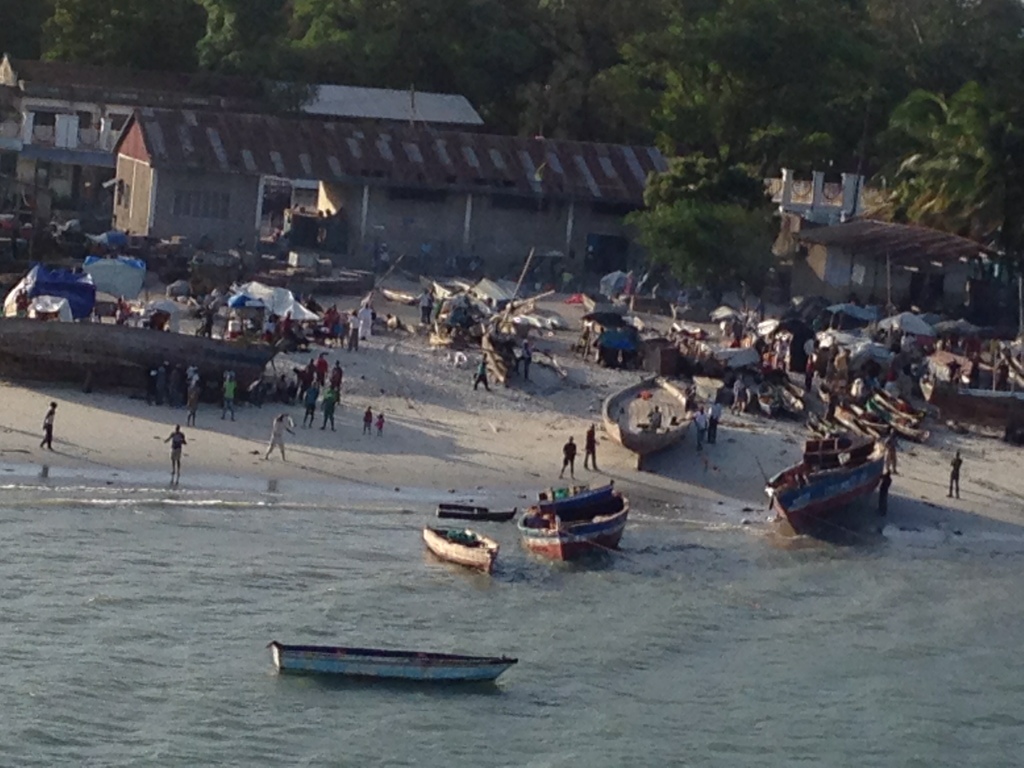
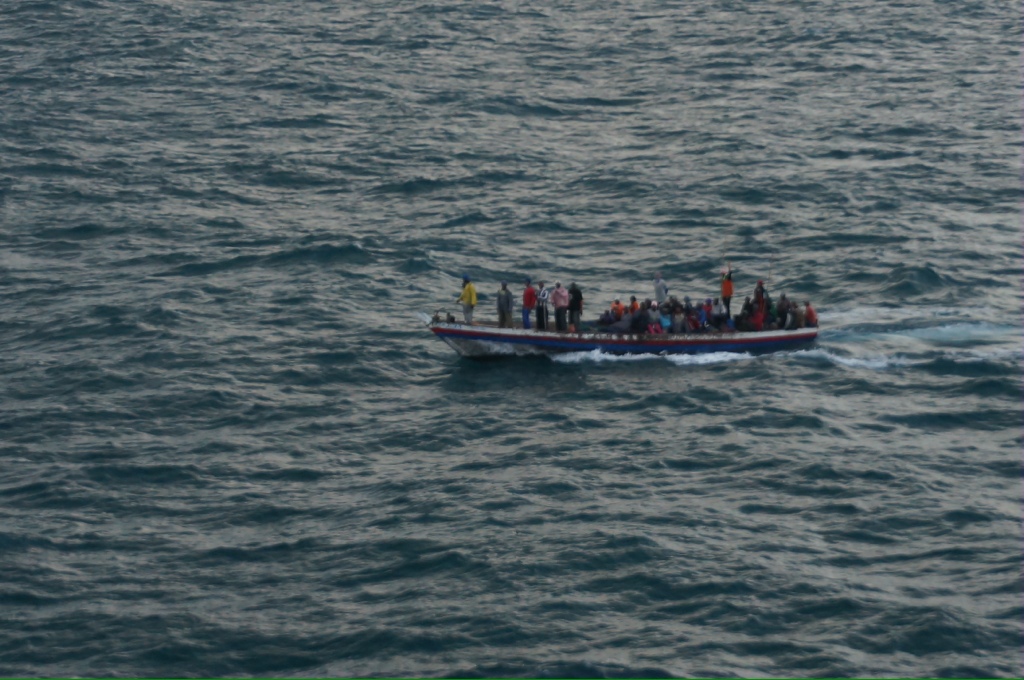
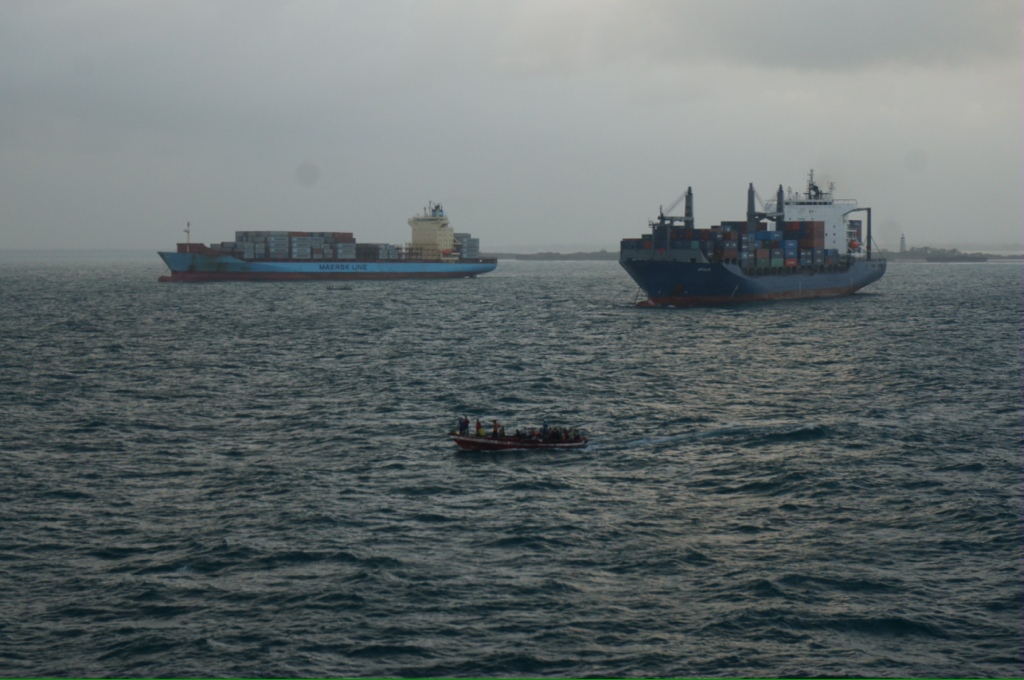
As we arrive at Dar Es Salaam we pass many massive container ships, some loaded and heading out to sea, others empty and anchored off shore. There are also a number of smaller vessels – fishing boats, small open boats loaded with people seemingly headed out to sea as well. We later learn these are water taxis taking people to the fish market. There are many islands some with white sandy beaches, lighthouses and some small buildings.
As we near the port we are in a narrow channel, the waters around are very shallow and we see a modern looking city with high rise buildings. Once ashore we see there are a number of newer buildings and some under construction. Dar Es Salaam is a city of 5 million people. It is the largest and richest city in Tanzania. It was the capital until 1974 when the capital was moved to Dodorma, the transfer of power is still underway.
In the 19th century Mizzina (Swahili for “Healthy Town) was a costal fishing village. In 1865 the Sultan from Zanzibar began building a new city and named it Dar Es Salaam (“Harbor of Peace”). In 1887 the German East Africa Company established a station here, it was captured by the British during WW I. The area surrounding Dar Es Salaam was named Tanganyika. After WW II there was a period of rapid growth. Independence was achieved in 1961 and in 1964 Tanganyika and Zanzibar merged to become Tanzania with Dar Es Salaam as the capital.
There is high unemployment, about 40% and we see much evidence of this – beggars, people selling things beside the roads, young men loitering beside the street, homeless people sleeping on the road side. Despite this the city is relatively clean and we even see street sweepers working on several roads we drive down. Our guide says that a lot of people come in from the country looking for work and there are a lot of Chinese immigrants as well.
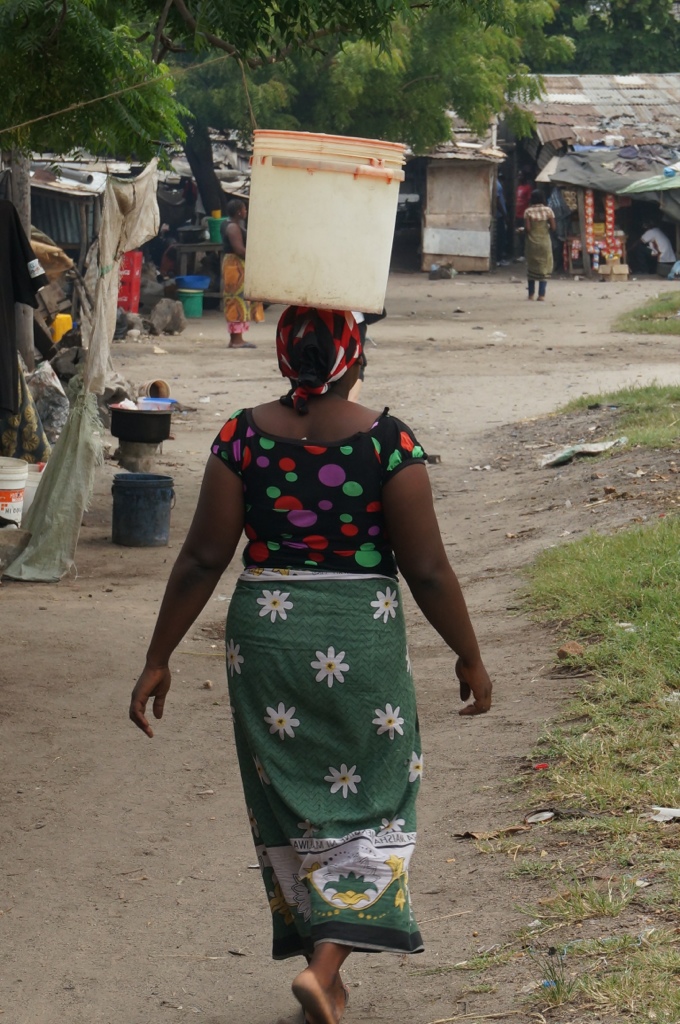
The high rise buildings are government, banks, casinos and a couple of hotels. This is a democracy with elections every 5 years, the President can only hold power for 2 terms or 10 years maximum. Schooling is free to grade 7 and they only teach Swahili so if people can afford it they send their children to one of the private international schools so they can learn English. Most of the people we see along the streets wear Western style clothing, however, there are still a lot of women in the bright colored traditional dress.
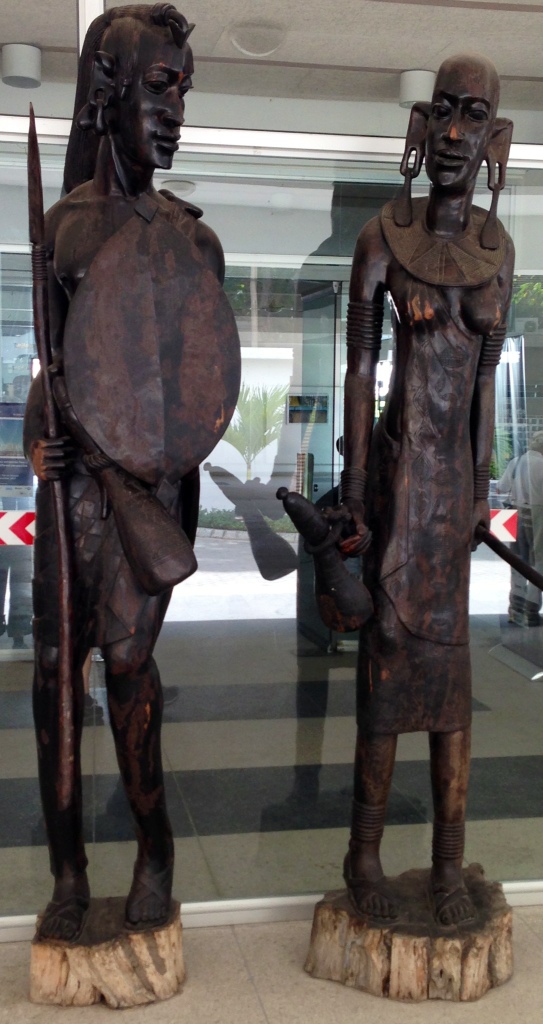
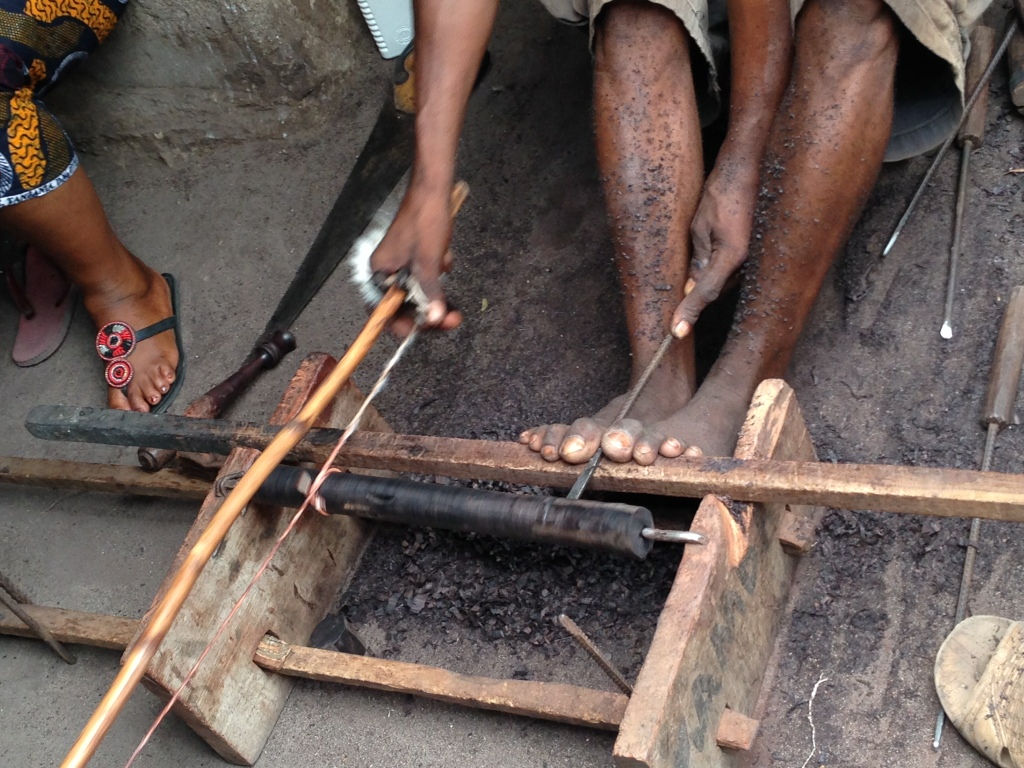
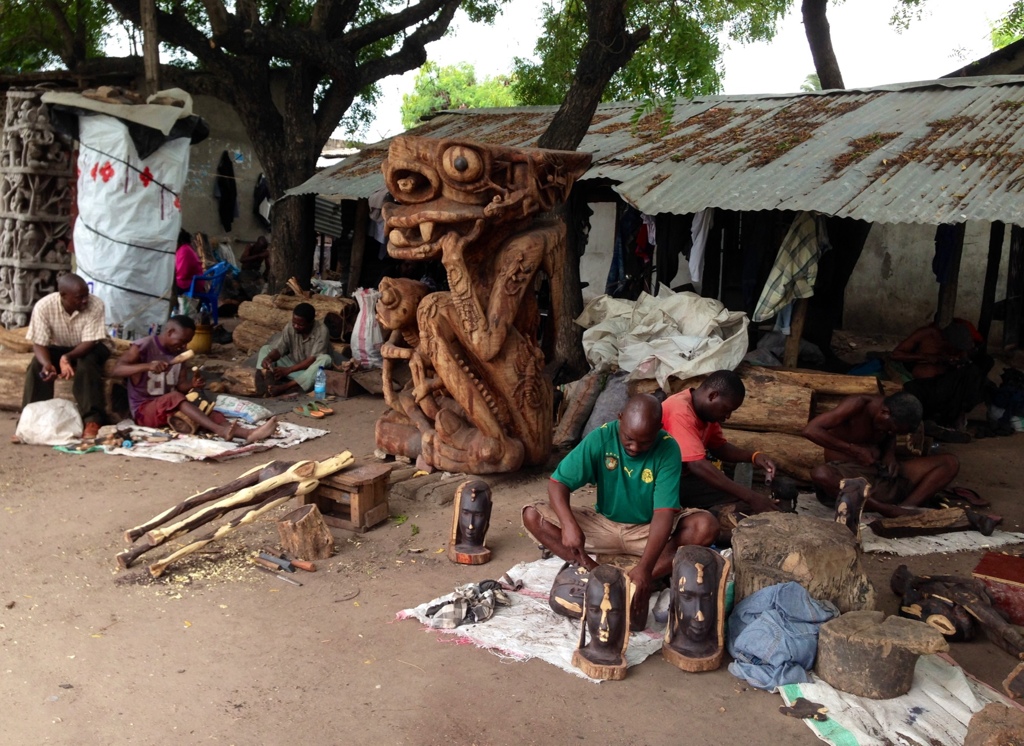
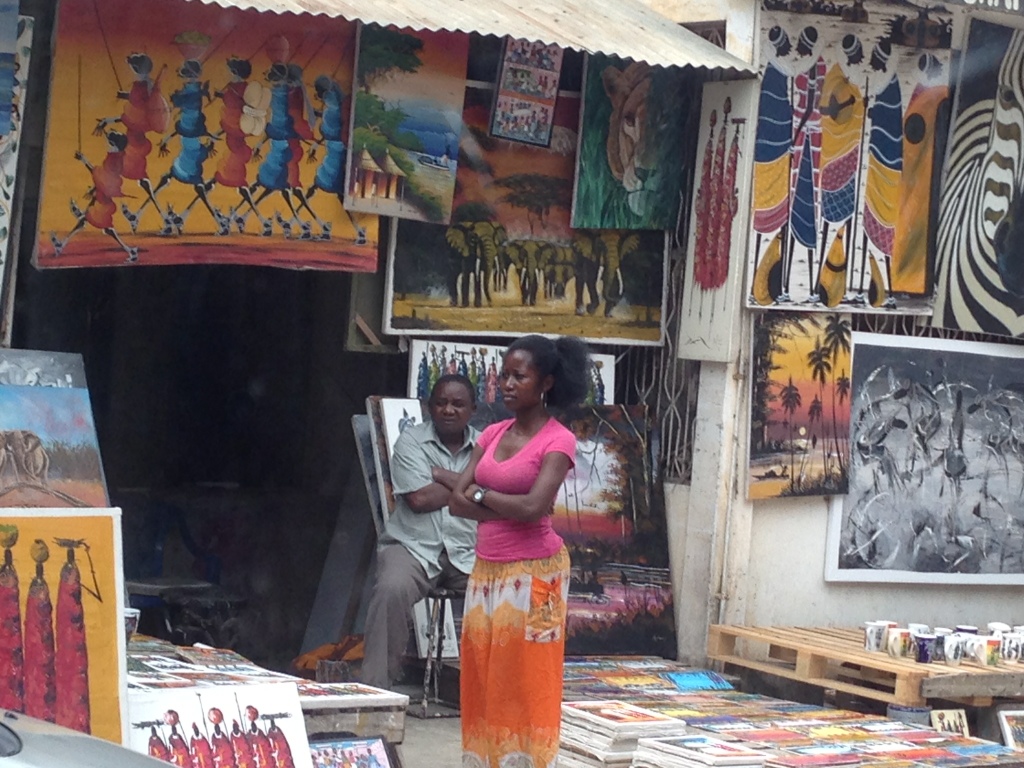
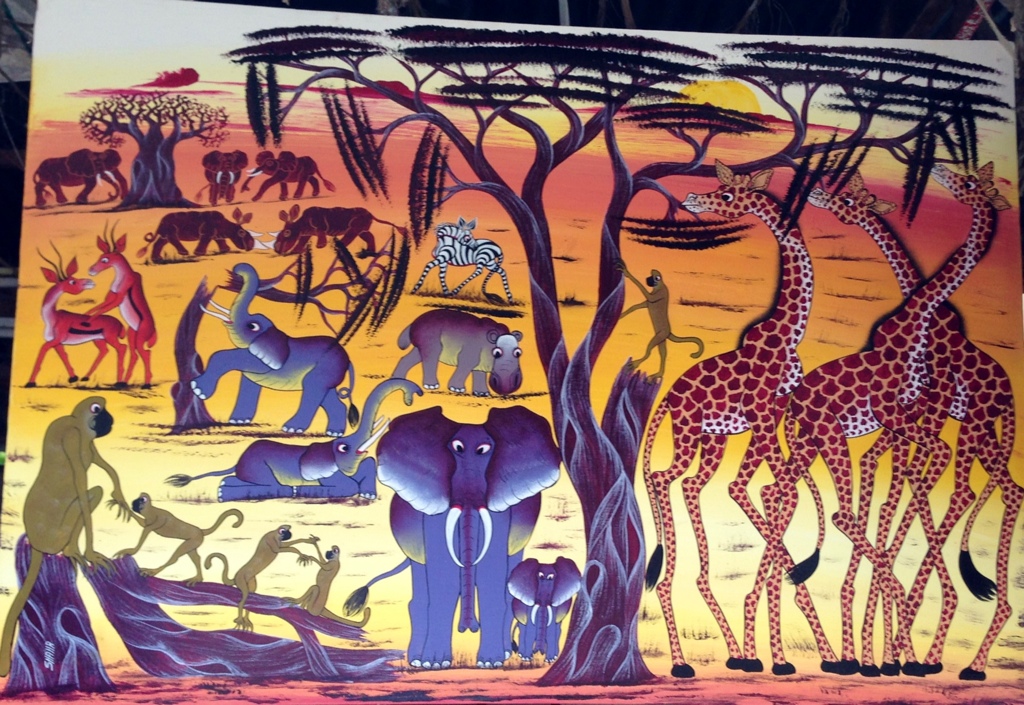
We visit a Tinga Tinga art collective where the artists work and sell their paintings which are a stylized form of colorful painting. They tell us it is oil, however it is likely acrylic. We also visit a craft market where there are several carvers working in ebony. In spite of our recent downsizing and lack of wall space we bought a couple of works (where will they go??). Next we drive through the university area and visit a museum. The university has about 20,000 students and tuition is about $1,000 per year. It sounds like there is access to student loans from the government.
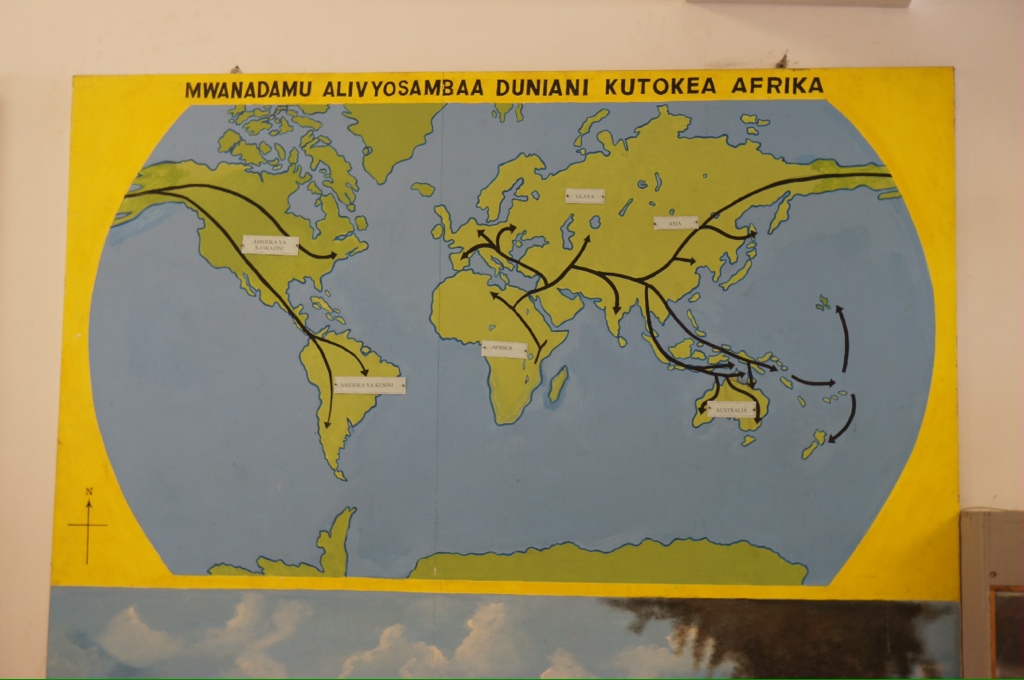
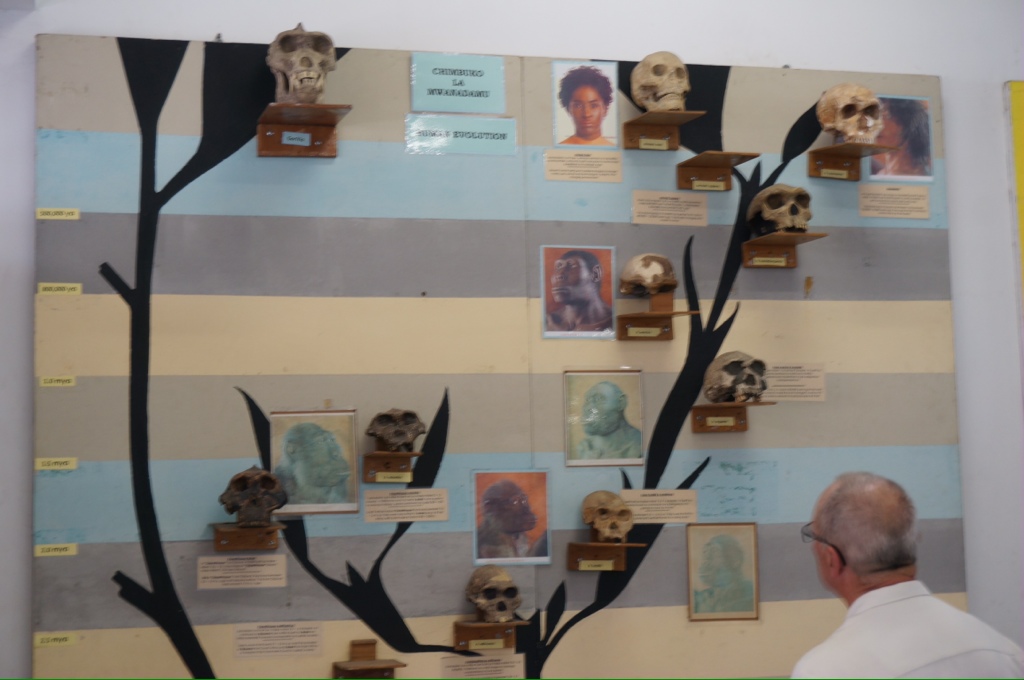
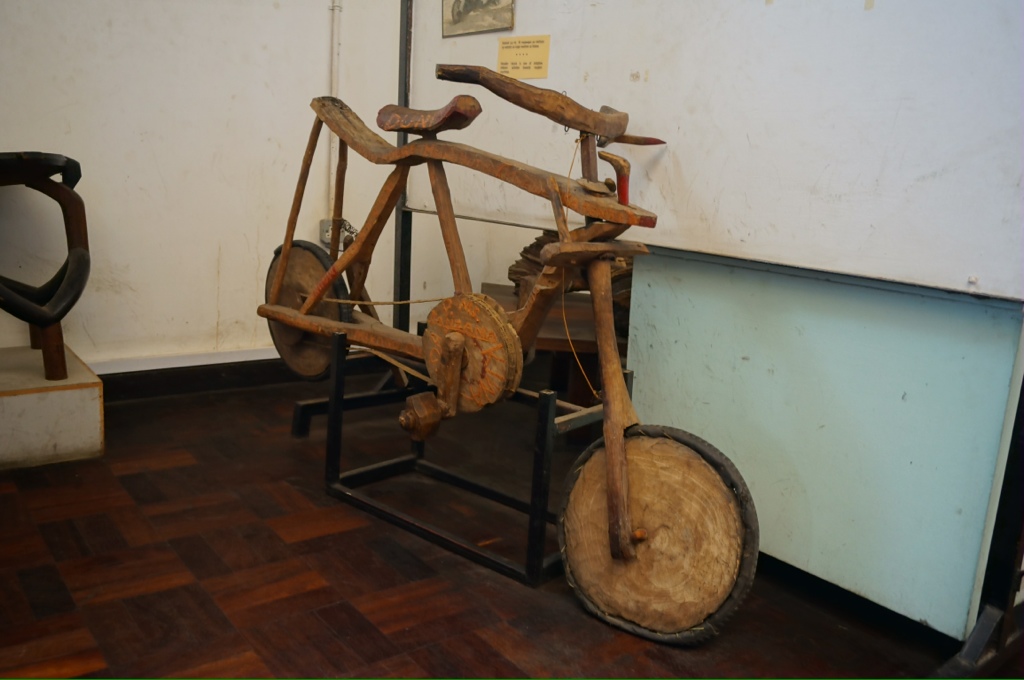
The museum is one of the better ones we have seen on this trip with exhibits on the Masi, evolution, local animal life, history of the area, examples of cave art, and included a memorial of the 1998 bombing of the American embassies in Nairobi and DarEs Salaam.
Dar Es Salaam is about 50/50 Muslim/Christian with a few minority religions as well. Our guide tells us there is equal opportunity for girls and boys for education and jobs.
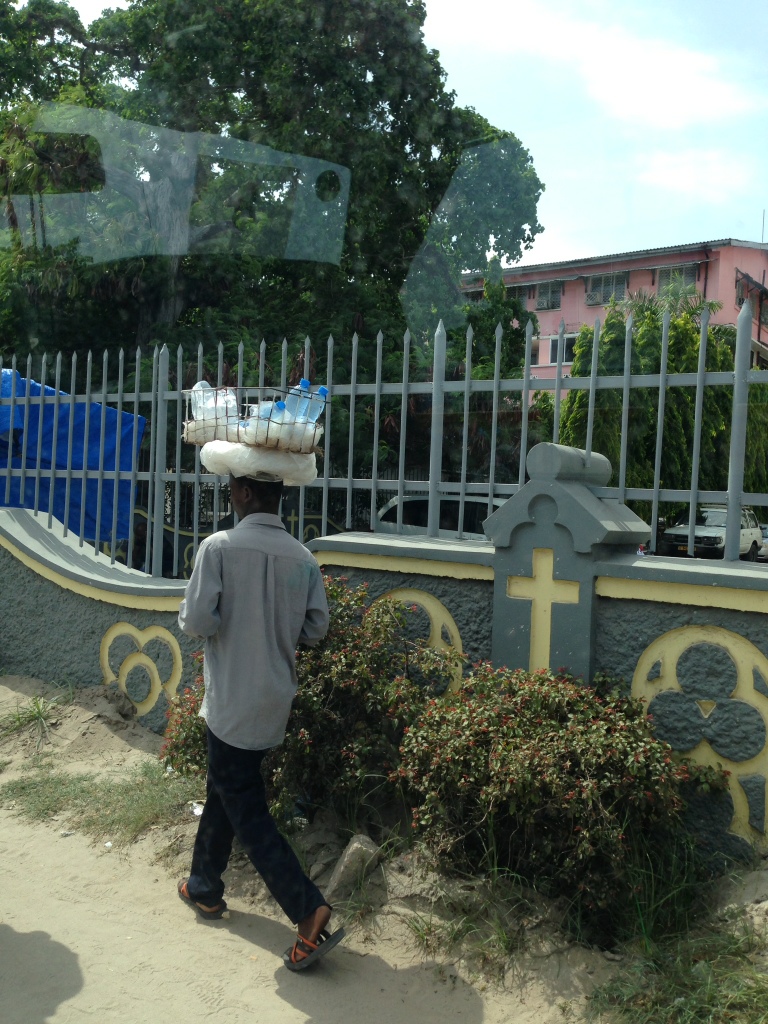
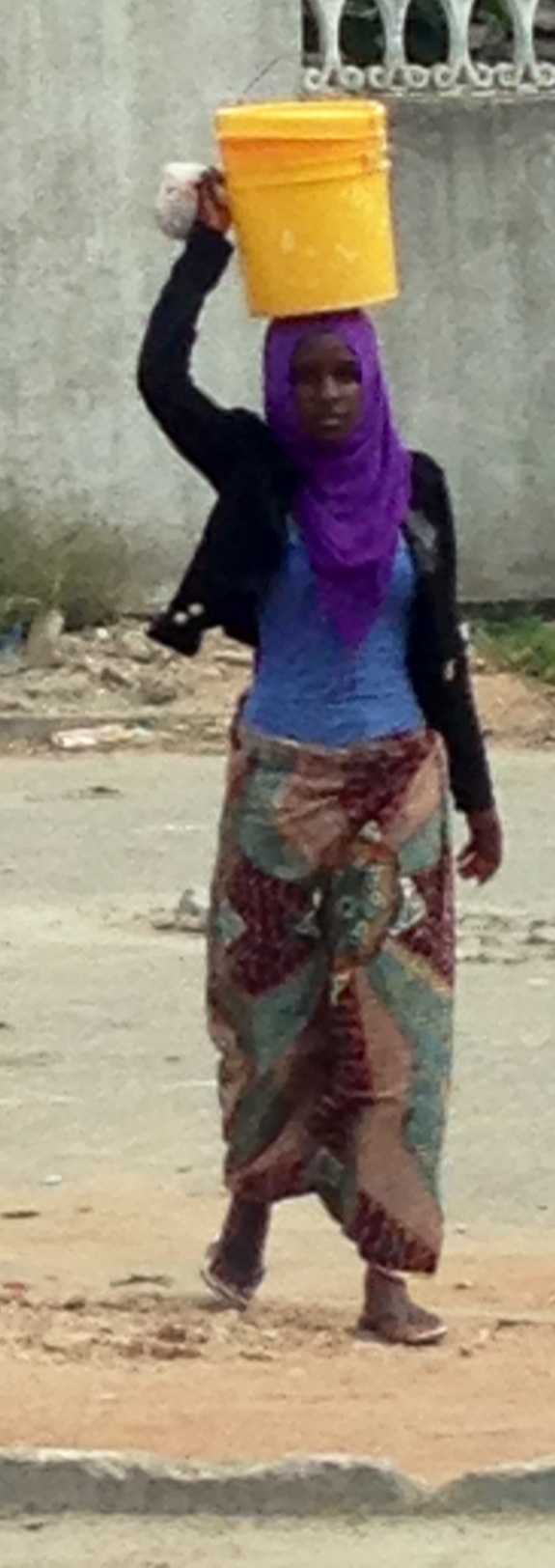
While this is a modern city by comparison to what we have seen over the last couple of days we still see push carts, lots of bicycles, many men and women carrying things on their heads, the same small shack road side stores, people without shoes etc. There are no computers in the schools, it sounds like the medical and government systems are corrupt. Supplies not getting to the intended recipients and people having to pay for medicine and treatment that should be available thought the free hospitals.
As our ship leaves port we pass by the fishing port.