
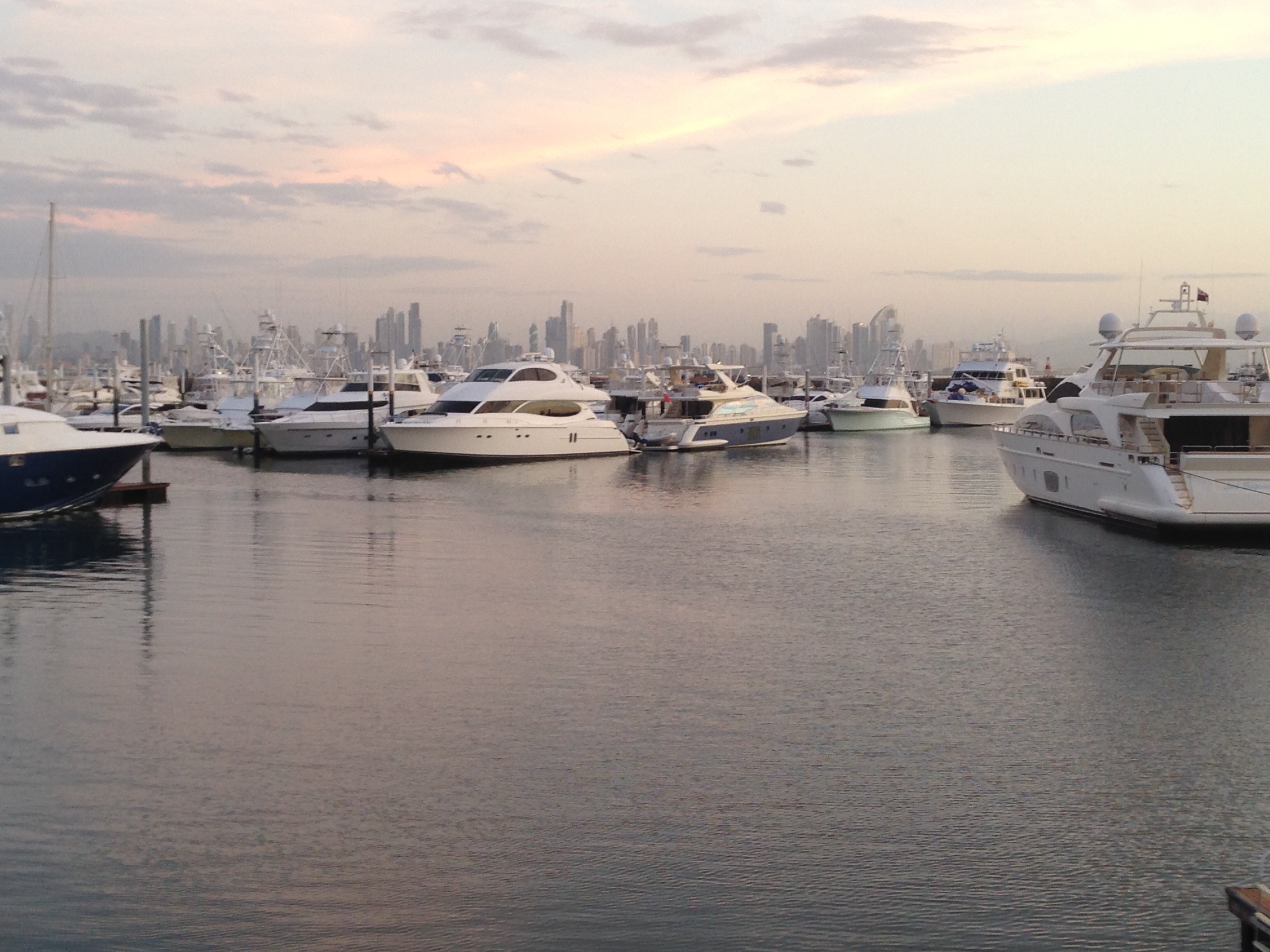
Our trip started with a drive to a local marina. Here we are waiting for our boat overlooking the marina with Panama City in the background. The sun is just rising!
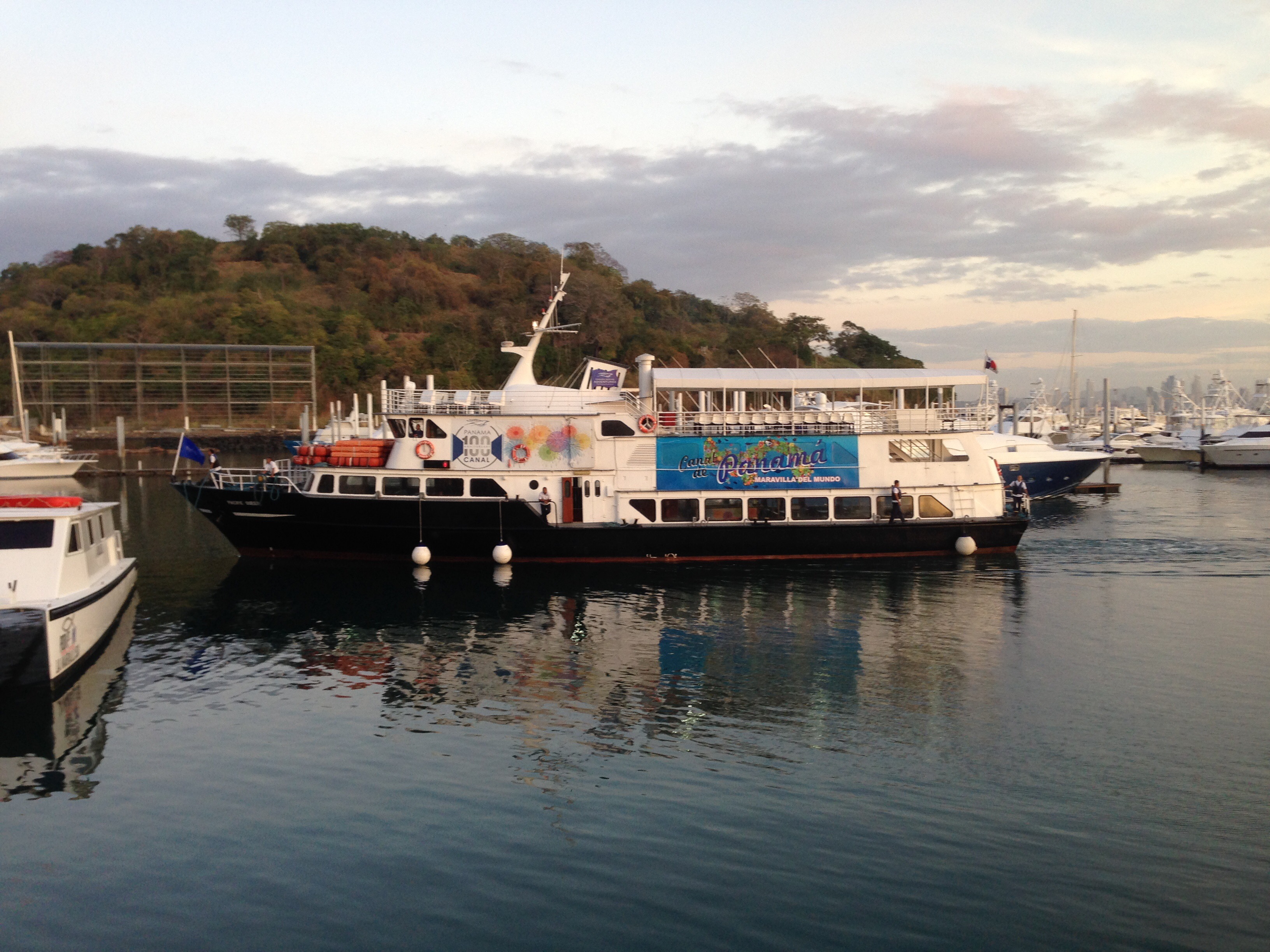
Our ship for the transit – the Panama Princess. Once on board we head out past all the ships lined up to make the transit. Once a ship arrives at the canal it radios to traffic control, is given their time for the transit and coordinates of where to wait for the pilot. Every vessel, no matter how small or large, must take on a pilot before entering the canal.
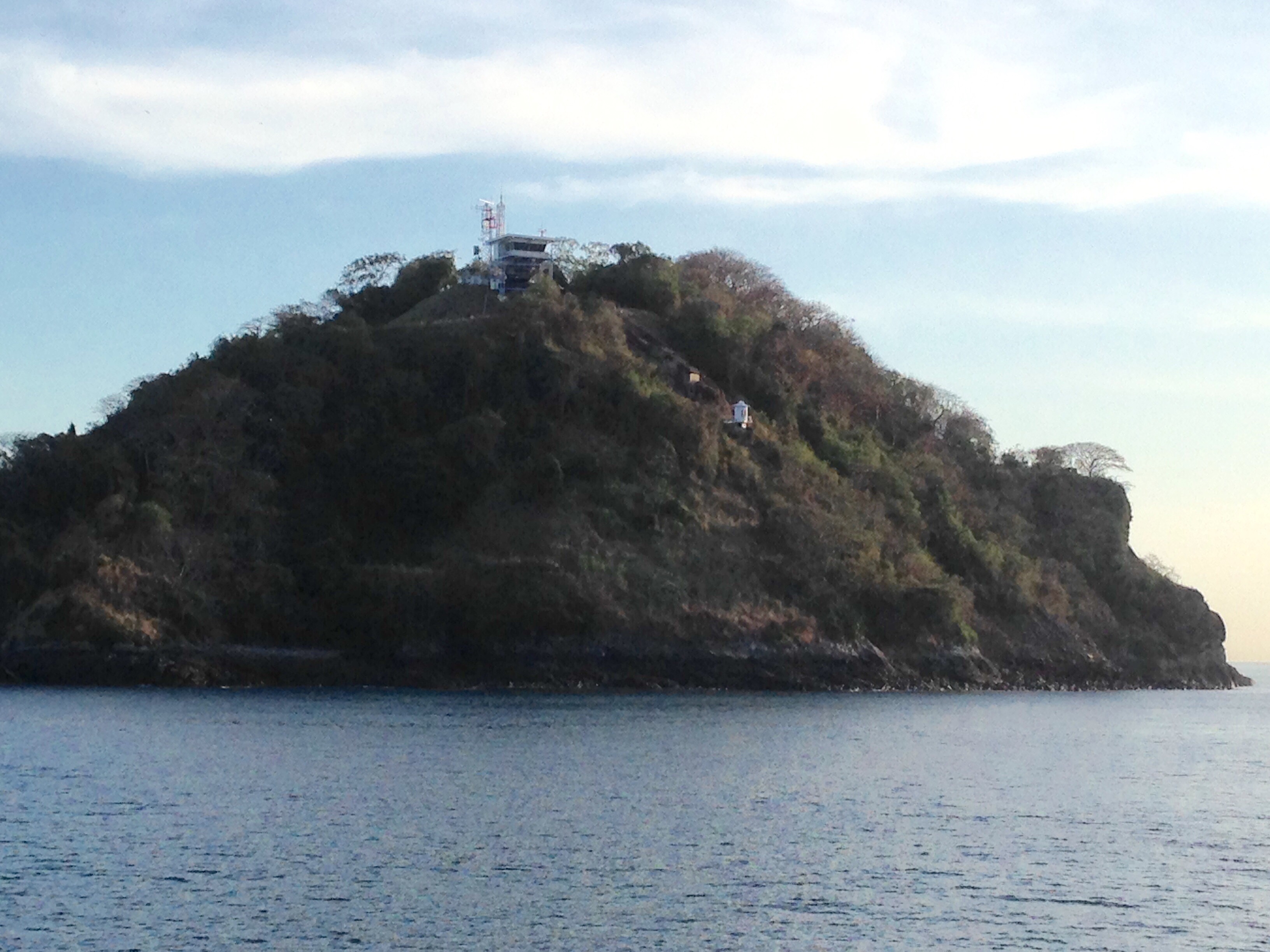
Traffic control is located on a hill just outside the entrance to the canal.
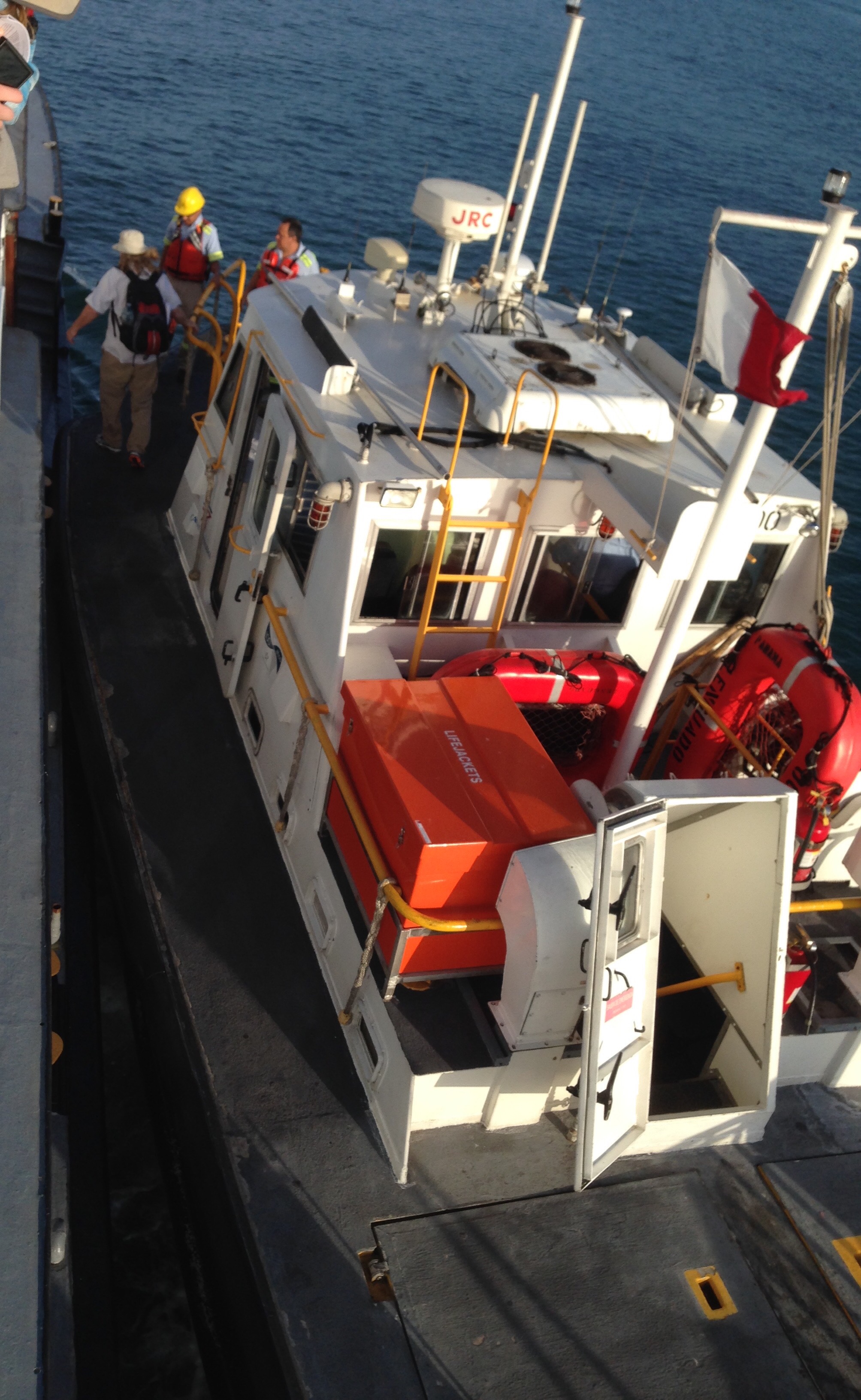
Pilot coming aboard. Once the pilot is aboard the transit has officially begun. Large ships have an average 24 hour wait.
As we start into the canal we pass under the first of 2 bridges – Bridge of the Americas which you can see in the distance off our stern.
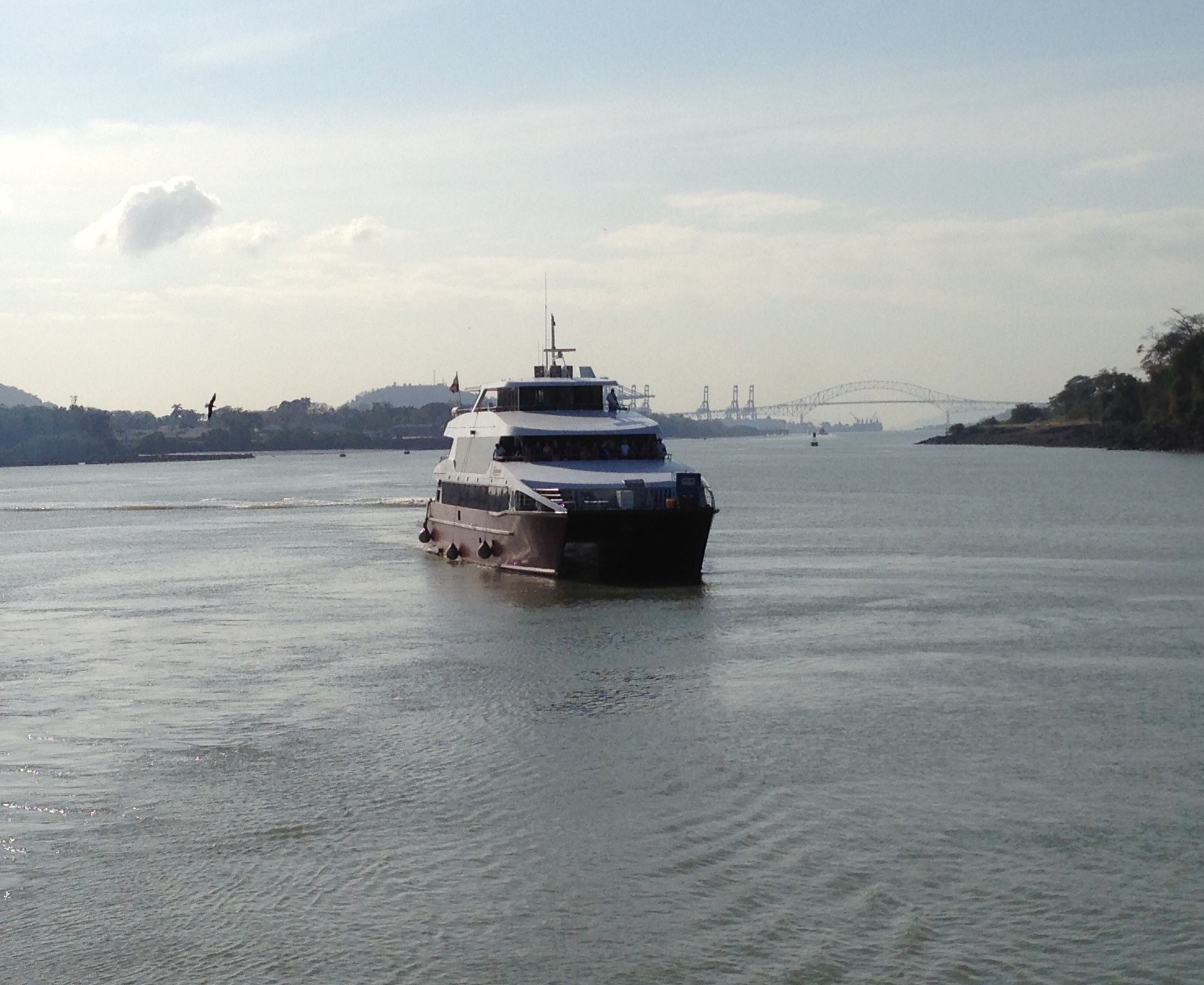
On the way to the first lock we pass a container terminal – instead of making the transit a ship can offload its containers here. The containers are moved by rail to the other side and loaded onto another ship. Two reasons why a ship might do this
1. The ship itself is too big. Today approx. 35% of the containers ships are too large to fit into the canal. This is the reason a third lane is being built.
2. Cost – ships are charged based on size of the ship and type of cargo. So if a ship is not full it may be more cost effect to use the rail alternative. The average cost for a commercial cargo ship is about $145,000 for a single transit. Cruise ships are more expensive as they pay based on passenger capacity. The highest single transit fee paid was over $400,000 by a cruise ship. Vessels under 125 feet long are charged by length. There is a minimum charge of $800 for an vessel no matter how small.
The canal earns $6 – $8 million per day.
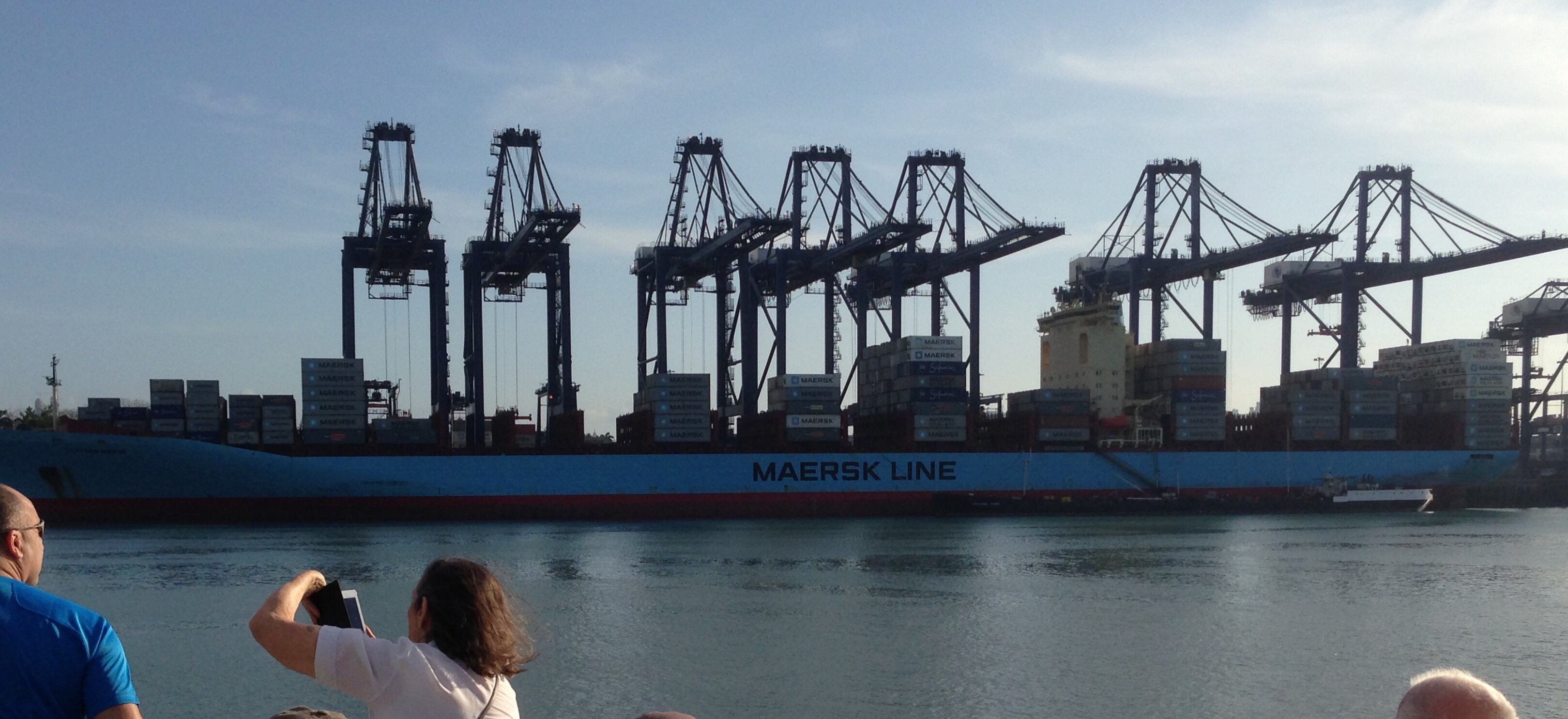
Container terminal with a “post Panama” ship ie too large to fit into the canal. The locks are each 1000 feet long and 110 feet wide. If the ship is smaller more than one vessel will go through together. We are with a cargo ship, a cruising yacht and a tugboat. Any ship over 125 feet long is required to have a tug tied on behind (a kind of mandatory insurance in case of a mishap). It costs the ship $3000 per hour for the tug.
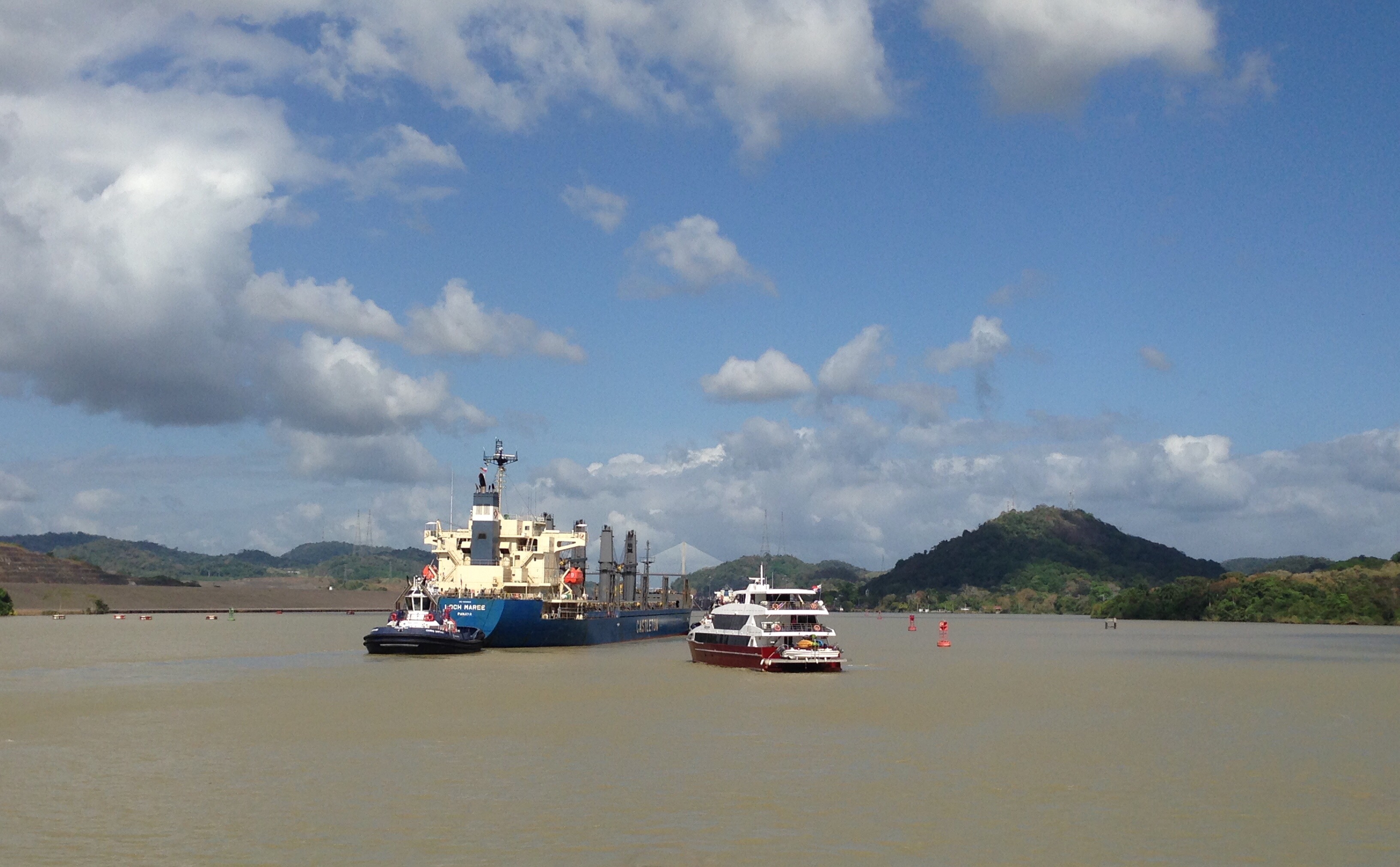
Our transit
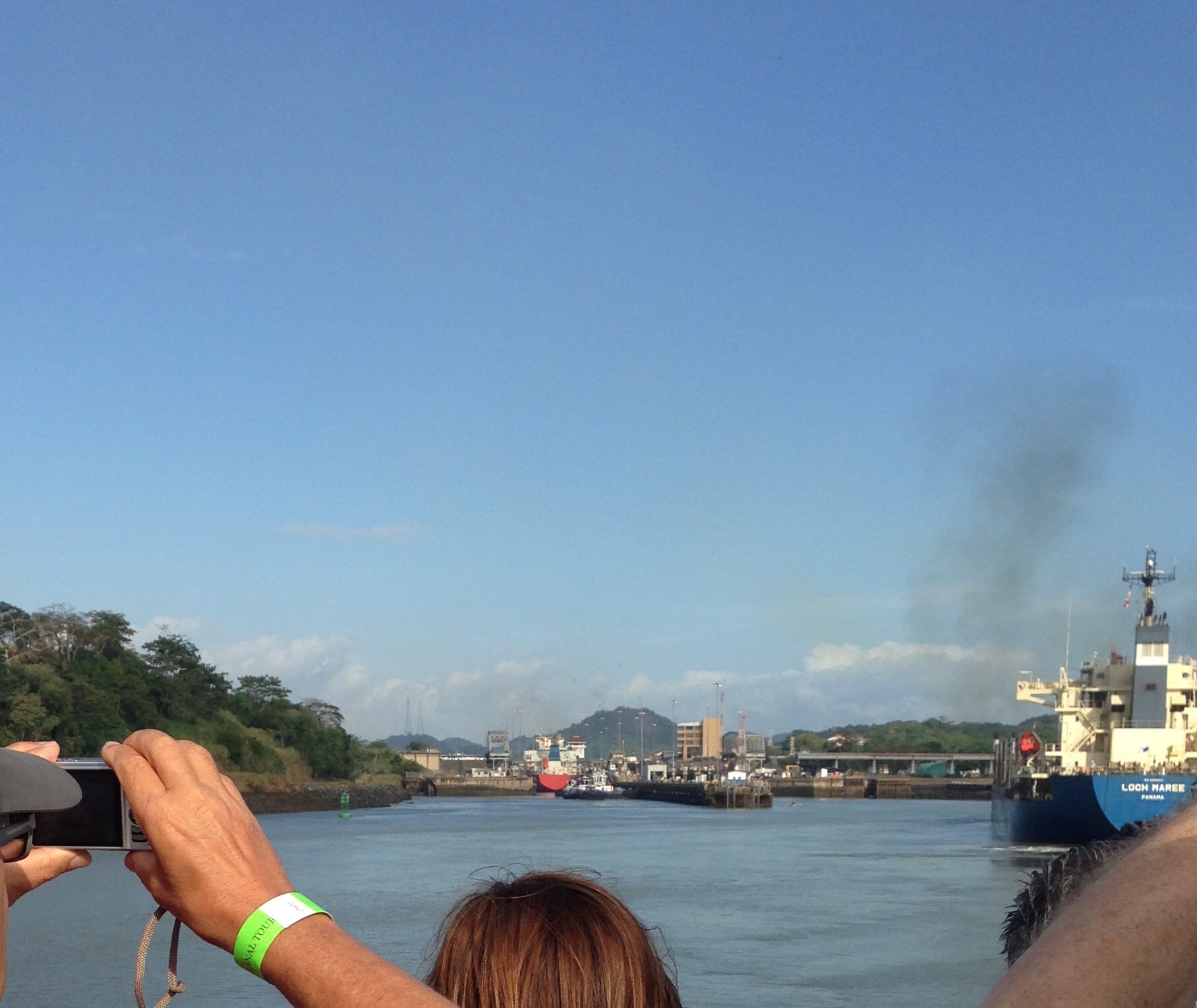 There are currently 2 lanes in use. The red ship is going through the left lane, the blue ship is headed toward the right lane.
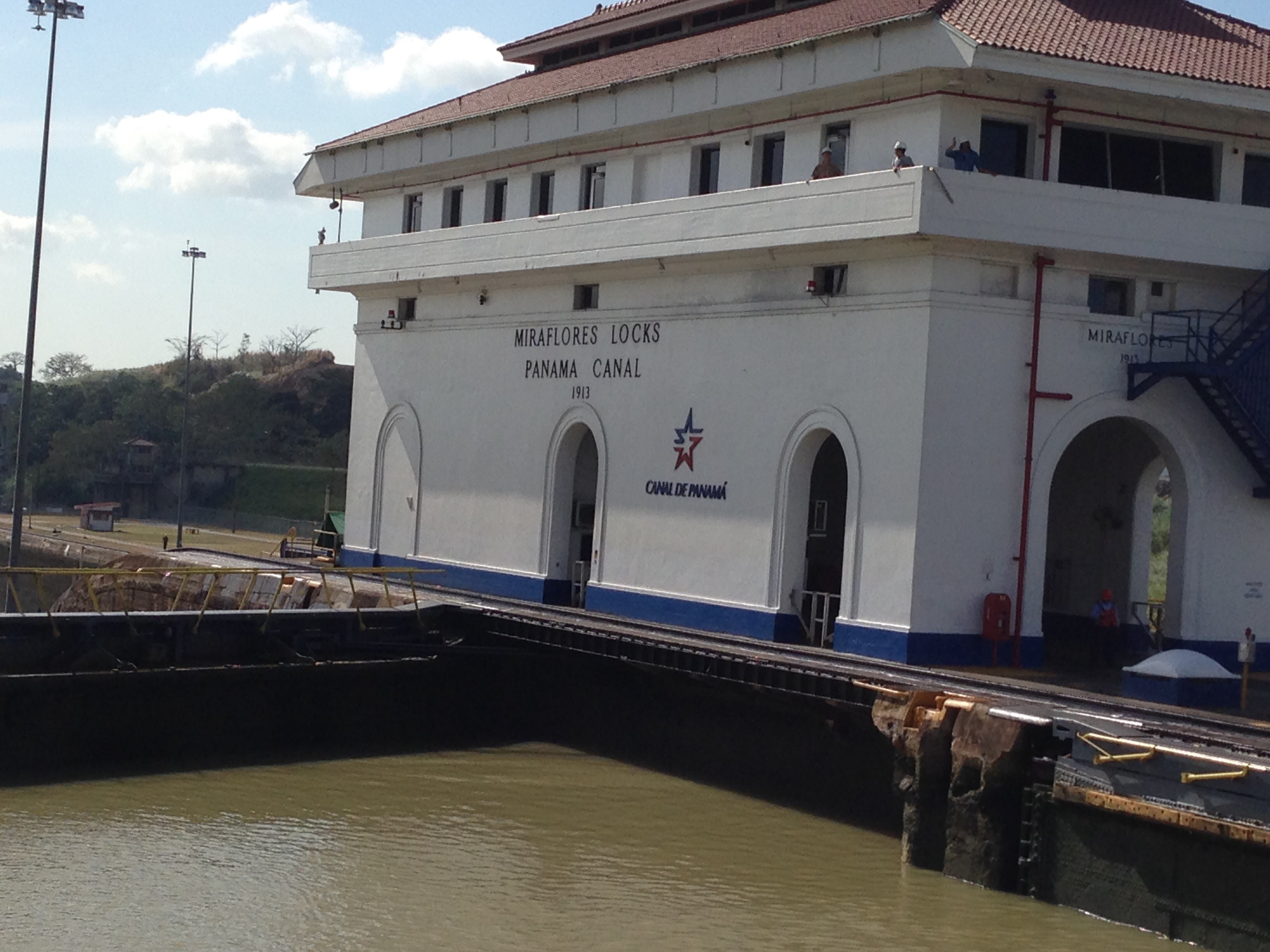
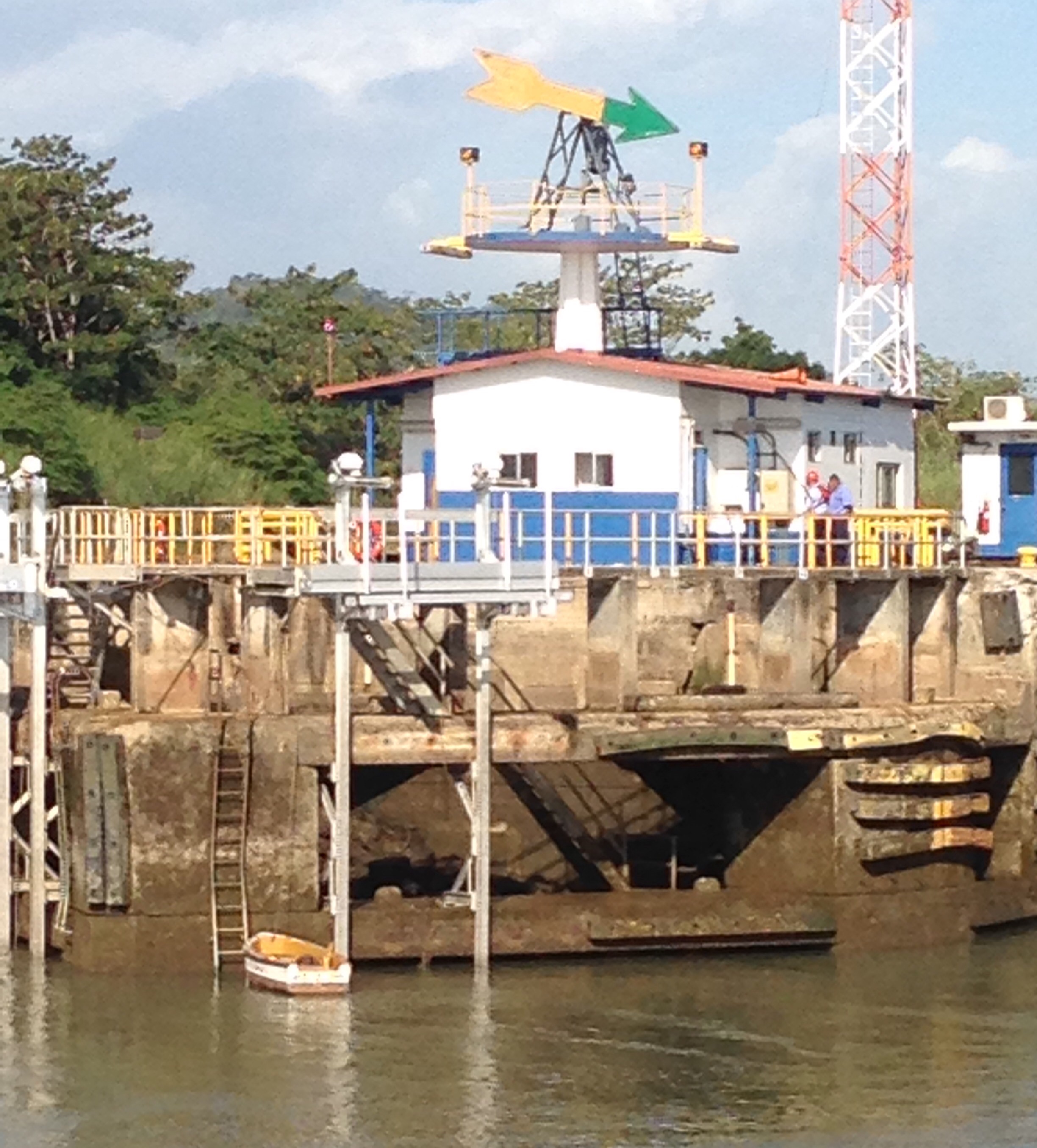 The canal operates much as it did in 1914 when it was completed. Note the green arrow. When it is pointed to the right your ship goes in the right lane, when it is pointed to the left your ship is to enter the left lane. When it points down do not enter. The rowboat at the bottom of the ladder is used to get the line from the larger ships. 2 guys row out to the incoming ship and the ship throws a line down. The canal is one way during daylight hours when the larger cargo ships go through. In the morning it is inbound to the lake from both sides. In the afternoon it is outbound to both sides. At night it is 2 way. This facilitates the movement of the large ship through the gap from the locks to the lake.
There are 3 steps up from each side to the lake. The lake is 85 feet above sea level.
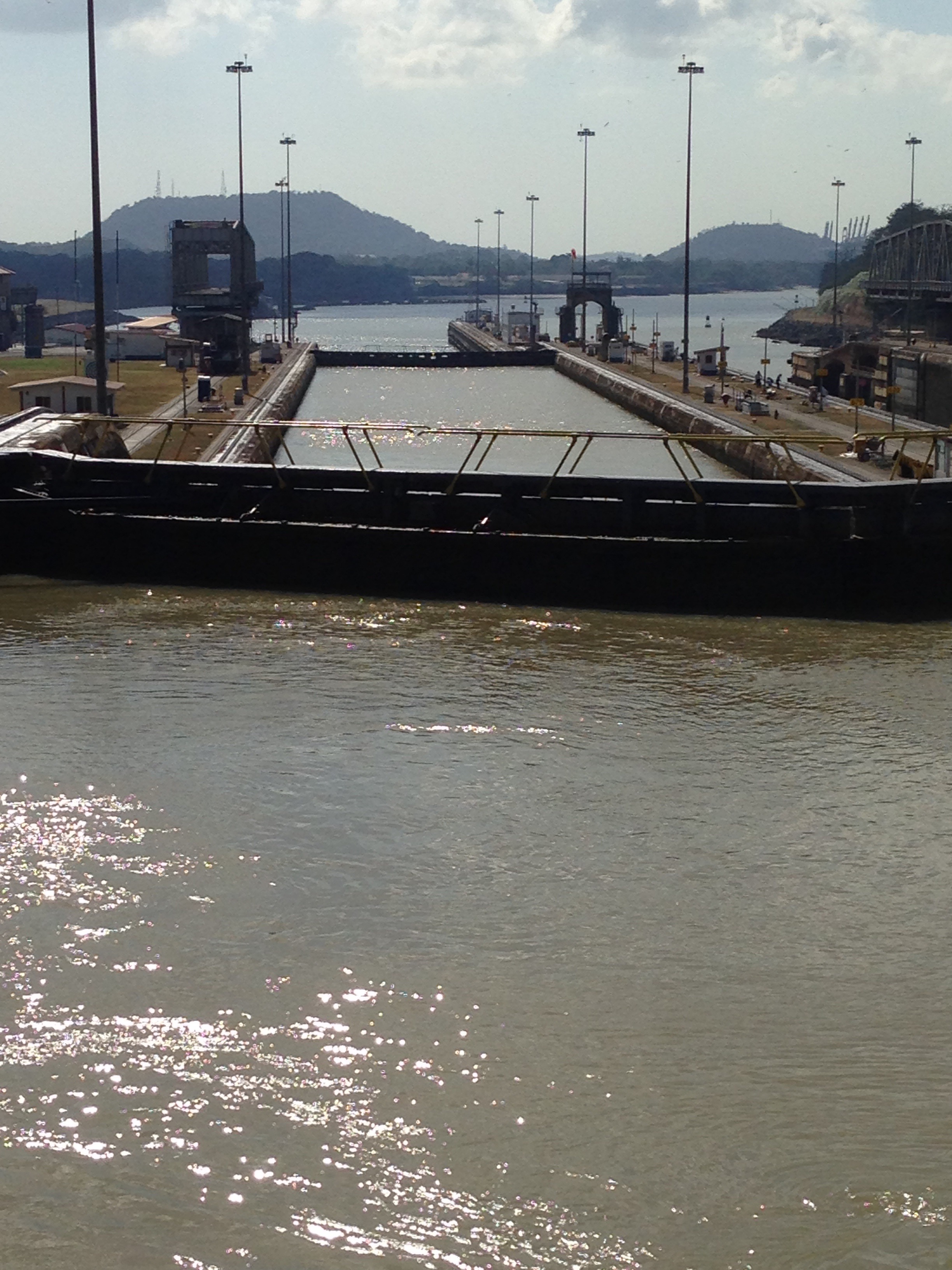
Leaving the second lock.
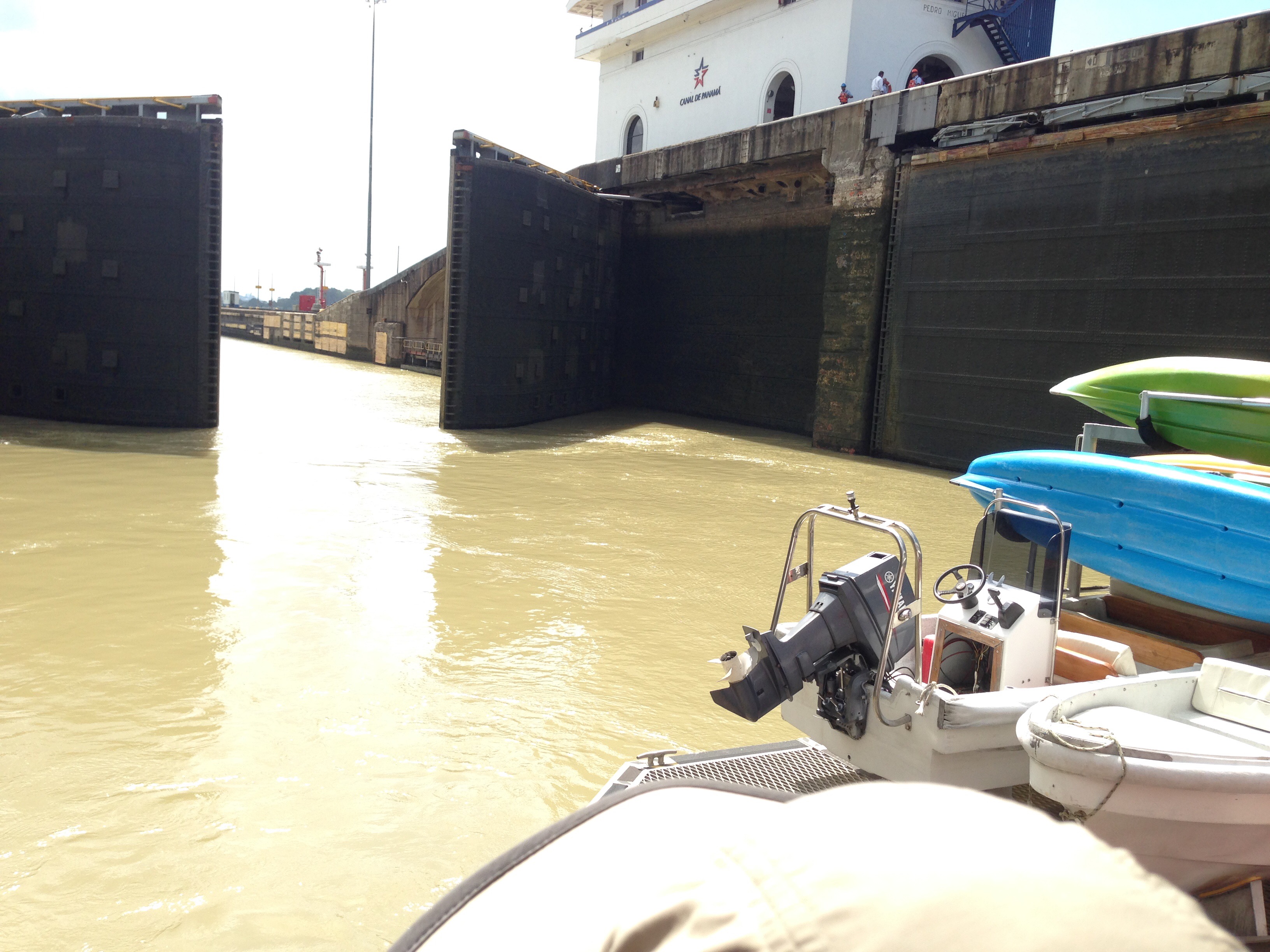
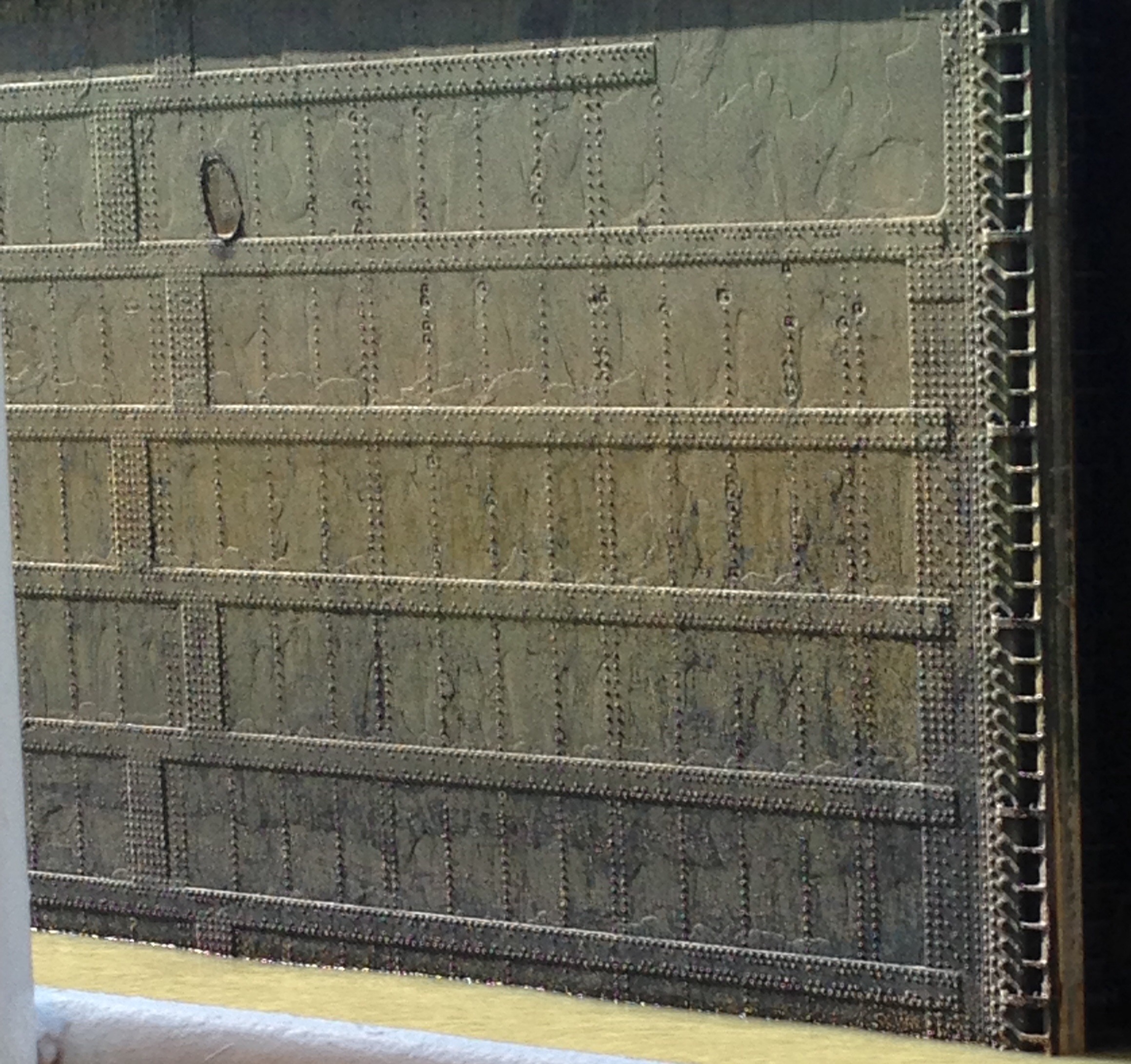
26 million gallons of water fill one lock in 8 minutes.
The French tried to dig a ditch below sea level to create the canal. However, even though both oceans are at sea level this did not work because of the difference in the tides. The Pacific tides can reach 20 feet while the Atlantic tides are usually around 1 foot. So a ditch would have created a year round white water rafting opportunity but would not have been good for the large ships.
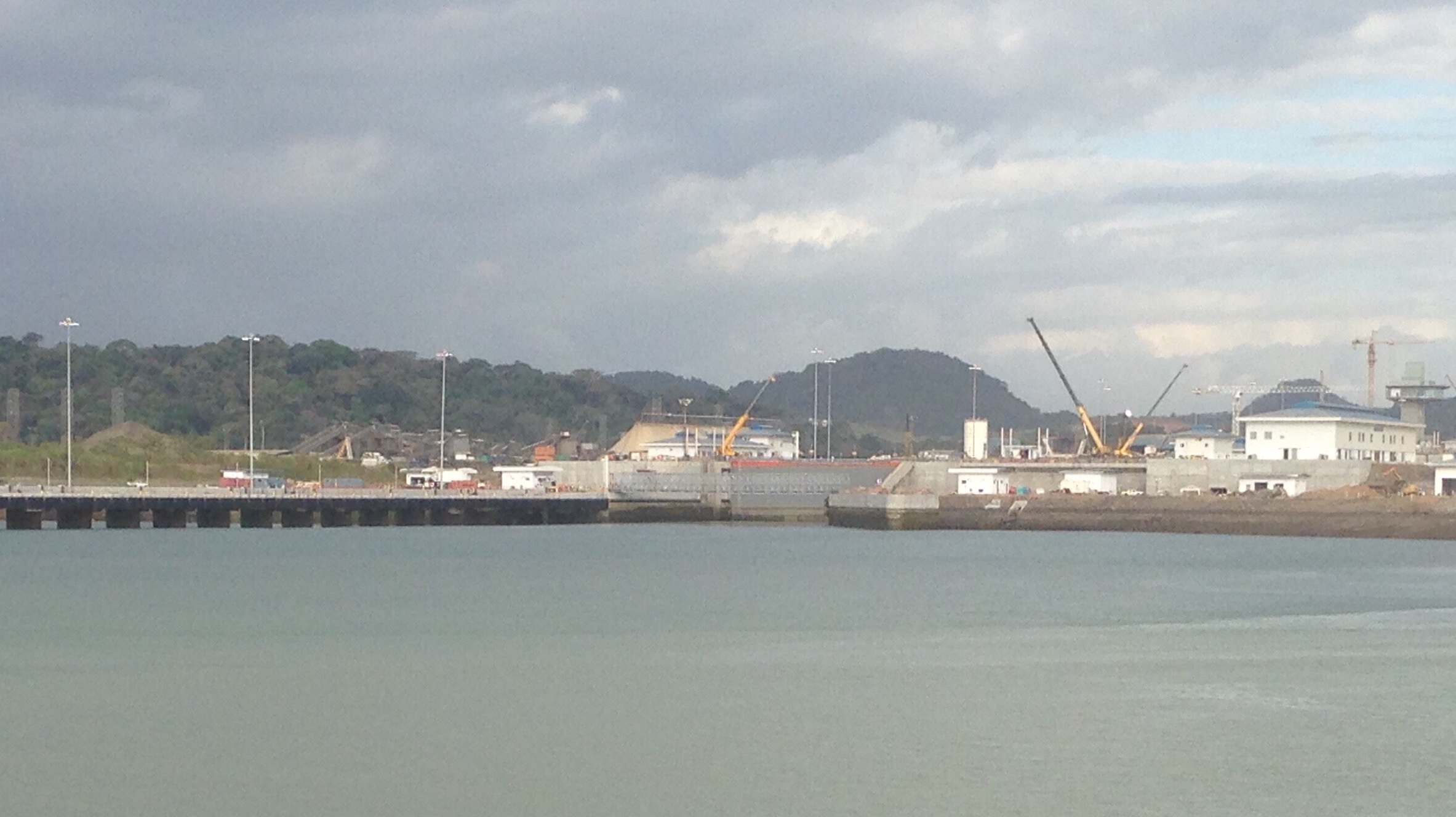
Construction on the third lane. This will mean 3 lanes going in one direction at a time. The third lane will be used for the post Panama sized ships – not sure how the arrow will point for this 3rd lane!
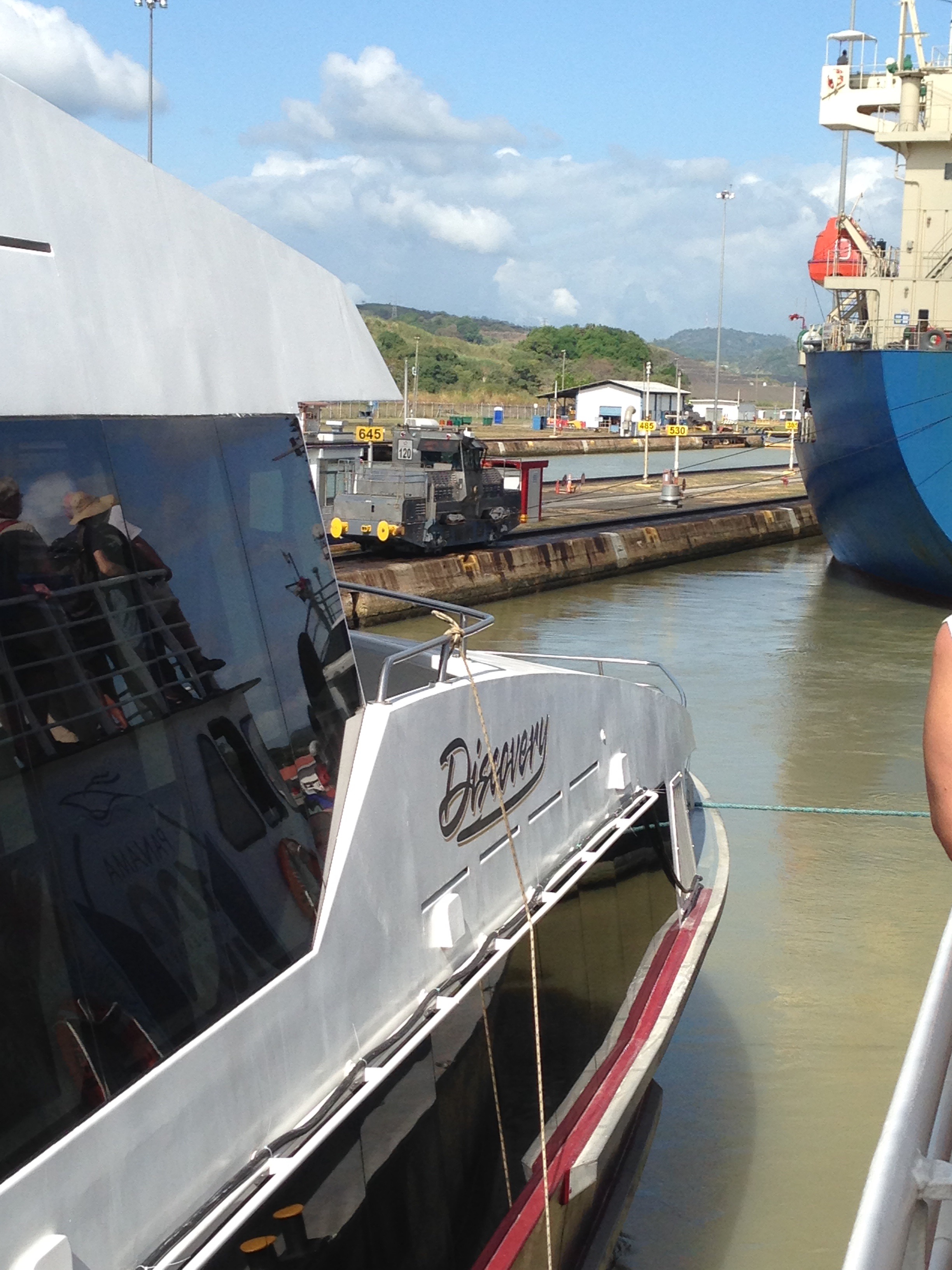
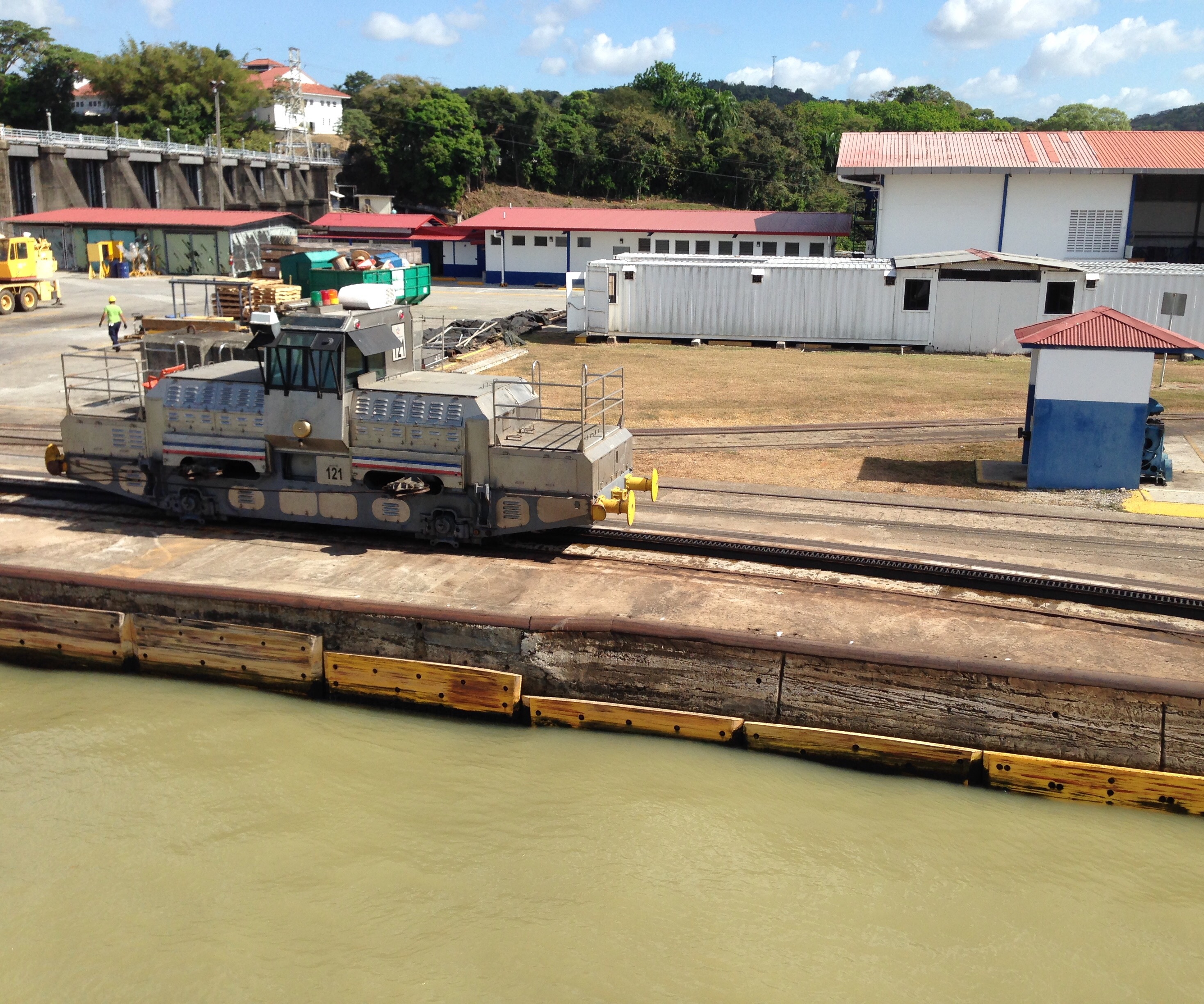
The canal is completely electric and completely self-sufficient. When the lake was created in the middle a hydro electric dam was built and generates all the electricity used. Large ships are attached to “mules” that are electric. While the ships are required to go through under their own power, the mules help to keep them in the centre – this is done to protect both the ship and the walls from damage caused by ships bumping into the walls.
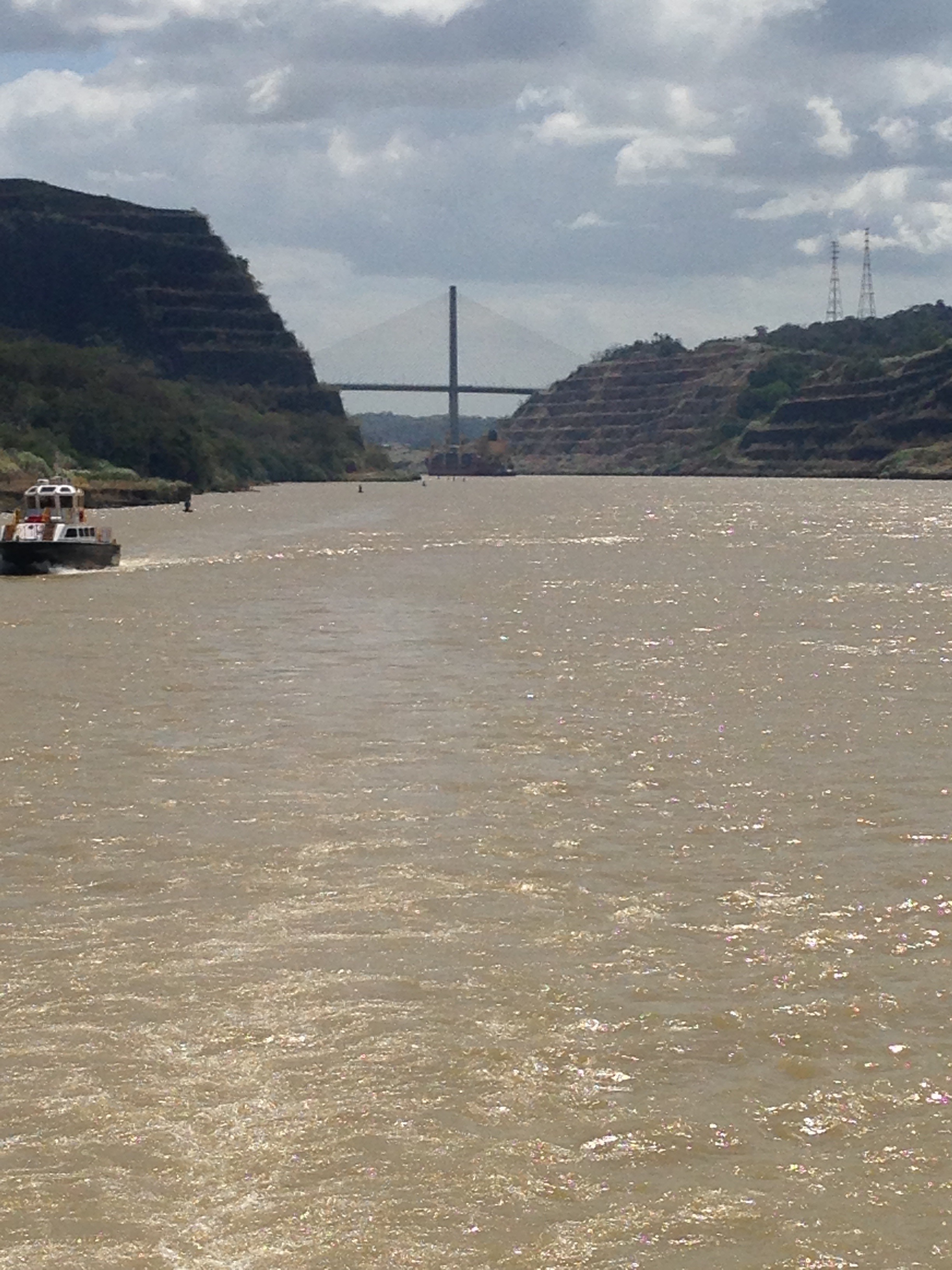
Centennial bridge with a ship passing under.
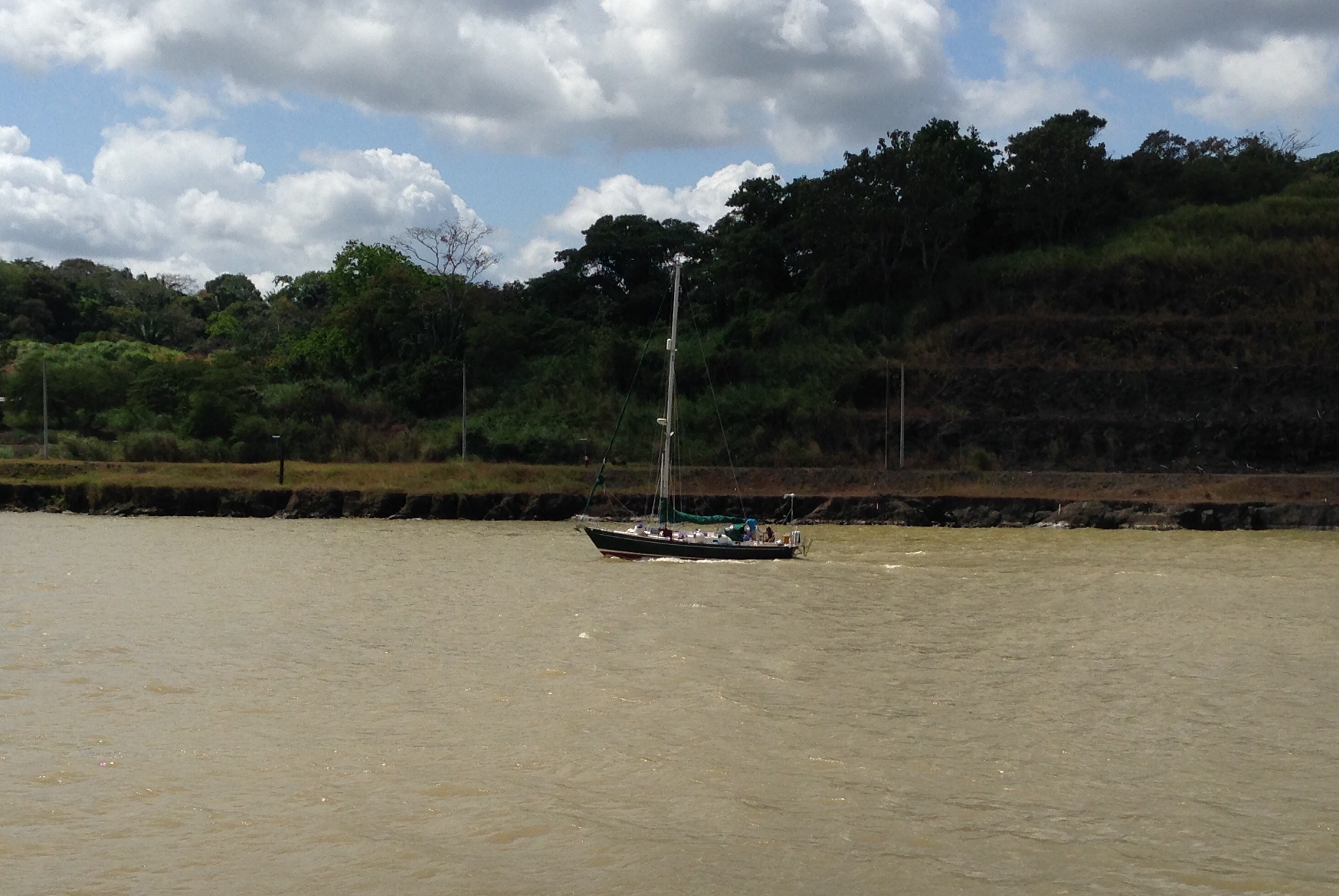
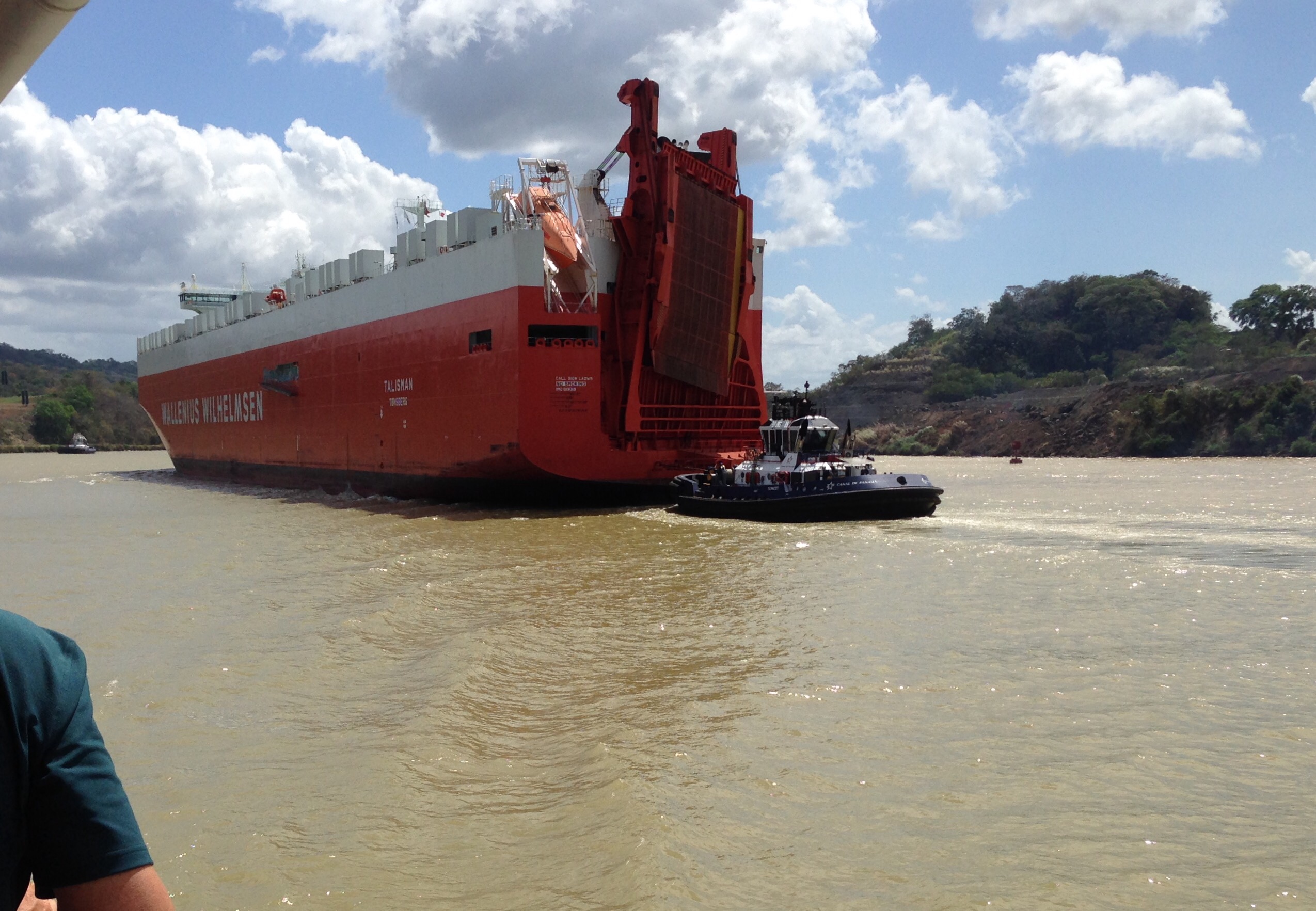
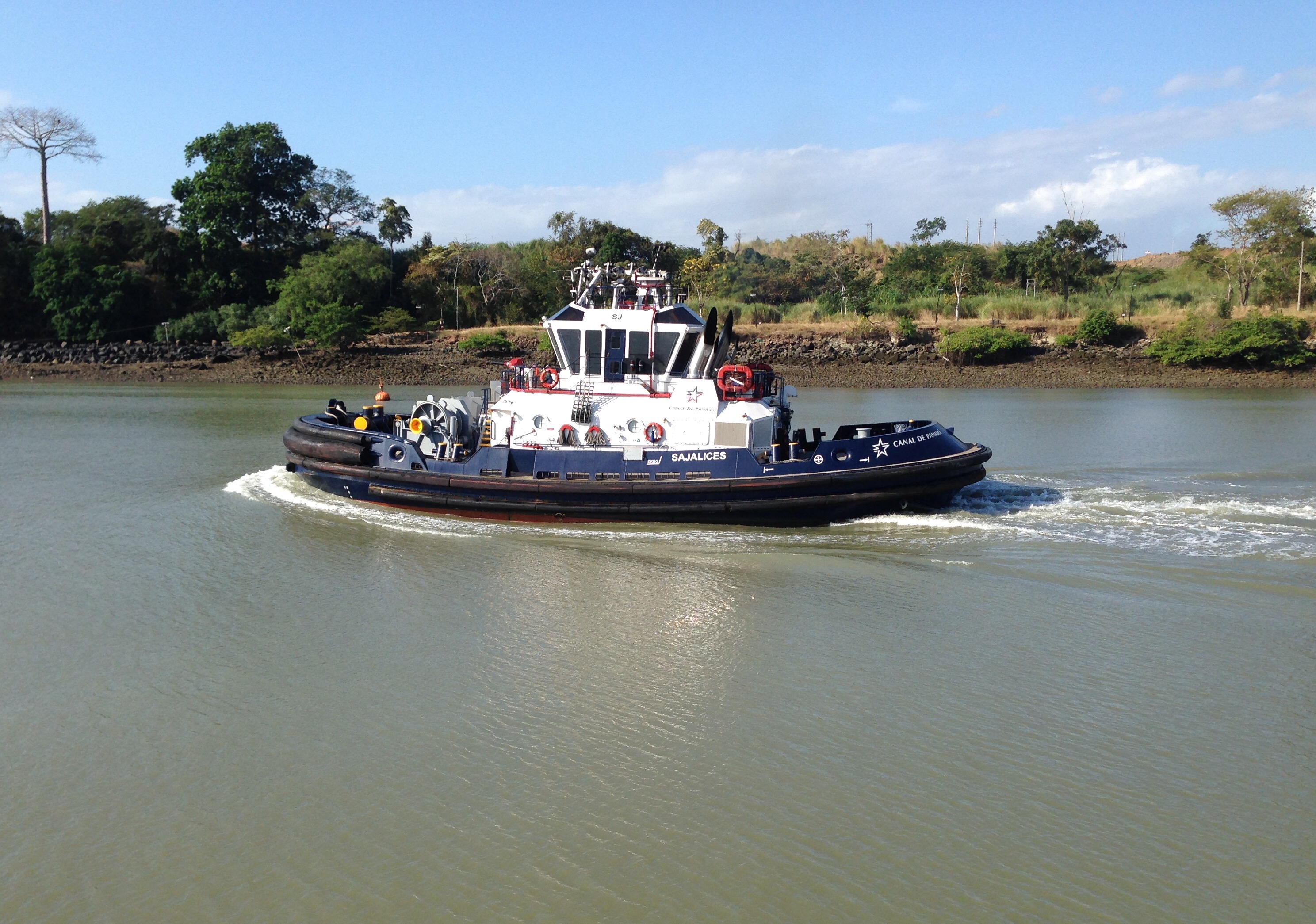
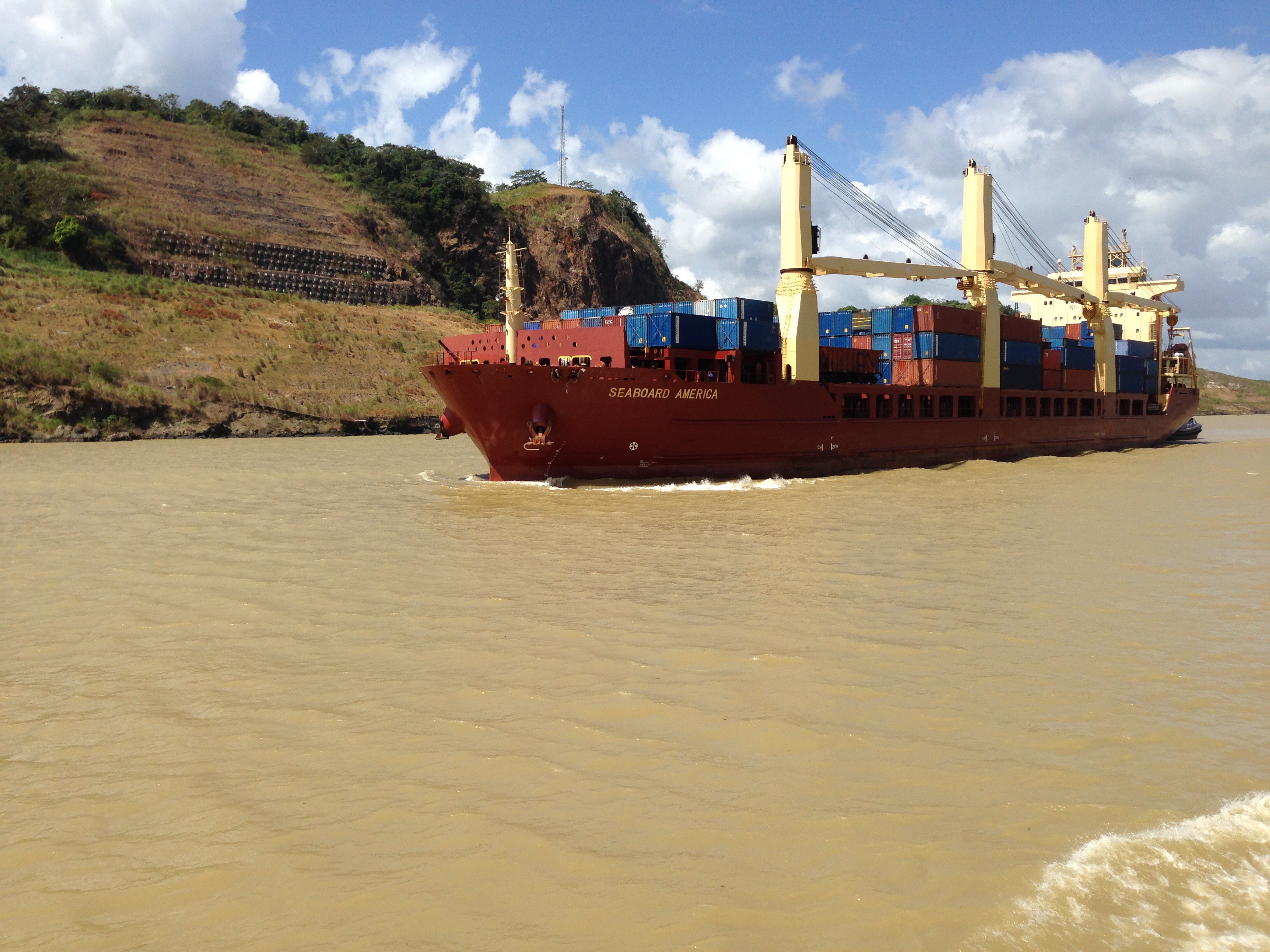
Some of the vessels we passed. One is a car carrier capable of carrying 5900 cars.
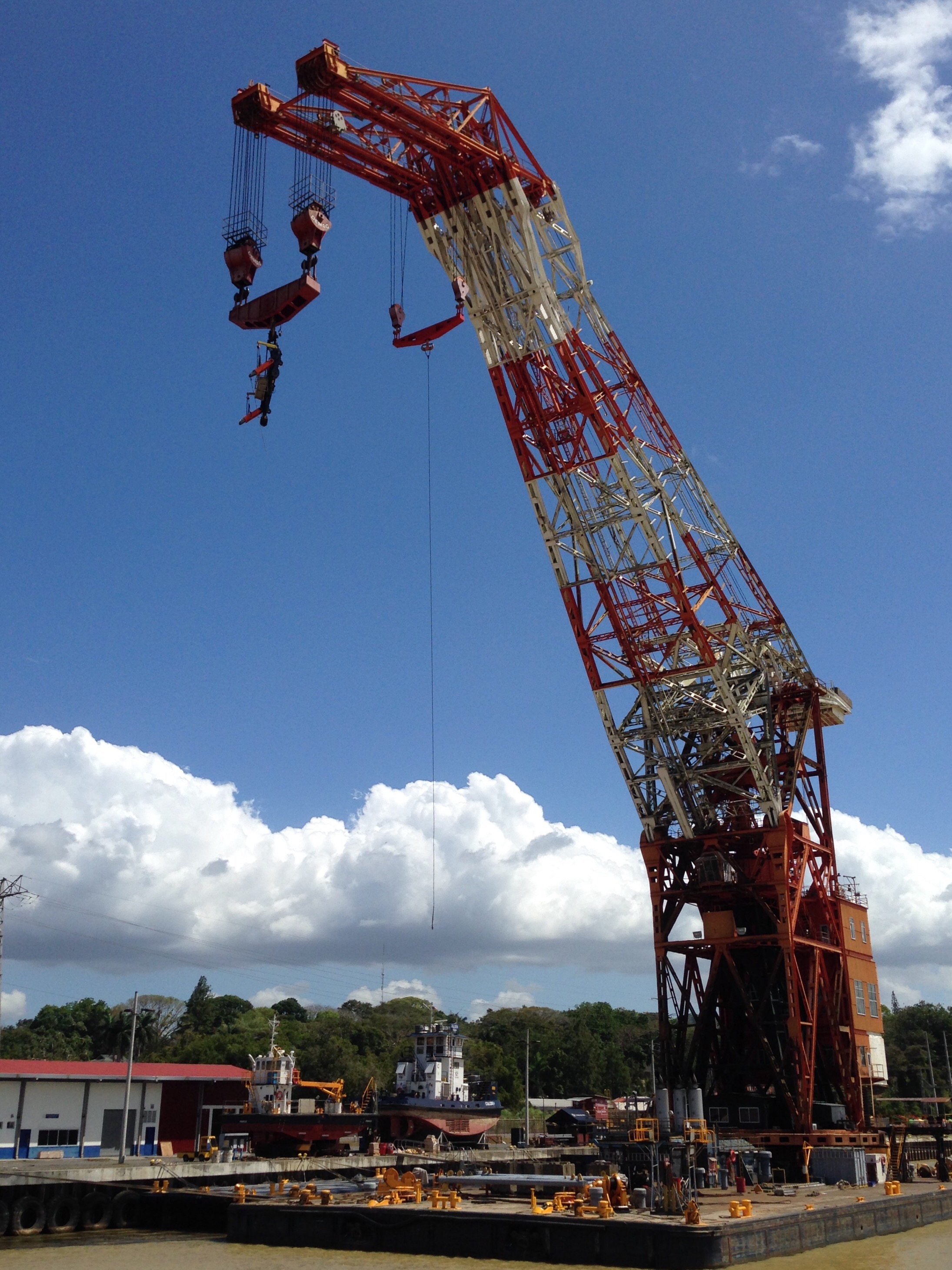
A Titan crane used to heist the lock gates when repairs are needed. Purchased for $1 but cost $2 million to get it in location.
For many years the USA managed the canal, then in 1999 it was turned over to Panama. While the USA was in charge the area for 5 miles on either side of the canal was USA land.
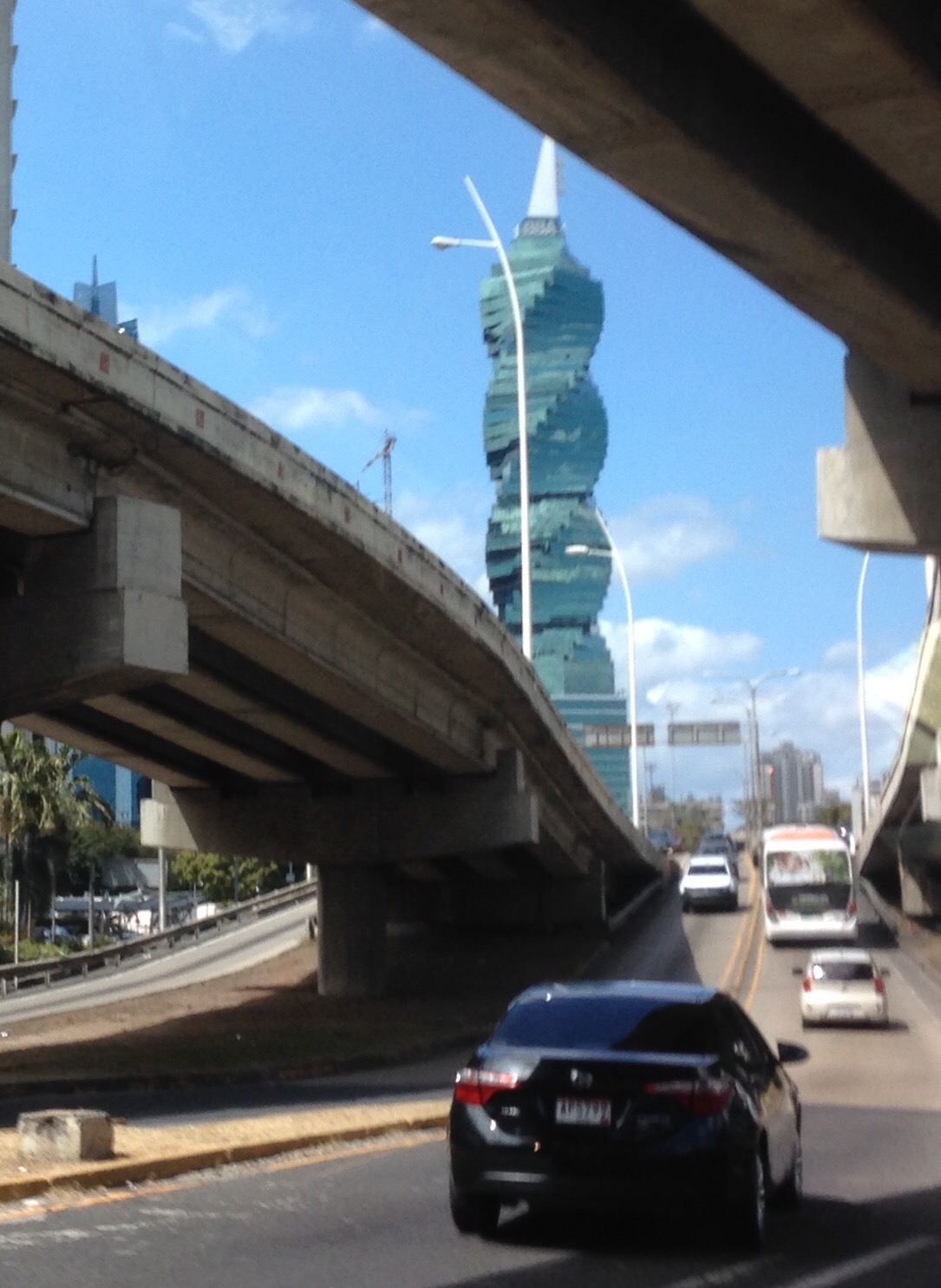
The most talked about building in Panama.
Tomorrow we fly & bus to Monteverde


Wow…great pictures, and a terrific explanation of what was going on!!
Keep ’em coming.
You mentioned you left at 6am. what time did you get done ?? Was it expensive ? or is there a train to take that runs beside the cancel. Just asking because we are thinking of going next year. ?
Colleen – we did not book the partial transit as a separate trip, it was part of the whole package put together by our travel agent. So I don’t know the cost. We were picked up by the tour company at our hotel which was in the middle of downtown at 6 am. The boat trip started around 8am and included breakfast and lunch. Our tour company picked us up at the end of the tour and we were back in the hotel by about 2. The boat trip ended in Gaillardia.
We did take the train from Colon to close to Panama. We did not see any of the canal from the train but did cross over some of the artificial lakes. I think if you want to see the canal the train is not the way to do it. There is also an observation tower close to the Miraflores locks where several people were watching the locks and boats. I think there are a number of different tour options that you can explore. Gary was really disappointed our cruise was cancelled and he didn’t get to go through the canal, that is why we booked the partial transit. Also we did try to get a tour on a full transit, which they do run – just not any of the days we were there.