
We had an interesting morning on a coffee tour. The plantation we toured is a small working farm that gets most of its income from tours to explain coffee, chocolate and sugar cane growing and production. The farm is family owned and operated. All employees (15) are family members. After the mandatory uphill slog, we started with a stroll through the sugar cane.
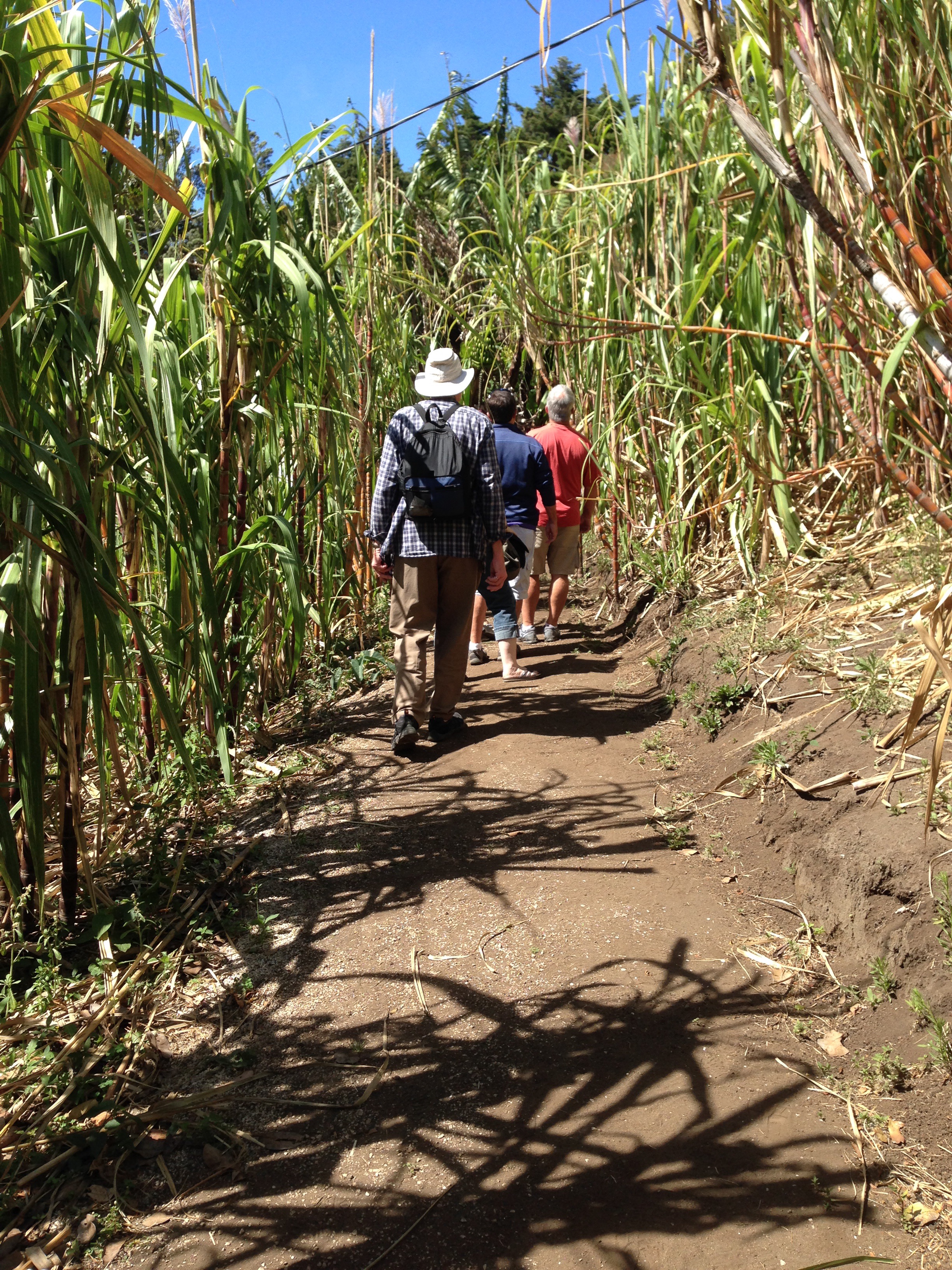
When the sugar cane flowers it is ready to harvest – usually about this time of year.
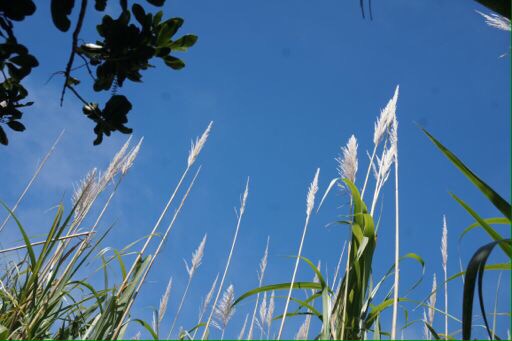
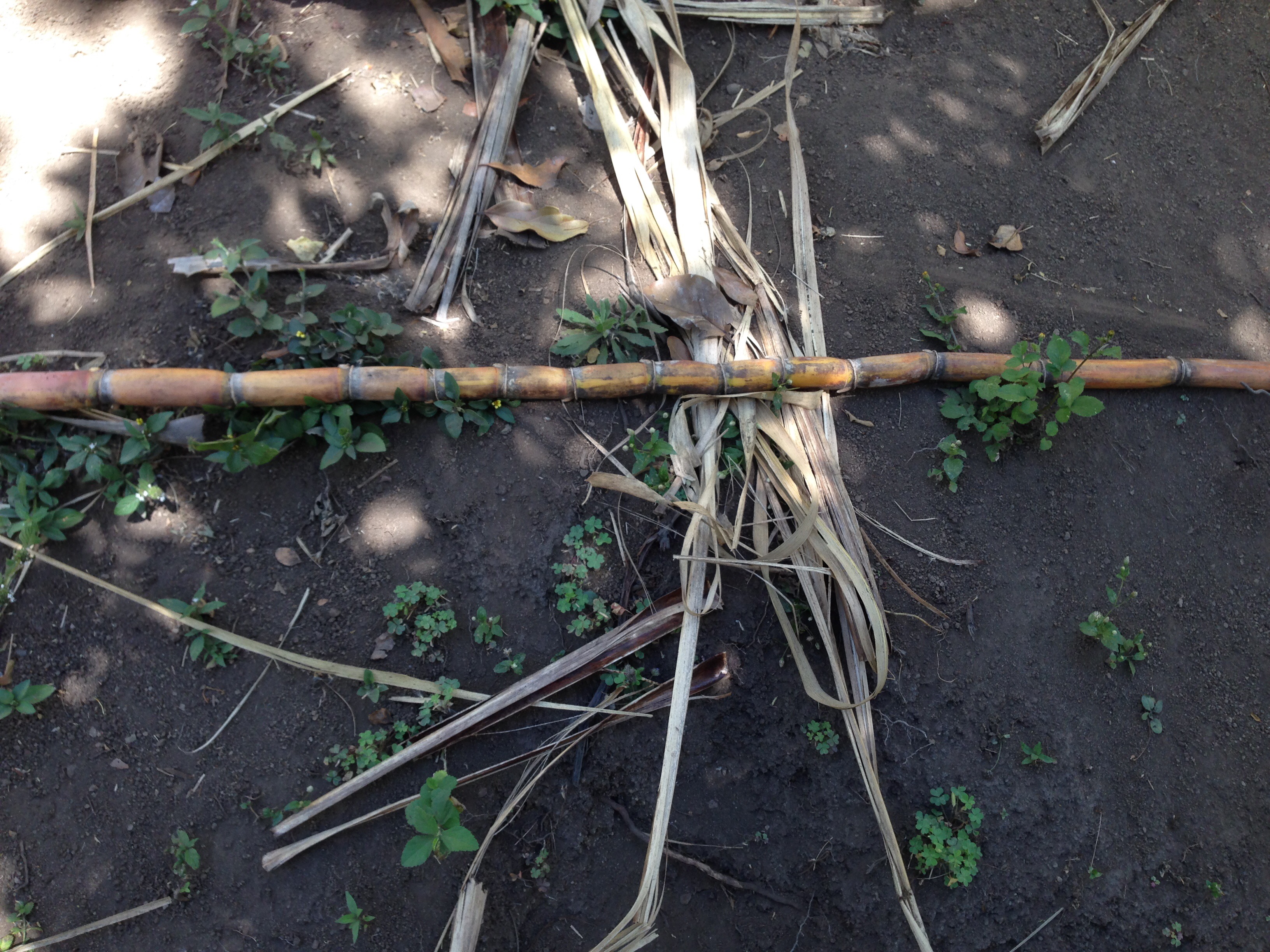
The cane has segments and each segment can be planted to produce a new plant. In the smaller farms the harvesting is done by hand (machette) and on the larger farms by a first burn to concentrate the sugar and then machine harvest. Because of the high fire risk and concern for the environment, smaller farms are not allowed to burn at all, while larger farms need a permit and the presence of emergency forces while the burn is underway.
Most sugar cane is grown in the lower regions. Cane from the lower regions have a 50/50 concentration of sugar to water. In the higher regions the cane is 75% water, so is not as profitable to grow. Sugar cane is not one of the major exports from Costa Rica because of the world competition – Africa is the biggest supplier.
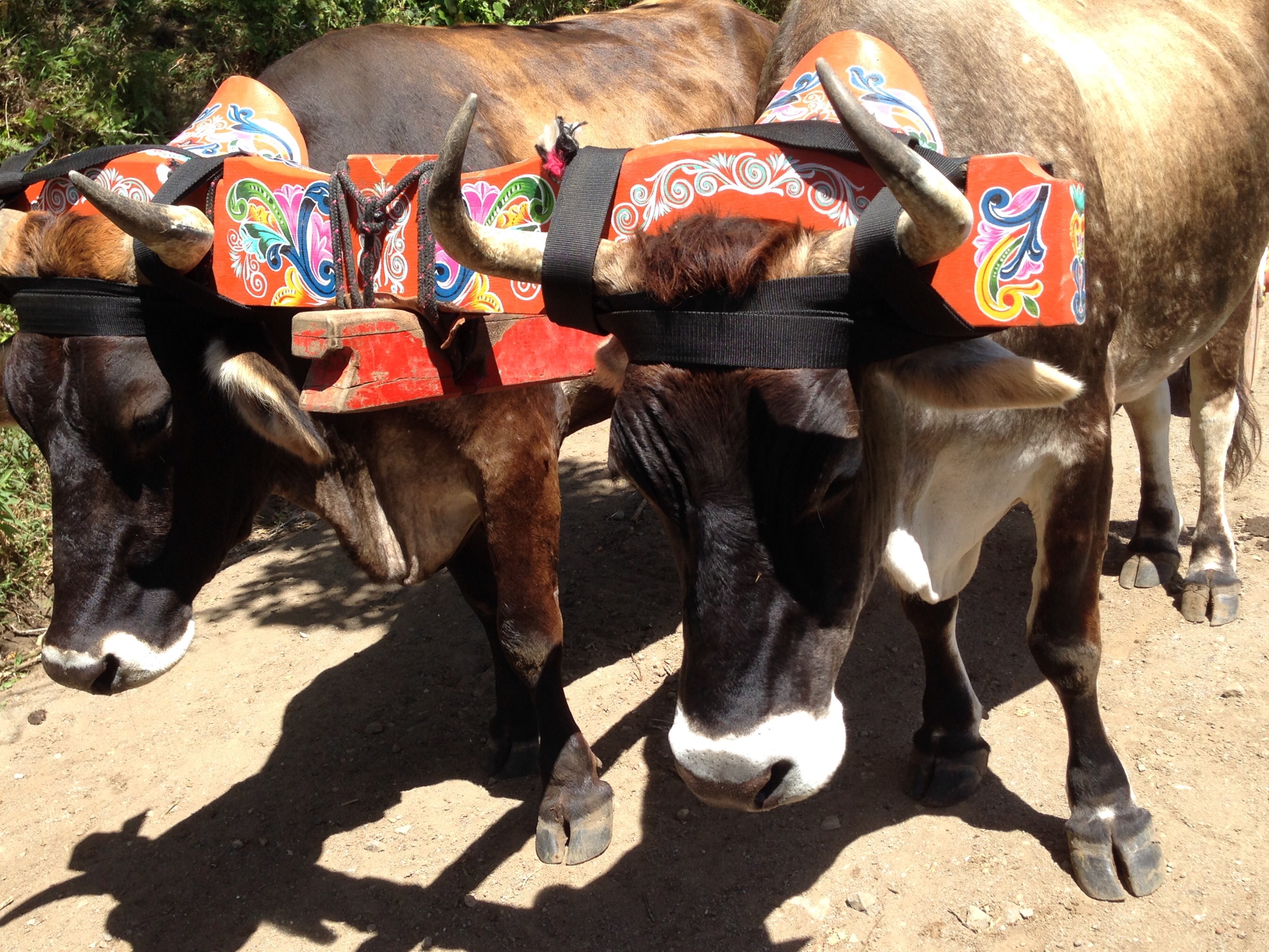
To produce the sugar from the cane in the traditional manner they have 2 pressings – the first uses a press powered by oxen
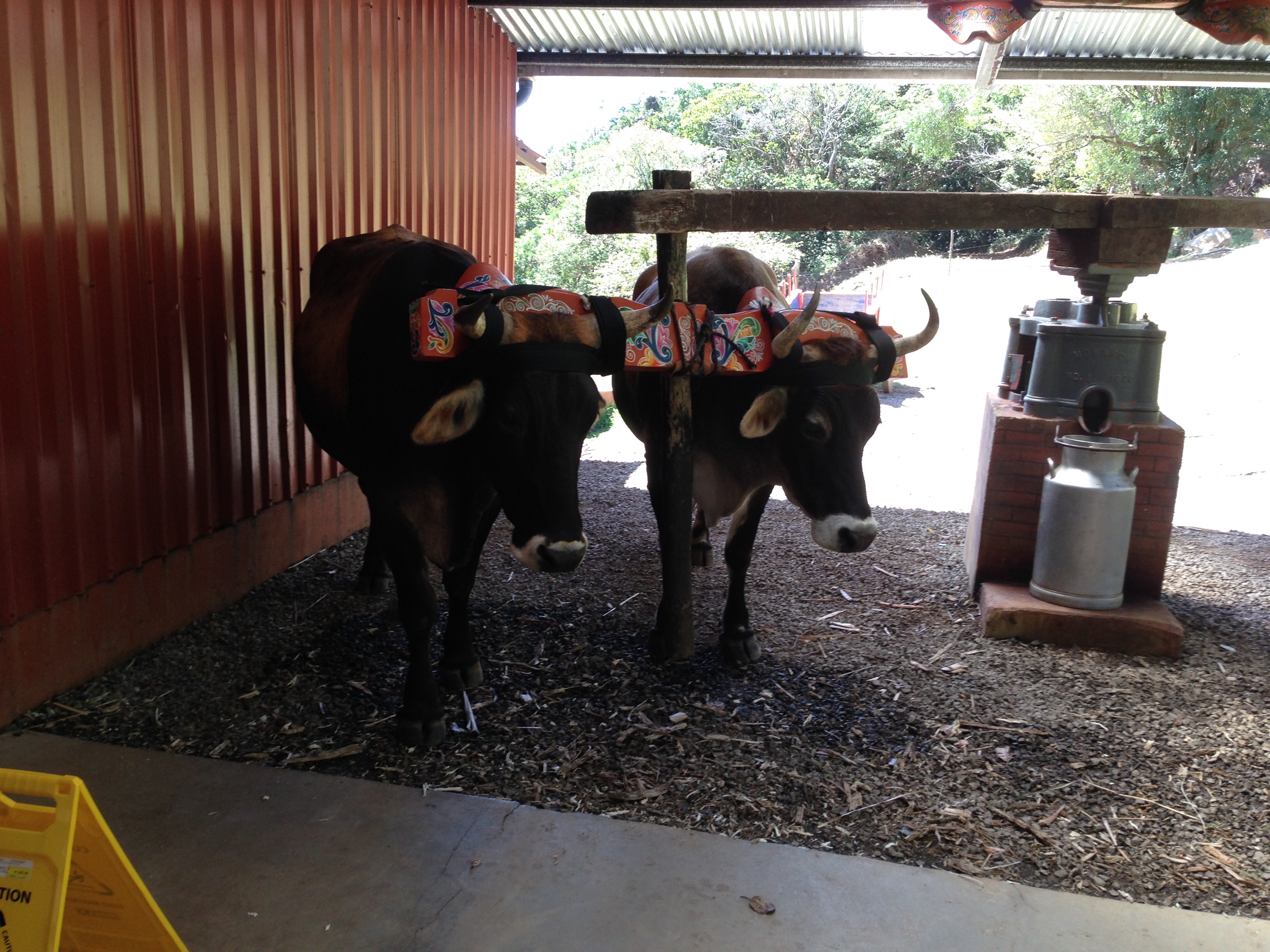 the scond is a press powered by a water wheel . What comes out of the press is a dark coloured liquid – basically molasses. The molasses is then processed much like maple syrup – by boiling it down until it reaches a candy like state which hardened when immersed in cold water. As there is a lot of dust I some areas and water evaporates so quickly some people use the molasses on their roadway to hold done the dust.
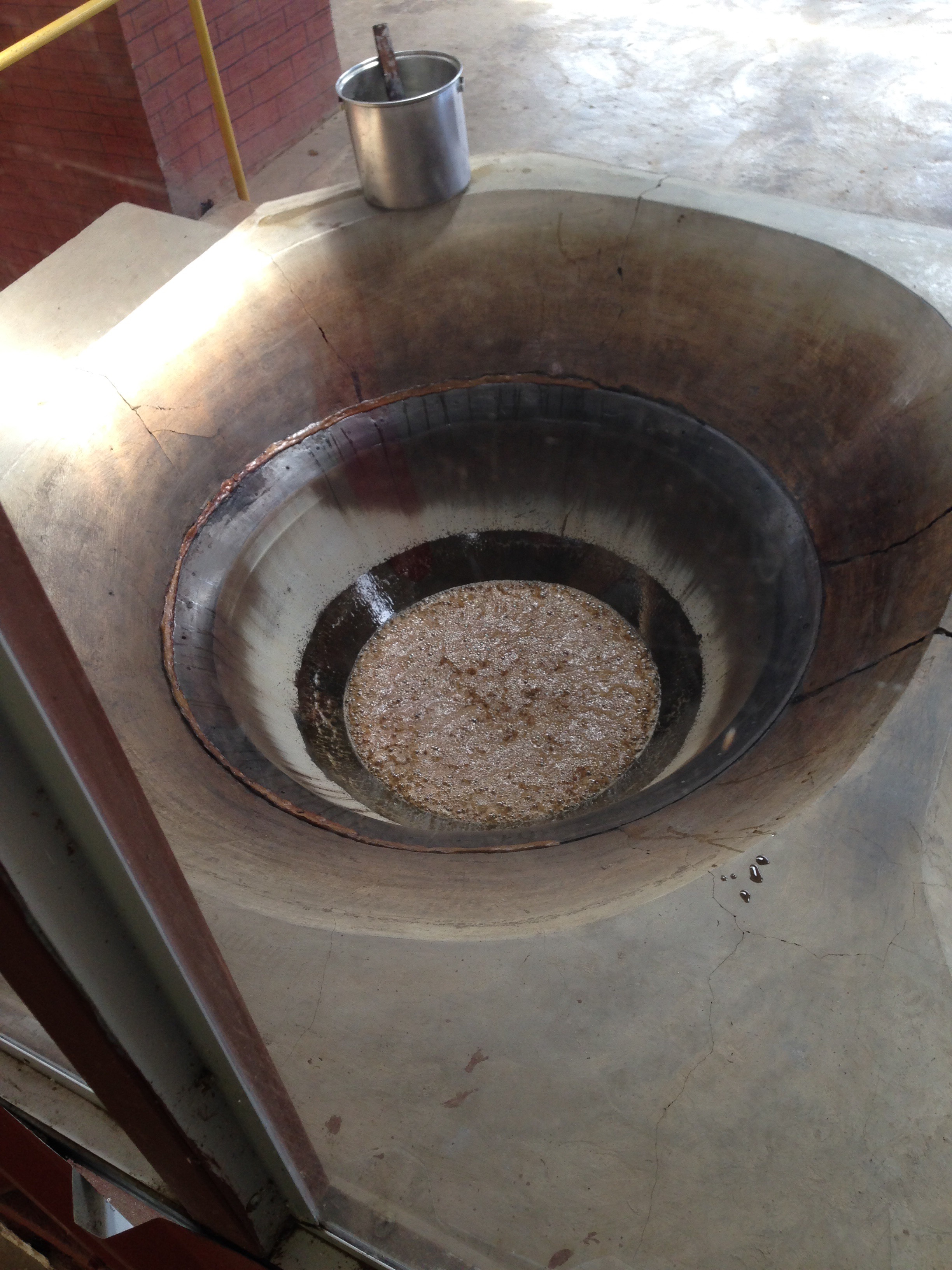
The syrup is then either whipped to add air and create a type of fudge
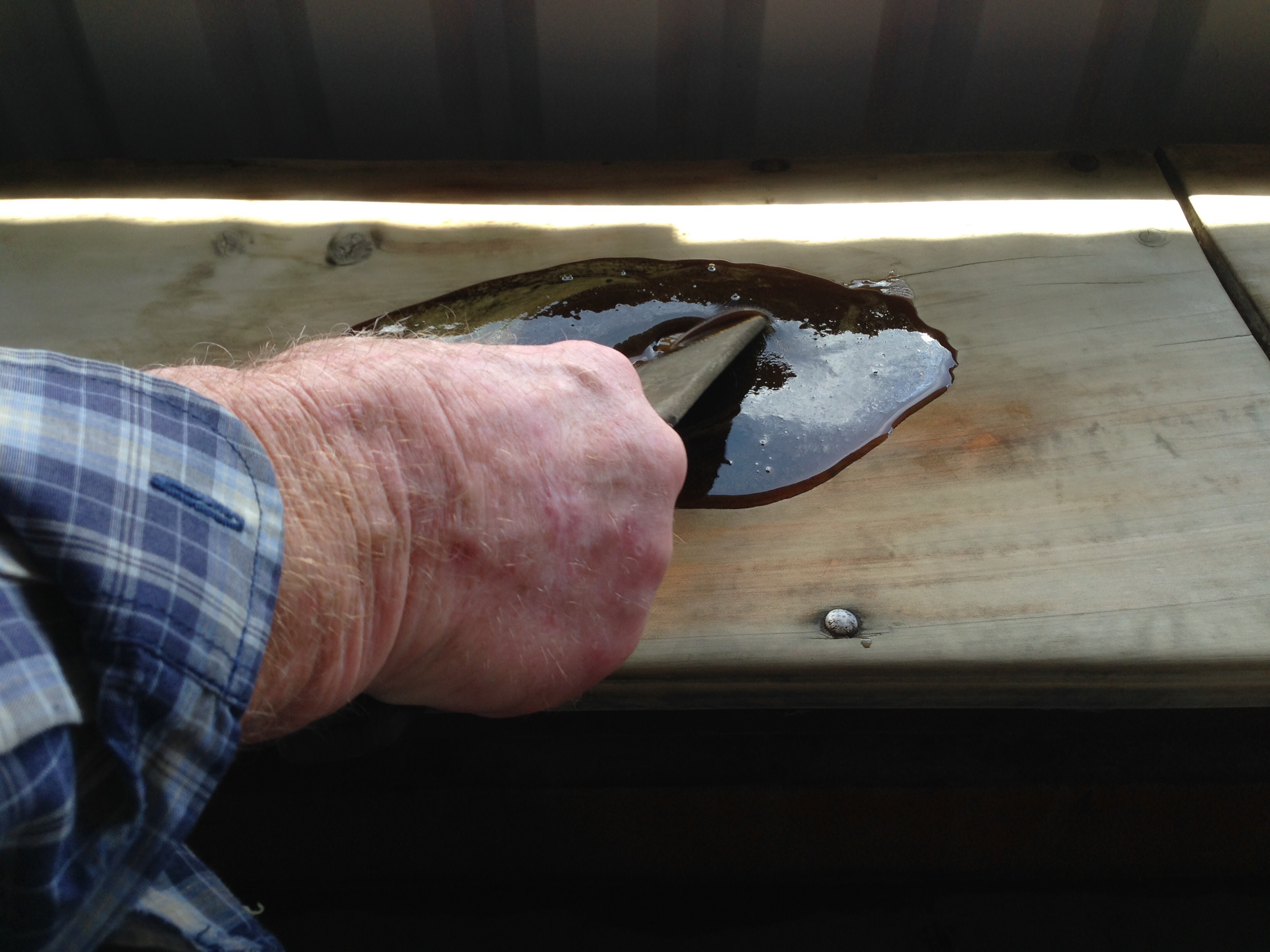
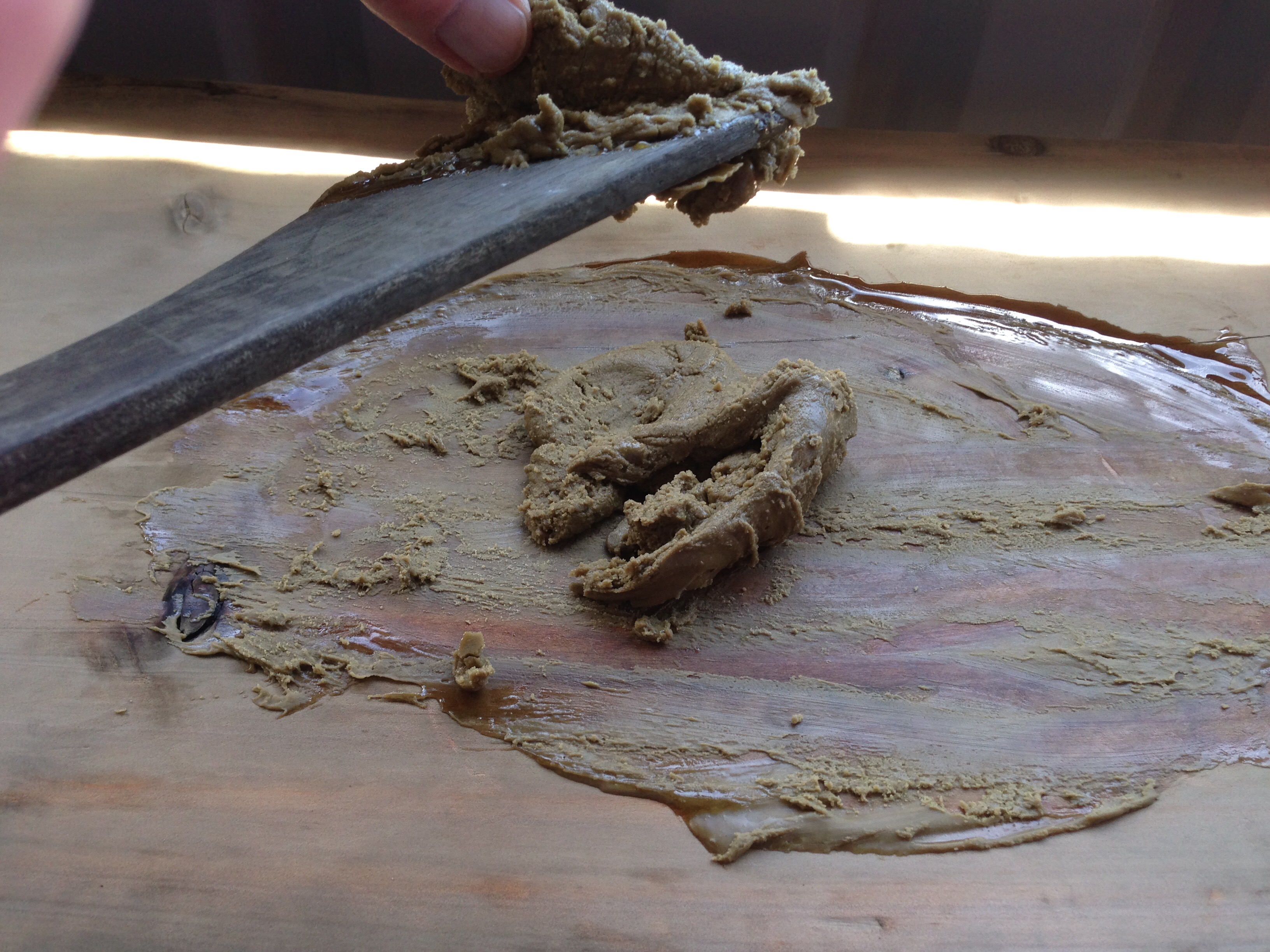
or cooled. It is first cooled in a large wooden box
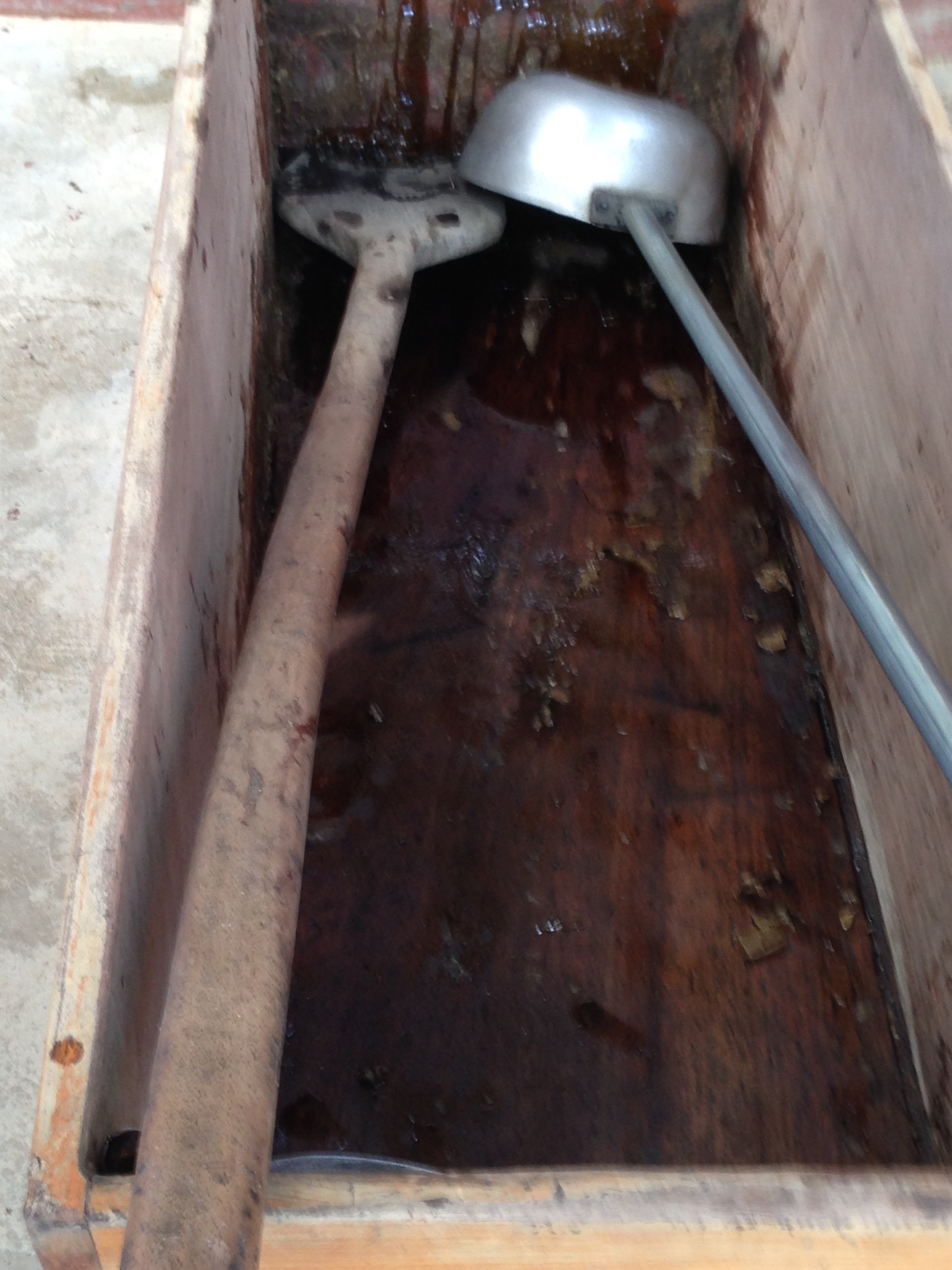
then in molds
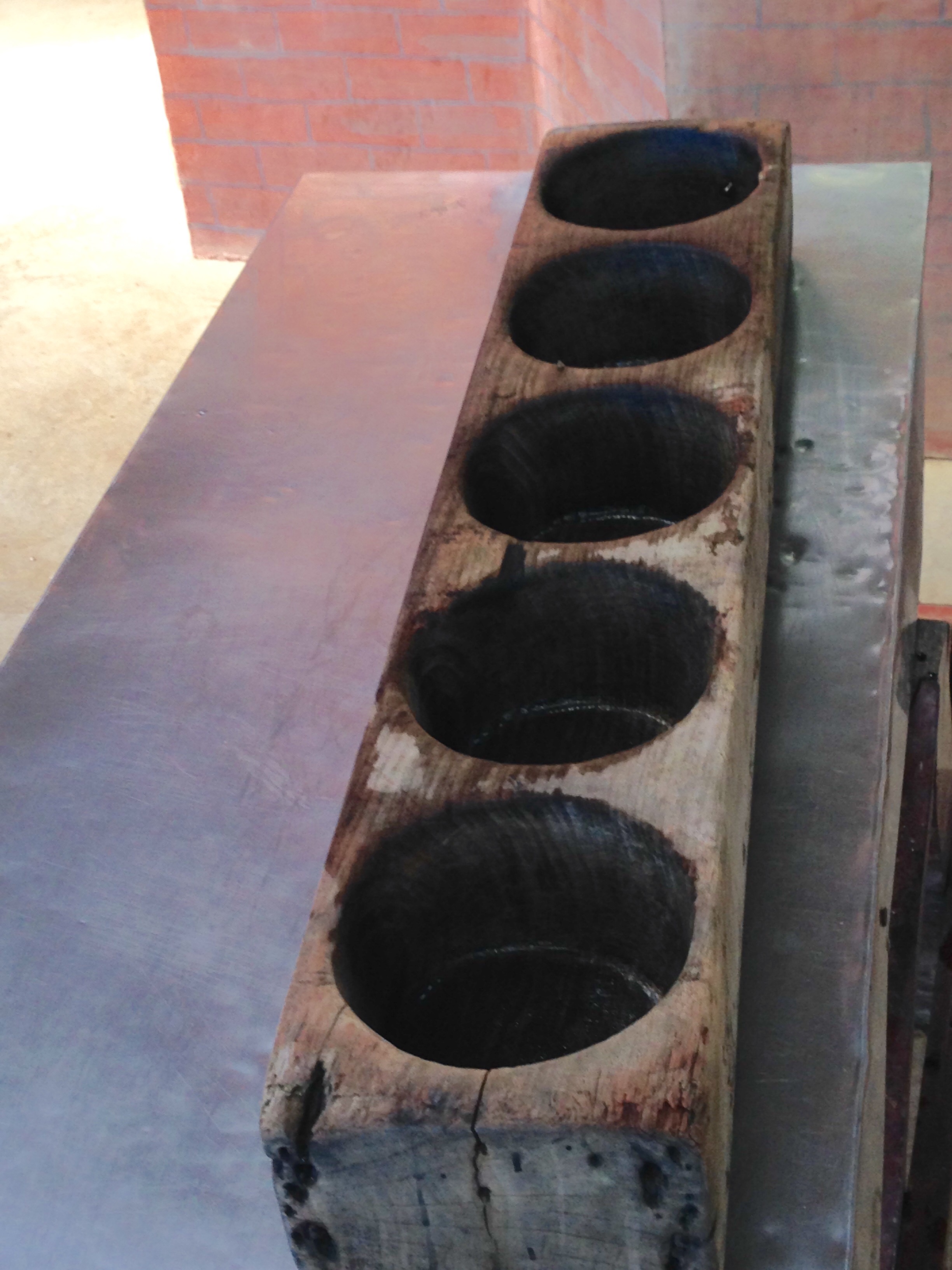
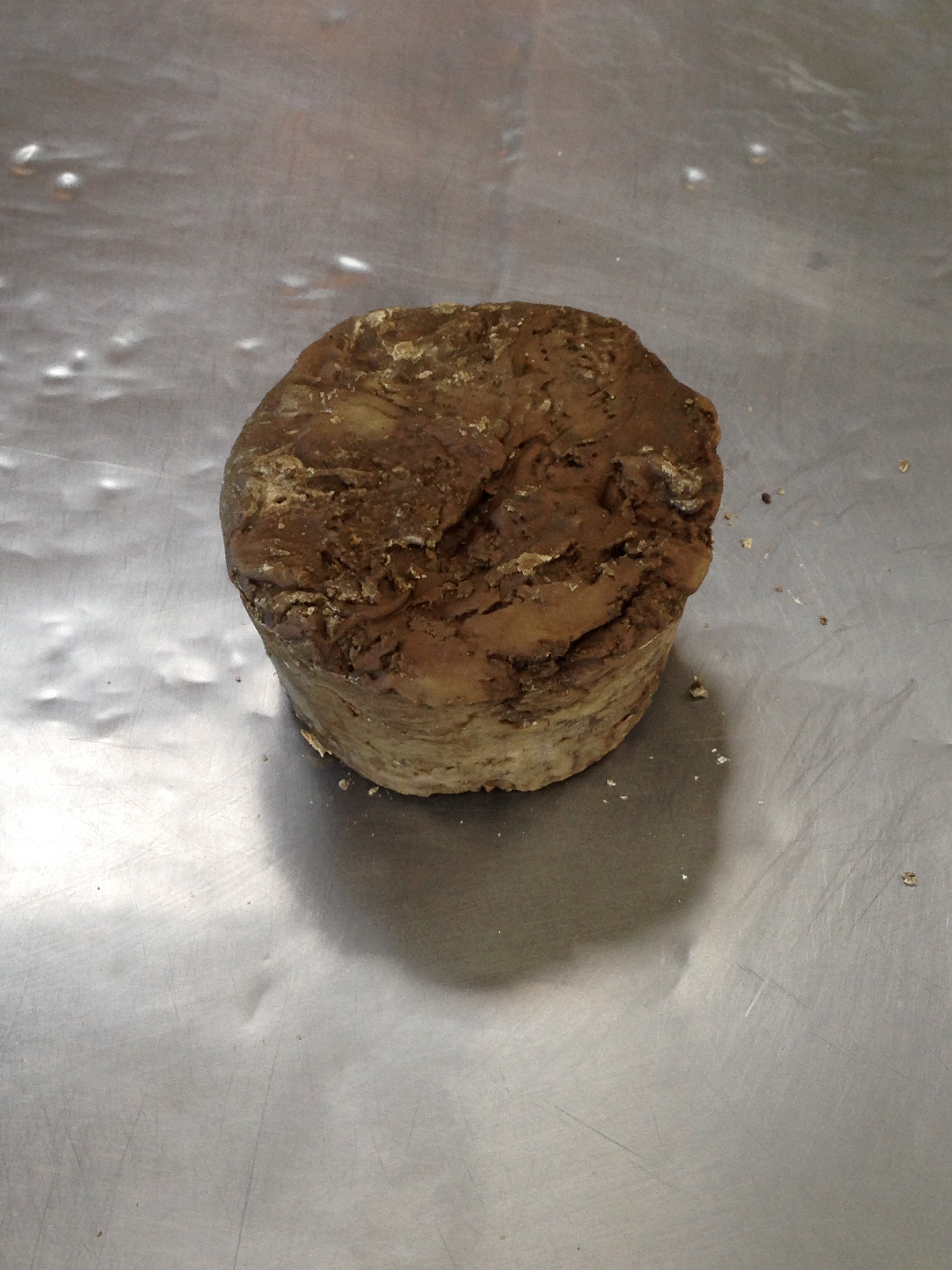
to create a block of brown sugar. The sugar is sold in theses blocks.
Of course some of the molasses will go to the private distiller to make an alcoholic drink.
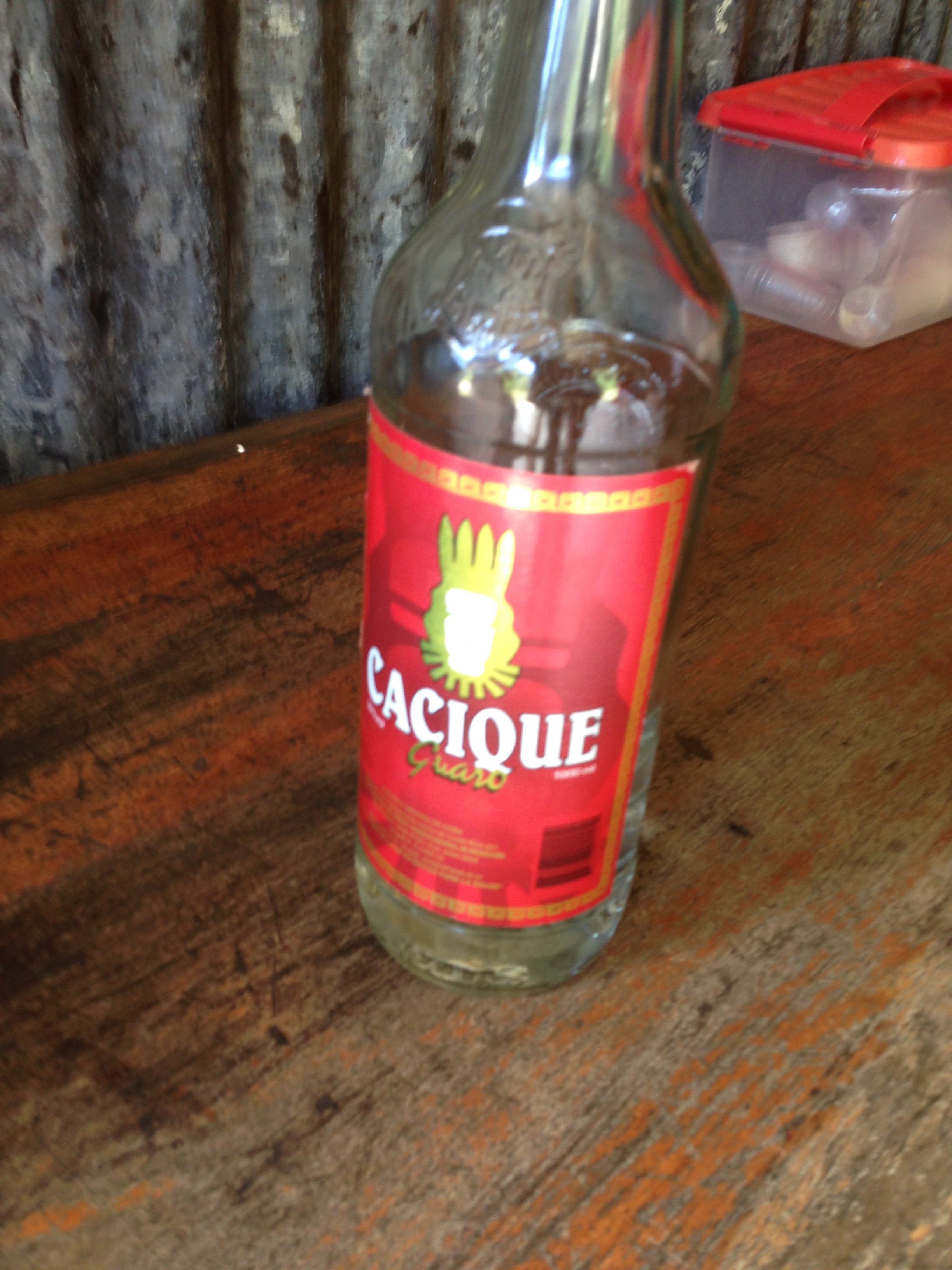
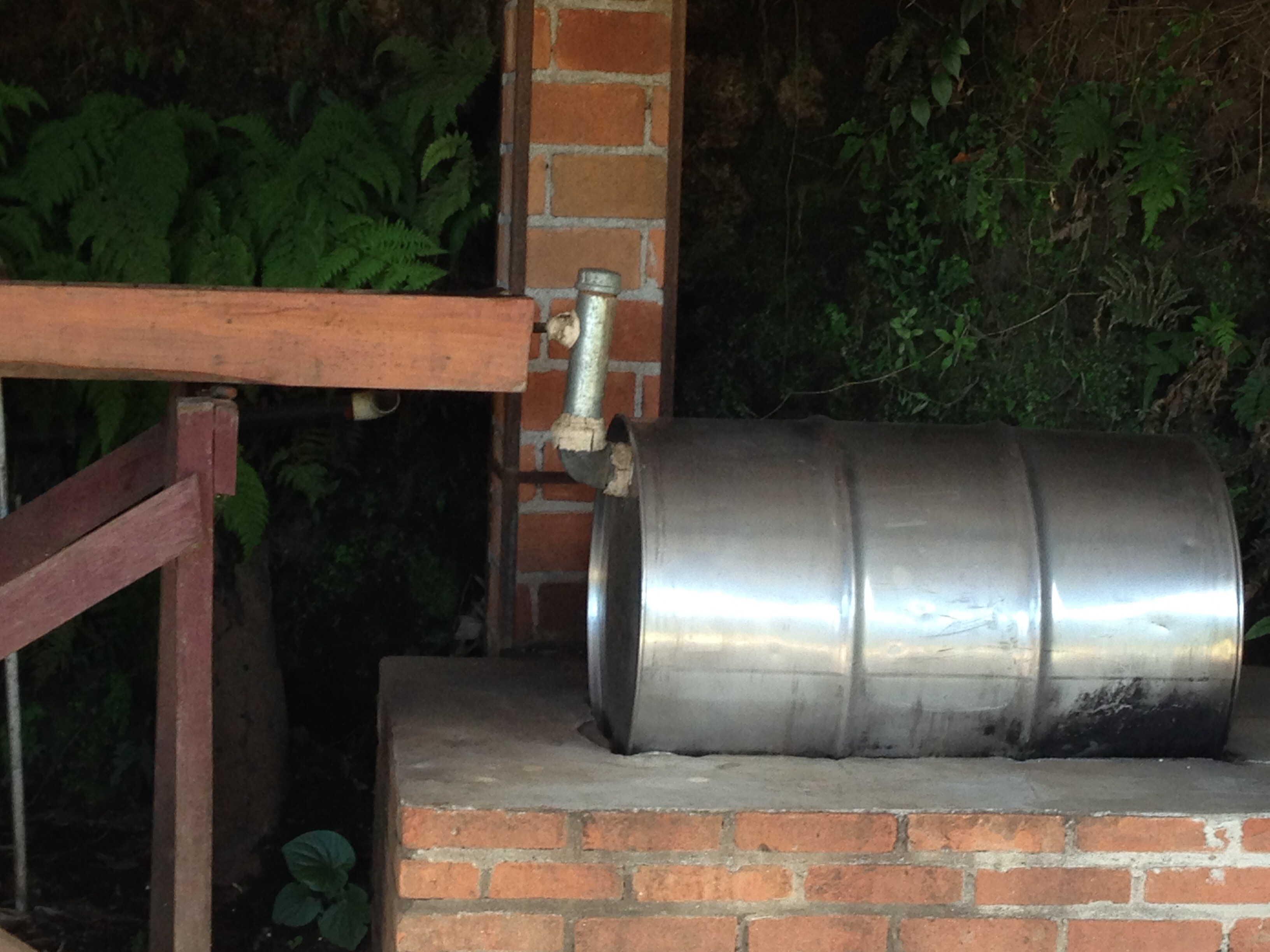
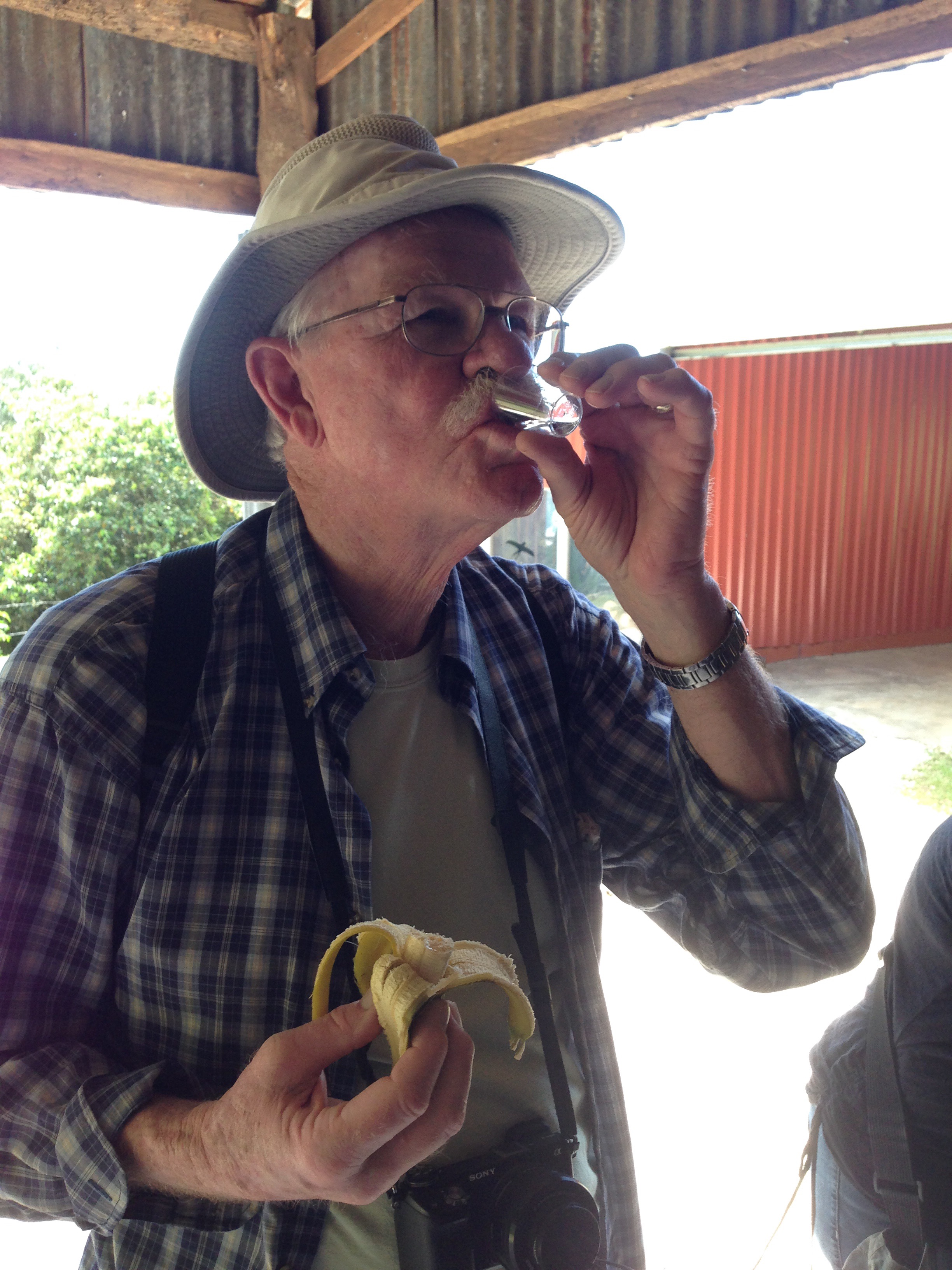
Gary had a sample with a fresh banana he picked himself
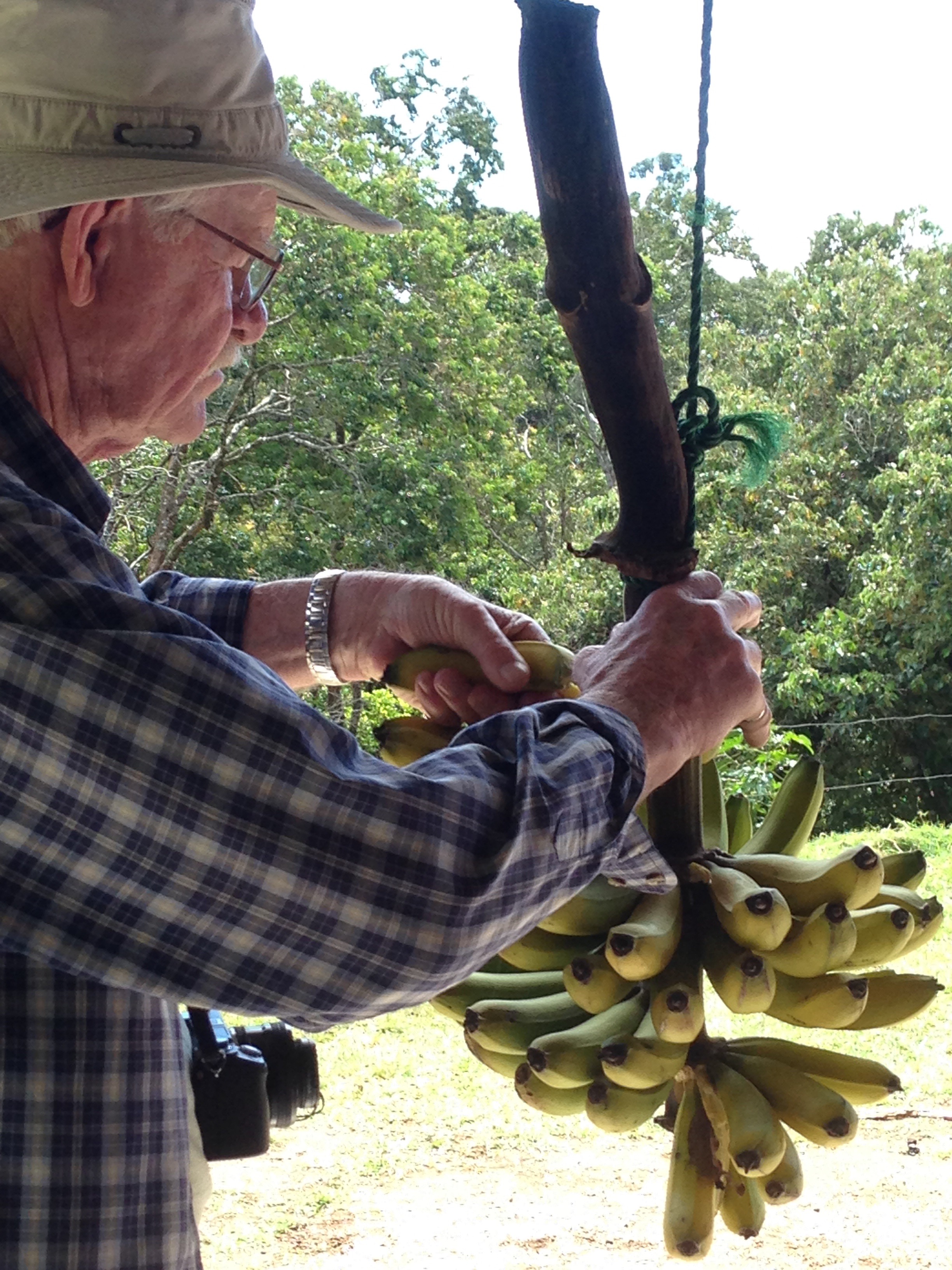
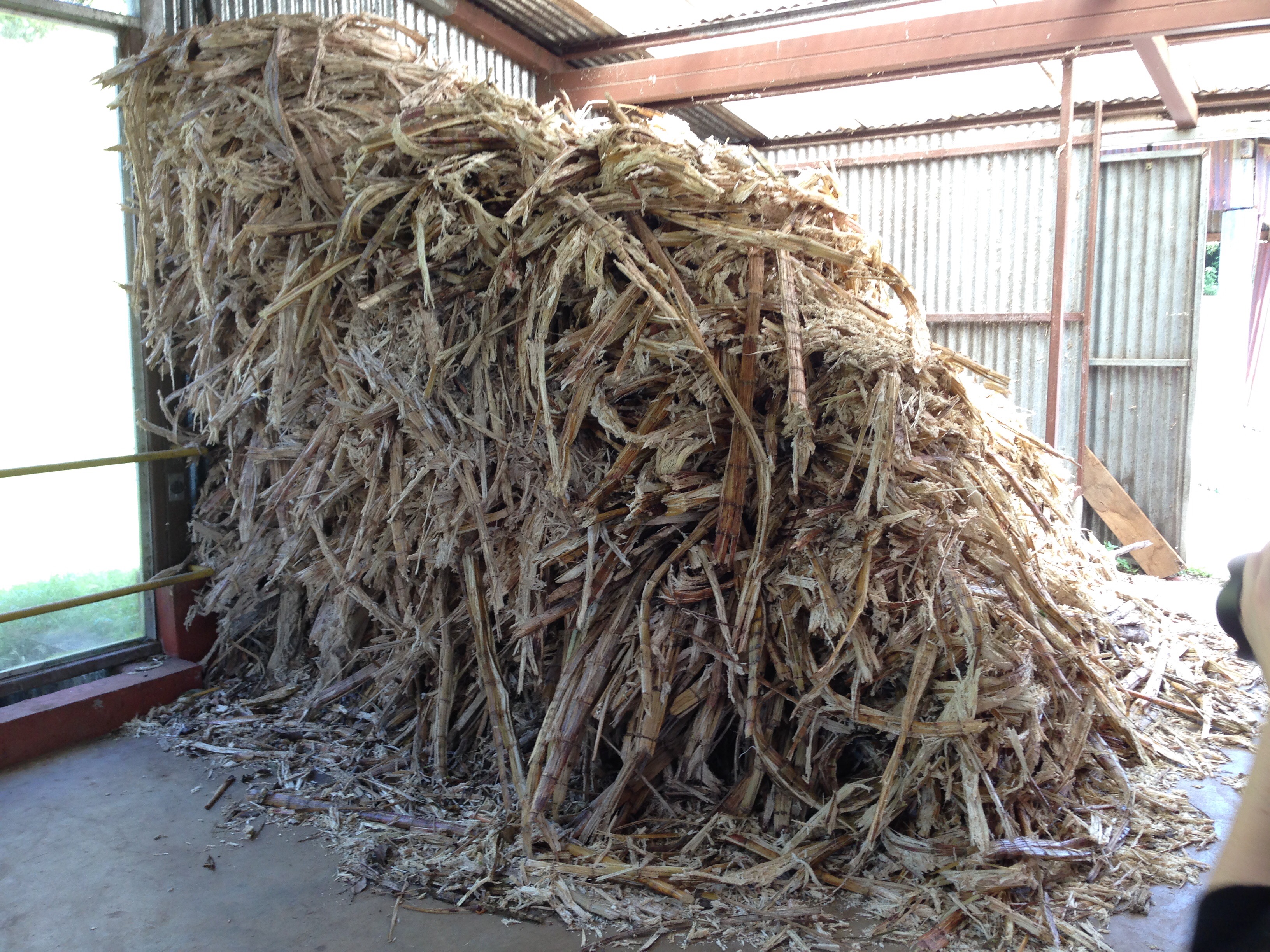
Nothing is wasted in the process – the pulp left over after the press is used as fuel
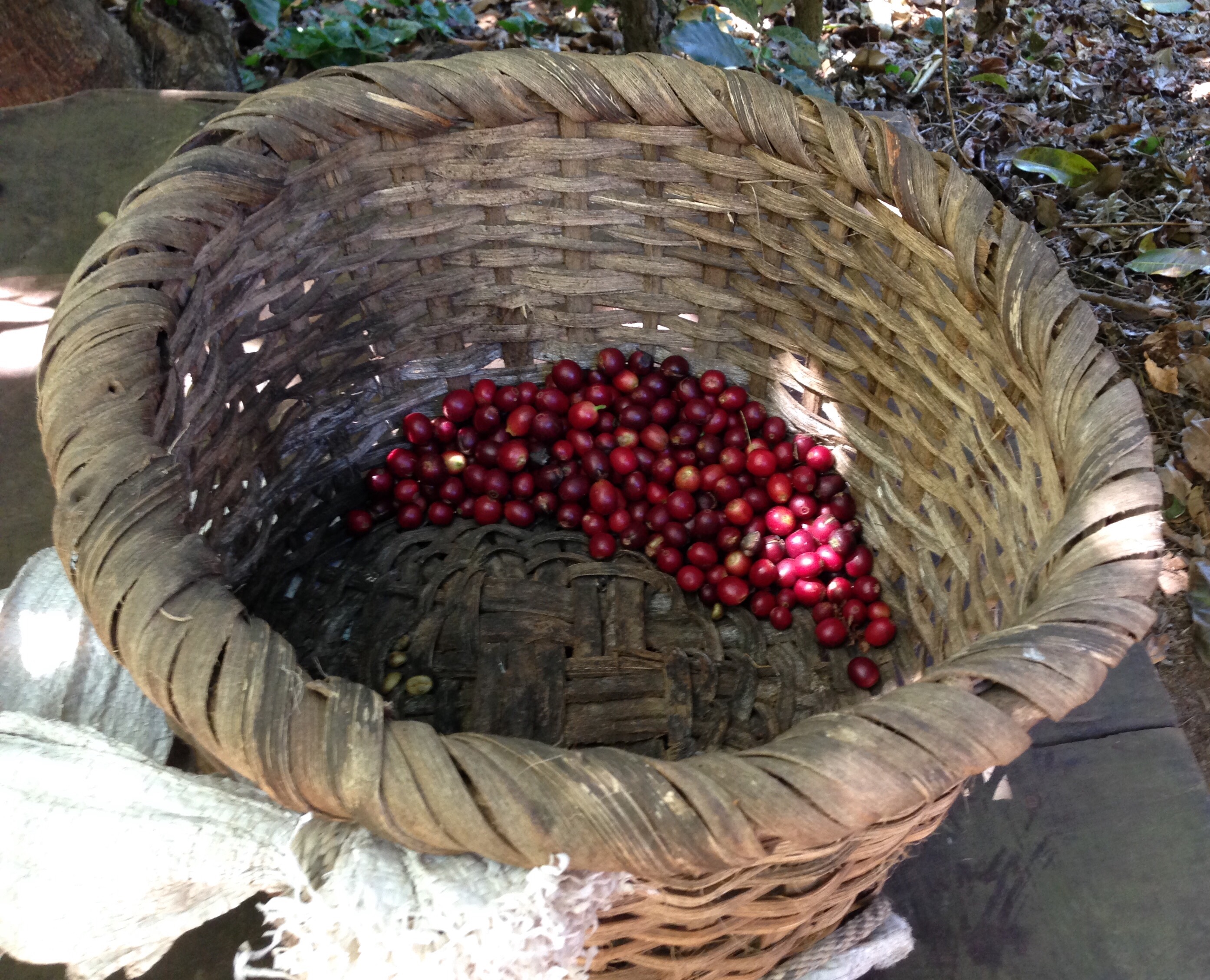
Then the coffee. The coffee berry grows on trees that reach only 6 feet. In Africa the coffee trees are much higher. Our guide says the smaller trees here are because the coffee is harvested by hand and Costa Ricans are short! The best beans are the arabica beans which only grow in the high areas on steep slopes. The berries are ripe where red and are picked by hand. Each picker has a basket tied to his waist so he can pick with hands. A good picker will pick about one basket in an hour. During the picking season they pick from 5 am to 5 pm – 12 hours. For a basket of mostly red berries they earn $2 US. A good picker will earn $20 a day. The picking season is 6 months from November to April. Nicaraguans come here with their family for the picking season.A family of 5 can earn $20,000 in a season which is a good income for them.
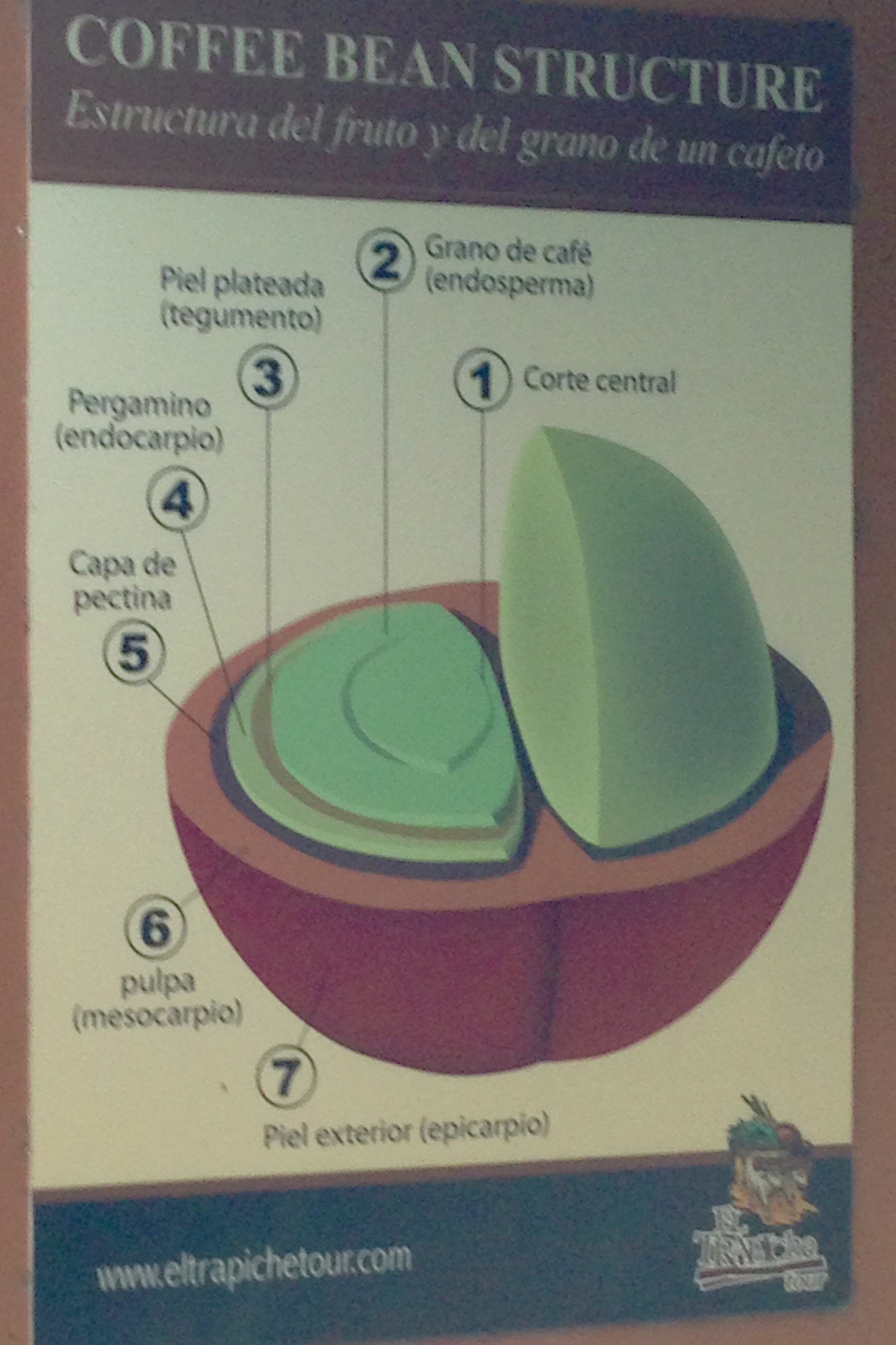
Inside the fruit there is either 1, 2 or 3 beans. The highest quality coffee comes from the one bean fruit called peaberry coffee. The one bean is a round shape, 2 beans – each bean is flat on one side and if placed together would form the round single bean, the 3 beans same thing if put together would form the shape of the single bean. The single bean is found in only about 5% of the berries, with the majority being 2 beans. They say the single bean, because of its shape and uniformity roasts more evenly so makes a better coffee.
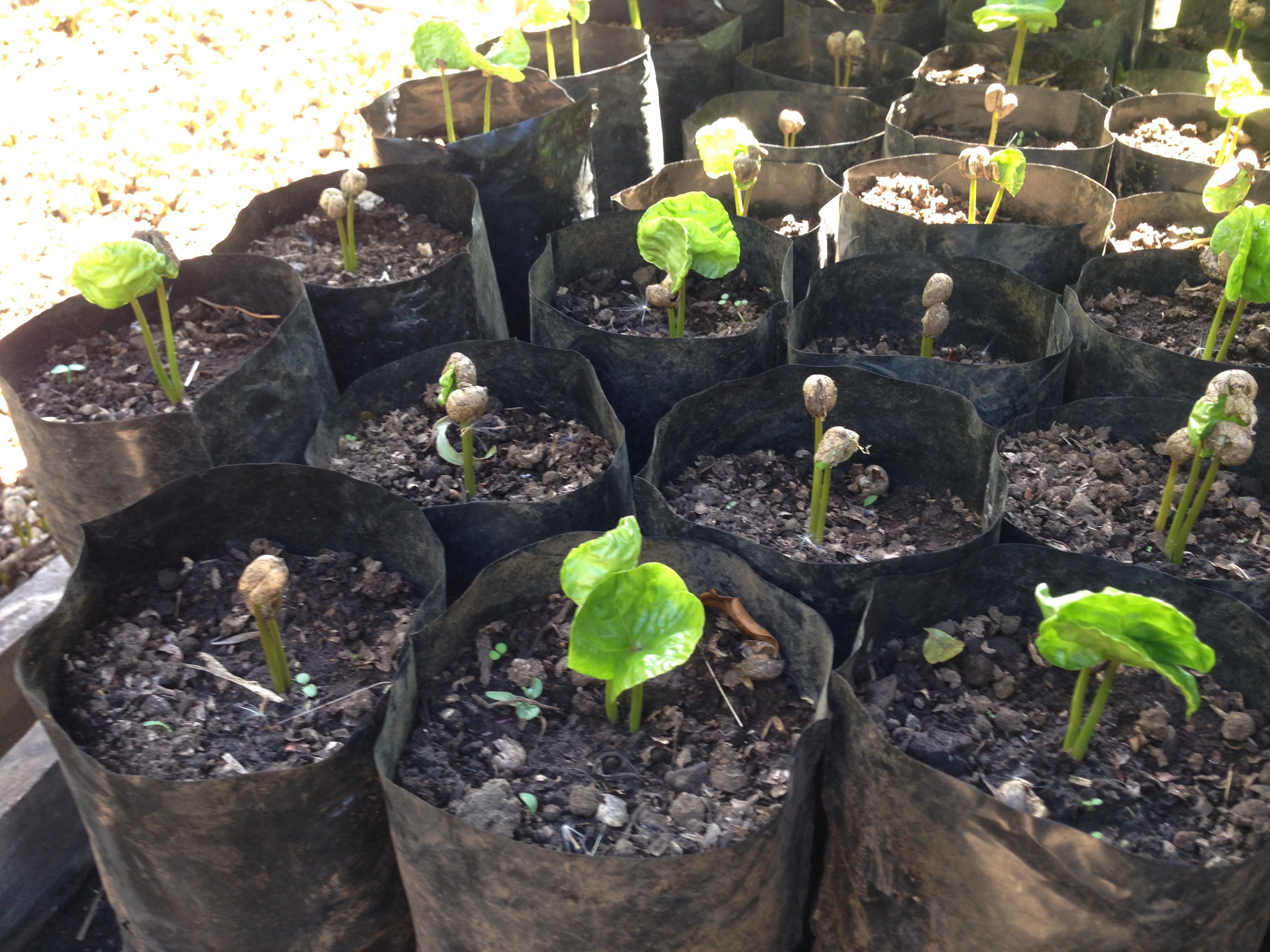
 The trees are grown from the bean and take about 3 years to start producing the berries
They are not allowed to export 3 bean coffee. Our guide referred to Starbucks as 3 bean coffee. He said coffee should be brewed at 90C, the same temp as recommended for tea. He also said the coffee starts to lose its taste after 3 months as the whole roasted bean.
Eric, our guide, opened up some of the red berries and had us suck on the beans – a little sweet but no real coffee taste. We there walked through the process up to the roasting. First the beans are dried in a greenhouse then they go to the first machine which sorts the beans – green beans are automatically discarded by the machine
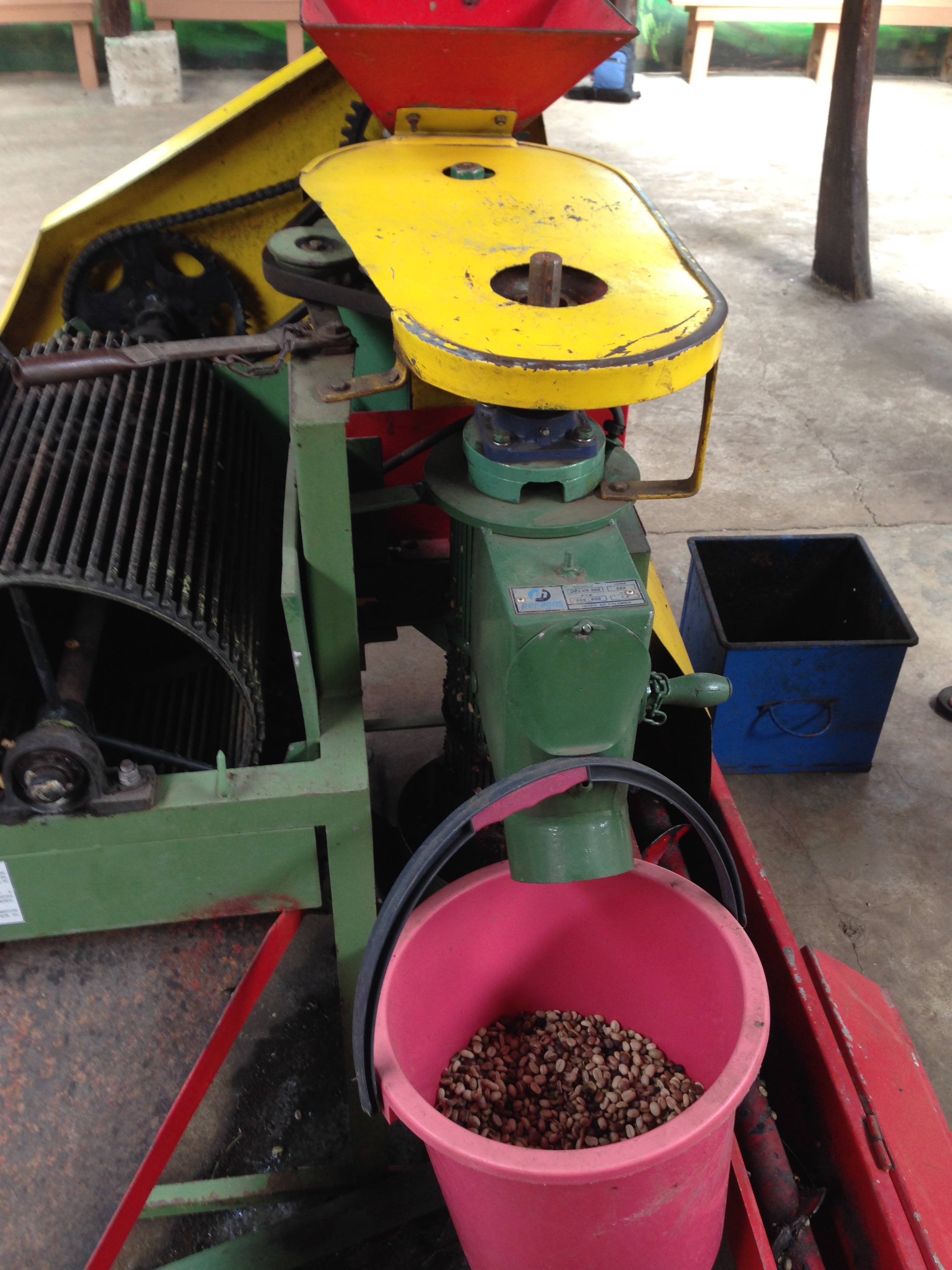
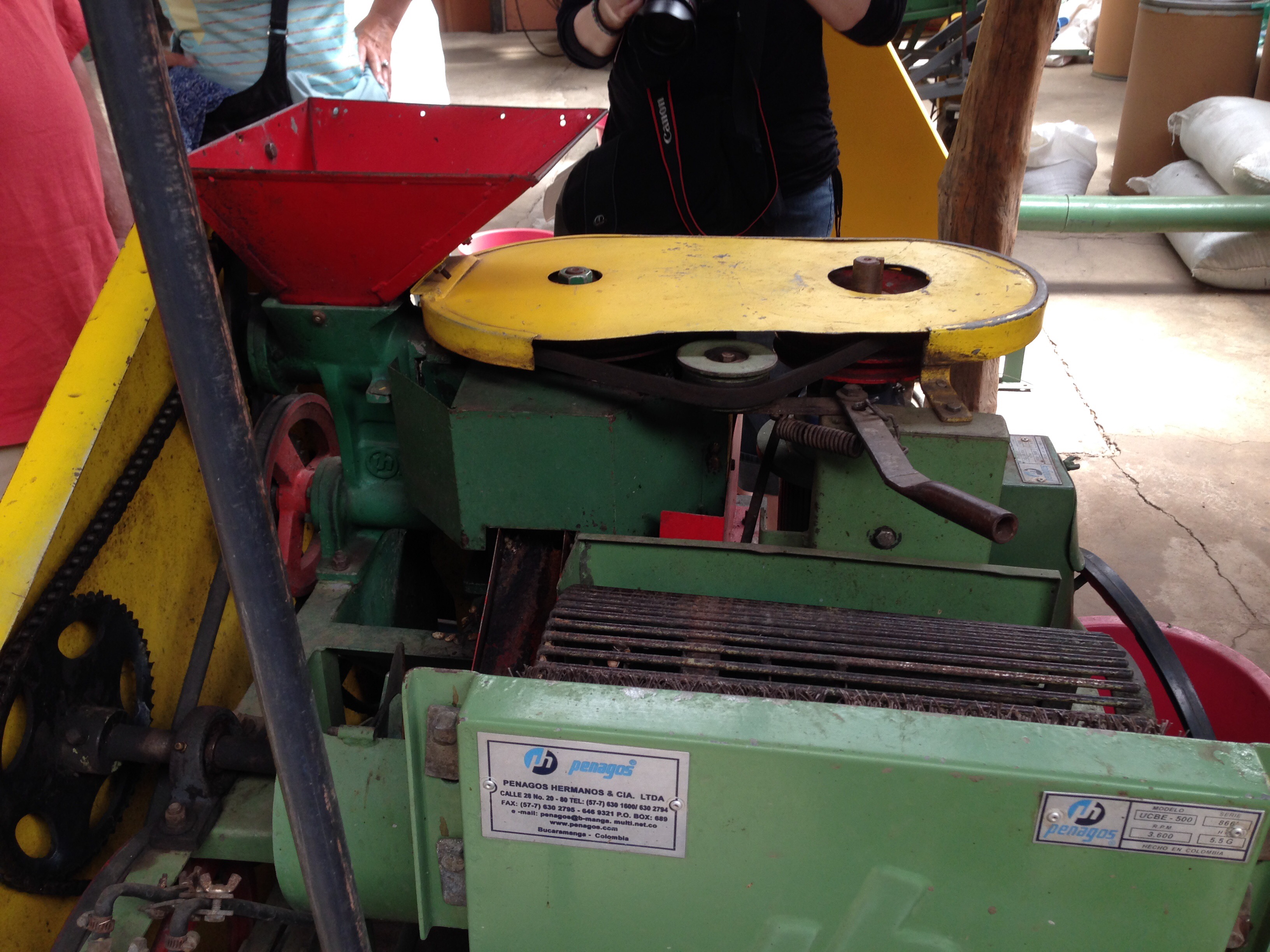
Next they go to a machine that peels the beans by shaking them so they rub against each other and the skins fall off. The skin are then used to make paper or for mulch. They also make paper from banana skins,
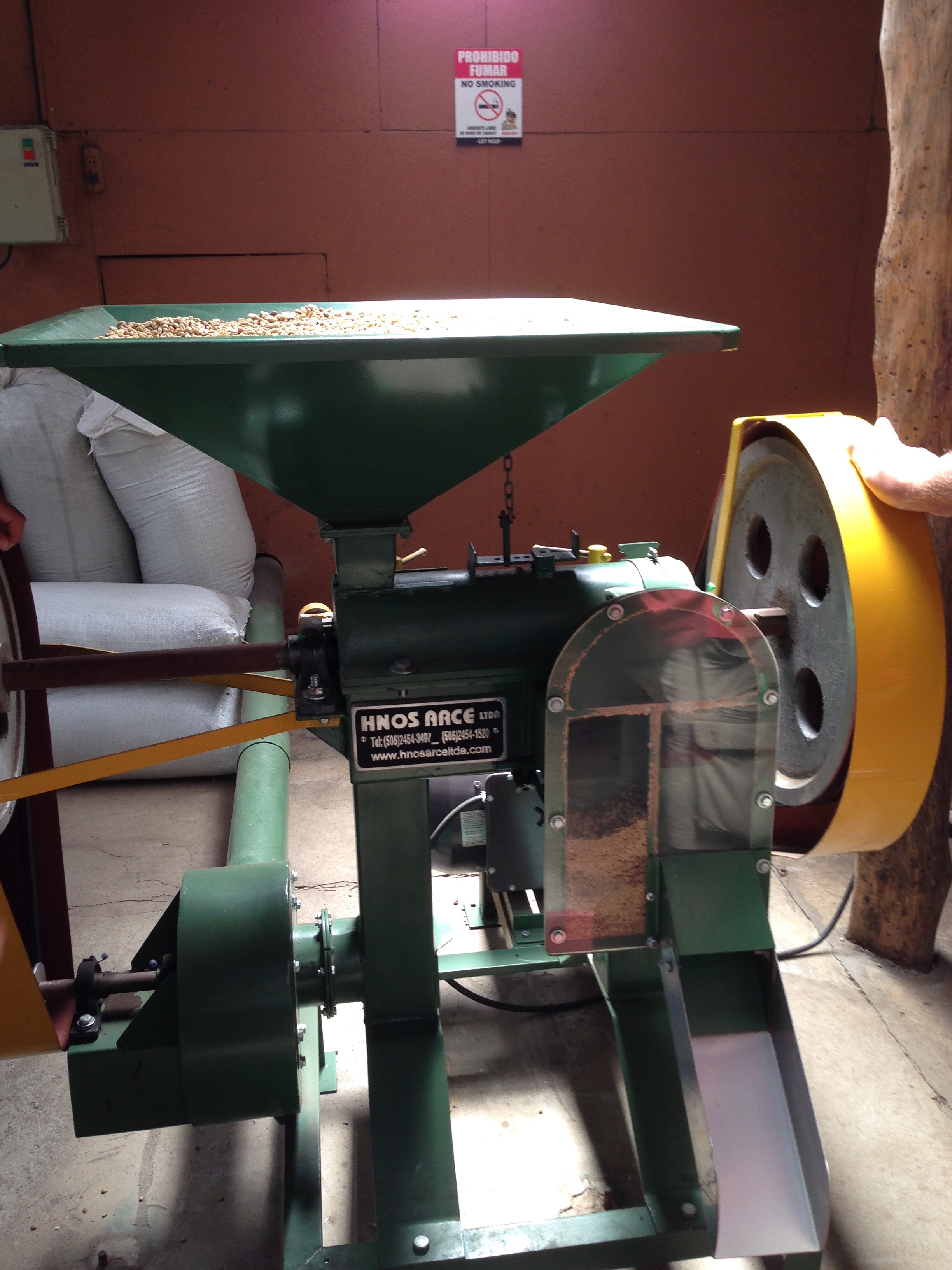
The next process is to sort the beans this machine uses a series of mesh screens of different sizes, the peaberries are screened out first as the largest, then the 2 bean, then the 3 bean and then any pieces.
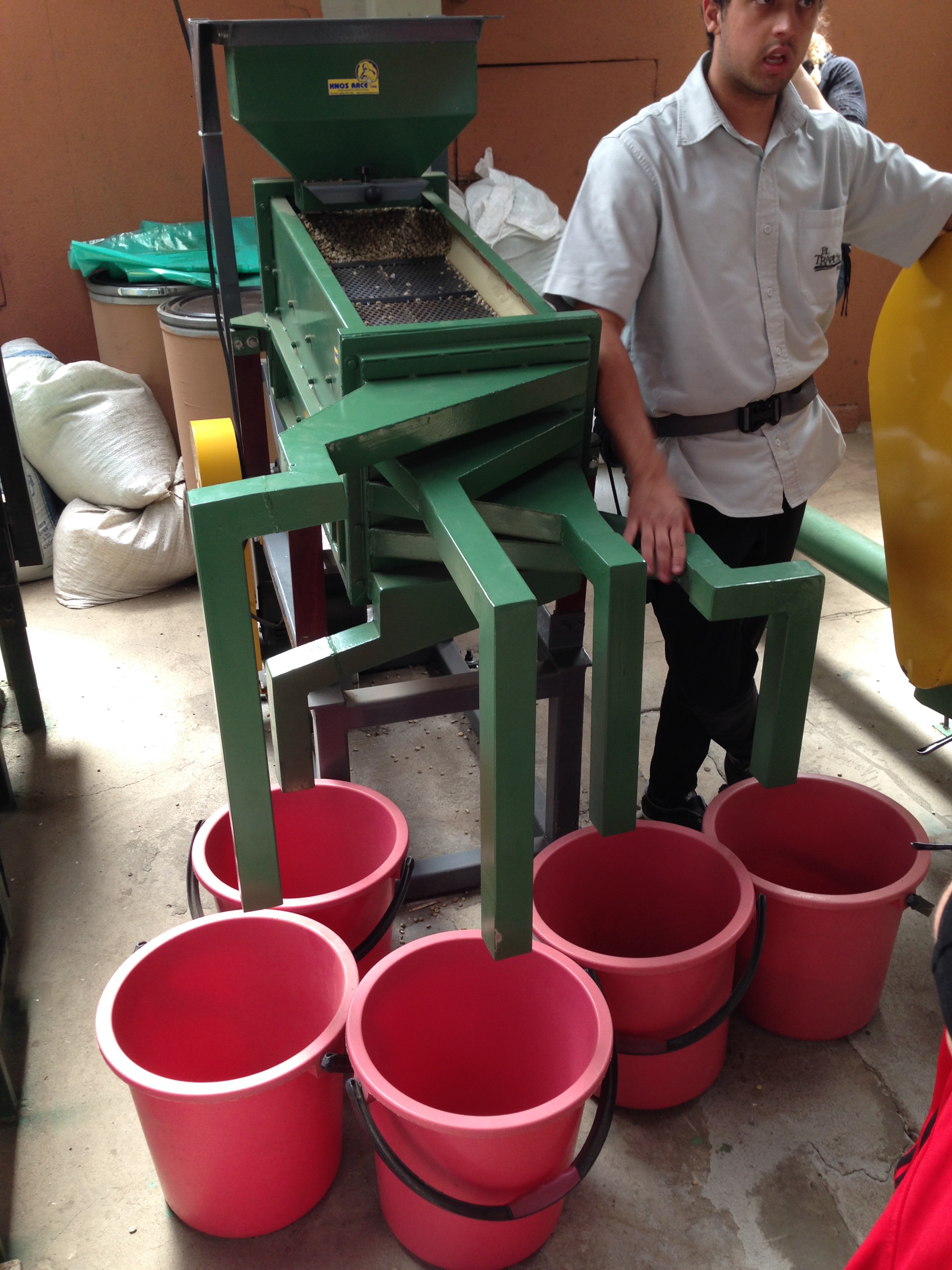
Not sure what the 5th bucket is for!
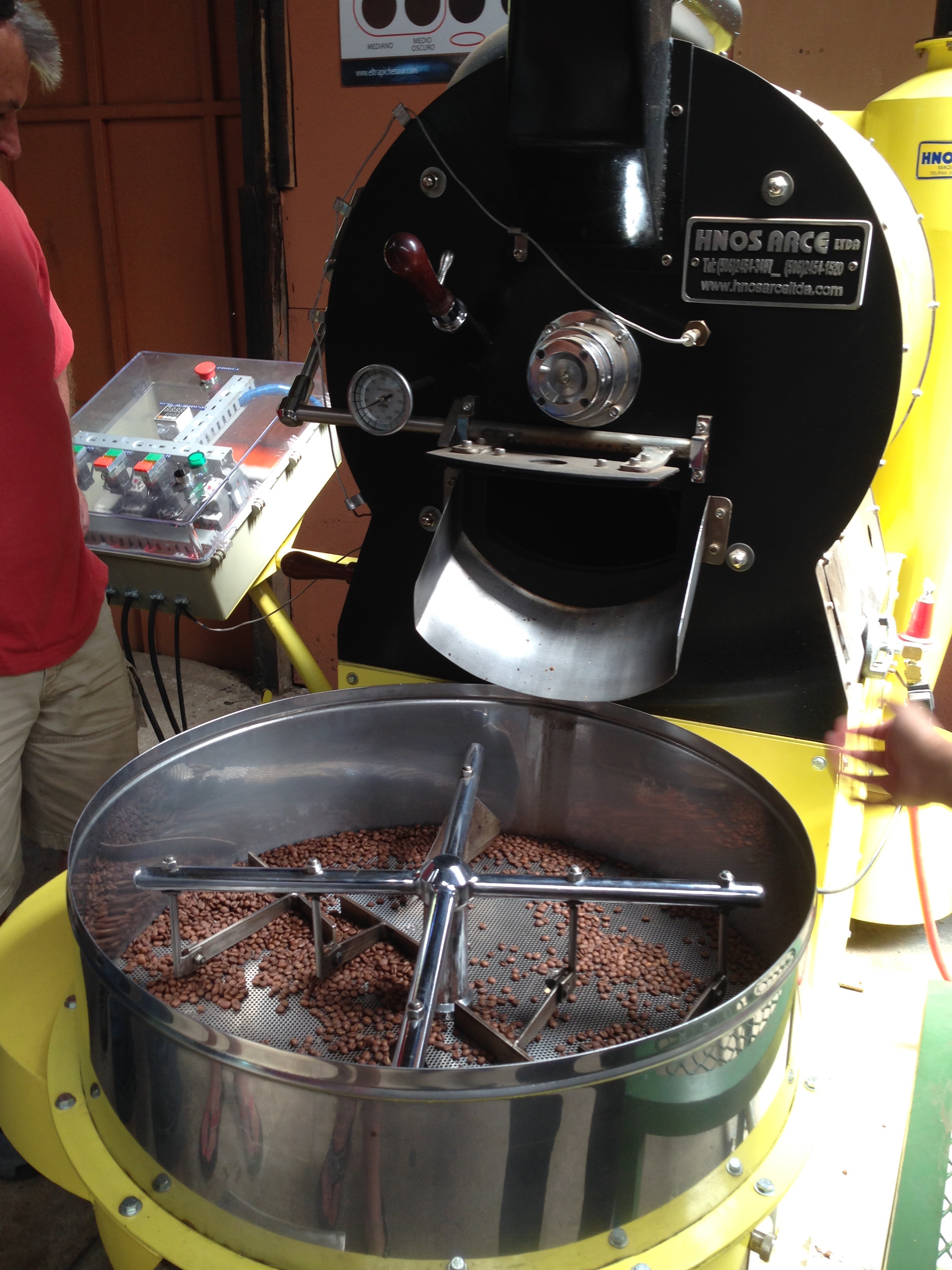
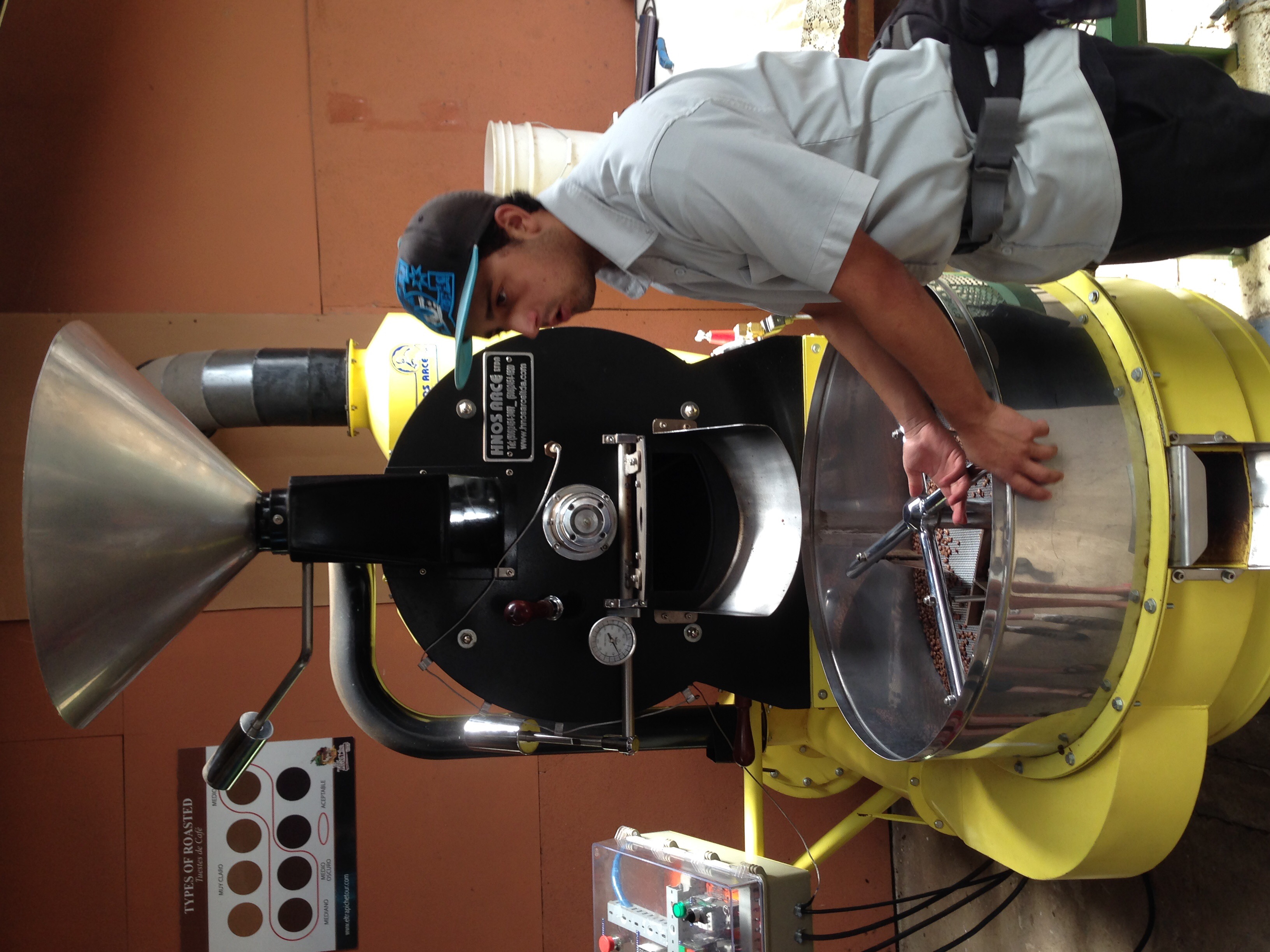
The last step is the roaster. The roaster is run by someone trained to select the temperature and time to correspond to the size and hardness of the beans. Different tastes are achieved through this process.
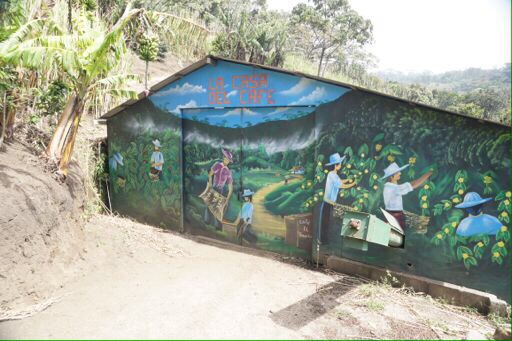
Now for the good stuff – chocolate.
They don’t actually grow the cacao on the farm but did a great job of explaining it
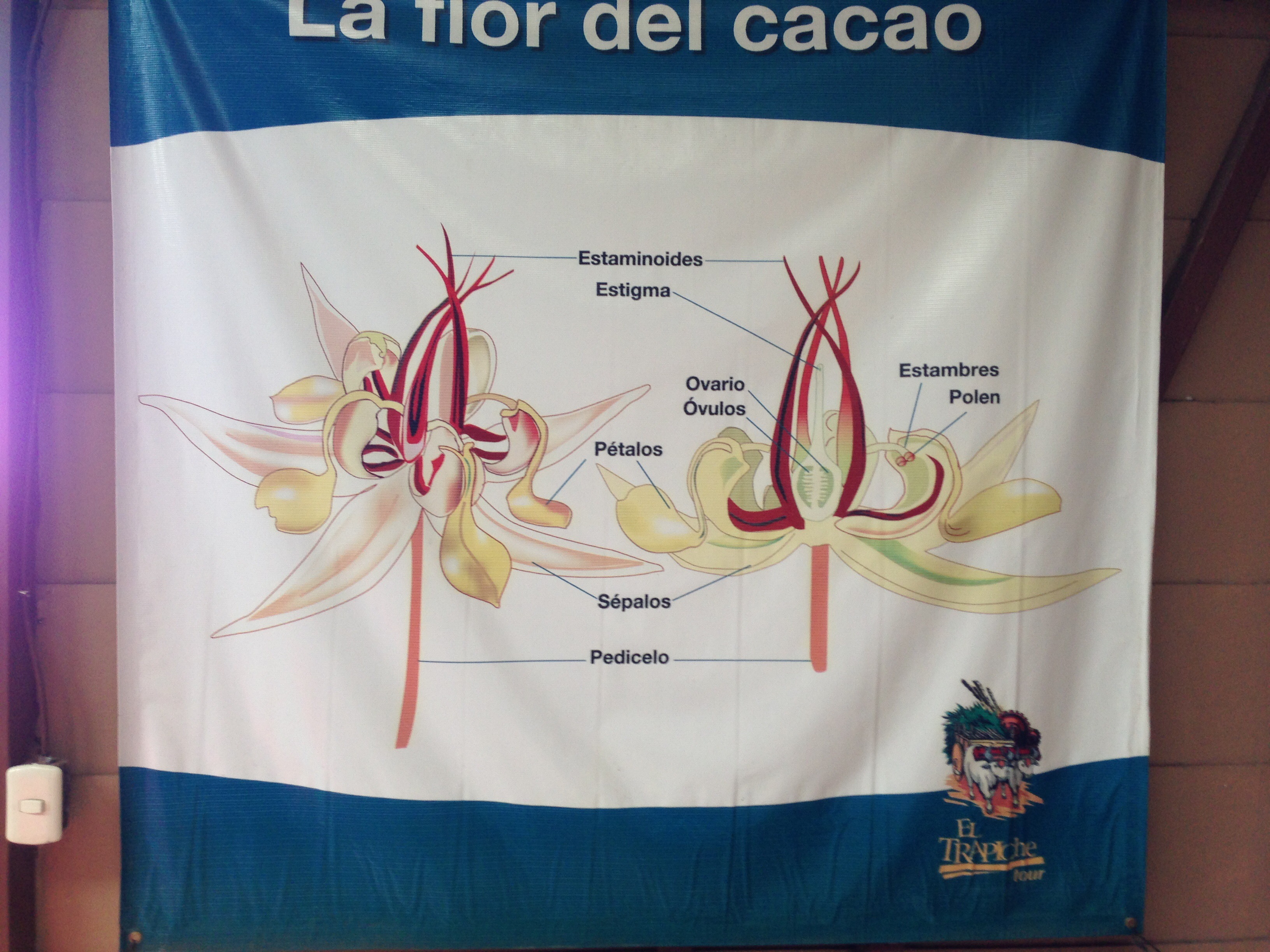
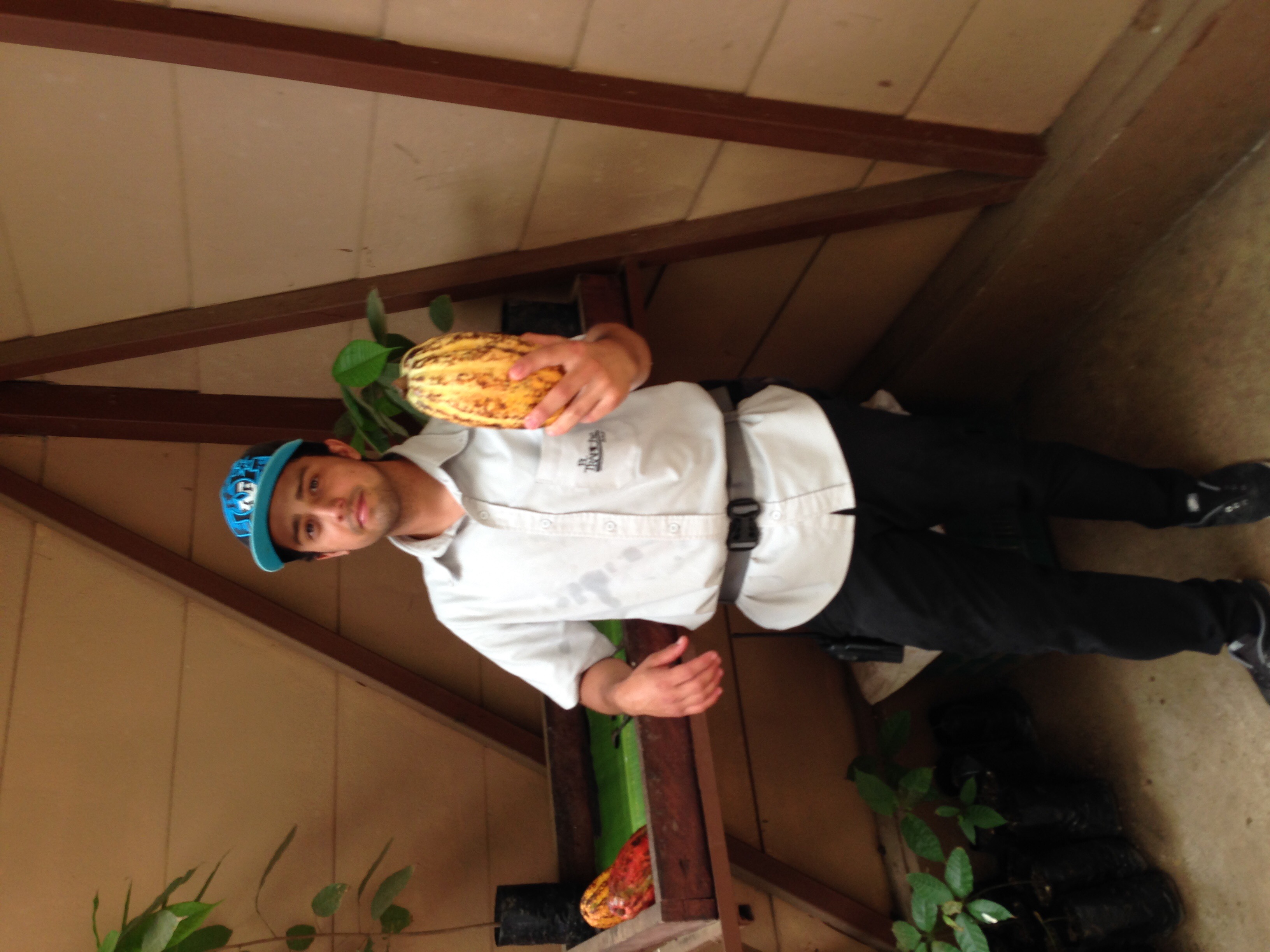
The fruit is huge and contains about 30 – 40 beans. The raw beans have a bitter taste.
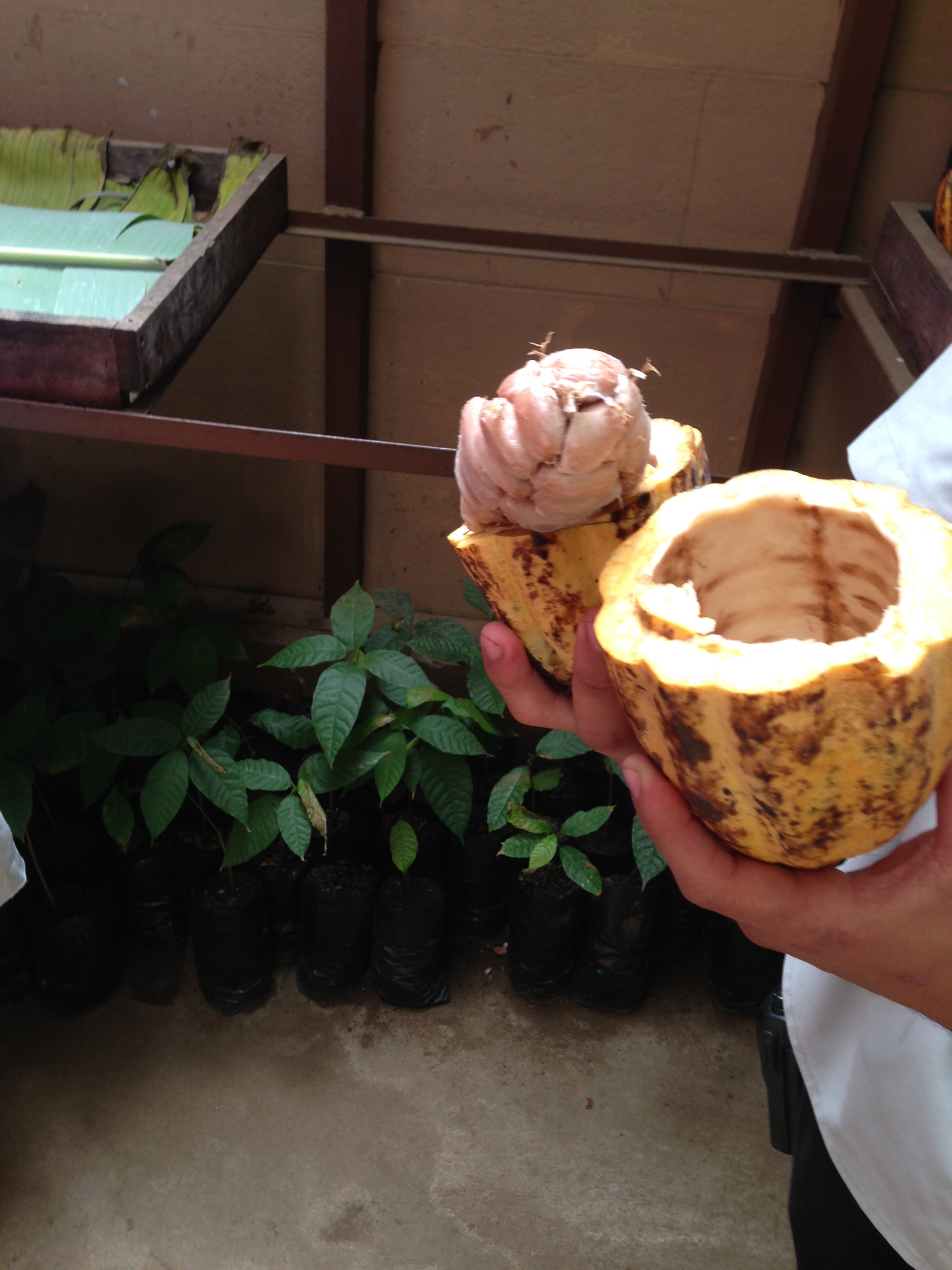
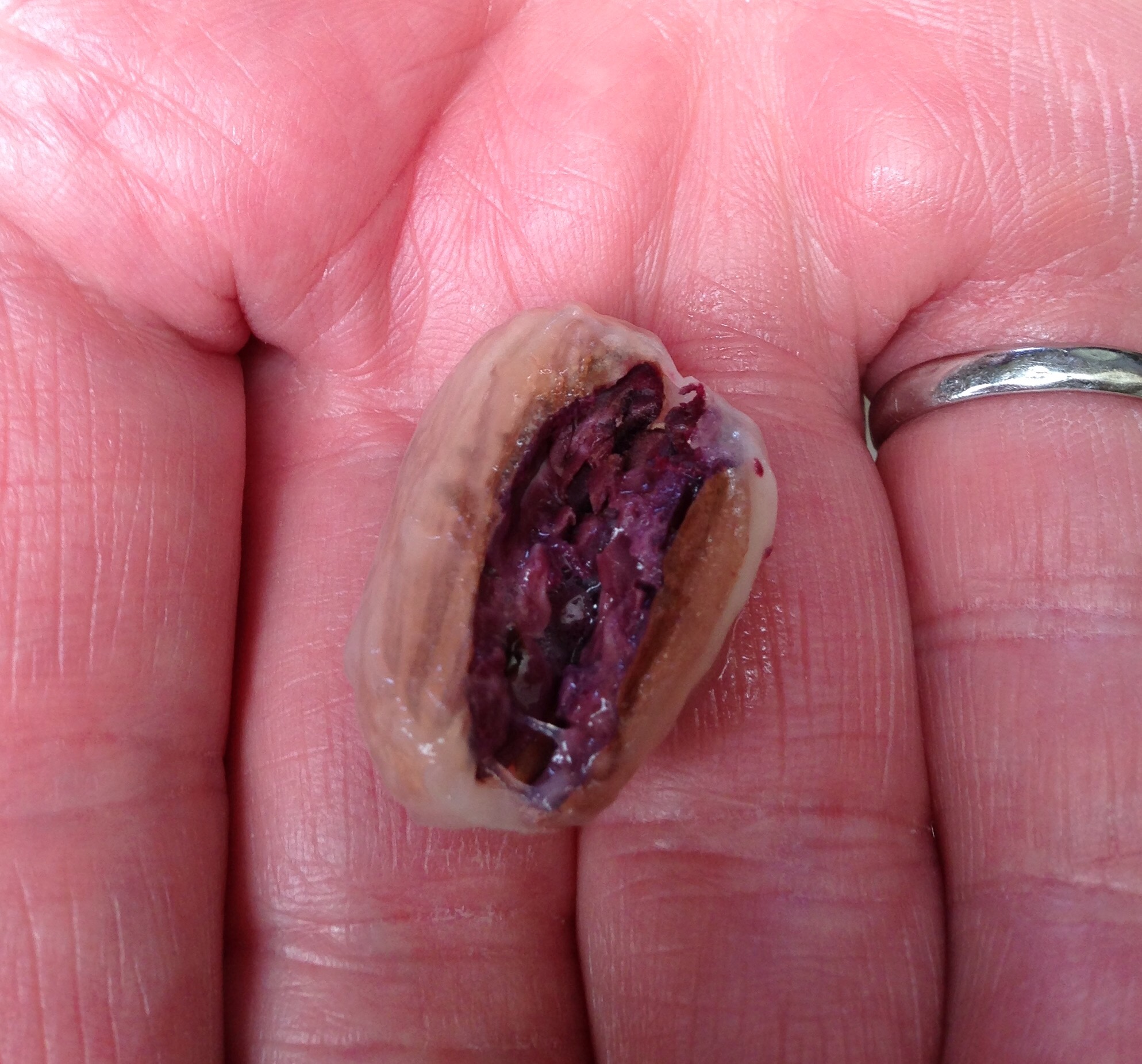
Inside the raw beans is purple — cocoa nibs
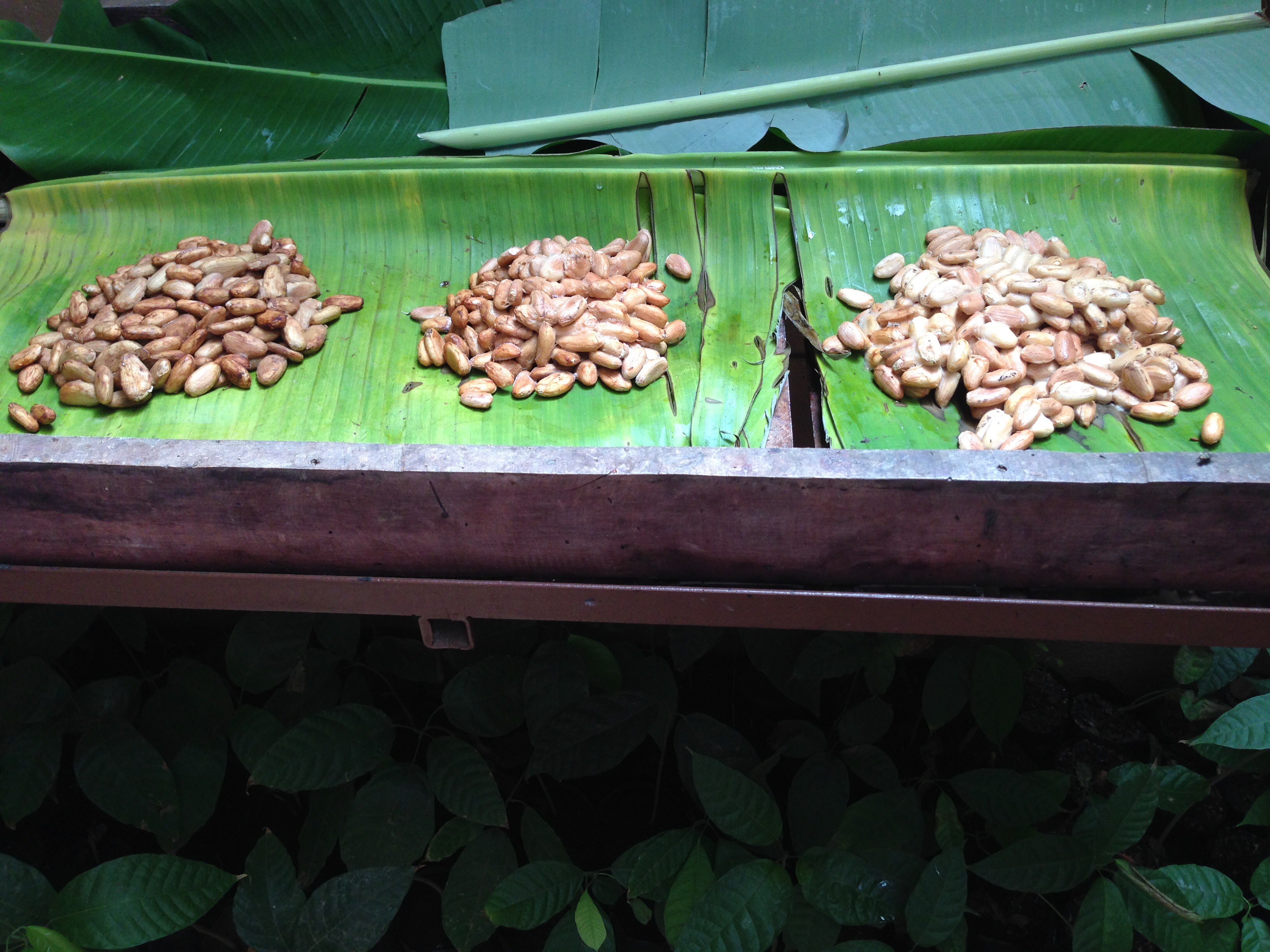
The beans are dried between 2 banana leaves for 7 days – from the left 2 days, 4 days, 6 days
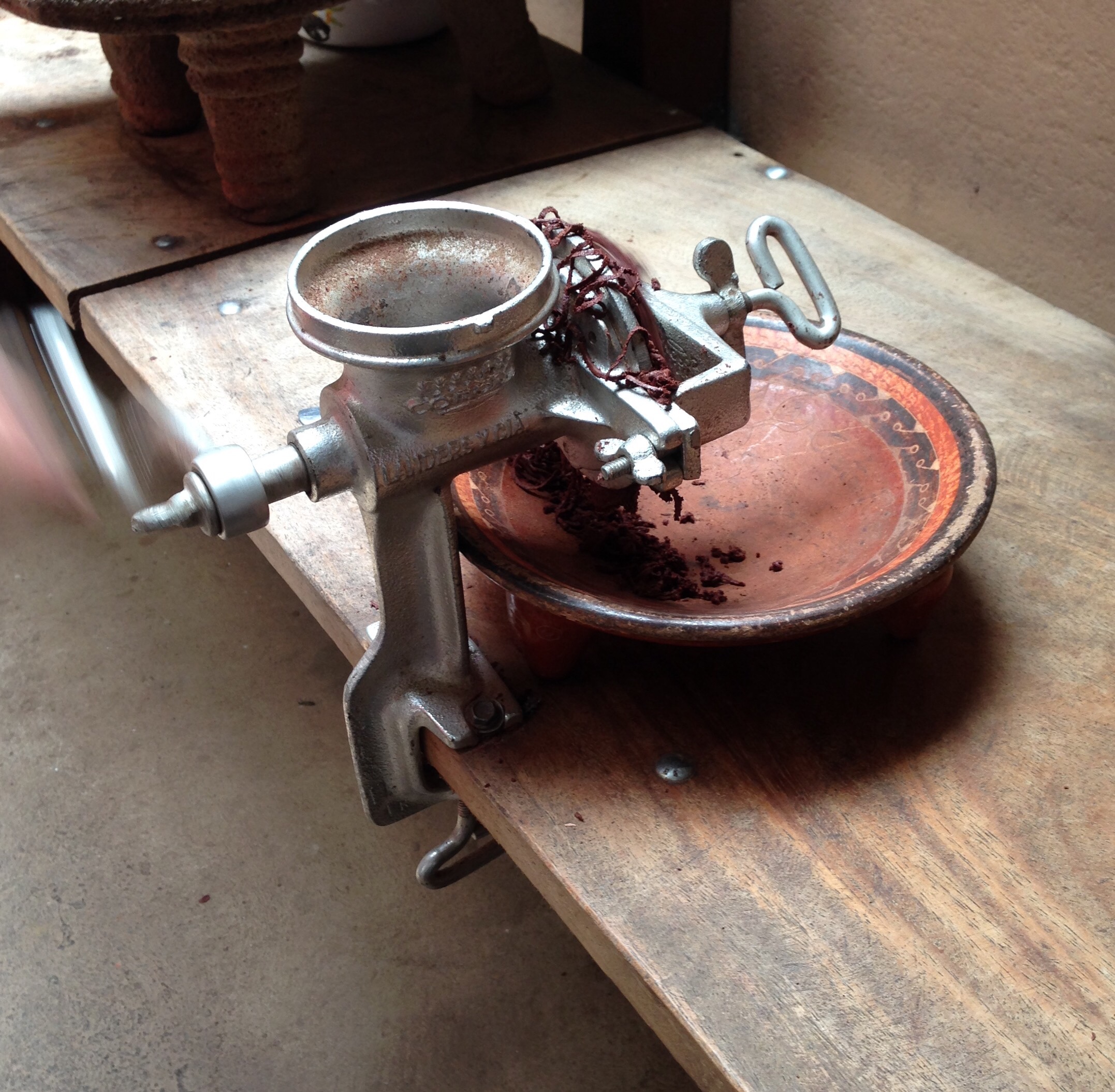
The beans are then roasted and the cocoa butter is removed to make the chocolate. White chocolate uses only the butter and none of the meal. The roasted beans are ground and make a paste because of the oil in the bean
At this stage very bitter as it is 100% cocoa. Add sugar to sweeten
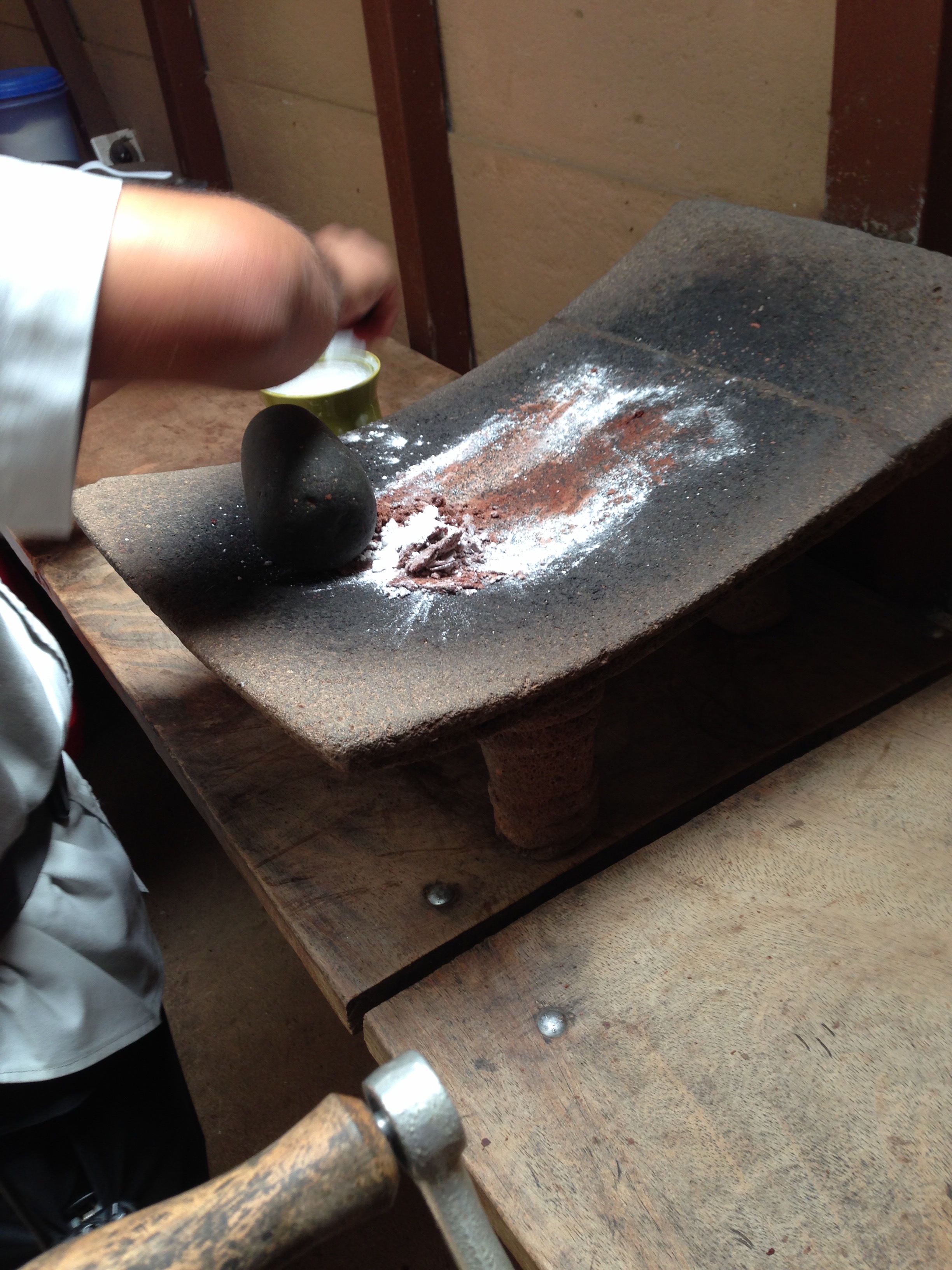
Tasted better, but still not chocolate – add milk and that is what I needed. Wonderful, dark chocolate!
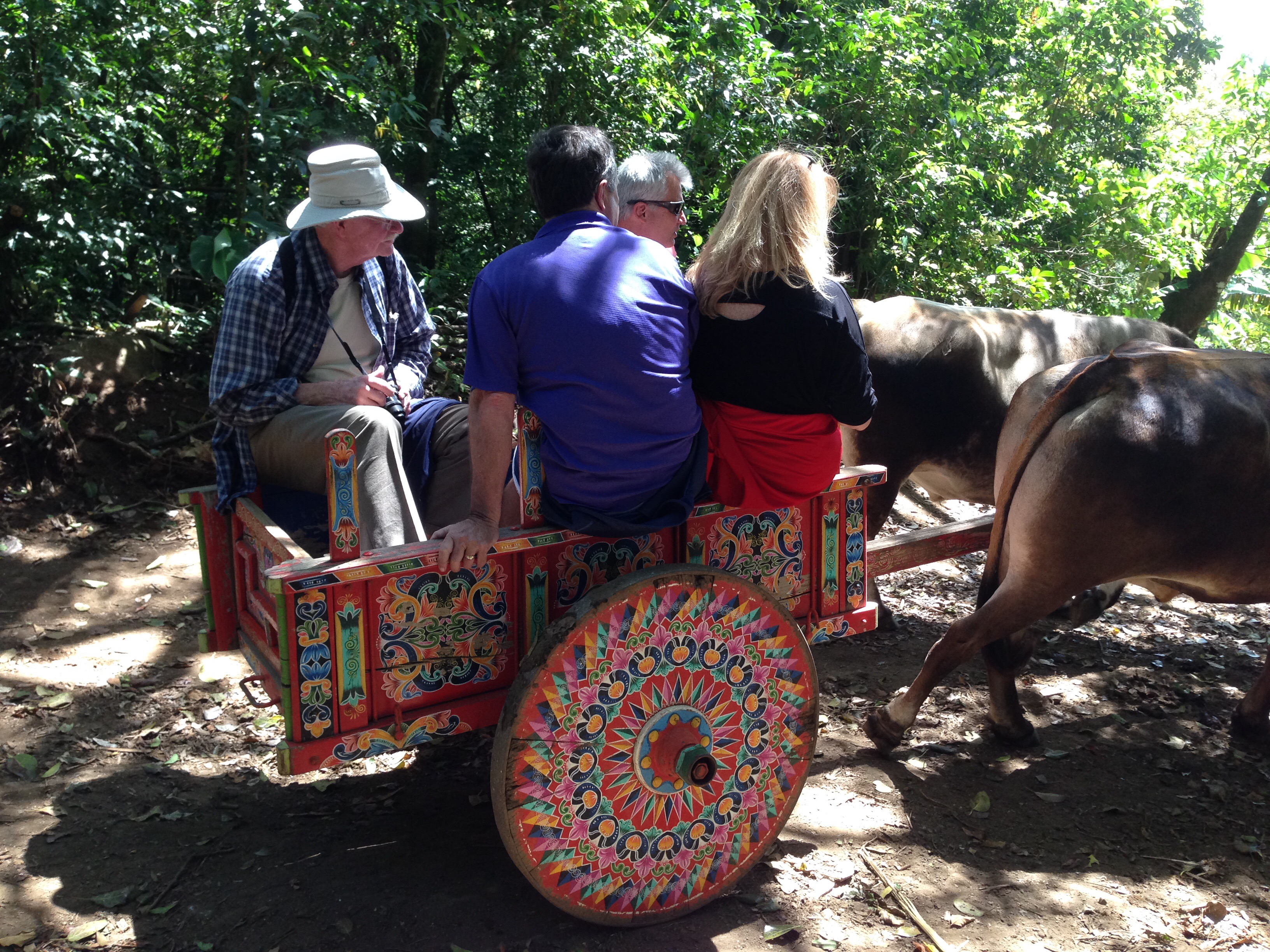
A ride back on the of cart, some coffee an arracache appetizer, a lemonade made with their own lemons and dark sugar. The end of a great morning


 travel70
Thanks a lot!!! I am a million years younger and much better looking.