
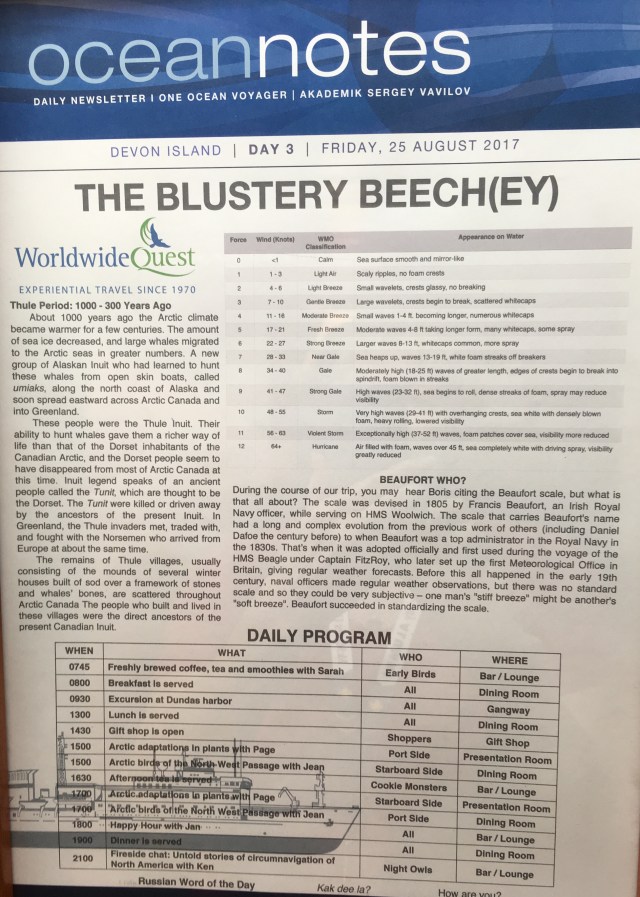
Today we woke up in Dundas Harbour on Devon Island. We had our first shore excursion. The first challenge was to get safely from the ship to the Zodiac. This means climbing down a steep set of stairs off of a bouncy ship onto an even bouncier zodiac. One of the Russian crew was at the bottom of the stairs and a guide on the zodiac to facilitate maneuvering onto the zodiac.
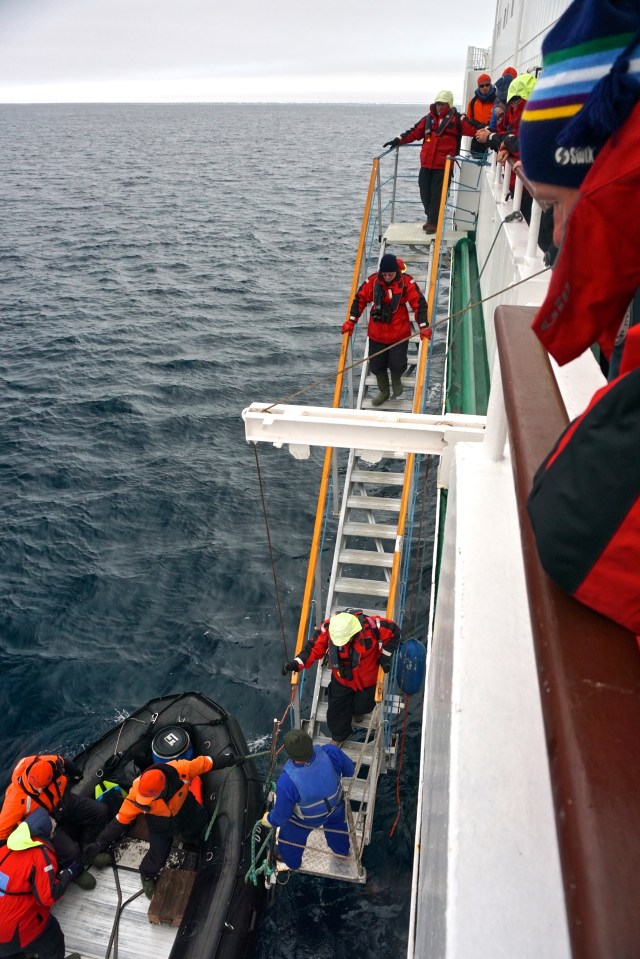
Getting onto the zodiac
There were 3 groups – charging, moderate and strolling. The charging group did a 6 km hike over a hill, the moderate group did a 5 km walk with rolling hills and the strolling group stayed close to the shore and looked for birds, examined flowers and strolled through the remains of an ancient Thule village.
Gary was going to go with the moderate walkers but was too hot and decided to stay with me and the other strollers. We saw some harp seals feeding, a lot of lichens, moss, Thule house remains, whale bones and a couple of red throated loons that landed on a pond in front of us. The advance scouts were there to welcome us when we arrived at the beach. They are all armed and a couple of them stayed with each group.
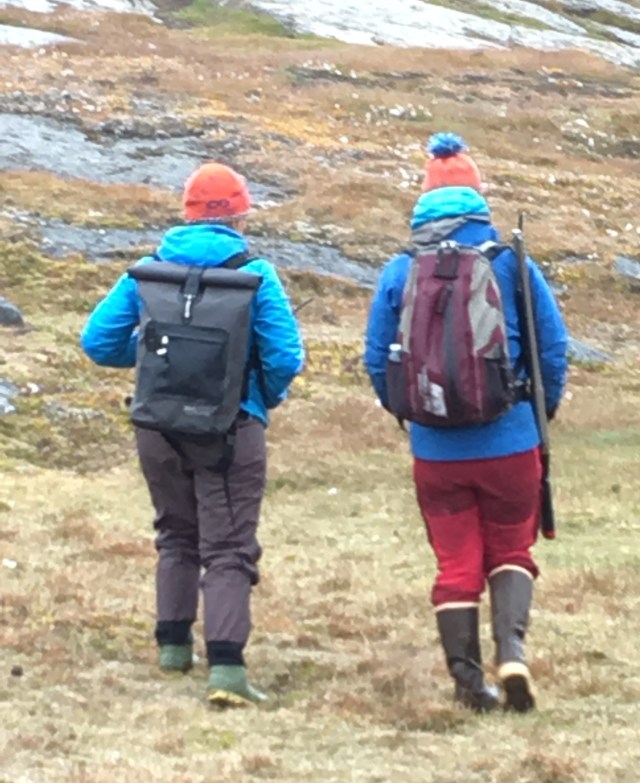
We had a bird expert, a botanist and a polar historian strolling with us. While our group did not go to the other side of the hills the 2 walking groups went to visit a former RCMP outpost. It was originally built around 1920 and was manned at various times until it was abandoned in 1951. The purpose was to establish a Canadian presence in the north.
While we did not see any Muskox we did see lots of evidence that they had recently been in the area we trekked. We were also told that some Inuit had killed a muskox there a couple of days ago.
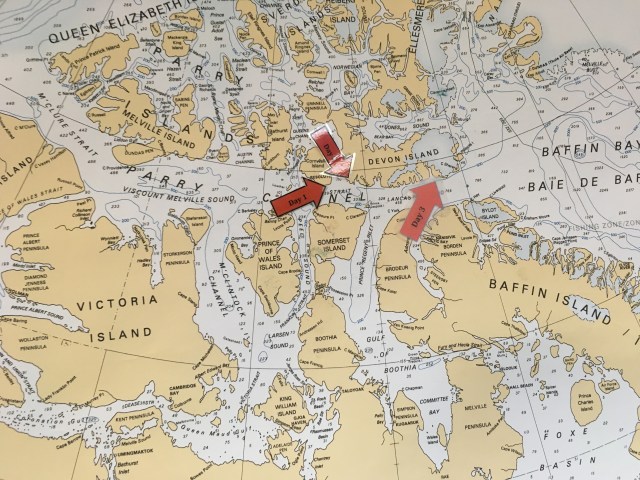
Day 3 is Dundas Harbour
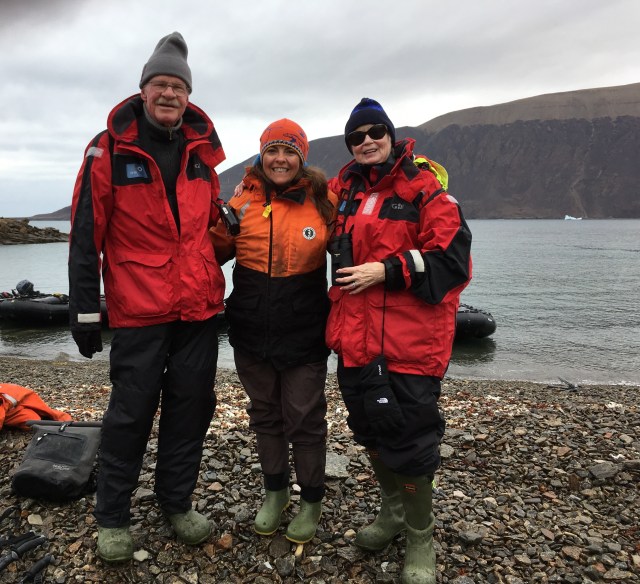
Gary, Beckie & Pat
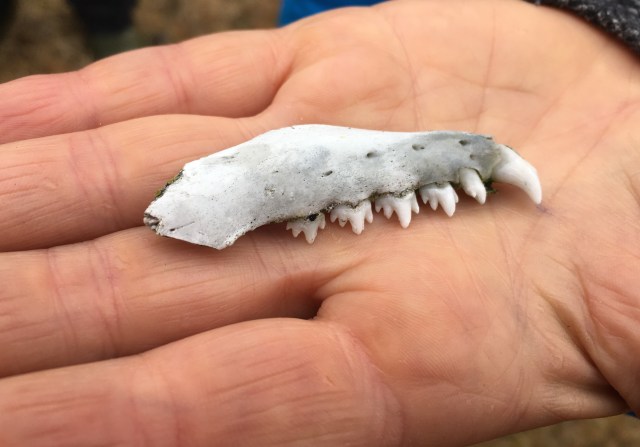
Baby Seal tooth
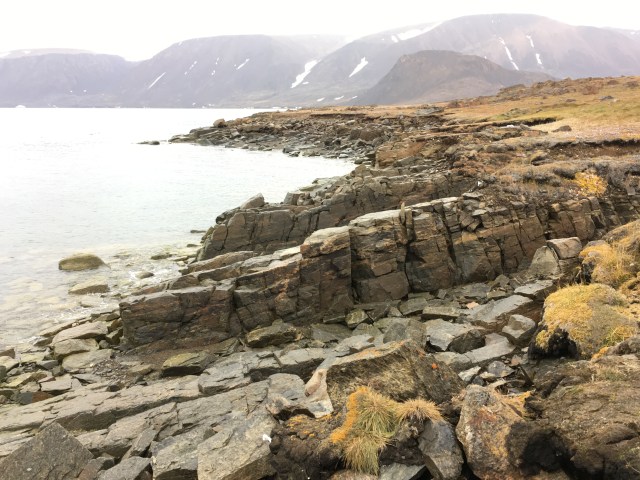
The coast line – formed by the ice
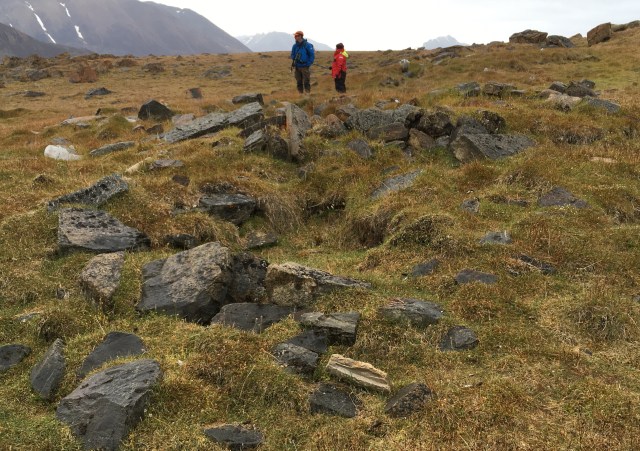
A Thule house built in same shape as an igloo – you can see the tunnel into the house
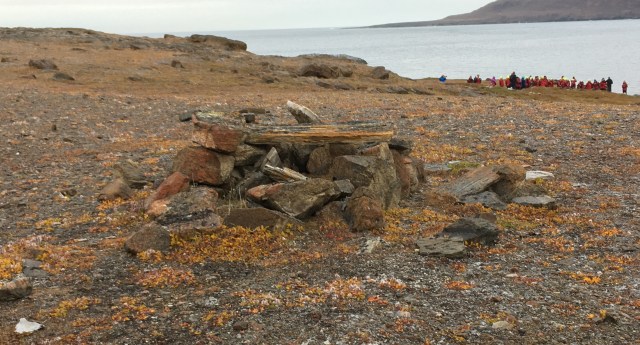
Thule house
The Thule houses were semi-subterranean and were constructed of stone on the bottom, then topped with whale bones in an arc to hold some kind of covering – skins of muskox, seals and polar bears. Thule lived in small communities, had sophisticated tools and hunting techniques. They hunted Bow-Head Whales which have huge bones, good for constructing their houses. The Inuit are direct descendants of the Thule. The Thule migrated east instead of south, likely following the animals.
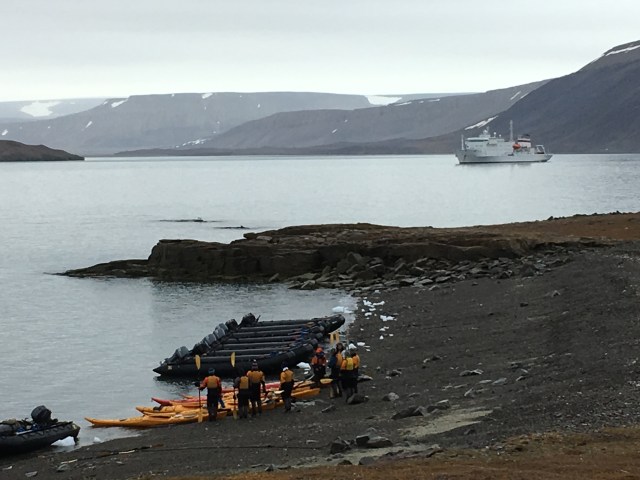
Kayakers
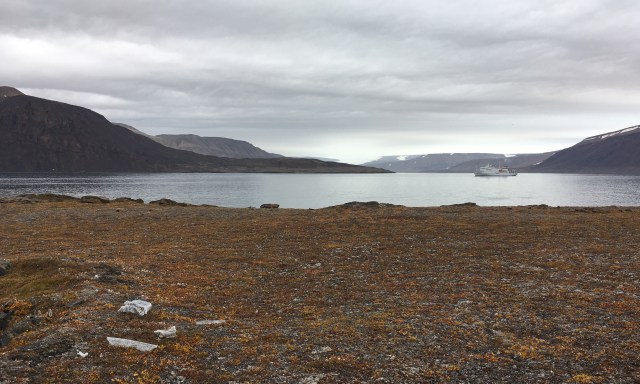
The Fjord
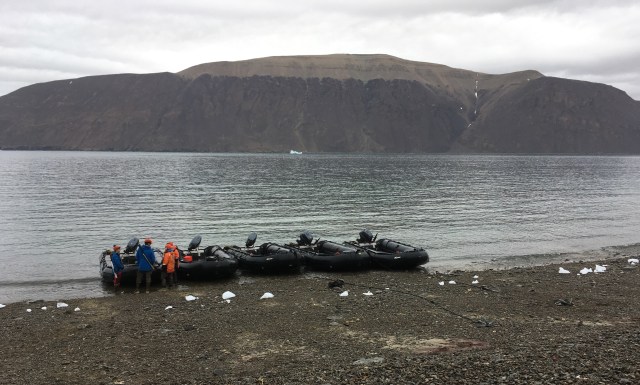
Dundas Harbour is really a fjord, sheer rock raising out of the water on both sides, water, snow and ice has etched deep crevices into the rock over the centuries.
Our weather is overcast and cold. Luckily no wind in the fjord so we were not too cold even with the standing around. A couple of large glaciers in “glacier alley” watch over us as we walk around the beach.
You can see why the Europeans saw this as a land of emptiness and ice. Most of the Arctic is actually desert and has very little precipitation. The land looks barren but a close inspection showed lots of moss, small flowers and mosses, lichens, mushrooms.
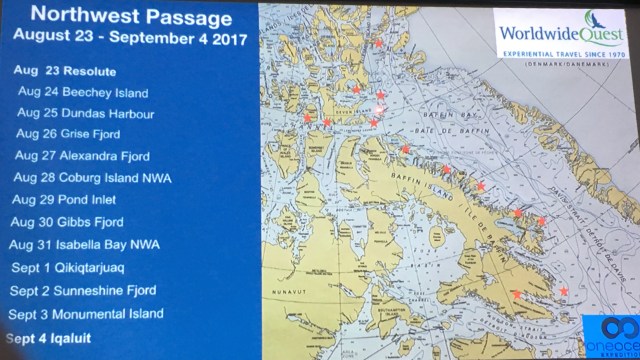
Our planned itinerary
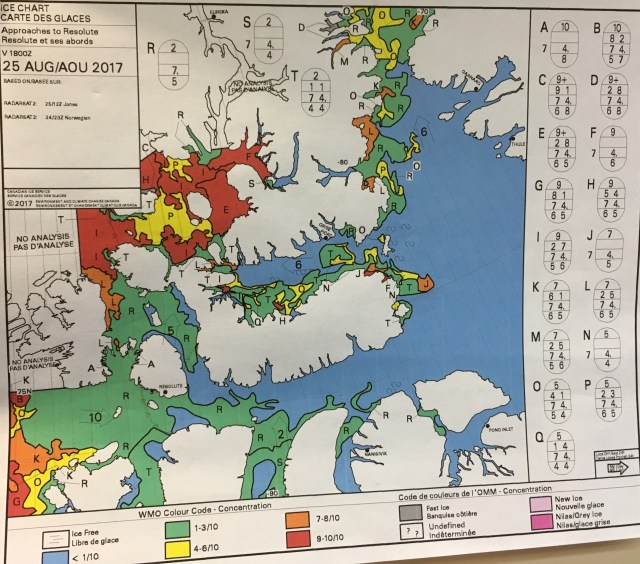
We learned to read an ice map. There is a lot of information on this chart. Where we are headed the green areas mean there is 20% ice coverage and the areas where there is ice is an ice density of 50%, yellow means 50% coverage with a density of 70%, red means 90% ice coverage with a density of 90%.
Ice coverage is the % of the area that has ice and density means how dense the ice is where there is ice.
While our ship is a Class IA ice ship it is not an icebreaker. We could go into some green areas as long as the ice is not too thick (i.e. not over 2 meters in thickness) and there is enough room to maneuver within the ice pack.
The Inuit have 2 words for snow and 18 words for fear!


 travel70
Very interesting. I love seeing pictures of my Uncle Gary too 🙂