
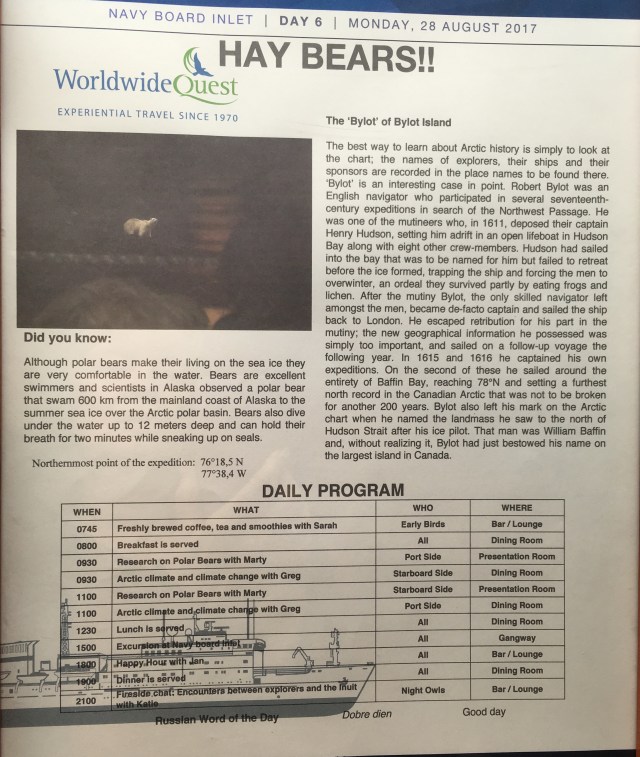
Today we headed through the straight between Bylot and Baffin Islands. Because of the sea ice shown on yesterday’s ice chart, the captain did not enter the channel until there was enough daylight. There is some light most of the time but that is changing quickly. At the equinox there is the same amount of daylight and night time at all latitudes of the world (12 & 12). So the Arctic goes from 24 of daylight at June 21 to 12 hours at September 21 to 24 of dark at Dec 21 to 12 hours of daylight March 21. When we arrived in the north on August 23 it was still very light at night. It is noticeably changing each day.
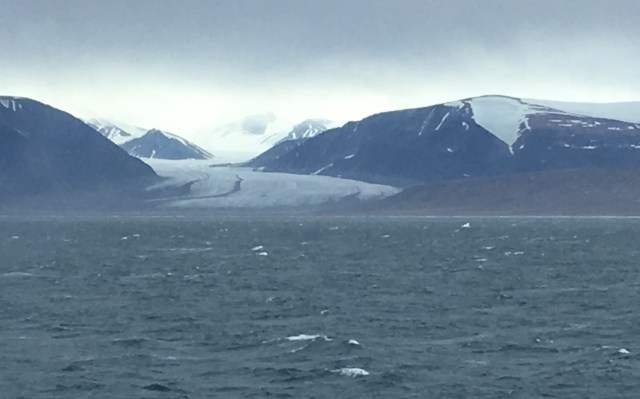
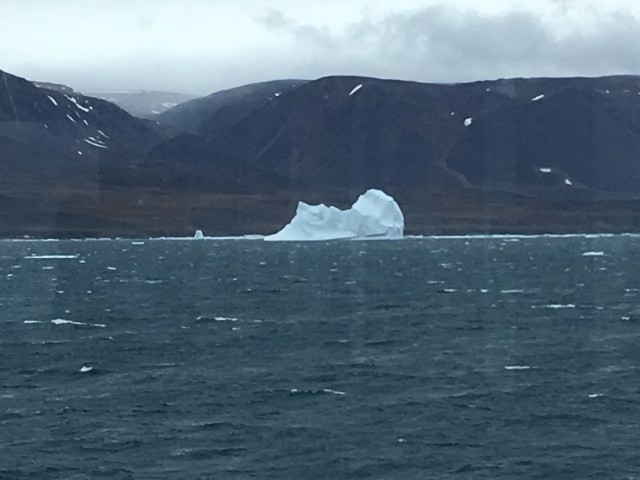
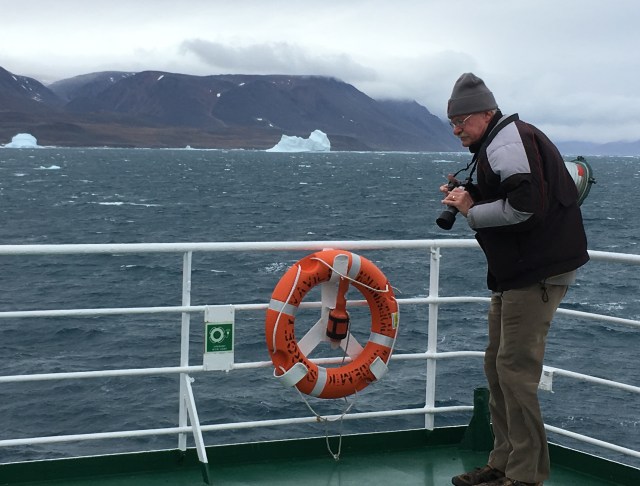
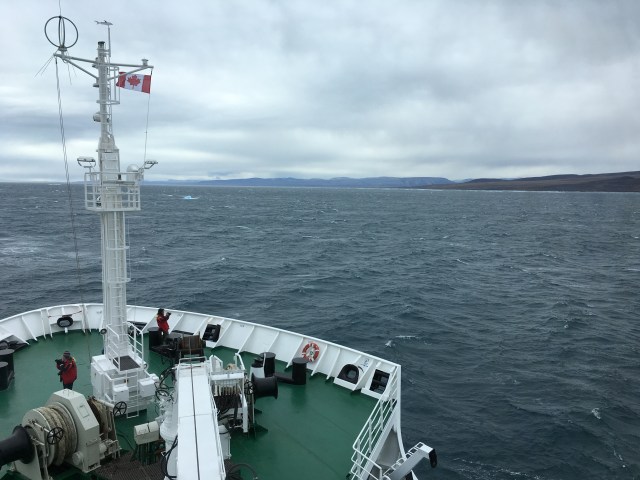
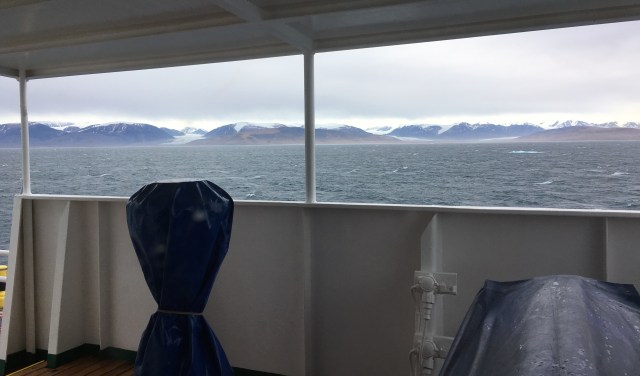
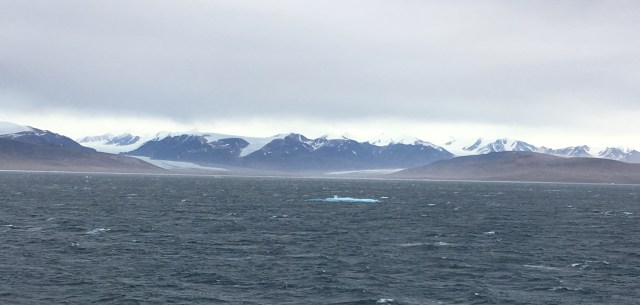
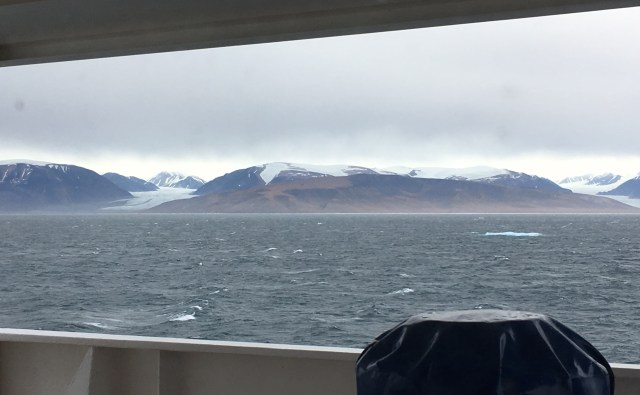
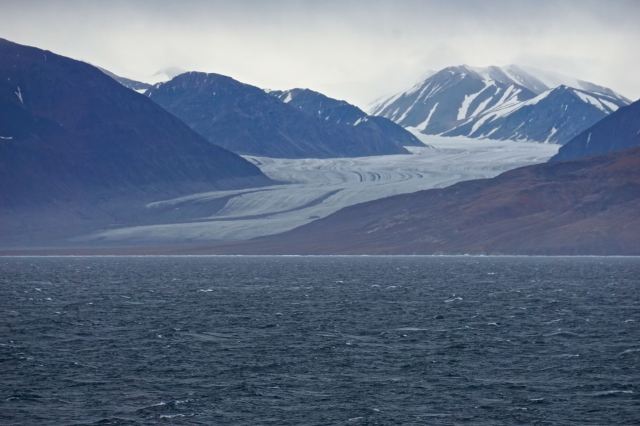
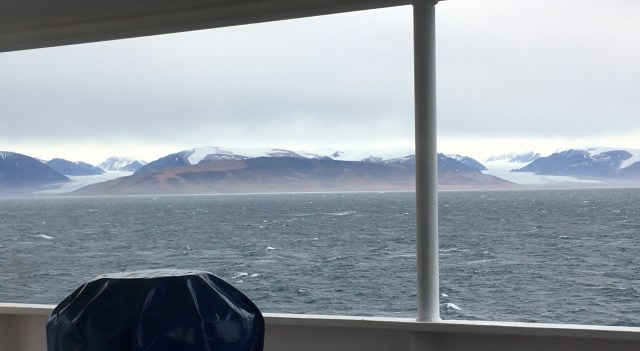
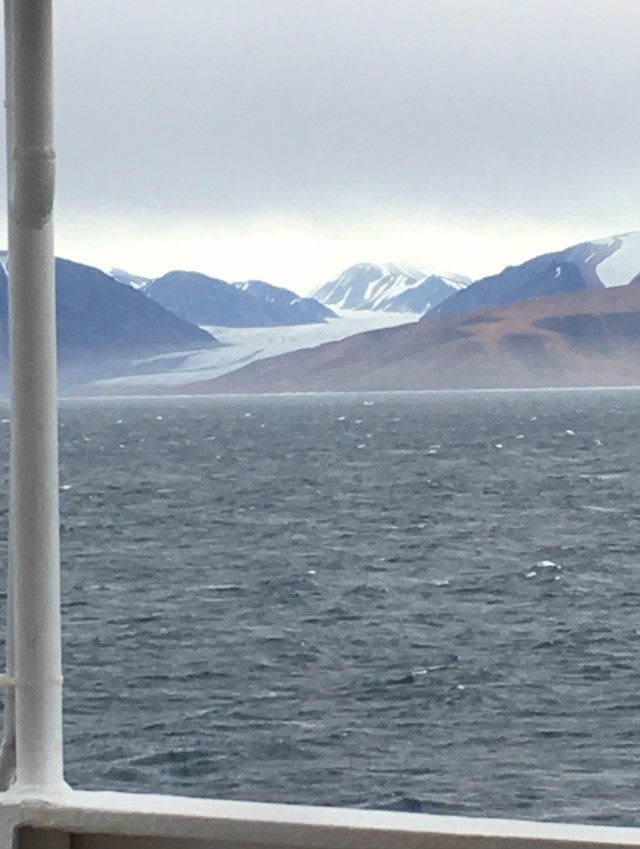
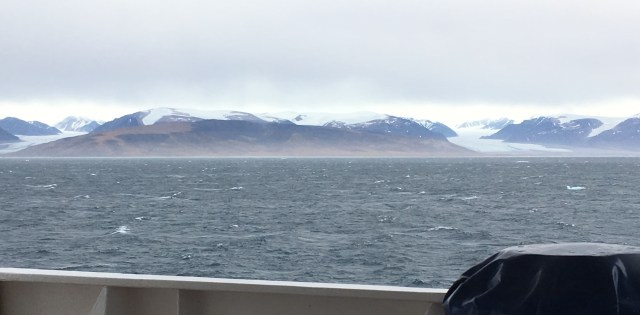
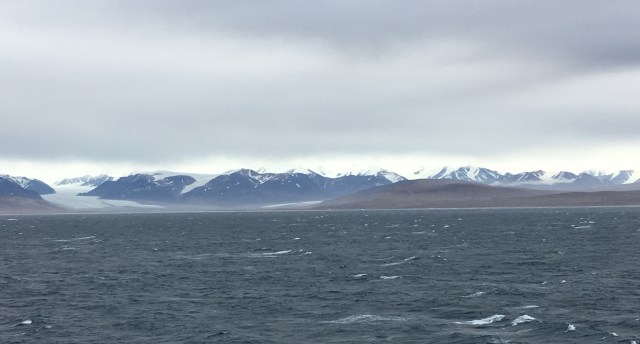
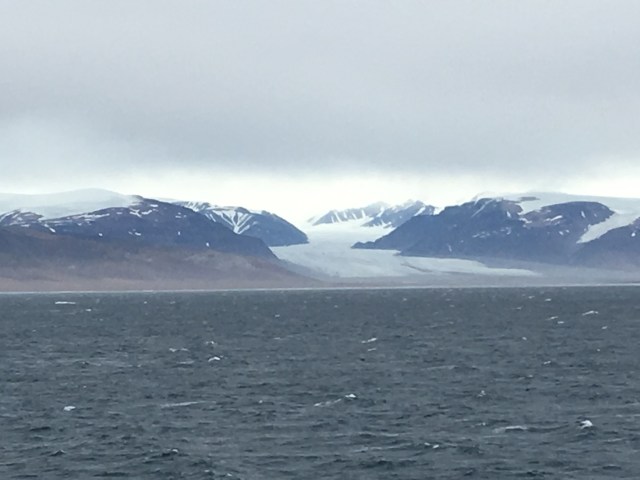
These pictures show the area we navigated this day – beautiful scenery
The plan was to go ashore at Low Point for a hike, however winds of 40 knots meant the zodiacs could not be launched.
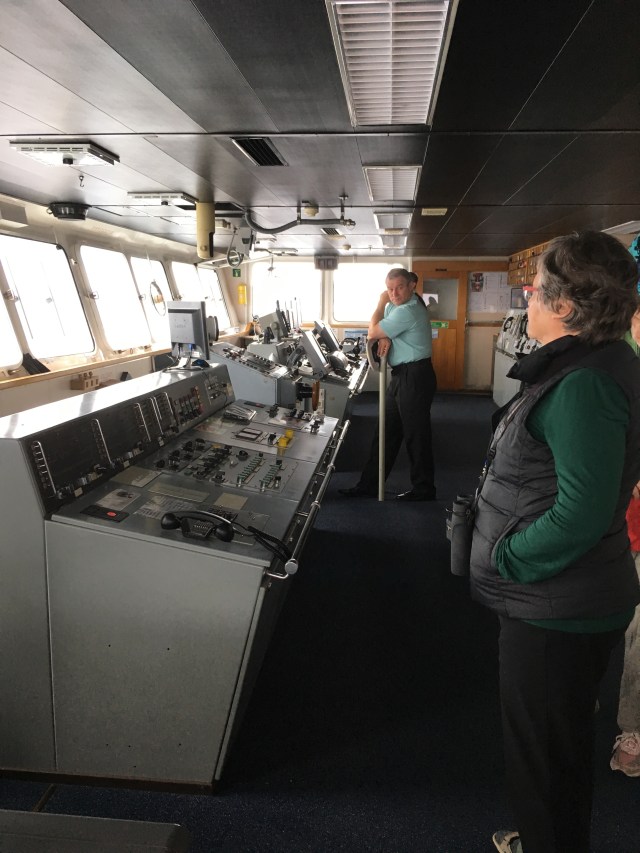
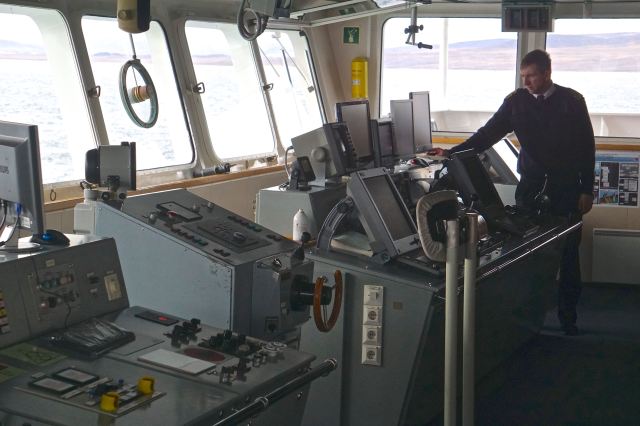
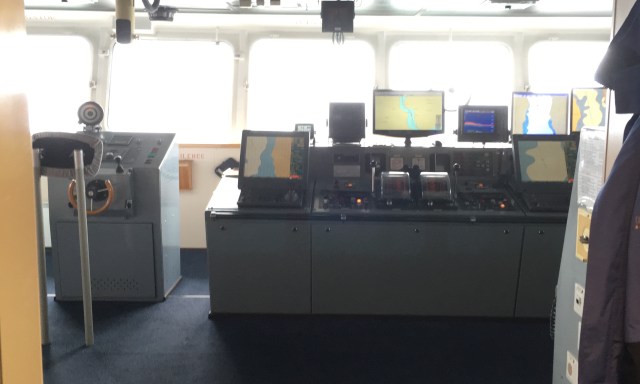
One nice thing on the ship was the open bridge policy – It was a great place to view our progress along the strait.
 So more lectures; this morning we heard about the Polar Bear research done by Marty and his students. Basically they hunt the bears with a helicopter, shoot a dart in the neck tranquilize the bear and then tag it with 3 tags – each ear and a lip tattoo. More recently they have started putting GPS collars on the bears. The collars stay on for 2 years and then a release mechanism automatically removes the collar which the researchers retrieve. (If anyone is interested I have the slides from the presentation and could email them to you – just send me a note.)
The purpose of the study was to track the Hudson Bay population – both numbers and health. Basically the numbers are down from 943 in 2011 to 784 in 2016. At the same time the cubs are 30% lighter and both males and females are smaller. The theory is this is due to the decreased sea ice, both quantity and time the ice is there. Also Orcas are moving into the area and competing for the bears normal food supply of seals.
The second talk was about climate change. A better explanation than I have ever heard of why the Arctic is cold (it was warm before the breakup of the continents) and why that is changing. Man’s activity is speeding up the process, but the warming was underway. 2 million years ago the Arctic and Antarctic were covered with permanent ice. There was a period of rapid warming between 18,000 & 6,000 years ago and with the change in the shape of the orbit around the sun and the earth’s “wobble” on its axis the science predicts an ice age about every 100,000 years. There was a mini ice age 1450 – 1850 and we are currently in an inter-glacial period. During the last warm period (900 – 1380) the tree line was at the Arctic coast and that was when the Vikings crossed the Ocean to arrive in Iceland, Greenland and America. Between 1800 – 2000 warming has occurred at about one degree per decade. Faster than ever before. They predict complete loss of sea ice by 2035 – 2050. (Again I have a copy of the presentation I could email to anyone interested)
In the afternoon we watched a movie – “People of the Feather”, a documentary about the impact of the electricity generation in Northern Quebec on the Eider ducks, the people who live off hunting in the Hudson Bay Area and the environmental impact.
We then had a wine and cheese party while looking at some objects from the Vancouver Marine Museum. Ken is currently Director of the museum. Some replicas of old maps (originals at the museum) and some objects from the recent ( and on-going) Erebus recovery project.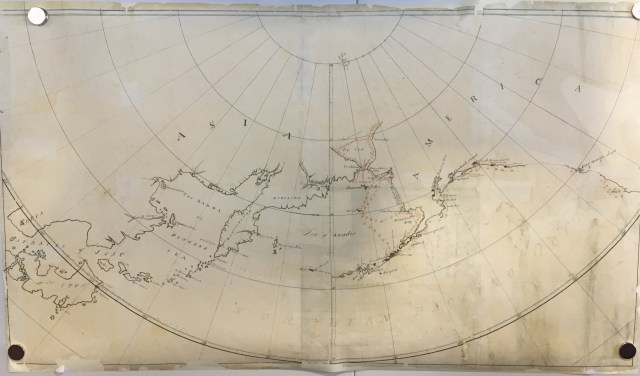
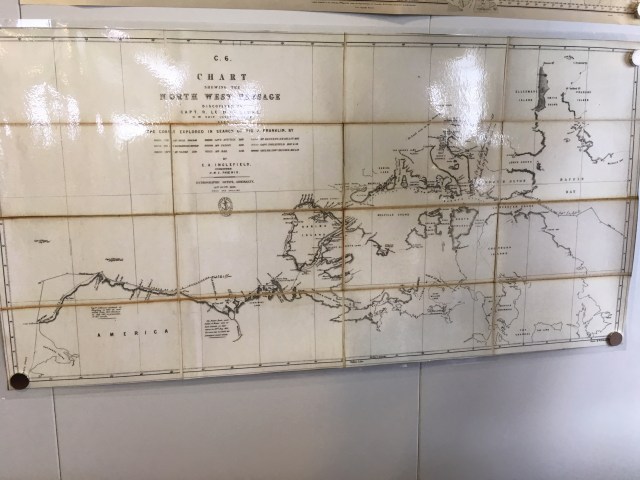
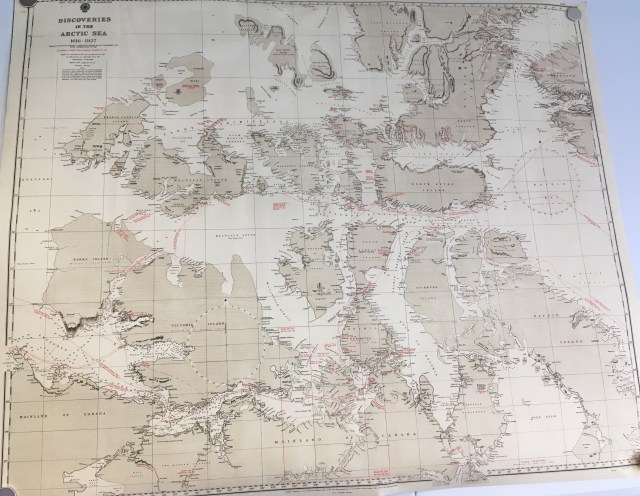
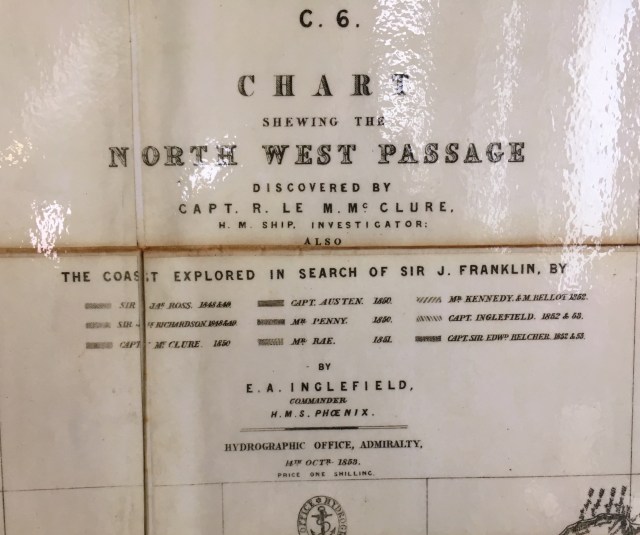
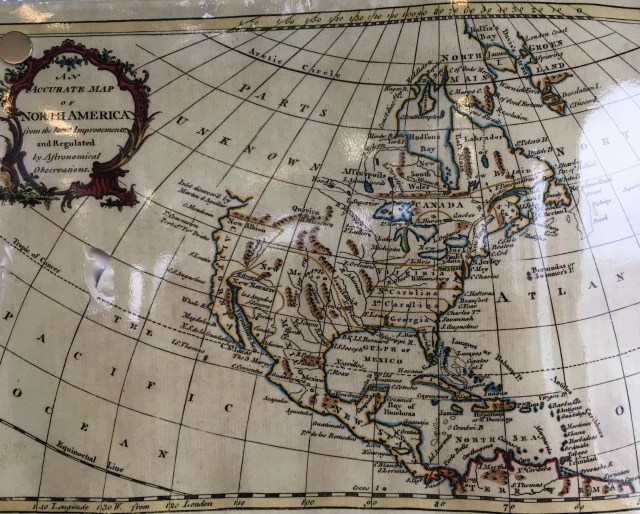
Some copies of the maps used by the early explorers. Note the last one has a caption that states it is “an accurate map of North America” – Where was western Canada?
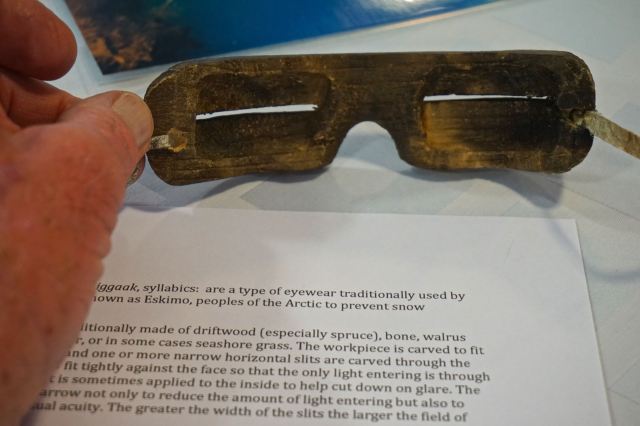
Early Snow Goggles – used to prevent snow blindness


I’m still shivering from looking at the photos of the ship’s passage through the straight. Sounds like you learned a good deal about the history of the Arctic & climate change. I’d like to see the presentation on “why the Arctic is cold”,