
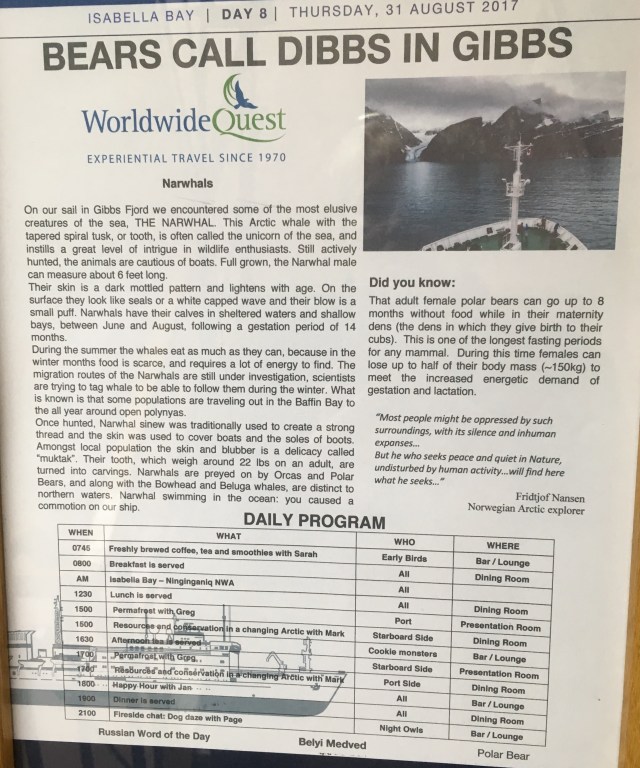
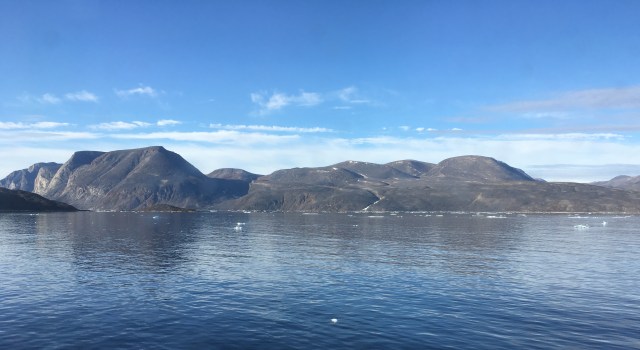
Our ship sailed alongside Baffin Island this morning and turned into Isabella Bay (named by Ross who was captain of the Isabella on his first voyage to the Arctic.) The area around the bay is a sanctuary and while we had a permit to visit the bay we were not allowed to land. While we were there a DFO plane (an Argus, out of NS) flew over low and circled the group a couple of times before tipping his wings at us and flying off. We were out in the zodiacs looking for whales. One of the groups saw a couple of Bowhead Whales but most of us did not see them. We did float around an iceberg and search the shoreline for Polar Bears, but none made an appearance. It was a nice couple of hours in the pristine bay, under a partly sunny sky.
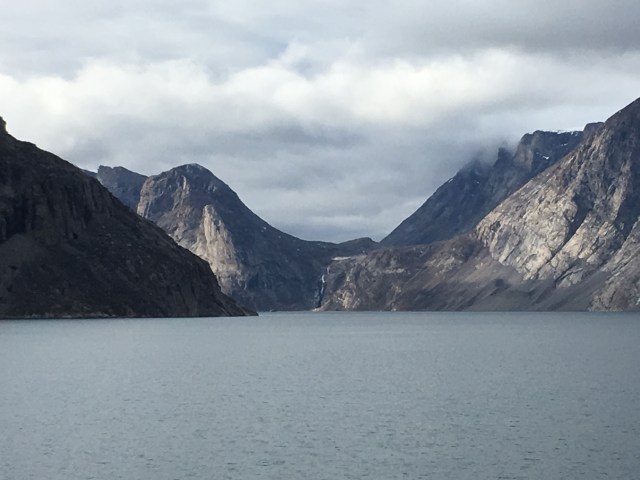
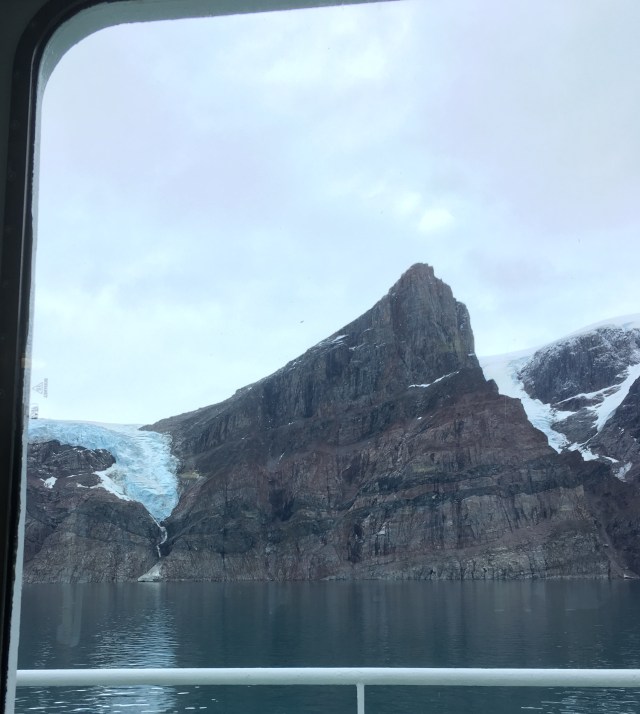
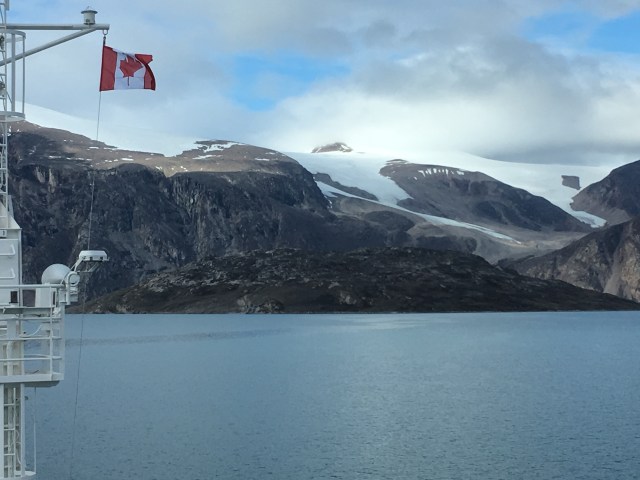
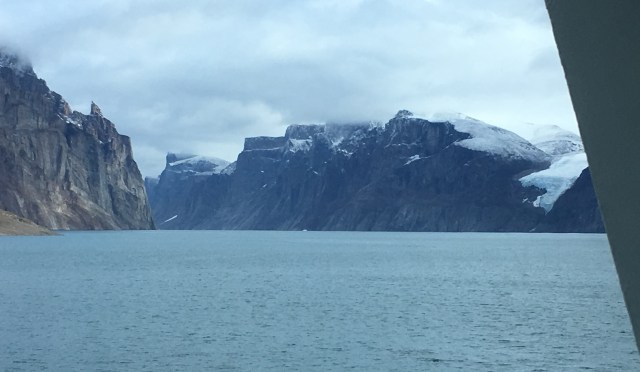
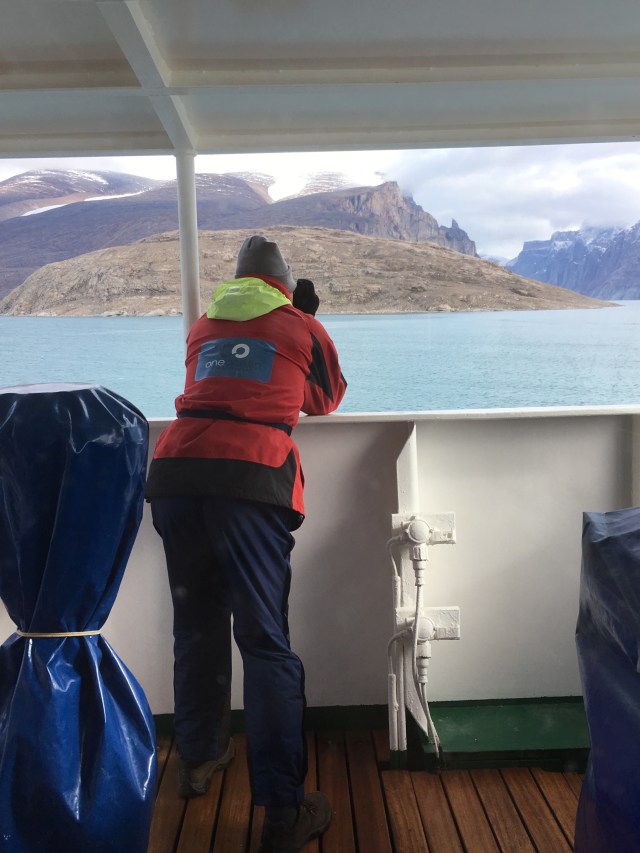
FAMOUS PHOTOGRAPHER WITH MUCH SCENERY TO CATCH
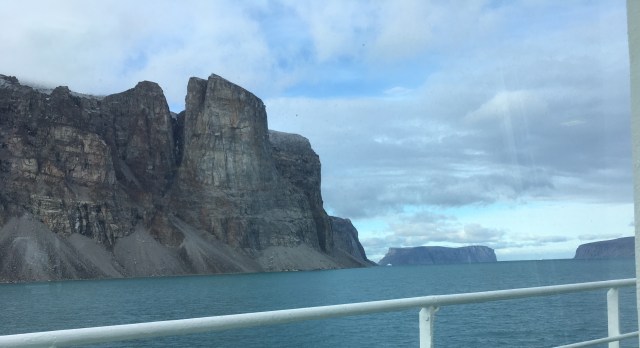
The entrance to Isabella Bay
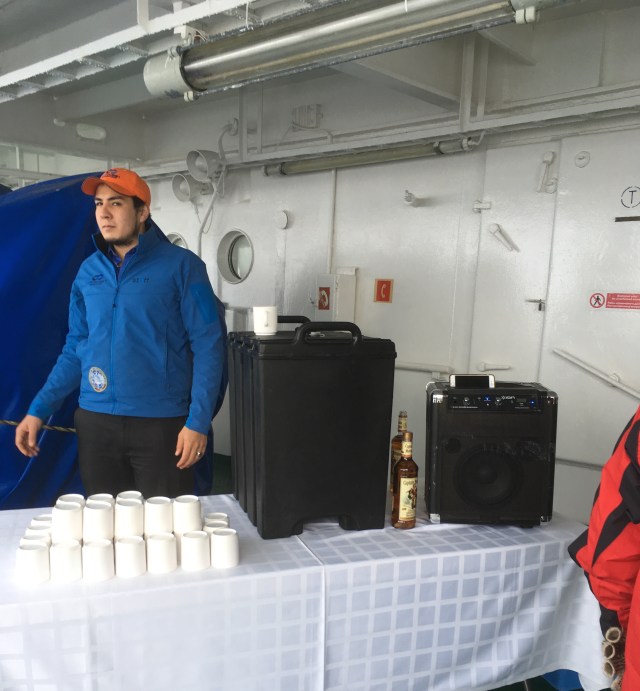
Something to warm us up after a couple of hours on the cold sea!
This afternoon our first lecture was on the permafrost, 50% of Canada is covered with permafrost (ground that remains at or below 0 degrees C for 2 years or more). The definition is based on temperature and not on the presence of ice.
By comparison Greenland is only 3% permafrost. This is because Greenland has a permanent icecap that insulates the ground, the ground stays warmer because of the heat from below. We also learned about Polygons and Pingos!
One of the contributors to glacial warming is the carbon and methane that is released as the permafrost warms up. 50% of the carbon on the planet is currently locked in the permafrost, and as it warms up this is released into the atmosphere as CO2 & methane. this causes more warming and creates positive feedback to the warming trend.
We have been told that there is more ice in Baffin Bay and Davies Strait than has ever been recorded before.
Our second lecture was on Reserves and Conservation in a Changing Arctic. Mark spoke about the various groups involved and their activities. One push these days is to combine the scientific knowledge with local Inuit knowledge and involve the communities more in the decision making. He spoke of the seismic testing being done in some areas that the locals believe are scaring away the marine mammals and a recent court case they won to stop it.
Our speaker in the evening spoke about the dogs she and her husband raise and race in Rankin Inlet where they live. They have 35 dogs (she said she had one and her husband had 34). Great pictures and explanation about the dogs they use in the Arctic – the Arctic Husky.


