Feb 20 Saigon

Feb. 20 Saigon

I finally got some pictures on the blog. I think you my have to click on the bar above the blog to see the pictures. They are all from Thailand
 Our second elephant ride
 The solid gold Buddha
 The Buddha head in tree roots
 Part of the summer palace
 Emerald Buddha
 One of the buildings in the Grand Palace
 Gary & I with the King of Demonds
 Gary & I on the first elephant ride
 The floating market
 Train coming through the market
 Putting market stalls back up after train.

Today we toured Saigon. Saigon is on the Saigon River, a busy port with large ships, small fishing vessels and ferries running all over the place. Lots of flotsam in the river which is a brown colour from the silt being washed toward the delta.

The French occupied Saigon for over 100 years and their influence is seen in the architecture. The older generation is still fluent in French, but it is no longer spoken much. Our first stop was the City Hall. This is where the President stayed and ran the government and the war in the war with North Vietnam. The building was designed by a Vietnamese who had been educated in France, so the exterior is European. The inside is Asian. One of the reception rooms has a wall completely covered with large lacquer tiles. It is magnificent, brightly colored and impressive. The other reception rooms have some lacquer tables and chests.

The basement was used as a bomb shelter and has many small rooms with radio equipment, maps, a tiny room for the President and his family in case of attack. It also has a secret tunnel connecting it to another building so the President had an escape route. The tank that crashed the gate and lead to the South’s surrender is on display. Our guide gave us a very good summary of the war.

As we arrived there was a group of acrobats doing the dance of the lion and dragon. They then had 2 of their group climb poles being held by the rest of the group. The dragon continued his dance at the top of the pole.

Throughout the building were symbols of the 4 sacred animals – the dragon which symbolizes power, the unicorn a symbol of peace, the turtle a symbol of long life and the phoenix  a symbol of good luck.

Our next stop was the post office. It was designed by the same architect that designed the Eiffel Tower. Inside was still an active Post Office, but it maintained the decoration from the past. The scene was dominated by a hugh picture of Ho Chi Minh. Gary was surrounded by tiny Vietnamese teenage girls who wanted their picture taken with him. You’d think he was Justin Beiber based on the way the teenyboppers were all over him.
  
We then went to a lacquer factory. Amazing what they produce, we bought a couple of small pieces. After the board is prepared it gets the first coat of lacquer the design is then added. The design could be done from broken duck egg shells, mother of pearl or painted on. 17 separate layers of lacquer are added with the piece being polished between each layer.the whole process takes months as it has to dry for days after each lacquer coat, the final polish is done using coconut fibre. The whole operation is done by hand. The artisans are amongst the better paid people.

On the way we passed the American embassy where we had watched on TV as the helicopters air lifted people out as the north Vietnamese entered the city. As you would expect it is heavily fortified with guards everywhere.

Next we went to another pagoda. This had the three kinds of Buddha images. It was very close inside with so much incense burning my eyes were watering. There was a group of women sitting on the floor and one was chanting ( on and on in a loud high pitched voice). The rest of the women were following along from a book in front of each of them. We were told they were praying, it sounded like they were on a pilgrimage. There were a few people wearing bandanas on their heads, all were white and some had a red dot in the middle. Reminded me of pictures we would see during the war. The bandanas meant they are in morning, the red dot means they are family of the deceased. 

We stopped at a market in China Town, there is a hugh Chinese population and the Chinese culture is evident everywhere. A number of the Vietnamese traditions, food, clothing have a basis in Chinese. A long the street we passed many coffee shops, not a Starbucks to be seen. Apparently Starbucks could not survive here as most people prefer the Vietnam coffee and of course it is much cheaper. Coffees is $0.50 on the street or in the coffee shop you pay $2.00 and get air-conditioning and free wi-fi. The tables and chairs they use at the out door cafes are what we at home would give to small children – these people are tiny.

In the market we were shown the beetle seed that older women often chew. They put the seeds in a banana leaf, roll it up, put the whole thing in their mouth and chew it. One “chew” would last a couple of hours. Their teeth turn black and they are prone to mouth cancer. The chew is very addictive and the government is trying to get people to stop using it. 

Our last stop was the Rex Hotel. Again a famous spot from the war. This is where the journalists and GIs stayed. It has been restored and is now the centre of the shopping area (all the big designers, no bargains there!) we did not get any shopping in. I would have loved to see some of the local fabrics but there weren’t any where we stopped.
 
Back to the ship for a Vietnamese dinner. The main course was duck Vietnamese style, probably the best duck I have ever had (sorry Dave). 
Posted in Uncategorized | Leave a comment

Feb 19 Vietnam Mekong Delta

Feb 19 Mekong Delta

We entered the delta about 5:30 this morning. At the entrance we passed many small boats that appear to be homes as well as fishing vessels. The shoreline is densely forested. While we travelled along a major channel there are several sharp turns – I didn’t realize that a ship this size could heel over that much, I was waiting for the captain to tell us all to hike out to stabilize the ship. it took 4.5 hours to reach Saigon. 

As we approached Ho Chi Minh City (aka Saigon) there were many large working ships, industry and housing. Saigon is a spread out area of about 9 million people.

Our tour today was a trip through the Mekong delta. From Saigon we traveled about 1.5 hours to My tho, a town on the Mekong river. Saigon has about 10% of the Vietnamese population. 

The traffic in Saigon is interesting if somewhat scary. There are 9 million people and 4 million motor bikes. Every one of those bikes was on the road with us. The guide said the laws are driving on the right but the bike drivers use all sides of the road and we saw lots of proof of that.

On the way to the Delta. The guide told us our animal signs in this year of the rabbit. It is just past New Years, the Vietnam use the same lunar calendar as the Chinese. Gary is a dragon (egotistical, strong and intelligent). I am a rooster (diligent, imaginative and need attention). 

On our journey we passed miles of rice fields. Most had small low buildings in the field. These are cemeteries. Children bury their parents there, so a whole family will be buried together. Once a year at Tet ( New Years) the families clean the burial house. The main industry of Vietnam is exporting rice, second largest exporter after Thailand. Also the second largest exporter of coffee. In the interior highlands they produce coffee, rubber and tea. The rice is harvested by hand every three months, the field is burned and then replanted. The delta area is very fertile as you would expect.

Our guide today said there is still a lot of animosity between the north and south. After the war ended in 1975 there were desperate conditions. People could only live off the land and were starving, would eat anything they could find – rice, a root plant like a potato, rats, snakes. 90 million gallons of Asian Orange plus many other poisonous chemicals were used in the war so immediately after the war the crops were not good. Many of the South Vietnamese were not allowed to work or were shipped to the country to work in the fields. Families in those days were large and the mothers often starved to feed their children. Our guide is one of eleven children ( a normal sized family then). 

Our guide is from the south and his father fought in the war against the north. He described the southerns as people that are friendly and help one another, people from the north are selfish and mean. Army service is required for all men at 18 years of age, they must serve for 3 years. There are 20 million people in the delta area.

All the women and some men wear the conical hat. It has a  number of purposes, first for sun protection, turned upside down it is filled with water which will be filtered and drip out the point for drinking water, it is a ” measuring” cup, inside there is 16 lines inside to measure quantities. It is a fan, a screen and a food basket.

Our first stop was a pagoda, a mix of Vietnam and Chinese architecture. There are 3 gates, one for the Buddha, one to enter and one to leave. The entrance is to forget, the exit to forgive. The Buddha statue is of a large, fat, laughing man. The fatness represents health, long ears to represent long life and laughing represents happiness. He described Buddhism as a peaceful religion. About half the Buddists follow the teachings of Confucius. A building that houses just Buddha is a pagoda, a building that houses more gods is a temple. The building is in the Chinese style. It is decorated in the same style. Inside, the incense smell is overwhelming. There are many statues of Buddha, some alters with pictures of dead relatives. The Pictures stay for five years and the monks pray for the soul to ascend to heaven during that time.

The Meekong river which creates the delta is 4500 kilometers long, starting in China. A tidal river with two meters difference between high and low tide. The water is collected, alum added to clarify it and the it is used for washing. The water is brown from the silt and has many floating branches from the jungle floating along. We got into a small vessel for a trip along the river. We passed a number of floating shacks, usually 5 or 6 clustered together and connected by planks. We could see nets surrounding sections of the areas. These are fish farms and the people who live in the shacks tend the fish, feed them and catch and sell them. Wires from shore provide electricity and TV antennas are apparent on most shacks. 

Most of the local boats have two eyes on the bow, considered good luck and is important to the fishermen. Guppy is a popular eating fish.

We stopped for lunch – elephant ear fish, grilled shrimp, spring rolls, grilled pork, steamed rice, great ball of rice for dessert with jasmine tea. The elephant ear fish tasted like flounder, was served whole standing up between two supports. The great ball of rice came to the table as a large ( soccer sized) ball looked like it had been deep fried, it was basically hollow. The server cut it into pieces, it has a sweet slightly deep fried taste. Not much to it! 

We returned to the boats and traveled to another island for some fruits. Same fruits we have experienced elsewhere. We also tasted honey tea, a mixture of honey, kumquat and tea. Then a mixture of royal jelly and honey, very sweet, also supposed to be good to put on face to remove wrinkles (didn’t work any better than Erno!). We then climbed into small boats rowed by two people (one at each end) we paddled down a small creek which had a lot of overhanging growth making it seem like a tunnel. Along the way we passed a few houses, seemed to be typical homes from what we learned. We visited one home. Very small by our standards, the living room had 2 small sofas, the kitchen was very basic, stainless steel counters, sink, kitchen table & chairs plus a motor bike. Outside some rain water collectors, chickens and clothes rack. There is no greenery, a dusty dirt yard. Despite that there is a motor bike in the kitchen, we are asked to take off our shoes before going into the house. Little furniture but a large lacquer cabinet. The kitchen and living room are probably the size of our kitchen.

In past and still in the country the women are not allowed in the living room just the kitchen. This is true of women who live in the house as well visitors. 

On way back to ship we pass number of kids flying kites, seems to be very popular after school activity. 

Posted in Uncategorized | Leave a comment

Cruising the South China Sea

Feb 18 Cruising the Sotheby’s China Sea

Finally a day of rest! Despite that we were up at 7:30, went to the gym, I had the world’s best massage, tea served at 4:00 while a string quartet played, went to the Captain’s reception (free champagne) then had the perfect meal (lobster with champagne and a decadent chocolate dessert) and finished the day entertained by a very good comedian. 

There wasn’t much to see except a few fishing boats and a number of very large oil rigs. I had seen some signs yesterday protesting the off shore drilling. I didn’t realize there is so much here.

Some impressions of Thailand. The people seem to be generally calm, peaceful (at peace within themselves). I keep wondering if that is a result of their religious beliefs. All our guides spoke of Buddhism and  meditation. It seems most people do practice meditation and follow the basic precepts of Buddhism. I wish I knew more about it. I am going to do some reading about it when we get home.

I expected a third world country and now think of it as a second world country. Of course, we did not spend much time outside of major areas. However, our tour guides came from rural areas and from their description the country has progressed a lot over the last few years. A lot of the farming is still done manually. That seems to be a matter of available cheap labour. Wages are low but so is the cost of living, things like medical care are available to all but access is dictated by location. Education is free until collage level and even then some is free and/ or very reasonably priced. Taxes are low – income tax 3% – 35% with no income tax below an income of 150,000 BHTS (about  $6,000) and the maximum of 35% at one million BHTS (about $40,000). The average wage is around $300 per month. Sales tax is about 3%. A cup of coffee on the street is $0.30.

There are 3 seasons winter – Oct to Feb, summer – March to June and rainy season July – Aug. The average temperature now is very hot eg morning around 5:00 am is 28C with 92% humidity and it gets hotter as the day goes on. 

There is evidence of extreme poverty next to large houses. We did see a few suburbs with housing similar to what we might see in Mississauga. We also saw tinned roof shacks built on top of each other, often with a number of satellite dishes.

Bangkok seems like a very safe place. I expect it would be easy to navigate as a tourist especially once you get to know the subway and air train systems. There are lots of taxis as well as buses and of course the tuk tuks. Traffic is a big problem but the drivers are very patient, the scooters have the big advantage as they don’t worry about things like traffic lanes and seem to fly past all the cars, probably why the taxi scooters are popular (don’t look very safe to me). 

We didn’t see any evidence of conflict but heard a lot about it from one of our guides. It seemed like there is still a lack of democracy and a growing underground movement to change the present system. The Red Shirts are the rebels trying to bring in free elections. The Yellow Shirts support the existing system. Not all guides would discuss it. As long as the existing king is alive I expect it will remain peaceful. He is 84 and not in good health, his son, the crown prince, is not generally like. It will be interesting to watch what happens over the next few years.

The history of the people is largely Chinese and Indian. The language and religion both have their origins there. Buddhism has its foundation in Hinduism. 

Tomorrow Vietnam.

Still having problems with pictures. It worked at home. I wonder if it has to do with the Maritime satellite service?

Posted in Uncategorized | 1 Comment

Feb. 17 Kho Samui

Thursday Feb 17 Kho Samui

Today we had a tour that circumnavigated the island. What surprised us the most was the ongoing development. It is a little messy but is clearly becoming a destination for tourists. There were a lot of young people around. Apparently Friday is the annual full moon party. This is a celebration that involves an all night party on one of the small islands close to Kho Samui. It sounds like a giant Florida break week that attracts people from around the world.

Kho Samui is the third largest island in Thailand. The population is primarily Chinese. After the opium wars the Chinese started emigrating south east and settled in Vietnam, Cambodia, Thailand and Singapore. The island is 247sq kilometers and has a population of 200,000. The main industry is tourism and coconuts. It is very inexpensive. You can rent a house on the beach for $500 a month. You cannot purchase property unless you are a citizen of Thailand. 

Monkeys are still used to harvest the coconuts. They use monkeys because of the danger in climbing the coconut trees. Apparently there are many snakes that will jump out at the climbers and a number of them are poisonous. There are two types of monkeys on the island – short tailed and long tailed. The short tailed ones are used on the coconut farms to pick the ripe coconuts. They are smarter, we watched one climb a tree, test the coconuts to find the ripe ones, pick them and throw them down. They determine ripeness by knocking on the coconuts and listen for the sound Of fueled sloshing – that means they are ripe.

Monkeys have very good eyesight and train for 10 – 12 months. They eat just about anything – snakes, worms, insects. But then so do the people (no we we not served any of those wonderful sounding foods. 

The fresh coconut is not what we get at home. They will hack off some chances of the outer shell to reveal a “core” this is picked out with the machete and straws are inserted. The liquid is clear and has a fermented taste to it. They do make wine from the liquid by adding yeast. A milky fluid, which is the coconut milk we Re used to is made by adding grated coconut meat to the clear liquid then squeezing it and capturing the liquid.

The older dried coconuts are what we are used to getting at home.

Other animals on the island include water buffalo and elephants. There are 80 elephants on the island, all domesticated.

We went to an elephant camp and watched a baby elephant show. Two elephants, one 5 years old and the other 8 years old both females. Basically the elephants did some tricks, while it was interesting and fun to see I felt like the elephants were being made fun of. I was embarrassed for them. One of the “tricks” was to have a member of the audience lie on a mat on the ground, the elephant then gave her a massage using one foot and her truck. 

More things I have learned about elephants – they have excellent hearing and can hear 2 – 3 kilometers, their sense of smell is also excellent (should be with that schnoze). They have very small eyes and cannot see well. The Thai people think the elephant is a symbol of courtesy and they “worship” them. They Re supported by different groups. Thai Air donates 5% of their income to supporting the elephants and the royal family sup rots 400. A portion of the sales tax collected goes to supporting them.

We had a lovely lunch of Thai and Chinese buffet sitting on a deck by the ocean. There was a nice breeze which helped as it was very very hot.

We visited the usual Buddha. This one was on a high alter that we had to climb up to. He was a gold colour. All around the Buddha was a colonnade which had large bells hung at regular intervals. You take a big stick and do a walking meditation, striking each bell as you come to it.

Around the Buddha were several small shops, the only one of interest to me was a batik shop. The artist was at work on a a marvelous piece. I bought a small hanging. Sorry girls no batik fabric that would be good for quilting. I have been watching for that.

Posted in Uncategorized | Leave a comment

Feb 16

Feb. 16

Today we took a trip to Ayutthaya. Ayutthaya was the capital from 1350 – 1767. The original capital was in the north. Burma and Thailand warred over borders for years. In 1767 the Burmese conquered Thailand and burned Attalya to the ground, there are many ruins which were once obviously major temples.

Today  Ayutthaya is a farming community of about one million  people. During the period of 1767 and 1782 The Burmese ruled. After the capital was moved to Bangkok. It’s Thai name ( which I cannot begin to spell) means city of angels.

King Rama v of Bangkok (aka Yul Brenner of the King and I) had a summer palace built in Ayutthaya It was not used for long as his favorite concubine died when her barge overturned on a trip home one year. He never returned.

Our first stop was at an elephant camp. We saw a baby elephant perform and then had another elephant ride. This was more luxurious as we had a seat raised up with reasonable leg room and an umbrella overhead. The raised seat made for more comfortable riding.

We then toured the ruins. One interesting sight was a stone carved Buddha head which had grown into the rots of a tree. It is believed that a Buddha statue was buried to protect it from the Burmese, a tree was planted over the spot and years later as the tree grew the head emerged from the ground embedded in the roots. There was also a current temple with a large gold Buddha several smaller Buddhas line the temple. Most have peeling gold leaf on them. People bring pieces of gold leaf to put on the Buddha for good luck.

There were 33 kings in Ayutthaya  (all the kings are named Rama). They are known asKing Rama the (#) of Ayutthaya. When the capital was moved to Bangkok the numbering started again ie the current king is King Rama IX of Bangkok.

There was a grand palace in Ayutthaya, which must have been at least as lathe as the current one in Bangkok and from the pictures we saw just as lavish. The palaces all have an outer courtyard and an inner, only women and the king are allowed in the inner courtyard. So all the work in the inner courtyard eg gardening etc was done by women. 

The summer palace main building is Chinese style. It was built by the Chinese population in Bangkok as a gift to the king. The king had roads built in Bangkok and instead of destroying properties and buildings in China Town he instructed that the roads be built around the existing houses, so the road “snakes” through the community. There was a large carving of a dragon made of camel bones in the house. The king was the only one to use the house and sleep there. His wives (all 92 of them) had smaller houses around. His first wife and favorite concubine had the largest houses. If the king wanted to spend the night with one of them he went to their house.

His office is a small open building set in one of the small lakes. Beside it, on land is another small open building where he would go to play with the children when he wanted to relax.

The current king is considered to be a real family man – he has only one wife. As I understand it this king and the 2 before him have taken only one wife.

On our way back to the ship we stopped for lunch of Chinese food. There are a number of Chinese here and the influence of their culture is often seen. Our guide’s grandfather had immigrated from China. Apparently it often happens that one generation will immigrate here then one or two generations later they emigrate to Europe or the Americas.

I think I have figured out how to get pictures on the site and will add some pictures after our tour on Thursday.

Posted in Uncategorized | 2 Comments

Feb. 15

Tuesday was a busy day. We visited a local market (with veggies, fruit and fish and a train running through the middle), the floating market, had a ride on the Tai version of a roller coaster (actually was a speed boat trip – more about that later), had our first elephant ride, visited the Grand Palace and the Emerald Buddha, then sat in Bangkok traffic for an hour on our way to the ship.

Our first stop was a town about 110 km from Bangkok. We visited a local market – a lot of the same produce we have at home, but also some new ones. Meats, fish and veggies all stacked beside each other, often with a lady squatting beside fanning the flys away. The fruits here are fabulous especially the mangos. I have it every chance I get. The most unique thing about the market is that it is built right on a train track and the train comes through twice a day. The stalls are on wheels Ora small track. When the train is coming everyone takes down the swings over their stall, roll the stall back and sit back until the train passes. They then jump up and everything is back in place in a flash. The only ones in any danger are the tourists who don’t realize how far aback they need to stand. There is literally only inches to spare.

The next adventure was a ride through canals on a “speedboat” this is a boat snapped like a gondola but larger and with a very powerful motor. We wound through a series of canals. The speed varied from a gentle ride to as fast as possible. A few traffic jams thrown in for good measure. The trip lasted about a half hour and ended at the floating market – major traffic jam there. At the floating market you can buy just about anything you want. Now it is mainly tourist stuff, but it used to be where locals did their main shopping.

After that near death experience we moved on to the elephant ride. For a half hour we rode through a forested area and through small stream. The Asian elephants are smaller than their African relatives. These elephants grow to about 2500 kilos, the African ones will get as big as 4 – 5,000 kilos. The ride was fun but uncomfortable. We sat on a plank set on a pile of blankets, a small wooden backrest. The mahoot sat on the elephant’s neck. He was barefoot and used pressure from his feet and some sounds to direct the elephant. A mahoot will start training the elephant when it is 2 or 3 years old. They are a team from then on, one mahoot works with the same elephant. During the ride our mahoot fed the elephant from a basket of bananas we had bought. The bananas here are small and come in big bunches. The elephant would reach up behind her head with her truck, take a whole bunch put it into her mouth and immediately reach back for more ( greedy bitch!) 

We then returned to the city. On the way we passed miles of salt ponds. They use windmills to pump the seawater into the ponds and then over 40 – 45 days of evaporation harvest the salt. There were piles of salt bags by the side of the road. Bangkok is about 30 – 35 kilometers from the ocean, so they are pumping the seawater a long way. We also passed miles of rice fields and sugar cane. Thailand is still mainly a farming country and most of the farming is still done by annual labour. For this reason large families are still the norm outside the large cities. 

We had lunch by the river, we asked the guide for something not too spicy. Our idea of spicy is different from theirs. It was still very good. Tad pai, squid and sticky rice with mangos.

Next was the highlight. The Grand Palace. The outer corridor is a series of murals depicting the war between King Rama and the King of Demonds. Rama wins with the help of the White Monkey. There are Hugh highly decorated statues of the various forms the  Demonds take. Several buildings with guilt, jewels, mosaic. Everywhere you turned, another fabulous decorated building, chedi or pagoda. Gary was overwhelmed with the photography opportunities. We could have spent several hours there. The main feature of this area is the Emerald Buddha. It is quite small and on a high alter. It is believed to be over 1,000 years old. It is actually carved from jade. It has 3 costumes and was wearing it’s winter costume. The costume is changed each season by the king. It is impossible to describe the beauty of this whole area. I will post a couple of pictures over the next couple of days.

We then went to see more buddhas at the marble temple. This is the only temple constructed of marble. Italian marble with some European influence designed by King Rama v after he visited Europe. Inside the main temple another big gold Buddha with several bronze cast buddhas surrounding the courtyard. Oh and one monk asleep in the corner.

Then after spending A couple of hours in a Bangkok traffic jam we got on the ship, unpacked, ate and went to bed – we are still a little jet lagged! 

Having problem up pictureswill send some pics later

Posted in Uncategorized | Leave a comment

February 14

Feb 14 We are in Bangkok. Getting here was interesting. It started on Thursday. I went to lunch with the BBBC group. Lunch was over at about 2:30. Thirteen hours later I got home and to bed. In the interim was 2 trips to the hospital with a bleeding nose. So I started the trip Saturday morning with my nose packed and instructions from the ER Doc re having the packing removed.
Then on the plane over my iPad died! My new iPad, my reading, my games and my link to the internet and my blog – a catastrophe!
When we had our stop over in Hong Kong I sent an email to Apple support and talked with them from Bangkok today – problem resolved. Thank heavens.
It is now Valentines Day. This morning the hotel arranged for a visit to a hospital to get my nose unstuffed. Canada’s healthcare system could learn something from my experience. We were greeted at the entrance by a welcome desk attendant, she directed us to the admissions desk. No waiting, filled out one simple form and directed to the ER. When we walked into ER there was no line, no triage process and two very efficient nurses rushed to my assistance. Gary pointed out that the nurses were all dressed in starched white uniforms. Once we established why I was there a doctor appeared and after  some questions dealt with removing the packing. He also arranged for me to se an ENT specialist (a third cauterization was done). Plus he conferred With a cardiologist to determine how to deal with the coumadin issue. All this for about $75Cdn

We are staying at the Peninsula Hotel. Wonderful hotel and a room overlooking the river. At night the boats are lit up creating a parade of lights drifting past. Just now we watched fireworks from a barge right in front of our hotel in the middle of the river.

Our tour today was very nice, we visited 3 of the main wats (temples). The Gold Buddha which is a hugh statue of solid gold, the Reclining Buddha and Wat Pho. All were beautiful. My favorite is the Reclining Buddha temple. In addition to the main pavilion which houses this 48 meter long/15 meter high Buddha there are several other structures with hundreds of smaller buddhas, a series of “pagodas” that house the ashes of royalty and a number of interesting Chinese sculptures. The Chinese art is there because of the old trade with China. Thailand (then called Siam) would ship food to China and the ships would bring back ballast which turned out to be these statues and in some cases broken pottery which was used to decorate the temples with mosaics.

Another barge arrived with more fireworks, it feels like they are going off 5 feet away.

We had a trip on one of the touring speed boats. They are shaped like a Venice gondola, bigger, with hugh motors that stick way out of the water. Gary thinks the motors look like old car motors rigged to power these boats. Getting into and out off the boat was an interesting exercise as the are no real docks and we had to either climb way up or take one giant step down. We also had a trip on an old rice boat (a real touristy thing) during our boating we explored the canals.

The canals go through housing. Everything from broken down shacks that look like a mild wind would crush them to large houses both traditional and modern. The canals are dirty, with garbage floating in them, yet we saw people fishing and swimming. Our guide said people also bathe in the canals.

No pictures today, Gary did fill one card but we are too tired to go through them tonight. 

Posted in Uncategorized | 3 Comments

Feb 6

Feb 6

Georgian Bay

Cottage view


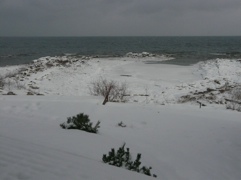
Here is a picture of what we are leaving. The water at the cottage is the lowest we have ever seen.

Posted in Uncategorized | 1 Comment

Itinerary

I will be using this blog as my travel diary. Here is the agenda for our first 2011 trip:
Feb. 12 – fly to Bangkok, Thailand via Hong Kong
Feb 13 – arrive Bangkok 8pm
Feb 14 & 15 – tour Bangkok with private guide and board ship Feb. 15
Feb 16 – tour Ayutthaya
Feb 17 – Ko Samui
Feb 18 – cruising South China Sea
Feb 19 & 20 – Saigon (Ho Chi Minh City), Vietnam
Feb 21 – cruising South China Sea
Feb 22 – Da Nang
Feb 23 & 24 – Hanoi
Feb 25 – cruising South China Sea
Feb 26 & 27 – Hong Kong
Feb 28 – cruising Taiwan Strait
March 1- Keelung, Taiwan
March 2 – cruising East China Sea
March 3 – Kagoshima, Japan
March 4 – Nagasaki, Japan
March 5 – cruising the East China Sea
March 6 & 7 – Shanghai, China
March 8 – cruising the Yellow Sea
March 9 – Seoul, Korea
March 10 – cruising the Yellow Sea
March 11-14 Beijing and Xi an
March 15 fly home

We will start posting our journal and pictures Feb 16 or 17 after we board the ship.

Posted in Uncategorized | 1 Comment