
March 1 KeeLung, Taiwan
KeeLung is a fishing port north of Taipei. Today we took a tour to a gold
 mining area and along the north coast. KeeLung means Bird Cage. It is a natural harbour and was used for many years as a fishing harbour, now it is the second biggest wholesaler for fish. It is a city of about 400,000 population and is 20 miles from Taipei. The total population of Taiwan is 23 million. The population is decreasing as people are getting married later (30s) and having only one child on average.
Our guide was a very energetic man of 63, he originally trained as a diamond cutter and worked in South Africa for many years, he then moved to White Horse, his son is currently going to school in Kamloops studying business. He didn’t think this was a good idea and has told his son he would be better off to come home and be a tour guide. Since Taiwan has started allowing Chinese into the country in 2010 their tourism had gone from 1.5 million tourists a year to 5 million.
It is very foggy and rainy today. Apparently it rains 250 days a year. It is spring here and we saw some lovely Cherry blossoms. We also saw MacDonalds. Our guide told us there are 350 MacDonalds in Taiwan (he thinks MacDonalds is great and eats there once a week). He also talked about shopping at Costco and about KFC.
The Japanese occupied Taiwan for 51 years from 1895 until 1945. Around 1949 China became under the influence of Russia and the communists took over and Chiang Kai Shek came to Taiwan, bringing 600,000 soldiers and train loads of treasures. Over the next number of years 3700 ships each with hundreds of refuges arrived from China.
A gold rush started in this area in 1907 when the Japanese discovered gold in the area. It became a major mining area for gold, copper and coal. The mines are all closed now. The gold has run out and the coal mines were closed after a series of accidents claimed the lives of over 100 miners. Taiwan now uses coal imported from Australia, USA and Canada to generate electricity, which is very inexpensive here.
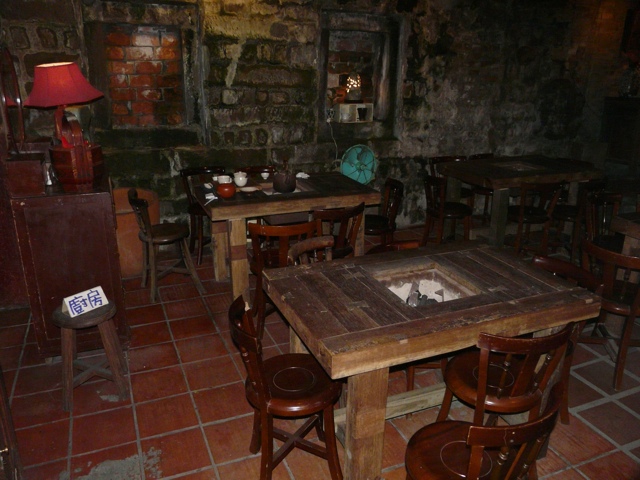
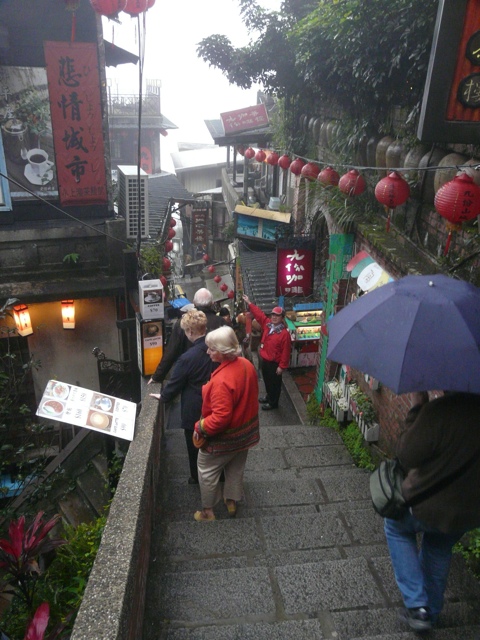
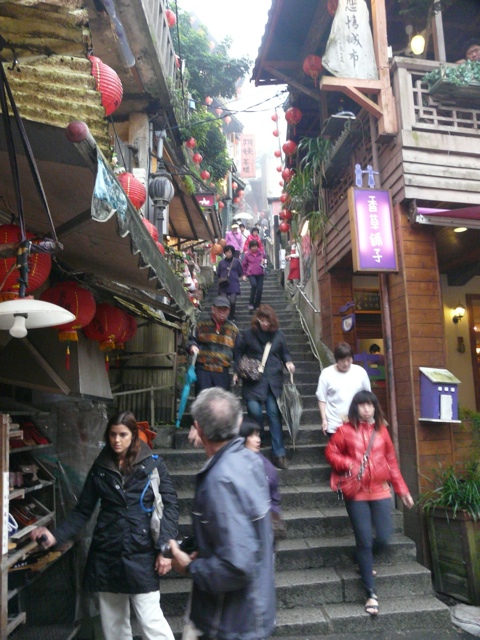
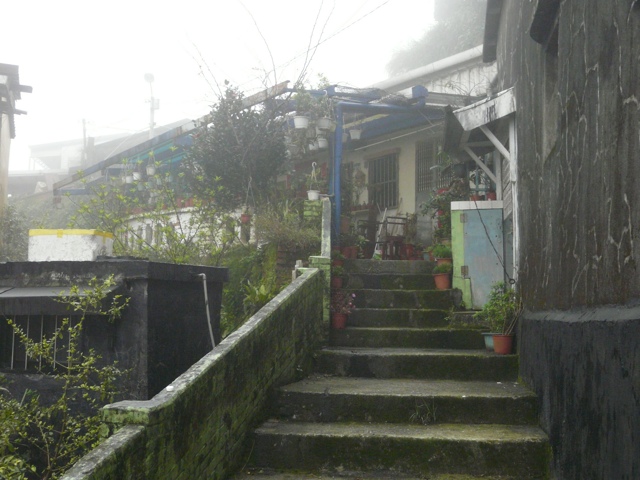
Our first stop is in the town of Joiu Fen. It used to be a mining town and became a ghost town when the mines closed. Then a famous Chinese director made a movie about the town – City of Sadness. The movie can still be seen on Utube. As a result of the movie the town became a tourist town and several hotels and restaurants have sprung up. We went for a walk in the market and down the many, many stairs. Why do such little people have such high steps? The market was very clean. Our guide went along the booths sampling all the dishes – candy, several kinds of tea from the highlands of Taiwan, art, pottery, carvings, leather goods, brushes and paper for Chinese ink drawings. Of course, everything is made in Taiwan. The prices and quality were very good. You could buy good sized hand made leather purses for about $40 Cnd.
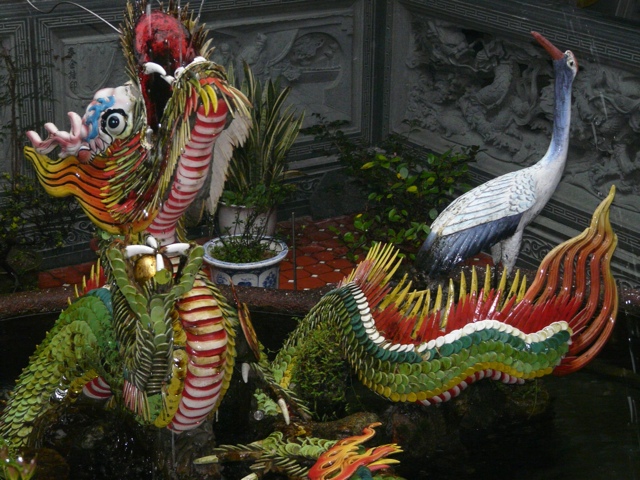
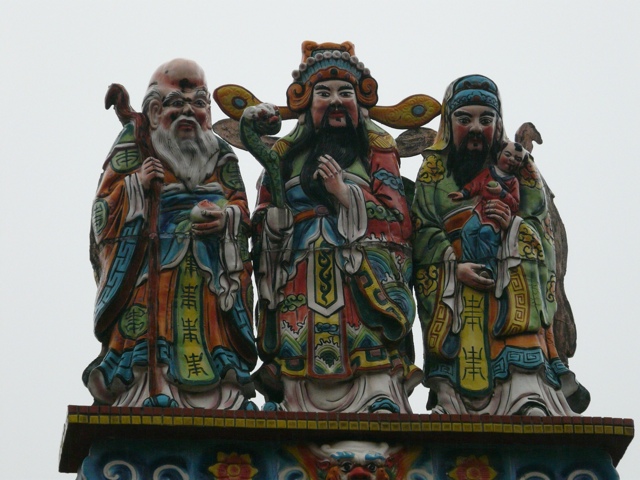
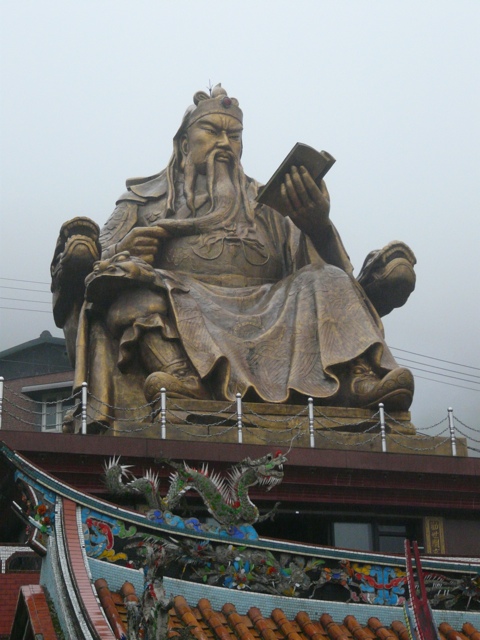
Taiwan has 40,000 temples of which about 50% are licensed. Temples are all supposed to be licensed. 70% of the population are Buddhists. We visited a Taoist temple. The temple was dominated by a huge statue of Mr Qwan Kung. He was a follower of Confucius who lived 2000 years ago and taught loyalty to your customers and masters. He is pictured reading from a book. The temple was built 120 years ago during the Han dynasty. Inside the temple was richly decorated. There is a beautiful fountain with a dragon and two male cranes, a red faced god who is the God of Money. The guide showed us how to ask the god for guidance. He first took some sticks in a jar and spun them 3 times each way, then asked the question and threw 2 pieces of lip shaped wood onto the floor. Depending on how the lips fell determined what the answer is to your question. People come to this god with questions about their jobs, to determine the best date to get married etc.
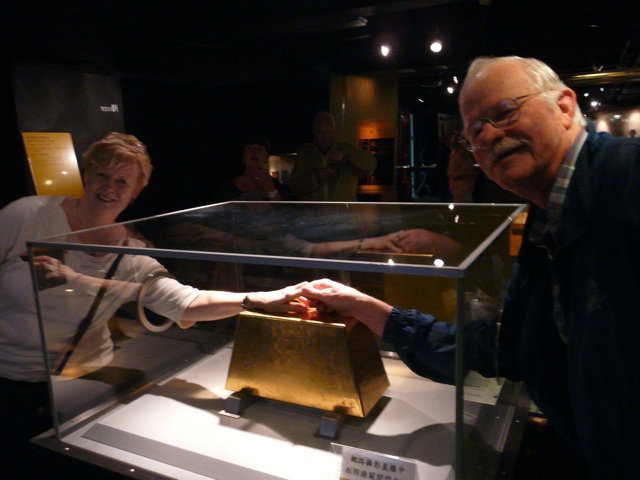
We also visited the Gold Ecological Park. There we visited the museum. During WW II POWs were brought here by the Japanese to work in the mines under terrible conditions that were compared to the holocaust in terms of how the prisoners were treated. While in the museum we saw and touched the largest brick of gold in the world – 2,130kg. The information in the display said that gold is so rare there have only ever been 200,000 metric tons mined world wide.
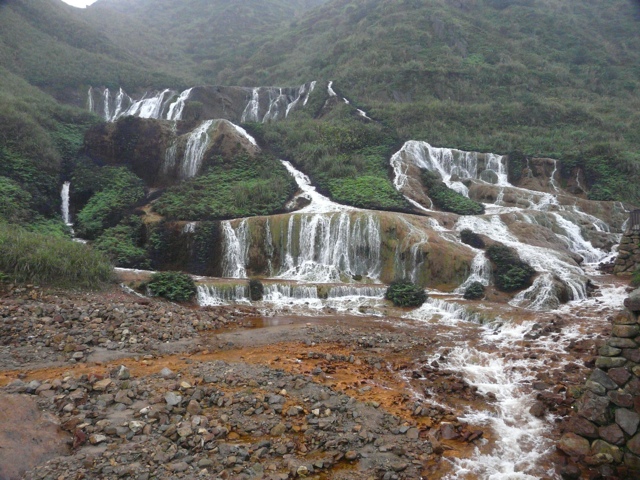
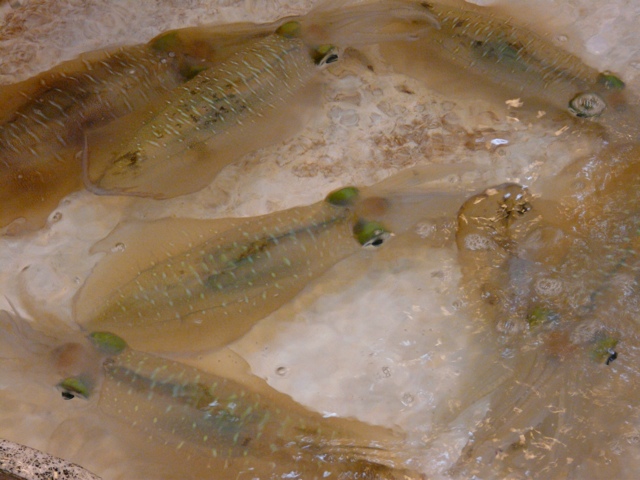
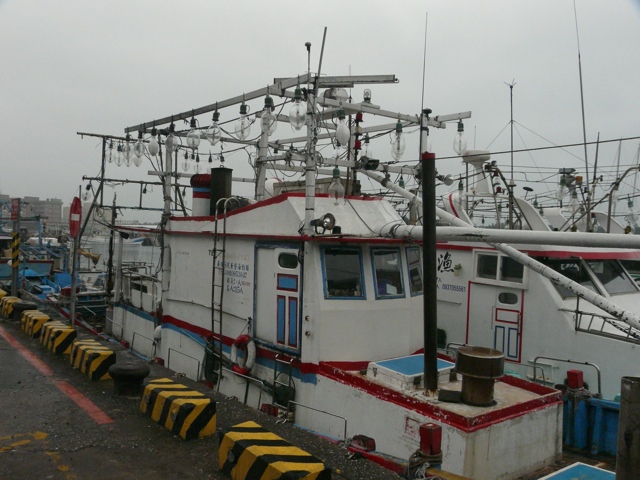
We then drove to the sea. On the way we passed a waterfall and a stream with copper colored rocks – tailings from the copper still in the mountains. Where the river runs into the sea the sea is two colours and so is named EuYung Sea which means two colours, this is also where the China East Sea and the Pacific Ocean meet. We passed through some small fishing villages. The fishing boats are equipped with a lot of lights strung along the length of the boats. They fish at night for squid and use lights to attract the squid into their nets.
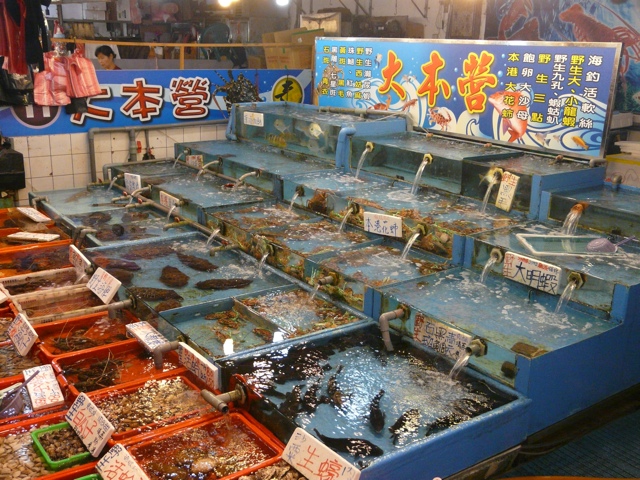
We stop at fish market. All kinds of unusual fish, most alive in tanks, several kinds of shrimp, squid, many varieties of fish we didn’t recognize, a counter filled with large fish eyeballs staring at us – we are told these are a delicacy, blue marlin eyes. We see elephant fish, apparently from Canada (who knew we even had them).
Tonight and tomorrow we are traveling to Japan. According to Japanese laws the ship cannot use it’s satellite communications system, so no Internet until we leave the Japanese waters. It will likely be 3 – 4 days before I can post the Japanese blogs.


Lovely pictures, Gary….and great writeups, Pat.
Where did you get all the info? You must REALLY be paying attention to all the details (numbers particularly) or your typing from the guide’s handouts!!
Will look forward to Japan notes…..Ross
Ross
I have posted the Japan notes and pictures now. As you can imagine there are hundreds of pictures that are not being posted. We will bring all of those when we come to visit.
I am taking detailed notes as we go along. My memory is not great these days, especially as one temple blurs into the next. This also has solved the problem of Gary and I having different understandings of what we saw and/or heard.
Pat Beaudoin Sent from my iPad