After a night of listening to the wind howl and rain pelt against the windows we awoke to another dark, wet day.
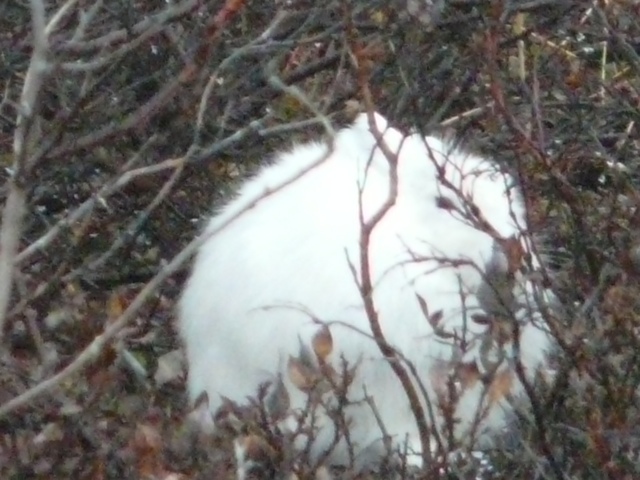
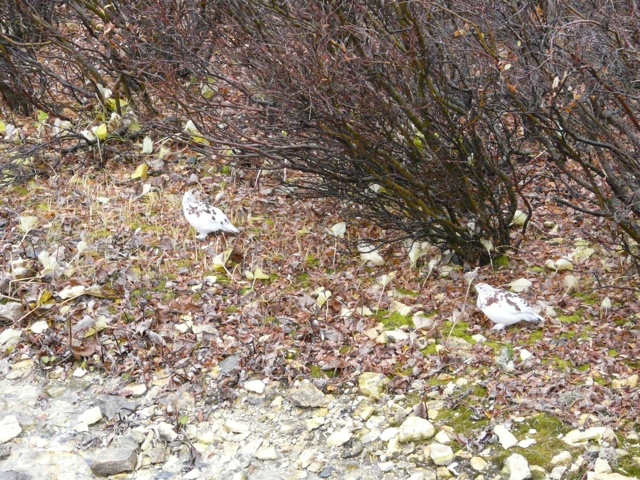
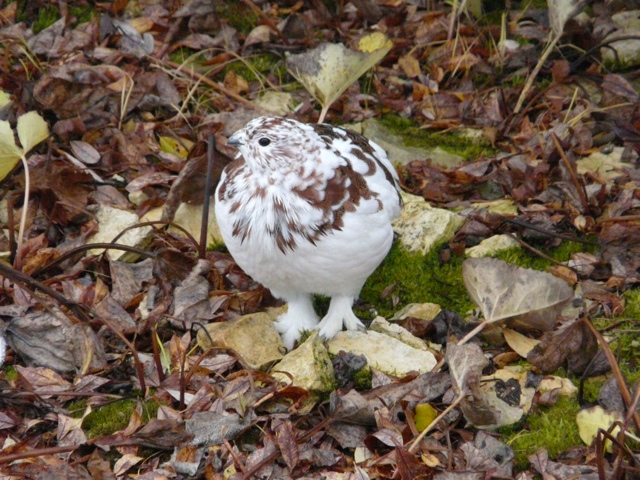
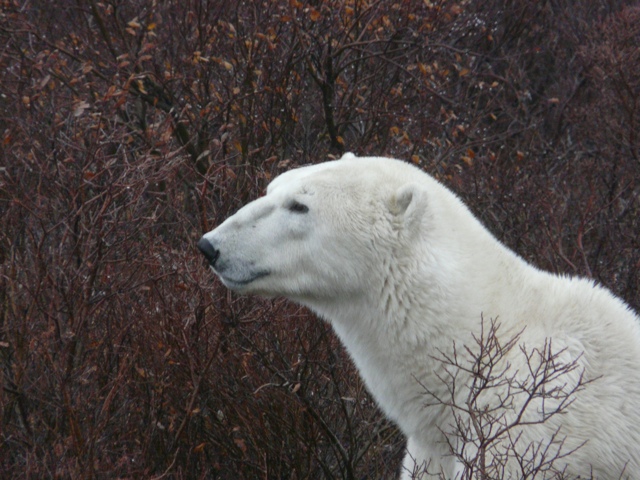
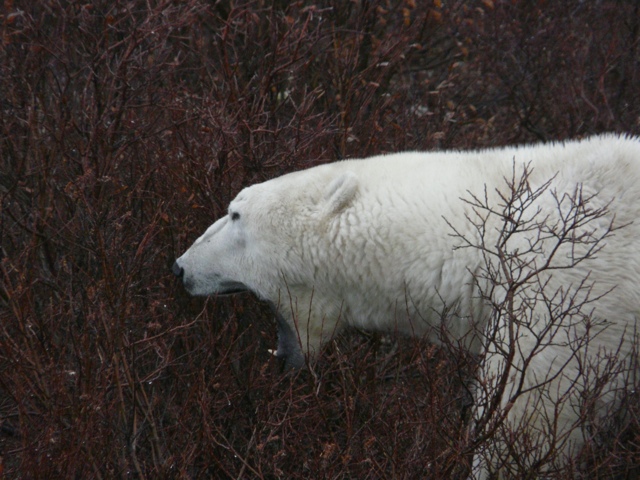
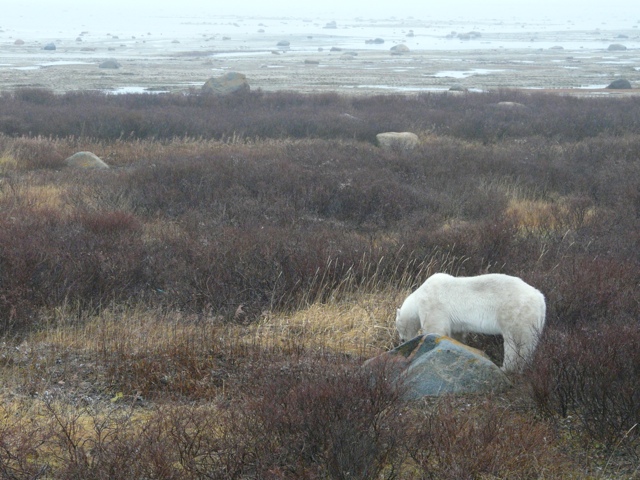
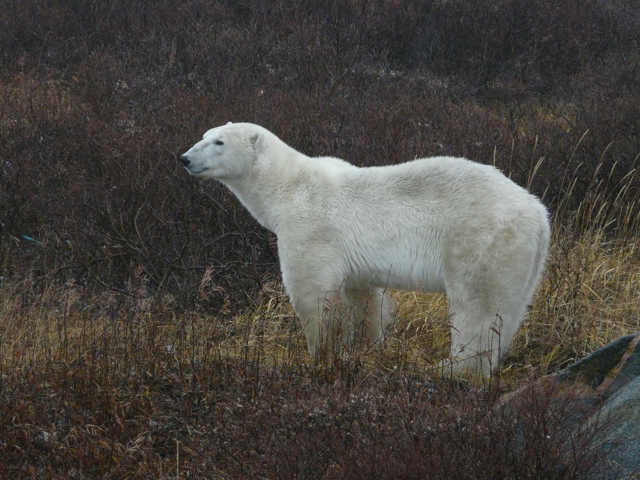
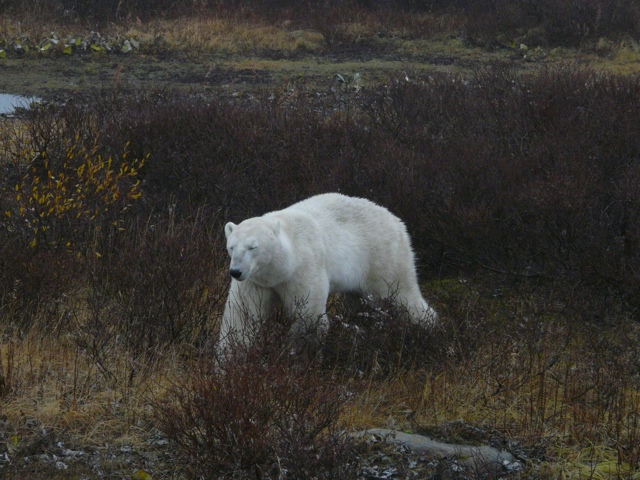
Today spent out on the tundra looking for bears. We saw 2 bears, some ptarmigans and artic hares and snow buntings.
Yesterday’s pictures included a domed building with a spire – that is an old rocket launcher. CNSC is on the site of a former atmospheric reach centre which used rockets to collect information on the atmosphere and aureola borealis.
Last night we had a lecture on the Polar Bears
Things to know about PBs:
Circumpolar – live all around the North Pole
Evolved from brown grizzly bear about 100,000 years ago and have recently been some interbreeding as their territories start to overlap with climate change.
Adult males 770 – 1500 lbs
Females 330 – 500 lbs
Can reach 10 feet when on hind legs
19 subcultures around the world
935 in this area
15,000 in Canada
25,000 est. in world
Legally hunted by local hunters. Each community gets a quota. Typically use half the quota for community members. Other half used for sport hunters who pay the community to hunt the bears. Spot hunters are allowed 3 days to get their bear and must hunt in the traditional manner camping out on and living off the land. They pay $25,000 – $30,000 to the community.
International treaty manages the PB population around the world
Paws have minuscule papilla that grip the ice
Large sharp claws each claw about as long as one of my fingers, used to grab and tear prey
Very powerful jaws used to crush heads of the seals
Primary food is ringed seals hunted on the ice
Adult male will eat avg. Of 50 seals a year
Ringed seal population of 6 to 7 million sufficient to feed bears and the Inuit who hunt them and the caribou
Bears have a long streamlined neck for reaching into berthing hole to grab the seals
Males neck bigger than head, females head bigger, for this reason only females have been tagged – collared as collars come off males
Necks powerful as used to pull a hundred to 200 lb seals out of water.
Ringed seal only one of a few that can keep a breathing hole open all winter, use claws to scrape through 6 feet of ice, they will keep 6 – 7 holes open all winter
Bears need to put on large store of fat to survive months of fasting while ice gone
In most cases bear will strip seal of it’s skin and attached fat and leave rest which scavengers will eat. The ravens and arctic foxes follow the bears
Mothers milk is very rich in fat – cubs one pound at birth and grow to 30 lbs over 2 months when they leave the den
Range 000 s of kms over ice hunting in winter
Run very fast over short distance
Males live 20 – 25 years, females 30; die when teeth start to rot and die of starvation .
Mate in April/May but embyro doesn’t implant until Aug and then only if female has fed successfully and can survive birth and delayed return to ice in winter.
Give birth in December and nurse young in den until about Feb when cubs big enough to make trek out onto ice.
Usually twins
Female dig dens in peat in summer inland and away from males who would eat cubs and might kill female in attack
Time off ice ” walking hibernation” very lethargic
This area has largest gathering of PBs because ice forms first here and leaves area last so also large number come off ice here
Hudson Bay shallow, much of Canadian water drains into bay. Water from over 1.5 square miles covering Quebec, Ontario, Manitoba, Saskatewan and Alberta, therefore less salty than oceans
Come onshore around July when ice usually breaks up
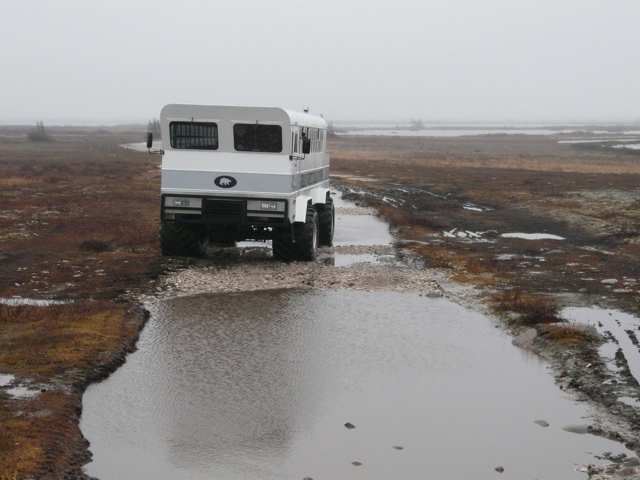
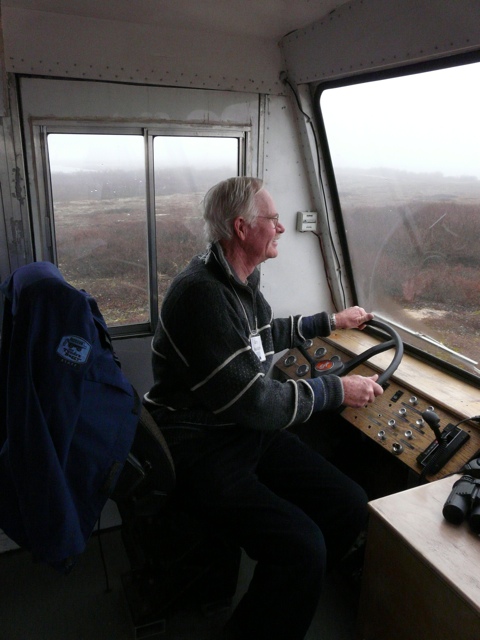
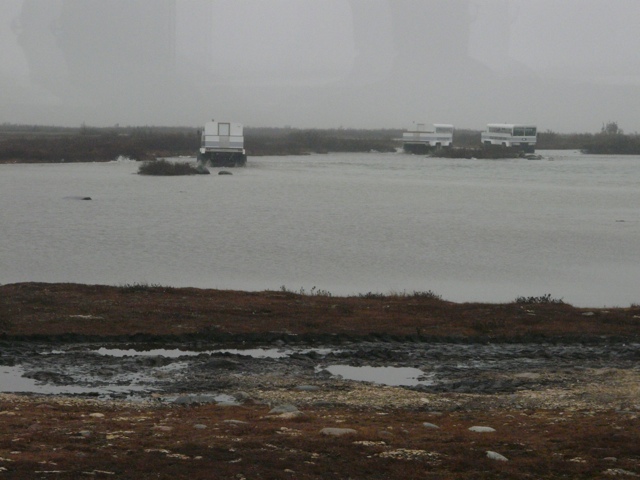
Our tundra buggy follows roads built by the military about 40 years ago during the cold war, no maintenance since then so roads are ” rough” to put it mildly. Can’t go off roads until ground freezes, track would stay in the tundra for years.
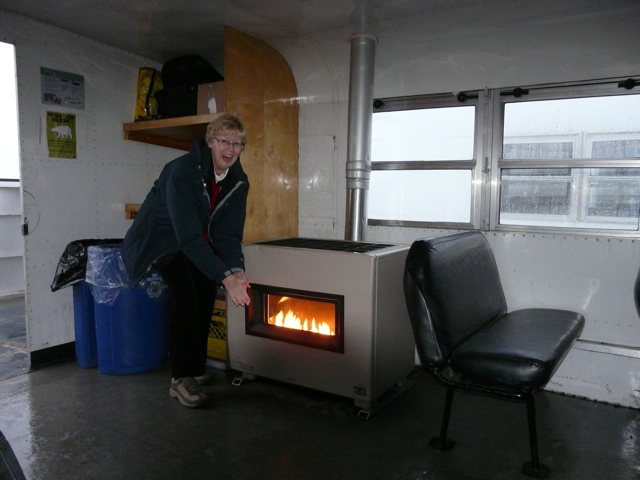
Heat on the tundra buggy is provided by a fireplace! See picture.
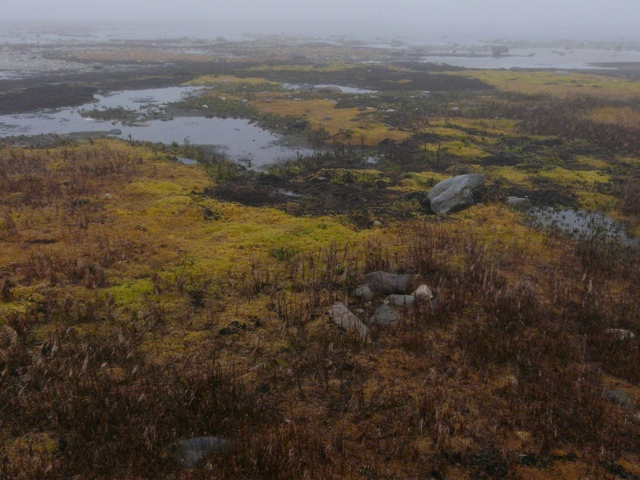
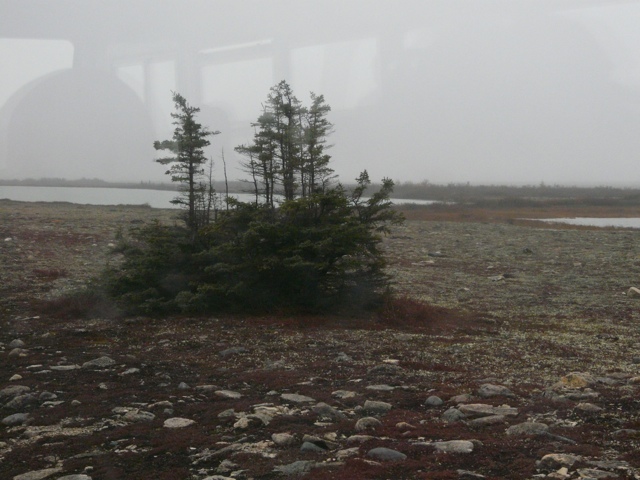
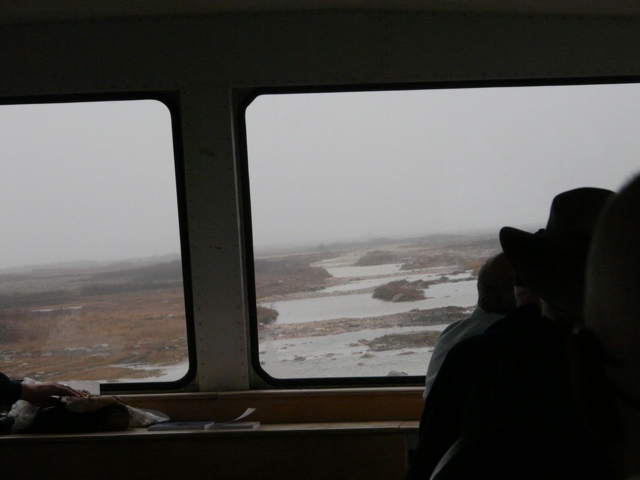
We pass by barren land covered with gravel, rocks, ponds, stunted tree islands. Permafrost varies in depth, in this open area likely 6 feet down, in more protected area closer to surface. Will go down a long way even miles.
Ice on the ponds and on the bay usually gets to a depth of six feet.
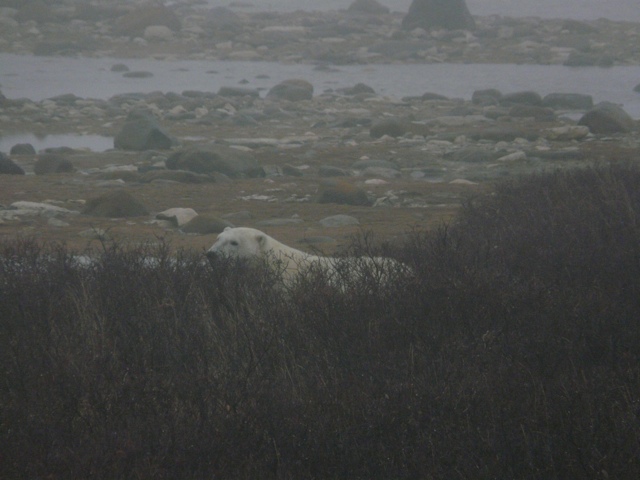
See a very large polar bear in the distance across a pond and a smaller one beside the buggy – male about 6 or 7 tears.