
Up at dawn so we can see the sunrise at the Taj. When we arrive there are 4 long lines – one for foreign women, one for local women, one for foreign men and one for local men. For once the men were in the slow line! Always there are more men than women out and about.
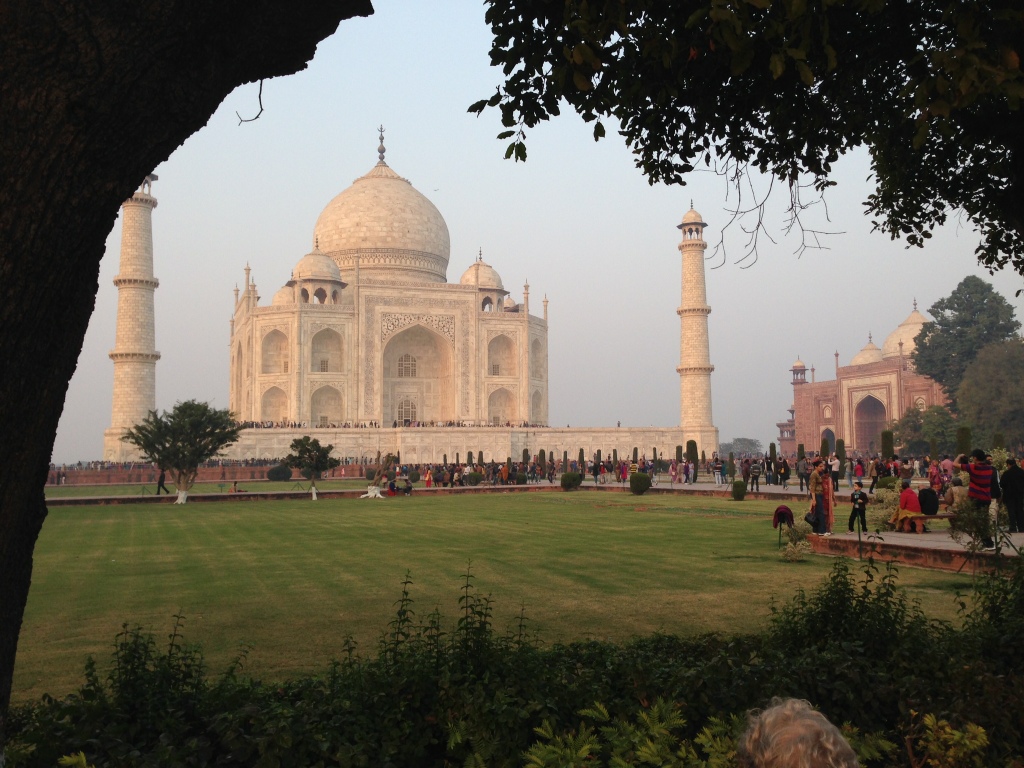
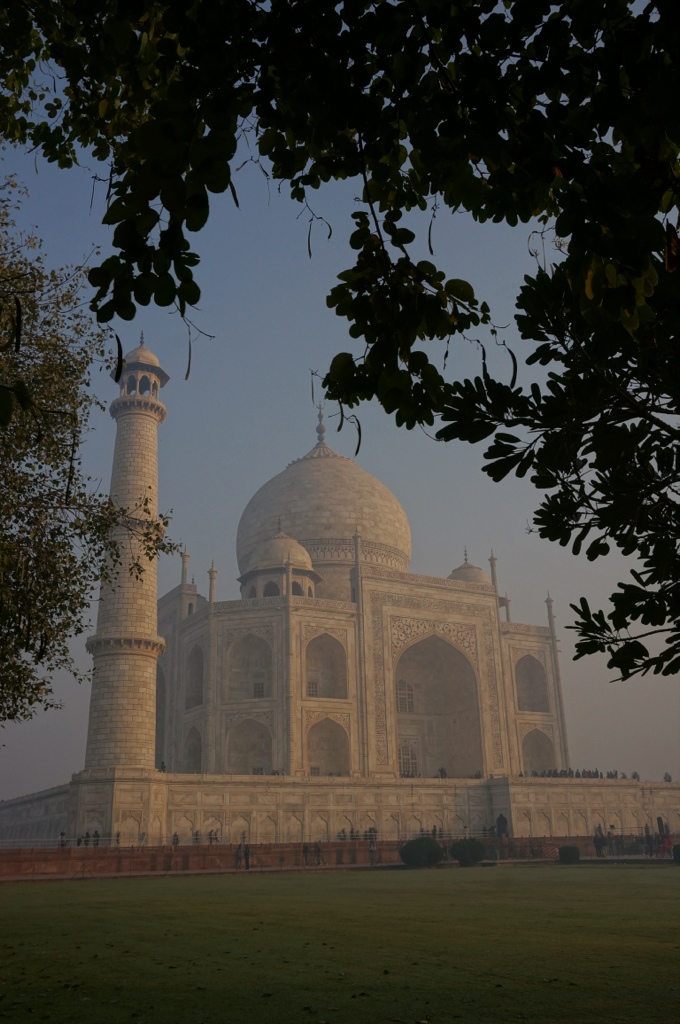
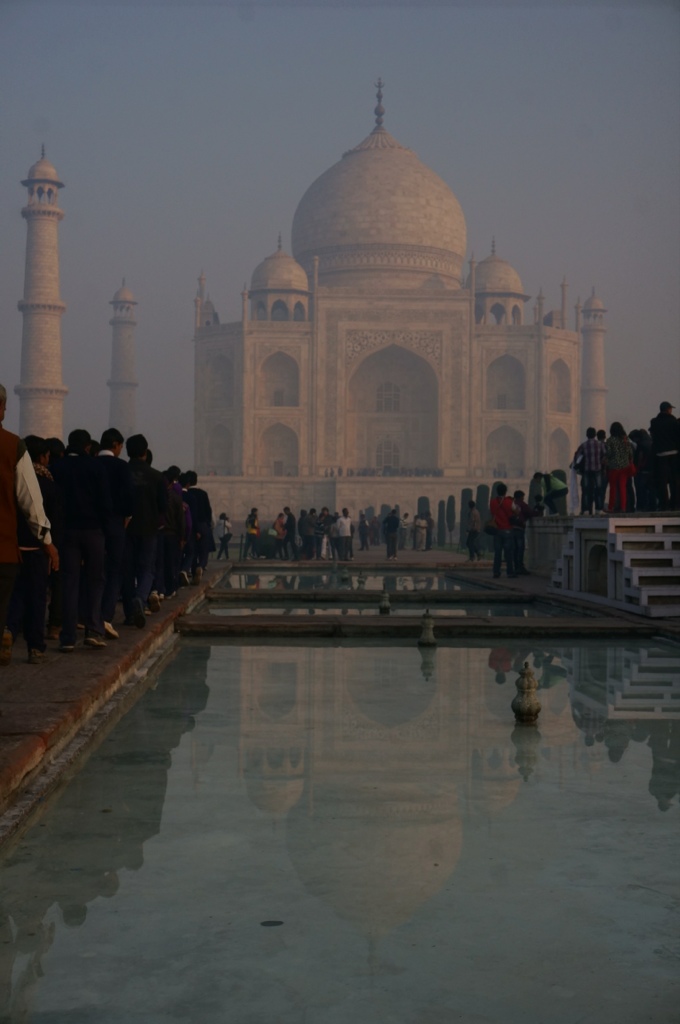
We saw the Taj twice. Once for sun rise (the sun was well up by the time we got in) and once at sun set. There was a very slight color change, slight pink in the morning, white during most of the day and slight yellow tinge in the evening. As you might expect we have a million photos of it. In the morning we thought it was crowded, in the evening it was a mob scene. The local people line up by being right up, against the person in front of them, you couldn’t put a piece if tissue between them and they shove in front of you – a polite Canadian ends up being shuffled back even though we are so much bigger than they are.
Taj was built by a king as a mausoleum for his wife. The Mongols conquered this area in 16th century and reigned for hundreds of years. The 5th Mongol king had the Taj built. He had 4 wives, his 2nd wife was a love match. She died giving birth to their 14th child. Six of the children survived. On her death bed she made her husband promise to not take any more wives and to do something to honour her memory. The Taj took 20,000 workers 23 years to build. Before it was finished the king’s second son imprisoned his father and killed his brothers. The king was imprisoned at Agra fort, he could see the Taj from the window and watched it being built. When he died he was also buried there.
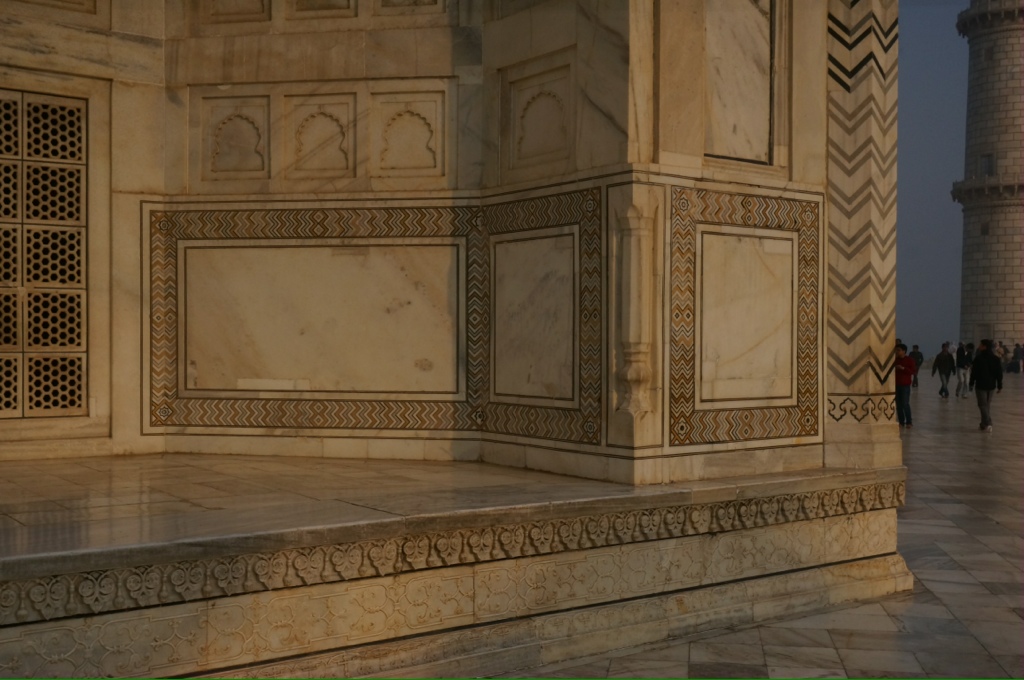
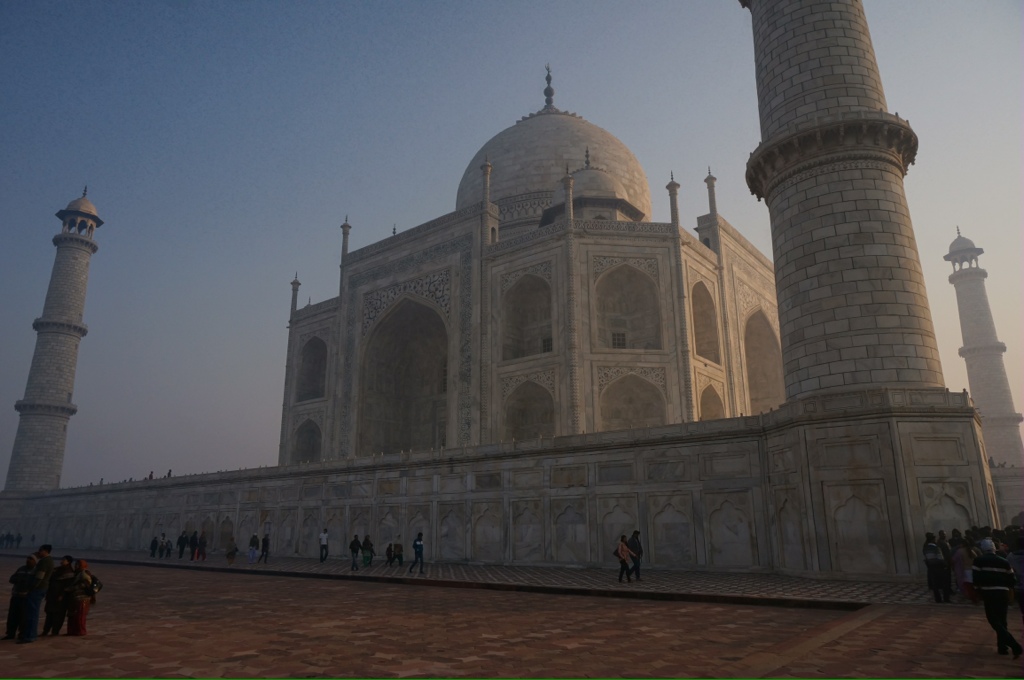
The buildings are brick with a marble facade, the marble came from a quarry about 300 kms north.
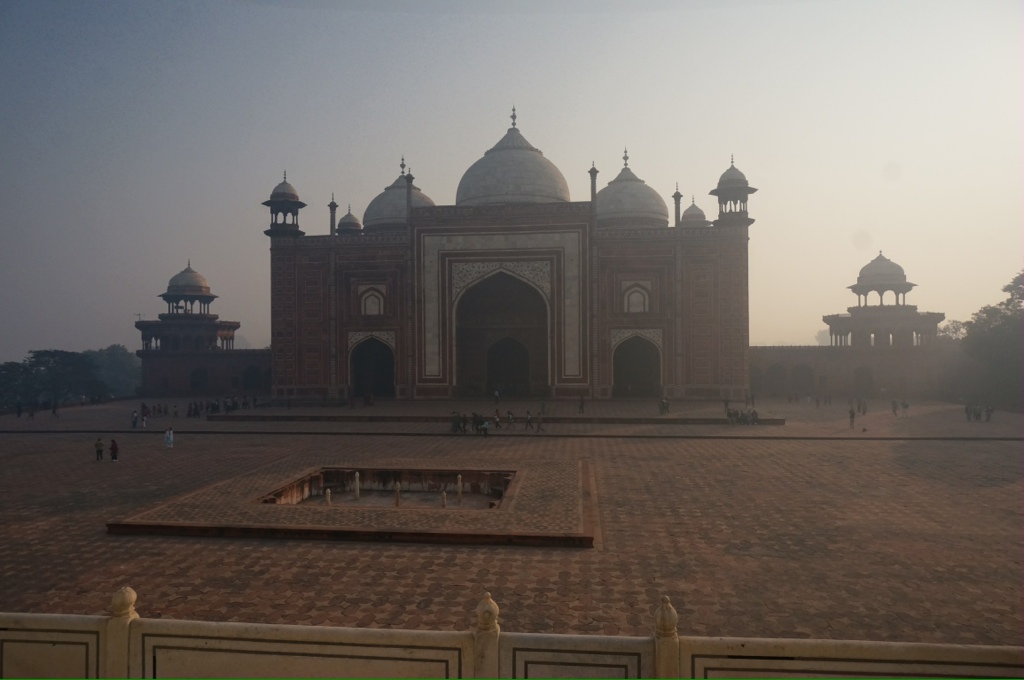
There are 3 buildings – the main one being the mausoleum, a smaller building to the right and a matching building to the left. One is a mosque, the other a guest house. No one has ever lived here.
The main building has 4 towers which were designed with a slight lean away from the main building, so if they ever fell down they would fall away from the graves.
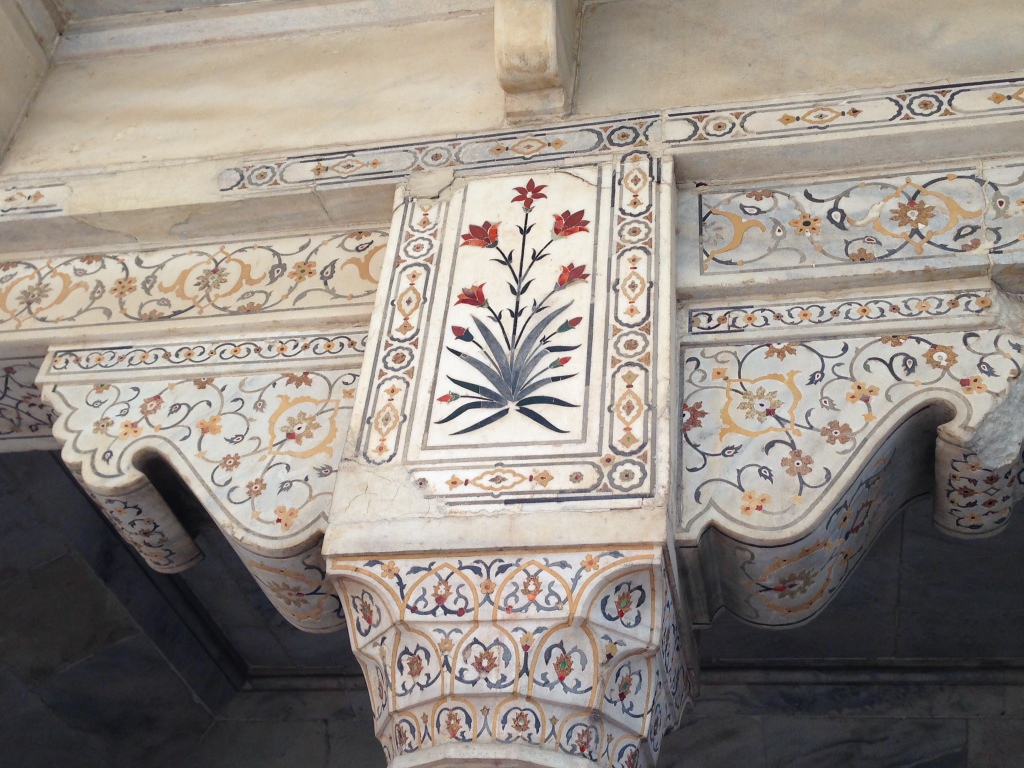
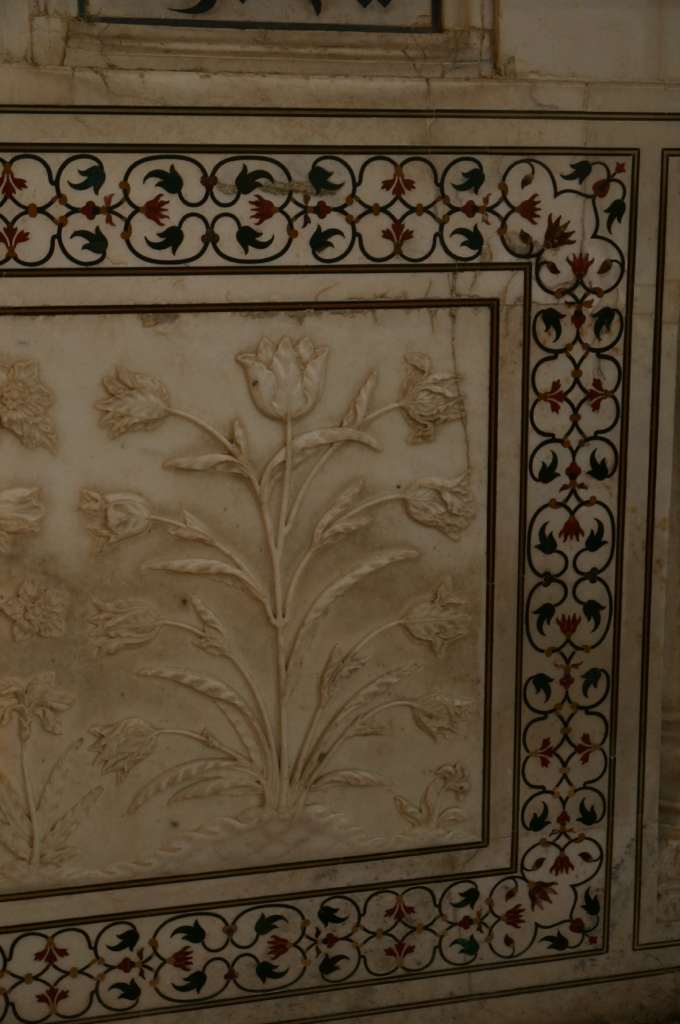
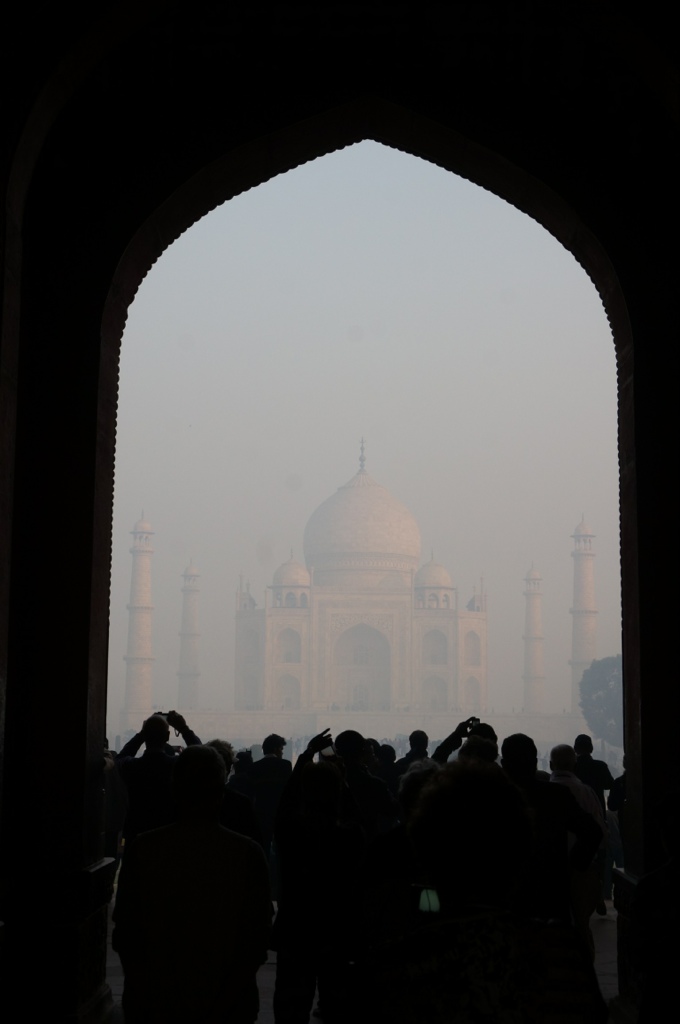
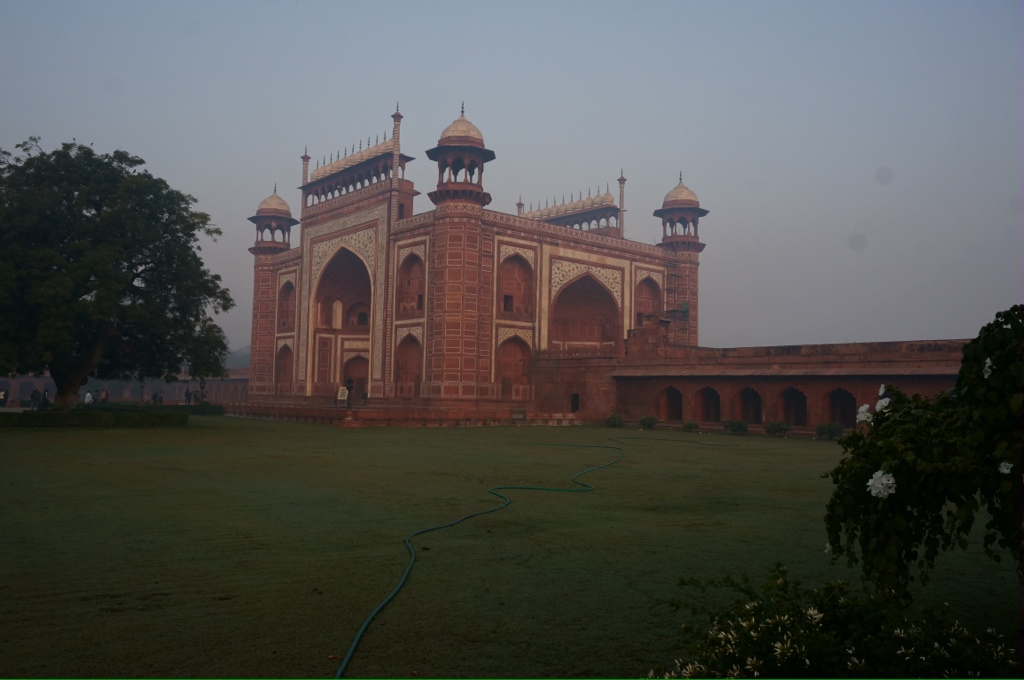
Much of the marble has intricate decorations, either inlay of color or carvings. The main building is protected by an entry gate built of brick and red stone so your first glimpse of the Taj is through the arched doorway.
In the morning there was a heavy fog or smog hanging over the scene, this cleared as the morning went on and when we returned in the evening it was clearer. We did go inside the main building in the morning to view the graves. This is the only area not symmetrical as the king had not intended that he be buried there. He had planned to build a matching mausoleum in black marble across from the Taj.
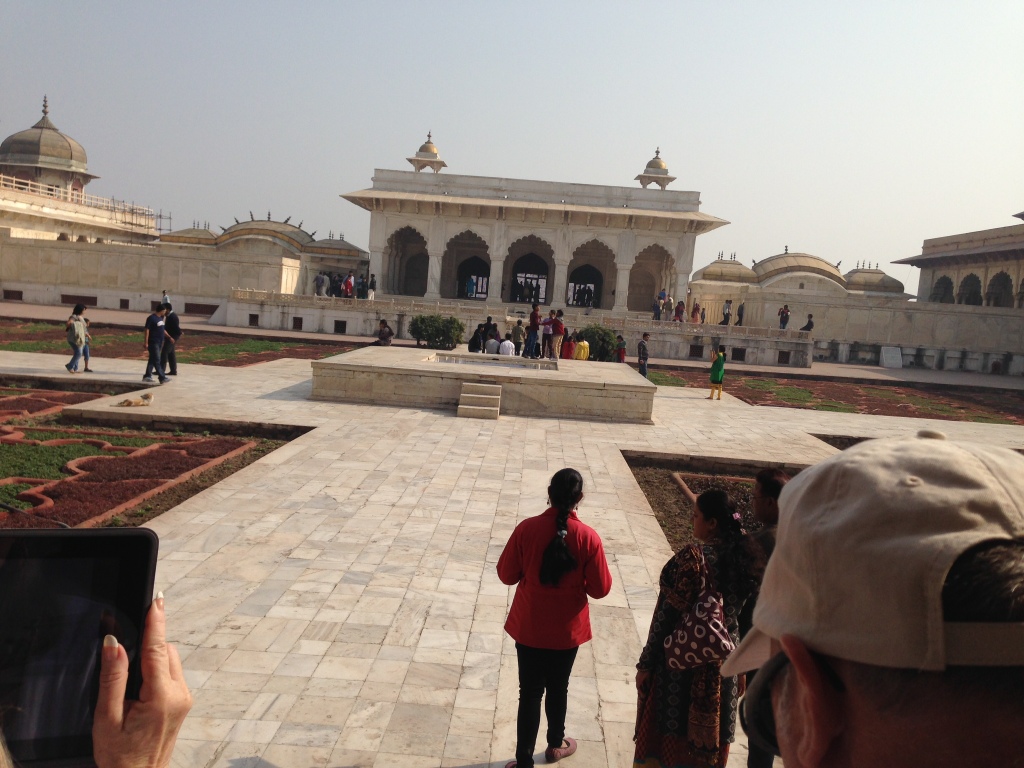
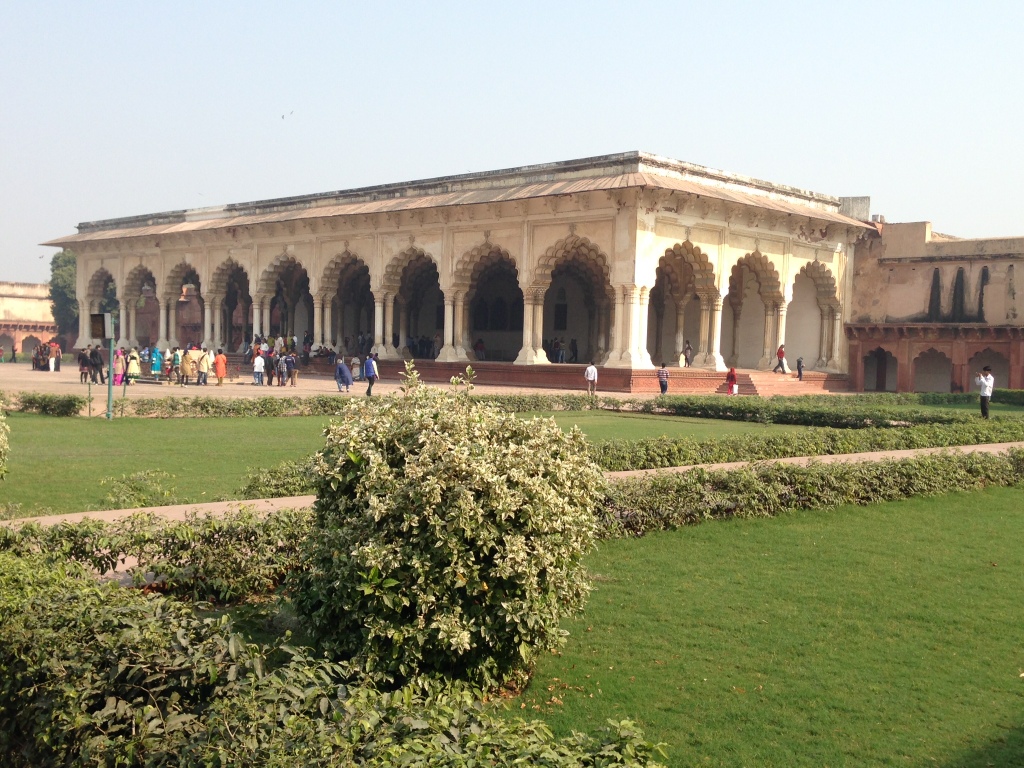
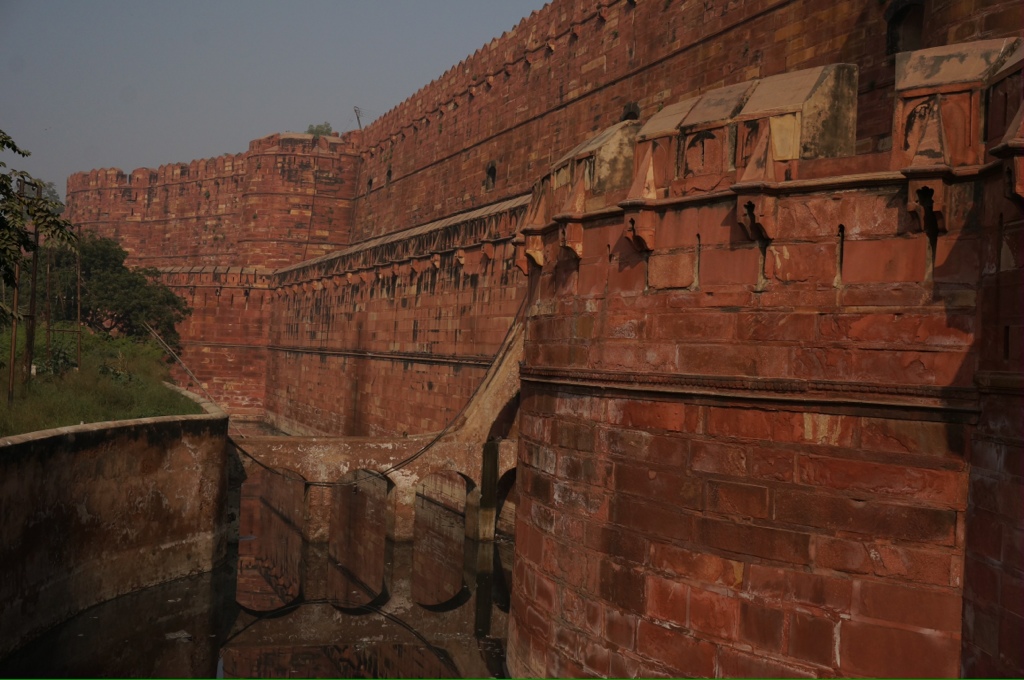
In the afternoon we toured part of the Agra Fort. Most of the fort is not open to the public as it is an army base. It is huge, the part we saw was where the king was imprisoned. We could see the Taj in the distance from the windows.
The fort was built in the 1500s and consisted of 500 buildings surrounded by a brick/red stone wall and moat. There are some marble buildings that were added later. The British occupied the fort in the 1800s and made some renovations as well, including the marble Hall of Justice.
There are millions of steps everywhere, if my knees weren’t wore out before our visit here they will be by the time we finish!
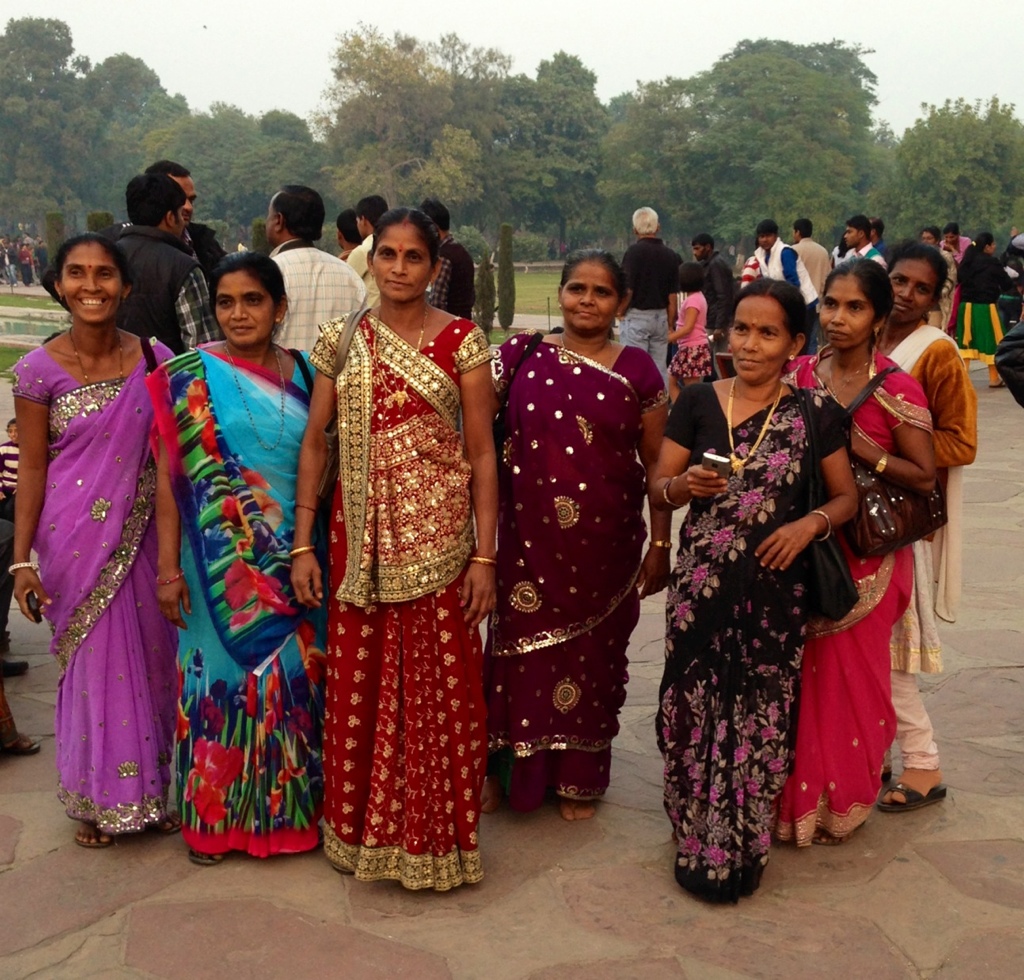
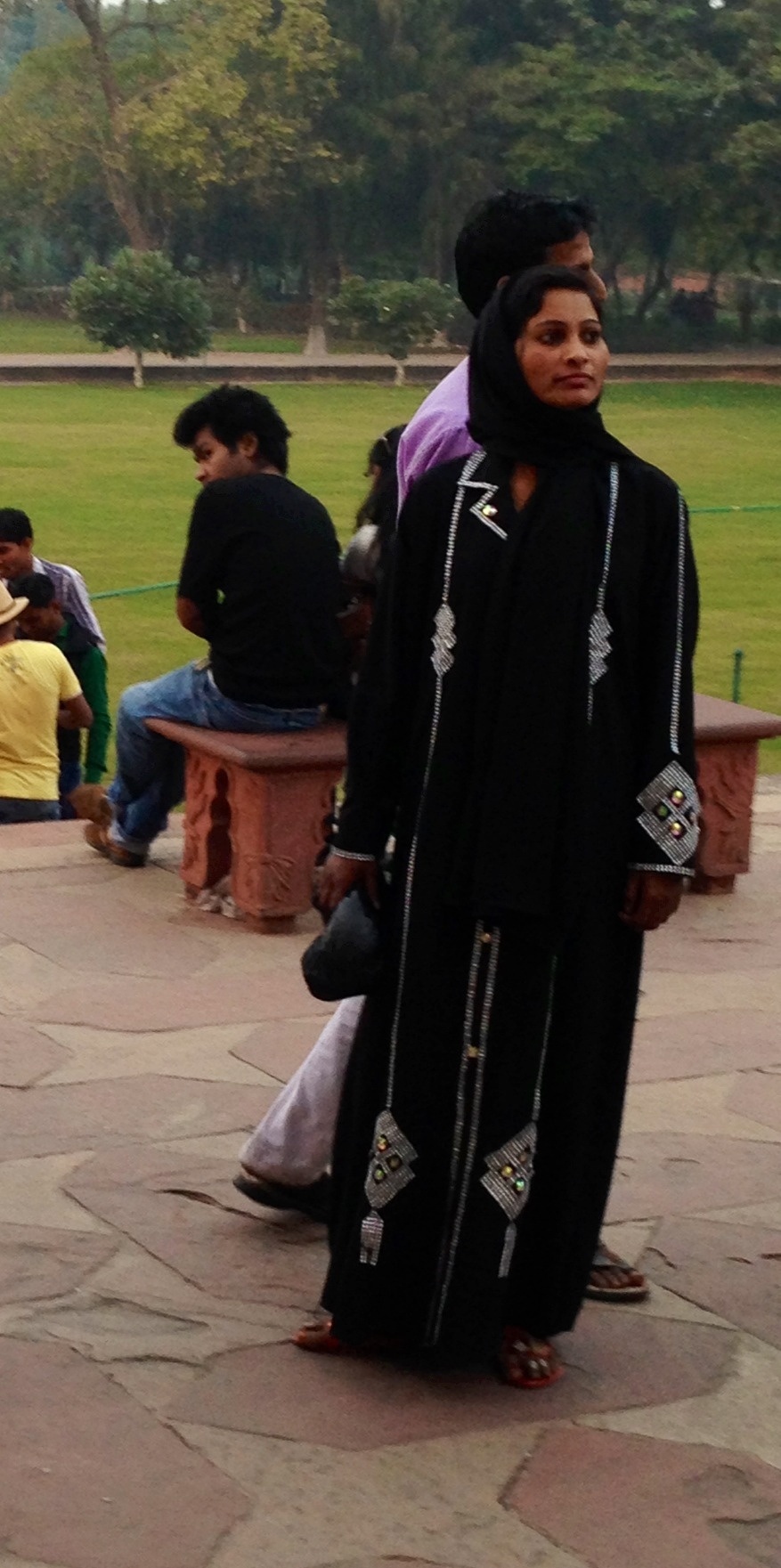
The local people we see on our tours mostly seem happy. The women are dressed in colorful saris and they are all interested in us. We have requests to get our picture taken with them.
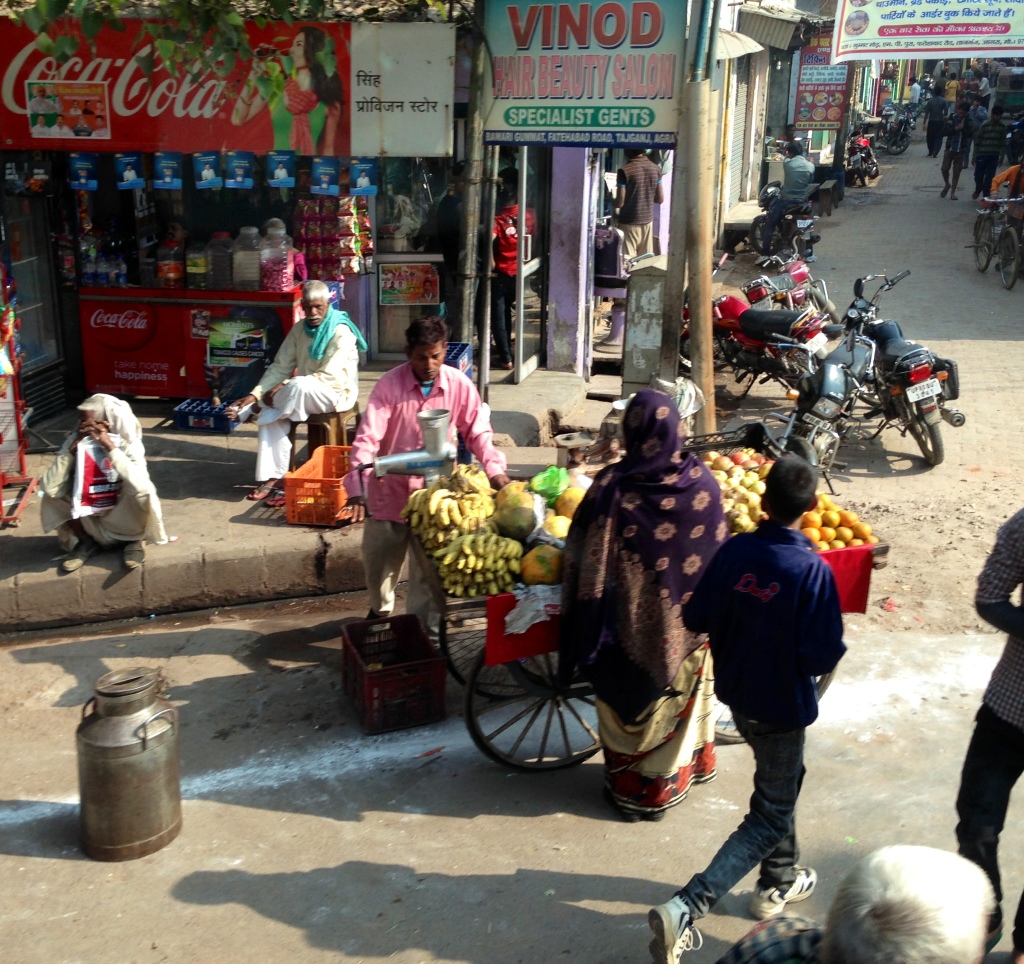
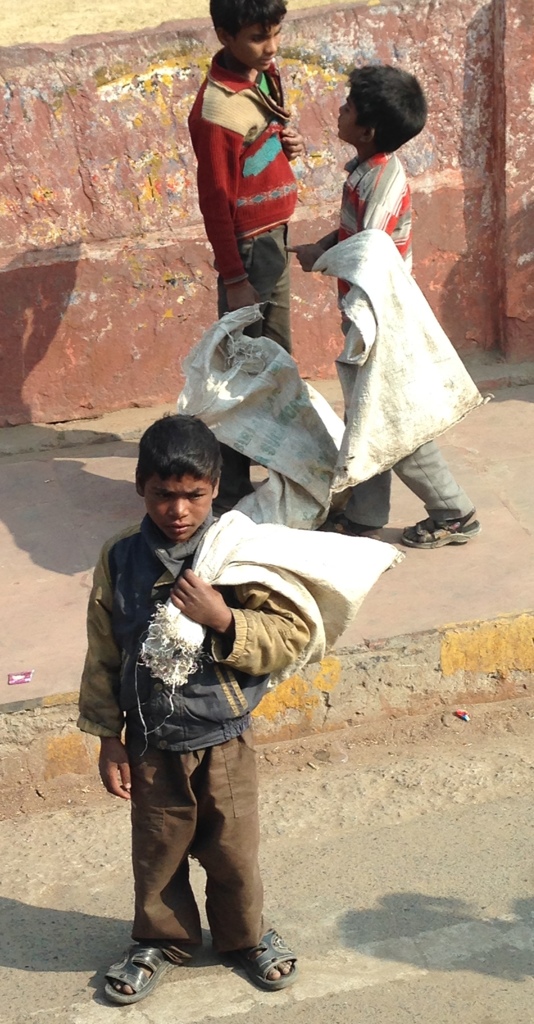
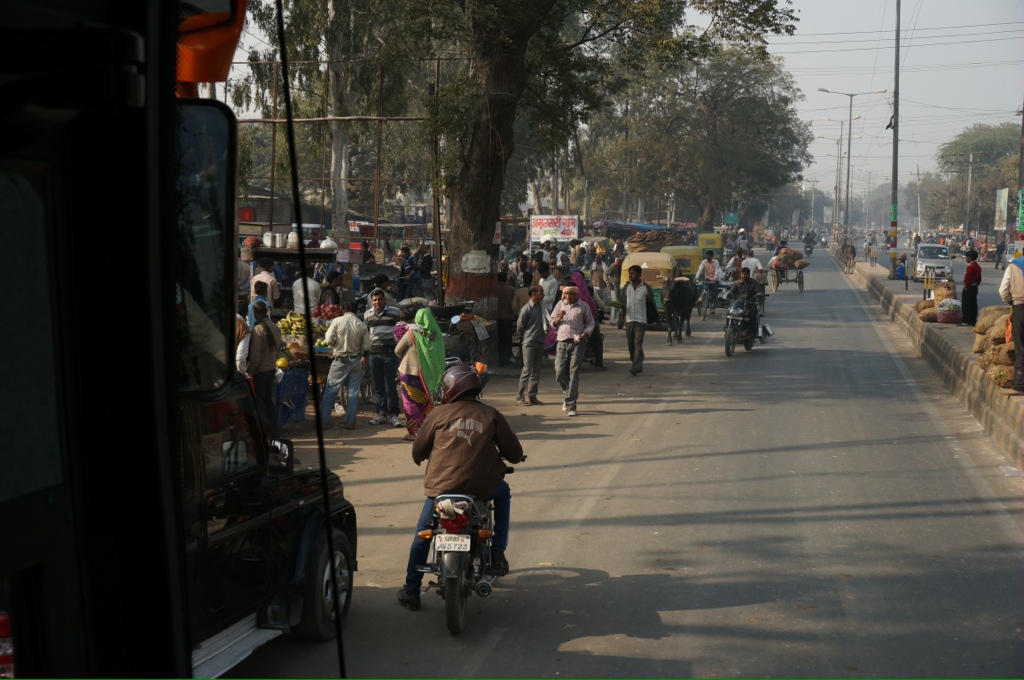
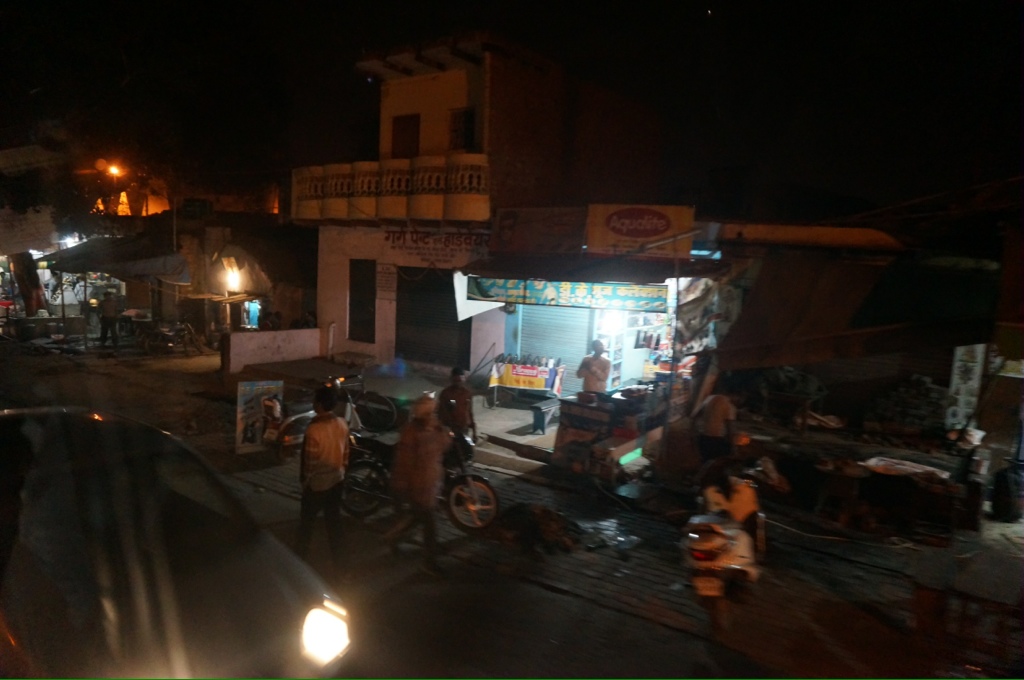
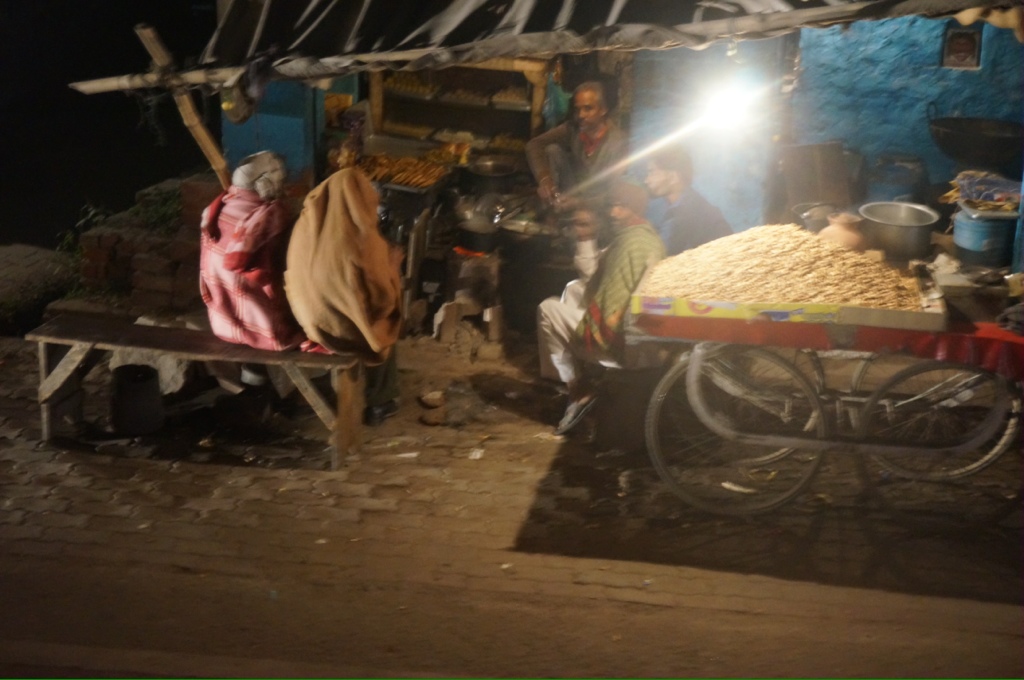
On our drive we passed through a market area. Fruit and veggies plus anything else you need out in stalls and carts along the road. Our guide says they shop everyday for fresh fruit and veggies, many are vegetarians and the produce is grown locally. Many tuk-tuks (green and yellow 3 wheeled “taxis”) often overflowing with people. Built for 2 passengers they often have 5or 6 and our guide says he has heard of 15 in one. Also trucks and buses with people crowded in and hanging off the sides. We see a few beggars but not many, a lot of very aggressive vendors of “stuff” with flexible pricing.
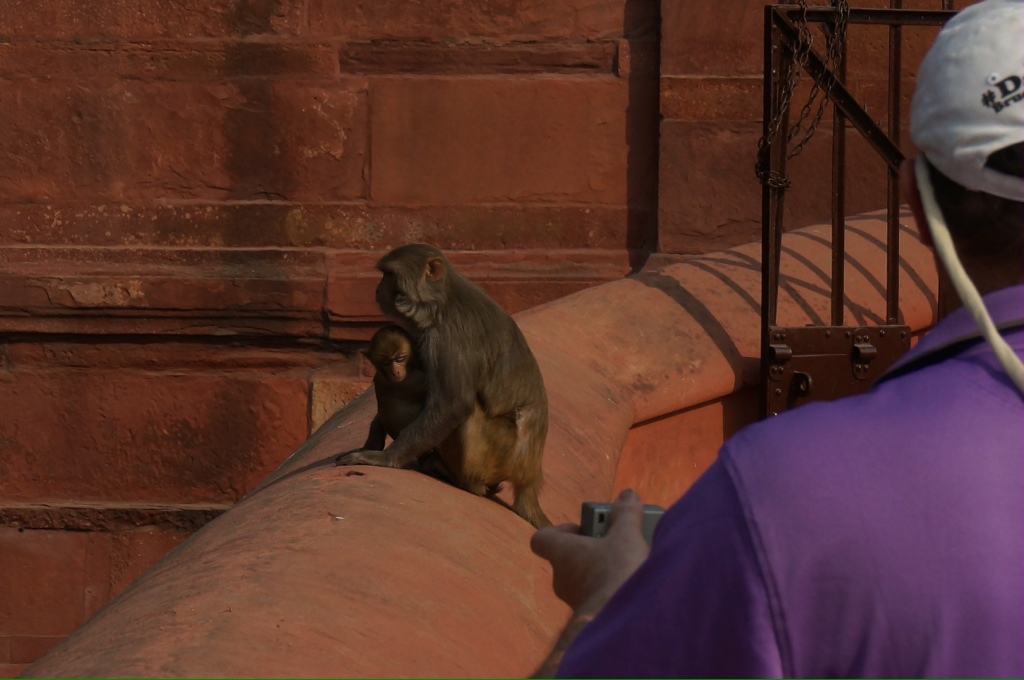
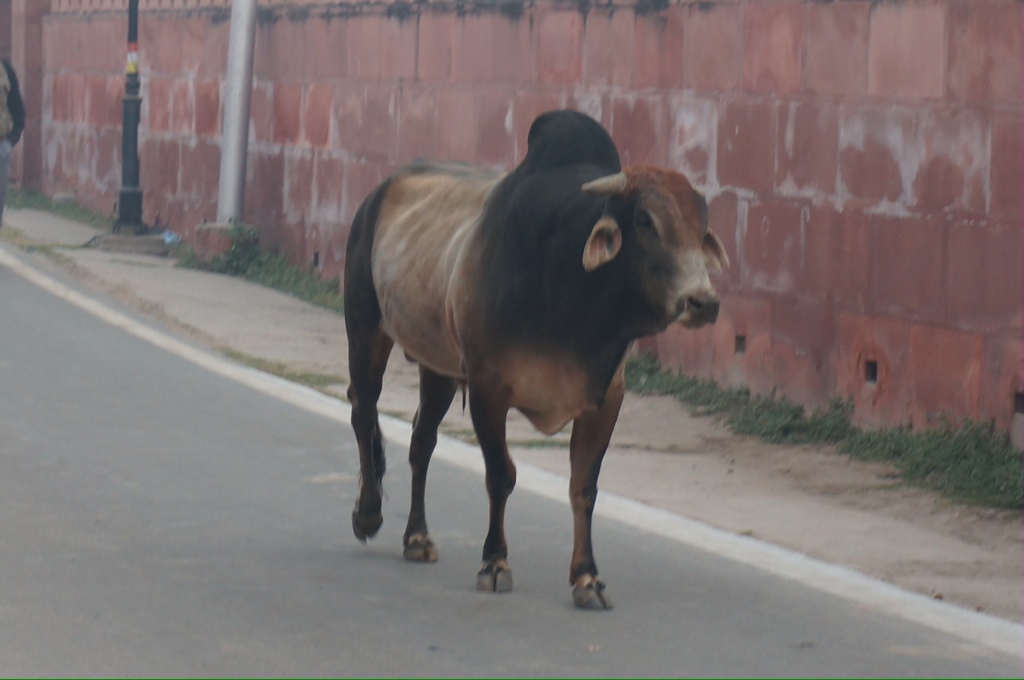
The main impression is people crowding in everywhere. Animals – dogs, bulls, cows, goats, monkeys wandering through the crowds. There are a few camels, but they are all being used to pull carts, also horse drawn vehicles. In the Arab countries we did not see any dogs and were told they do not keep dogs as pets, we did see a few cats, no cats in India.
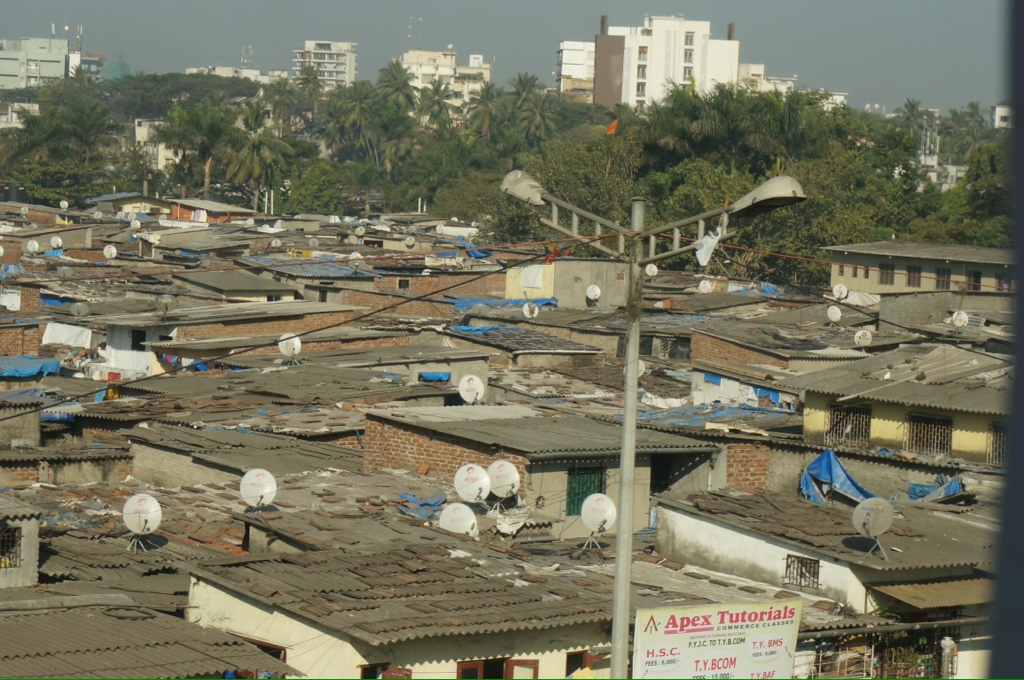
We did not go on the shopping tour, instead we stayed at the hotel, had a rest and then tea in the tea lounge. Still no shopping! Our hotel is a sharp contrast to the squalor we pass through on our drives. It is gated and guarded by armed sentries who also patrol the halls at night. Cars and busses are subject to a scan underneath as they enter the gates. We are protected, not sure from what!.
The next day we drive back to Delhi in a very heavy fog, we were lucky the heavy fog was not here on the Taj day, we wouldn’t have seen anything.


 travel70
Fabulous photos of the Taj & surroundings. The history makes it that much more interesting. It certainly seems like a much different way of life.