
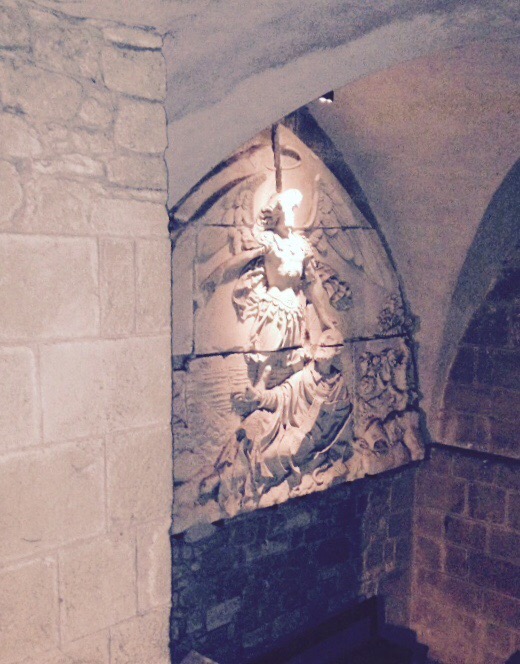
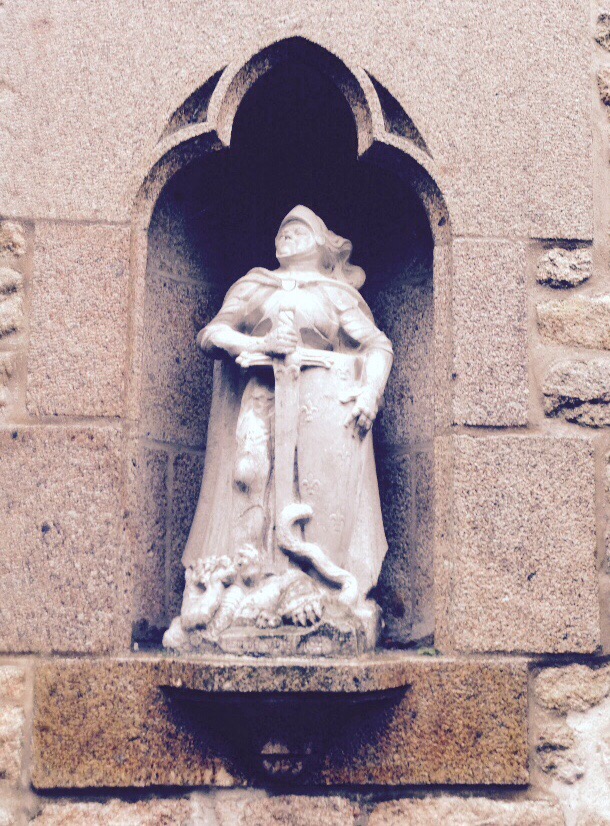
St. Michelle is portrayed as a warrior with weapons to slay evil (often depicted as a dragon). He also is responsible for determining if a soul will go to heaven or hell after death. So he will also be seen with a set of scales.
St Michelle appeared to a local priest in a dream telling him to build a sanctuary and pointed to the 3 islands. This happened twice. Both times the priest ignored the request as he was not sure what had happened when he awoke. The 3rd time St Michelle put a hole in the priest’s head to make sure he took the request seriously. This was about 708 AD
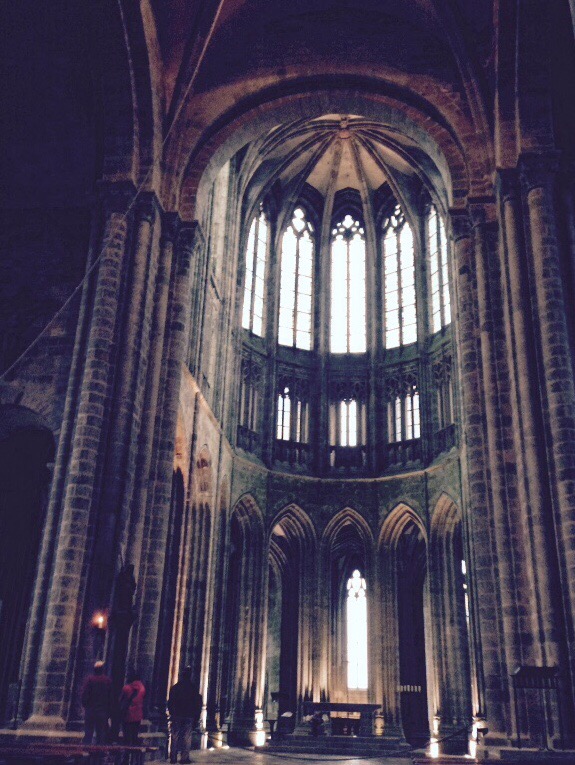
There was a shrine erected in early 8th century. The original church on the site was built in the 10th century and a new church in 11th century. These are still seen as part of the existing structure.
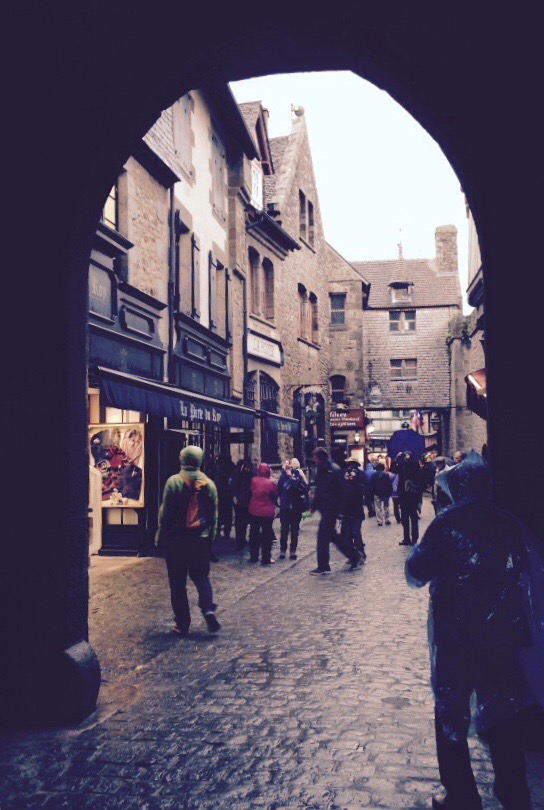
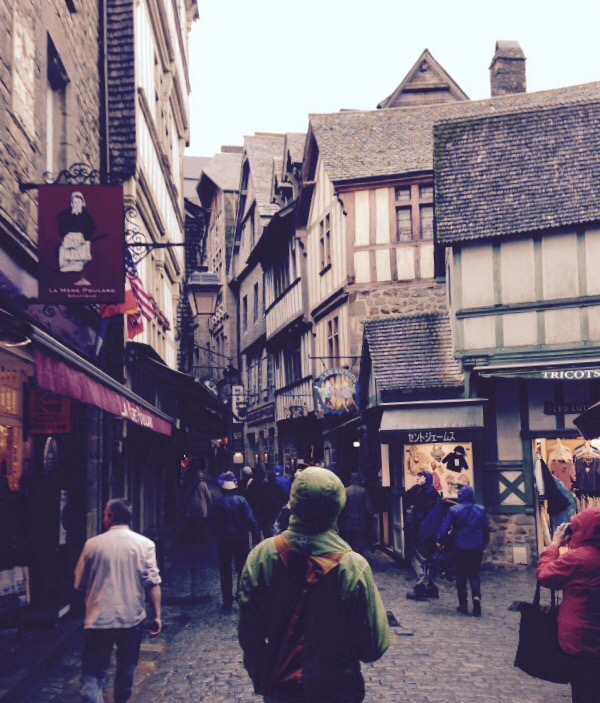
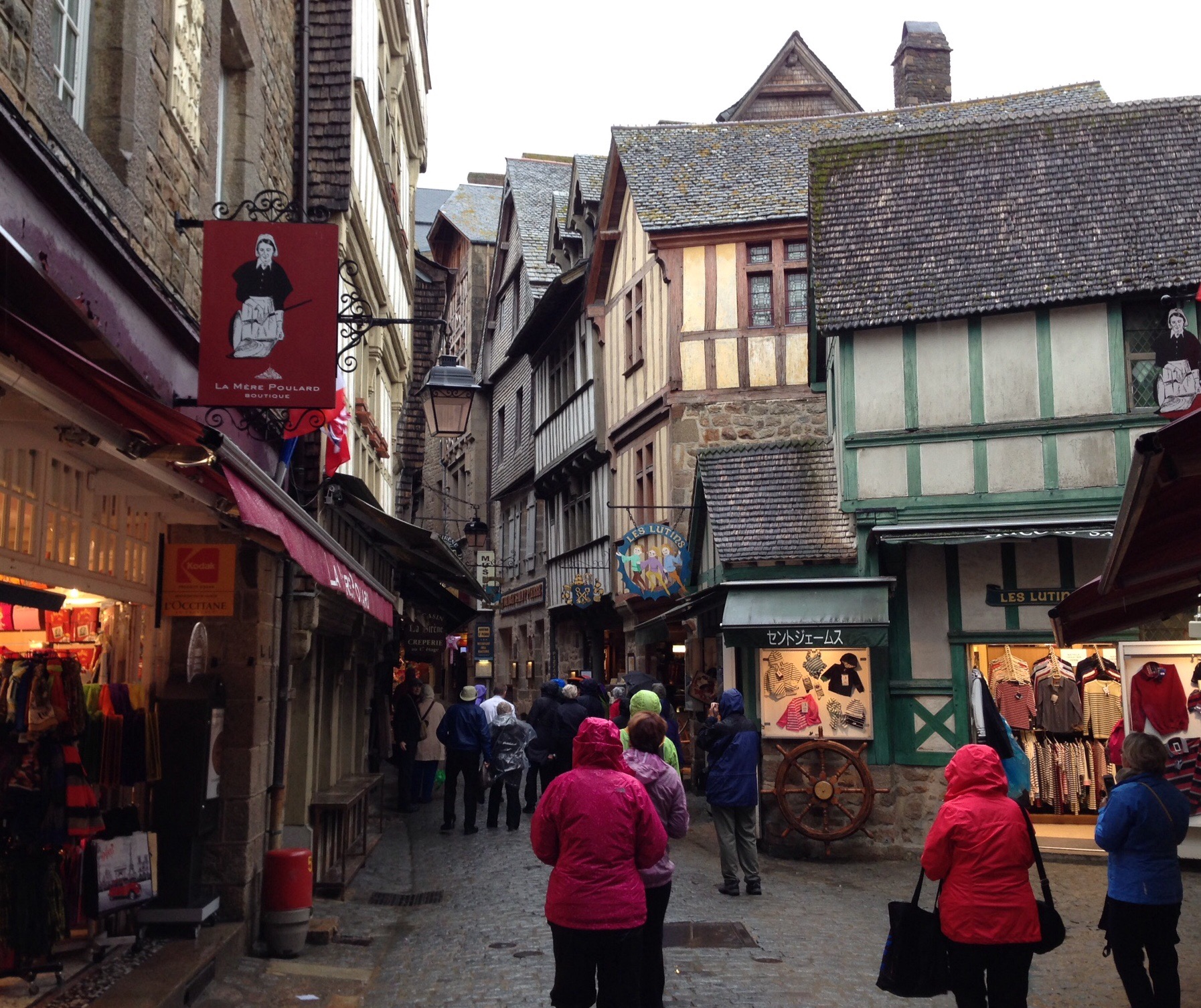
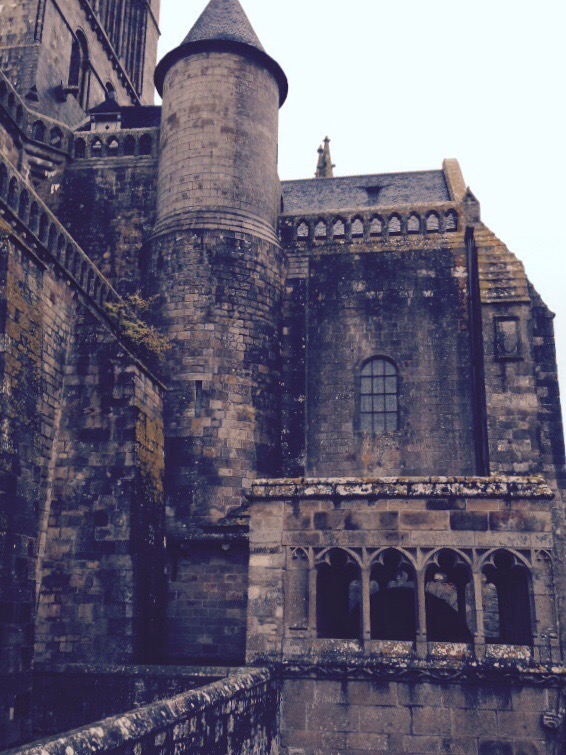
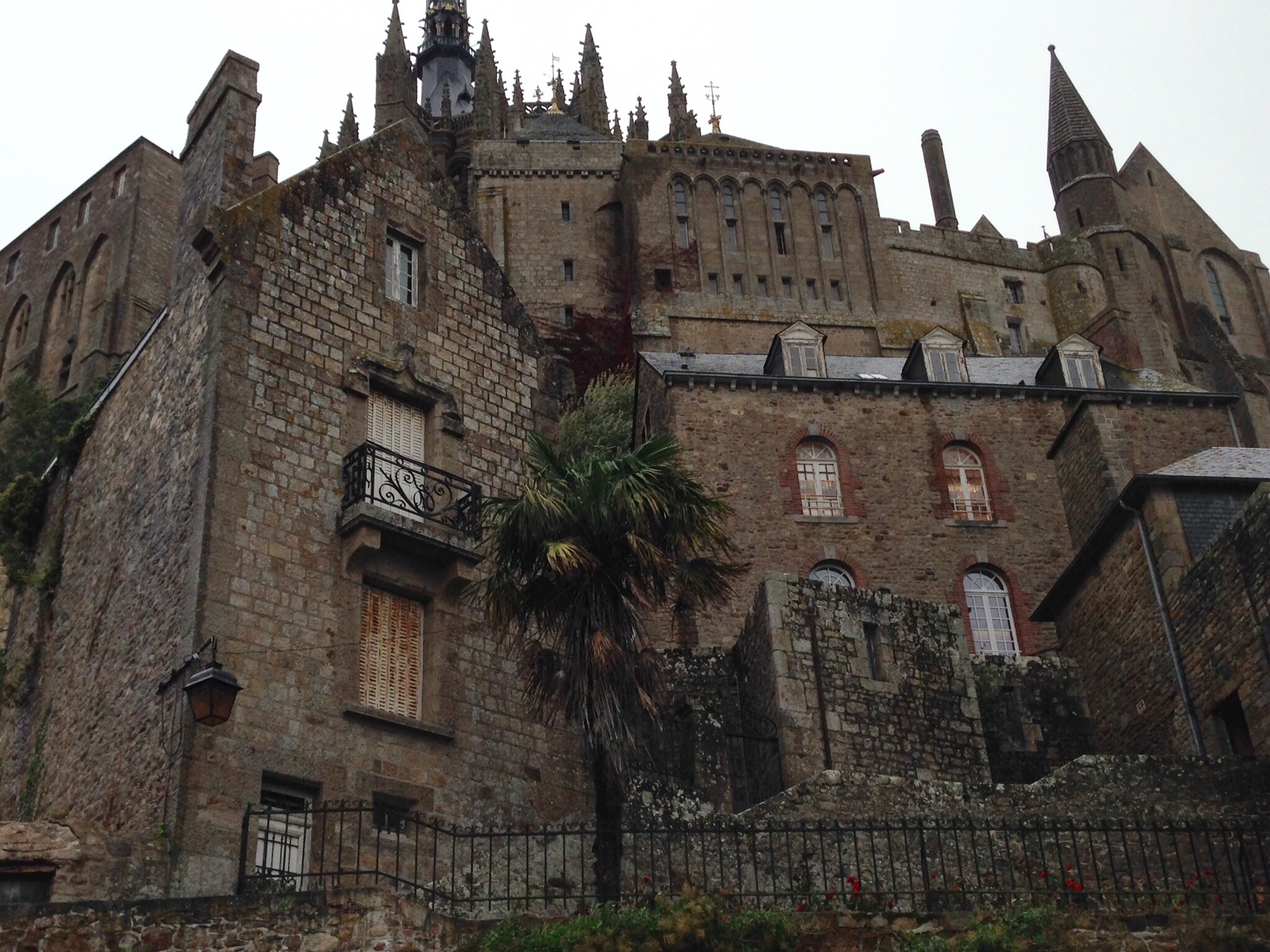
In the 11th and 12th century a village developed on either side of the abbey at the foot of the rock. Now we see a huge rock totally covered with buildings and the Abby sitting on the top. The abbey is 80 meters long. The rock is the shape of a triangle with the point at top. So the abbey is wider than the rock where it is built. To support it the underlying structures were built into the rock and formed the base of successive layers. The townspeople lived at the lowest level, the middle section was reserved for the military and nobles and the top reserved for the abbey and its inhabitants.
During the 12th and 13th centuries when England ruled Normandy they never managed to take Mont St Michelle. The structure remained a monastery until the French Revolution in 1789, when the monks were chased away and it was turned into a prison. The name during that time was Mont Michelle. In the second half of the 19th century the prison was closed and major renovations were completed in 1966. When it was a prison it housed 700 political prisoners.
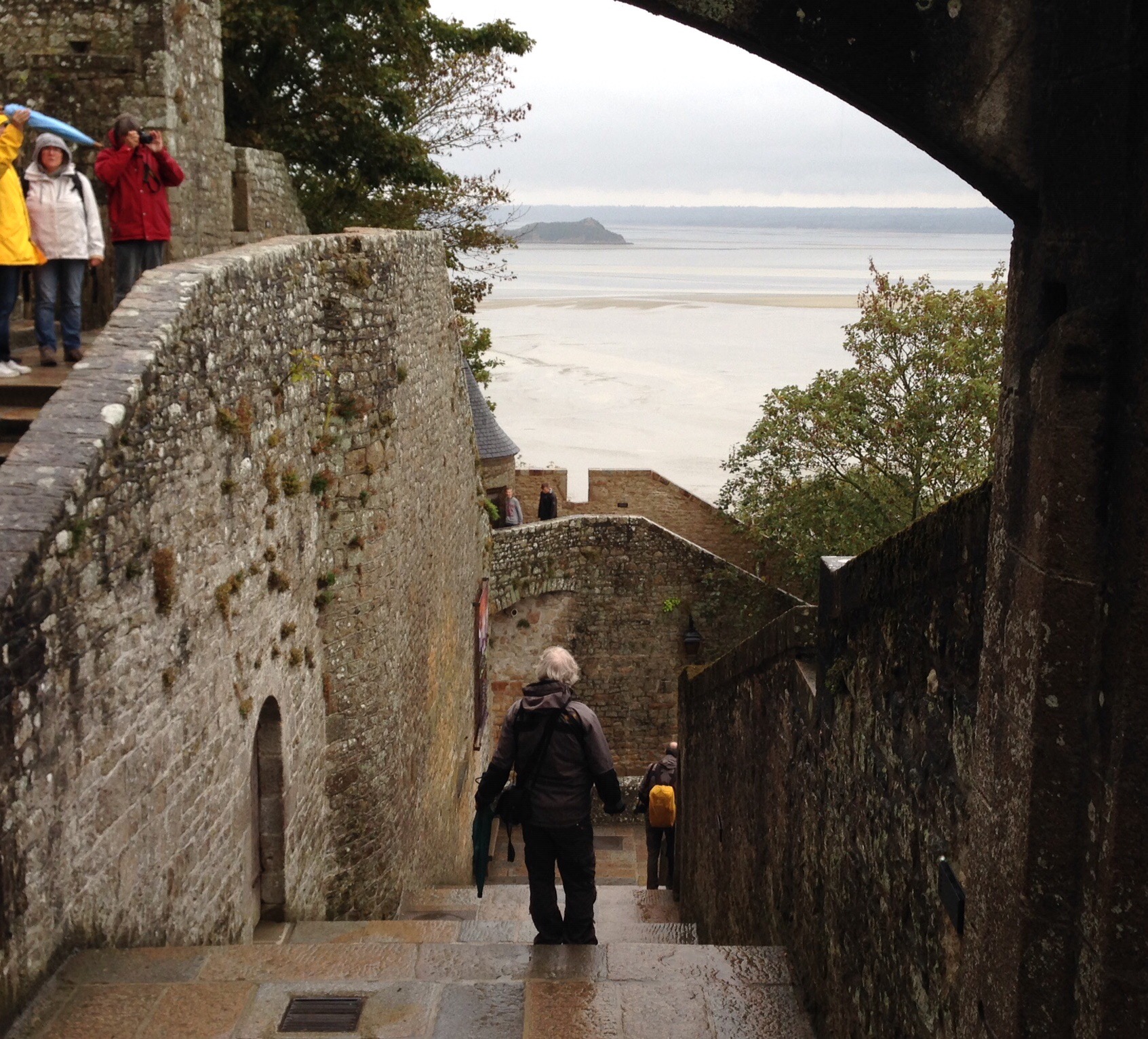
The island has a causeway connecting it to the mainland. Over the years this has resulting in sediment collecting along the causeway from the tides. There is a current project to replace the causeway with a bridge to allow the tides to pass through and hopefully have the sediment flushed away with the tides. Currently the island is surrounded by quicksand created by this build up of sediment.
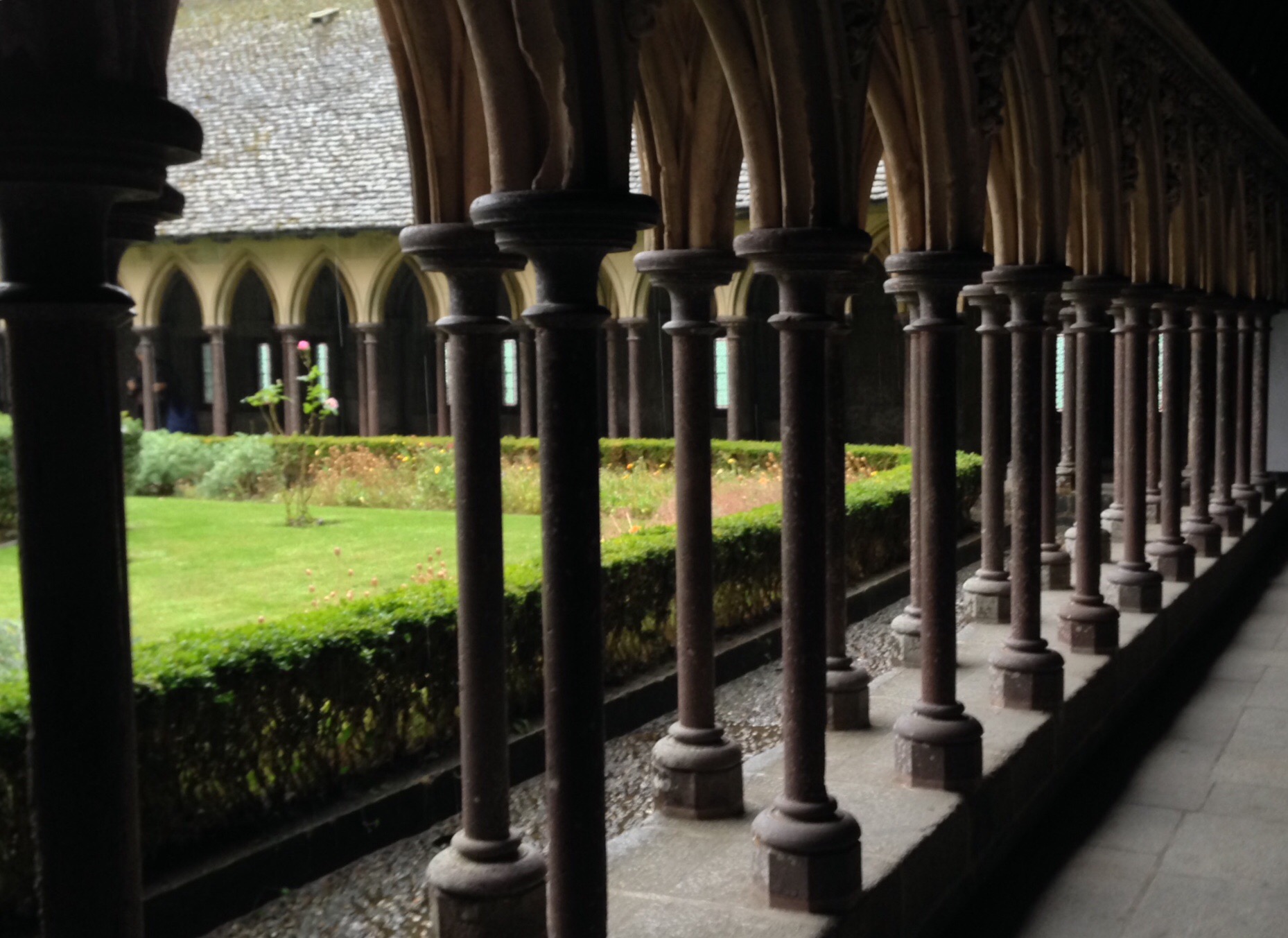
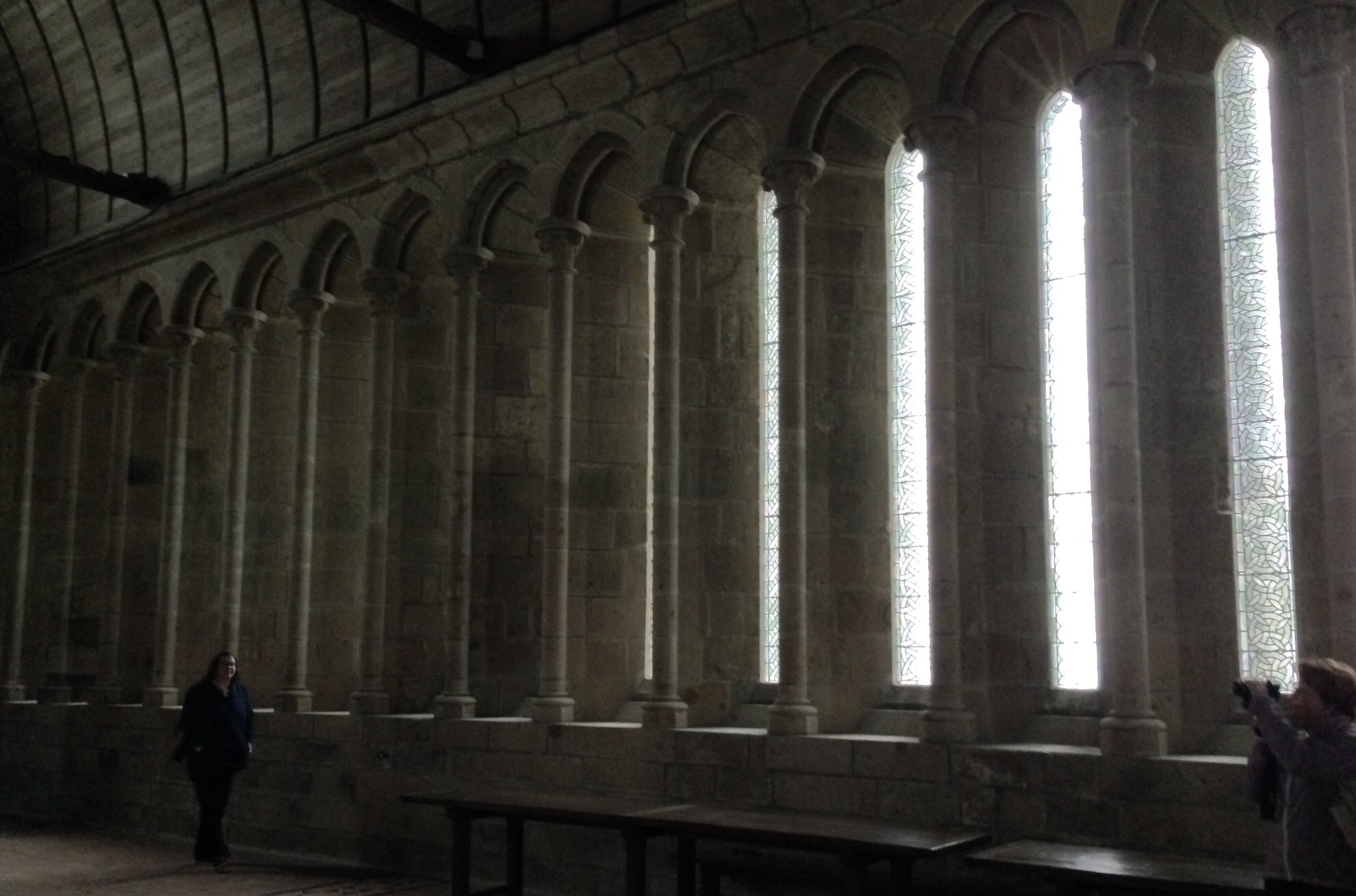
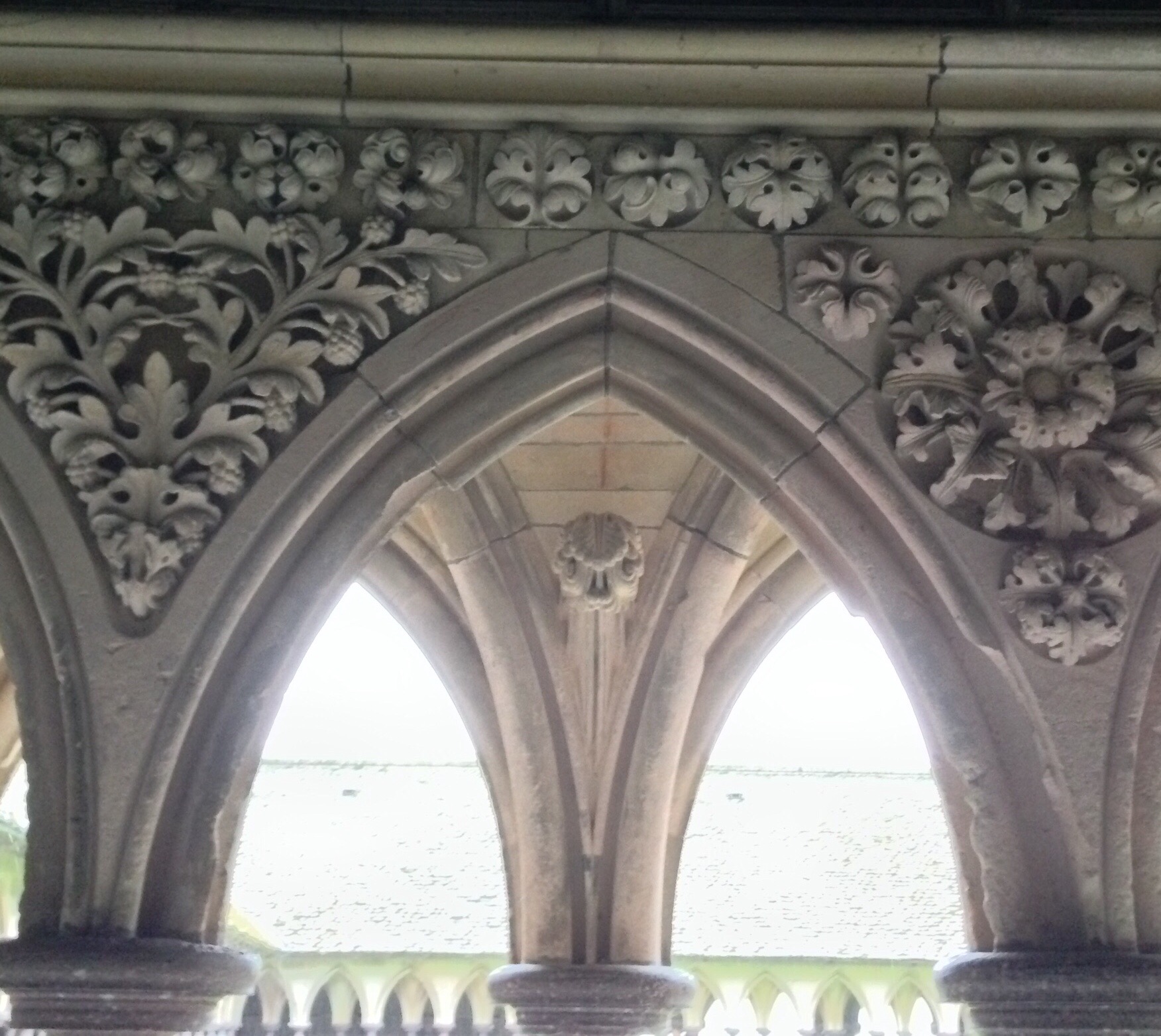
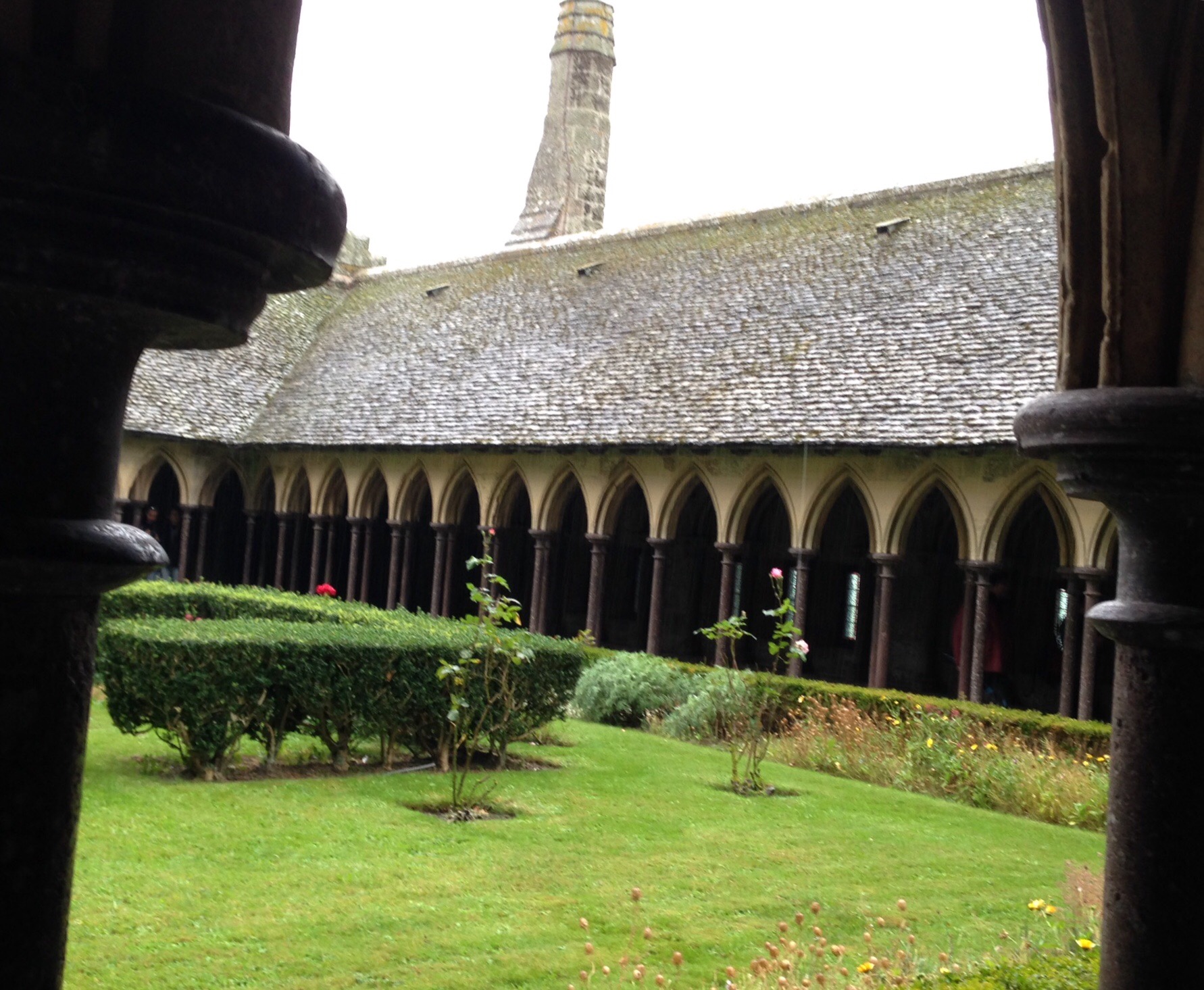
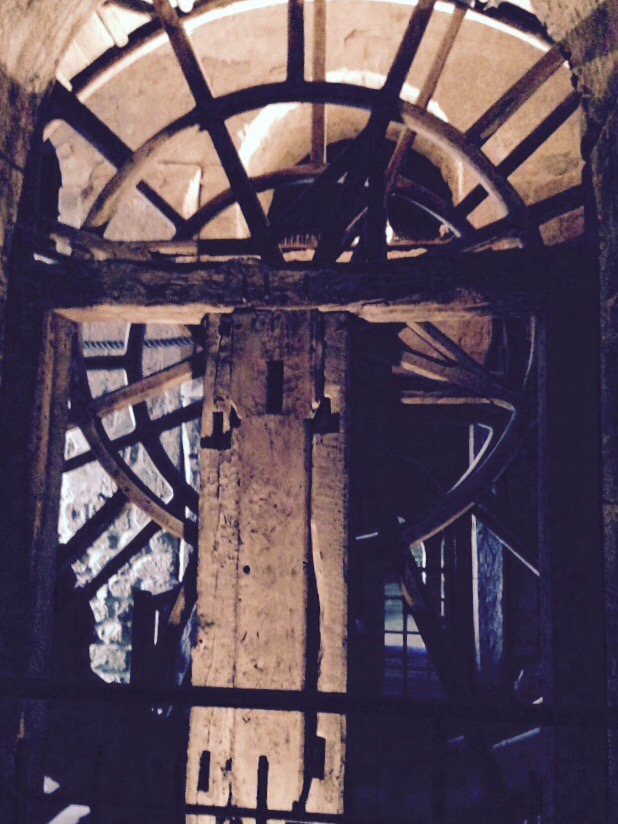
We walked to the top (I counted one hundred, thousand, million steps, but apparently there are about 350.) .There are distinct architectural areas depending on when a certain section was built. One interesting feature is a huge wheel that looks like a hamsters wheel. It was used to raise needed supplies up and lower garbage during the time it was a prison. The wheel was powered by prisoners who would walk inside the wheel much as the hampster does in his exercise wheel. At the very top a beautiful cloister, complete with garden.
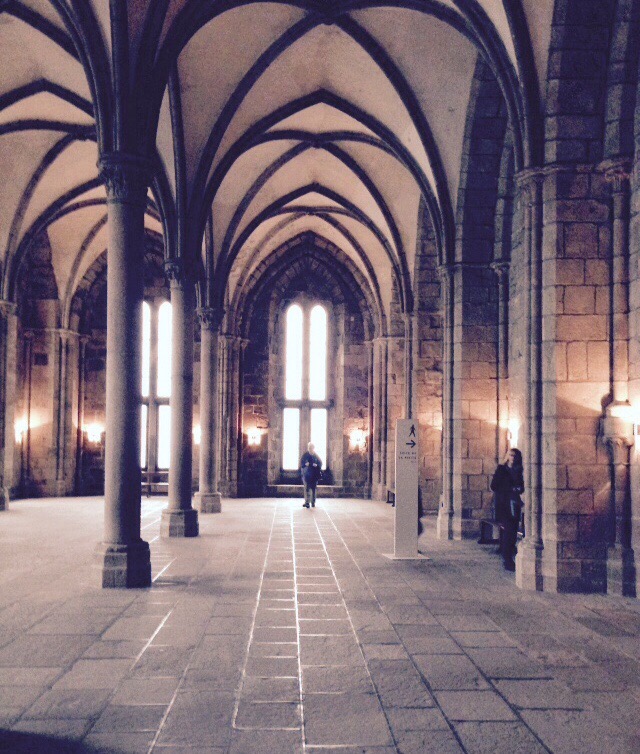
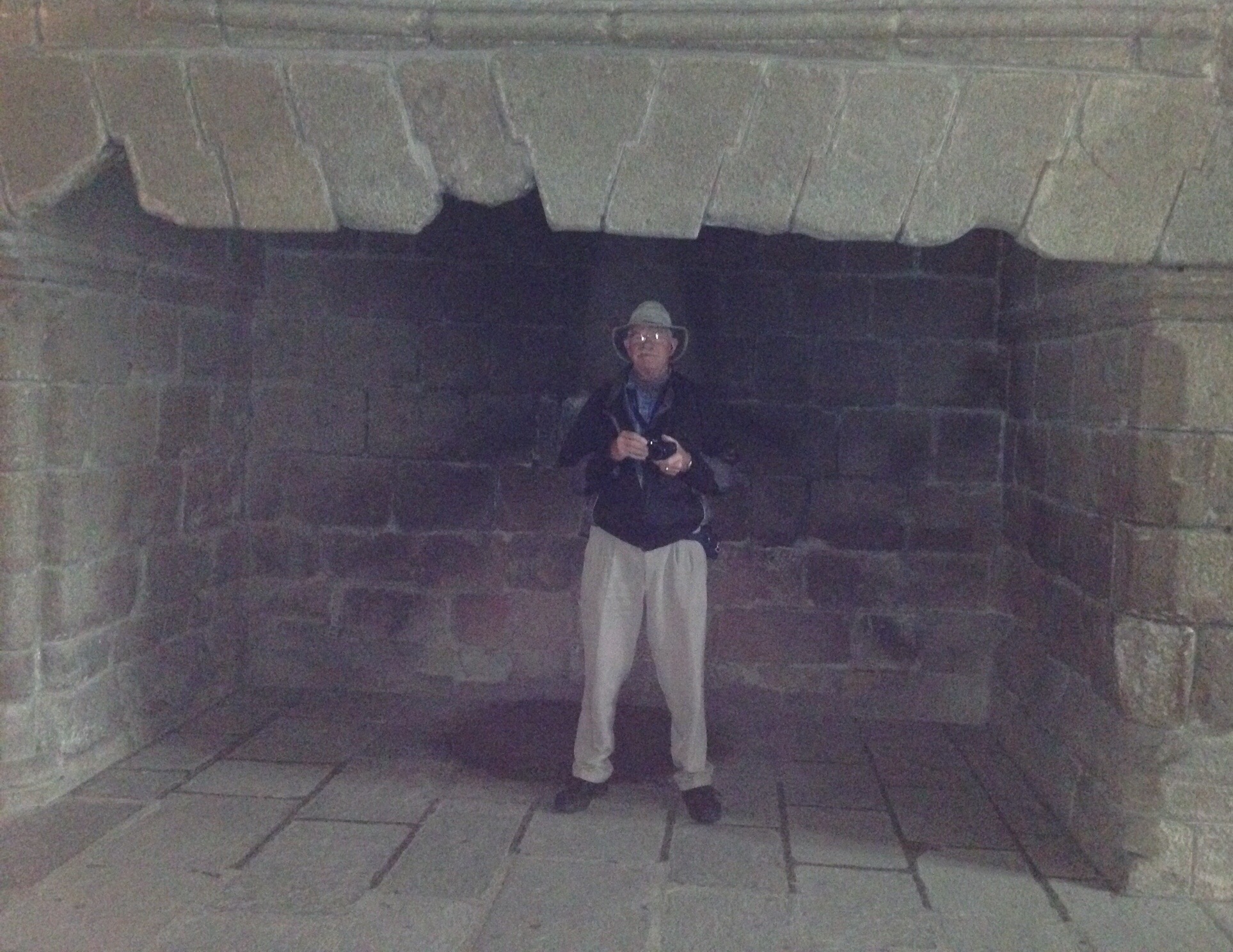
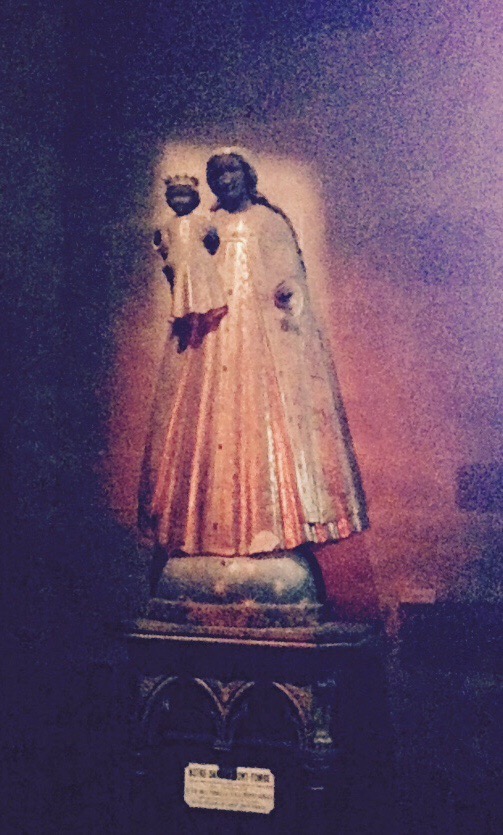
There is not a lot of decorations, all these had been removed when it became a prison. We see a couple of representations of St Michelle, a black Madonna and some huge fireplaces. (Gary is standing inside one of them).
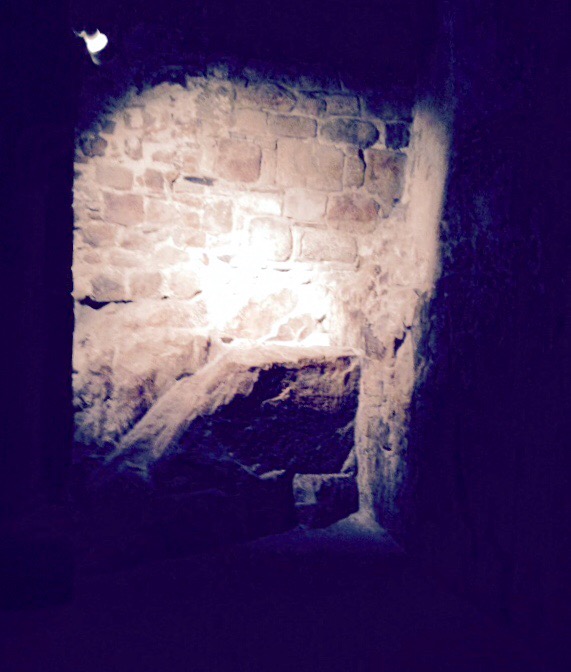
In a few places we can see where the structure is supported by the rock, with the stone beams coming right out from the rock.
It was a rainy cold day. We walked to the top and are told after that only about a third of the people who visit the island ever make it to the top! Our whole group went up to the top, sturdy Canadians all!
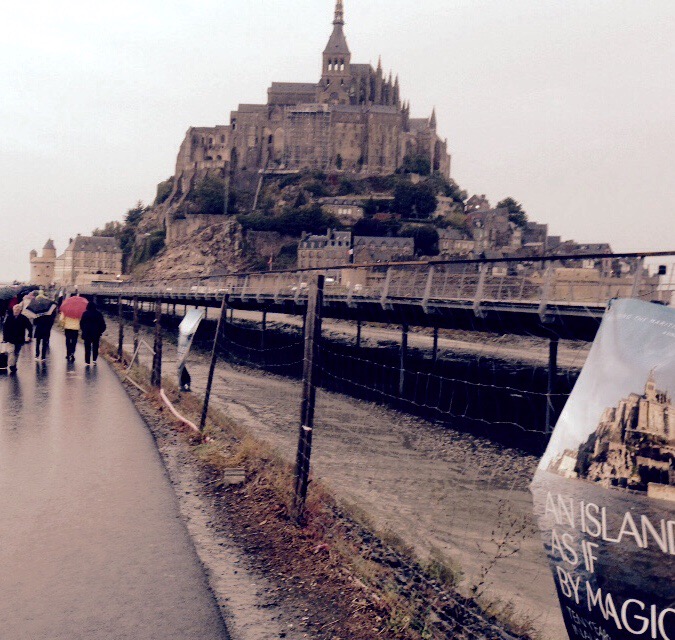
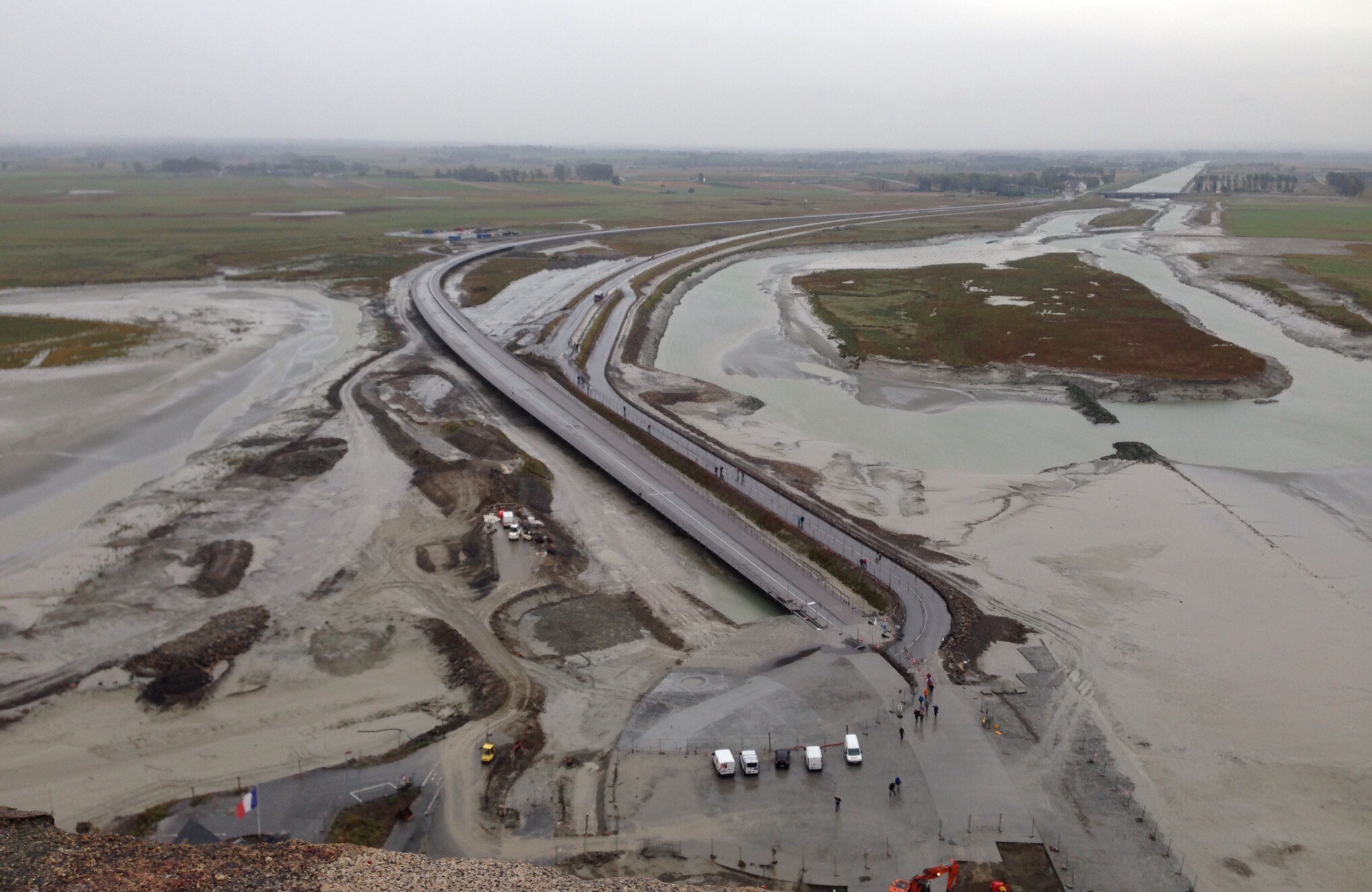


You wouldn’t want to be hitting your golf ball into that bunker next to the causeway!
True, especially as it is quicksand!