
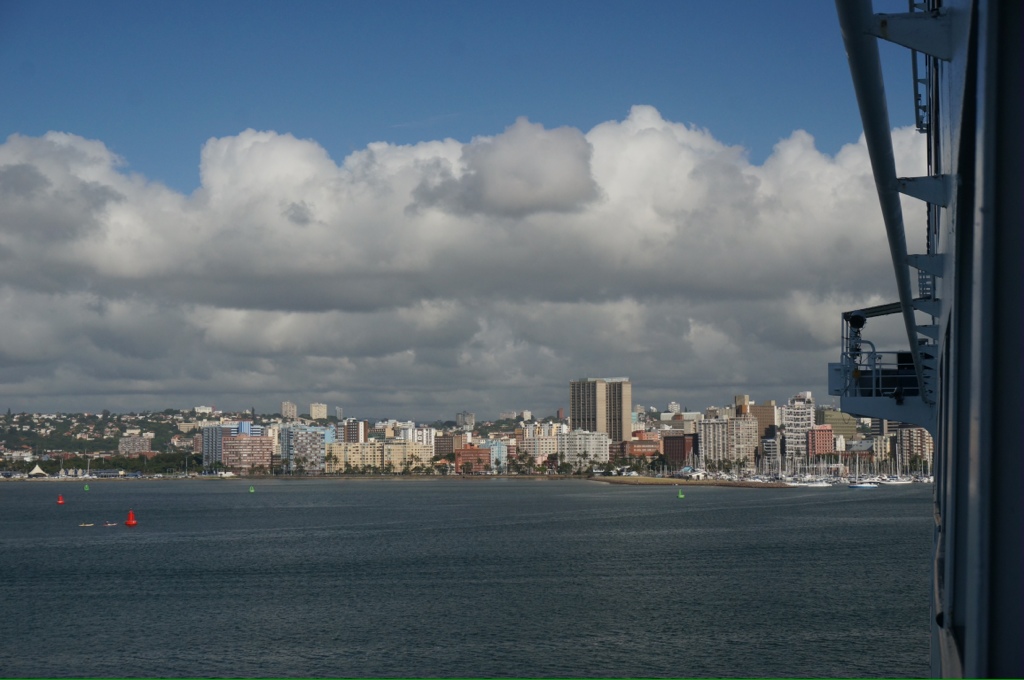
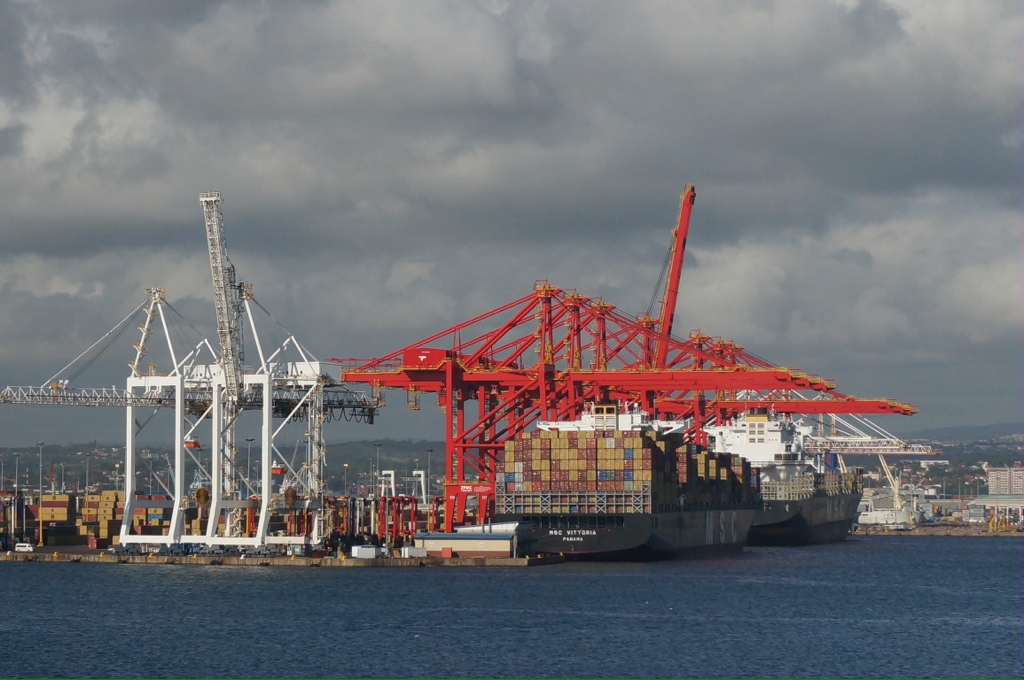
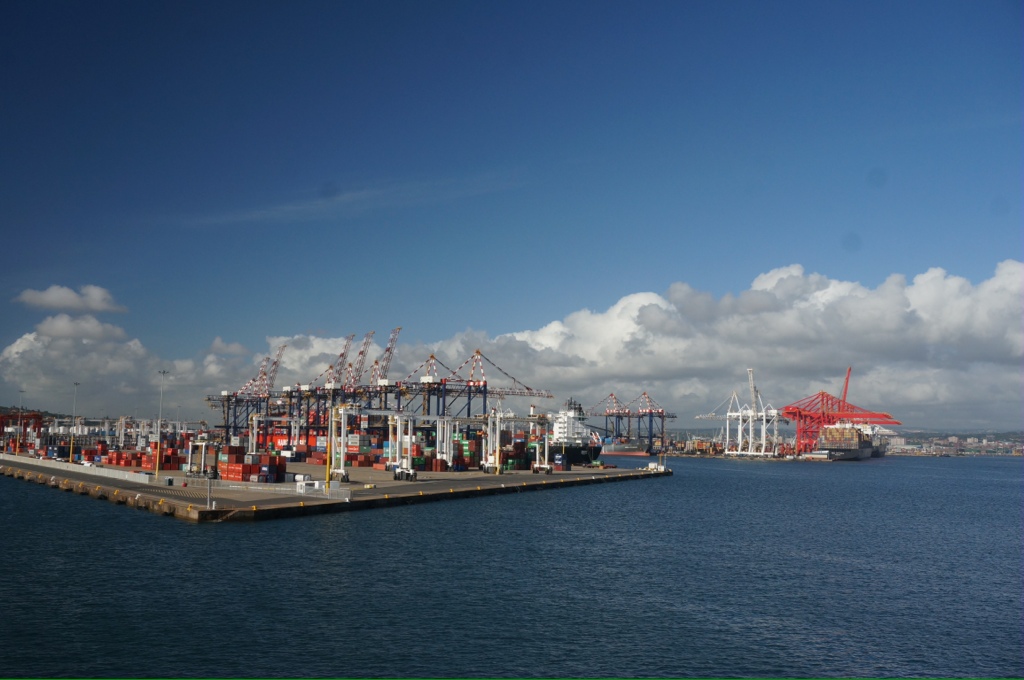
We are clearly into a more modern society. As we pull in to the harbour we see huge container docks, many of the giant container ships, a downtown area of high rise buildings, a full yacht basin, a very active port. We are told this is the largest harbor in the Southern Hemisphere. They must mean busiest, it is no where near the size of Sydney, Australia or Rio. From this harbor they export sugar – South Africa is the largest exporter of sugar (sugar cane) also coal, grain, chemicals, cars etc. There are currently 58 berths for container ships and that is now being doubled. The bay is so shallow that it is dredged daily, at low tide you can walk to the container island. We see many cars lined up on the docks, cars are assembled just north of here and then exported to India, Asia and other Pacific countries. Many car manufacturers send parts here for assembly and export to their final destinations. Examples we were given included BMWs, Honda.
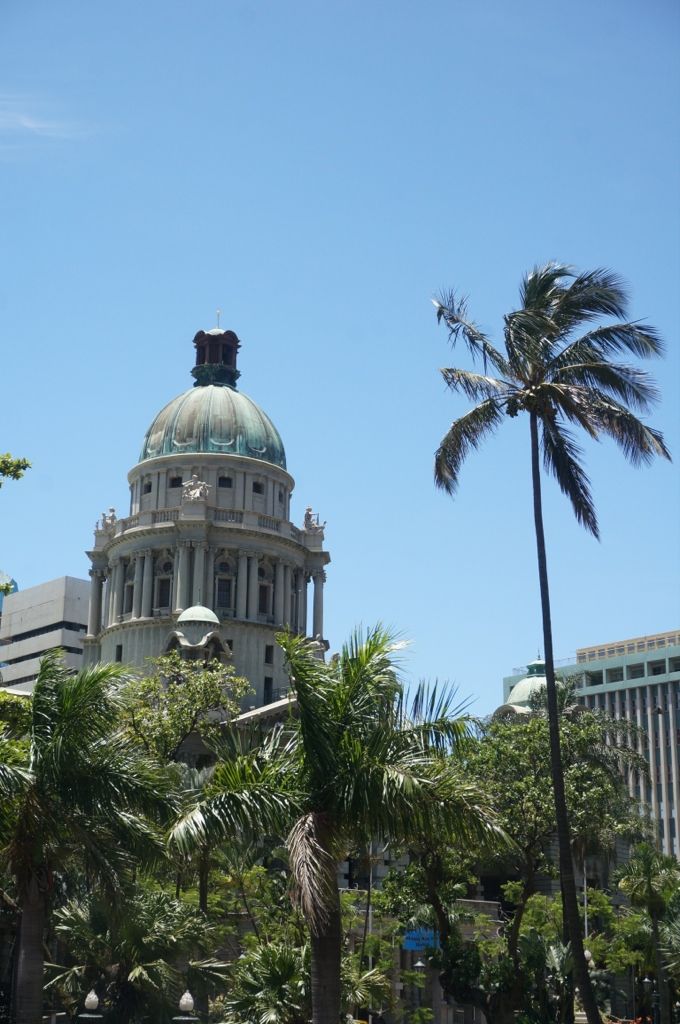
Durban is the 3rd largest city in SA with a population of 3 million. Johannesburg is 12 million and Cape Town is 4 million. This used to be a whaling port and a swamp with hippos, crocs and Mangroves along the coast. Vasco Da Gama landed here in the 1400s. In 1827 the first permanent settlers arrived, Dutch. There are still some buildings that have been preserved in the Victoria style.
Gary and I took a bus tour to explore the town. The first language of South Africans is English and a lot of people also speak Afrikaans, a mixture of Dutch and Spanish.
The largest ethnic group is the Zulus who make up 70% of the population. The next largest group is the Indians. Europeans are about 2%.
There are about 1 million people of Indian descent living in Durban. The Indians were originally brought in to help with the sugar cane harvest and most stayed. One of those who arrived during that time was Gandi. There are streets named after him. We are told that it was here he developed his approach for peaceful resistance. Apparently he was throw out of the courts, for wearing a turban, he was practicing as a lawyer at the time. This and other episodes of discrimination made him determined to change things.
Because of the high proportion of Indians the culture and food has a strong eastern aspect.
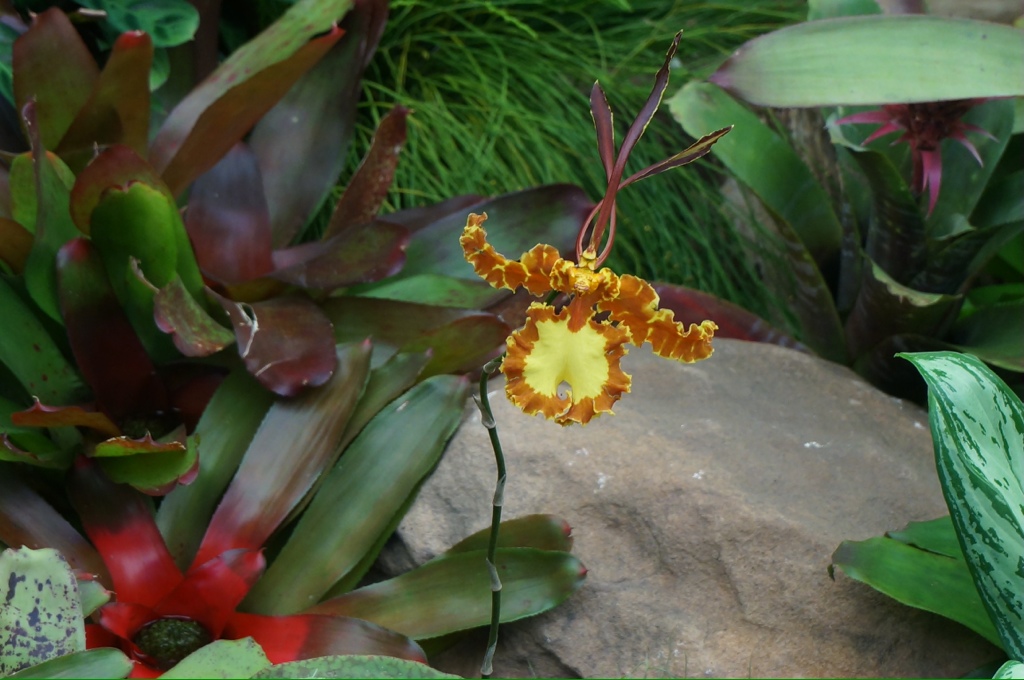
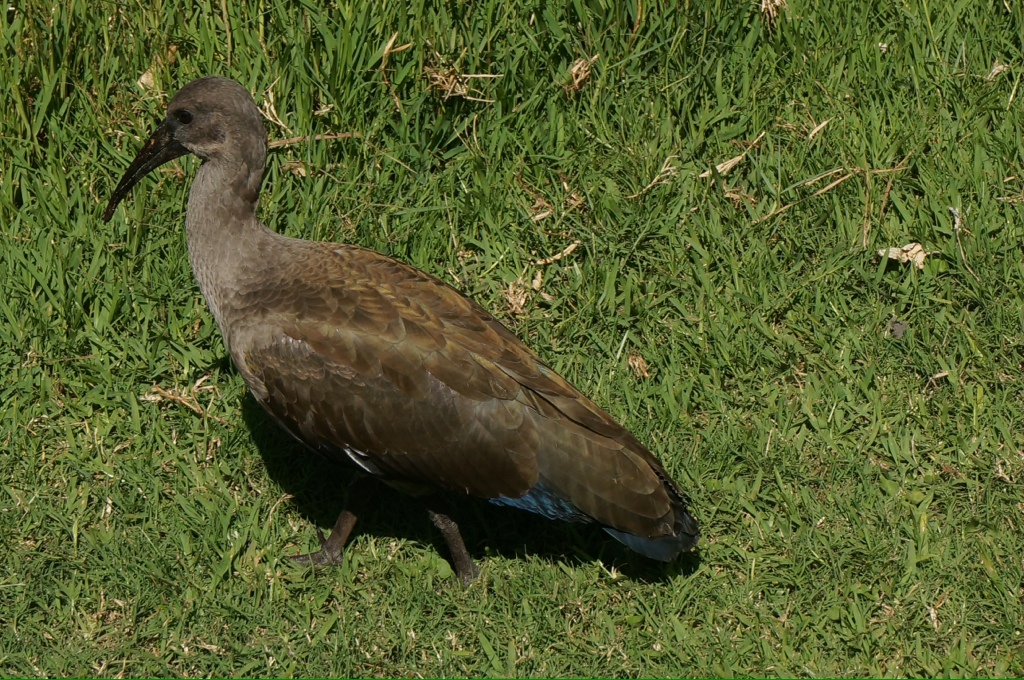
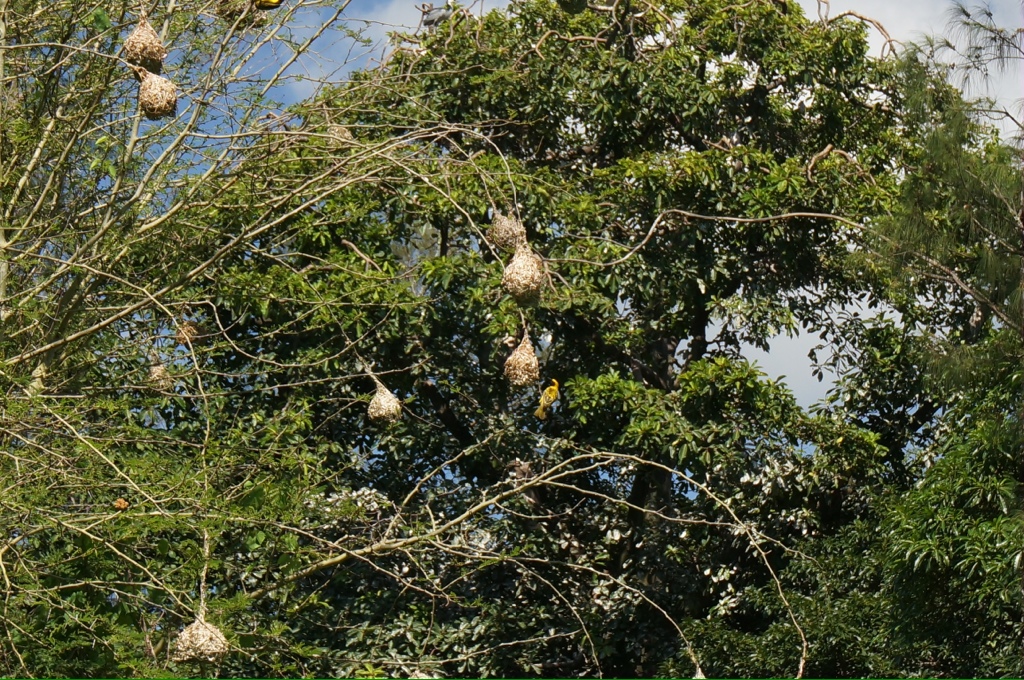
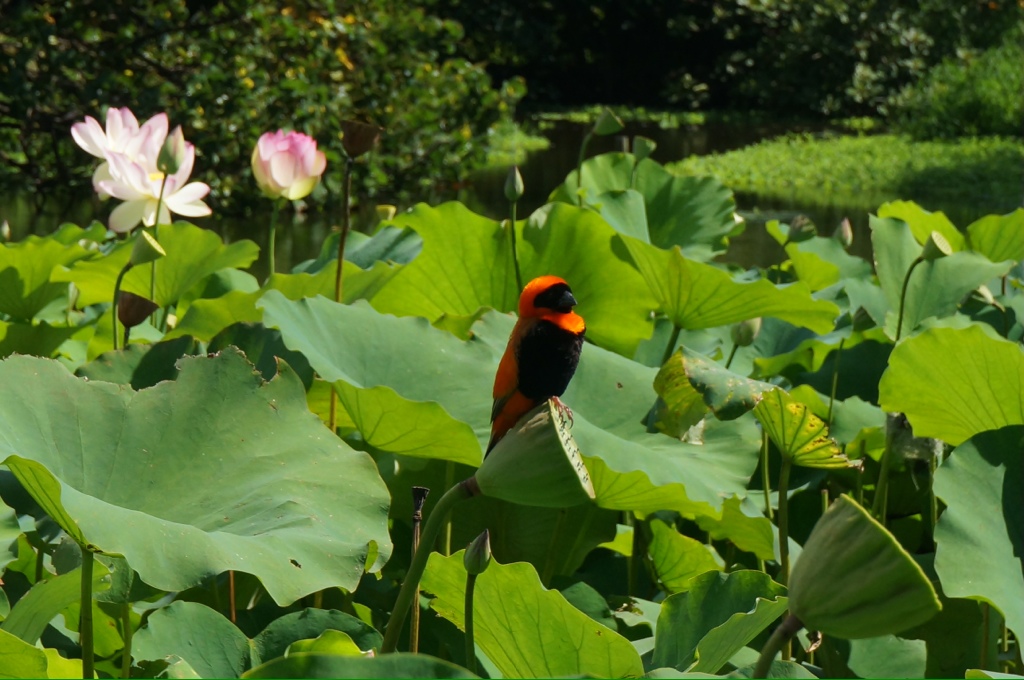
Our first stop is the botanical gardens. This area was originally the source for sweet water for the town and where the vegetables and fruits were grown. Before that, it was a watering hole /oasis that attracted elephants, so there was a hunting lodge here at one time. Our guide gives us a tour of the many indigenous plants and birds, including orchids. We saw brown ibis, bishop birds (bright red), storks, spoon billed stocks, a little yellow bird that builds a unique nest (looks like a wasp nest hanging in the trees).
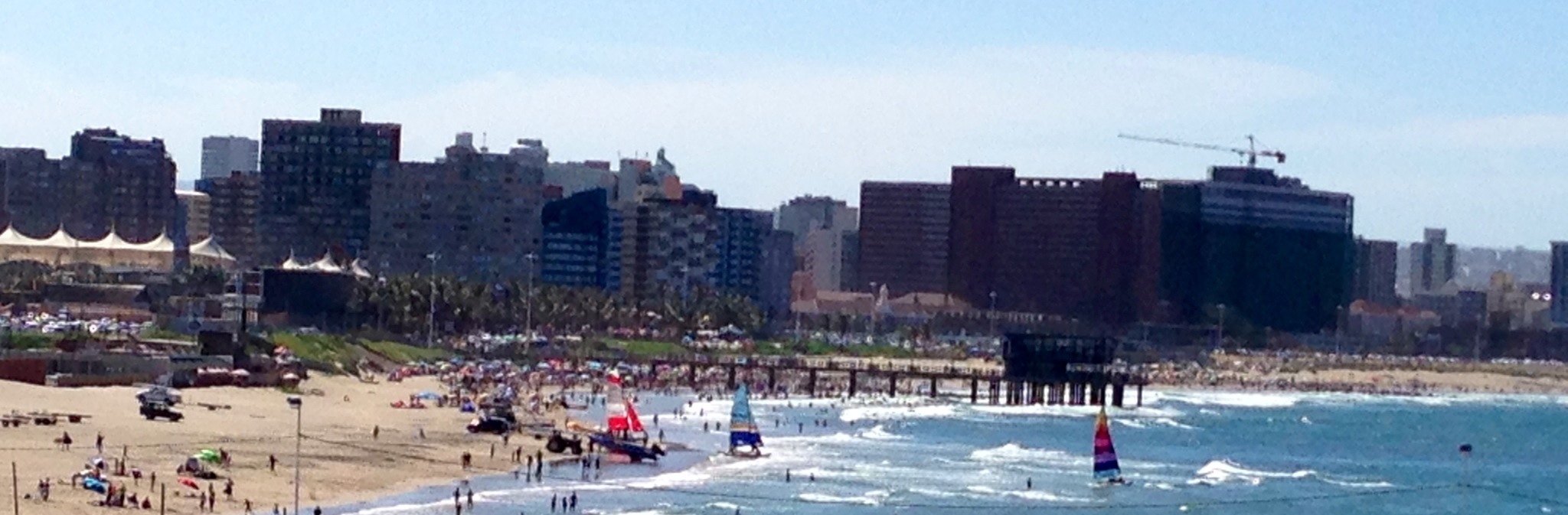
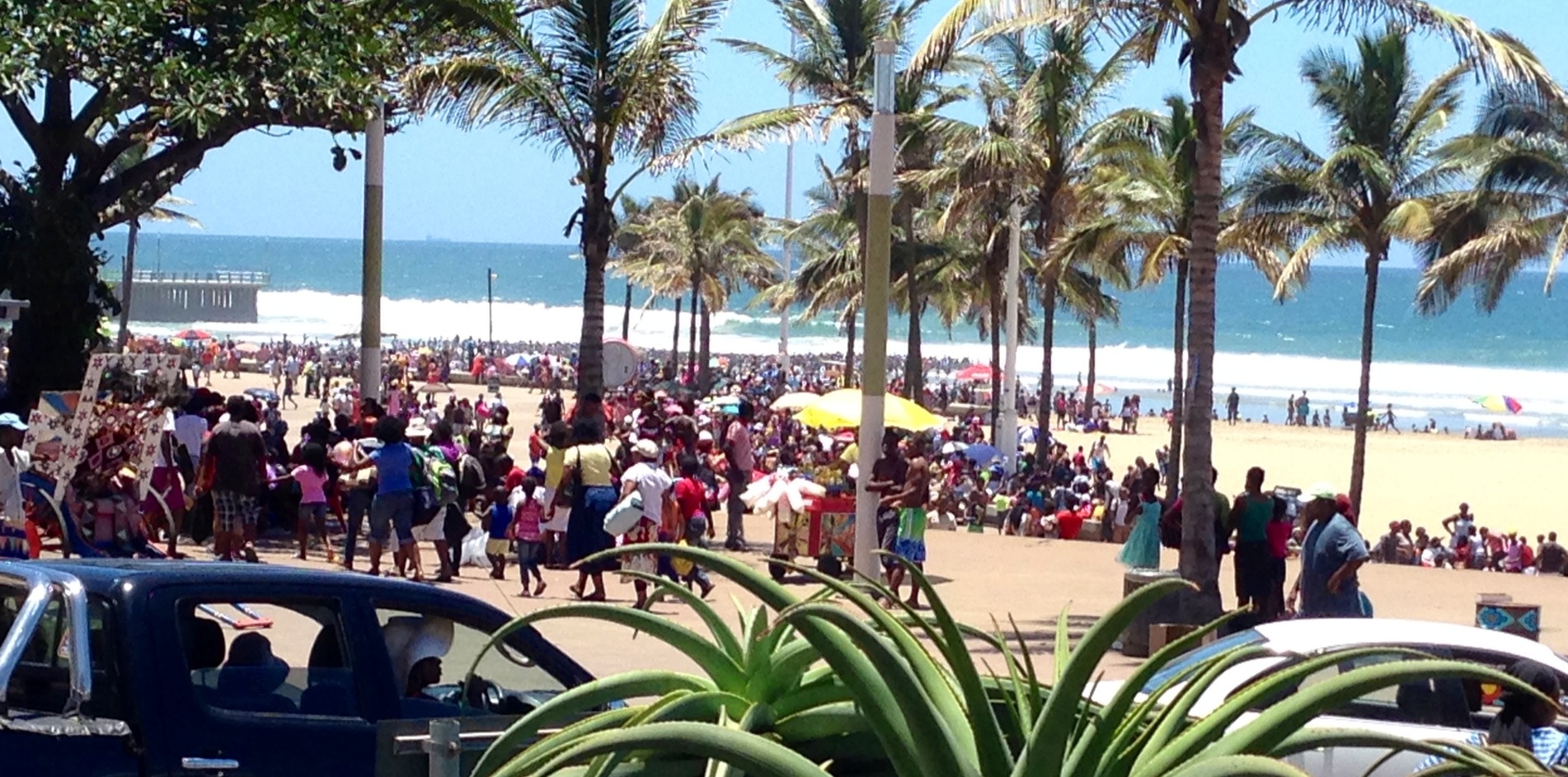
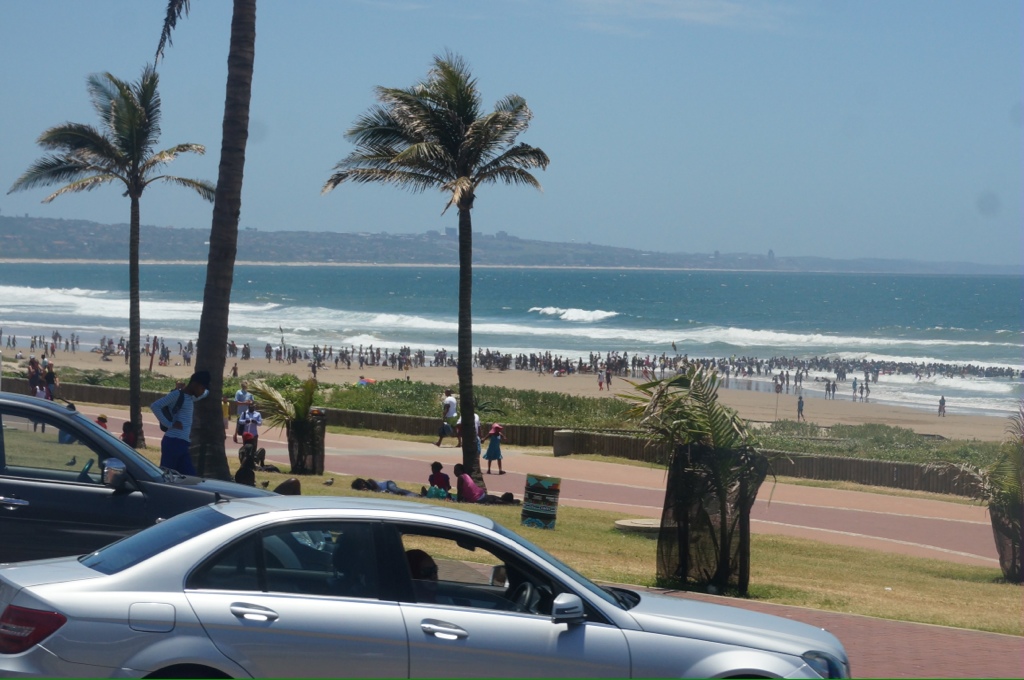
Durban is a popular spot for people from northern Africa, India and Europe for vacation. It has a lovely beach called the golden mile with gold colored sand. The sand gets it’s color from the many minerals, including titanium. Throughout the year the temperature is around high 70s low 80s F with blue skies guaranteed in winter, our guide compared it to Florida. The sea is warm and pleasant for swimming year round between 20 & 27 C. As we drove along the beach we saw many people out enjoying the day. Before 1994 when apartheid ended blacks were not allowed on the beach.
We see that people are in the water only in some confined locations. These are the areas protected by shark nets. Apparently sharks are numerous all along the coast and in the harbor. We see mounted Police patrolling the beach area. There is a long promenade along the beach. This is a popular surfing area where an International surfing championship is held every year. Waves can reach 9 to 10 meters
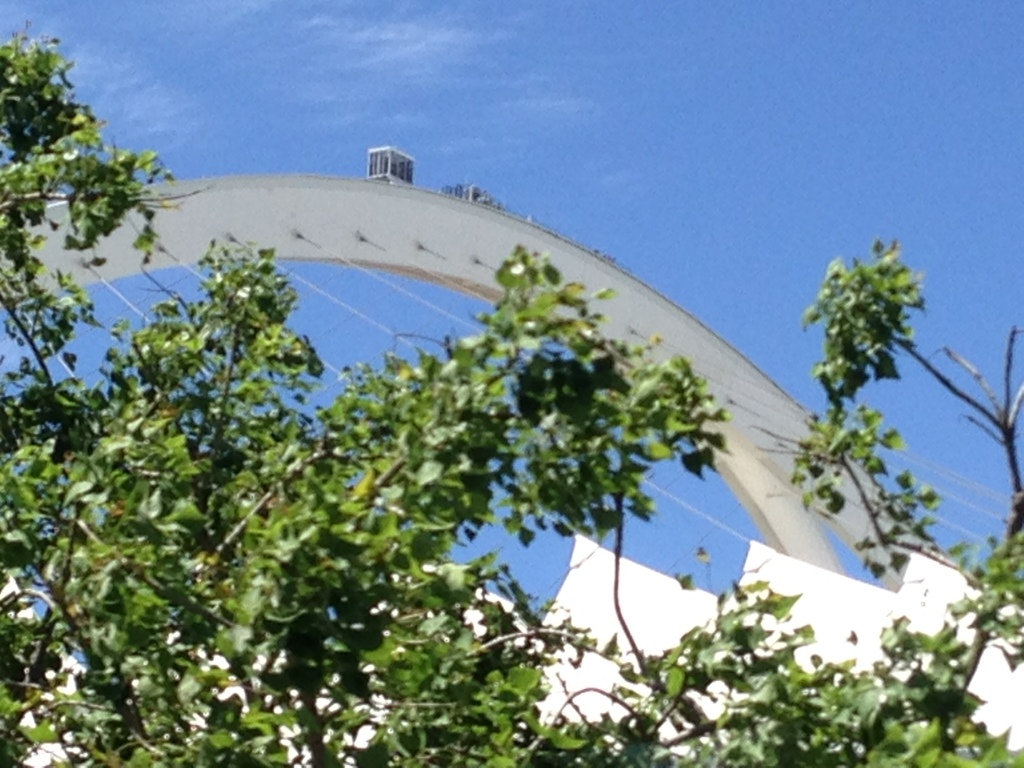
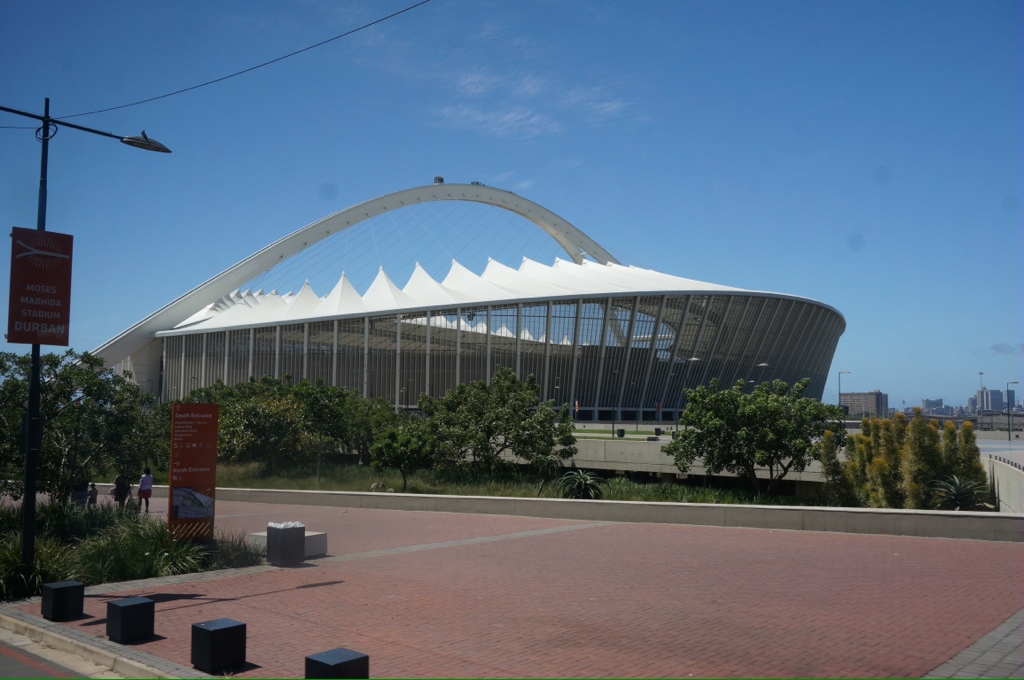
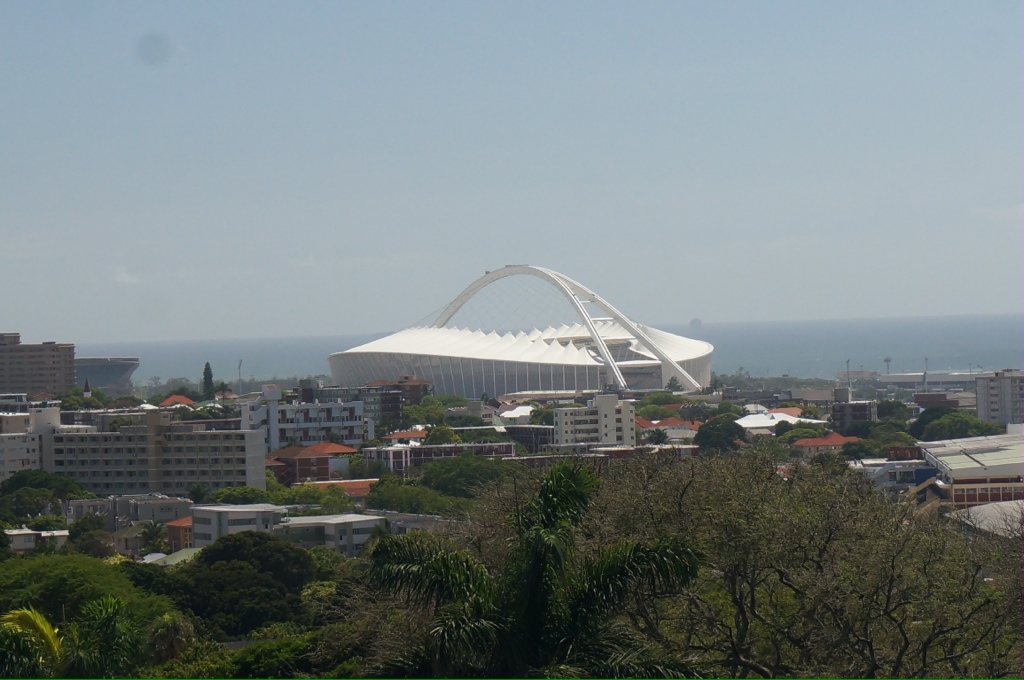
We saw the stadium built for the soccer world cup in 2010. Now it is used for a variety of events and there is a ride you can take to the top. While it is a domed structure it is open in the middle. Next door is the rugby (football) stadium called the Shark Tank, the team is the Sharks and the current provincial champions. The teams and sports are very important. There is also a large stadium for cricket. The city is very neat and tidy, good roads. Unlike many places we have been the buildings are not run down and dirty. There is a huge conference center that can hold up to 20,000. This is important as there is usually at least one convention each week, adding to the tourism income.
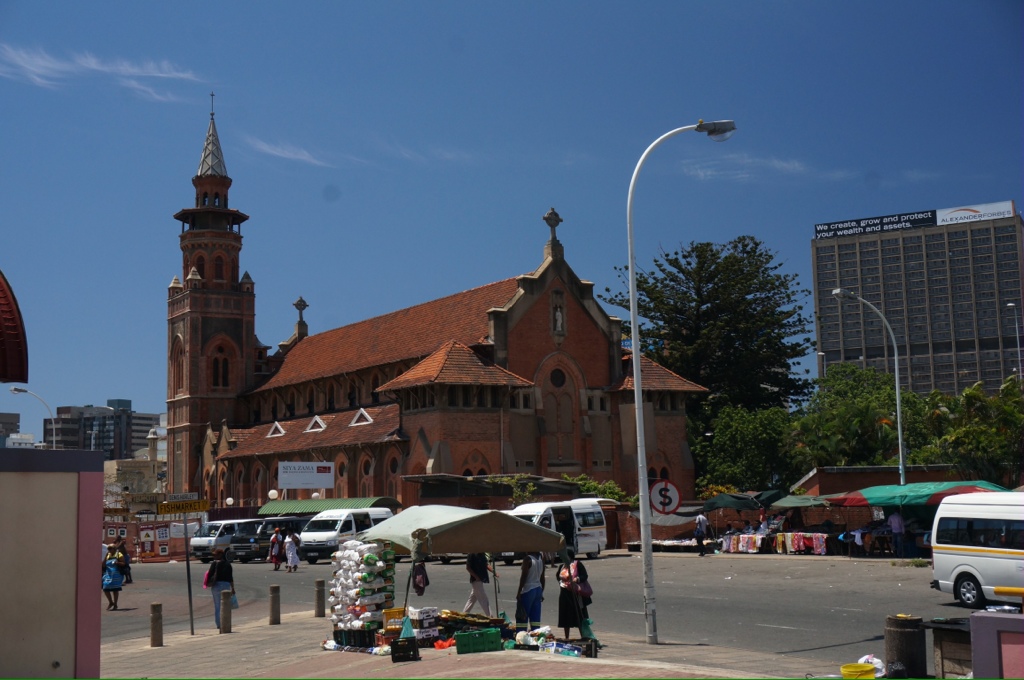
As we drive through town on the way to the market we see many small store fronts and vendors with stalls on the street and some people with blankets spread on the ground to display their wares. The tables under green awnings are legal and rented from the city. The other street vendors are operating illegally, but generally ignored by the police. There is a large mall they claim is the largest in the Southern Hemisphere.
We drove through some prosperous looking neighborhoods with some Victoria era buildings, light standards. Most houses were surrounded by high fences topped with razor wire and with guards stationed around. Despite this our guide assures us the crime rate is low. Most of the middle class live inland, this was originally to escape the malaria found along the coast. House prices are around $800,000US in the high end areas and $300,000 in the suburbs. Our speaker today maintains SA is the place to retire with a very low cost of living, good climate and improving economics.
Since the election of the ANC (African National Congress) in 1994 there has been efforts to improve education especially in the country. Children attend schools separated by sex, not color. The schools are run in the British tradition. The system is good in the cities but the country schools are very poor quality, made worse by corruption, teachers collecting wages but not teaching, drunkenness, no facilities or buses to get kids to school. This is made worse by an agricultural culture that does not value education.
Our lecturer today spoke about the future for South Africa. He did not make a definitive prediction but I believe he is optimistic. There is speculation that oil will be discovered off the west coast and that will provide a much needed economic boost. Currently the lot of the blacks has not really improved much except for a few who have managed some economic success and are enjoying a better standard of living. So far the government has avoided the move to a welfare state and has tried providing things like land for the farmers. They buy the land from the whites and divide it up amongst a group of farmers, unfortunately the farmers don’t get much help and this strategy has not really worked. Most blacks have not experienced much improvement in their circumstances and are still at the bottom of the economic ladder. There is still a high level of corruption – a number of International criminals have moved here as well.
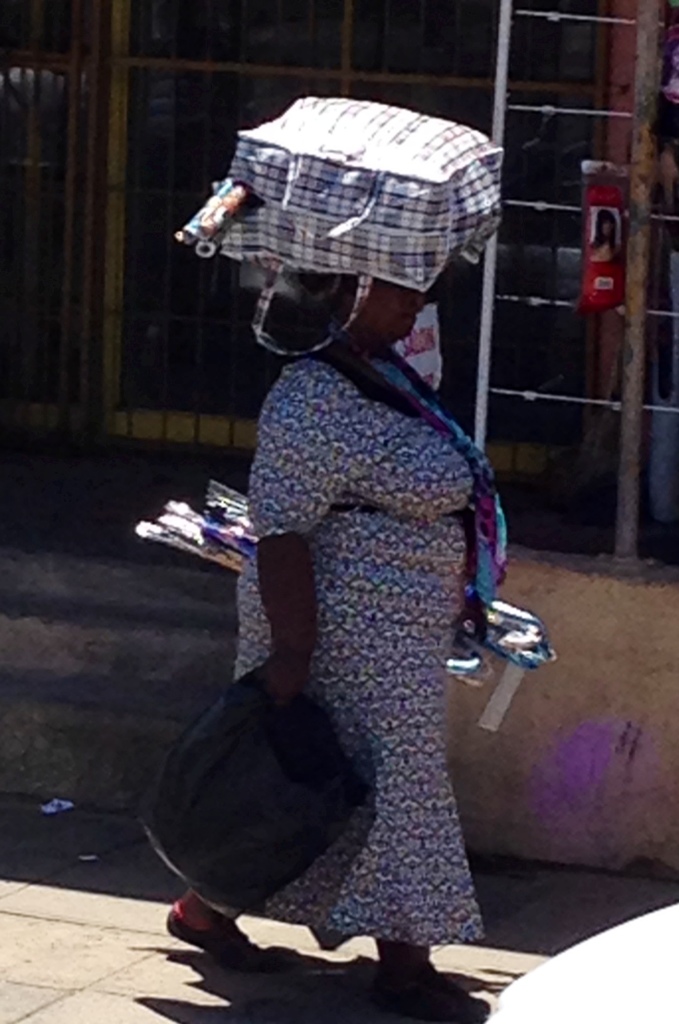
Most of the people we see on the streets have on western style clothing, however, we do see some traditional outfits plus men in western dress with an animal skin tied around their waist and hanging down the back in the Zulu style. We often see people carrying things on their head (good system, keeps your hands free).
The borders especially to the north are very porous and they estimate that 2-3 million illegals fleeing fighting and extreme poverty have entered the country. The last census was 50 million in SA with most of those being Zulus and similar tribes. While the unemployment rate in SA is estimated to be 40% it is 80 or 90% in many of the neighboring countries.
Tomorrow when we land in Cape Town Gary and I will tour Robben Island. Tonight we will round the Cape. I didn’t realize it but Cape Town is actually on the west coast.
Rick, I know this was a lot of words for you but there are pictures.
Jane, thank you for your comments. No, no one bought any of the giraffes, too bad, I really liked them. The extreme poverty is hard to see, our travels always make me so thankful I live in Canada where we can get jobs, health care, education and the freedom to live as we please!


Gary’s photos are certainly spectacular but your blog provides an insight to a part of the world I will never visit but thanks to you both I can see these strange lands without leaving my computer!!
Sadly (for us), your trip will come to an end soon but we have been royally entertained & look forward to seeing you again soon. Regards to you both & the Lewis’.
Unfortunately, you may be coming home to some ugly weather – we’re supposed to get 10 – 20cm. of snow to-night mixed with rain & ice overnight. Temperatures will dip to -15 by Tuesday…ugh!!
Thanks for the tour!
What a trip Ross & I have had through your pics and running history. Thks for setting up this blog again and devoting the time it takes from other activities.
It was time for a reminder of how great our country is with all it’s oortunities and how much we have in life here.
I think I will still plan to stay here but will probably complain about the frigid cold and rain.
Looking fwd to your visit with us in Palm Desertand hearing more stories.
Safe travels home. Nancie
Some fabulous shots of Cape Town. The buildings appear to be very colourful. Rather sad to hear that much of Mandela’s successful efforts may be slipping away.
We’re heading for a heat wave this week-end – a high of +8 with rain. Everyone here is fed up with cold – it hit -41 overnight on Tuesday. Bring some sunshine & heat back with you!!