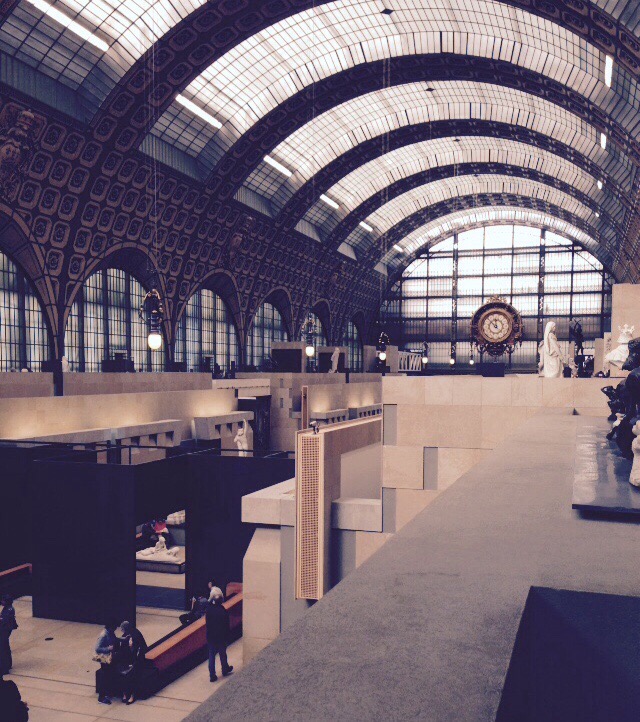
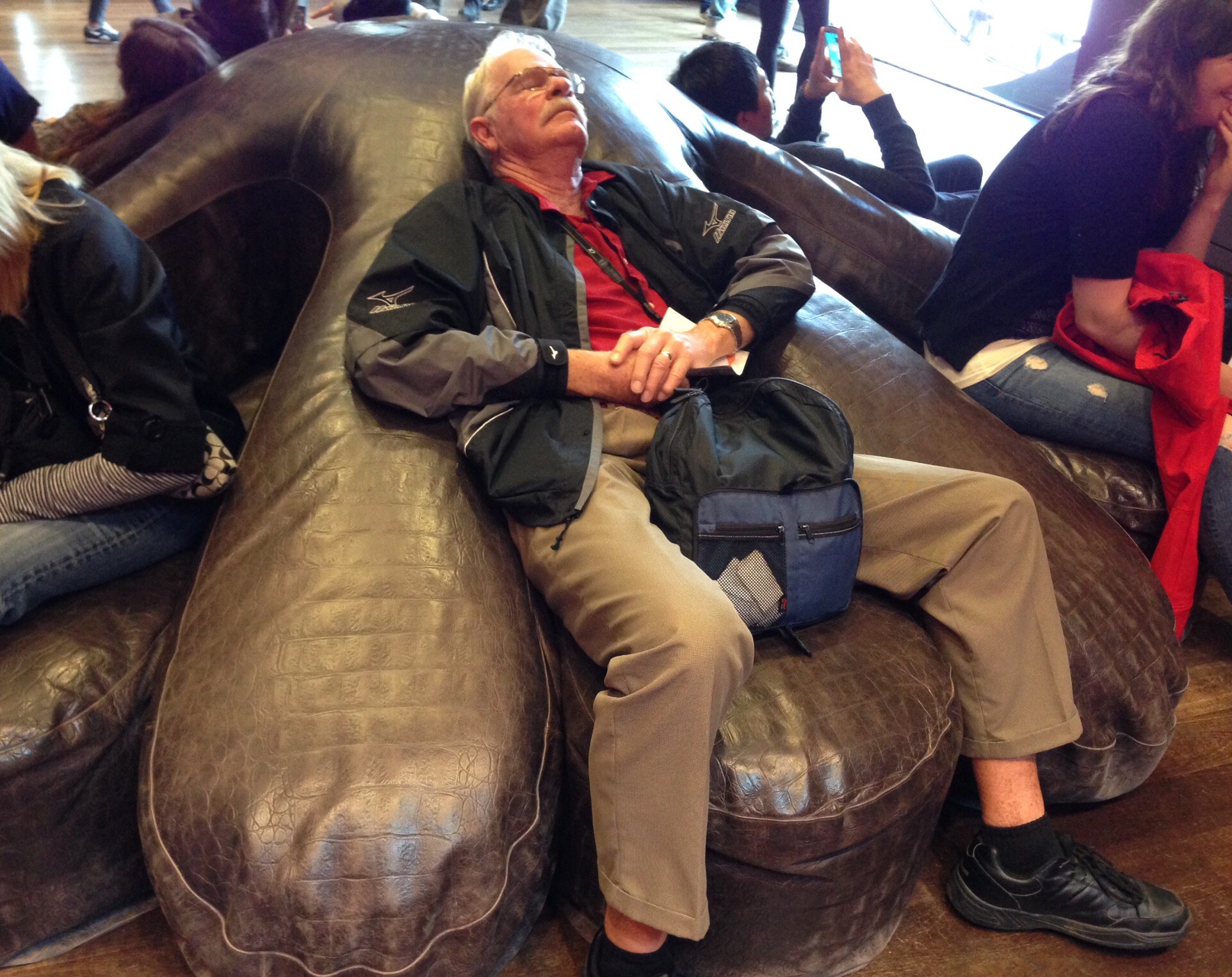
El Trapiche Jan 26

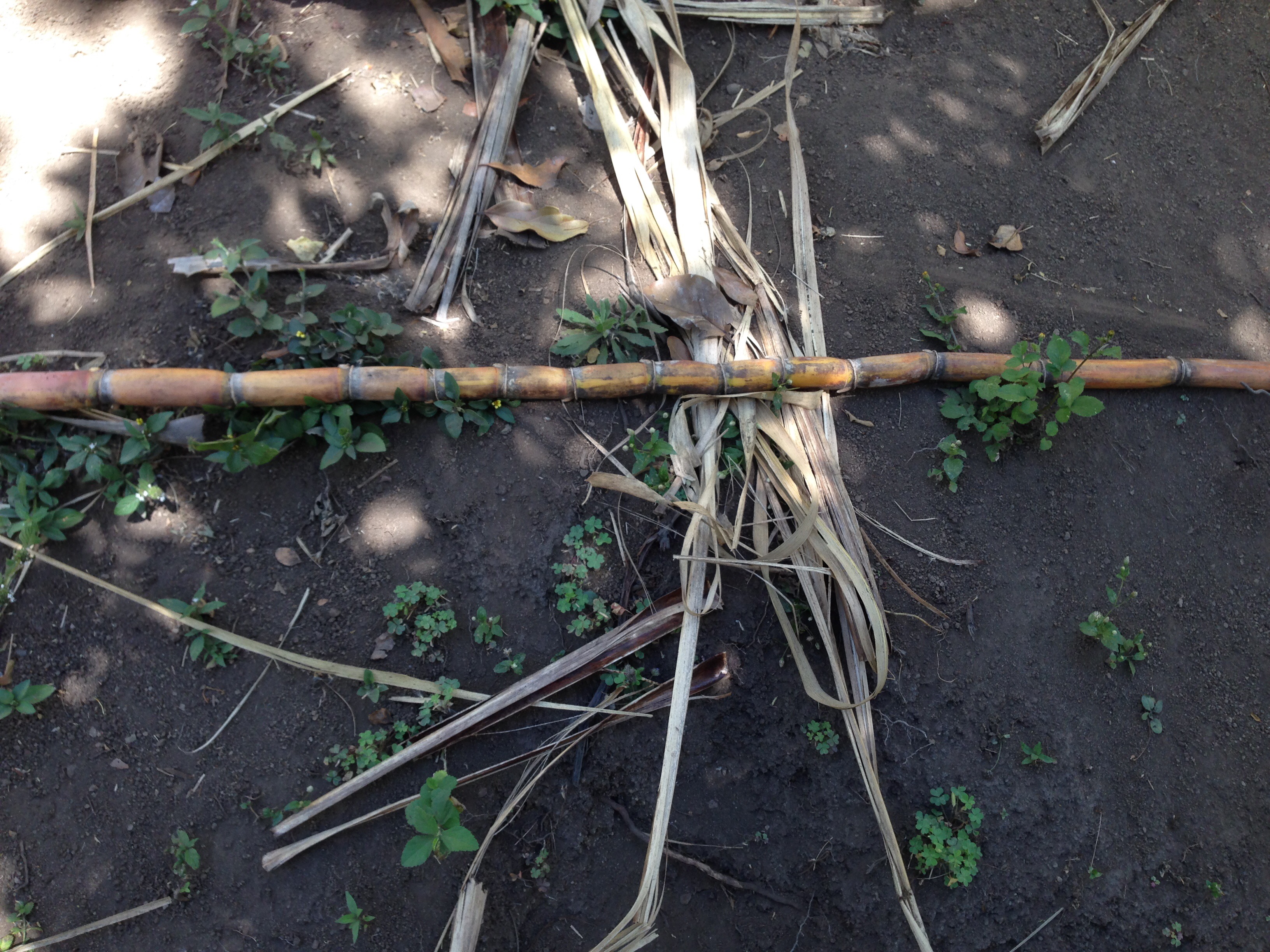
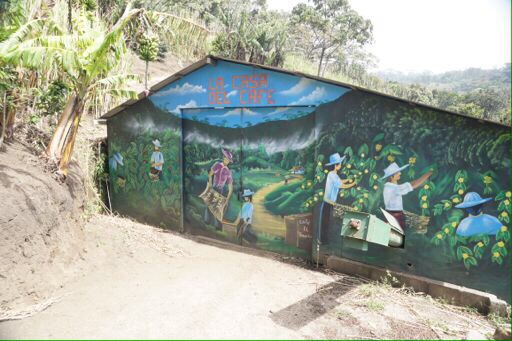
We had an interesting morning on a coffee tour. The plantation we toured is a small working farm that gets most of its income from tours to explain coffee, chocolate and sugar cane growing and production.  The farm is family owned and operated. All employees (15) are family members. After the mandatory uphill slog, we started with a stroll through the sugar cane.
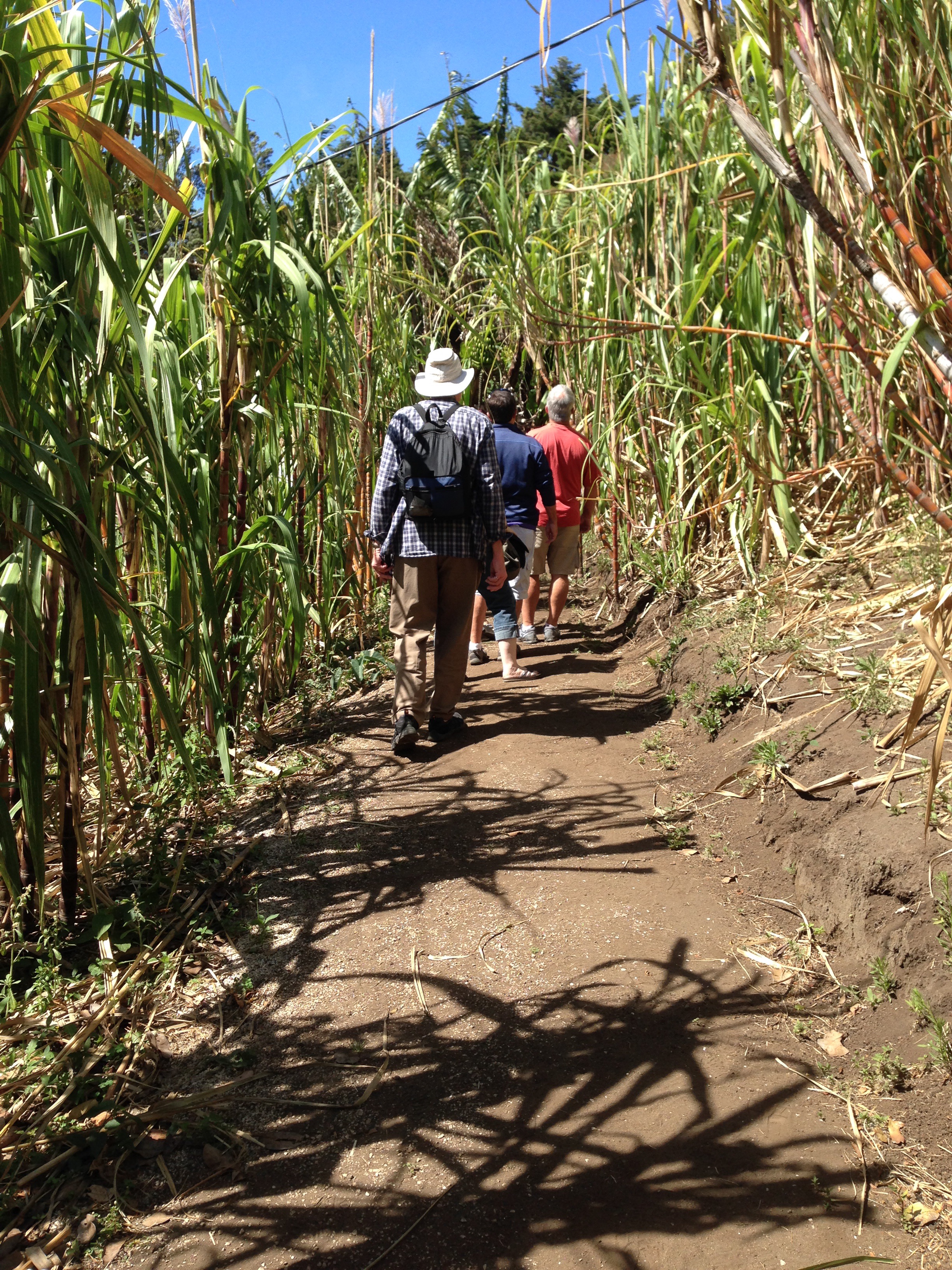

When the sugar cane flowers it is ready to harvest – usually about this time of year.
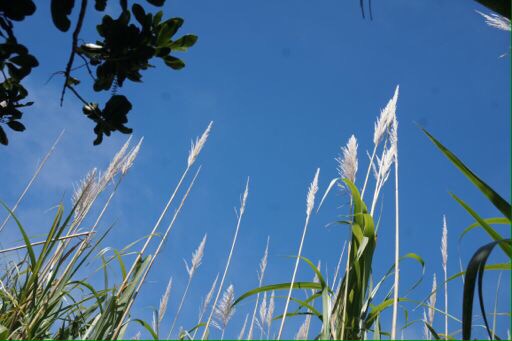


The cane has segments and each segment can be planted to produce a new plant. In the smaller farms the harvesting is done by hand (machette) and on the larger farms by a first burn to concentrate the sugar and then machine harvest. Because of the high fire risk and concern for the environment, smaller farms are not allowed to burn at all, while larger farms need a permit and the presence of emergency forces while the burn is underway.

Most sugar cane is grown in the lower regions. Cane from the lower regions have a 50/50 concentration of sugar to water. In the higher regions the cane is 75% water, so is not as profitable to grow. Sugar cane is not one of the major exports from Costa Rica because of the world competition – Africa is the biggest supplier.

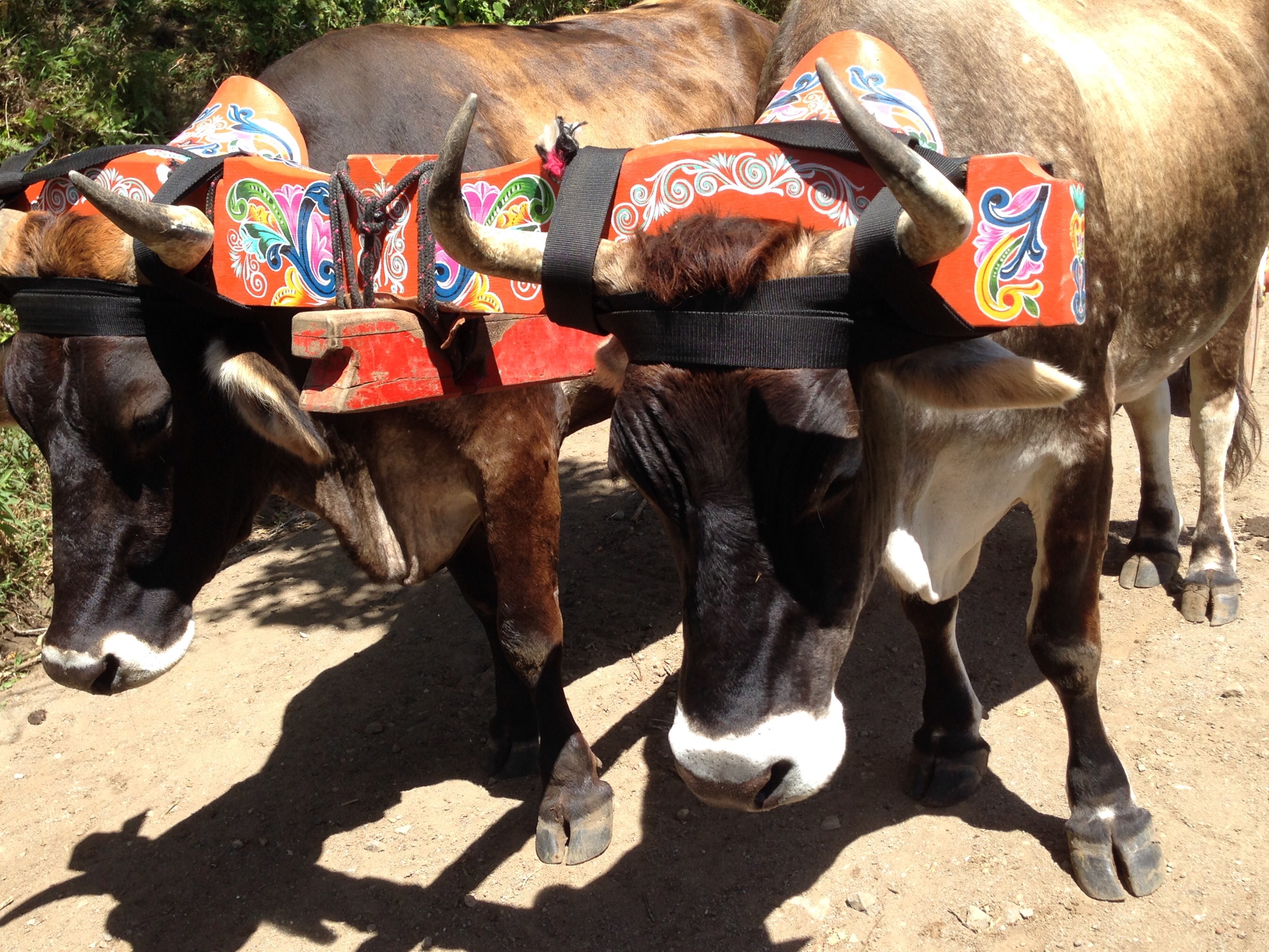
To produce the sugar from the cane in the traditional manner they have 2 pressings – the first uses a press powered by oxen
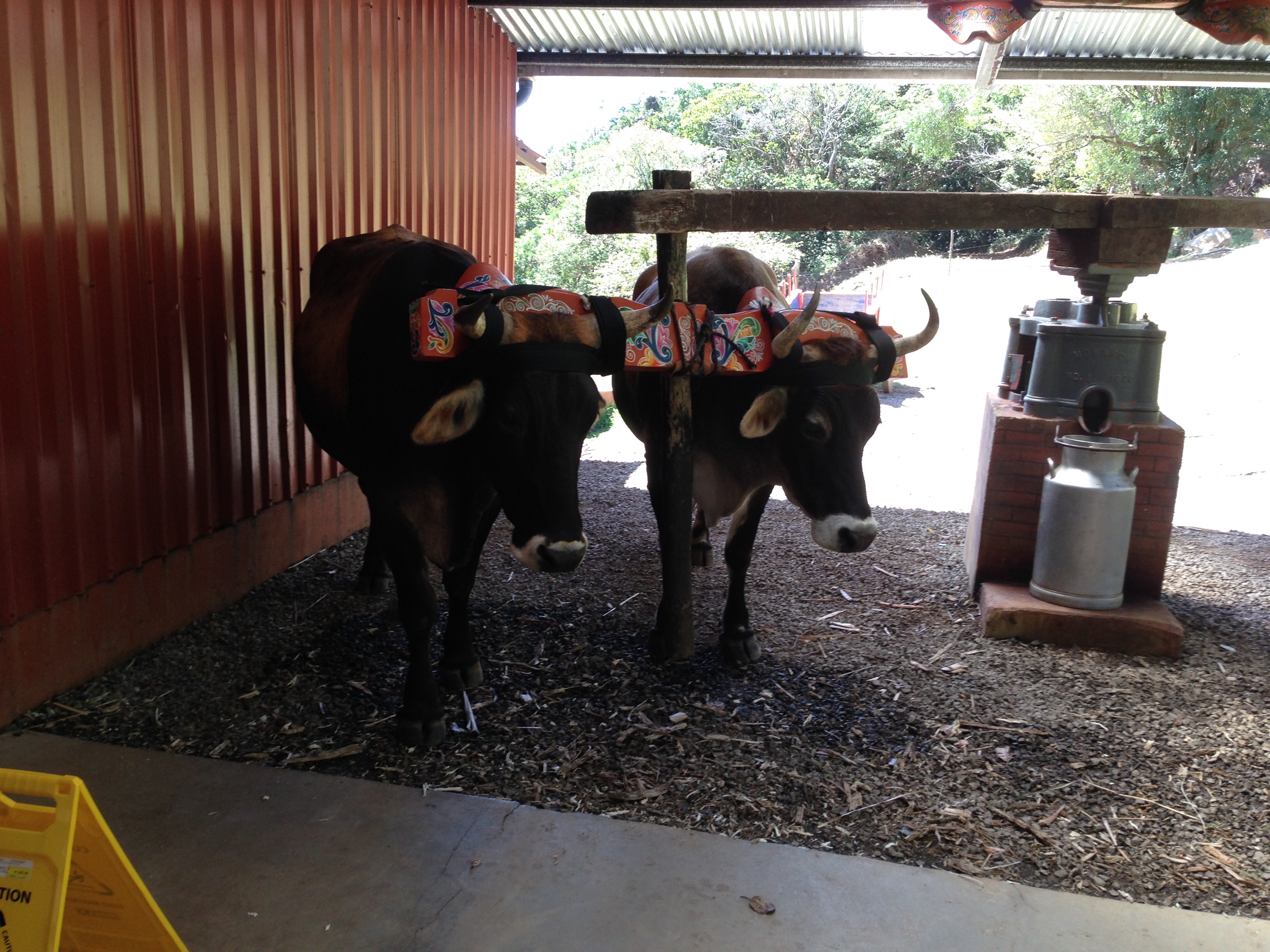
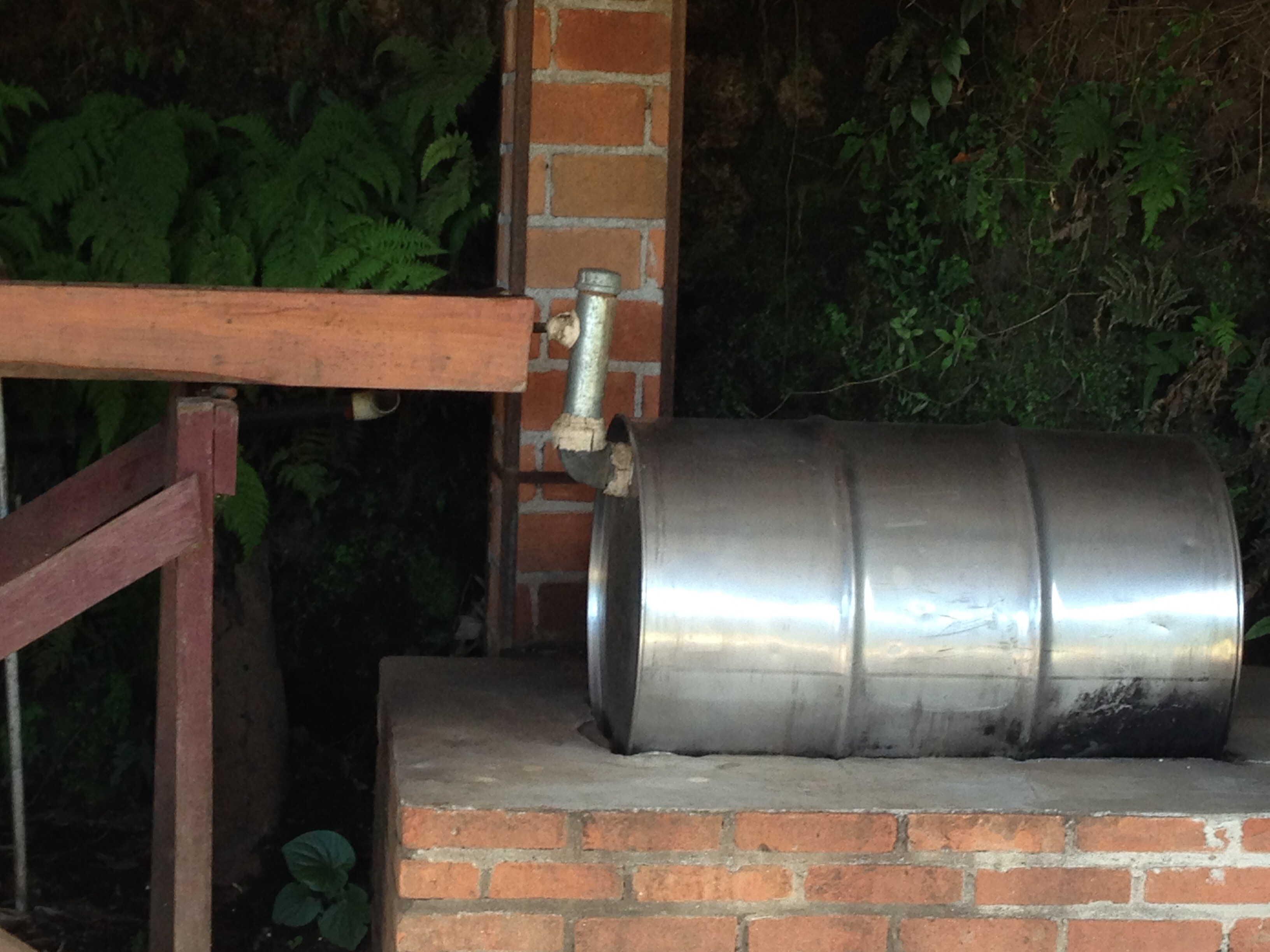
 the scond is a press powered by a water wheel . What comes out of the press is a dark coloured liquid – basically molasses. The molasses is then processed much like maple syrup – by boiling it down until it reaches a candy like state which hardened when immersed in cold water. As there is a lot of dust I some areas and water evaporates so quickly some people use the molasses on their roadway to hold done the dust.
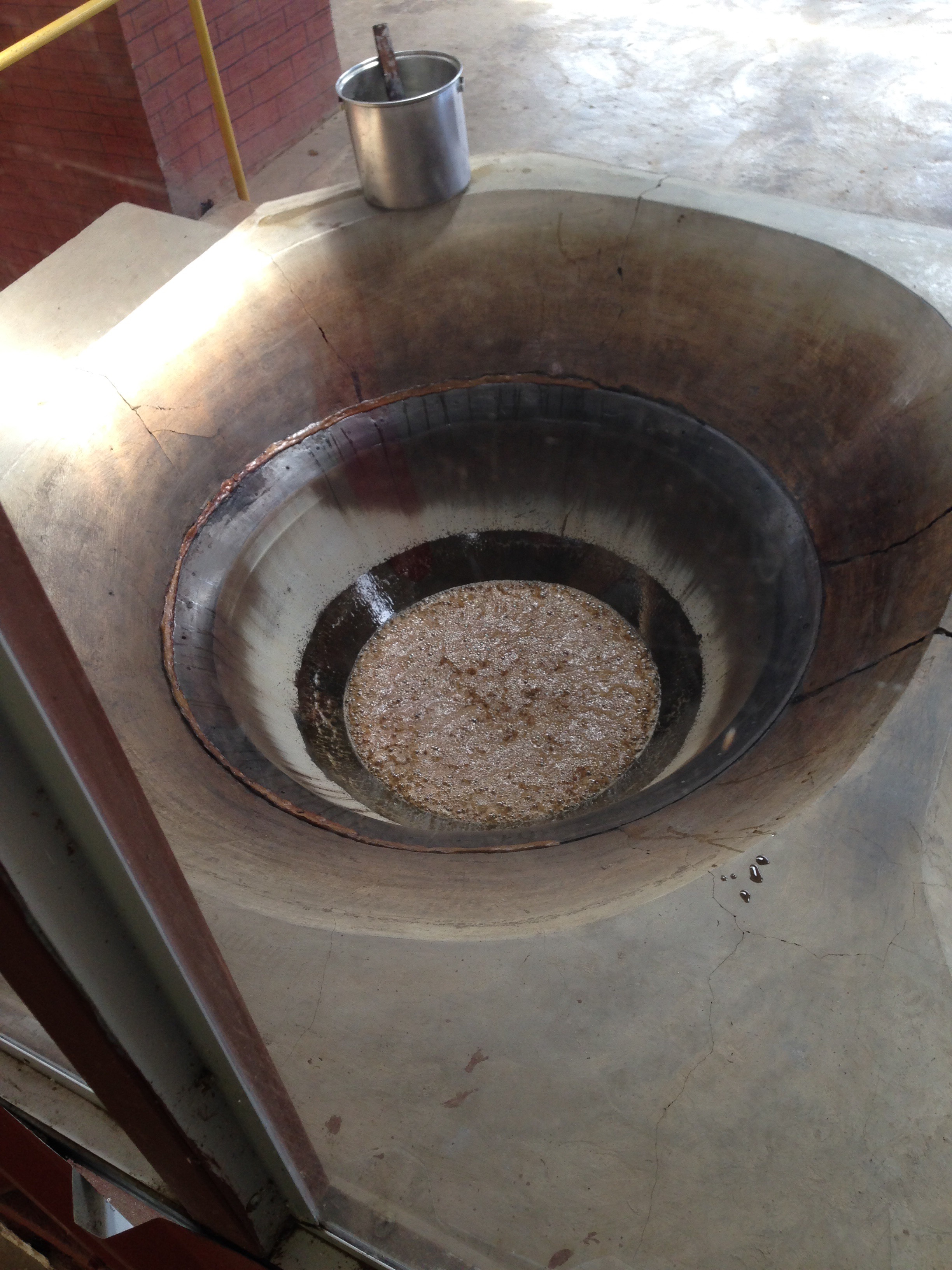

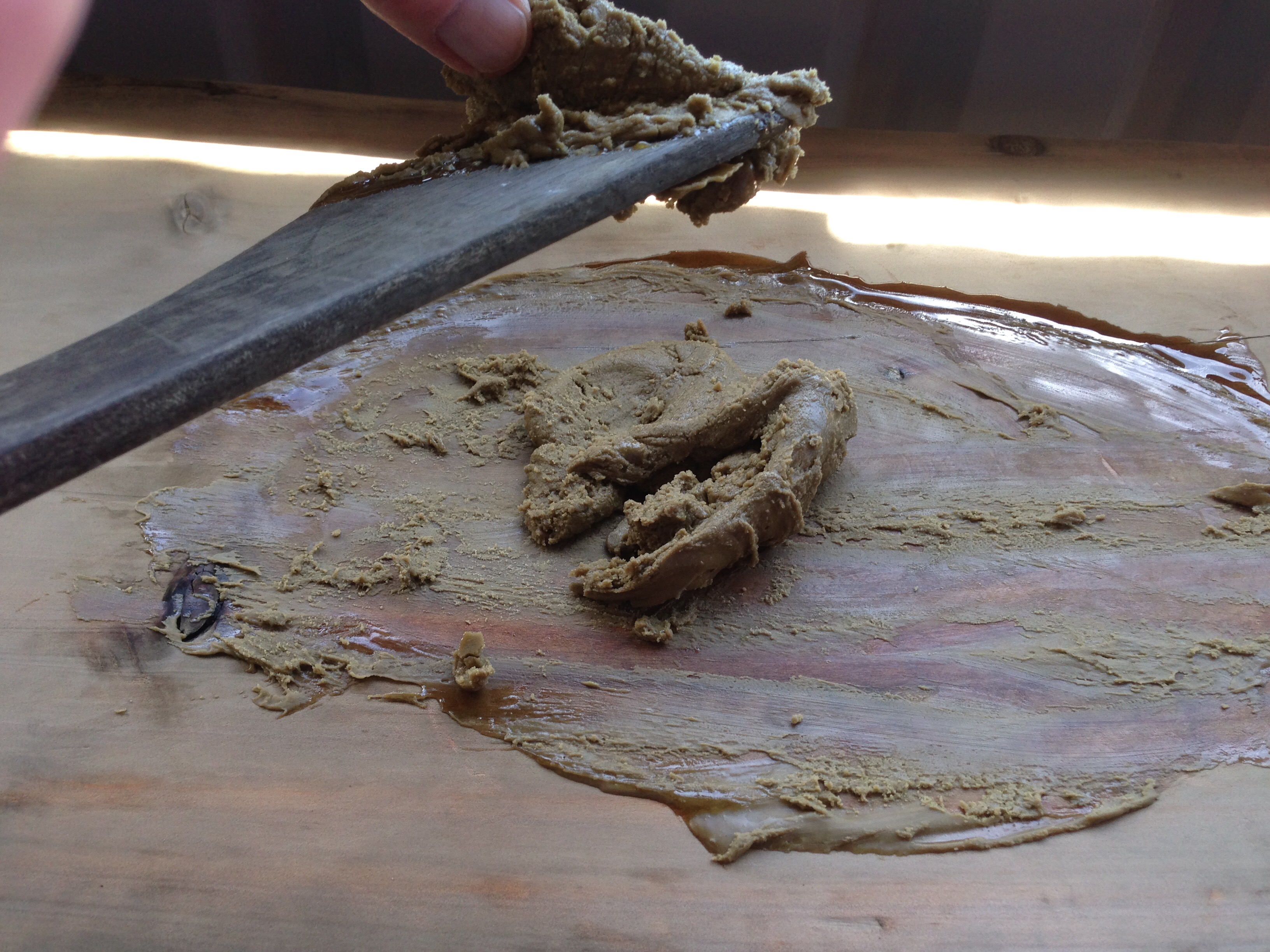
The syrup is then either whipped to add air and create a type of fudge
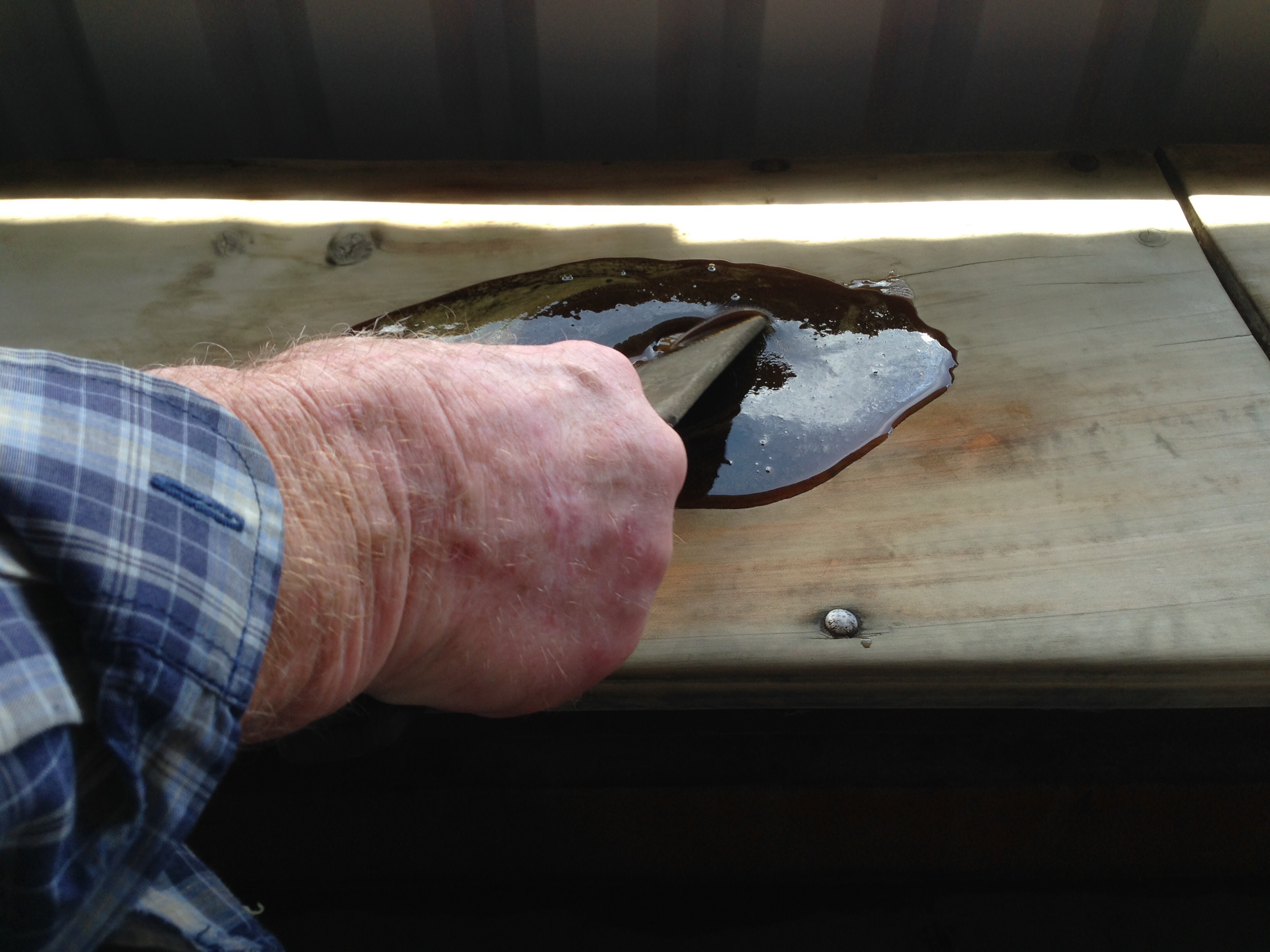
or cooled. It is first cooled in a large wooden box
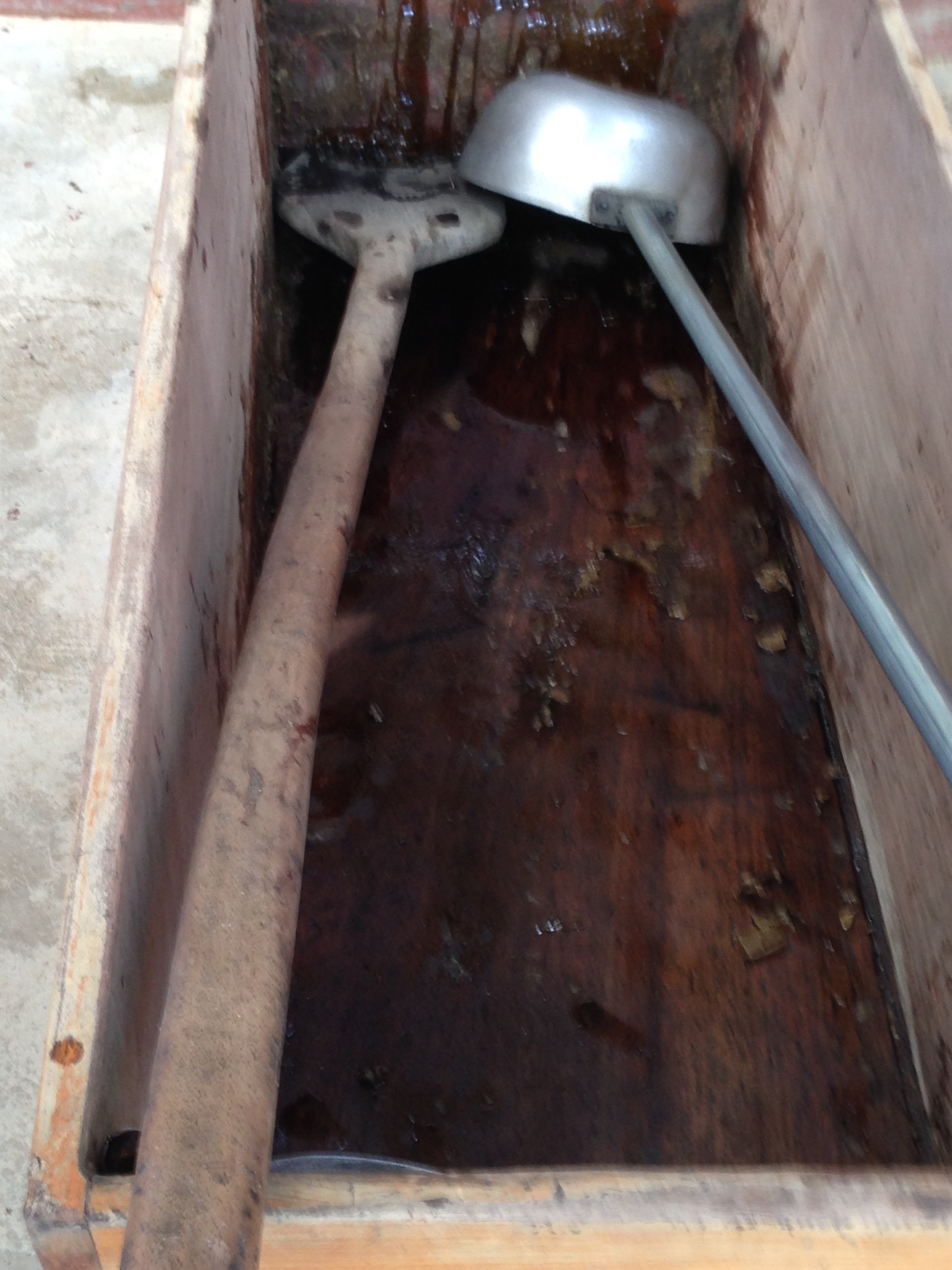

then in molds
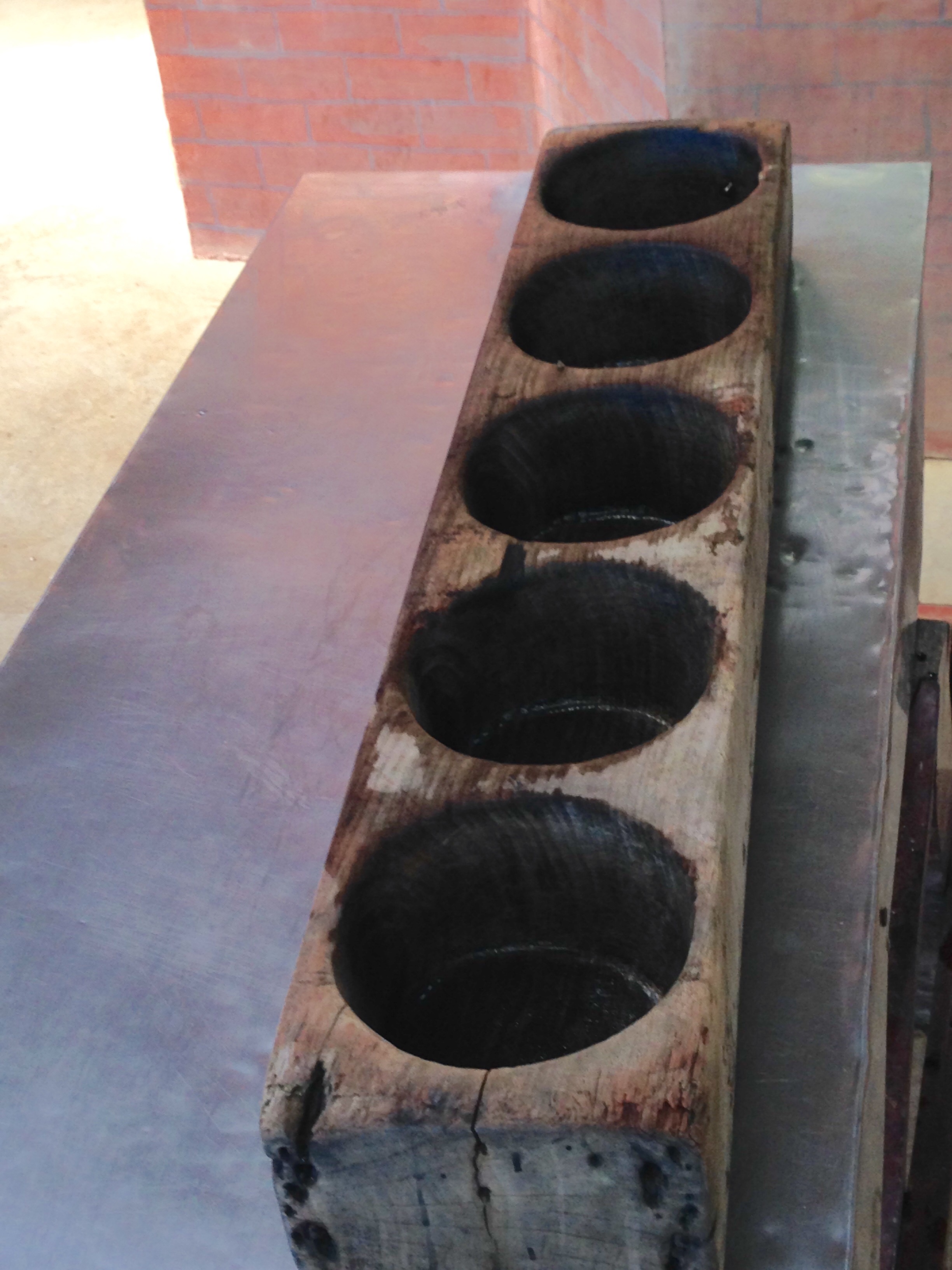

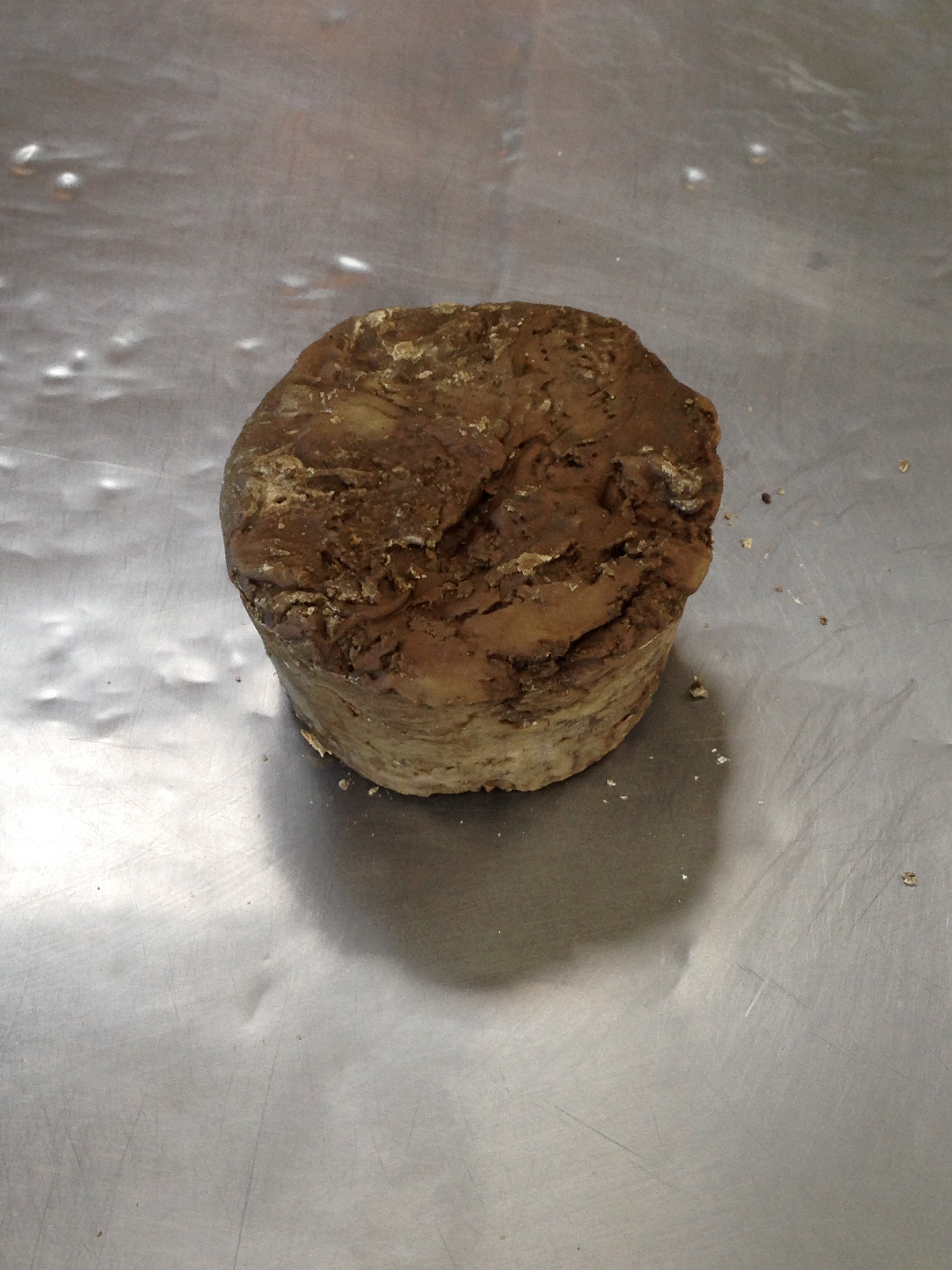
to create a block of brown sugar. The sugar is sold in theses blocks.

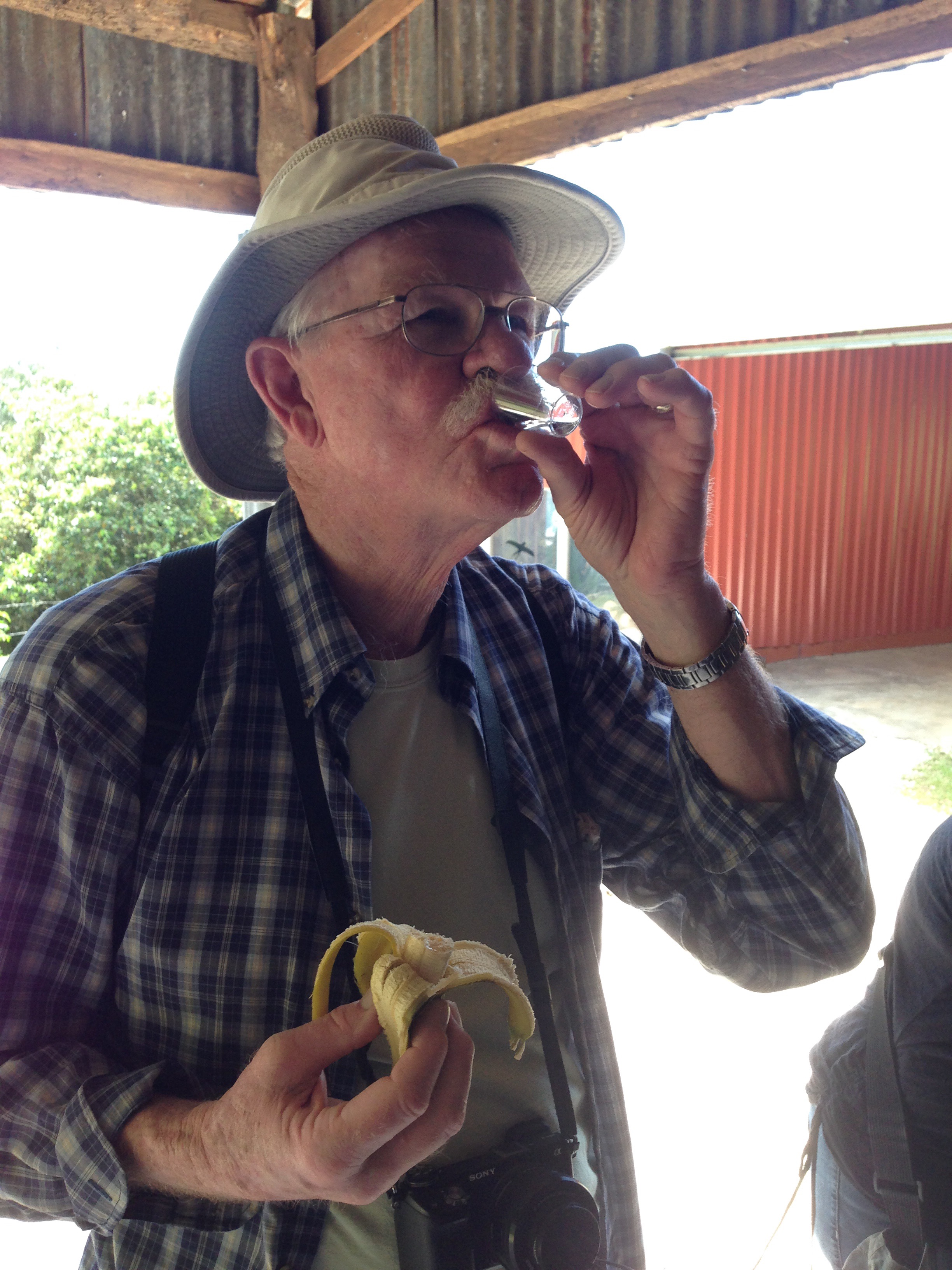
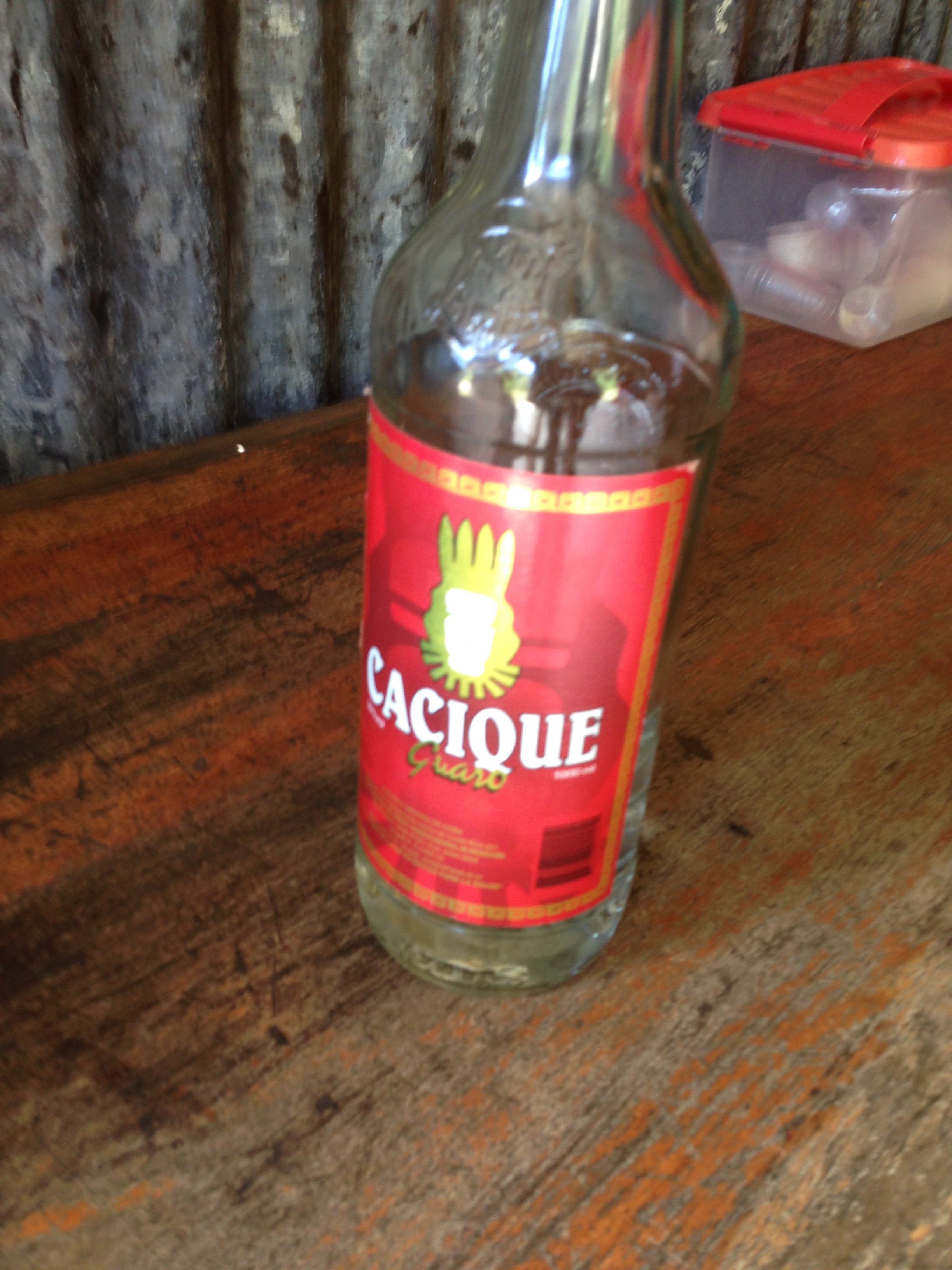
Of course some of the molasses will go to the private distiller to make an alcoholic drink.
  

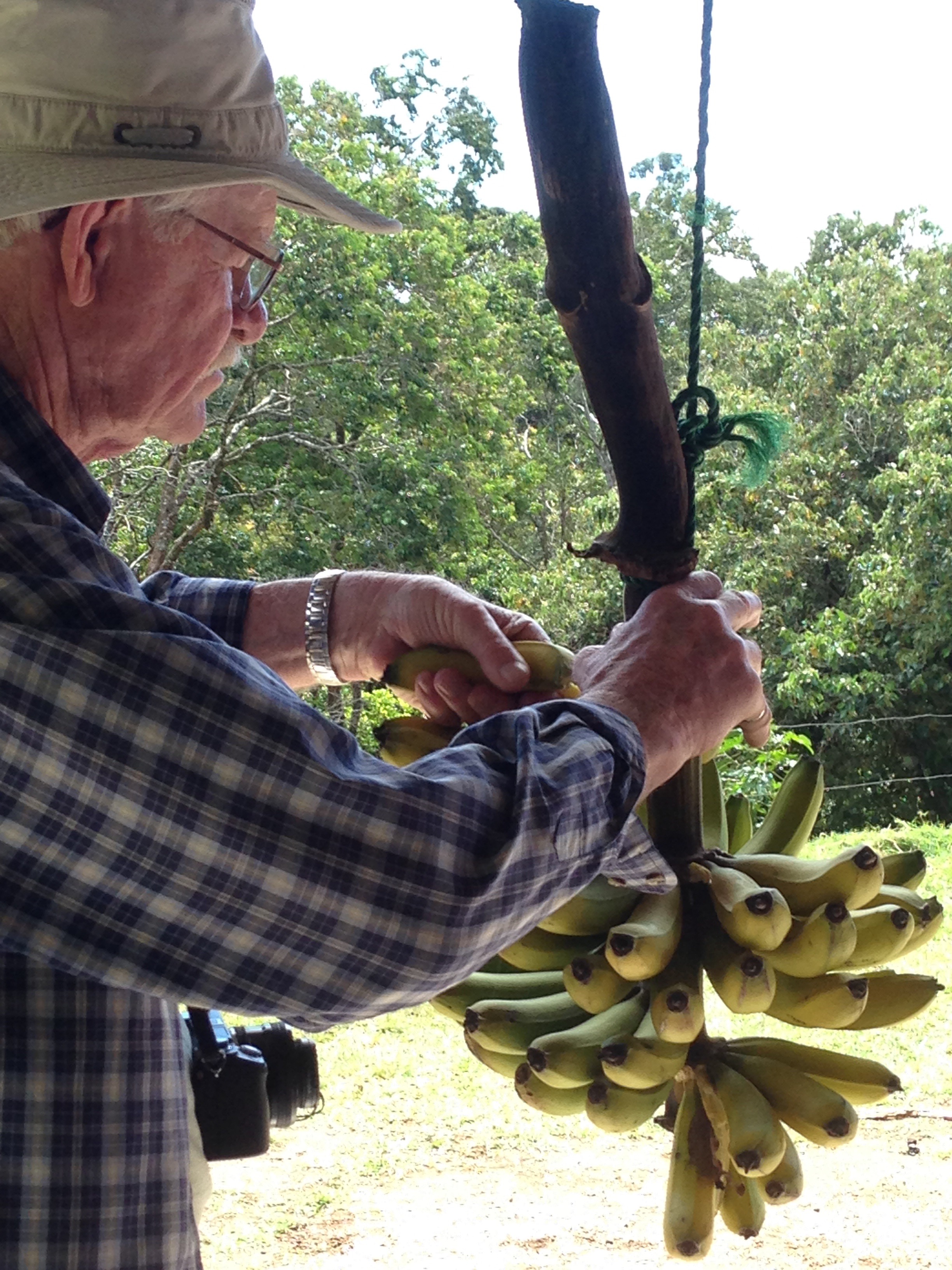
Gary had a sample with a fresh banana he picked himself

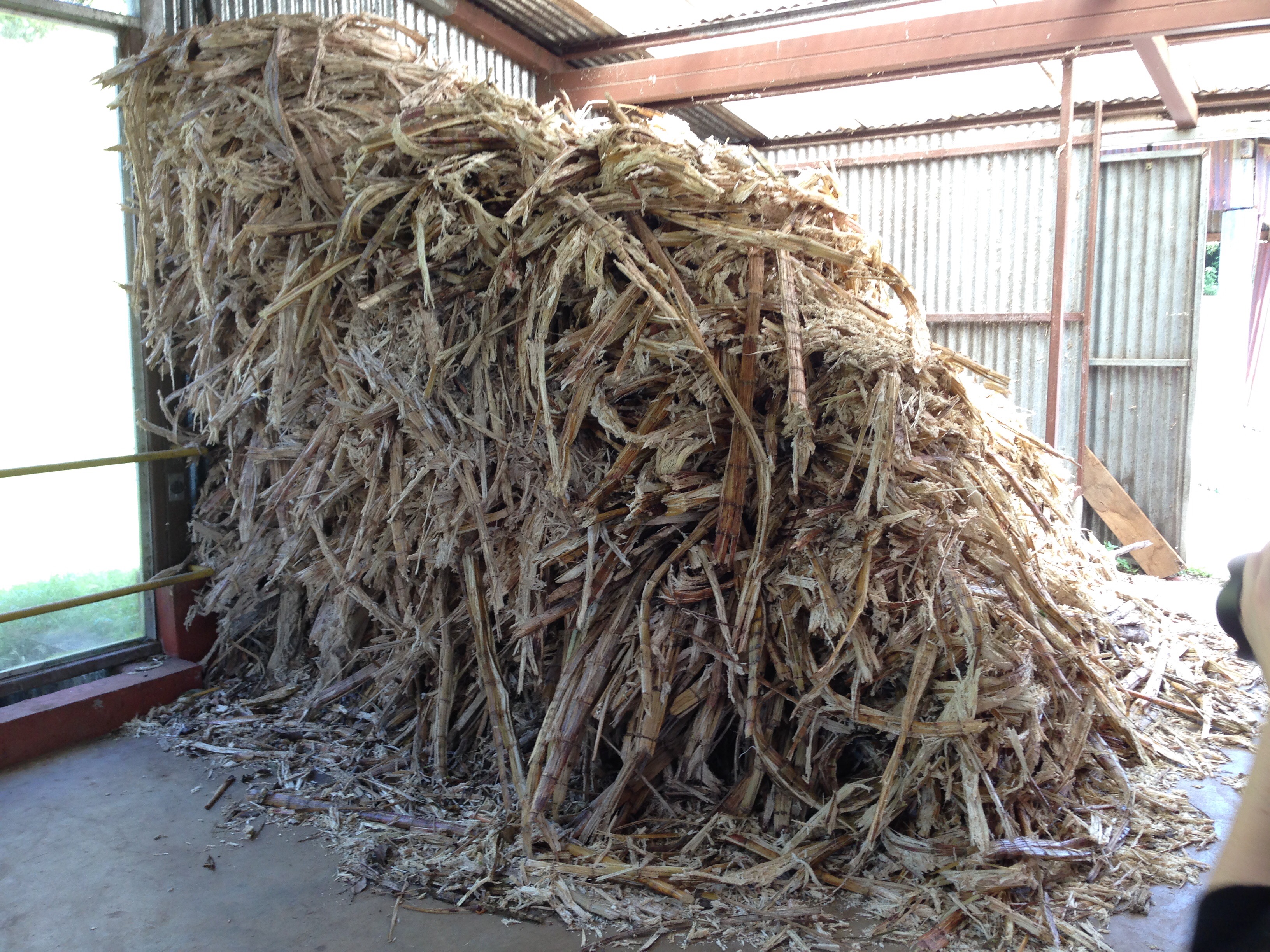
Nothing is wasted in the process – the pulp left over after the press is used as fuel

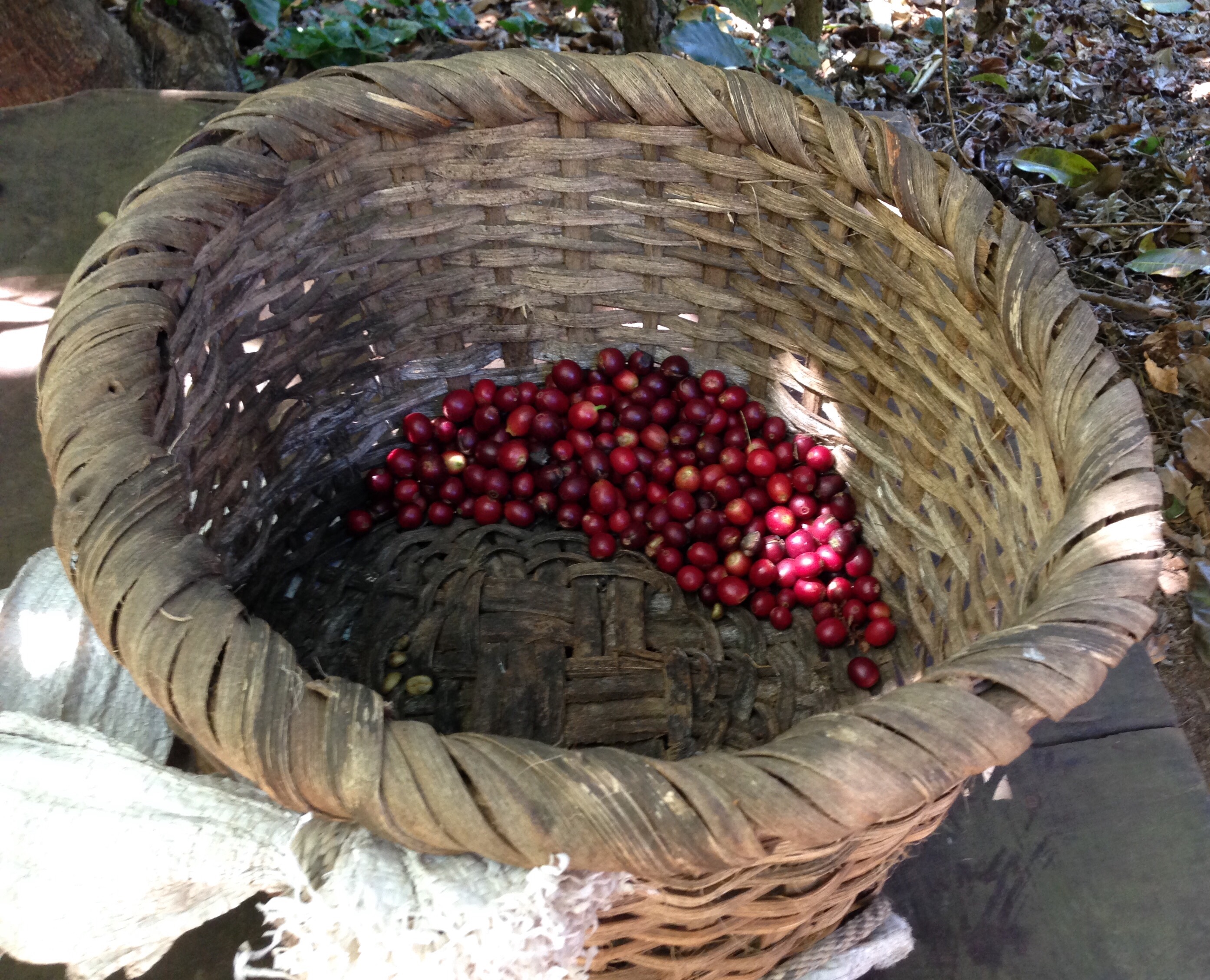
Then the coffee. The coffee berry grows on trees that reach only 6 feet. In Africa the coffee trees are much higher. Our guide says the smaller trees here are because the coffee is harvested by hand and Costa Ricans are short! The best beans are the arabica beans which only grow in the high areas on steep slopes. The berries are ripe where red and are picked by hand. Each picker has a basket tied to his waist so he can pick with  hands. A good picker will pick about one basket in an hour. During the picking season they pick from 5 am to 5 pm – 12 hours. For a basket of mostly red berries they earn $2 US. A good picker will earn $20 a day. The picking season is 6 months from November to April. Nicaraguans come here with their family for the picking season.A family of 5 can earn $20,000 in a season which is a good income for them.

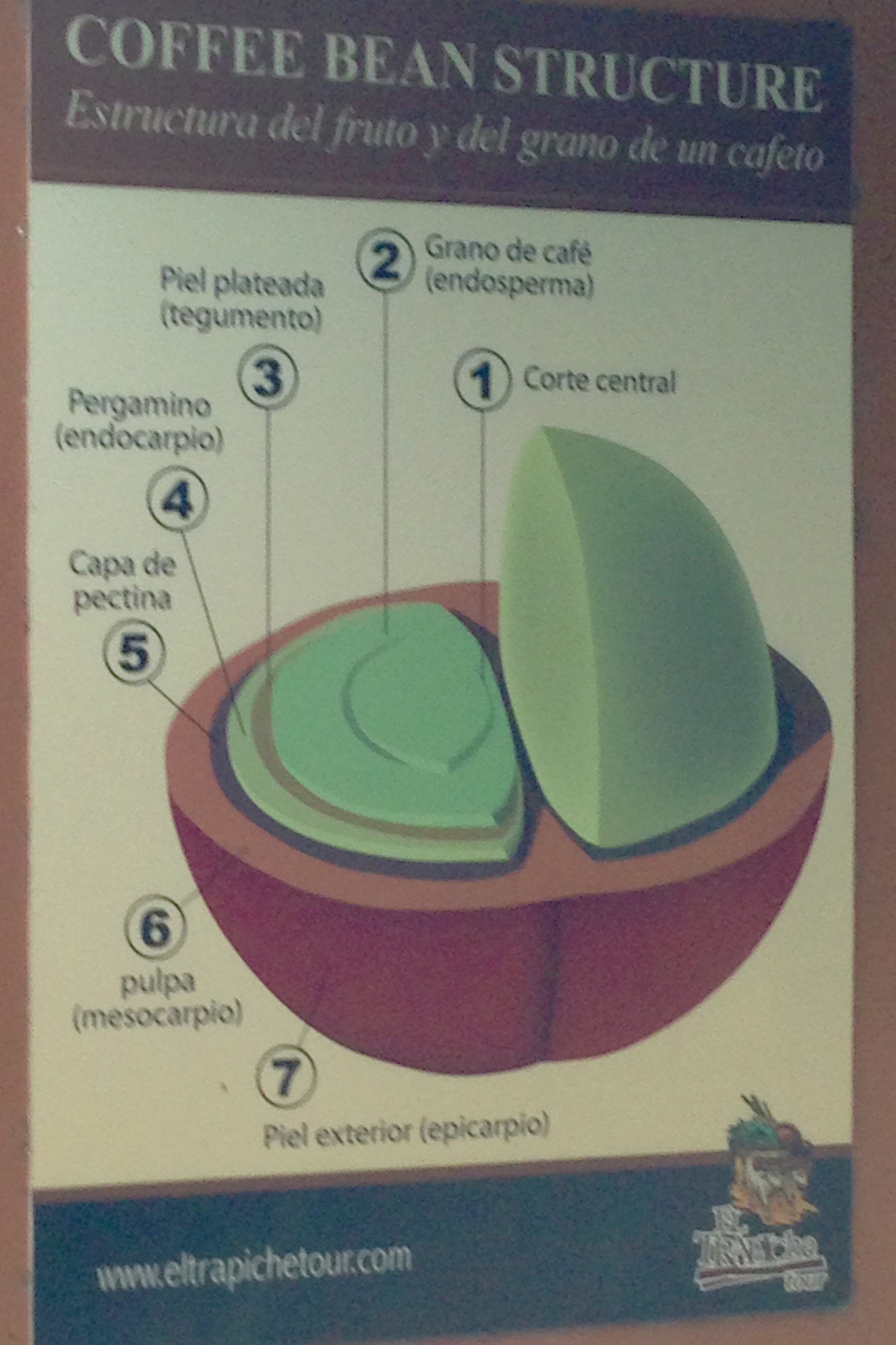
Inside the fruit there is either 1, 2 or 3 beans. The highest quality coffee comes from the one bean fruit called peaberry coffee. The one bean is a round shape, 2 beans – each bean is flat on one side and if placed together would form the round single bean, the 3 beans same thing if put together would form the shape of the single bean. The single bean is found in only about 5% of the berries, with the majority being 2 beans. They say the single bean, because of its shape and uniformity roasts more evenly so makes a better coffee.
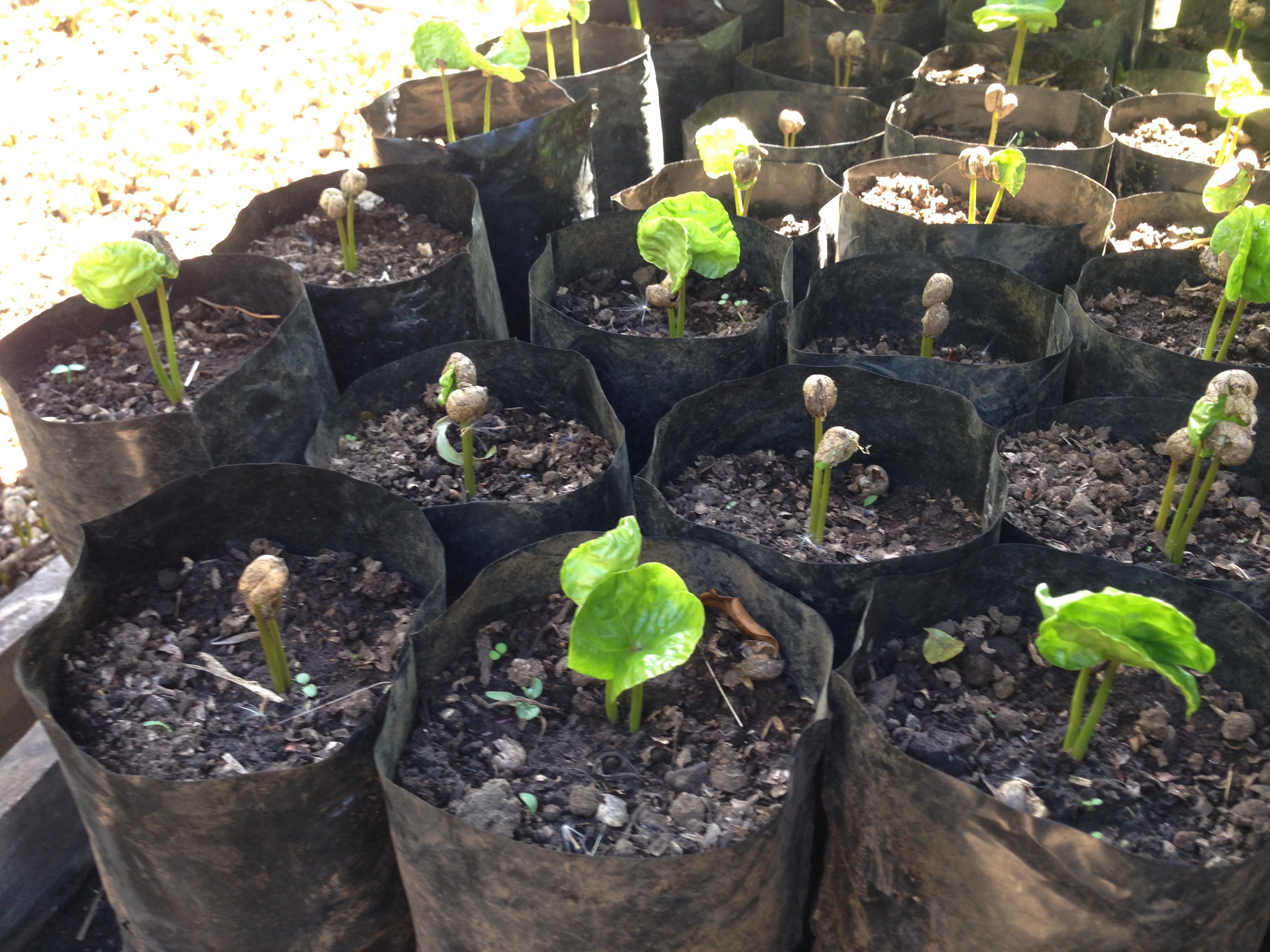
 The trees are grown from the bean and take about 3 years to start producing the berries

They are not allowed to export 3 bean coffee. Our guide referred to Starbucks as 3 bean coffee. He said coffee should be brewed at 90C, the same temp as recommended for tea. He also said the coffee starts to lose its taste after 3 months as the whole roasted bean.

Eric, our guide, opened up some of the red berries and had us suck on the beans – a little sweet but no real coffee taste. We there walked through the process up to the roasting. First the beans are dried in a greenhouse then they go to the first machine which sorts the beans – green beans are automatically discarded by the machine
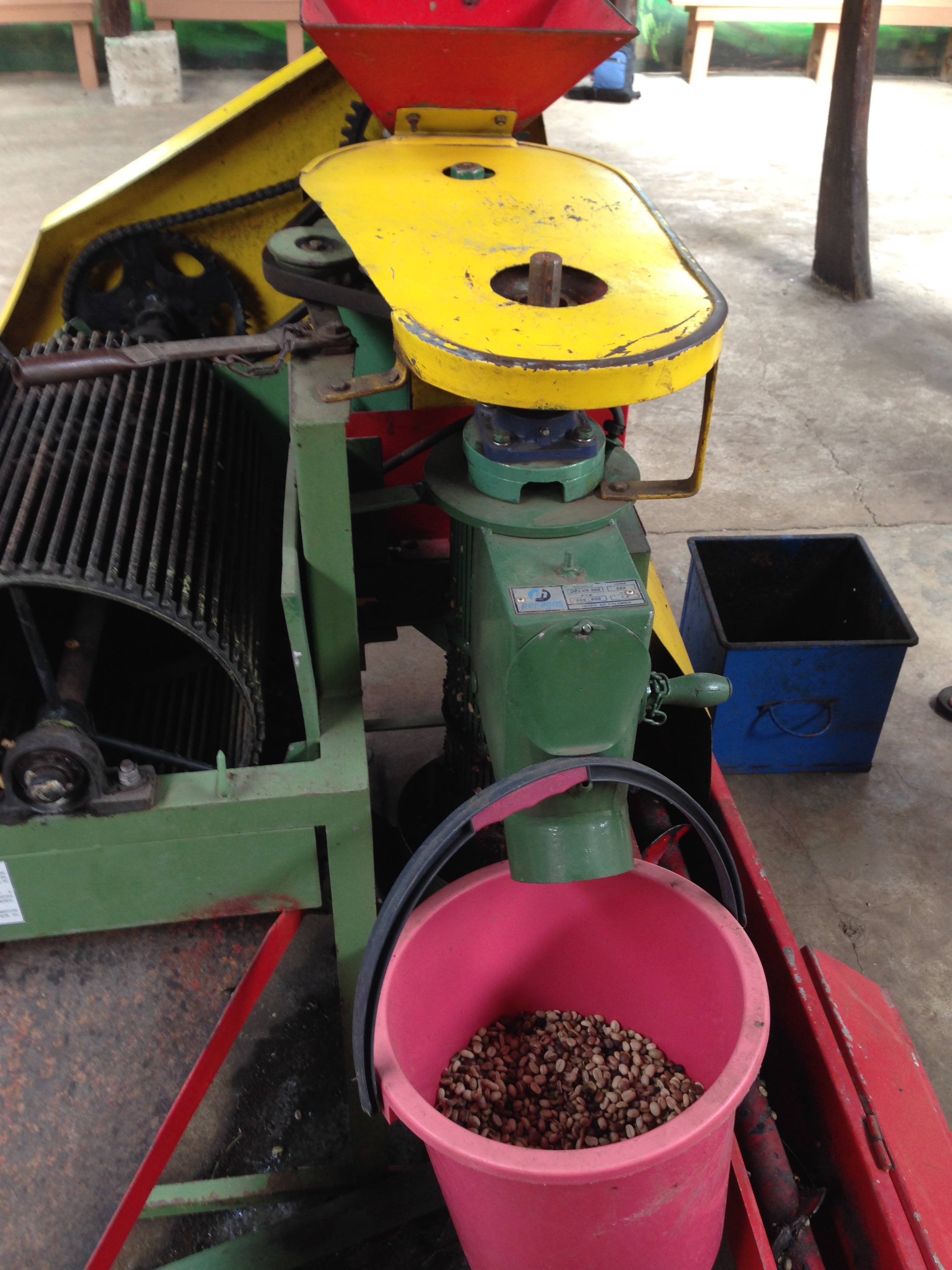
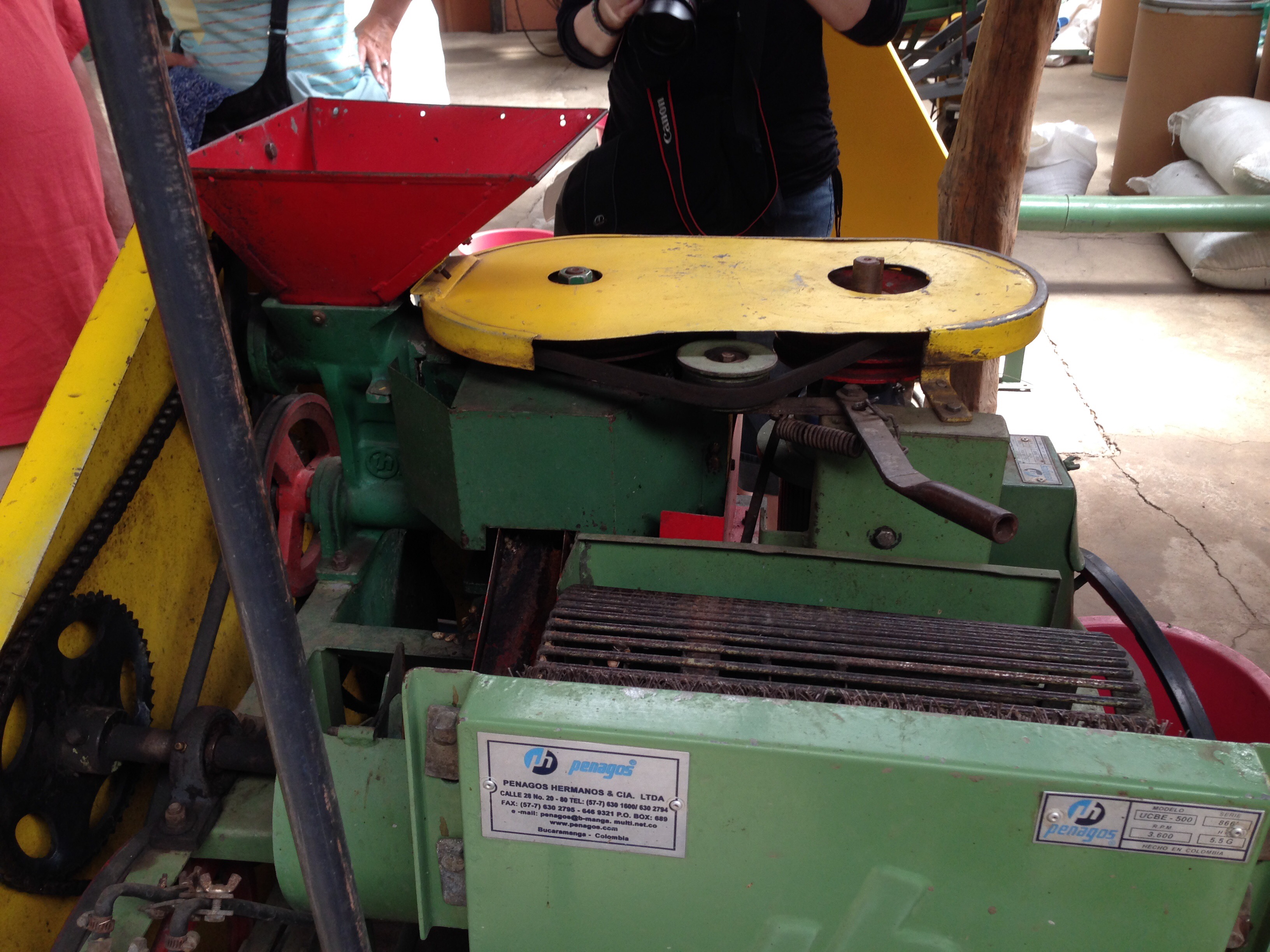
Next they go to a machine that peels the beans by shaking them so they rub against each other and the skins fall off. The skin are then used to make paper or for mulch. They also make paper from banana skins,
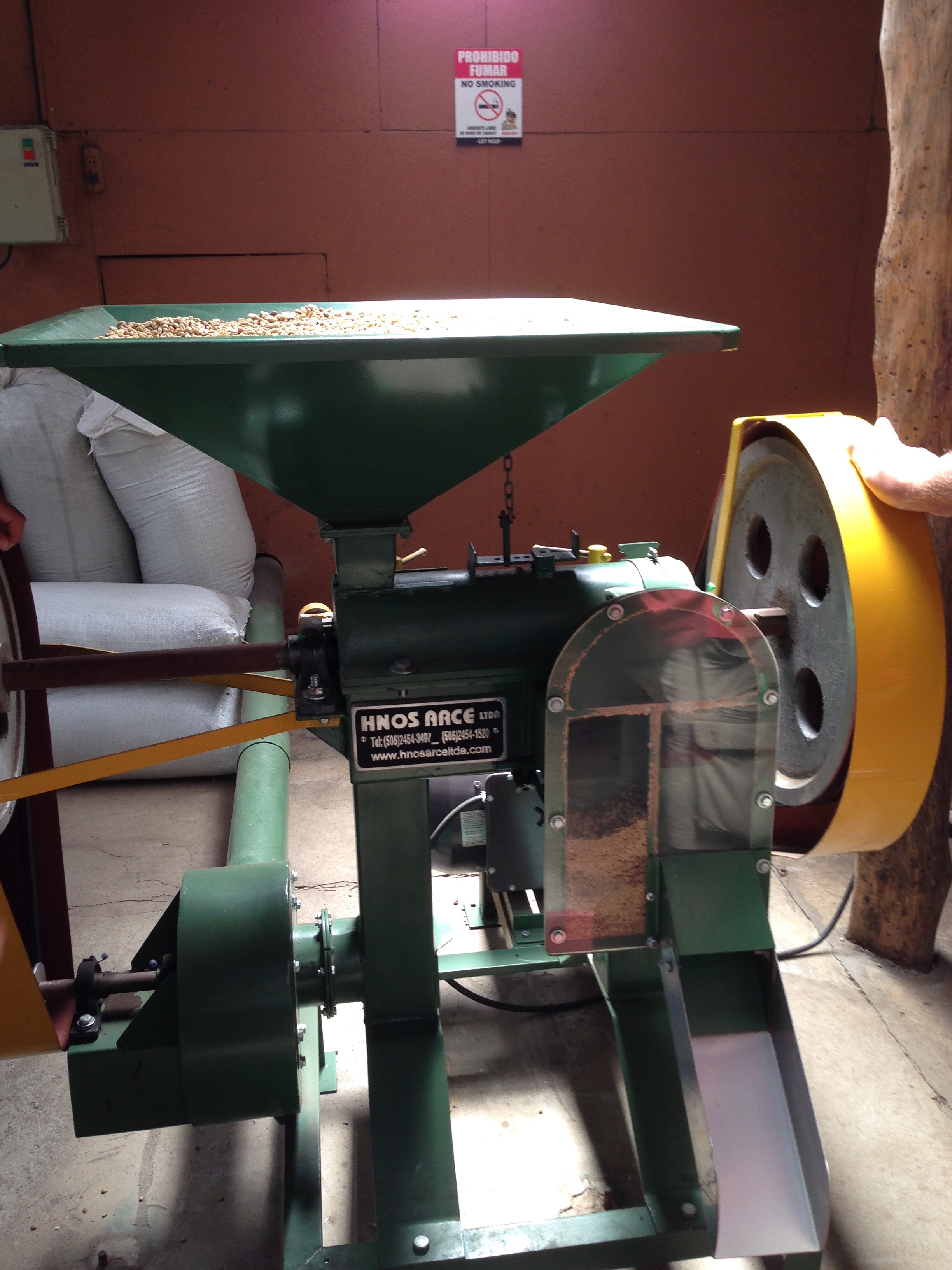


The next process is to sort the beans this machine uses a series of mesh screens of different sizes, the peaberries are screened out first as the largest, then the 2 bean, then the 3 bean and then any pieces.
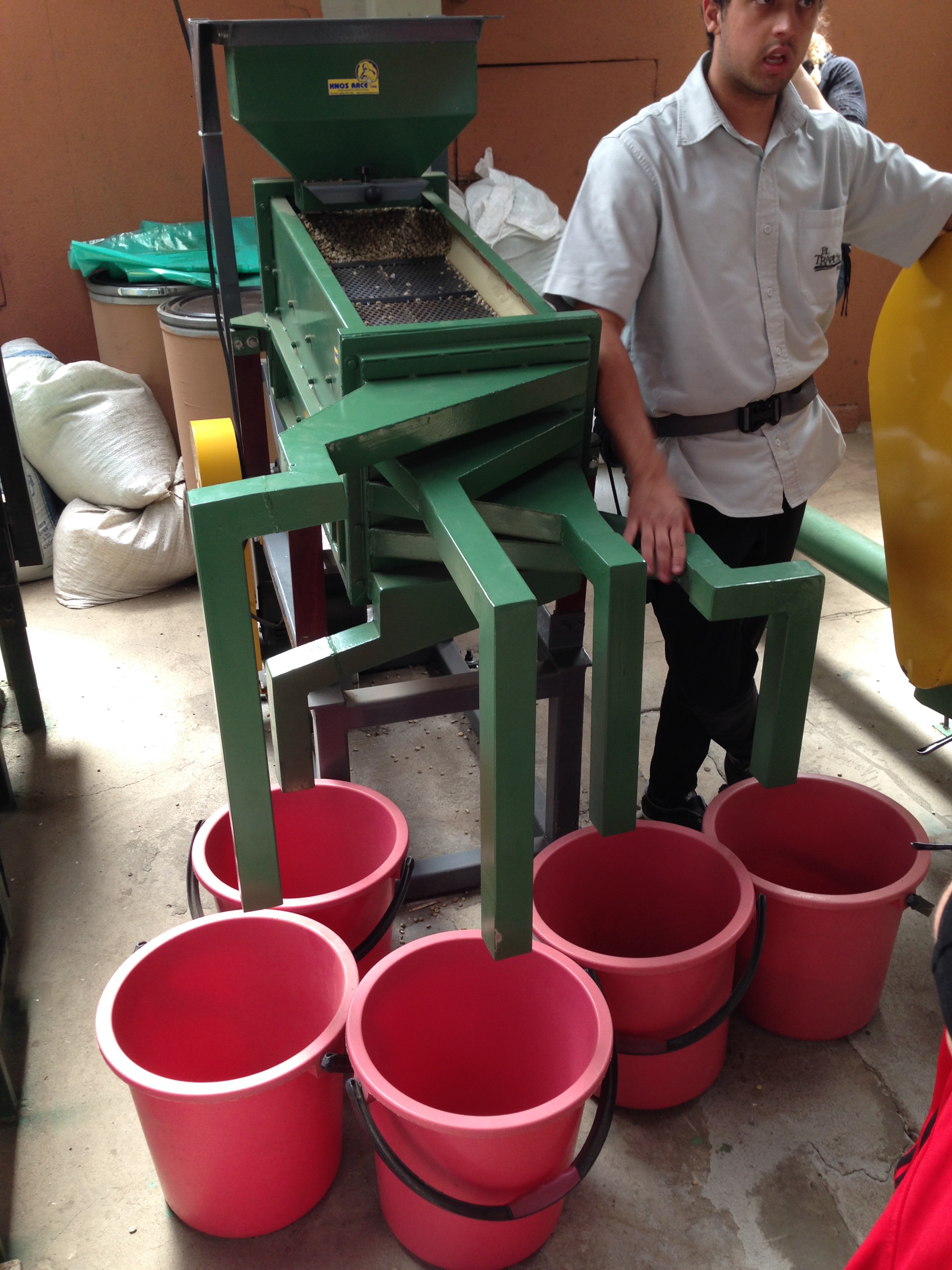

Not sure what the 5th bucket is for!

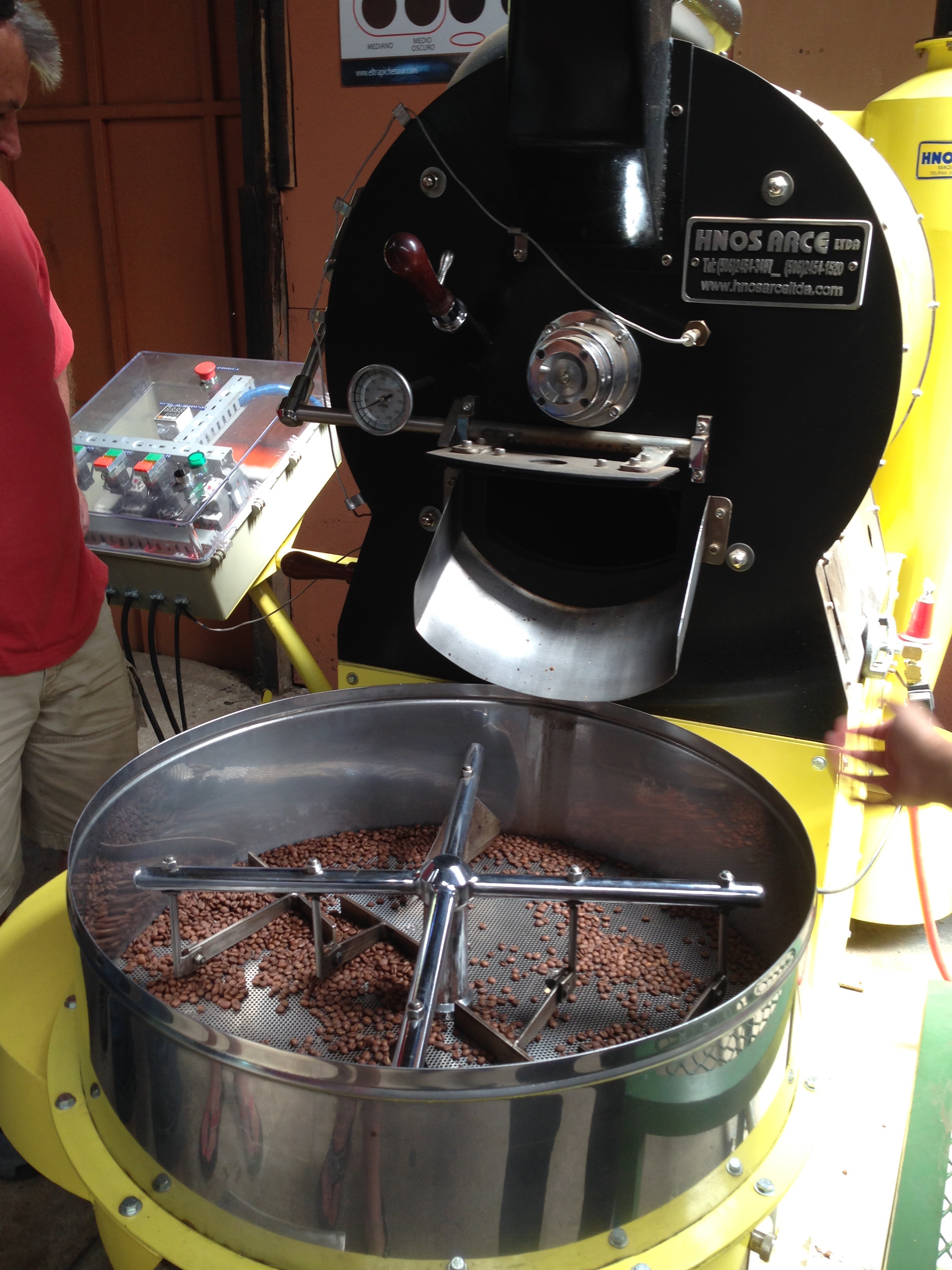
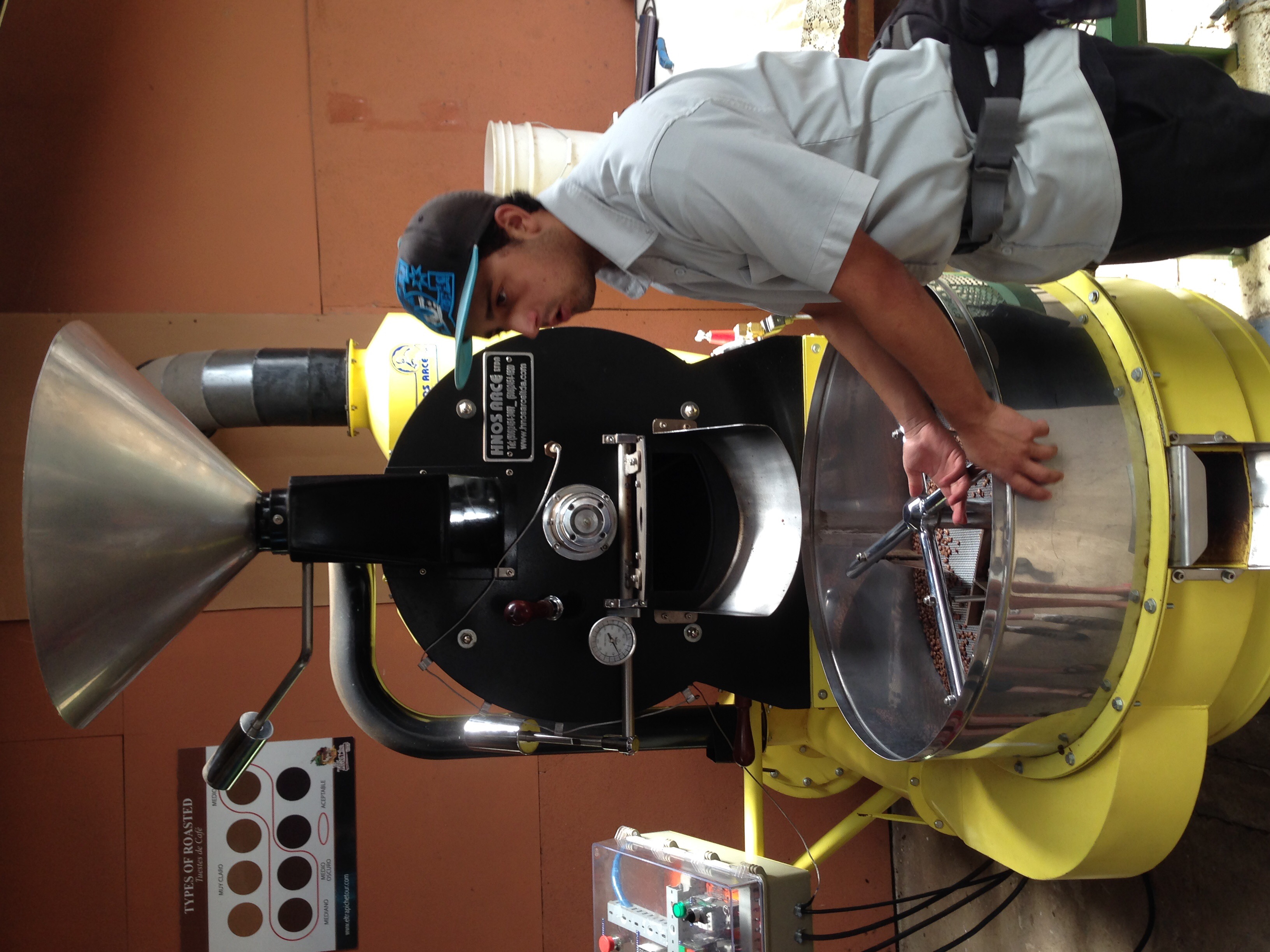
The last step is the roaster. The roaster is run by someone trained to select the temperature and time to correspond to the size and hardness of the beans. Different tastes are achieved through this process.


Now for the good stuff – chocolate.

They don’t actually grow the cacao on the farm but did a great job of explaining it
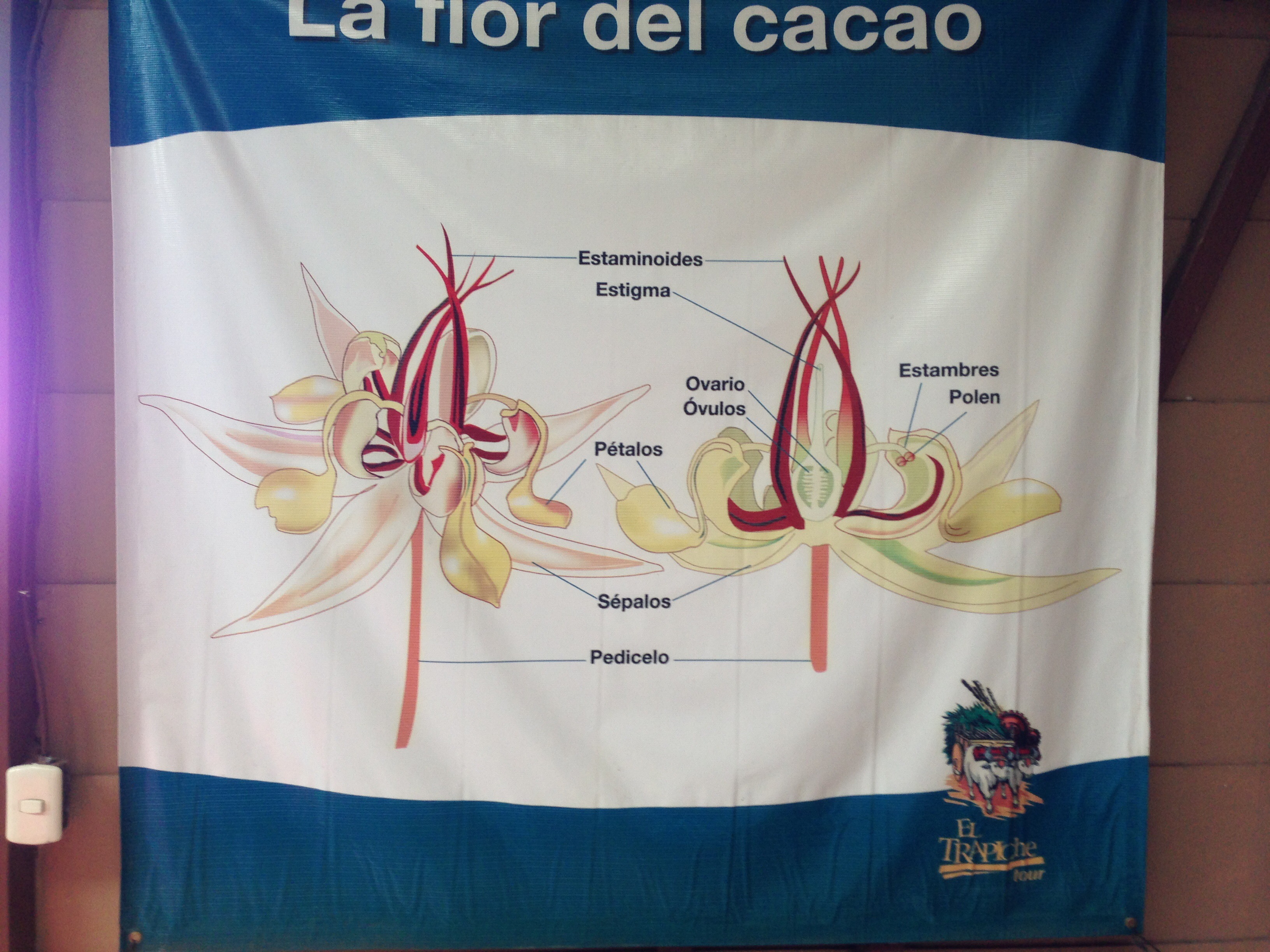


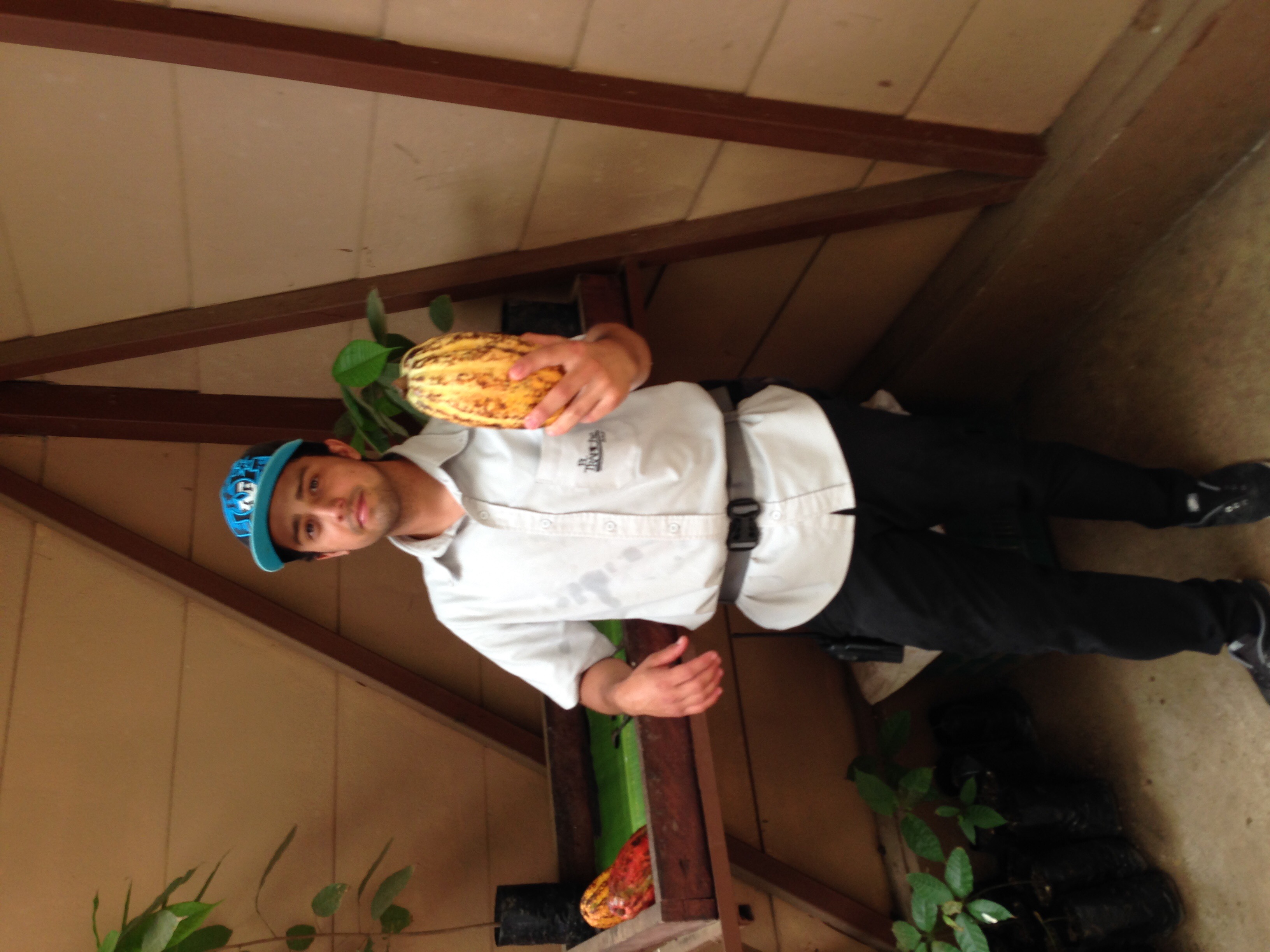
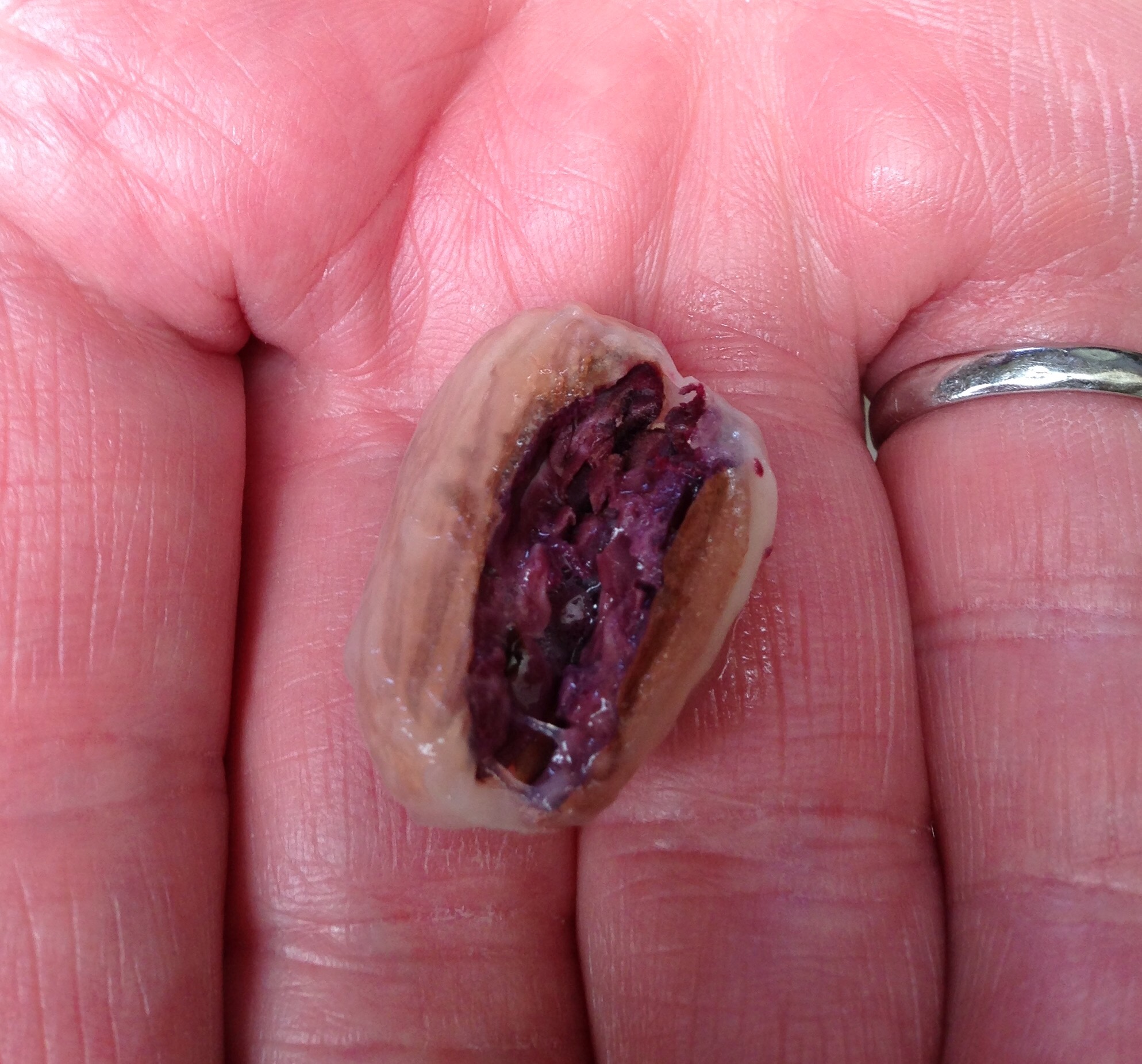
The fruit is huge and contains about 30 – 40 beans. The raw beans have a bitter taste.
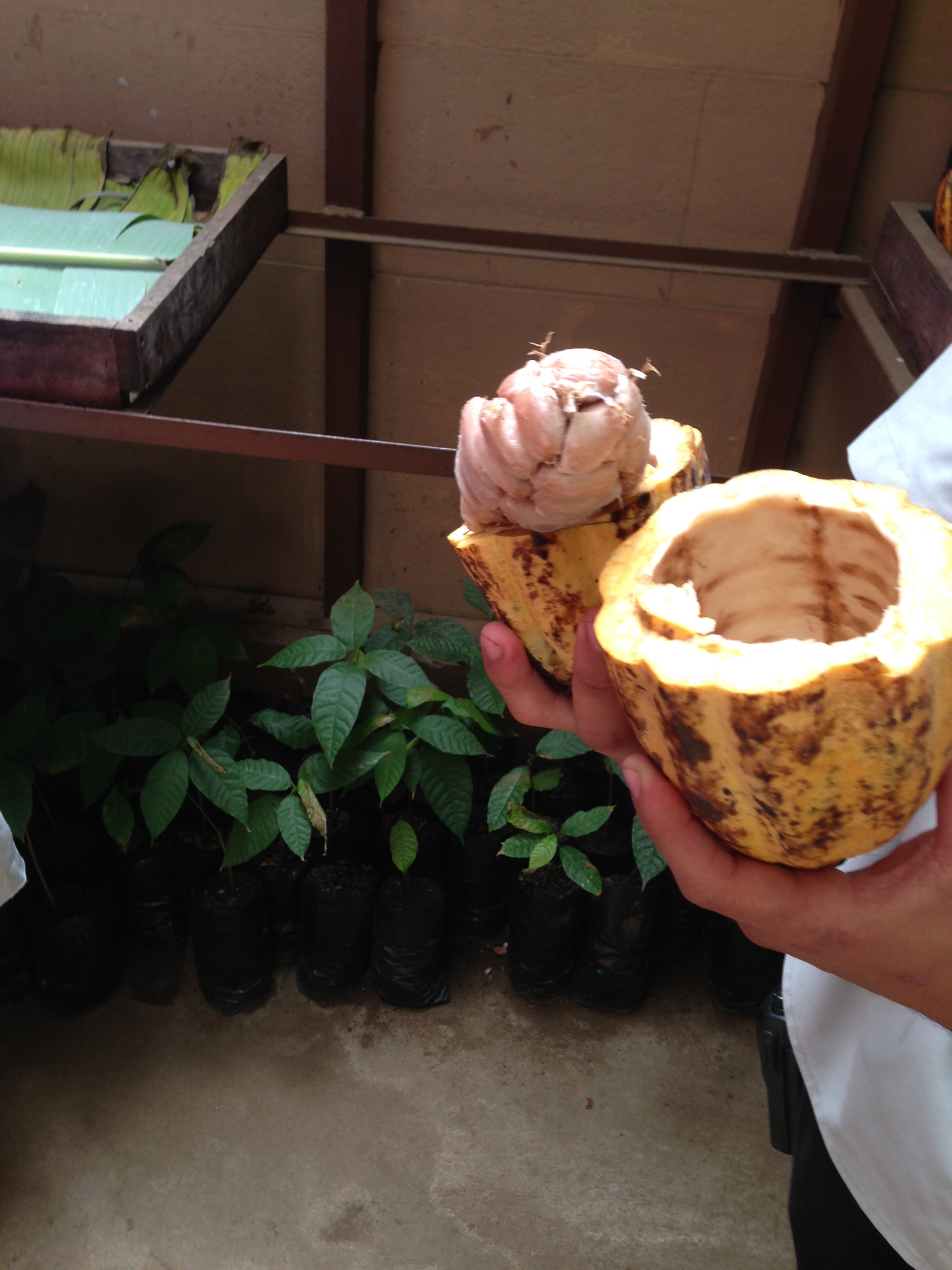

Inside the raw beans is purple — cocoa nibs
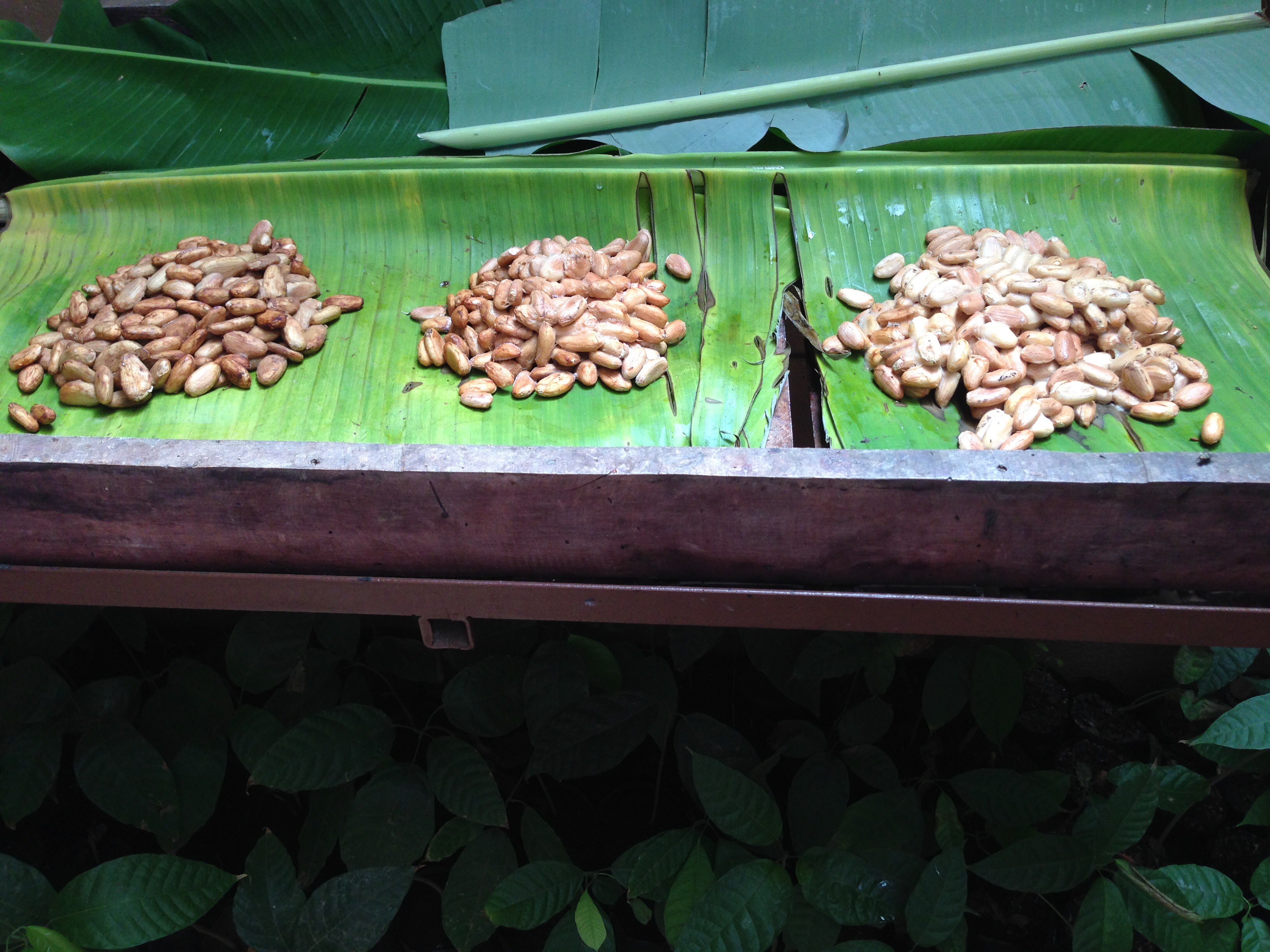
The beans are dried between 2 banana leaves for 7 days – from the left 2 days, 4 days, 6 days

The beans are then roasted and the cocoa butter is removed to make the chocolate. White chocolate uses only the butter and none of the meal. The roasted beans are ground and make a paste because of the oil in the bean
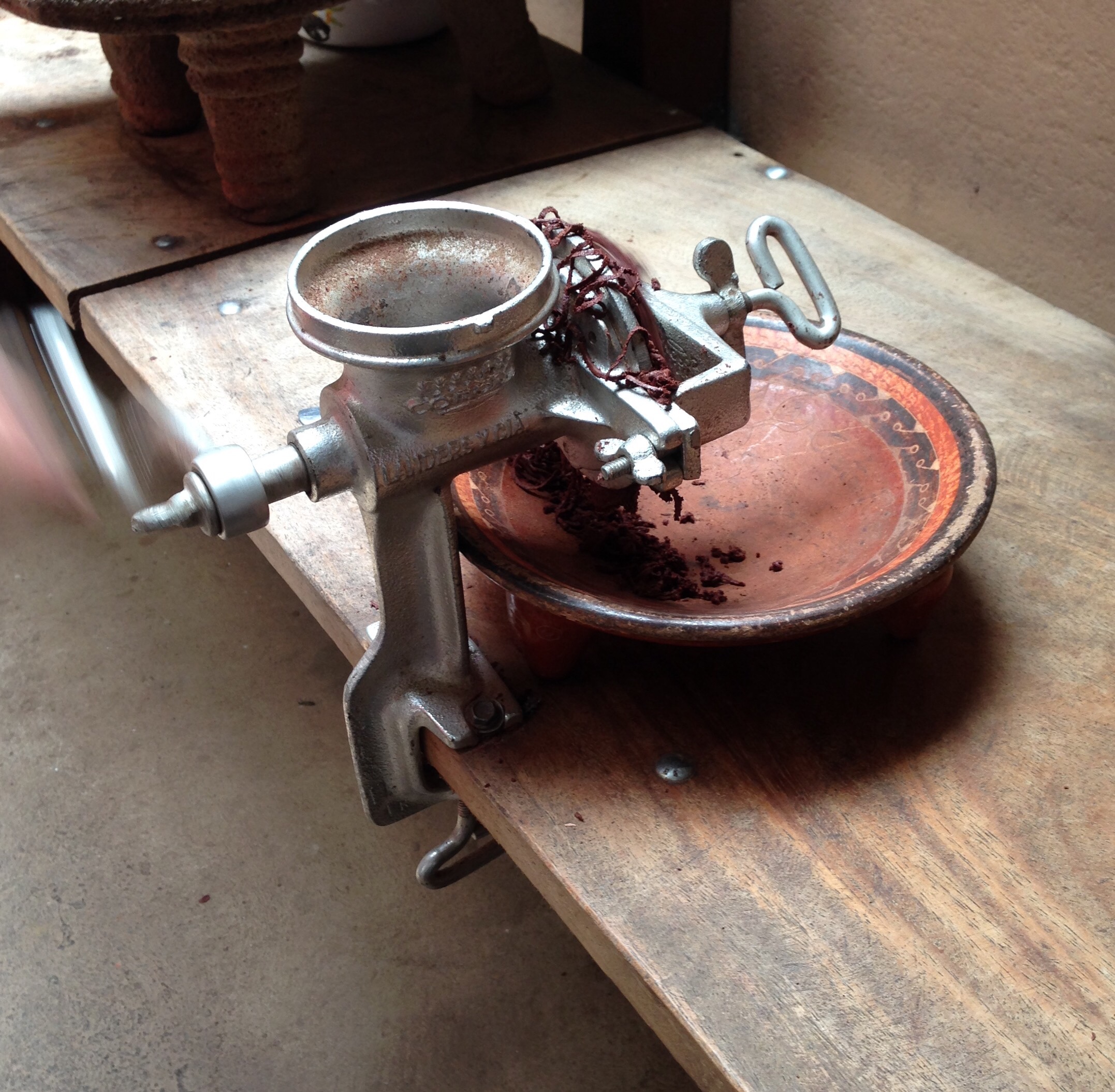

At this stage very bitter as it is 100% cocoa. Add sugar to sweeten
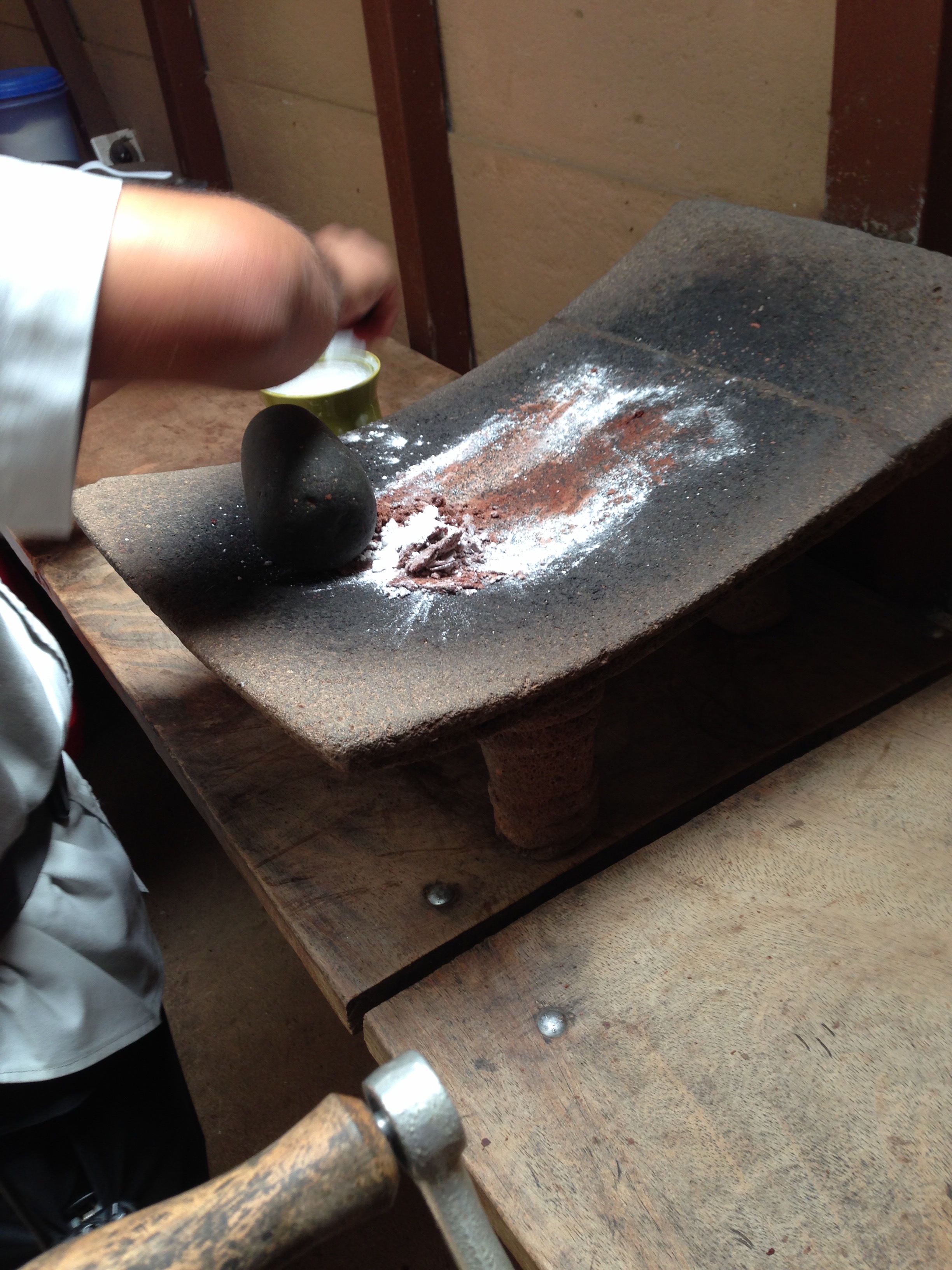
 

Tasted better, but still not chocolate – add milk and that is what I needed. Wonderful, dark chocolate!

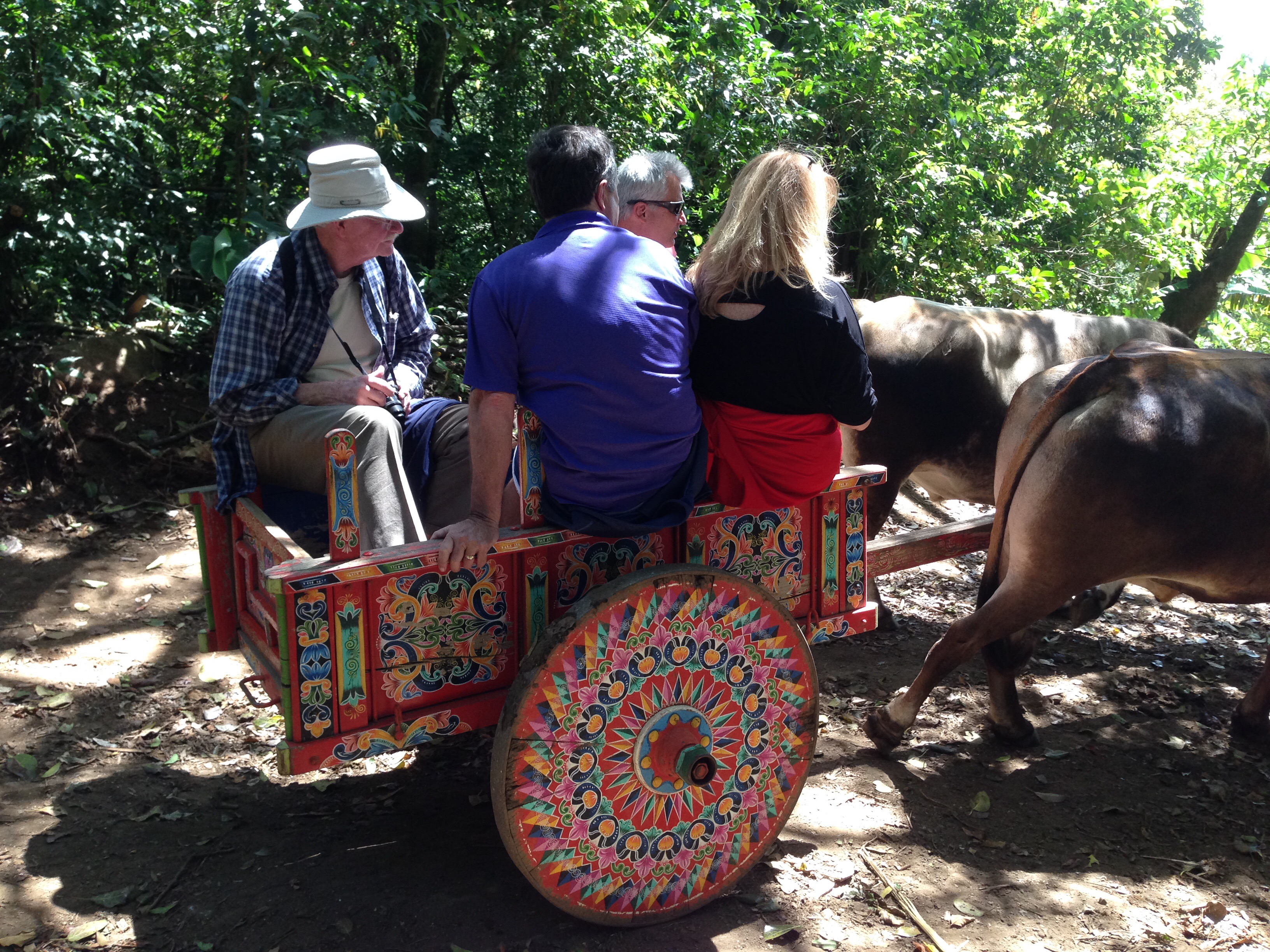
A ride back on the of cart, some coffee an arracache appetizer, a lemonade made with their own lemons and dark sugar. The end of a great morning
Posted in Uncategorized | 1 Comment

Monteverde Jan. 25

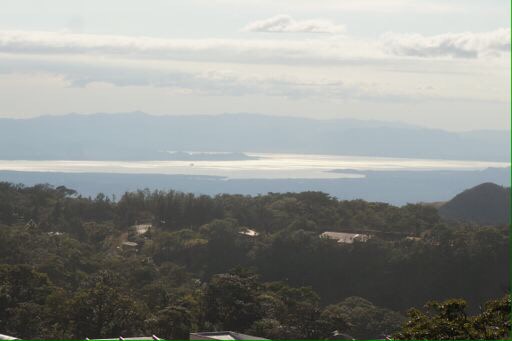
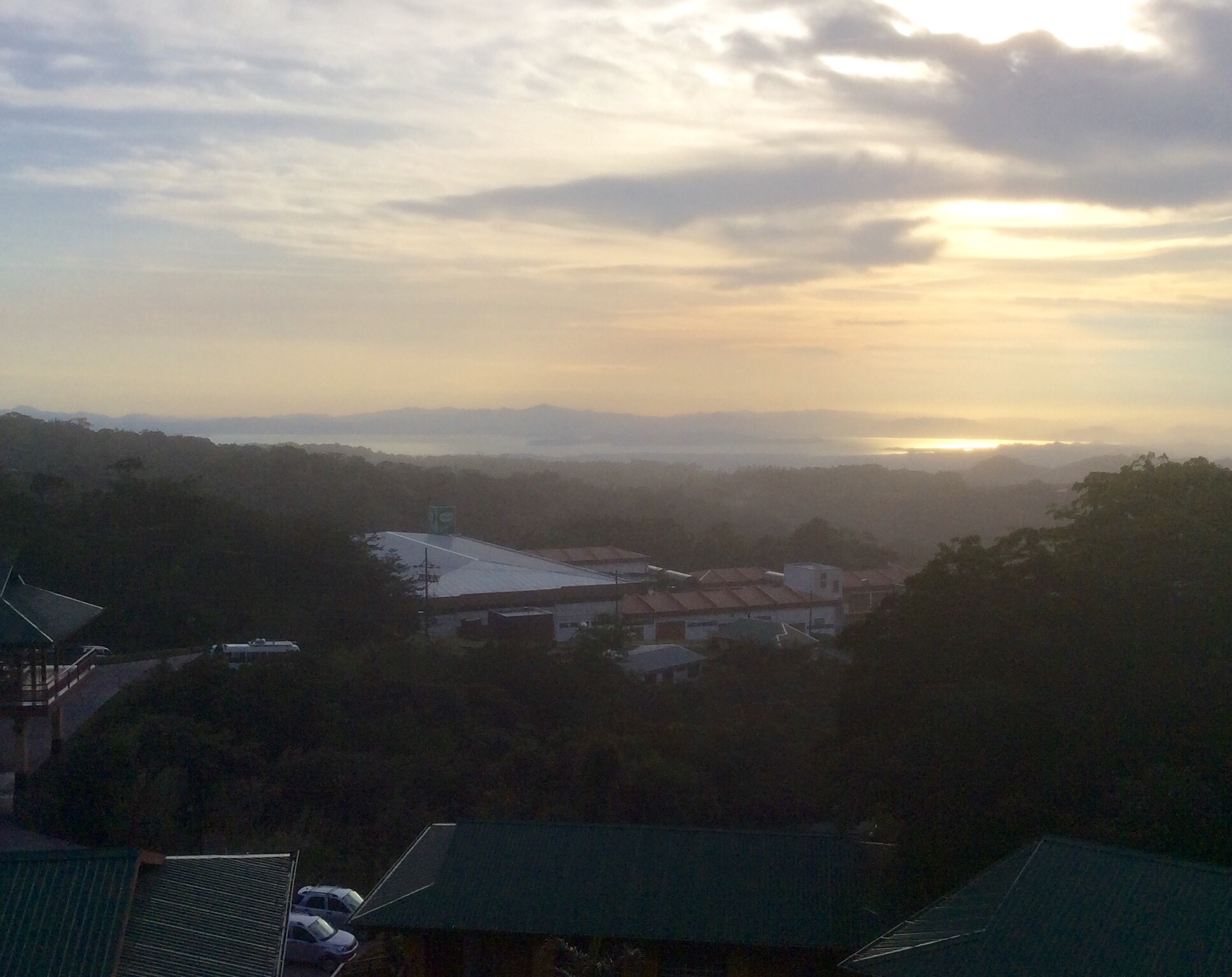
     From our room last night


This morning’s view

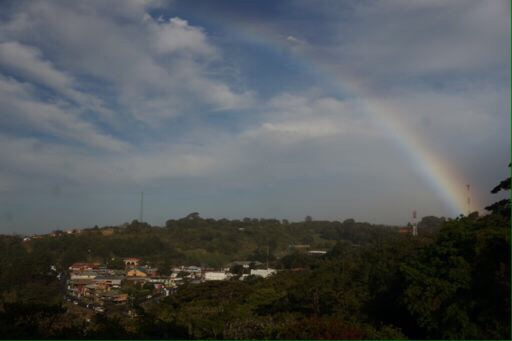
There are often rainbows to be seen. Yesterday we drove along a valley known as Rainbow Valley and saw several rainbows – most below us. There seems to be a slight mist at all times even if it is sunny.
 Found out why the road here is so bad. This area was settled by Quakers fleeing the USA during the Korean War. They settled here because no army in Costa Rica. They did not want tourists coming into the area and stopped the road construction. It did not stop the tourists (did slow us down a bit though) and the area is a popular tourist destination. A drive through town this morning was like a drive through Whistler in the old days before it was developed – hostels, backpackers, hikers and young people looking for an adventure in the wild.
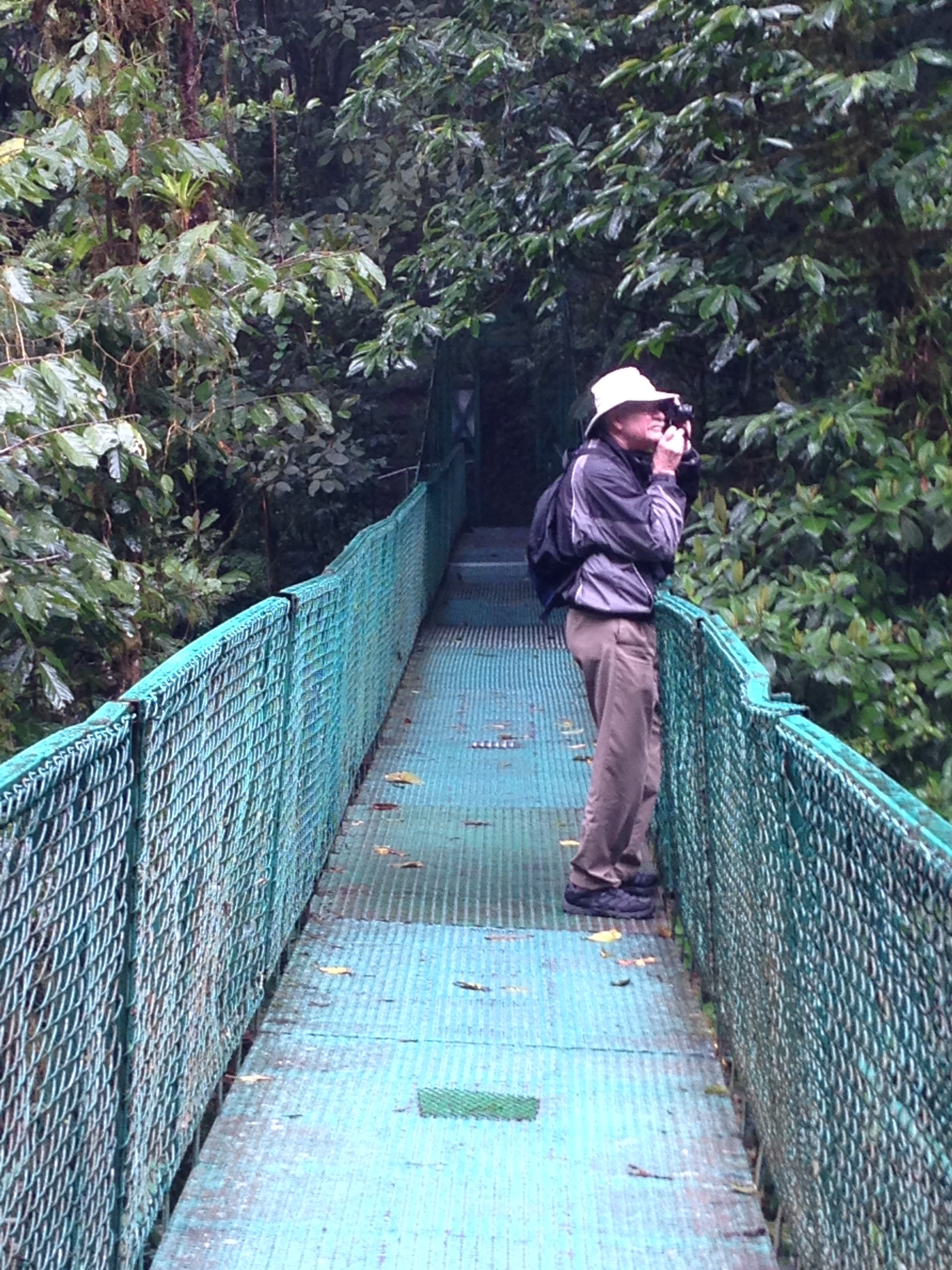
The wind was howling all night and again this morning so I expressed some concern about spending the day on hanging bridges, but we did go and I am glad we did. After what was supposed to be a hot breakfast of cold eggs, unevenly cooked bacon and cold potatoes, rice and beans, we were picked up by an old, well used van for the drive to Selvatura Park.
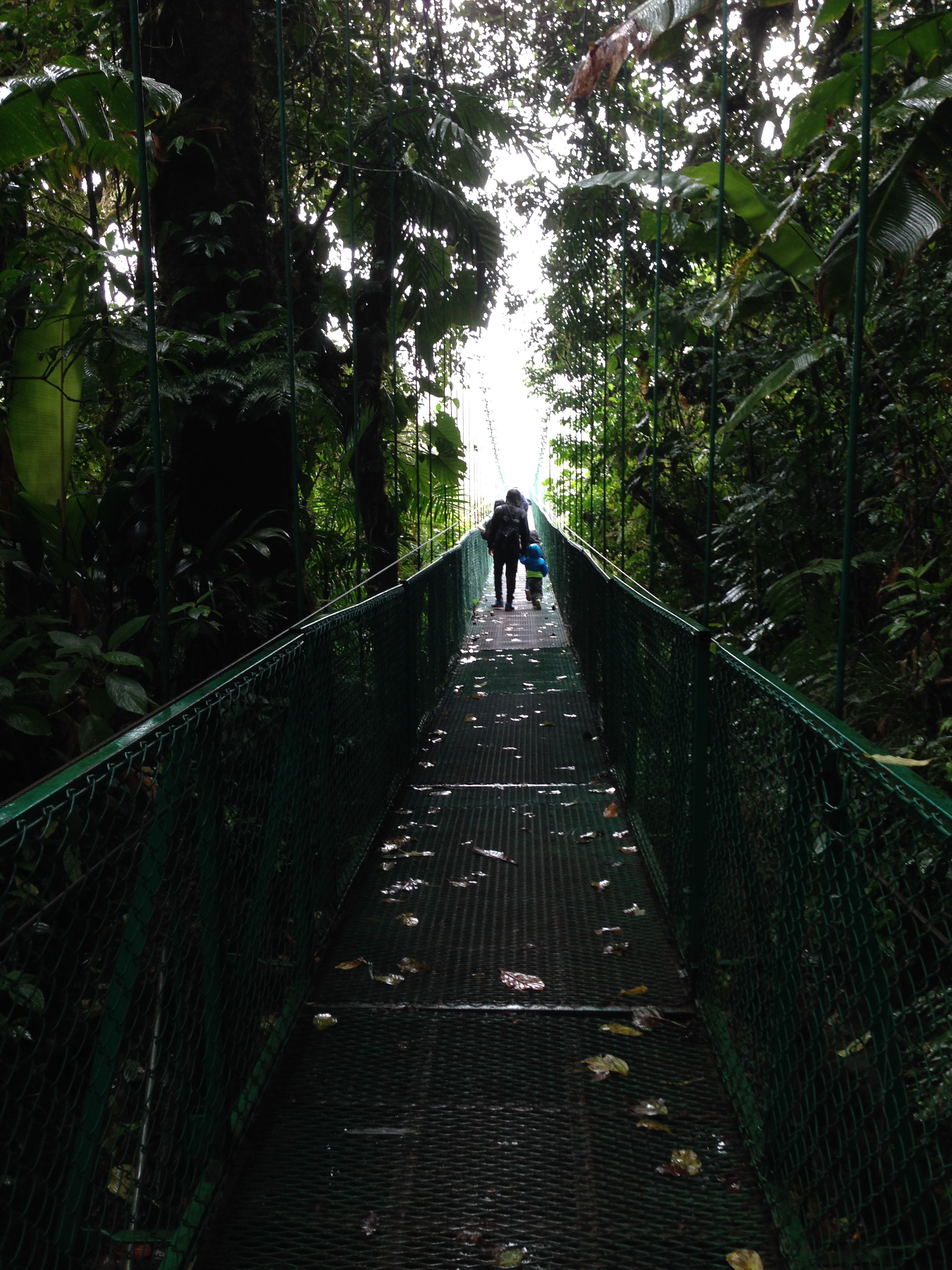
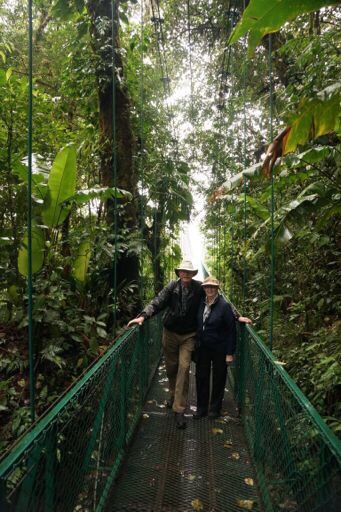
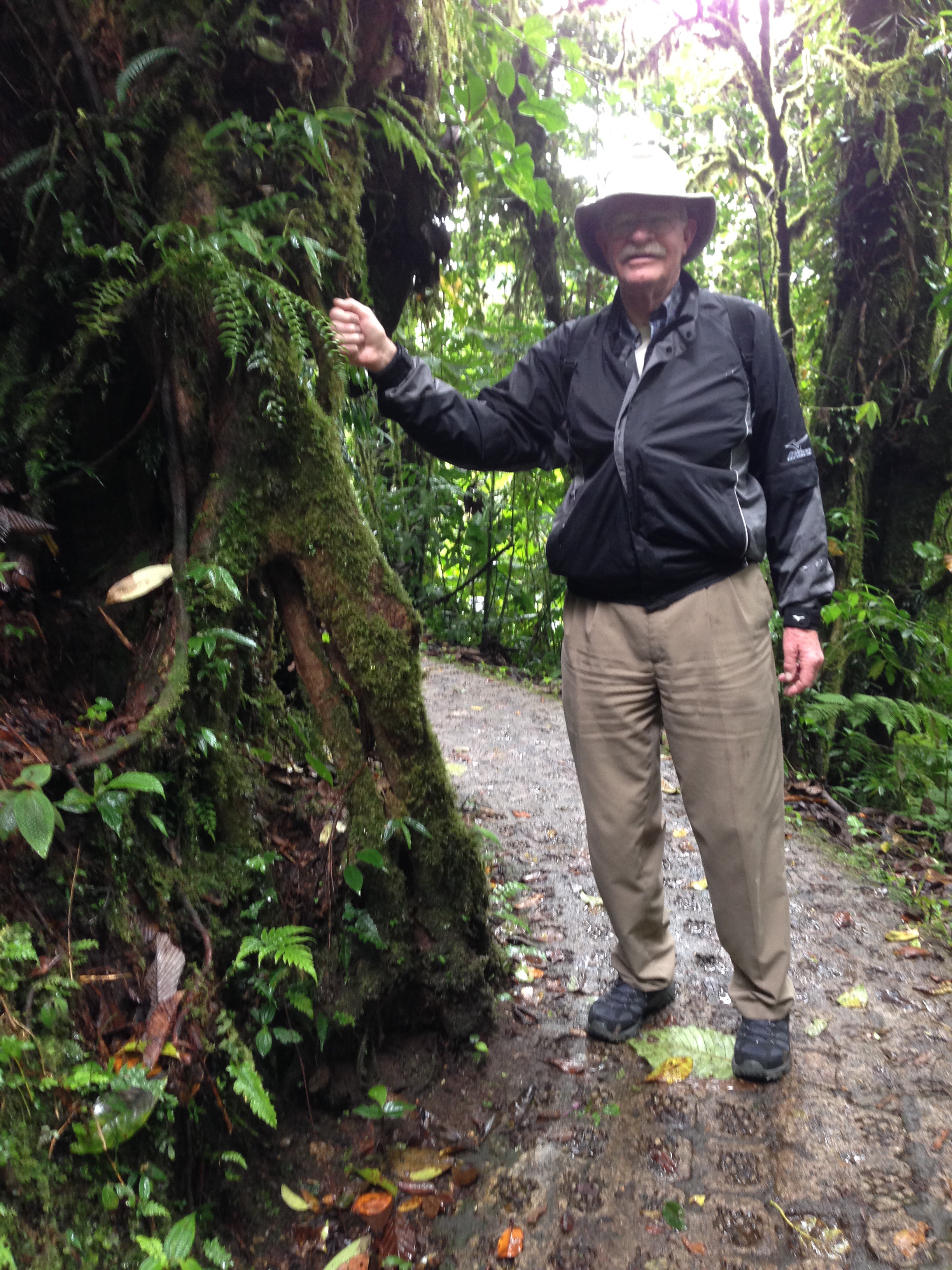
The drive to the park was along some of the same roads as yesterday. I don’t think they have graded the roads since they were first cut into the forest 100 years ago! Unlike other world class athletes we did not have time to acclimatize  to the altitude before starting our mountain climb. Here I am after finishing the hanging bridges walk

  
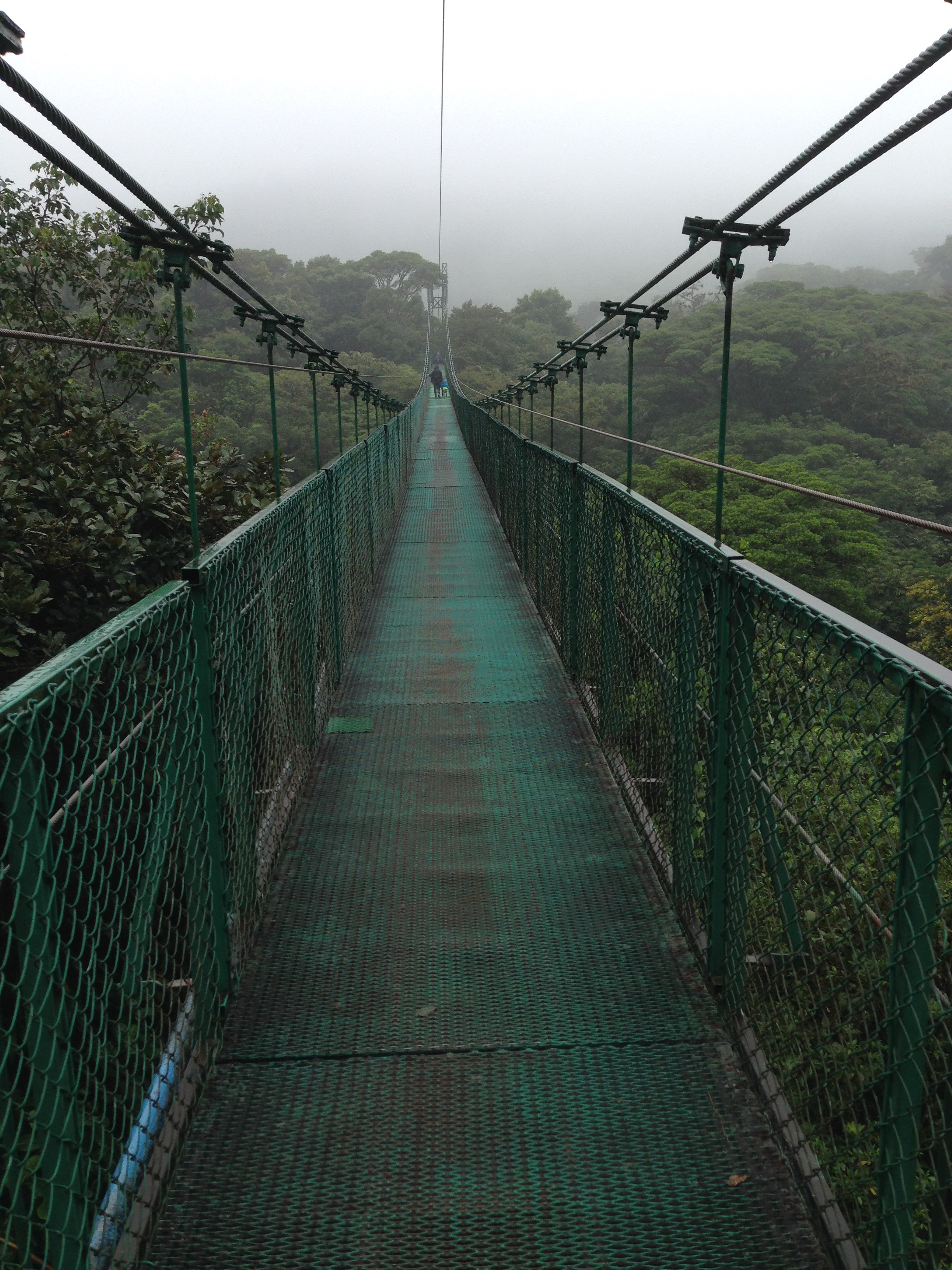
It is called the cloud forest for a reason. It rained the whole time (about 5 hours). We were told that wasn’t rain. Not sure what it was. We did the whole walk but met some people who had turned around after bridge 3 – to quote a Texan we met “even a chicken who has a brain this big (small circle with finger and thumb to demonstrate) knows enough to get in out of the rain” We were smart enough to leave our umbrella, rain jacket and rain capes in the hotel – I had brought that stuff specifically for today. So we got a little wet.

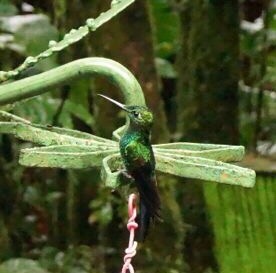
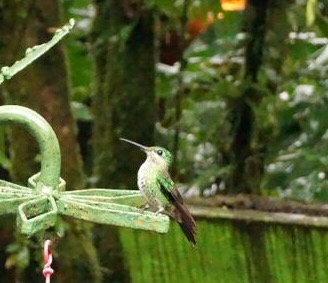
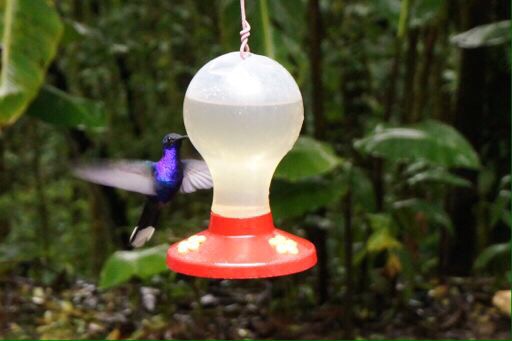
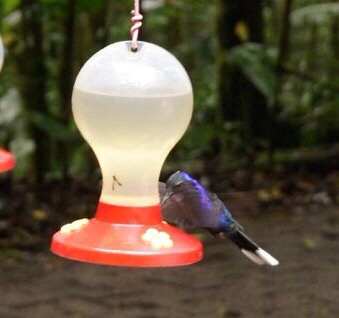
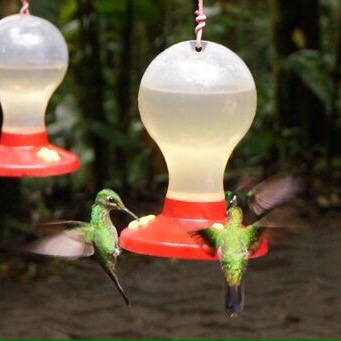
Our tour started in the humingbird garden. There are about 14 varieties of hummingbirds native to this area. We saw about a 6 or so varieties. There were hummingbird feeders set up and we could get right up to them . 


The guide said do not use coloured water in your feeders, use distilled water and add sugar. The birds certainly seemed to like it.

  
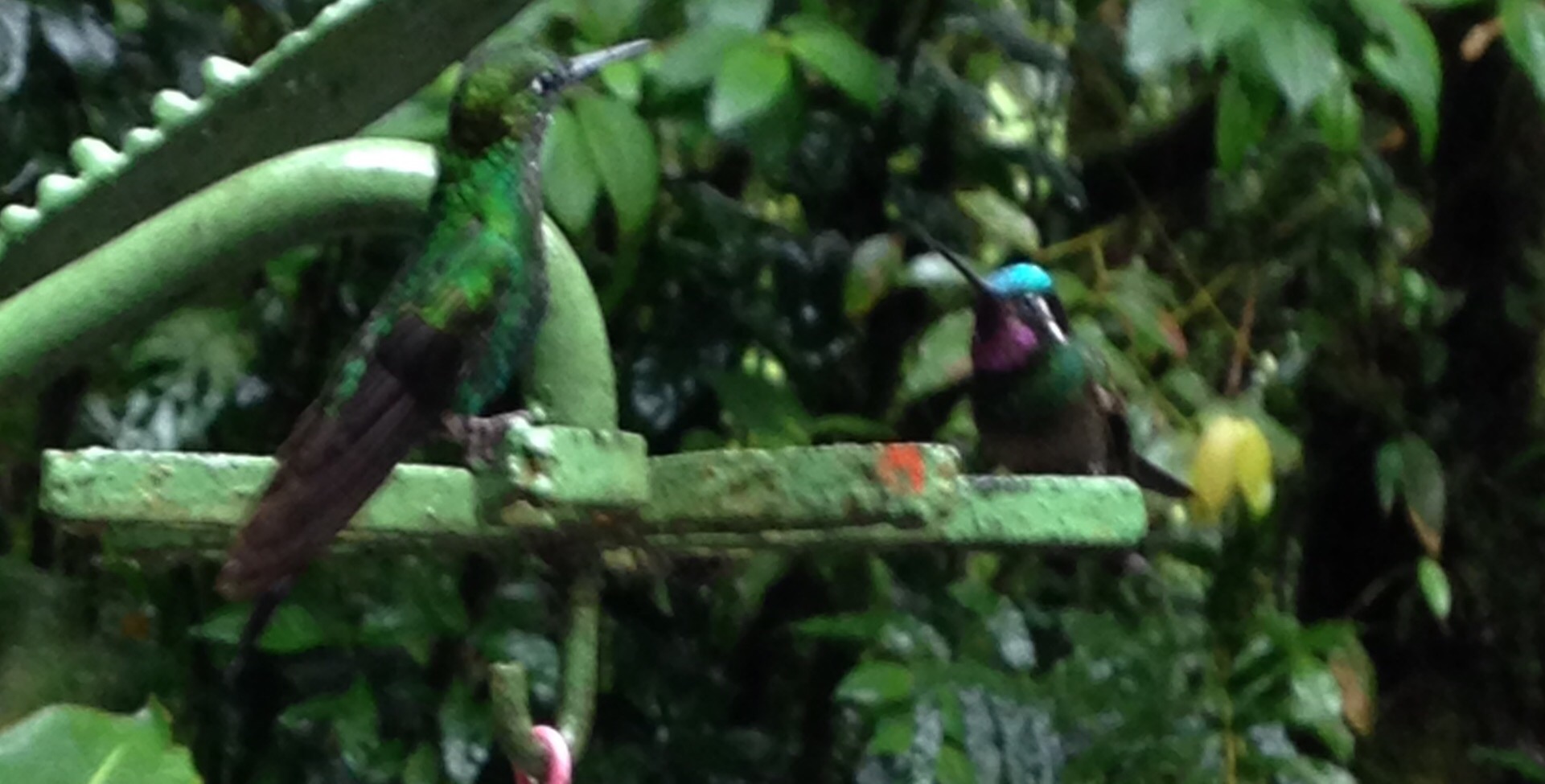
Note the bird on the right with the iridescent blue top, it flashed as he moved his head.

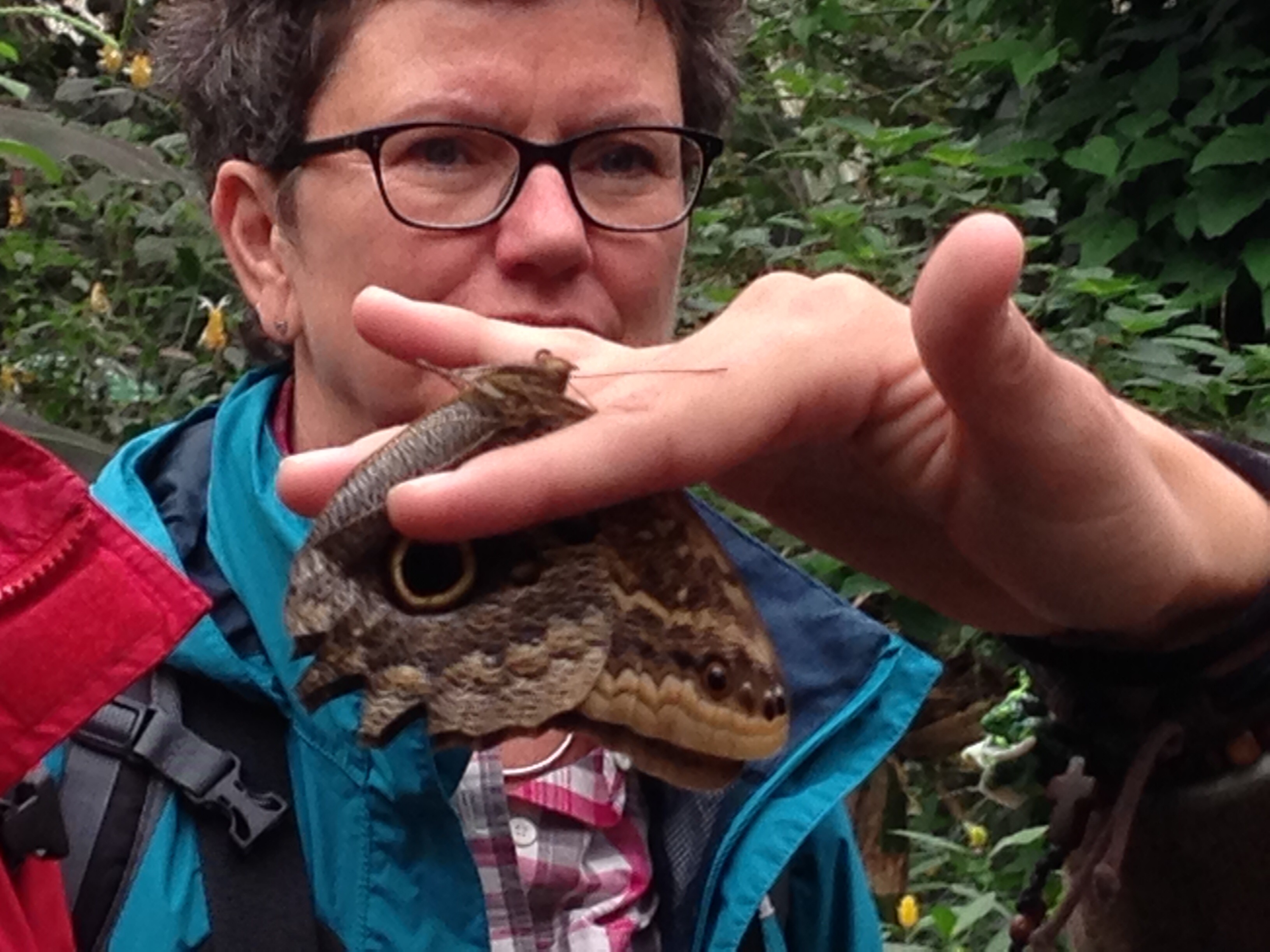
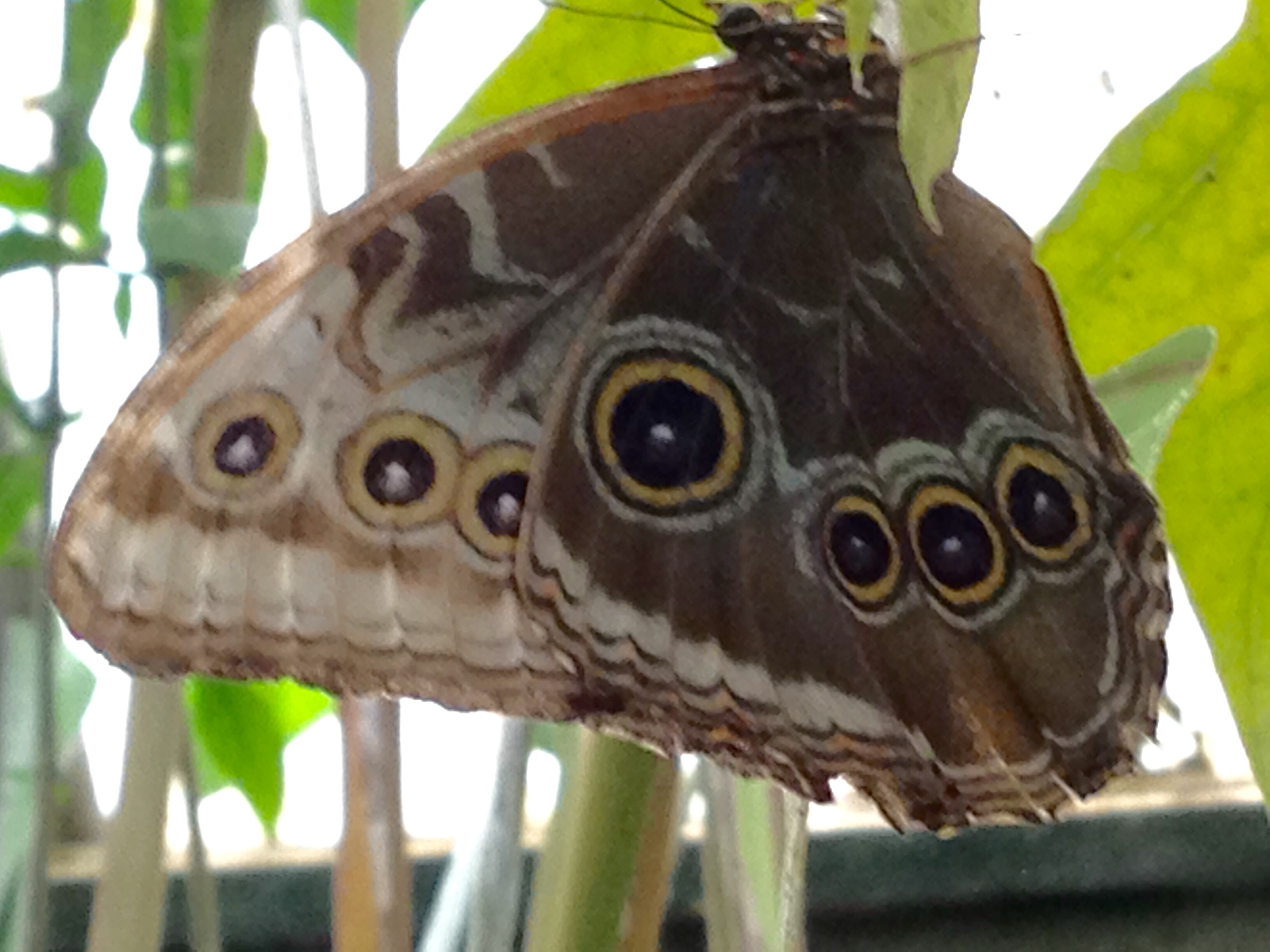
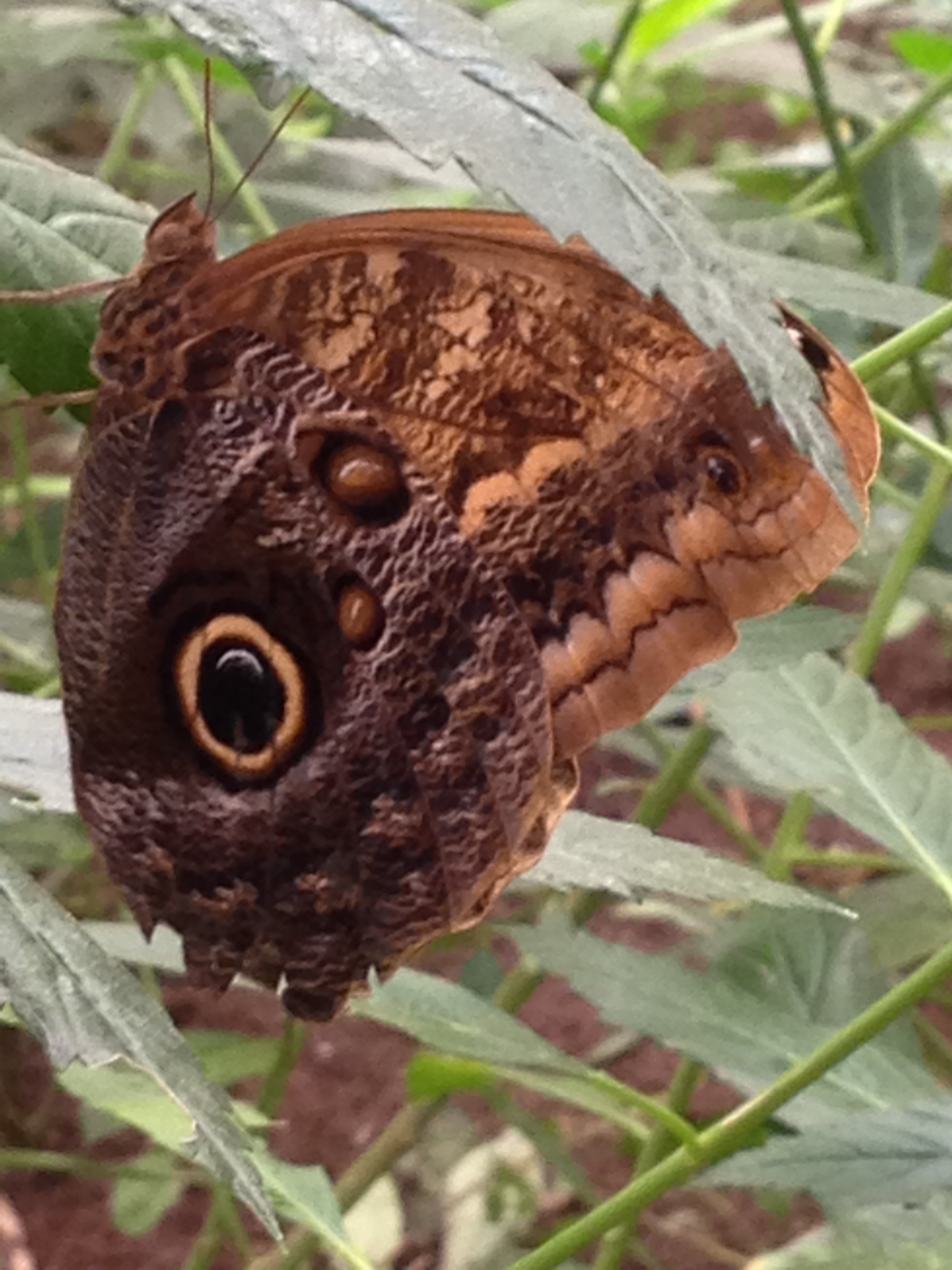
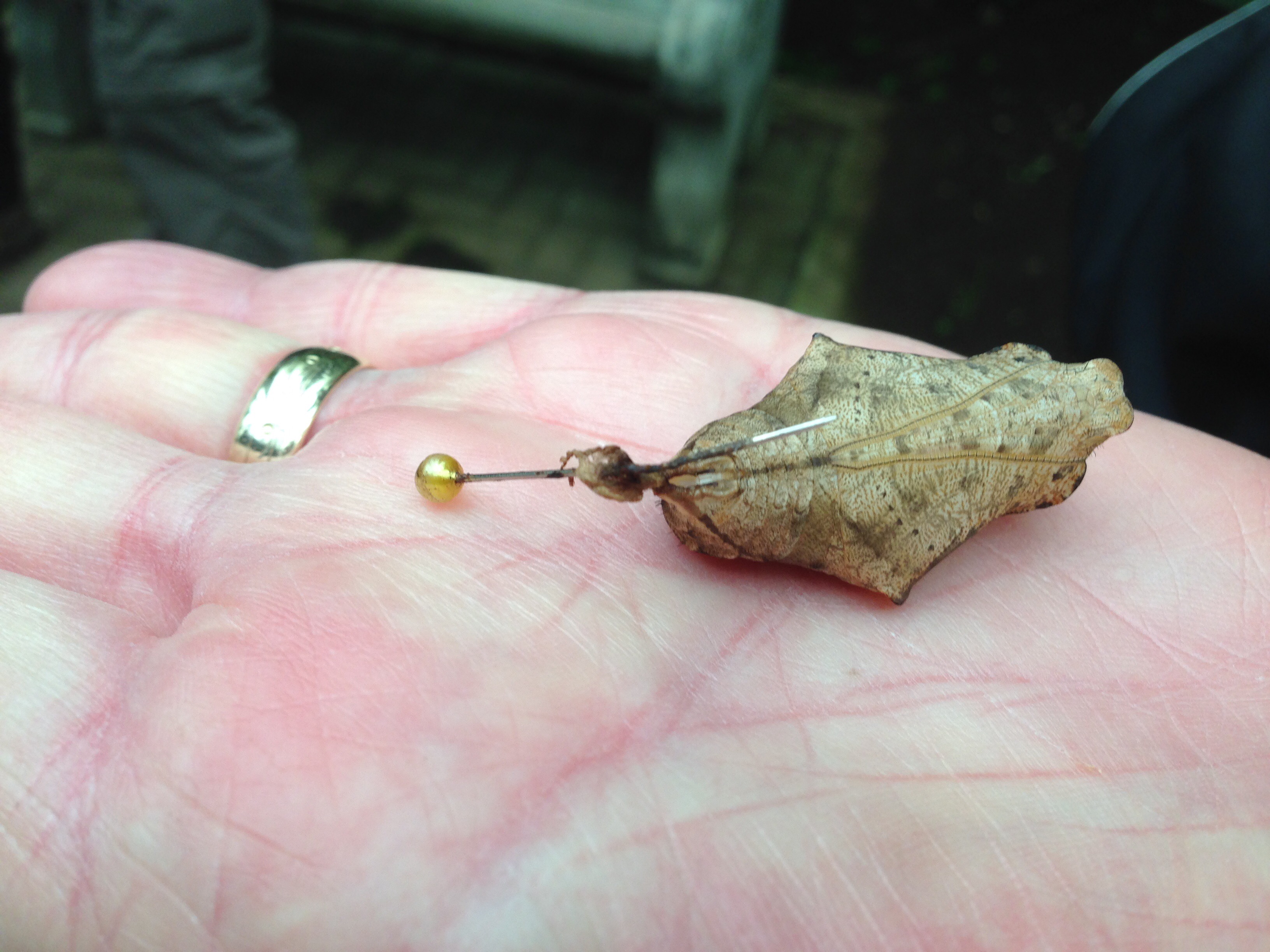
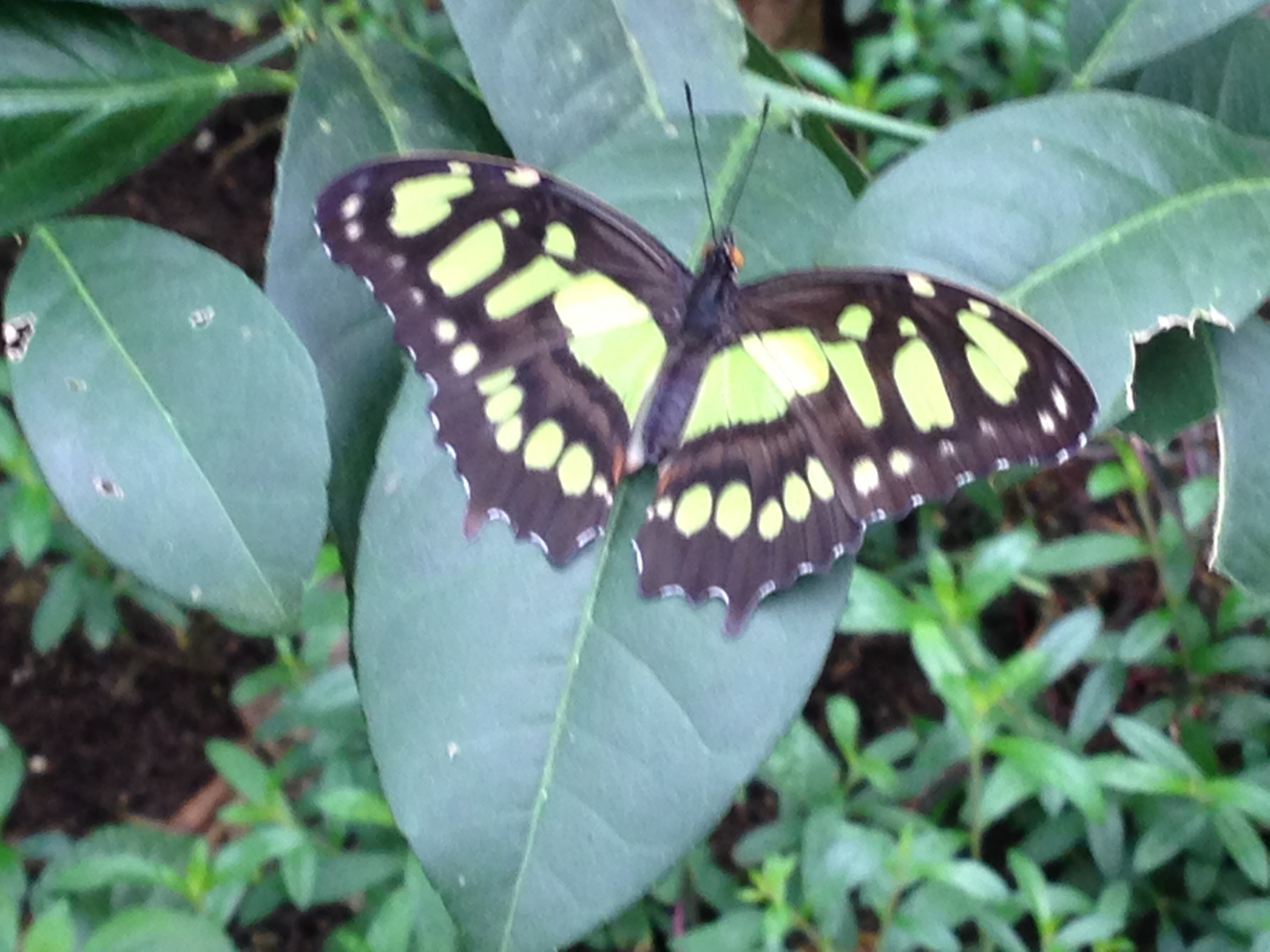
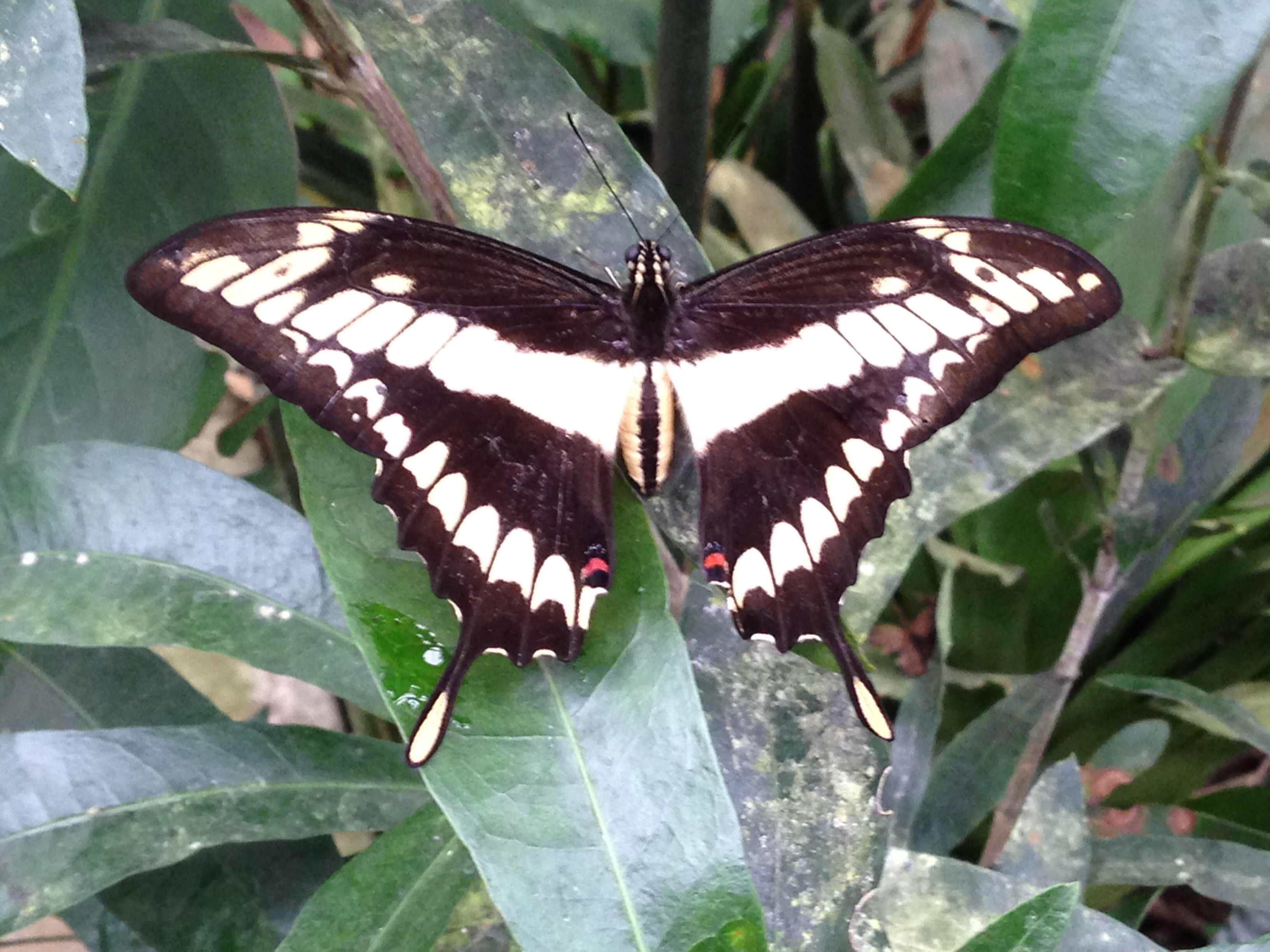
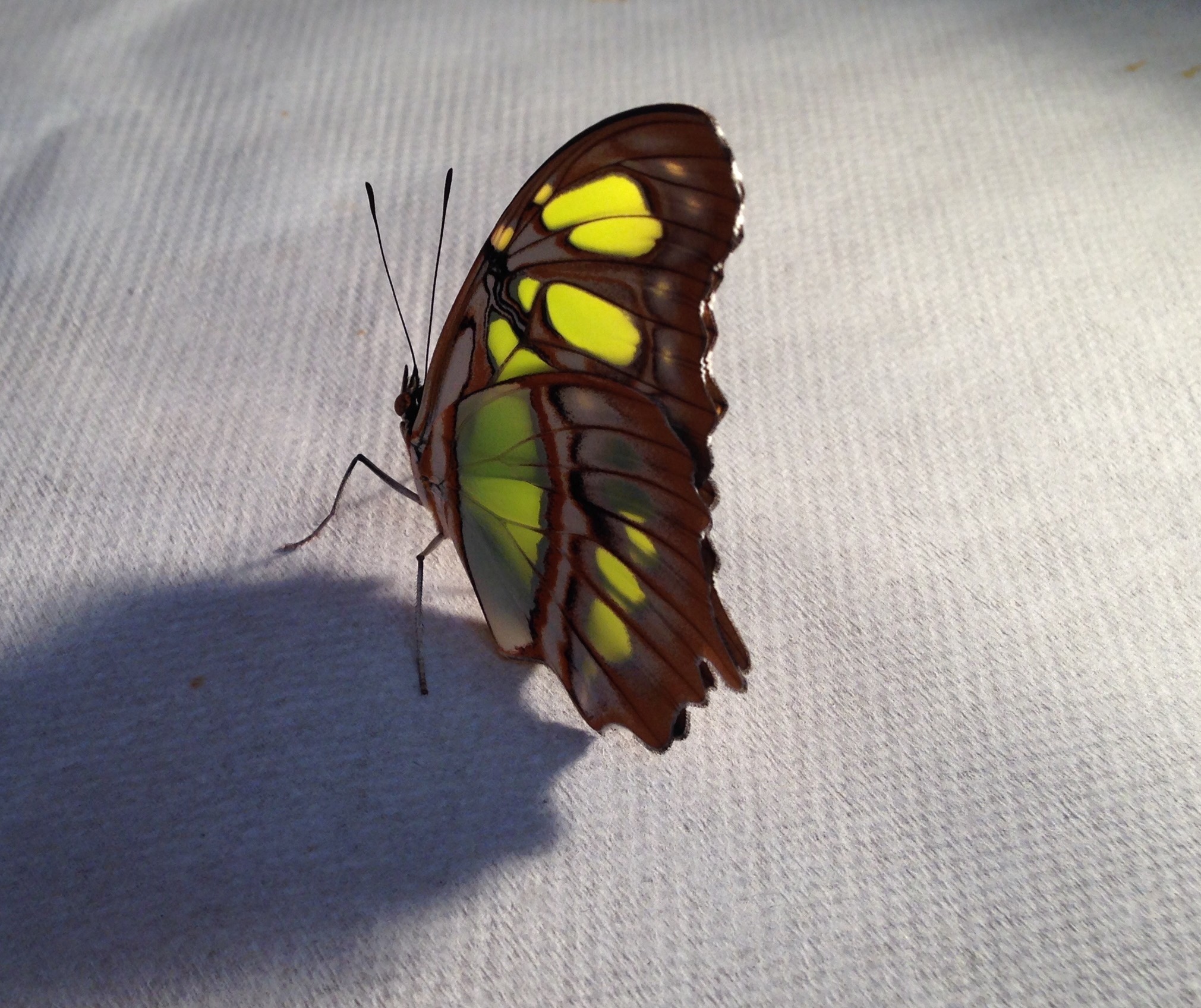
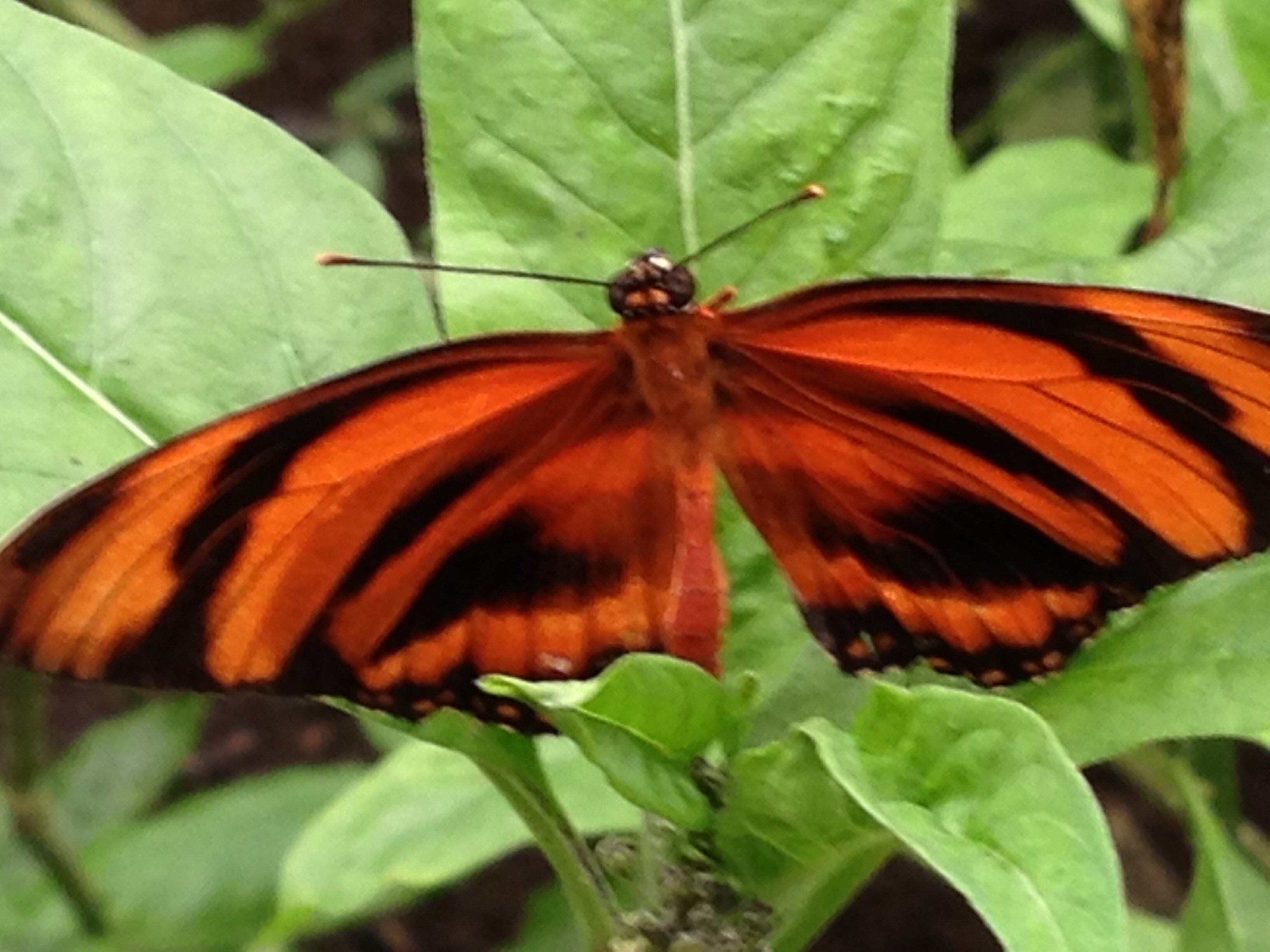
Next the butterflys. There ar 12,000 varieties of moths and 2,000 varieties of butterflys here. Moths open their wings when at rest. Butterflys close their wings while at rest unless they are in need of energy, which they get from the sunlight.

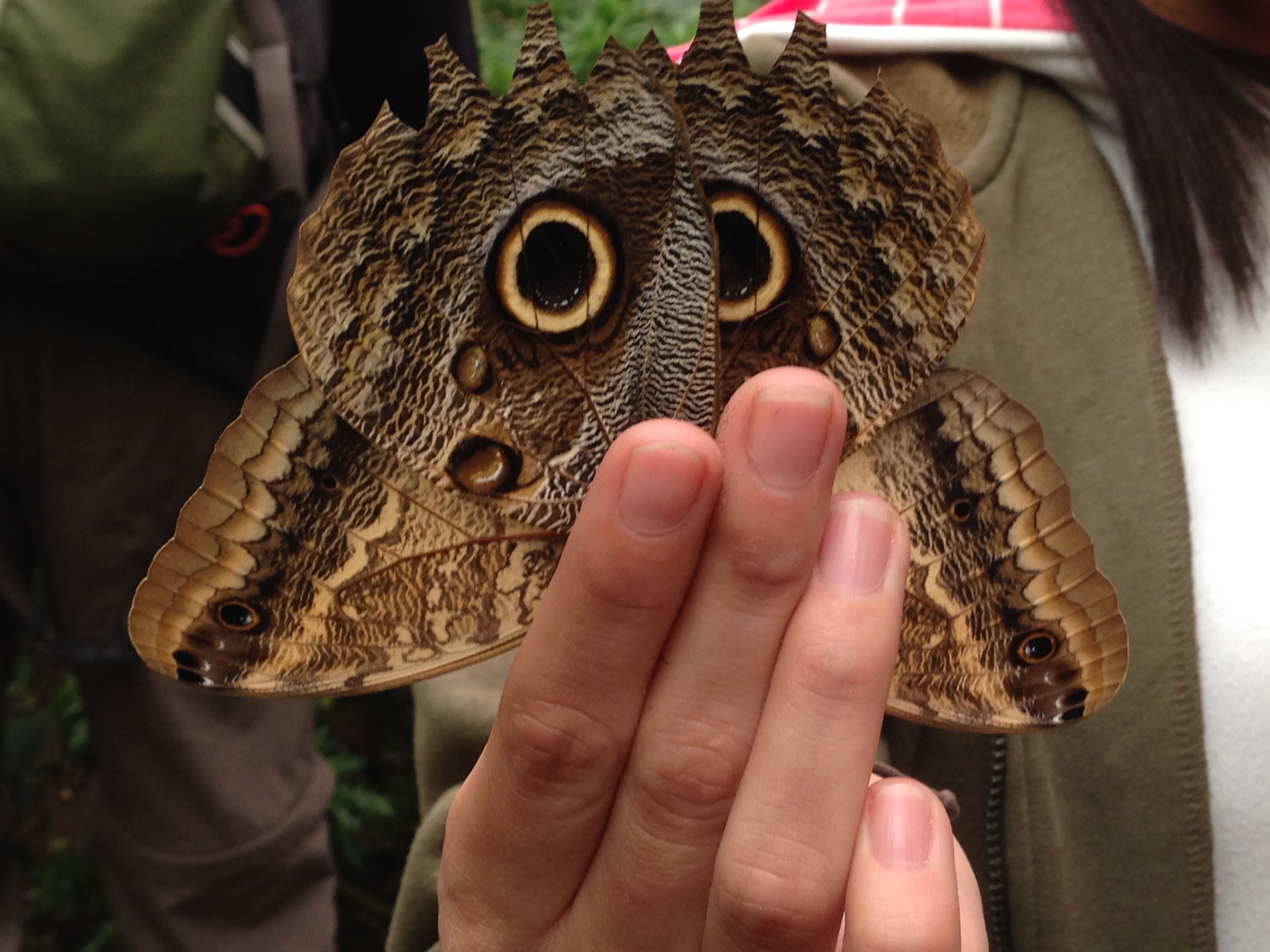
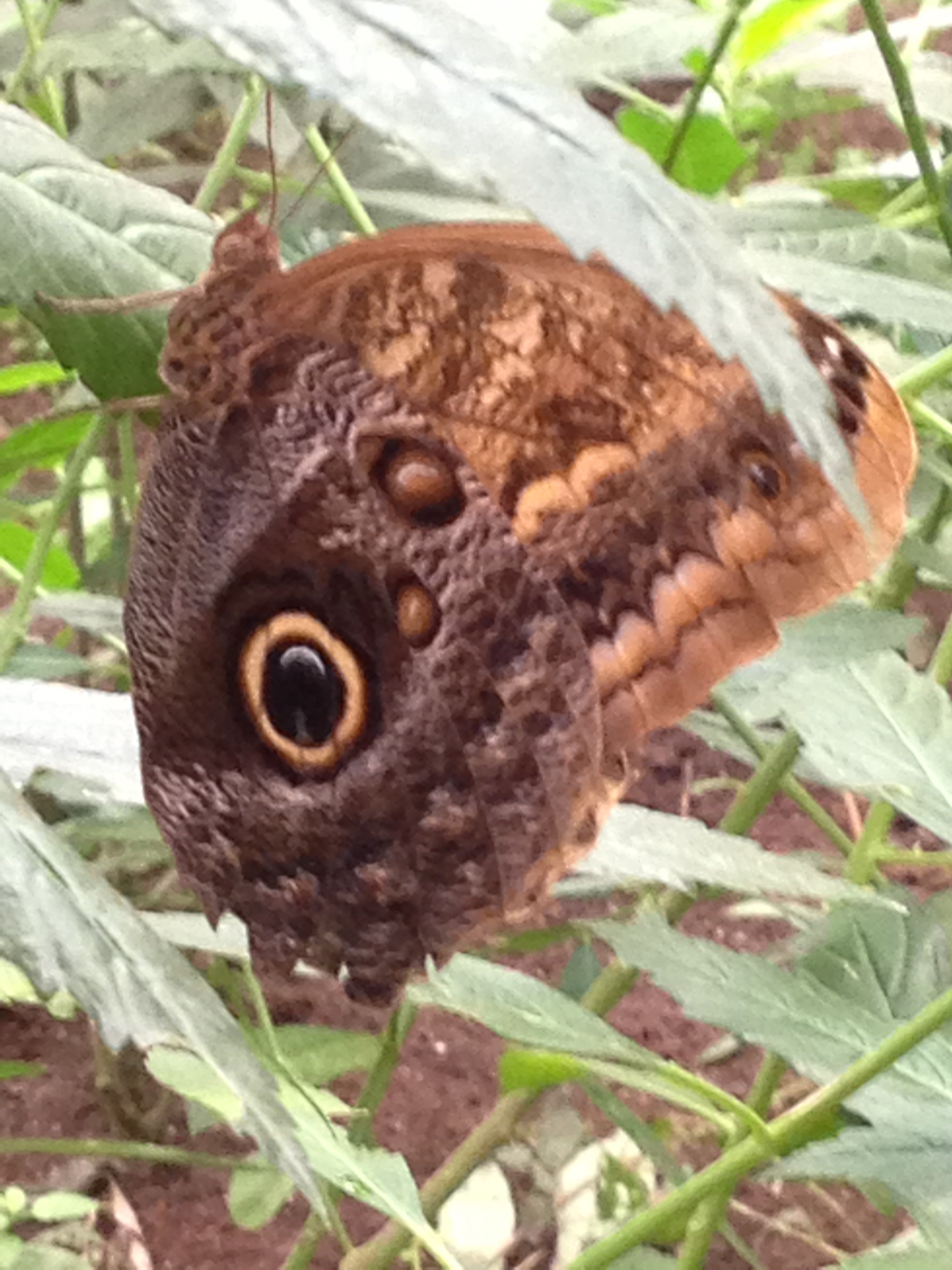
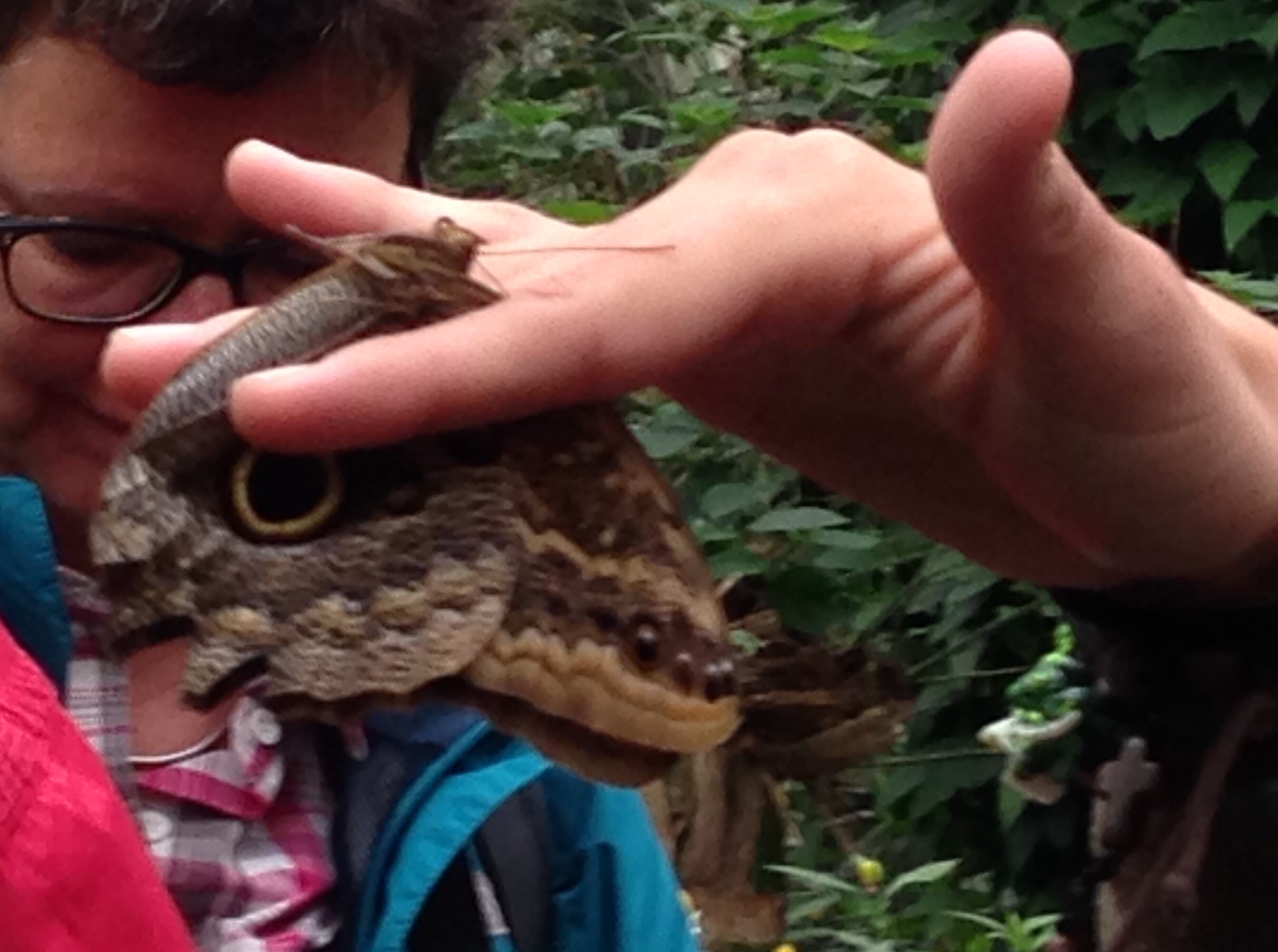
The largest butterfly is the Owl butterfly see why the name.

   
To protect itself from some predators it can make itself look like an owl

    
Or a snake


Pupa stage


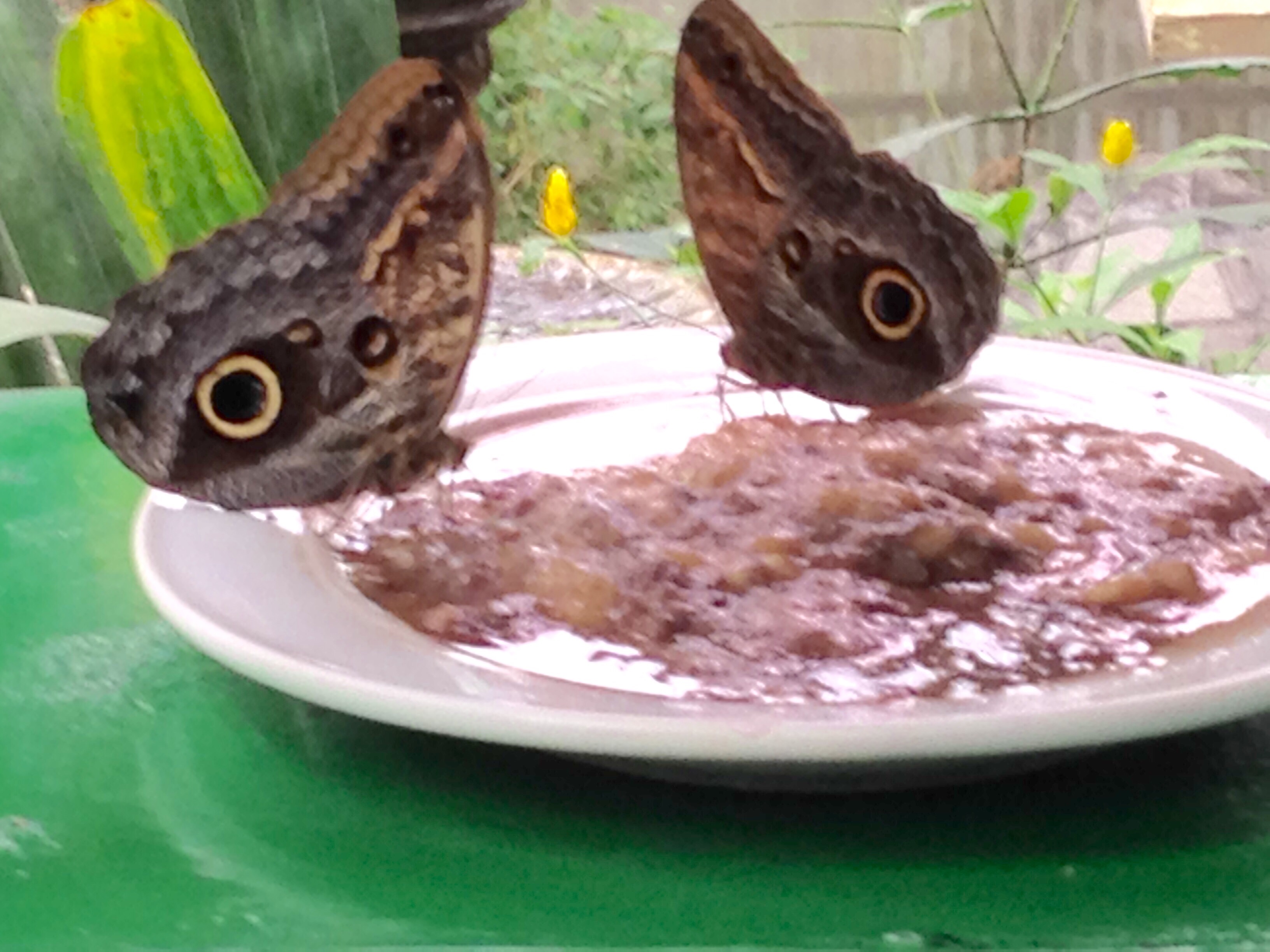
Feedin on mashed bananas

  
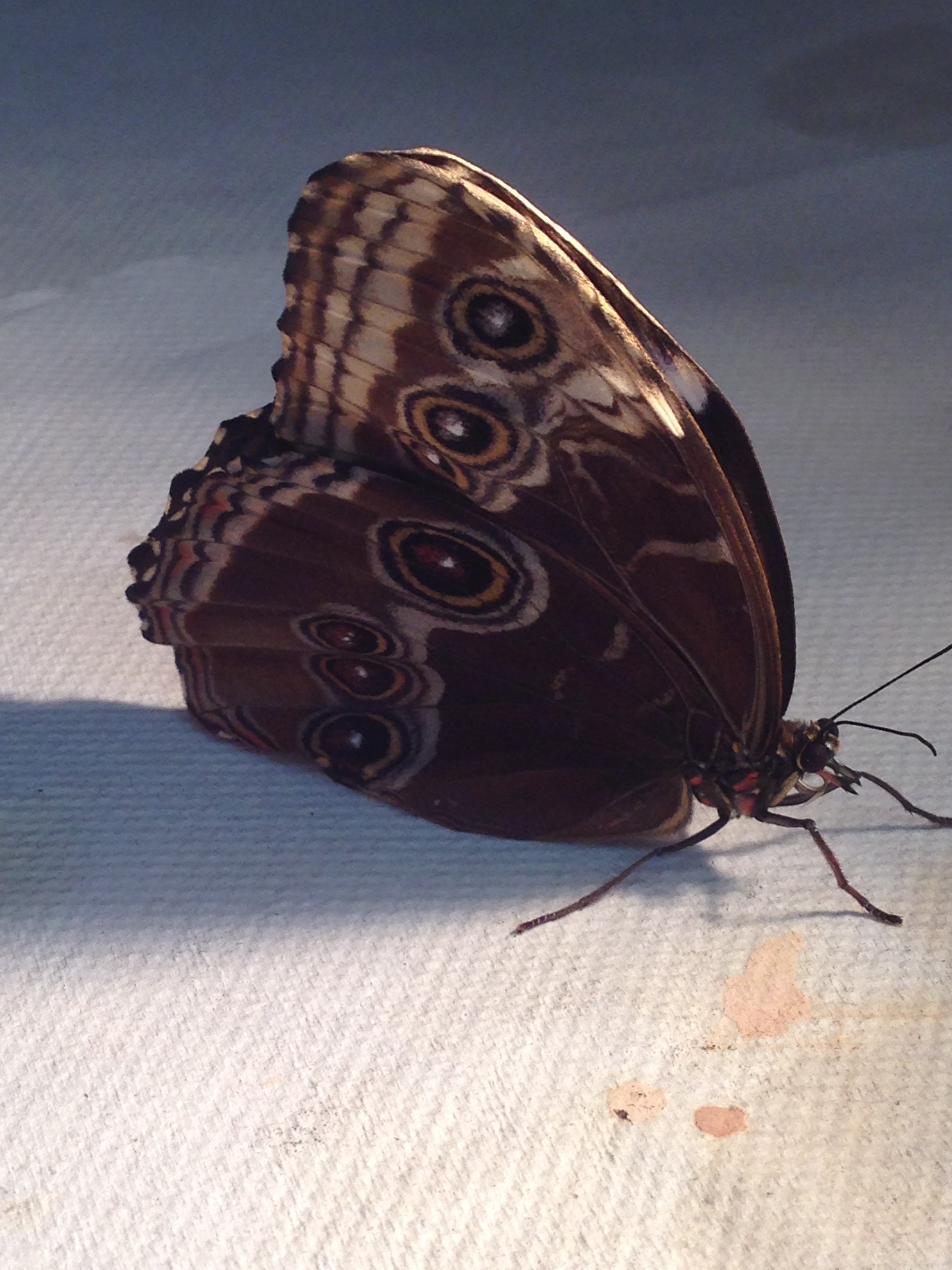
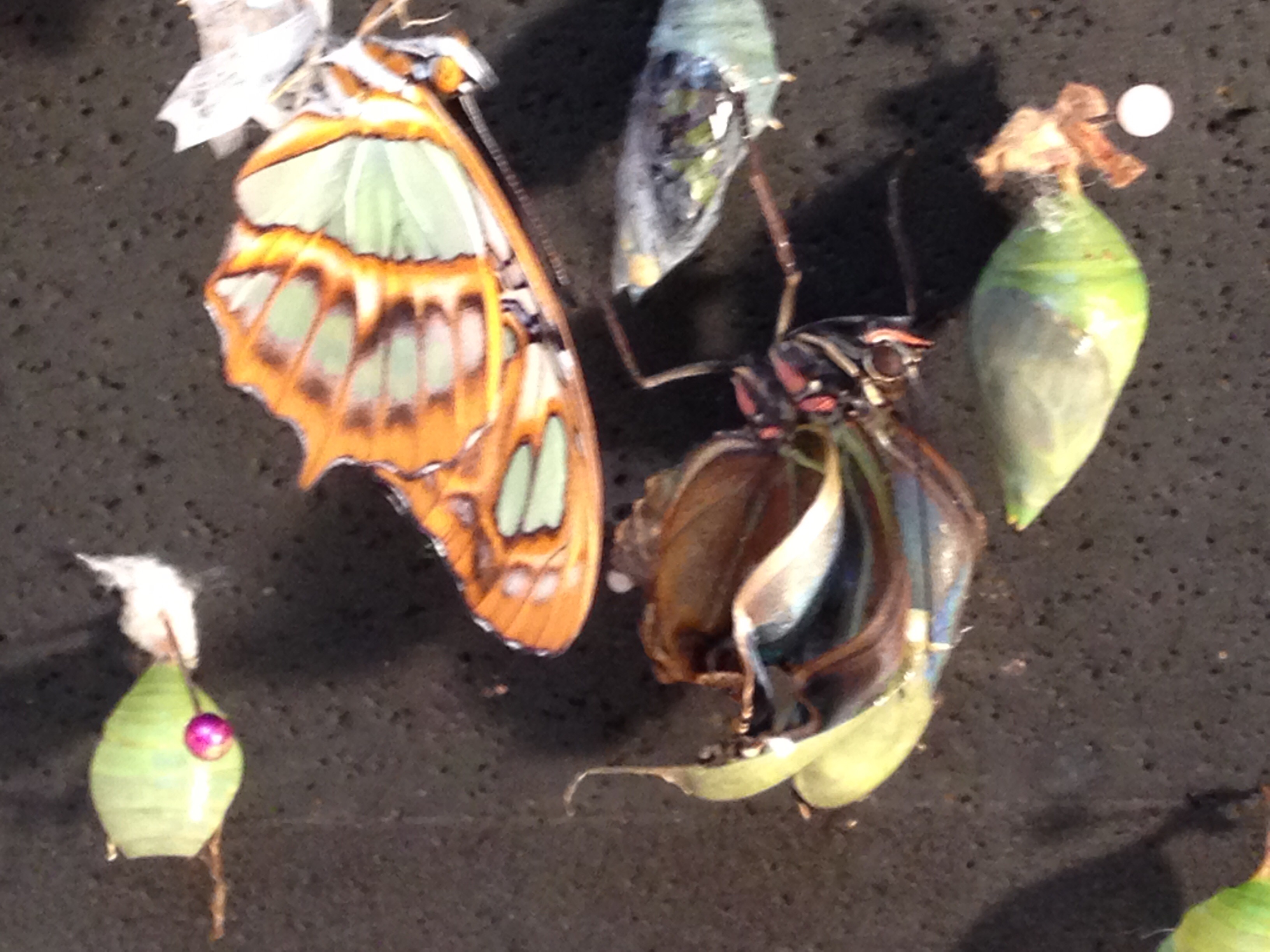
Just emerged from cocoon.

  
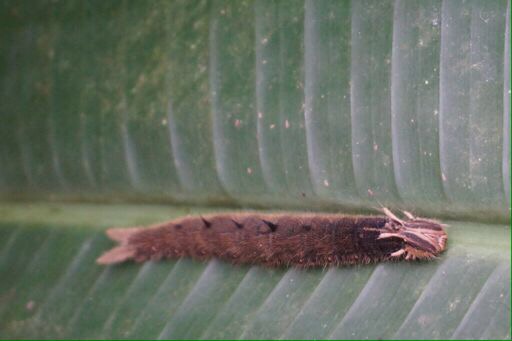
Caterpillar stage. There are 4 stages – egg, caterpillar, cocoon, butterfly

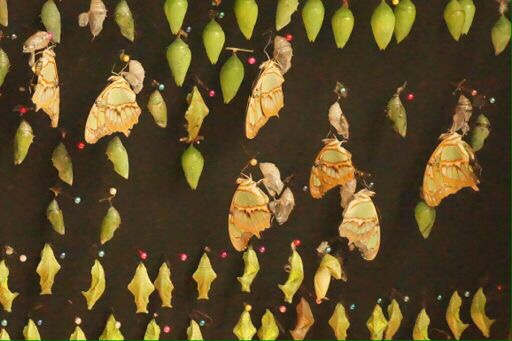
Here are some more we saw 


Just hatching


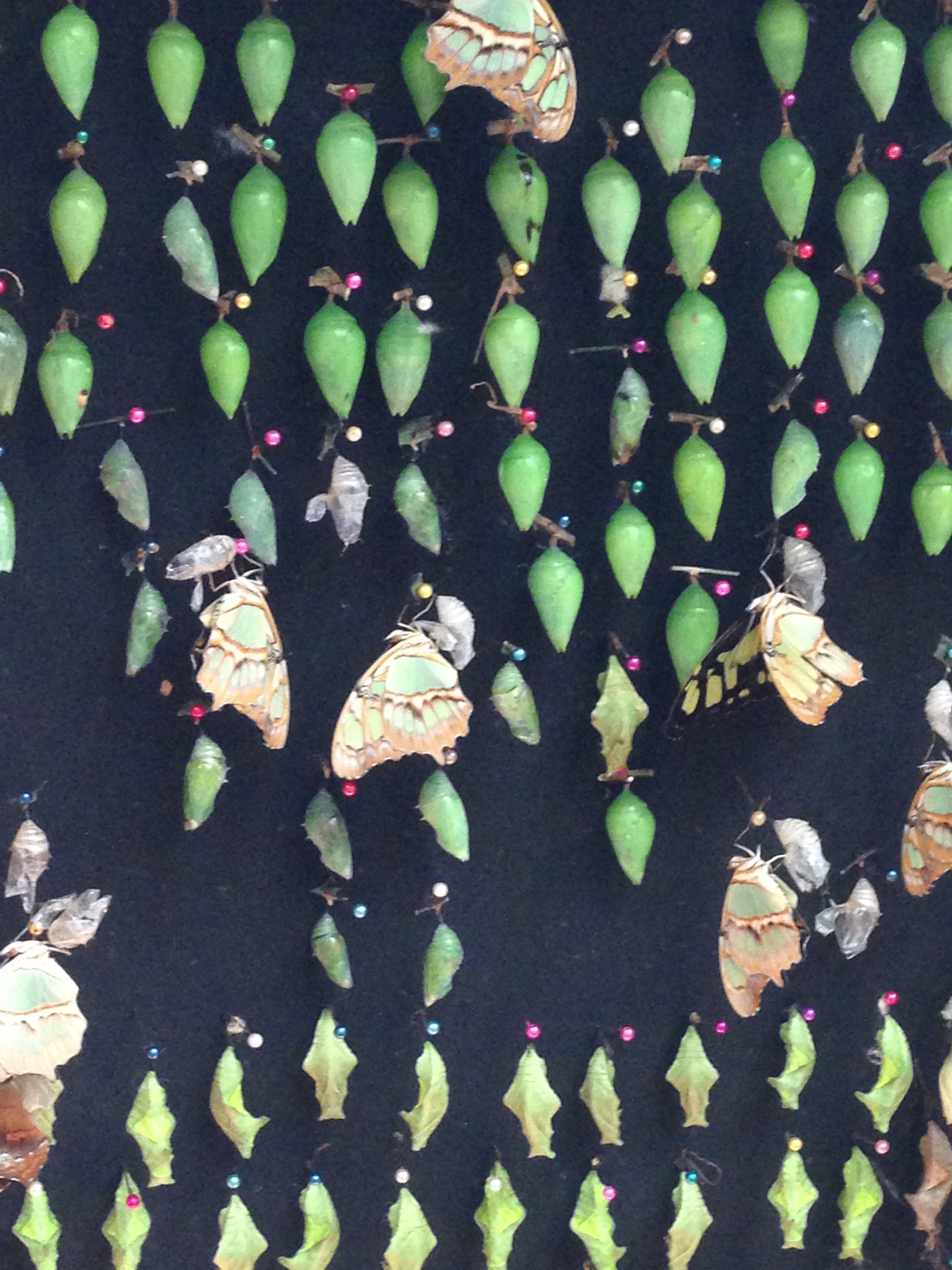
A couple of the nurseries, locals collect the cocoons and bring them in to the butterfly centre where they are protected and hatched.

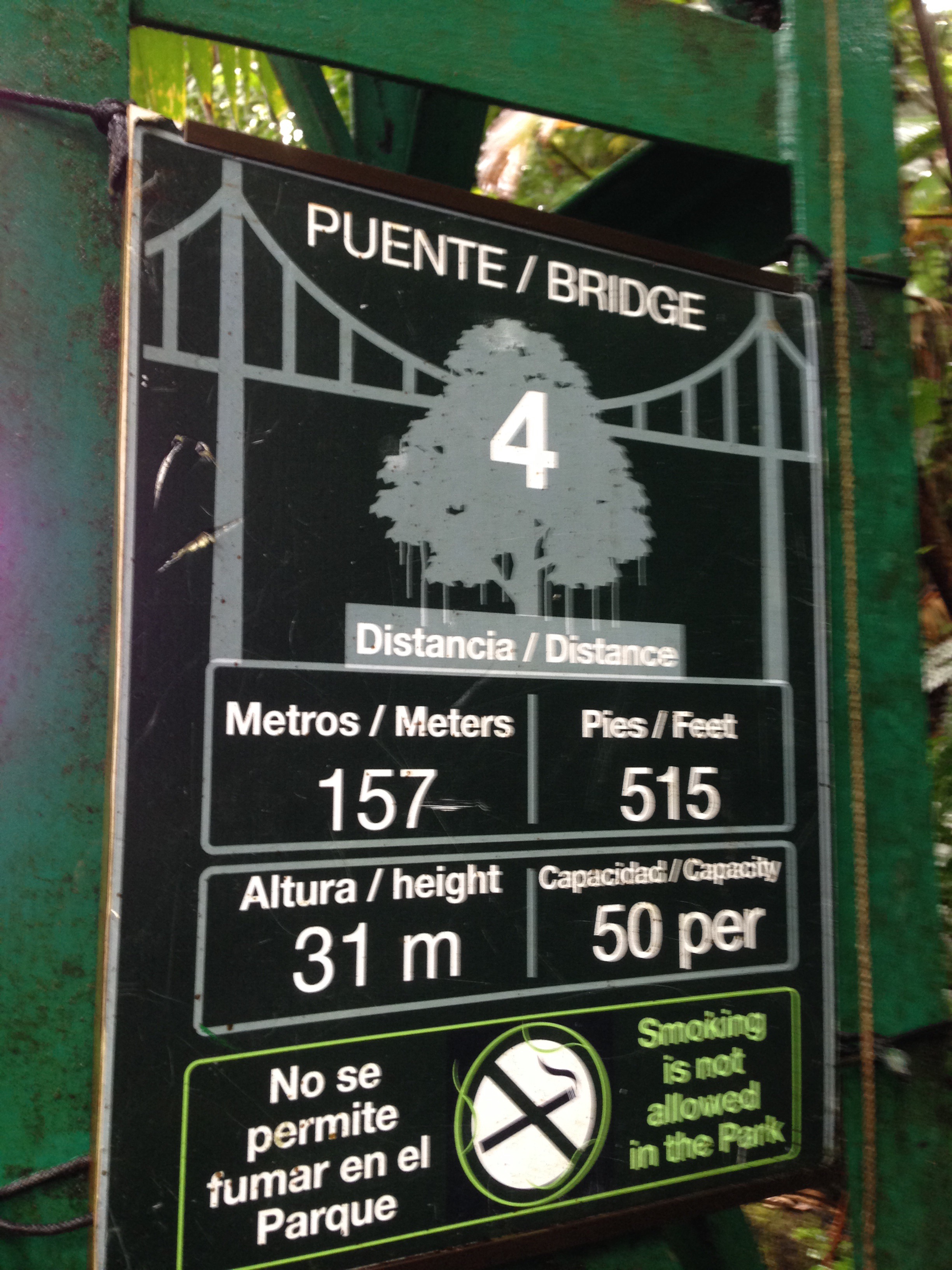
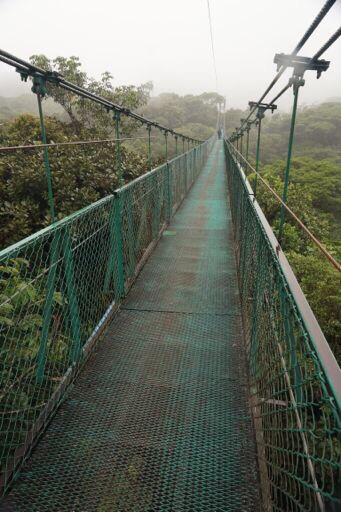
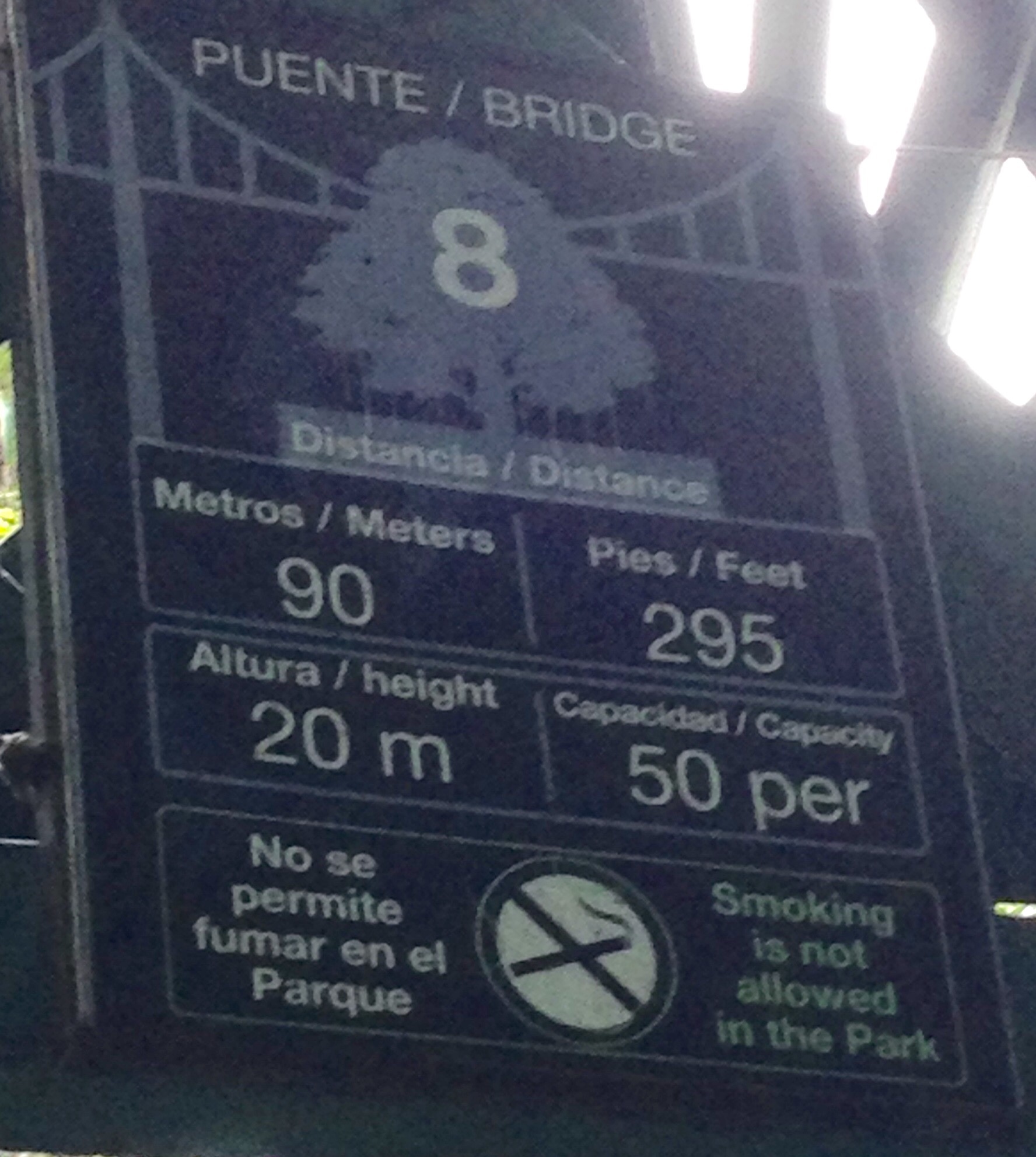
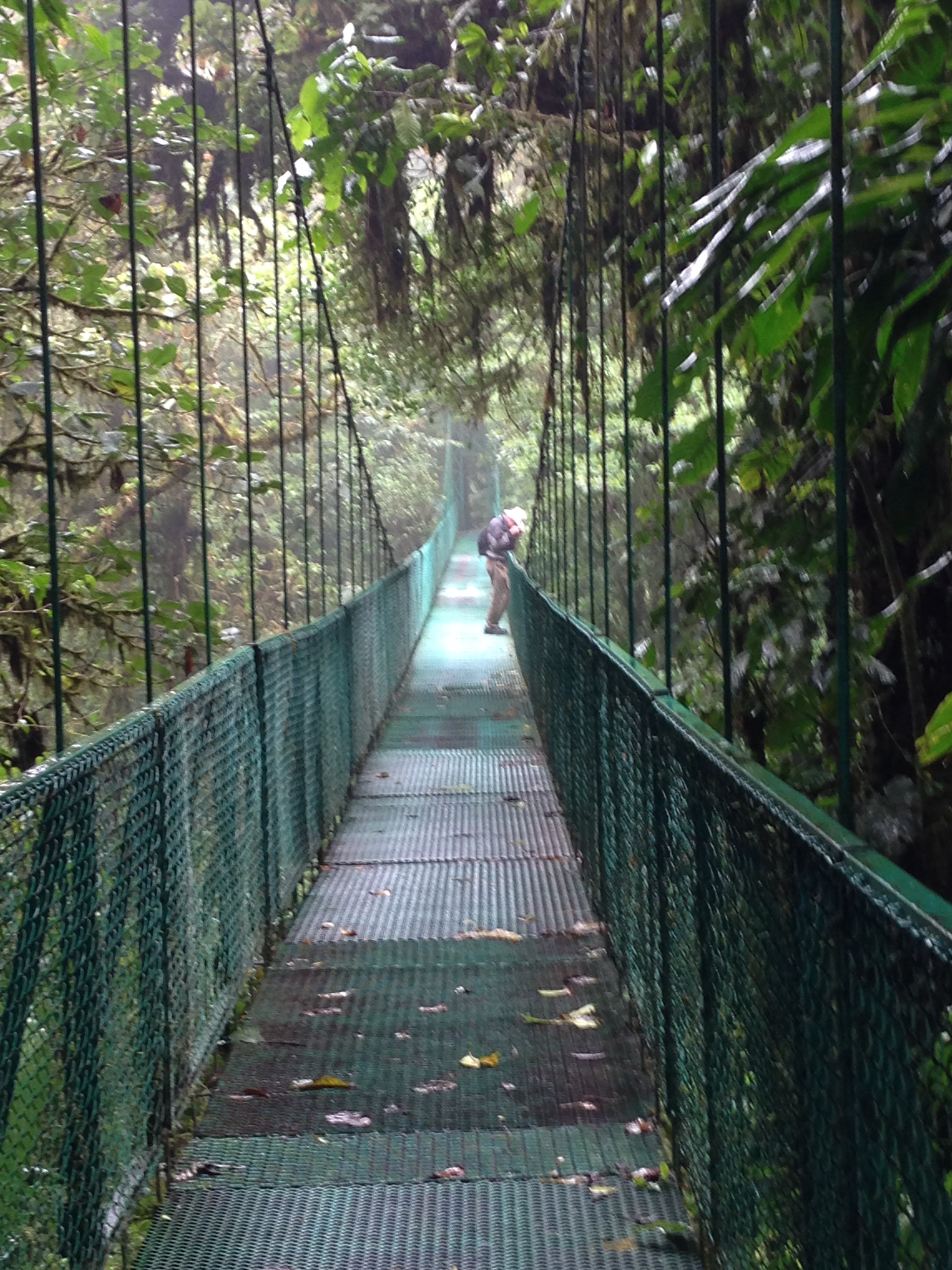
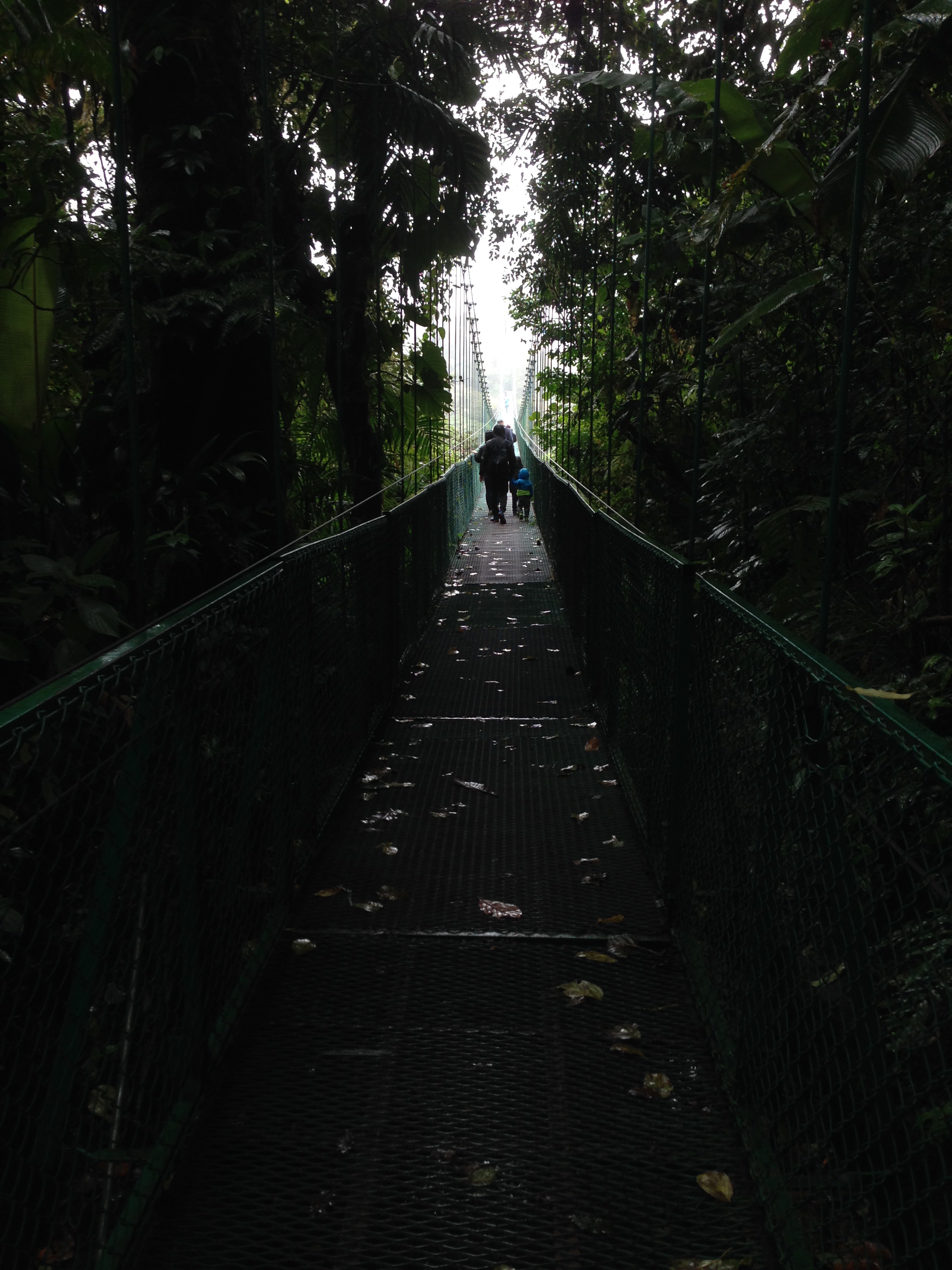
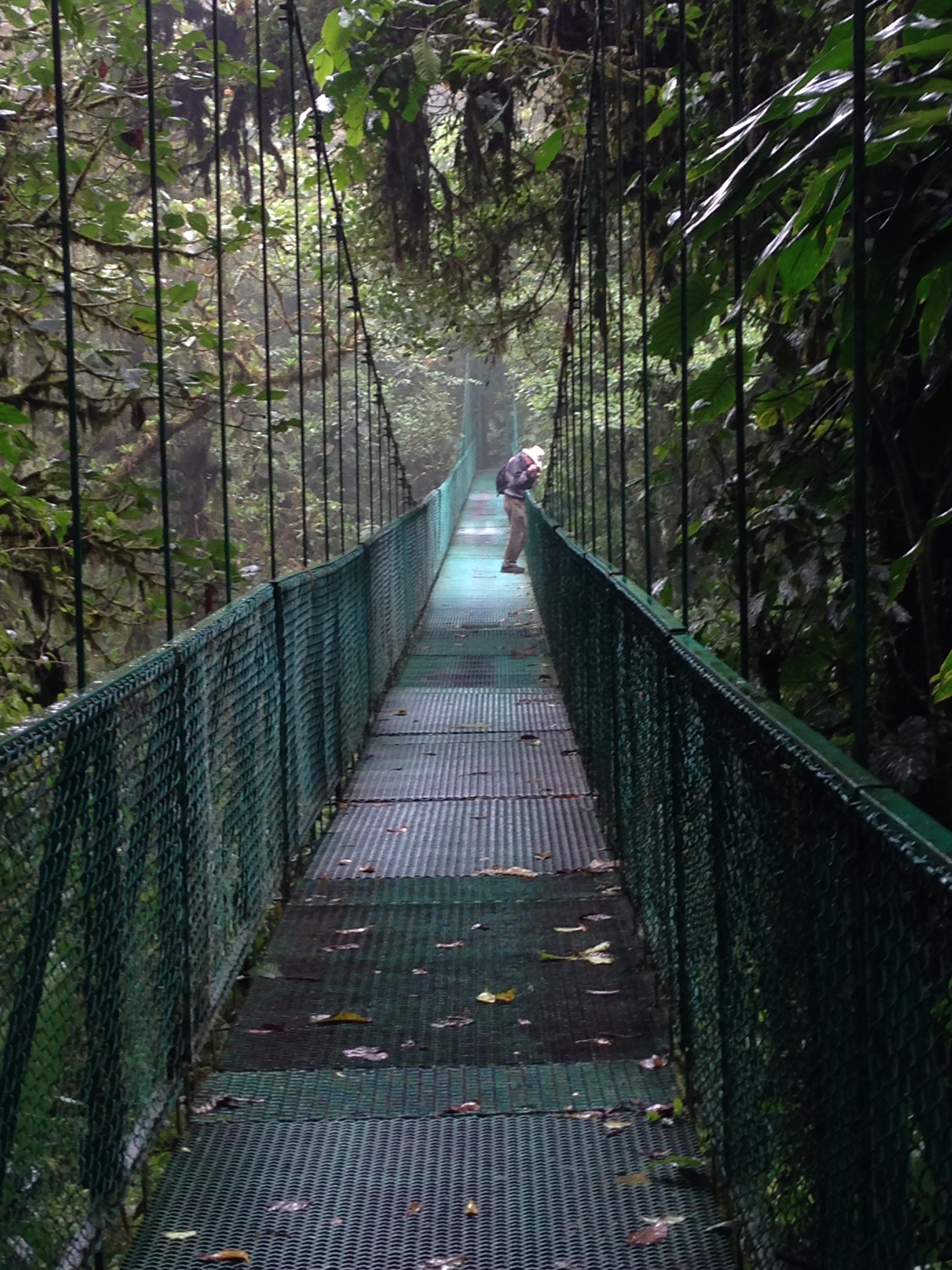
Now for the tough part of the tour. The bridge walk. Actually the zip line looked easier but even scarier. As I stepped onto each of the bridges (there were 8 ) I thought of Jean. I could have chosen not to cross the bridge but that would have meant turning around. The walk was through the tree tops – hence the bridges. There were 8 bridges, #4 was the longest and scariest but I only froze once.


 Once again, I reminded Gary how lucky he is. 

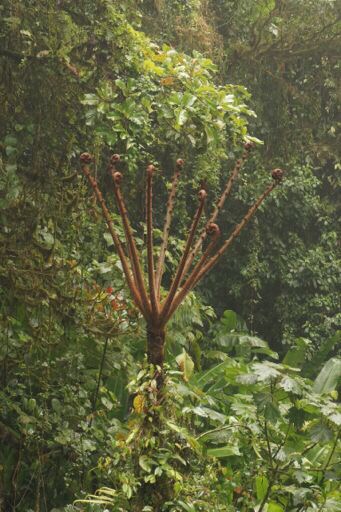
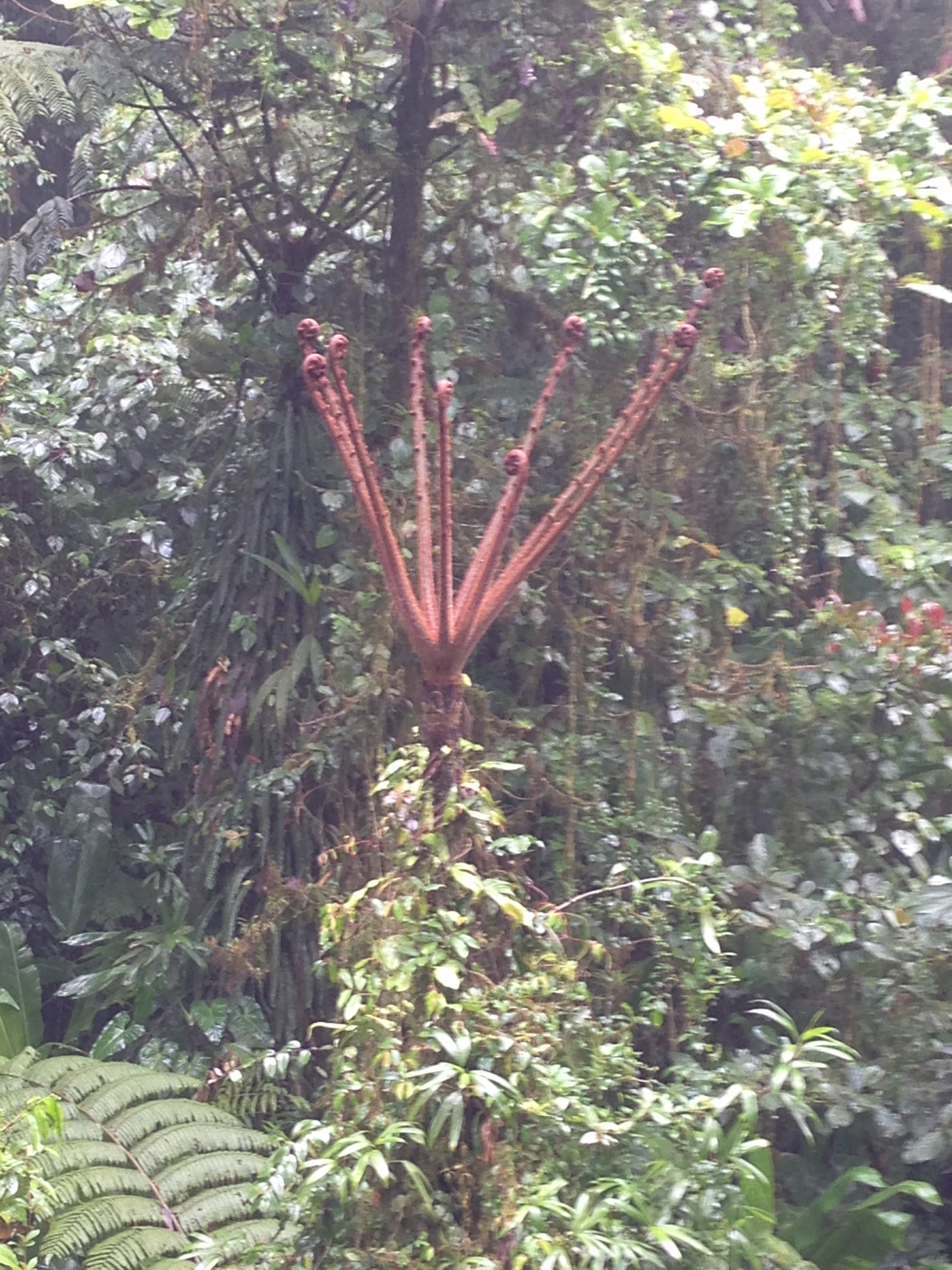
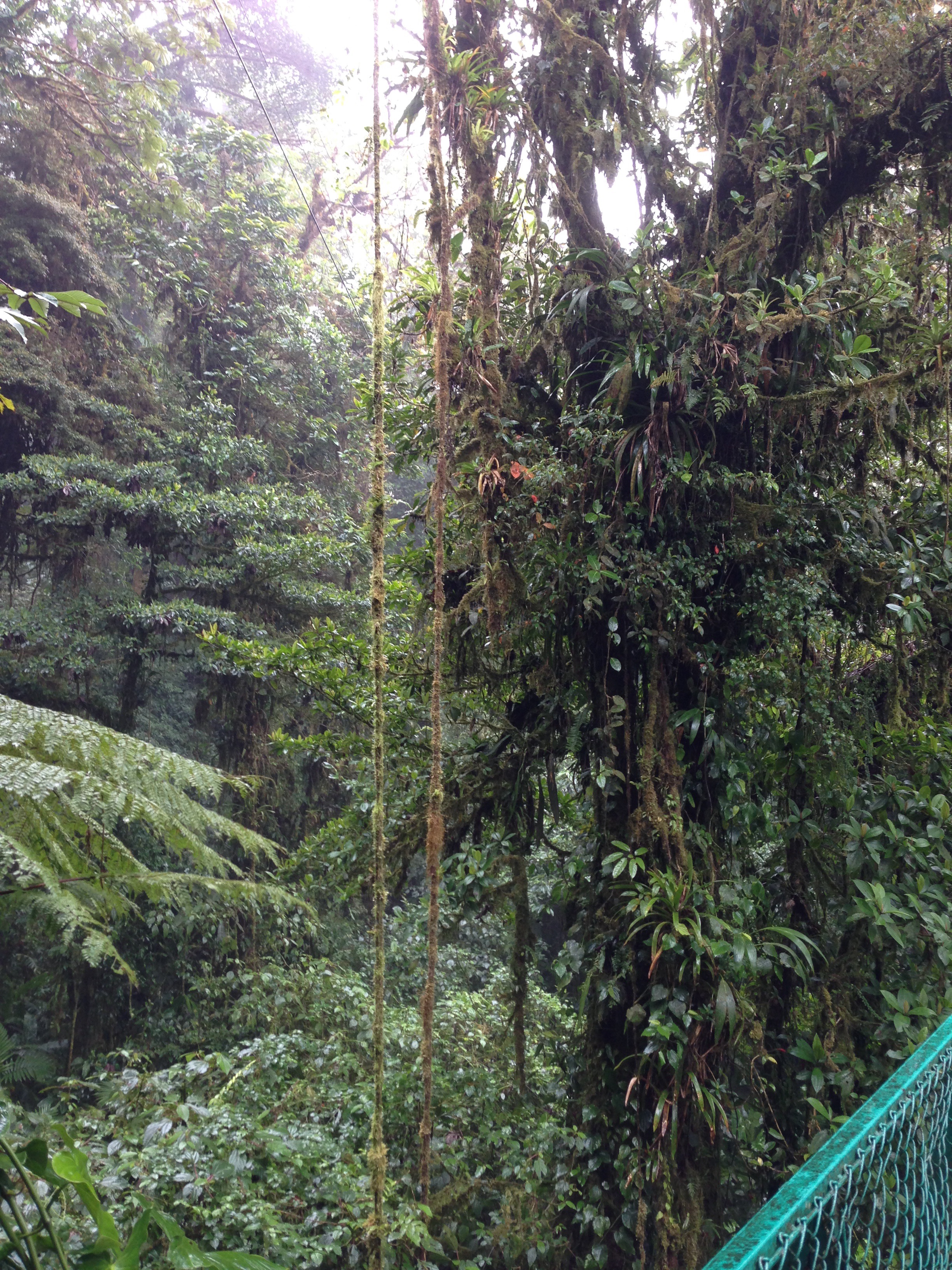
I thought the trek would be reasonable as the literature said the walk was level. However, once again terminology is misleading. I thought that meant it would be level – very little ups and downs. But no, it means the pathway is man made, not dirt or gravel with holes. I was thankful for that but not for the significant climbs and descents – hard on the knees and the breathing. Athletes that we both are, we managed despite the altitude fighting to keep us down! We saw lots of flora – mainly green rain forest stuff, but very little fauna – just a few parakeets. Here are some pictures.


So happy to see this sign

  
Tomorrow an easier day. A tour of a local coffee farm. This area was settled by the Quakers and they were dairy farmers at the start. Hopefully get more history.


Posted in Uncategorized | 3 Comments

  Jan. 24 Monteverde 

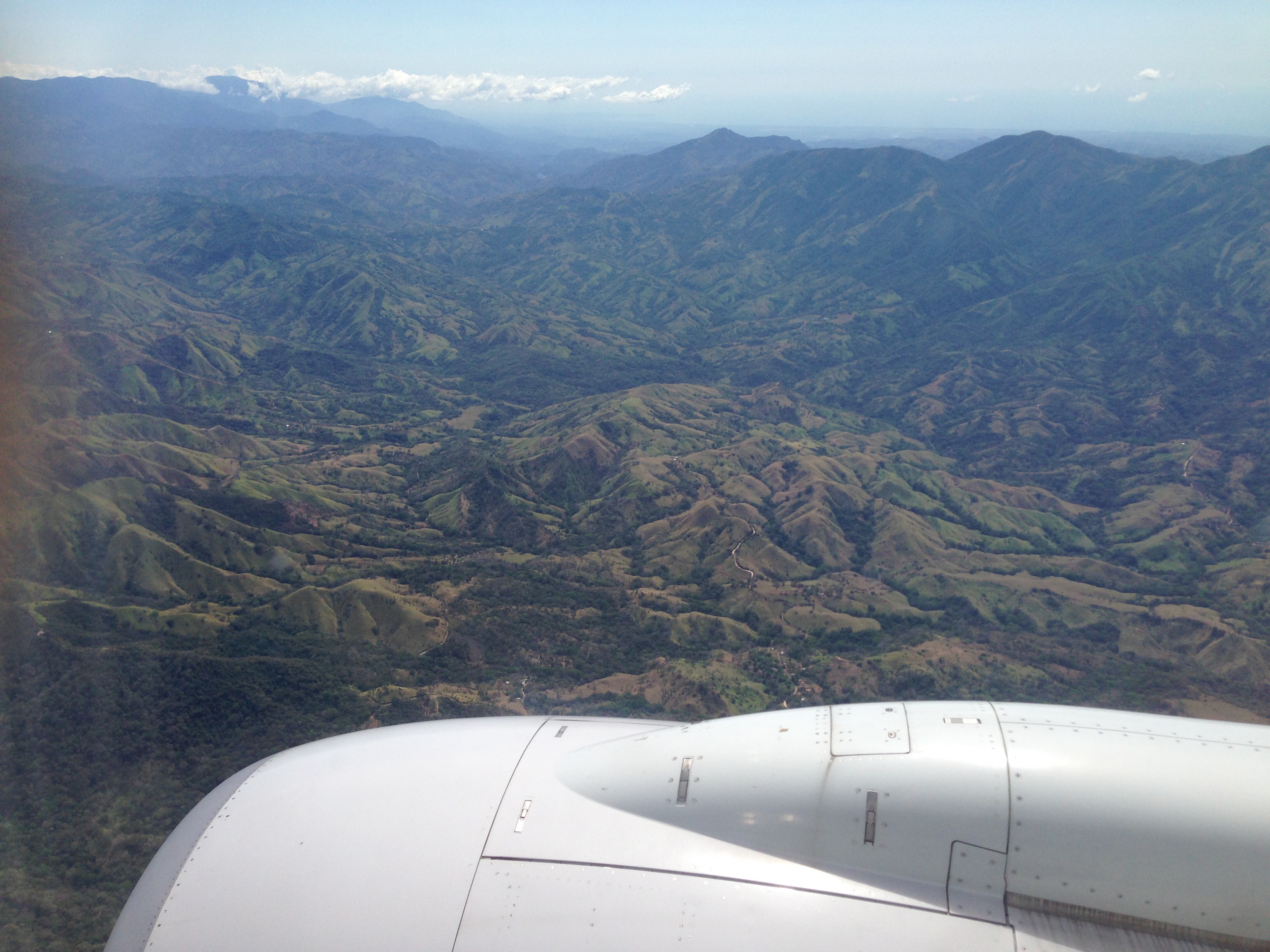
Our flight to San Jose, Costa Rica this morning was smooth. However, we should have got the premium seats – I fogot how crowded it is for Gary in Tourist class.We flew in over a very mountainous terrain 
 
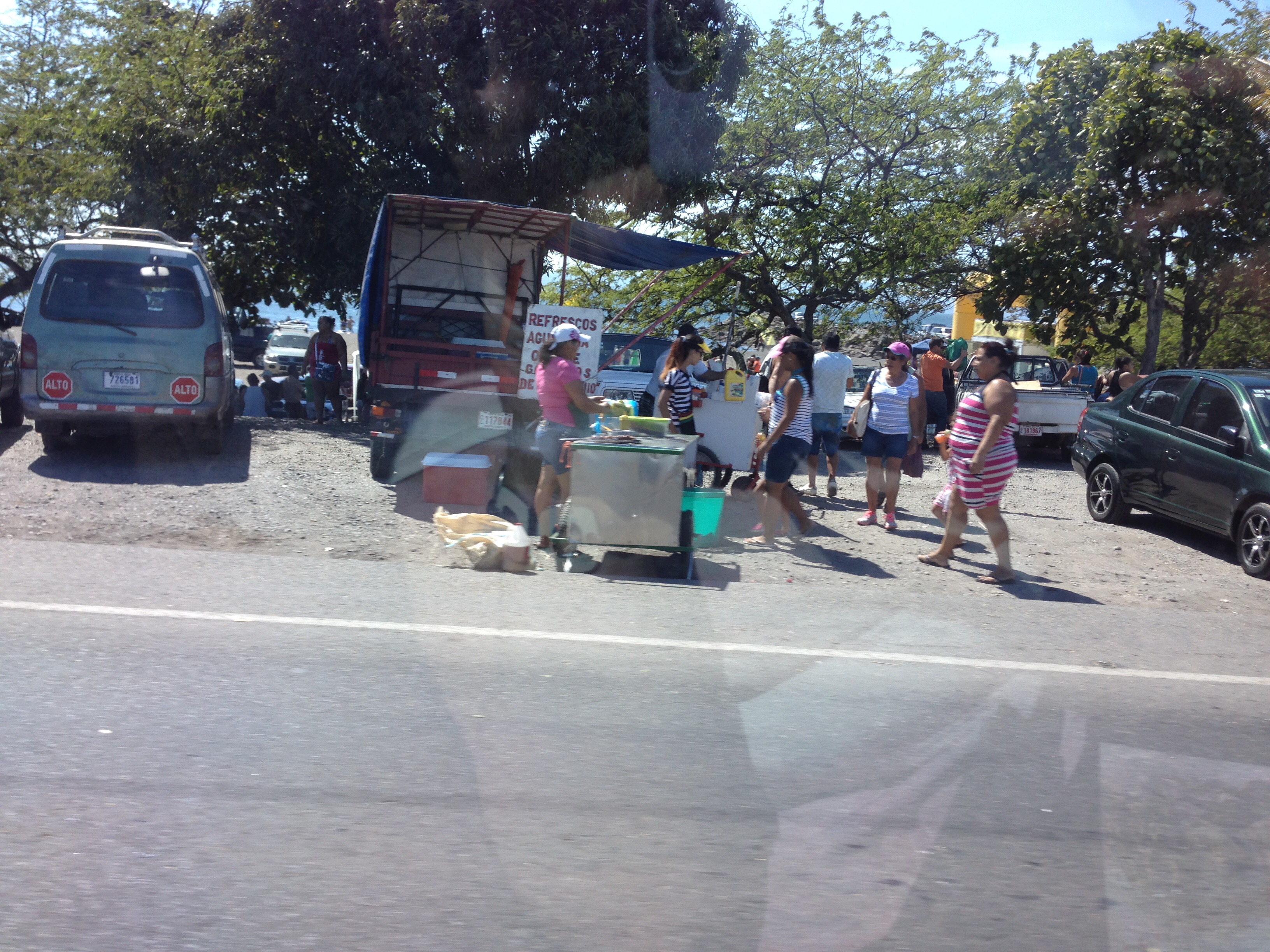
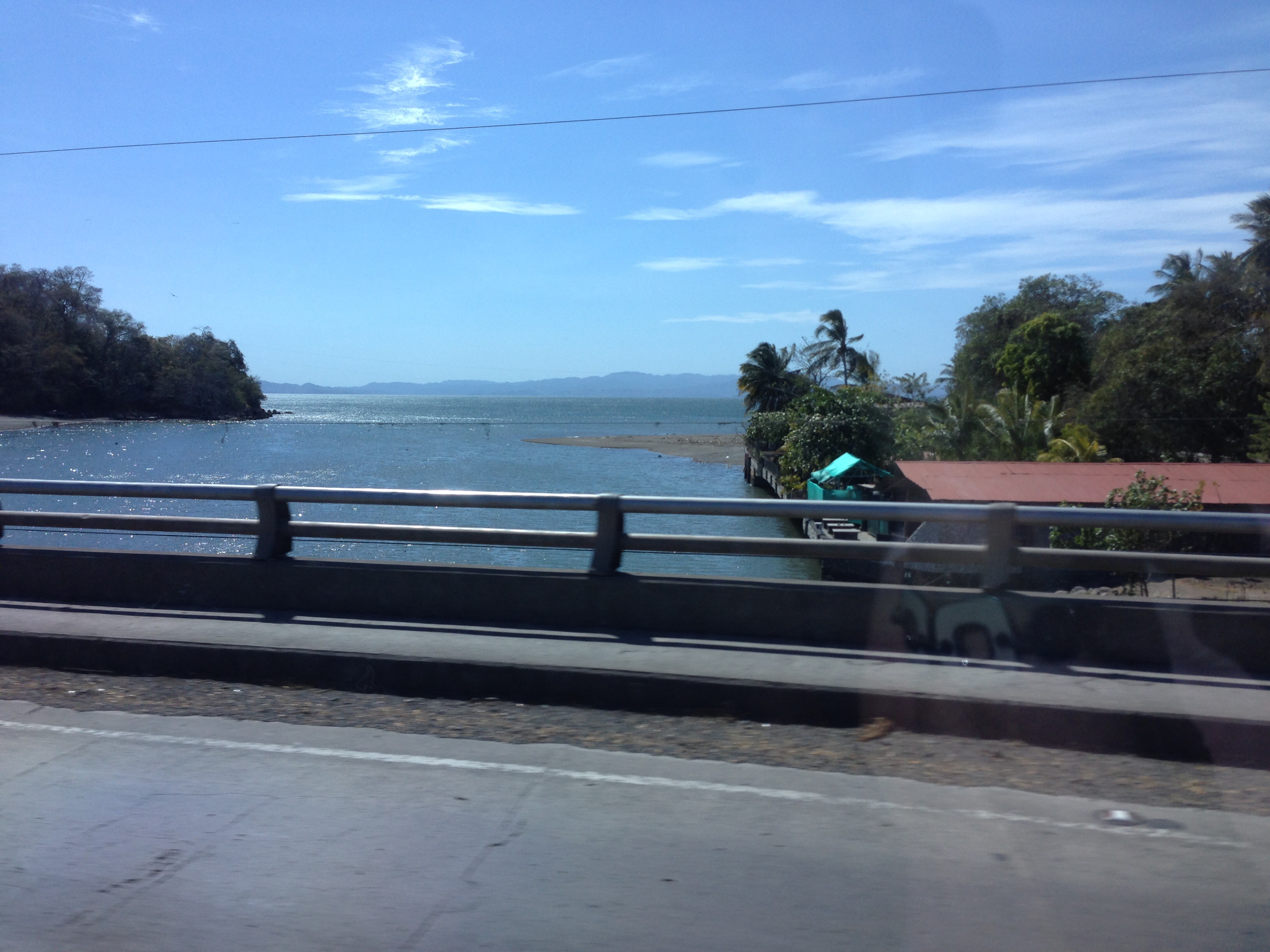
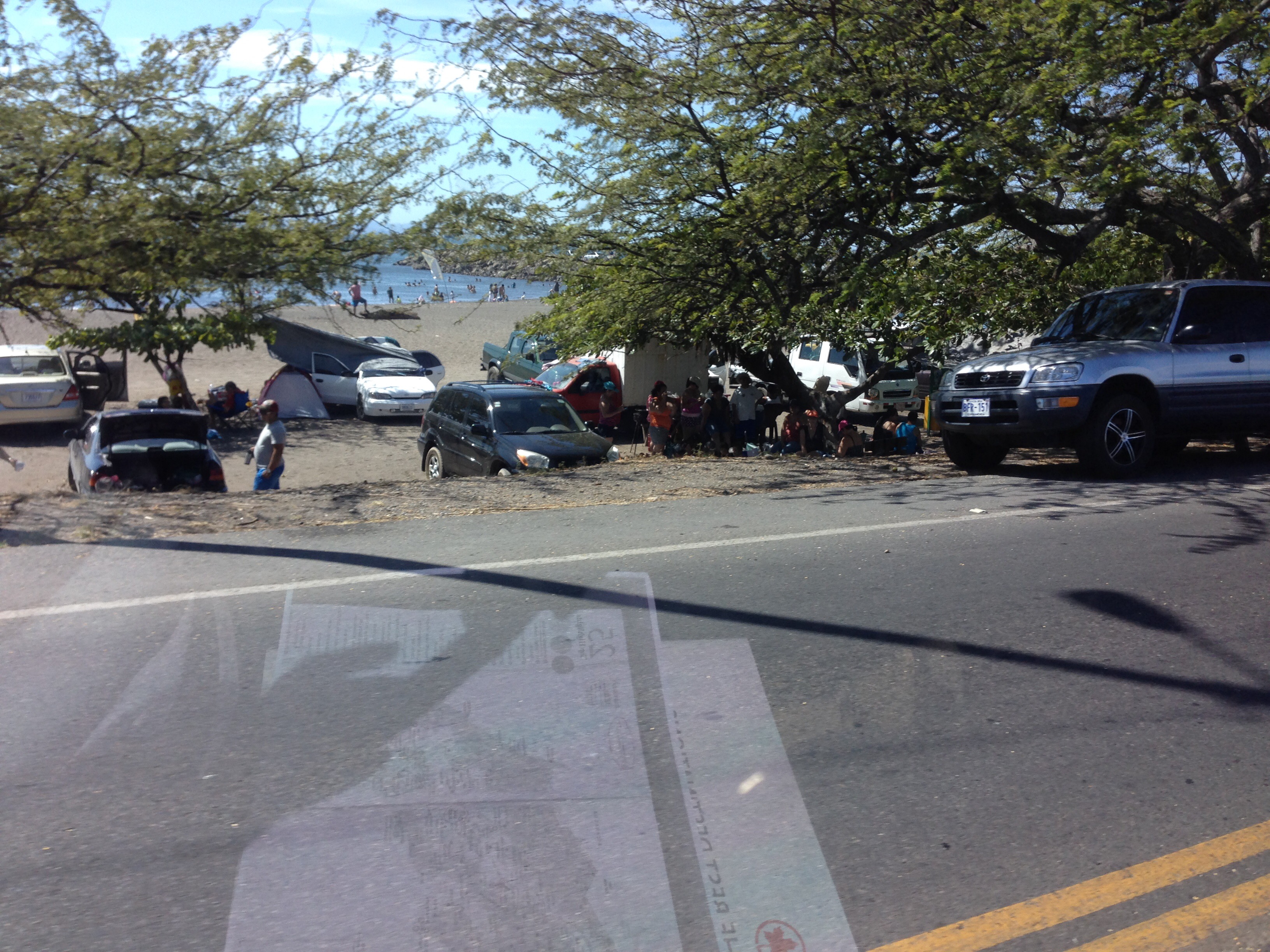
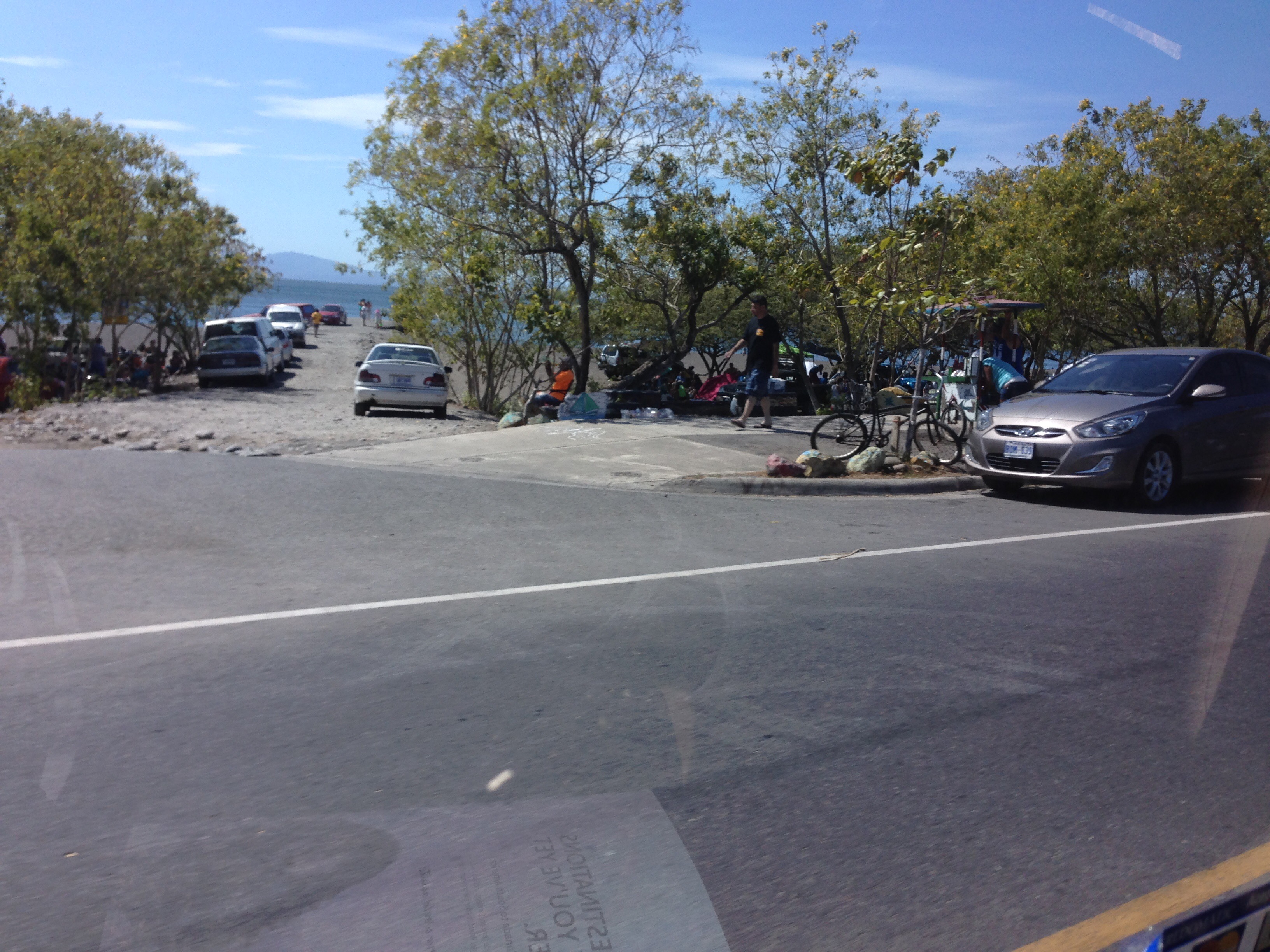
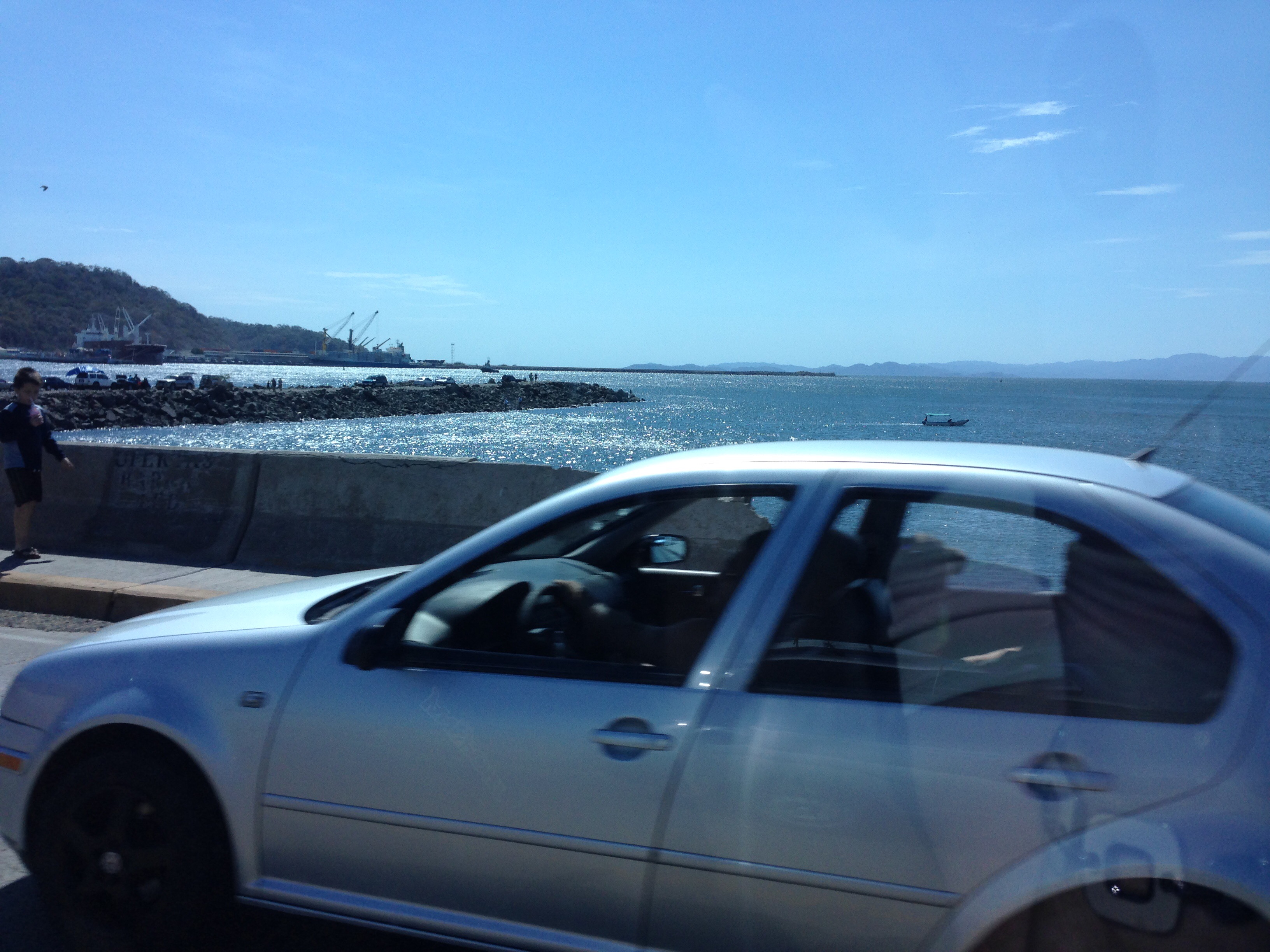
Then a 3 hour drive to Monteverde. The drive started out through the city towards the Pacific coast. We drove through dry areas and saw about 4 separate brush fires. The route took us across mountain streams, past small communities and then arrived at Cauldera. There drove along the coast for a while. It is Sunday so families where out enjoying a day at the beach. 


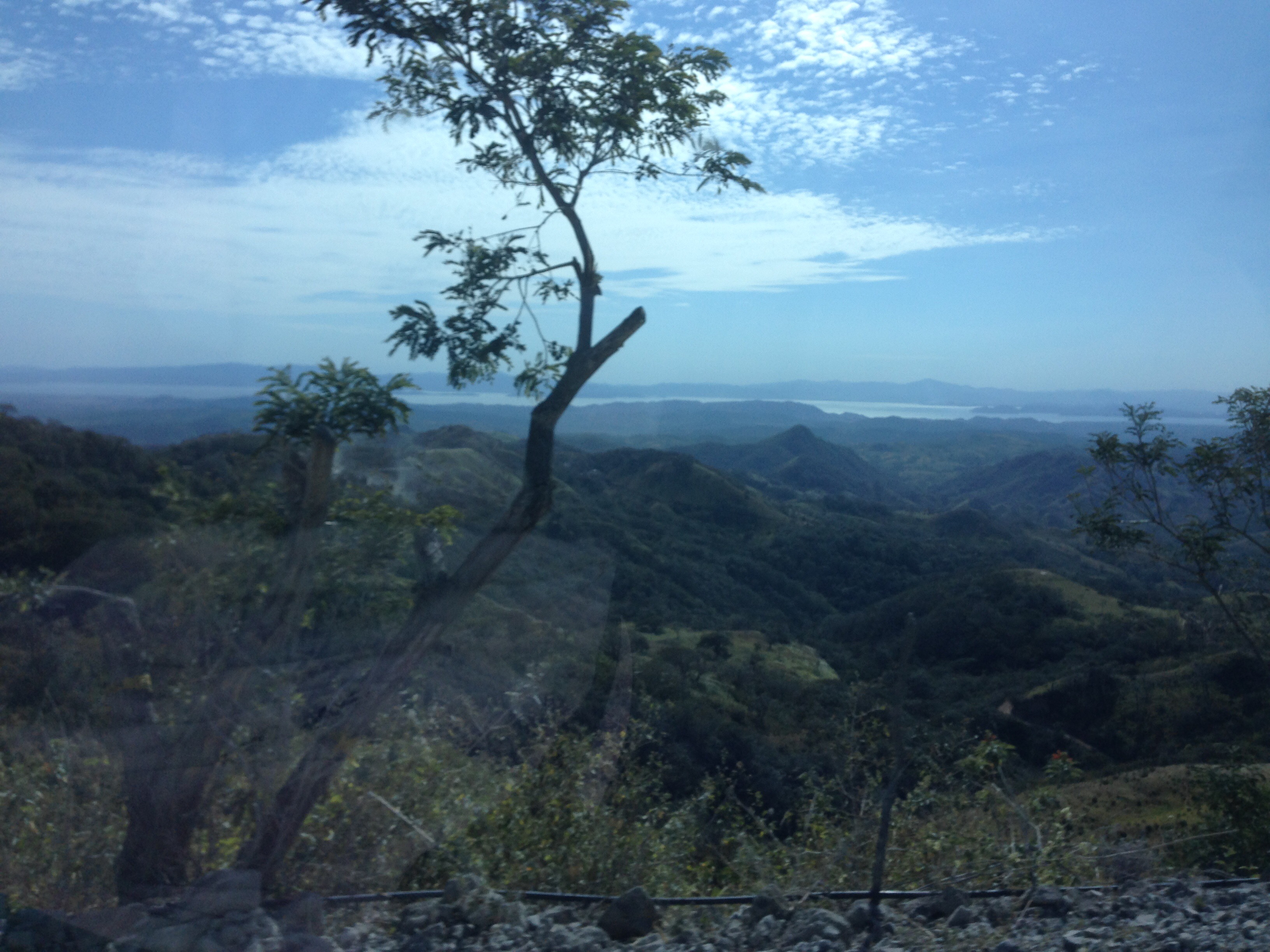
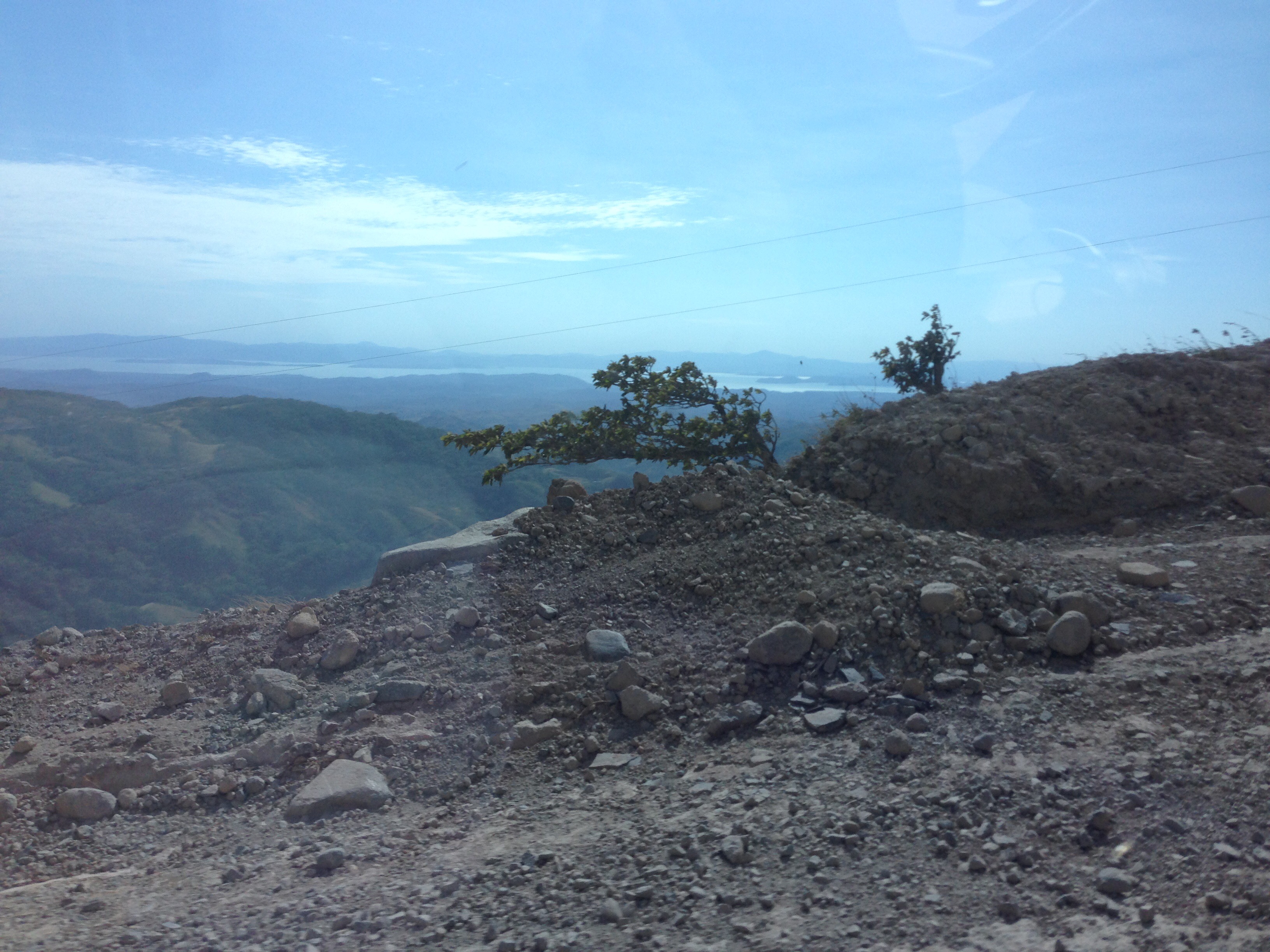
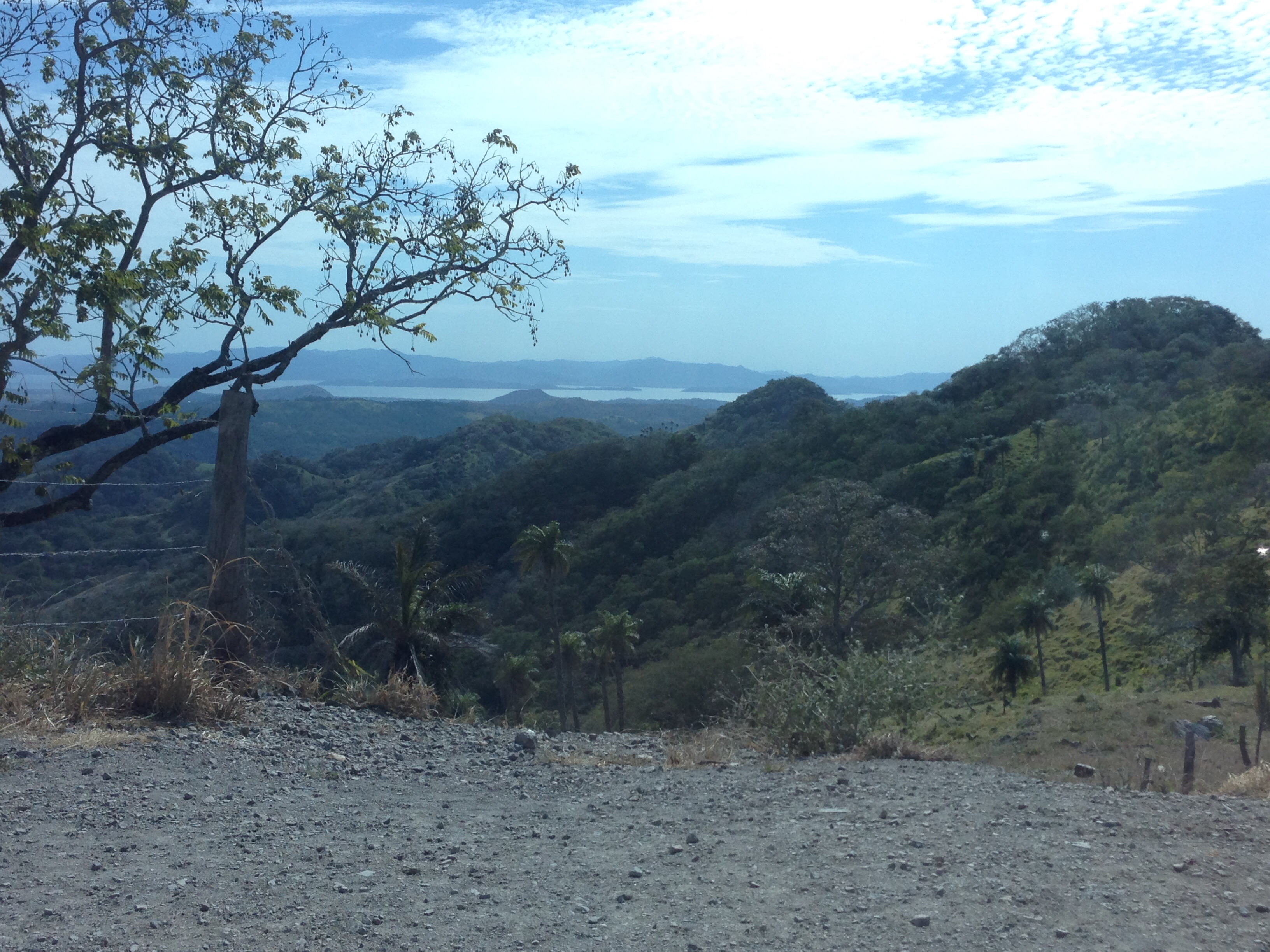
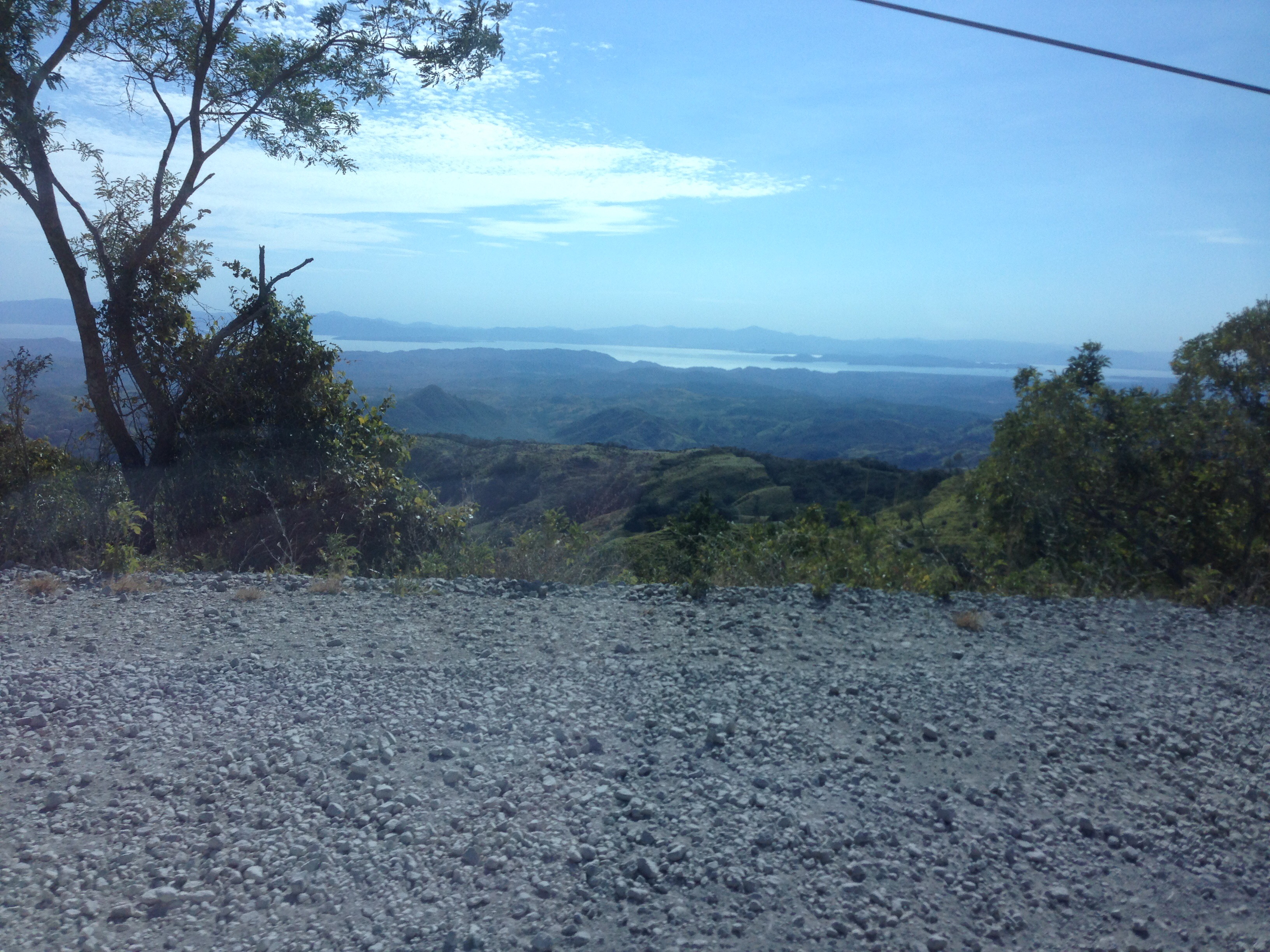
Our route took us inland along route 1 for a while. Route 1 south of Panama, crosses the Bridge of the Americas and finishes in Alaska. Then a turn for the worse! Onto a gravel road cut into the side of the mountains with all the excitement of driving through any mountainous area – switchbacks, narrow areas with barely room for the 2 way traffic, driving along a steep drop off with no guard rails, meeting buses coming the other way, steep cliffs that look like there are regular land slides and beautiful views overlooking the Gulf of Nicoya.


The higher we get the stronger the wind gets, until we arrive in Monteverde with the wind howling and a fine rain falling – it feels freezing after the heat of Panama. As drove here I noted the communities and roadside were much tidier and cleaner than in Panama. We did pass some shanty complete with satellite dishes.

In Monteverde the streets are paved and very steep! We are staying at the Hotel Ficus, which is not as nice as we expected. On the plus side we have a fabulous view looking over the town, the countryside and the gulf. However, when we arrived we had to climb up a very steep sloped roadway to our room – which of course is the furthest from the lobby. Why is there no golf cart or some other vehicle to transport us up. I had to stop about 4 times on the way, there are 2 switchbacks the path is so steep. The room does not compare to the Bristol at all! We were told there is a restaurant and bar/lounge. Well if there is they are not open. We have to walk into town for lunch and dinner. Town is very close and yet very far. It is a short walk away down a very steep road – going down hard on the knees! Coming back after a meal is even worse than the climb to our room from the lobby area! I definitely would recommend anyone coming here find an alternative to the Ficus, stay right in the town if there is a decent hotel there. I did overhear some complaints in the restaurant about at least one other hotel – no hot water. Maybe I am getting more demanding in my old age or maybe it will seem better in the morning after we slog our way down for breakfast. Here is the view from our hotel room. 
  
 More about Costa Rica tomorrow.

Posted in Uncategorized | 1 Comment

Panama Impressions

Alert for Rick – no pictures, just words!

As we wait at the airport here are some random thoughts about Panama.

Smoking – as we came through the airport on arrival I noticed a sign that said Panama is smoke free and smoking is not allowed in any public areas. The only time I saw anyone smoking was on the boat yesterday and then in an open area designated for smoking. It looked like only a few tourists were smoking. Never saw anyone smoking on the streets, restaurants or even while outside waiting for the boat. Wonderful!

The army was disbanded years ago. There are border police along the border with Columbia. We did see a number of police but not heavily armed. There is a coast guard and a small air police force. We saw no evidence of military as we have seen in many other countries. Even with all the cargo ship milling around the entrances to the canal there was no obvious evidence of military or security.

There are obviously some seriously wealthy people here as evidenced by the yachts and some of the buildings. We heard about, but did not see, some enclaves where there are large, modern homes. Most people here think if you are rich you are either a foreigner or somehow involved in the drug trade. Our drivers talked about people who live in the shacks having big TVs, fancy furnishings etc. They say that comes from drug dealing. They worry about their kids getting involved and talked about the danger to anyone and their families who are involved.

We did not see beggars on the street nor were we approached by people asking for money, except for 2 little kids who looked well fed and had a 2 litre bottle of Coke in hand. We also did not see any evidence of drunks, or tramps. In the poor area of Colon we did see a lot of people hanging Bout the street (not smoking) but no obvious thugs or gangs, although of driver was nervous in that area and I did see what looked like a police raid going on.

The population of Panama is a little over 4 million with about half in Panama City. Despite the USA being here until 1999 most of the population speaks only Spanish. Even in the hotel some of the restaurant staff could not speak English. The front desk staff were quite fluent. We went to a local restaurant last night and our Spanish obviously was not very good. We ordered calamari, which turned out to be shrimp and I ordered a fish dish that I thought came with a green salad, but came with a green sauce. Anyway it was all good.

English has recently been introduced into the school system along with computers. Up until 3 years ago if you wanted your kids introduced to computers or English you had to send them to a private school. The public health system sounds like it is very basic, again if you want quick and/or more than basic care you had to use the private system.

Generally people appear happy and reasonably healthy.

Now we are off to Costa Rica.

Posted in Uncategorized | Leave a comment

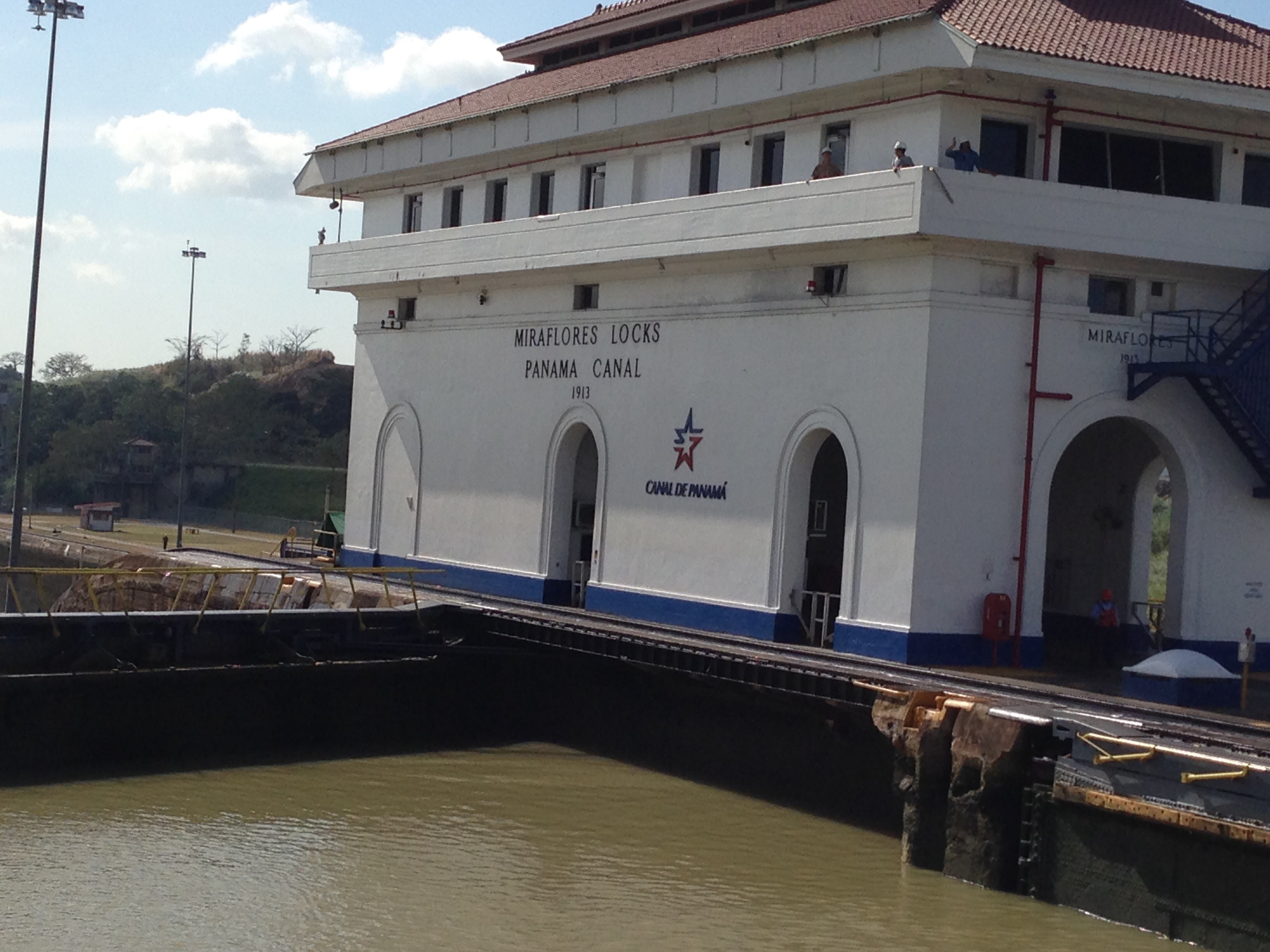
Jan. 23 Canal Transit – Miraflores locks


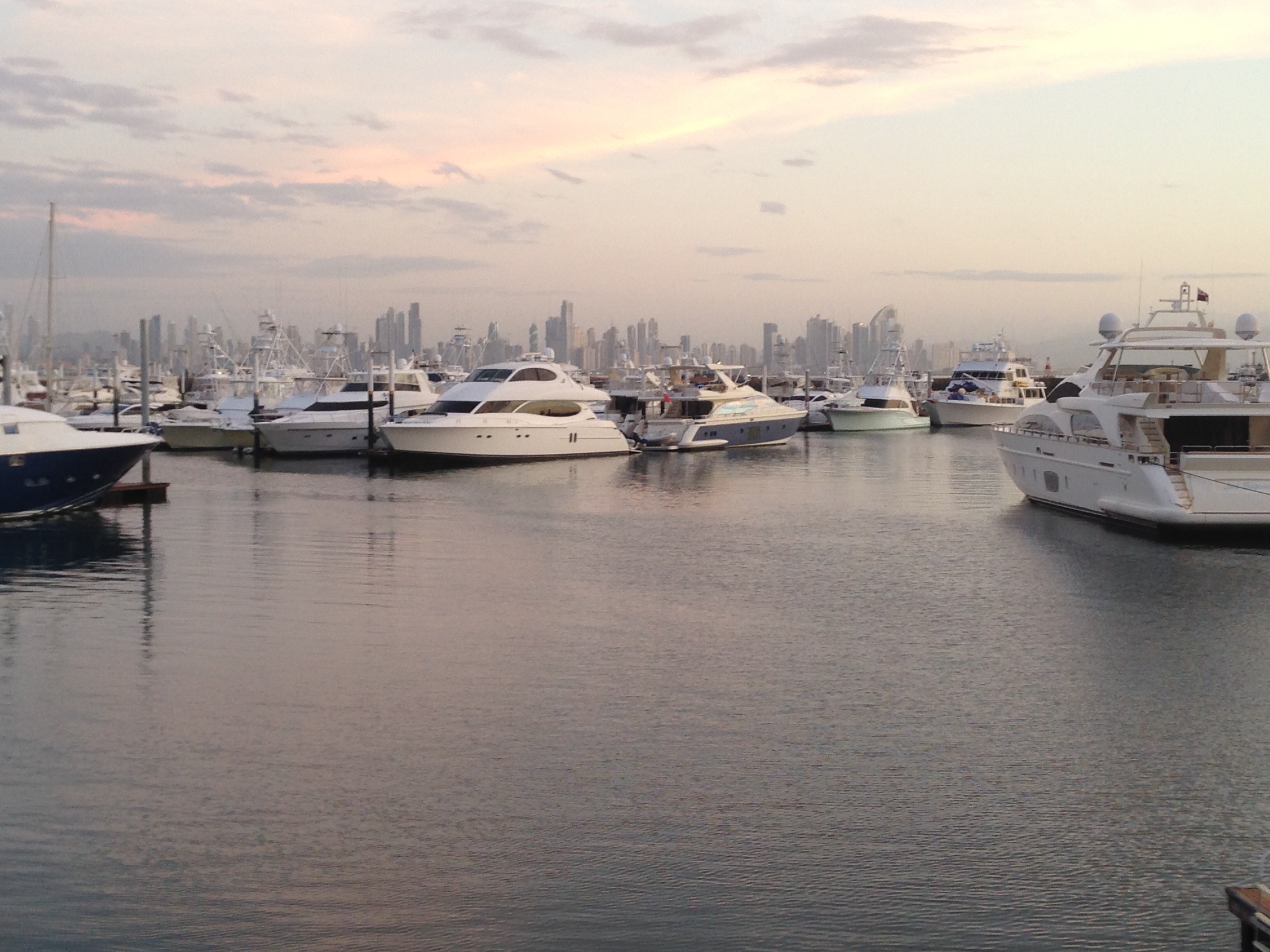
Our trip started with a drive to a local marina. Here we are waiting for our boat overlooking the marina with Panama City in the background. The sun is just rising!

  
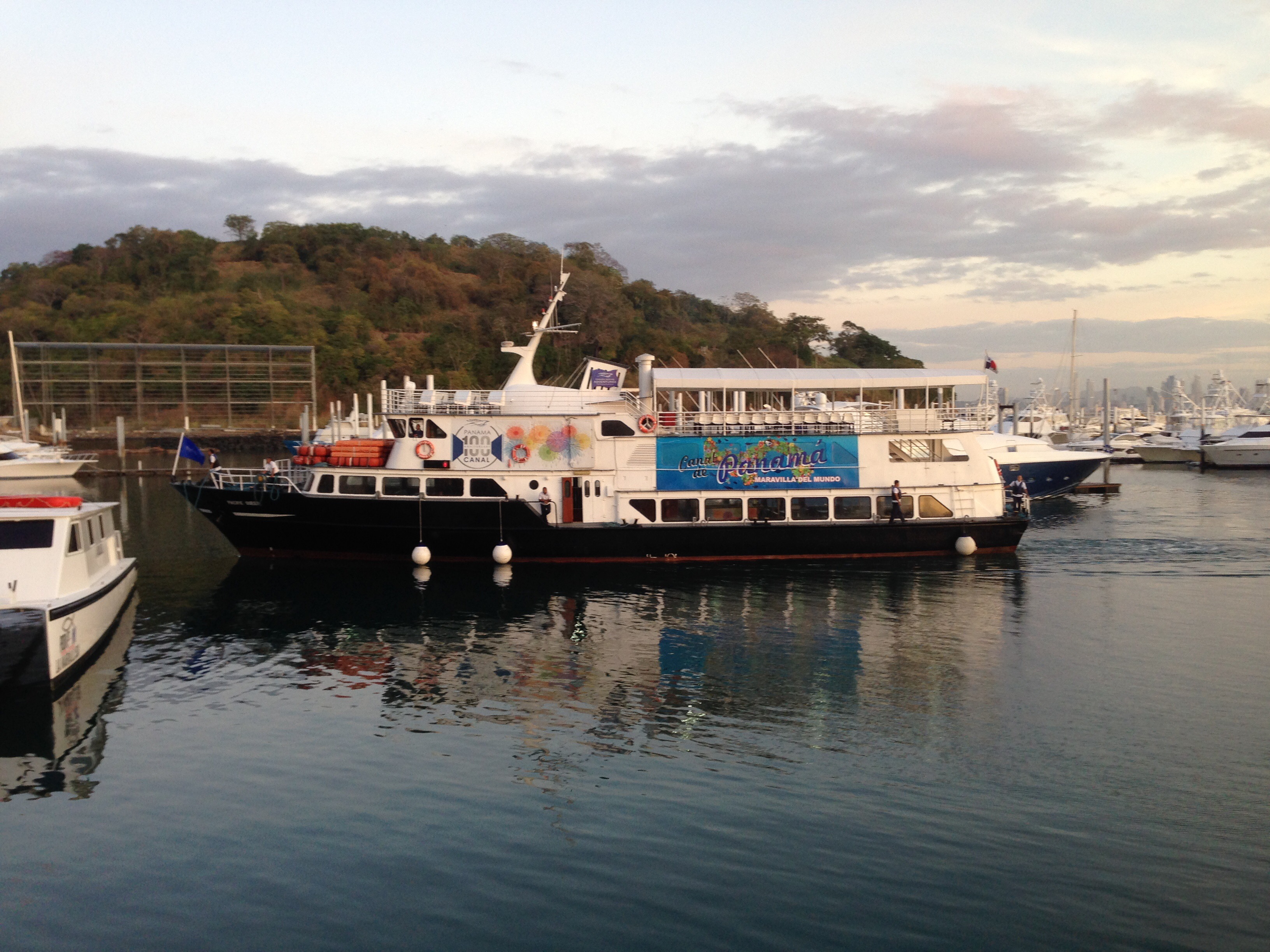
Our ship for the transit – the Panama Princess. Once on board we head out past all the ships lined up to make the transit. Once a ship arrives at the canal it radios to traffic control, is given their time for the transit and coordinates of where to wait for the pilot. Every vessel, no matter how small or large, must take on a pilot before entering the canal. 

 
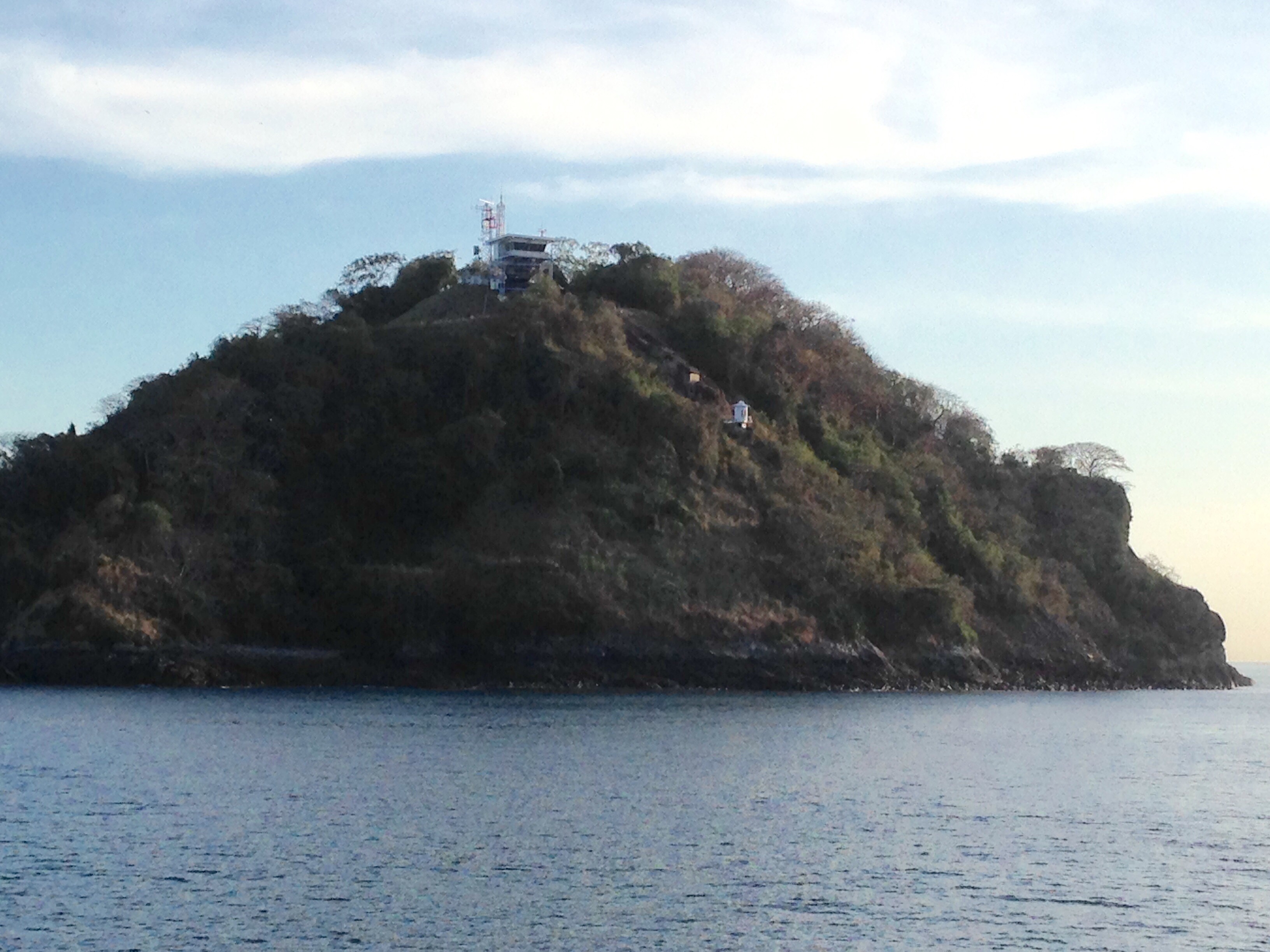
Traffic control is located on a hill just outside the entrance to the canal. 

 
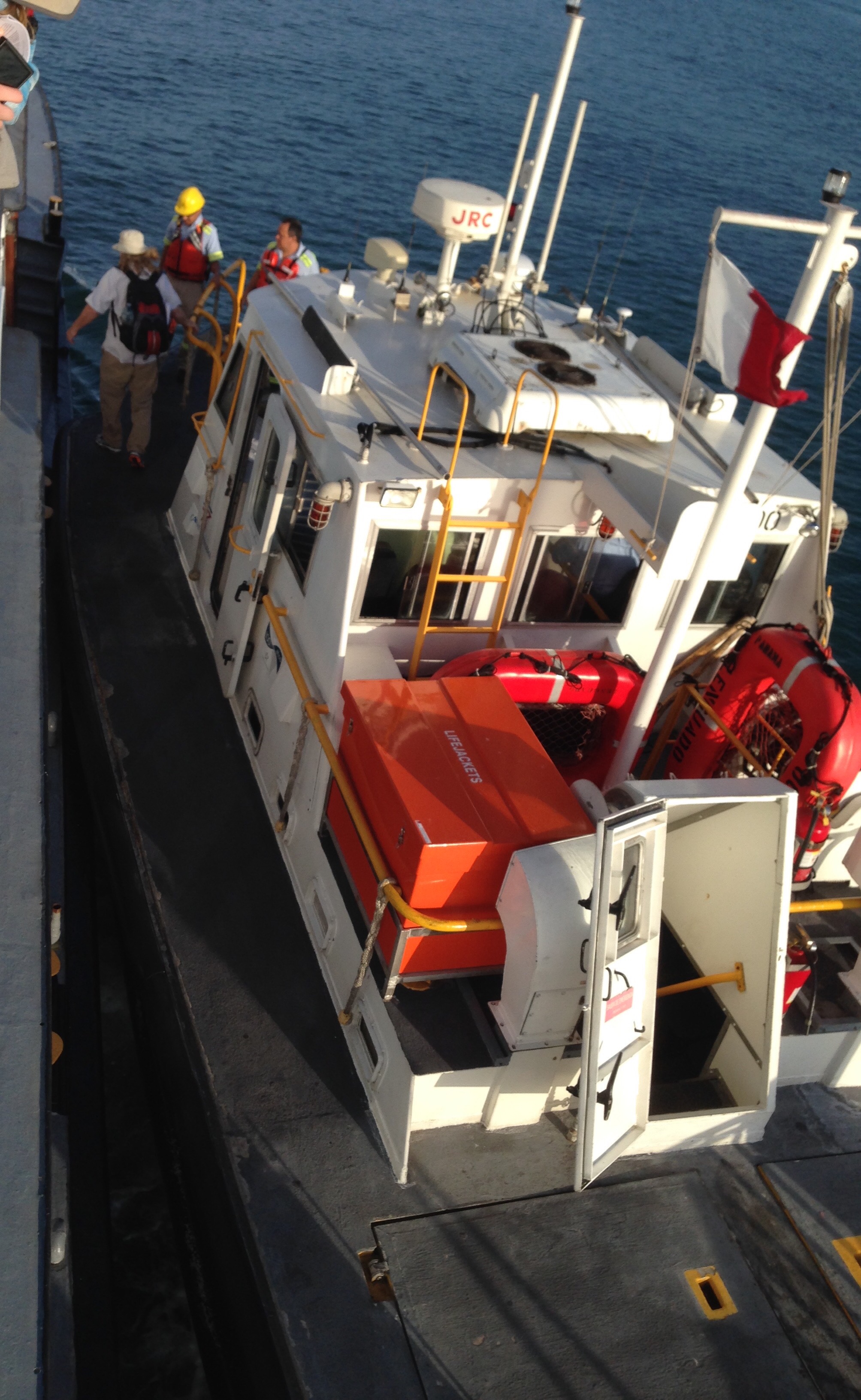
Pilot coming aboard. Once the pilot is aboard the transit has officially begun. Large ships have an average 24 hour wait.

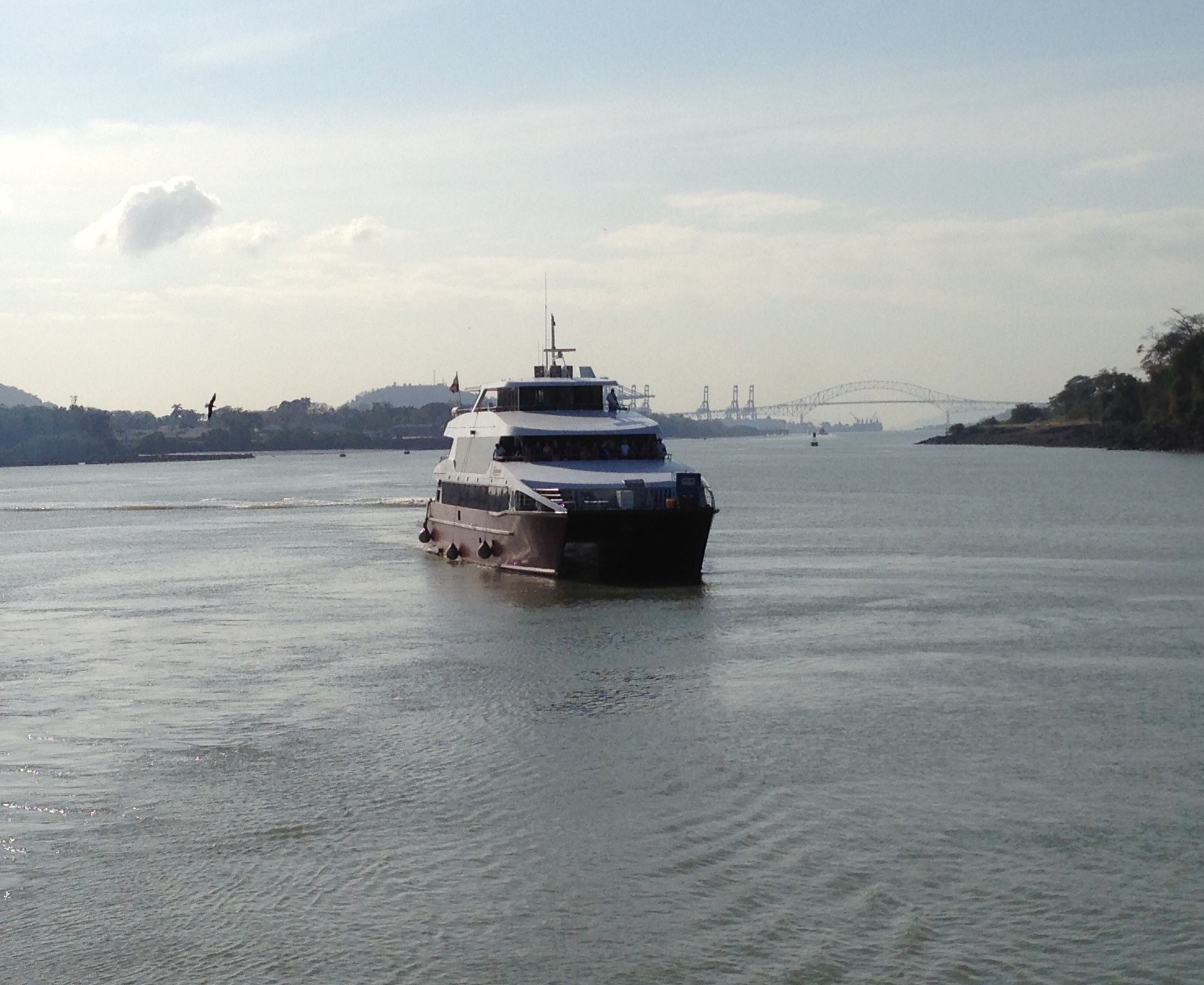
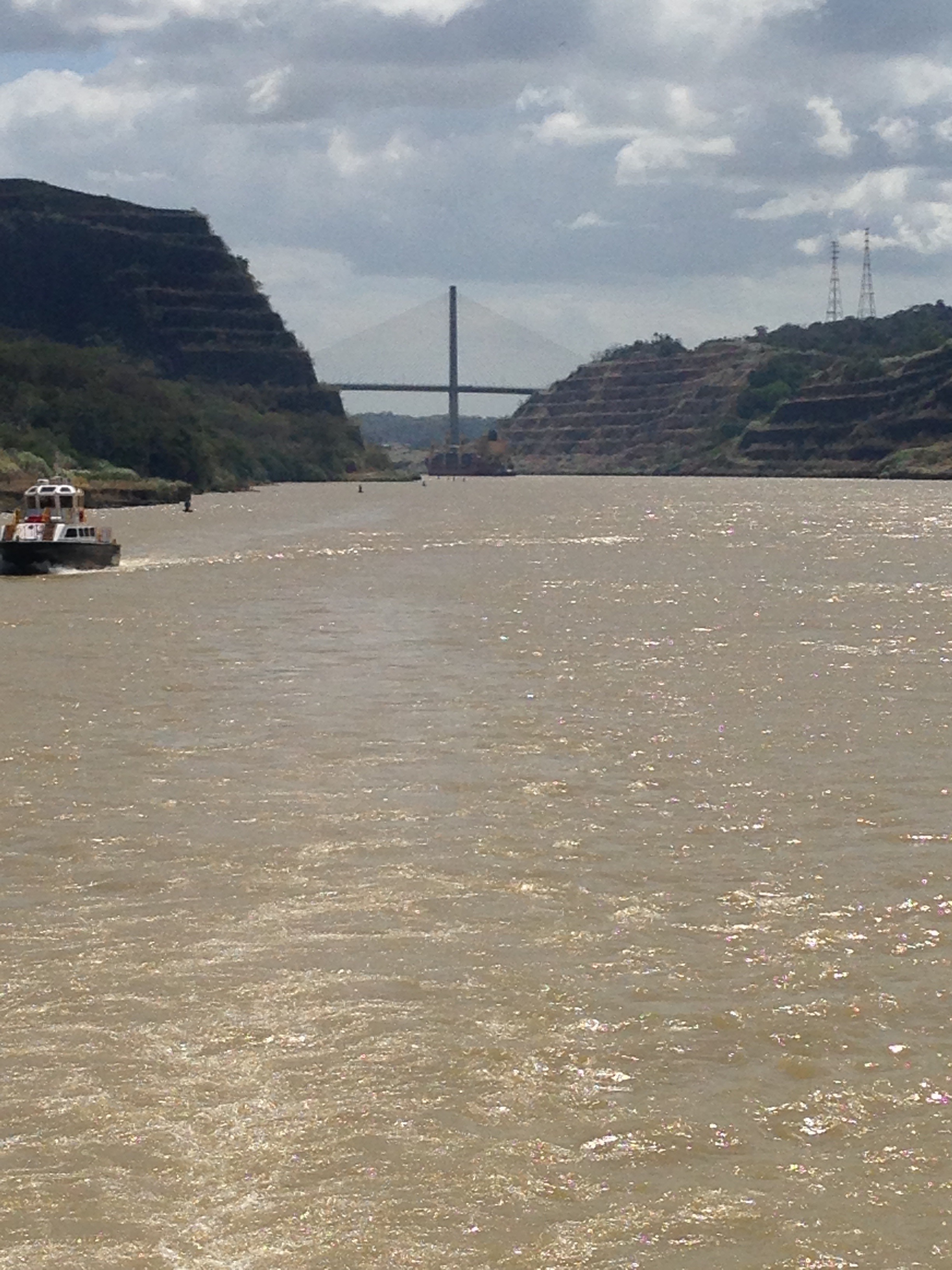
As we start into the canal we pass under the first of 2 bridges – Bridge of the Americas which you can see in the distance off our stern.


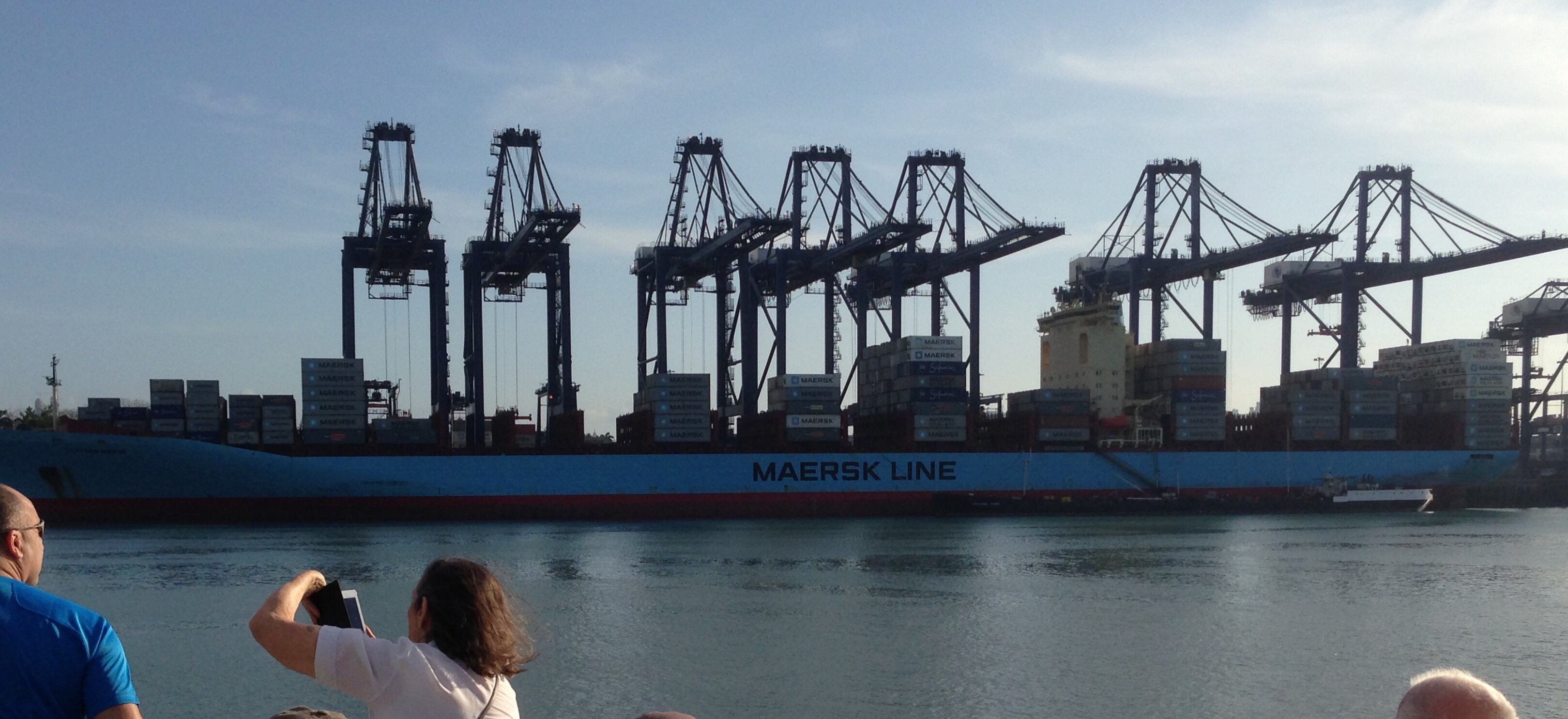
On the way to the first lock we pass a container terminal – instead of making the transit a ship can offload its containers here. The containers are moved by rail to the other side and loaded onto another ship. Two reasons why a ship might do this

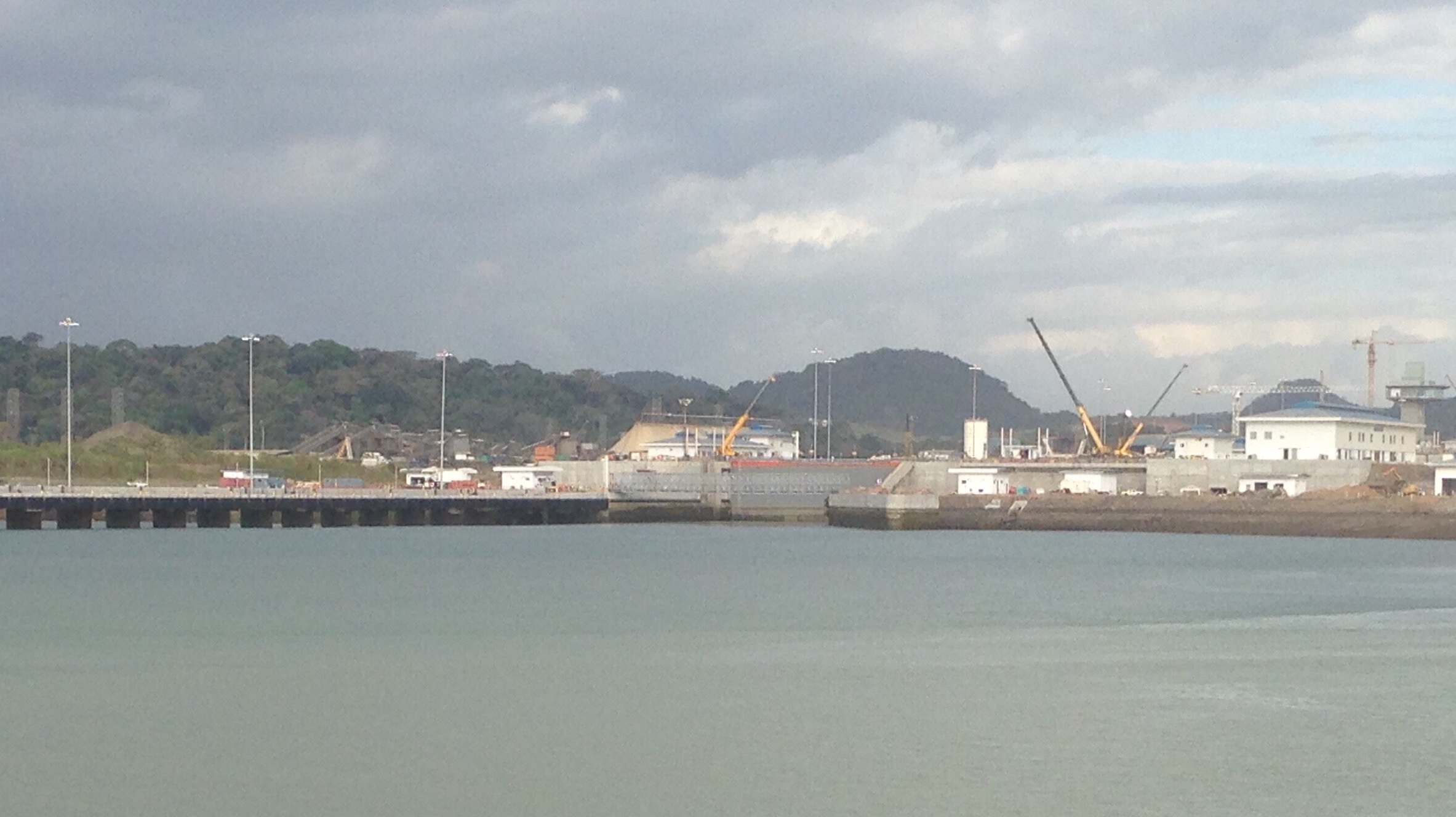
1. The ship itself is too big. Today approx. 35% of the containers ships are too large to fit into the canal. This is the reason a third lane is being built.

2. Cost – ships are charged based on size of the ship and type of cargo. So if a ship is not full it may be more cost effect to use the rail alternative. The average cost for a commercial cargo ship is about $145,000 for a single transit. Cruise ships are more expensive as they pay based on passenger capacity. The highest single transit fee paid was over $400,000 by a cruise ship. Vessels under 125 feet long are charged by length. There is a minimum charge of $800 for an vessel no matter how small.

The canal earns $6 – $8 million per day.

  
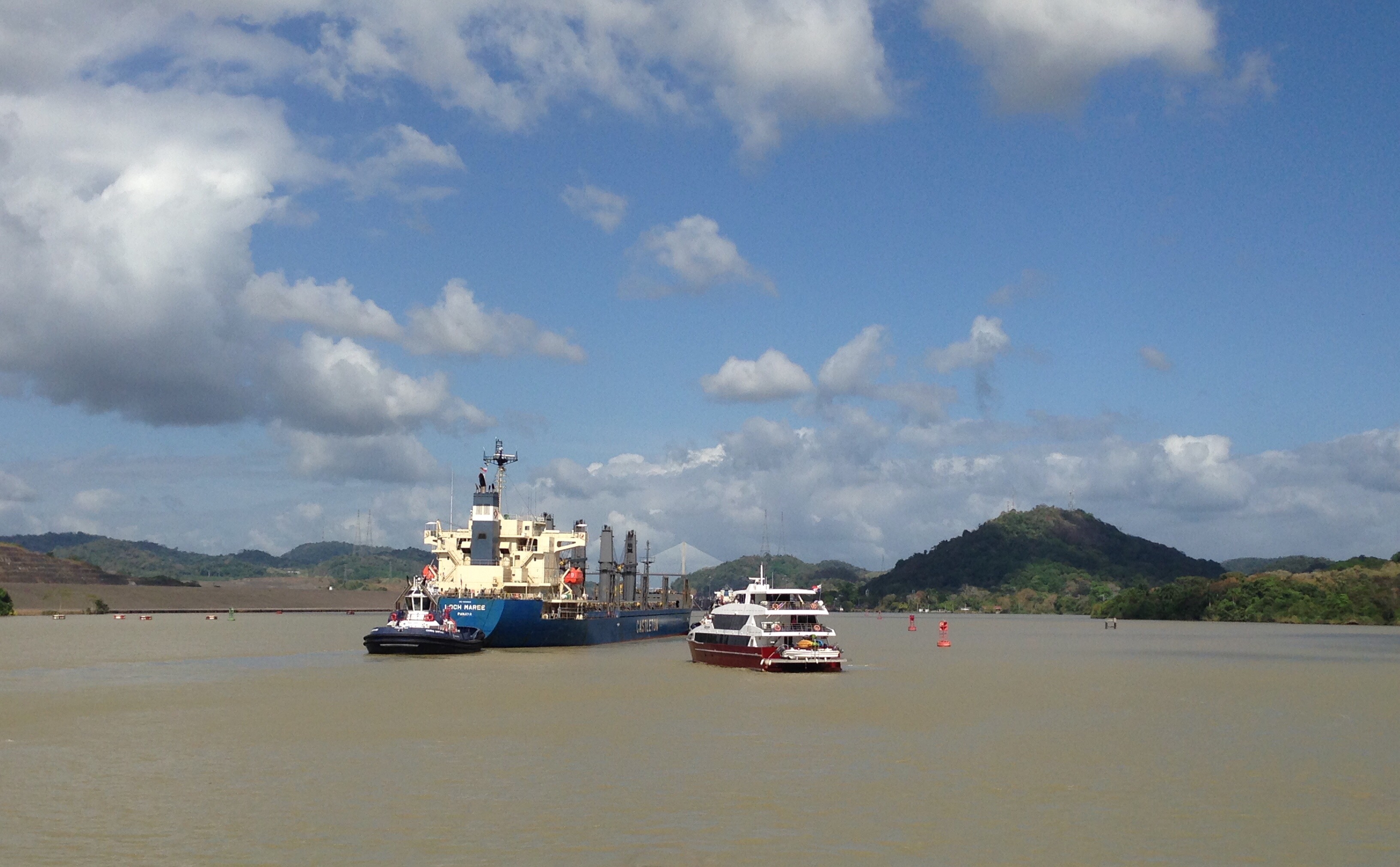
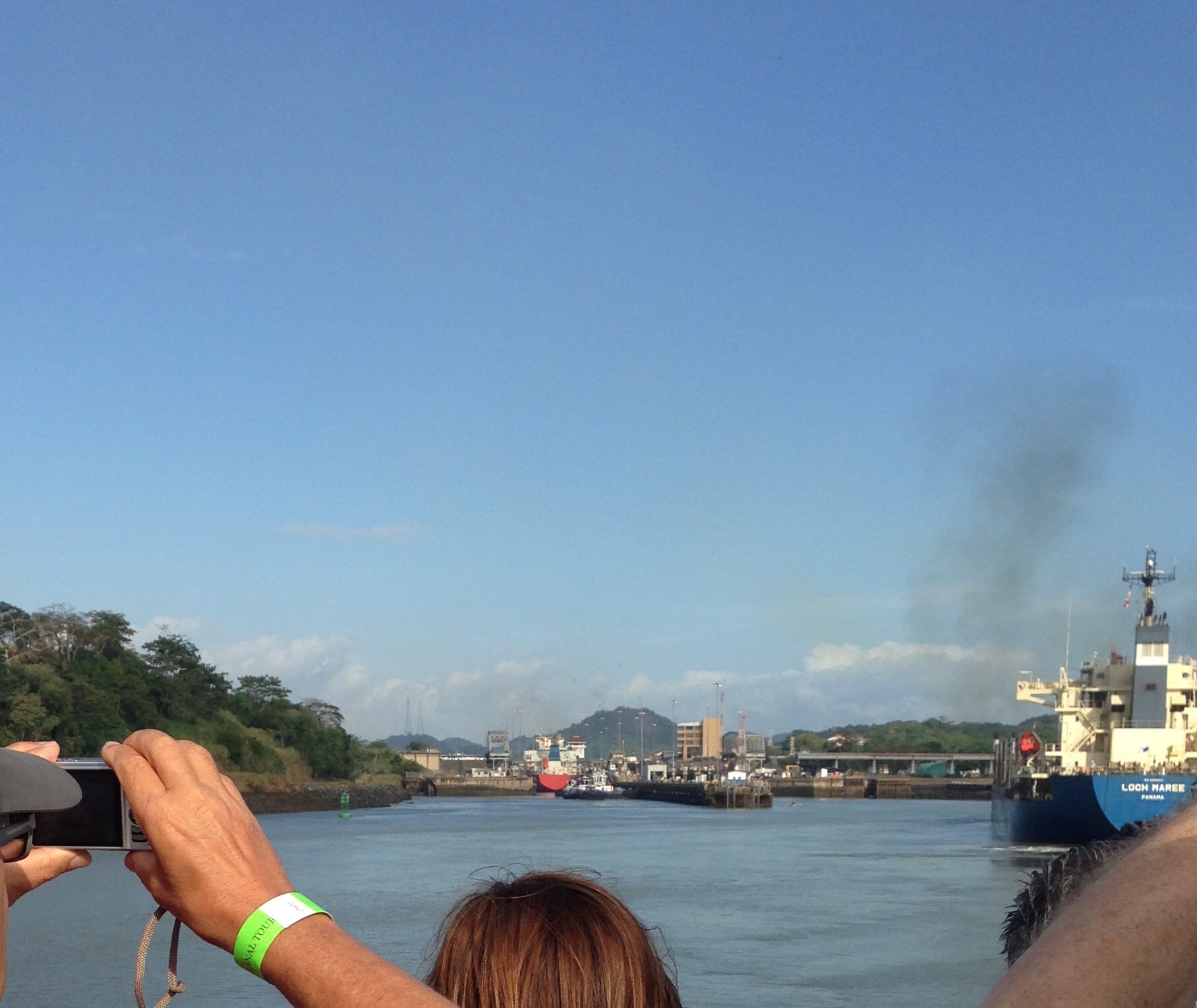
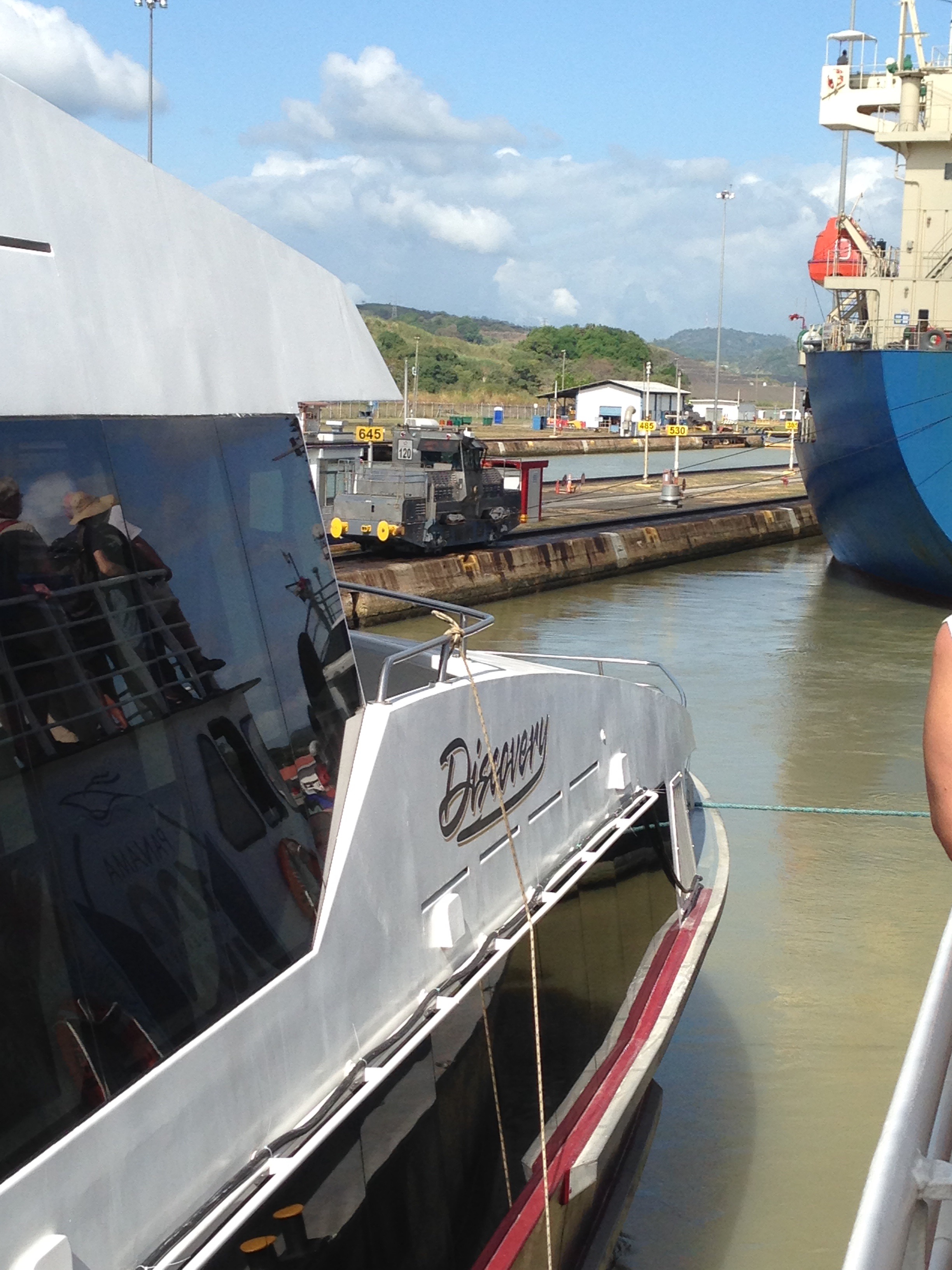
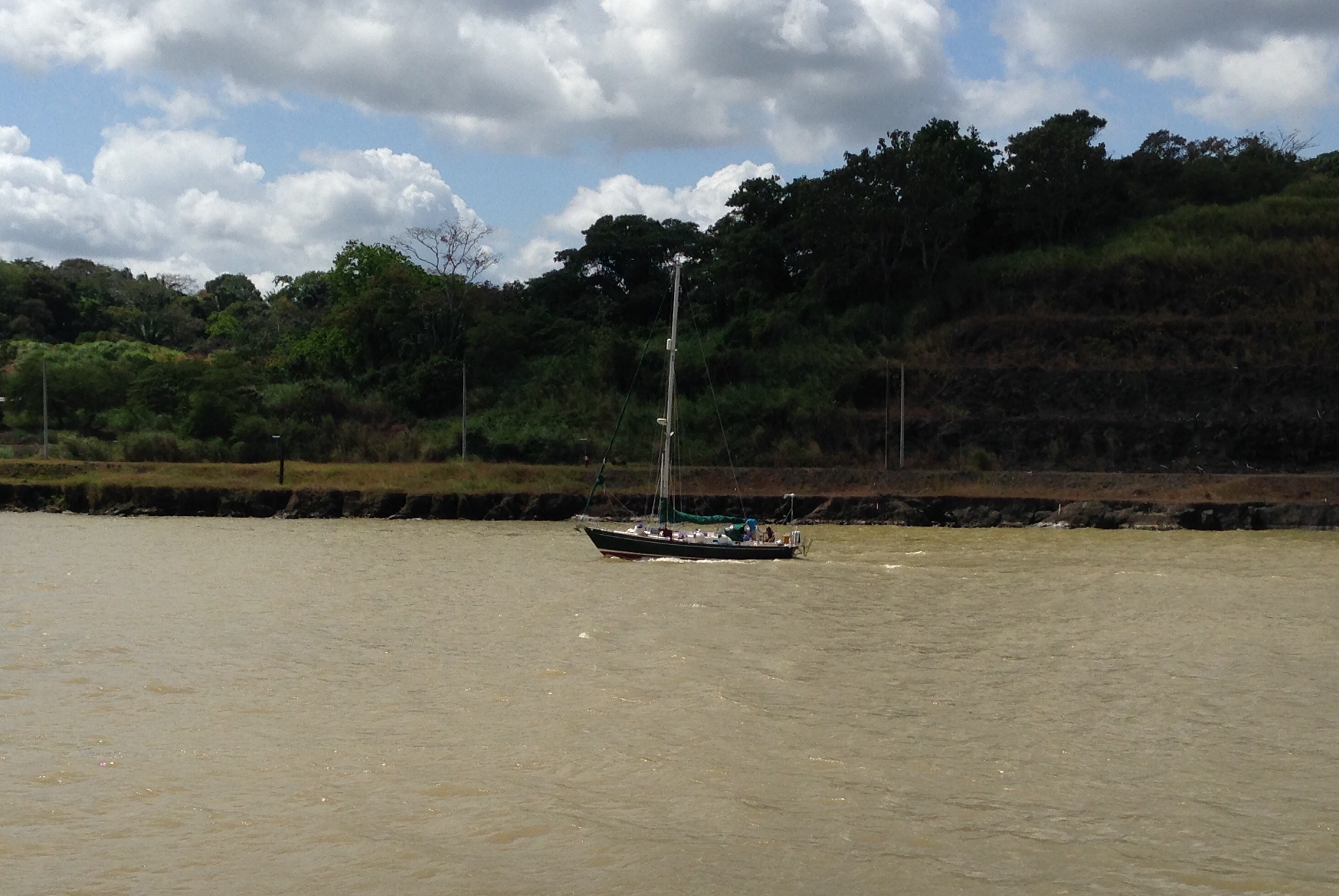
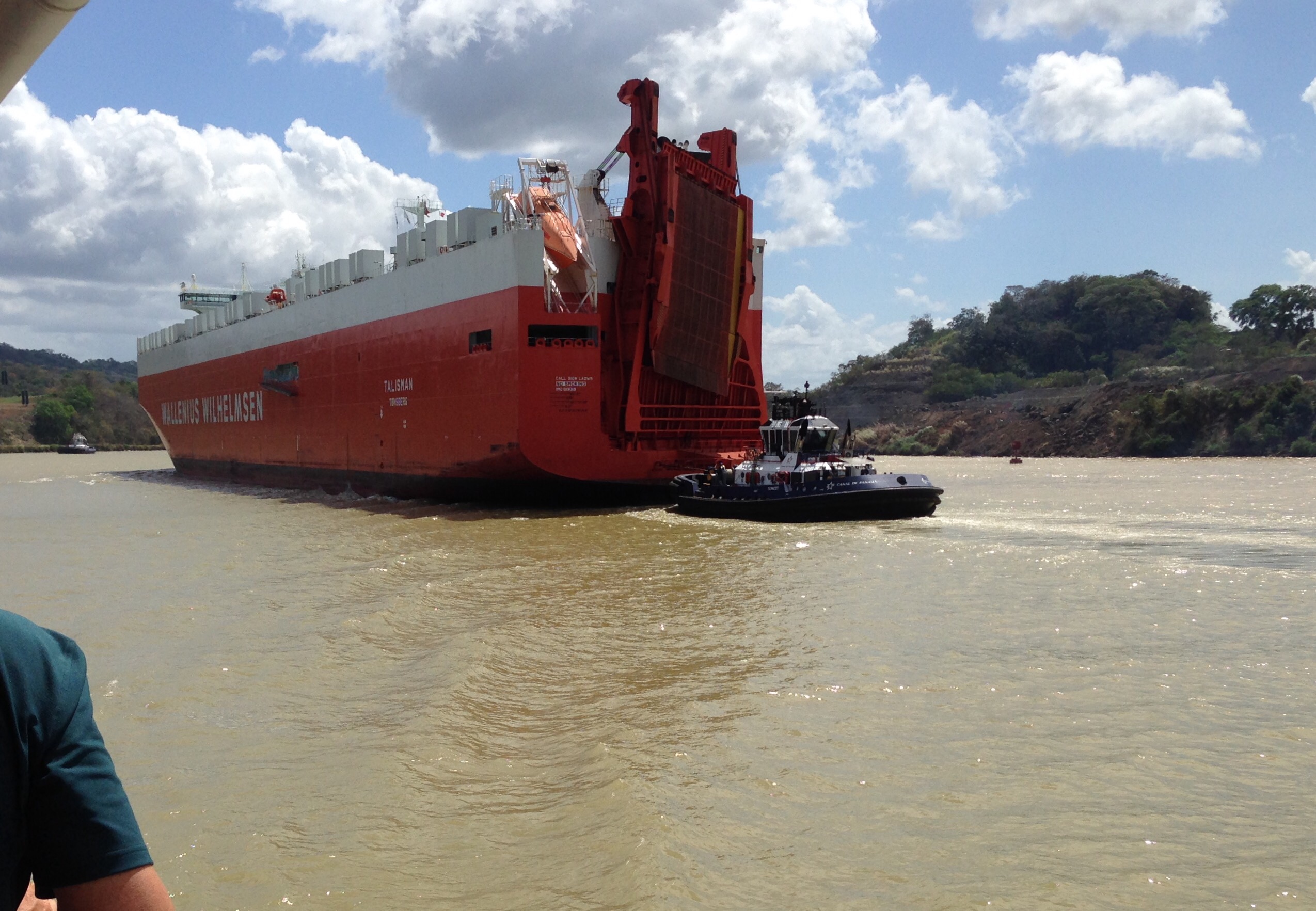
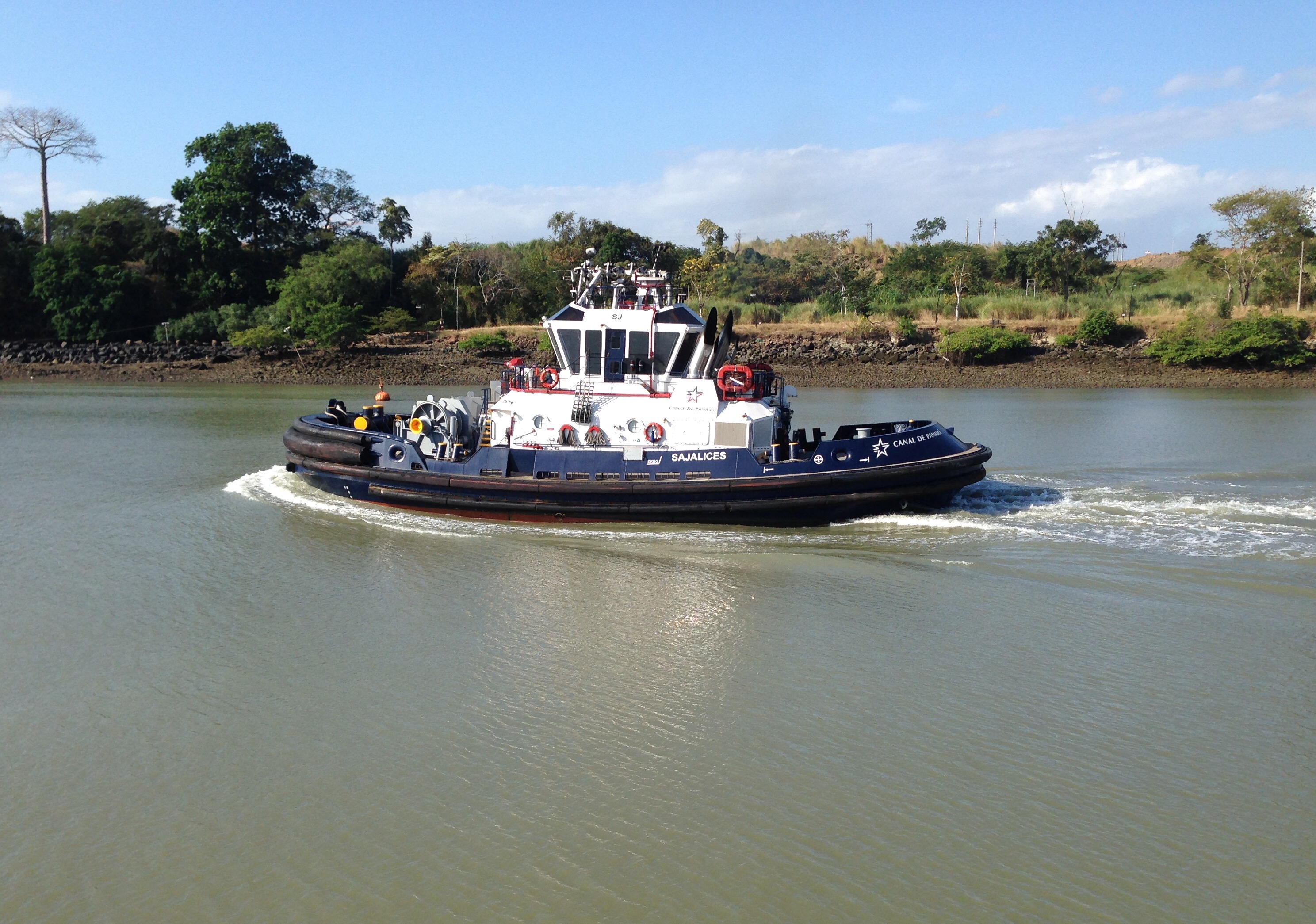
Container terminal with a “post Panama” ship ie too large to fit into the canal. The locks are each 1000 feet long and 110 feet wide. If the ship is smaller more than one vessel will go through together. We are with a cargo ship, a cruising yacht and a tugboat. Any ship over 125 feet long is required to have a tug tied on behind (a kind of mandatory insurance in case of a mishap). It costs the ship $3000 per hour for the tug.

  
Our transit 

 There are currently 2 lanes in use. The red ship is going through the left lane, the blue ship is headed toward the right lane.

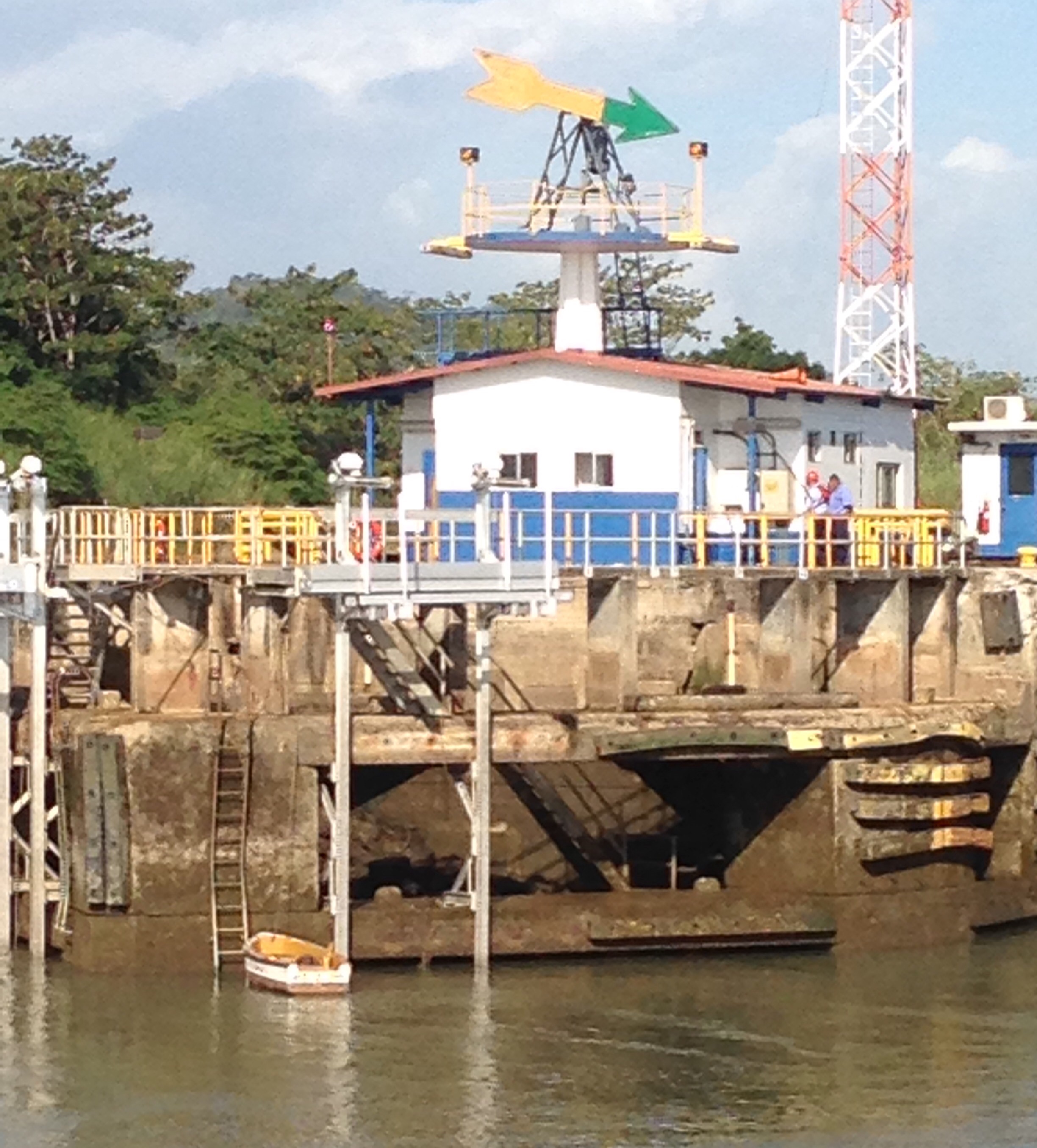
  The canal operates much as it did in 1914 when it was completed. Note the green arrow. When it is pointed to the right your ship goes in the right lane, when it is pointed to the left your ship is to enter the left lane. When it points down do not enter. The rowboat at the bottom of the ladder is used to get the line from the larger ships. 2 guys row out to the incoming ship and the ship throws a line down. The canal is one way during daylight hours when the larger cargo ships go through. In the morning it is inbound to the lake from both sides. In the afternoon it is outbound to both sides. At night it is 2 way. This facilitates the movement of the large ship through the gap from the locks to the lake.
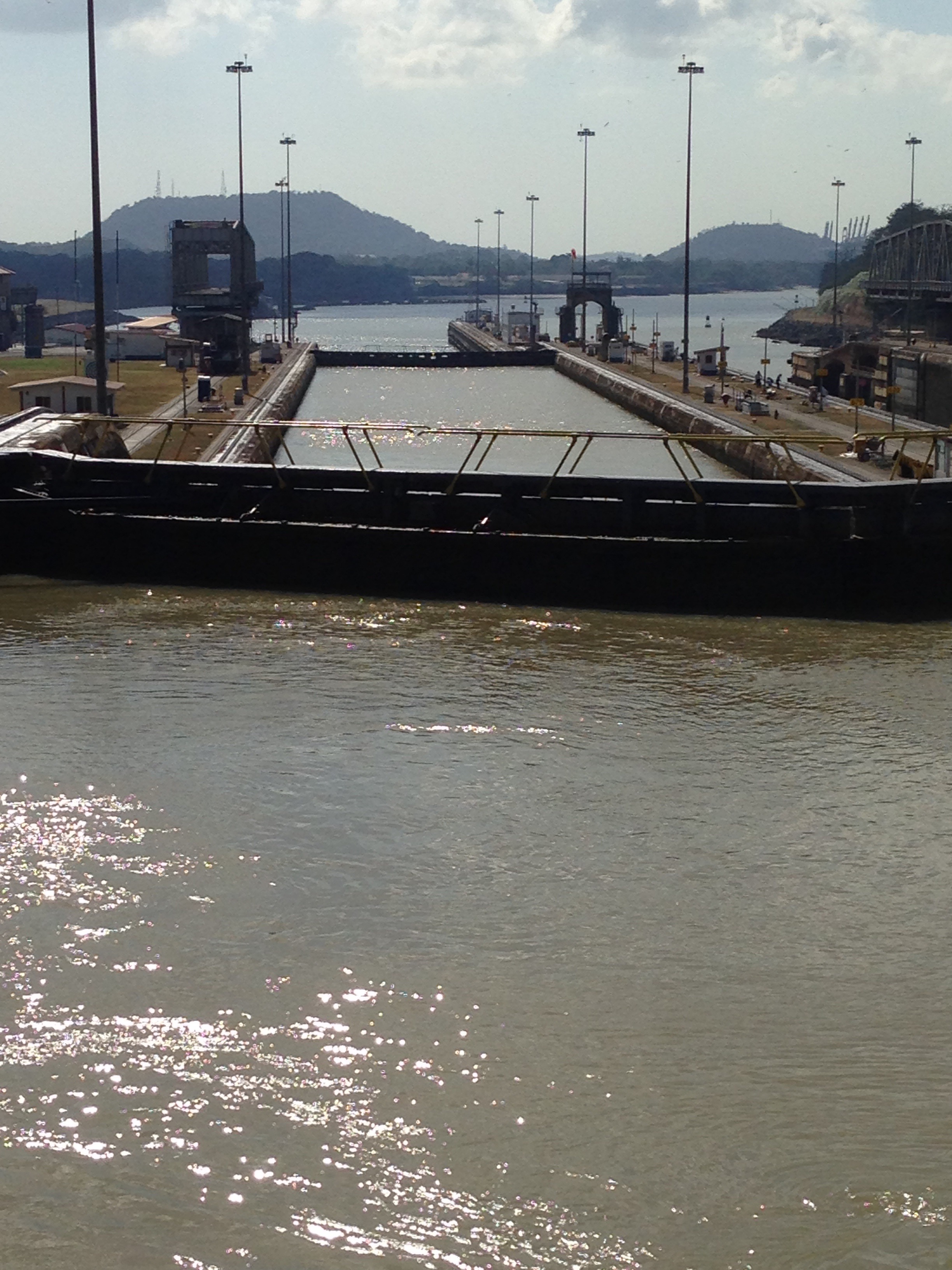
There are 3 steps up from each side to the lake. The lake is 85 feet above sea level. 

  
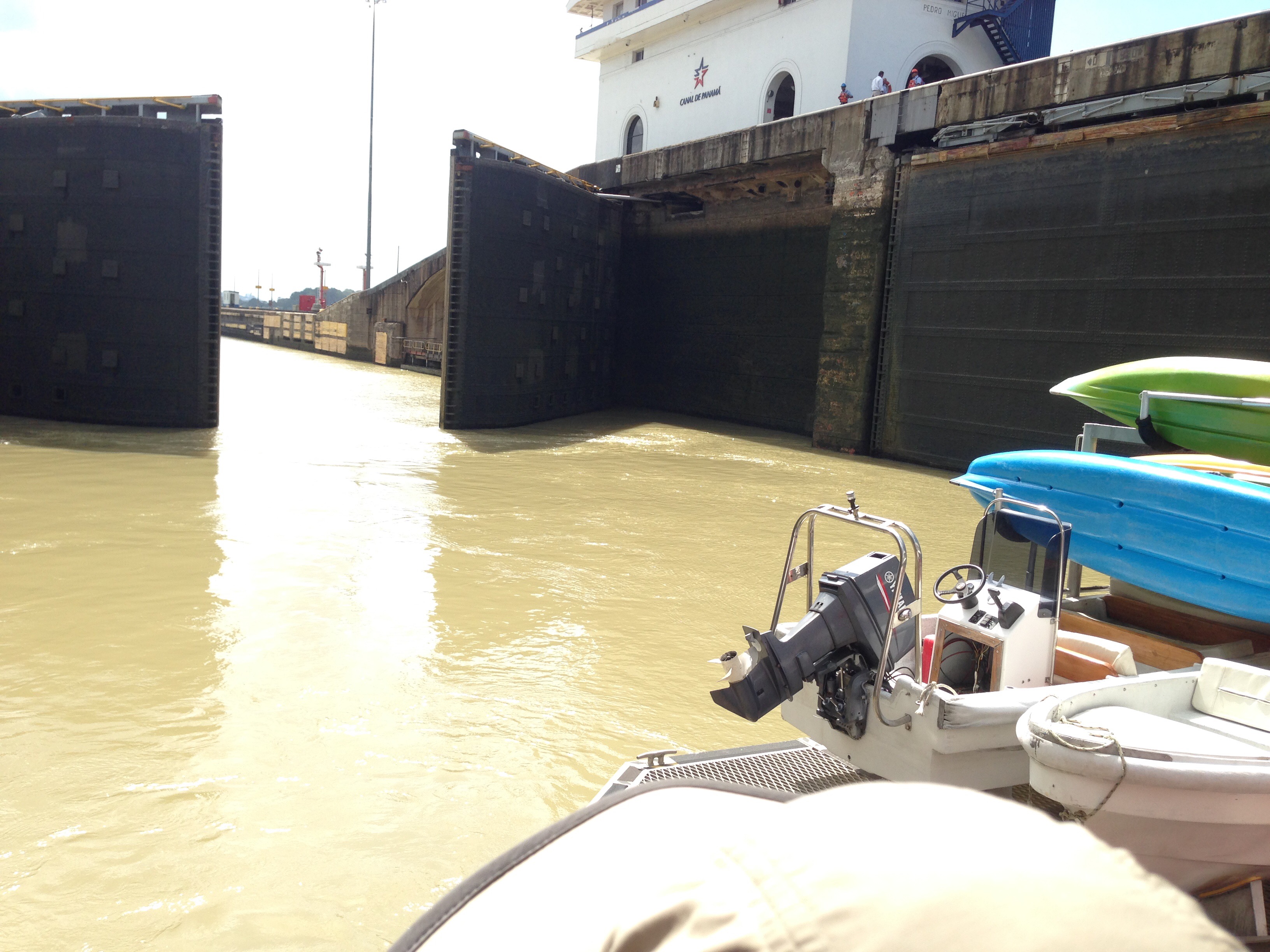
Leaving the second lock. 
    
 
26 million gallons of water fill one lock in 8 minutes. 

The French tried to dig a ditch below sea level to create the canal. However, even though both oceans are at sea level this did not work because of the difference in the tides. The Pacific tides can reach 20 feet while the Atlantic tides are usually around 1 foot. So a ditch would have created a year round white water rafting opportunity but would not have been good for the large ships.
  

Construction on the third lane. This will mean 3 lanes going in one direction at a time. The third lane will be used for the post Panama sized ships – not sure how the arrow will point for this 3rd lane!
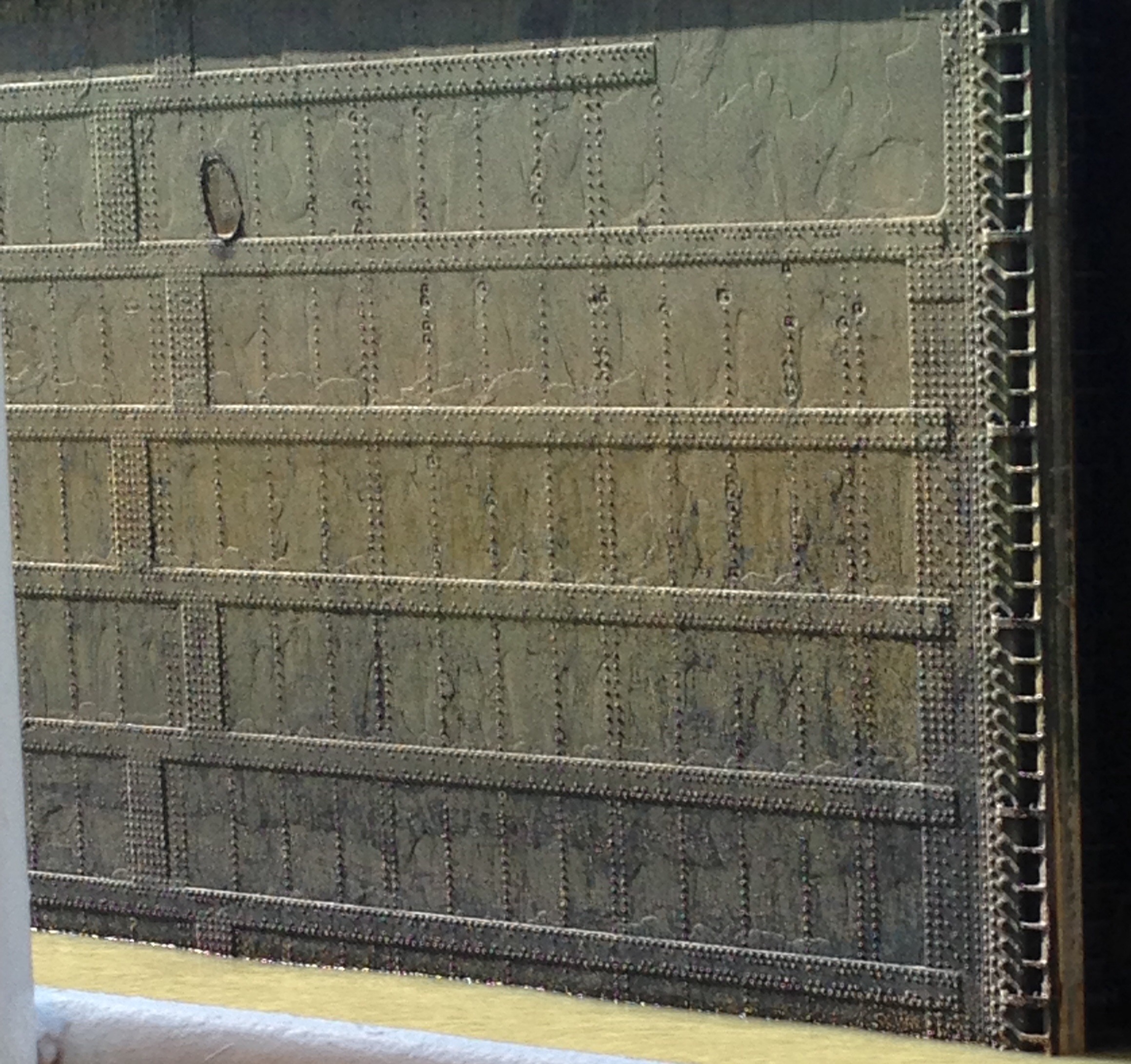
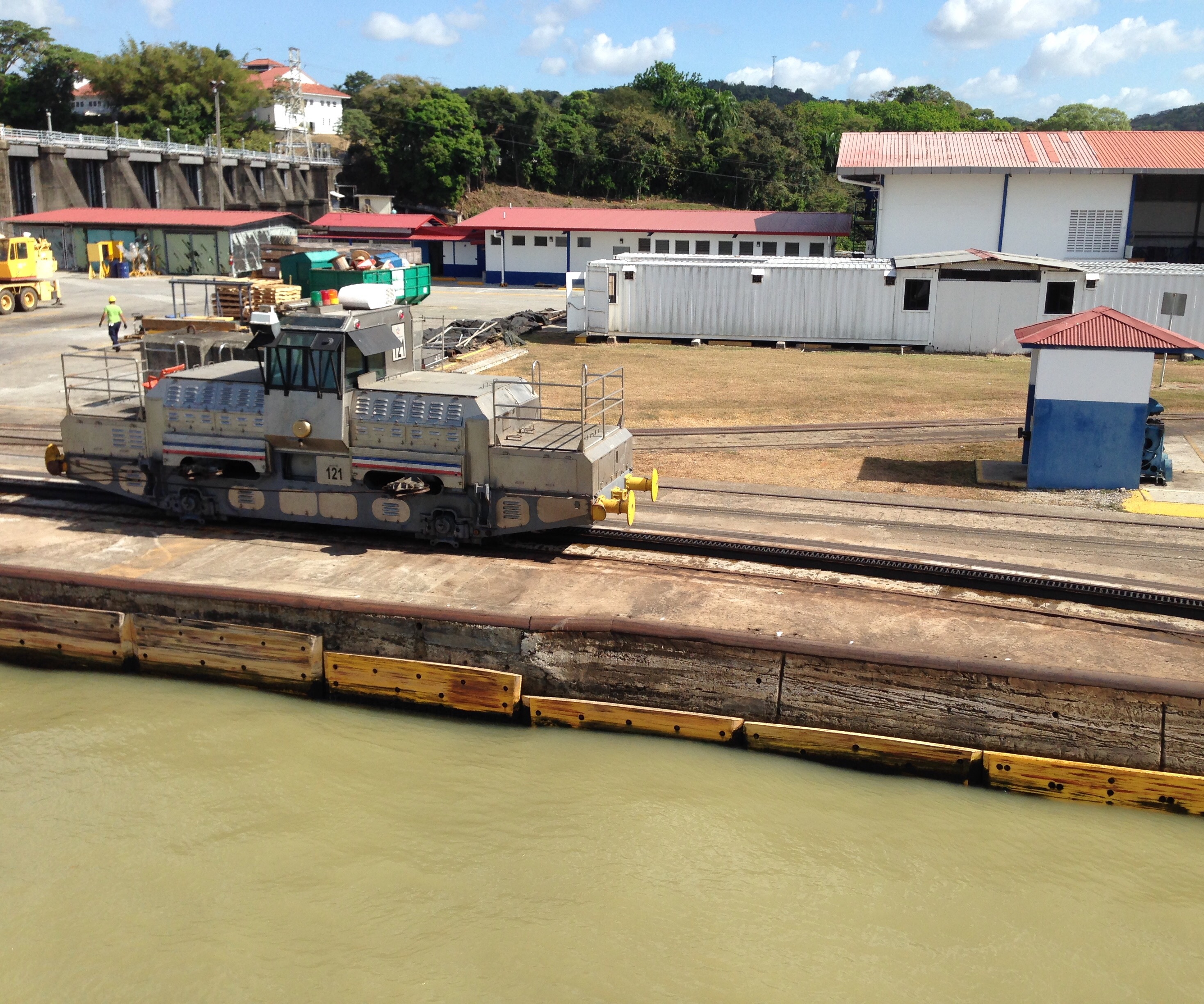
The canal is completely electric and completely self-sufficient. When the lake was created in the middle a hydro electric dam was built and generates all the electricity used. Large ships are attached to “mules” that are electric. While the ships are required to go through under their own power, the mules help to keep them in the centre – this is done to protect both the ship and the walls from damage caused by ships bumping into the walls.


Centennial bridge with a ship passing under.


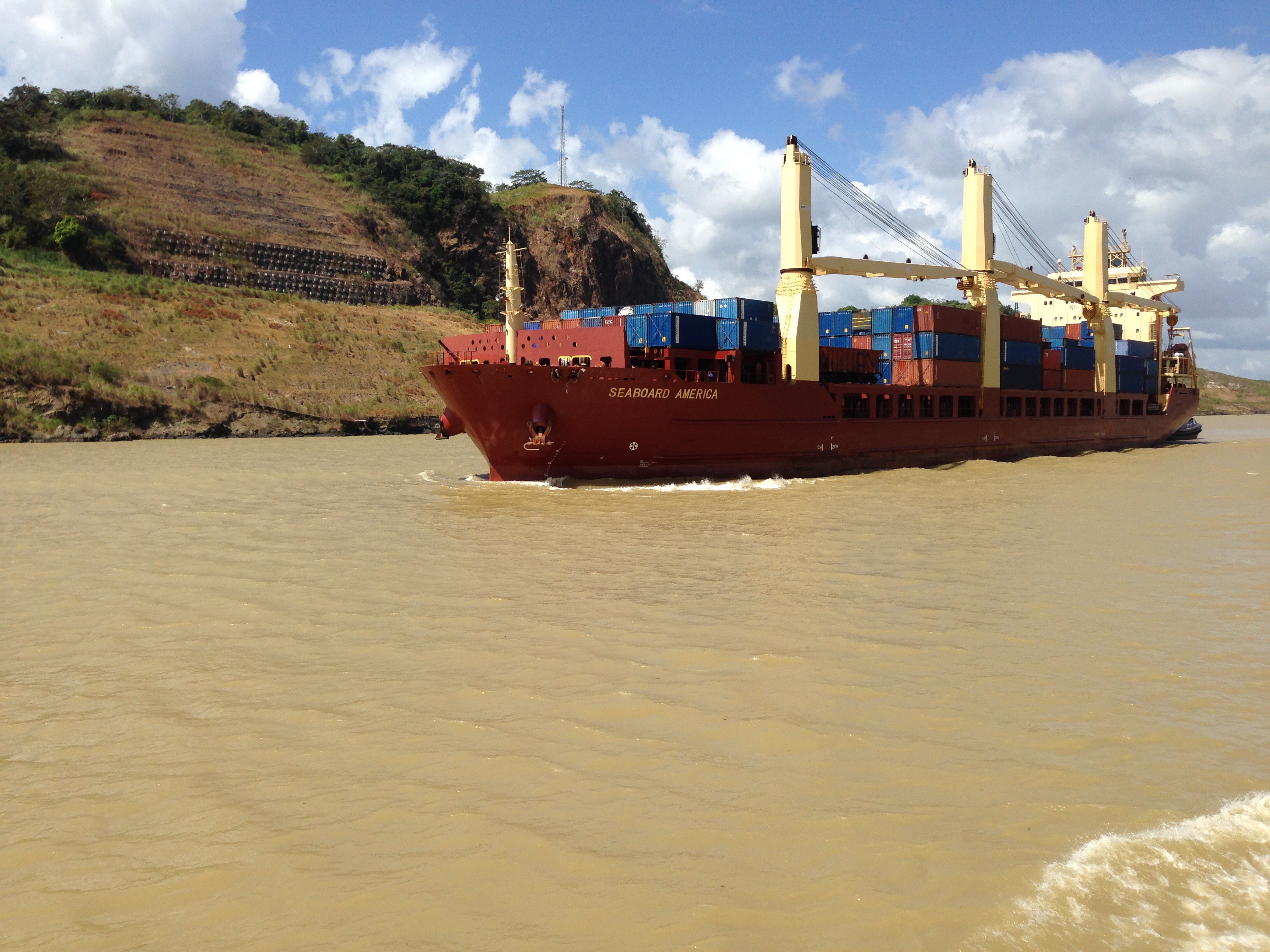
Some of the vessels we passed. One is a car carrier capable of carrying 5900 cars.


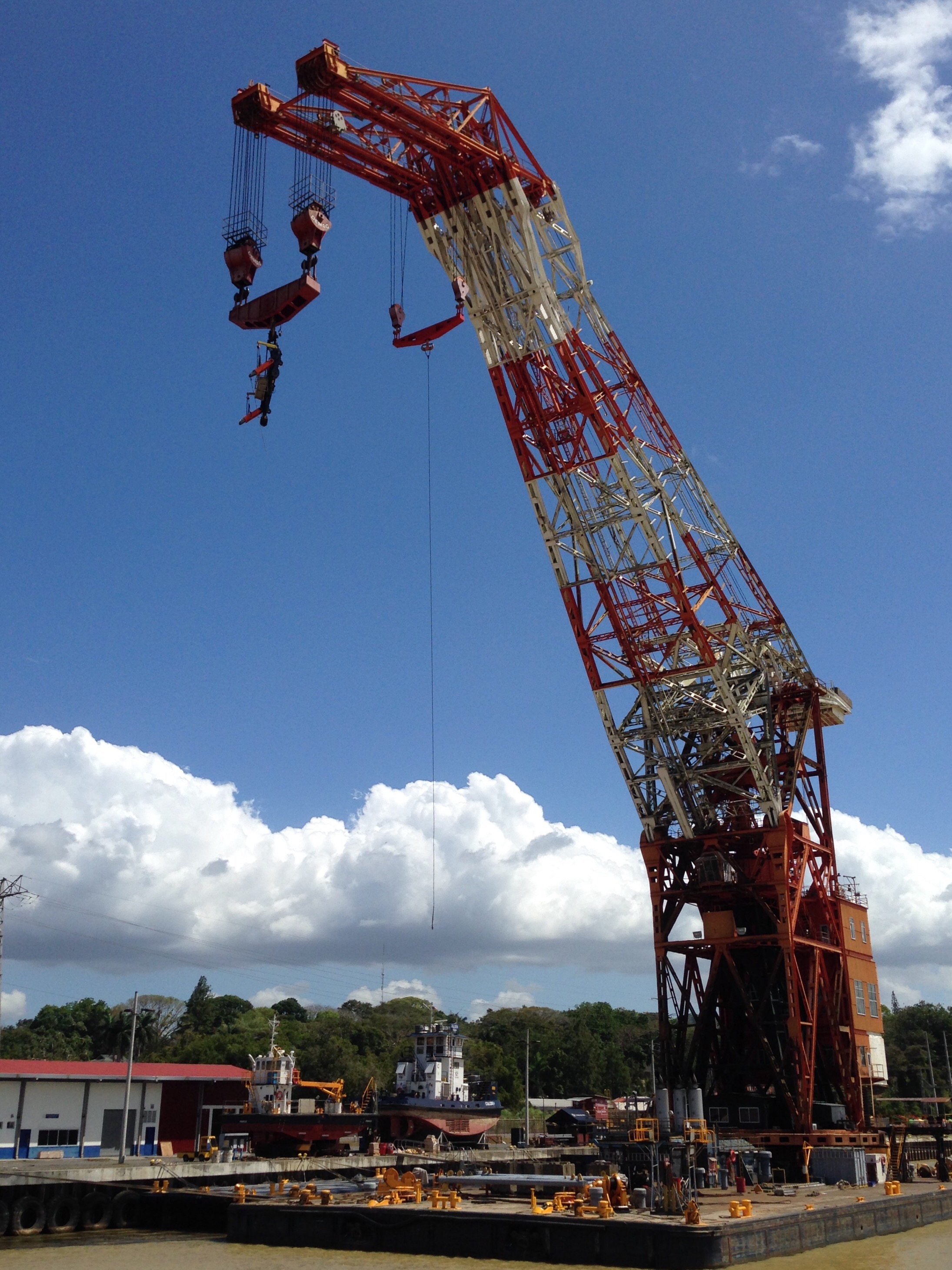
A Titan  crane used to heist the lock gates when repairs are needed. Purchased for $1 but cost $2 million to get it in location.

For many years the USA managed the canal, then in 1999 it was turned over to Panama. While the USA was in charge the area for 5 miles on either side of the canal was USA  land.

  
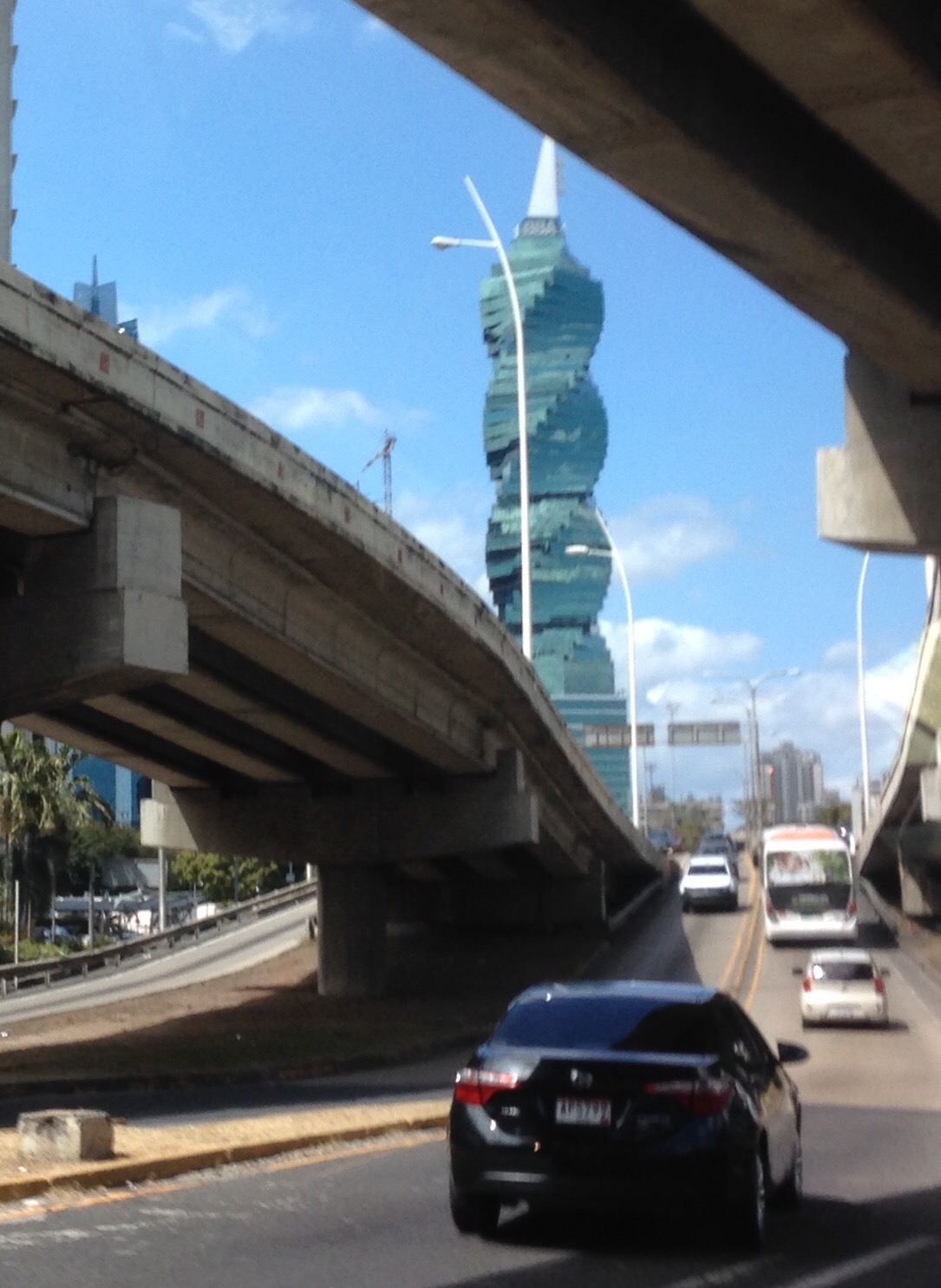
The most talked about building in Panama.

Tomorrow we fly & bus to Monteverde


Posted in Uncategorized | 3 Comments

Portobelo, January 22

  
Yes, I did spell it correctly – only one “L”

We had a private tour to Portobelo, then on to Colon and back to Panama on the train. The highlight of the day was Portobelo. The drive there took about 1.5 hours – along the canal, over the continental divide, through the rain forest to arrive at the Caribbean. So we went from the west coast to the east coast in 1.5 hours. How long would it take to drive from the west coast to the east coast of Canada?

On our way we passed a French cemetery. There was a plaque in front of the cemetery which was a field filled with small white crosses – too many to count. Each cross represents 100 French who died building the canal. The French built the Suez Canal, but it was all at sea level and they couldn’t handle the rocky terrain they found here. So the US took over and completed the canal in 1914.

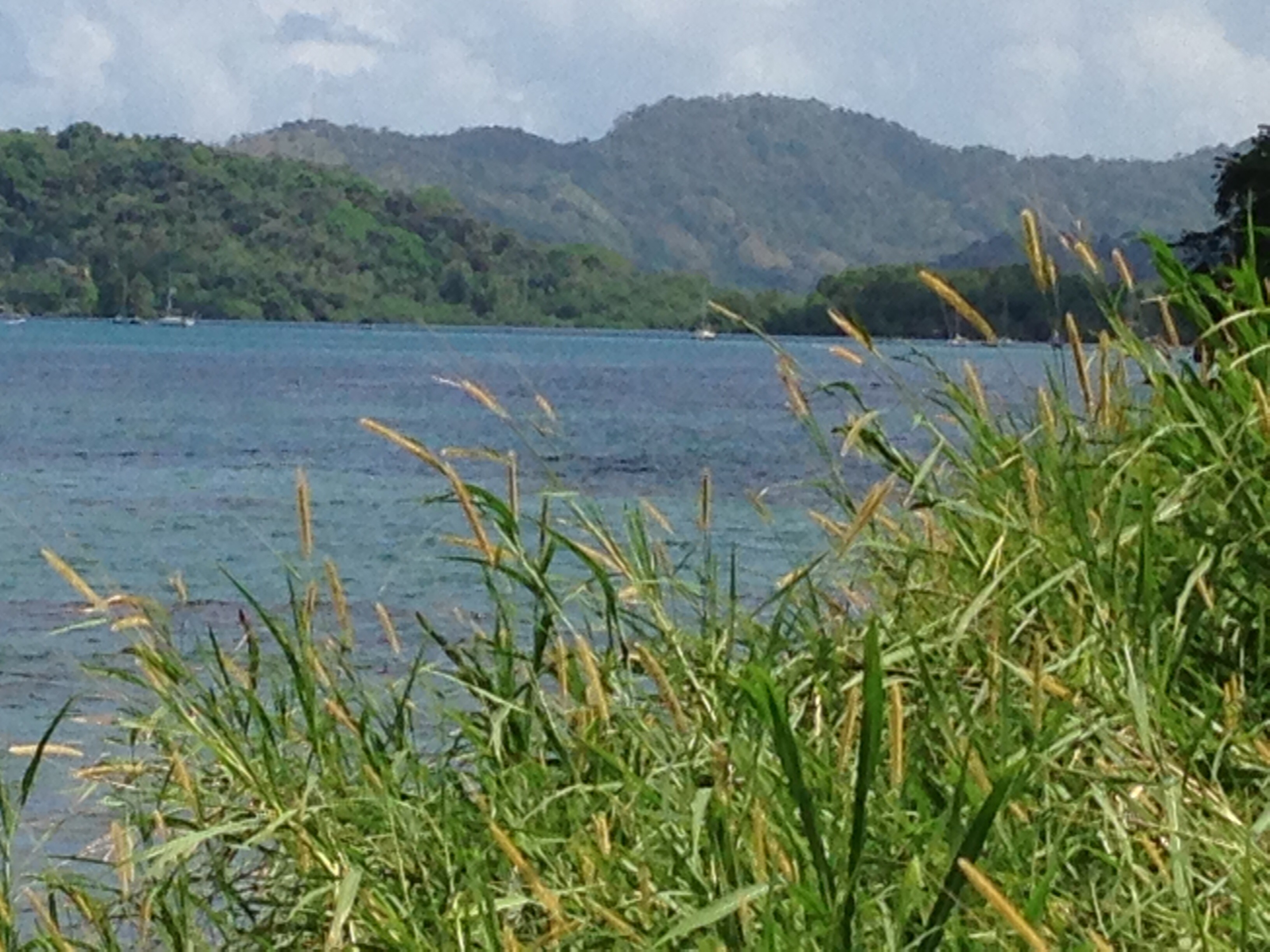
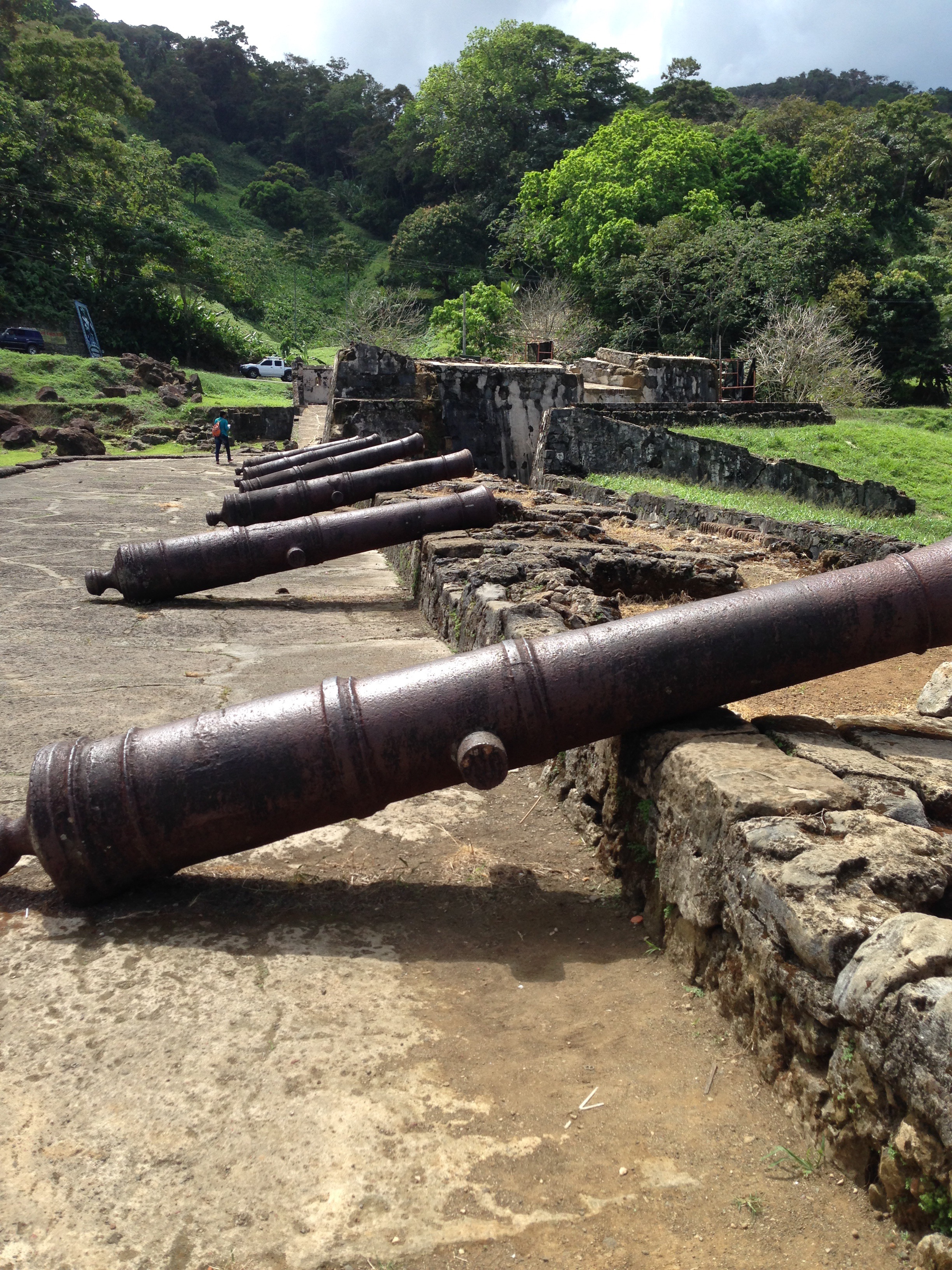
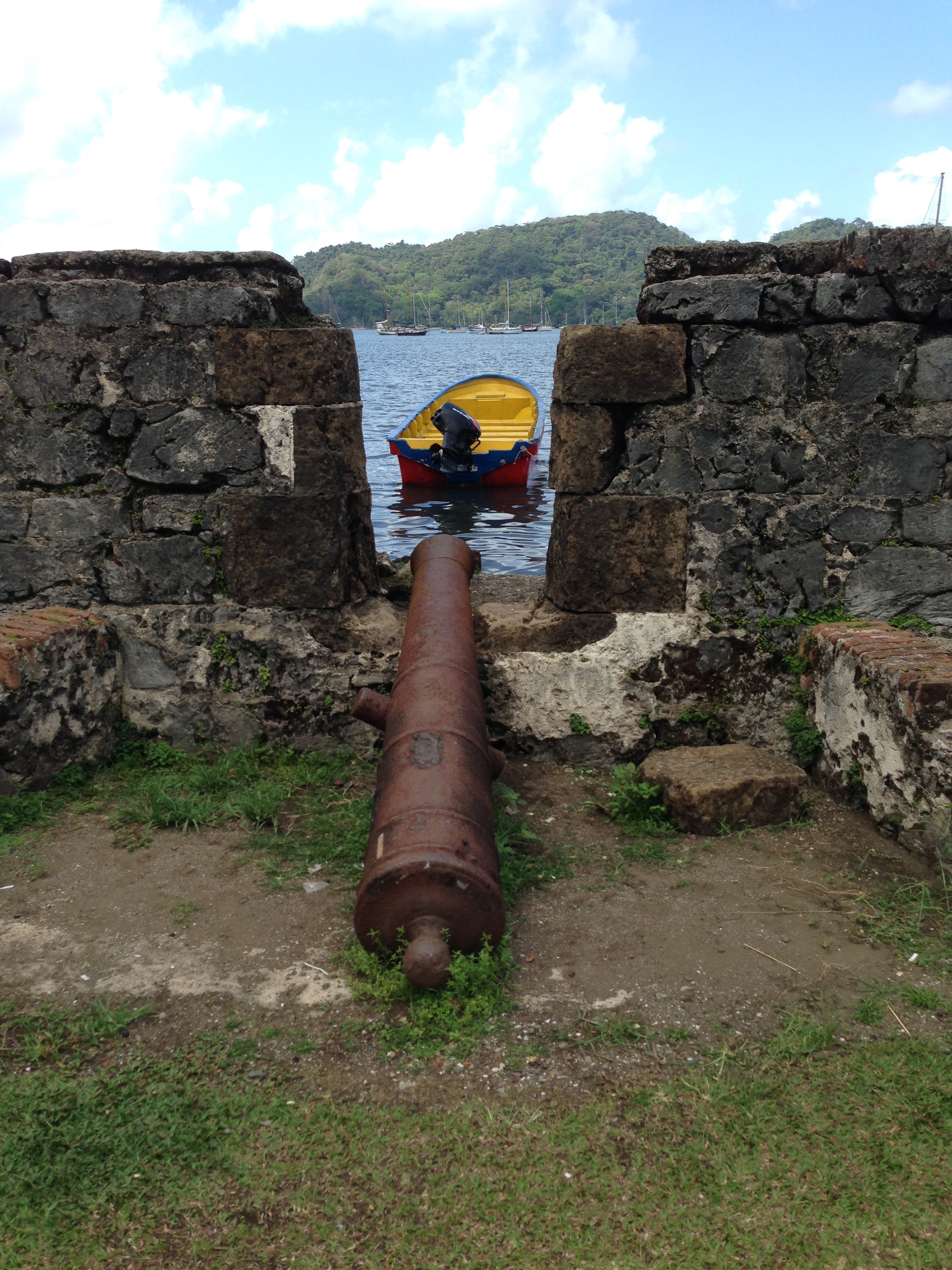
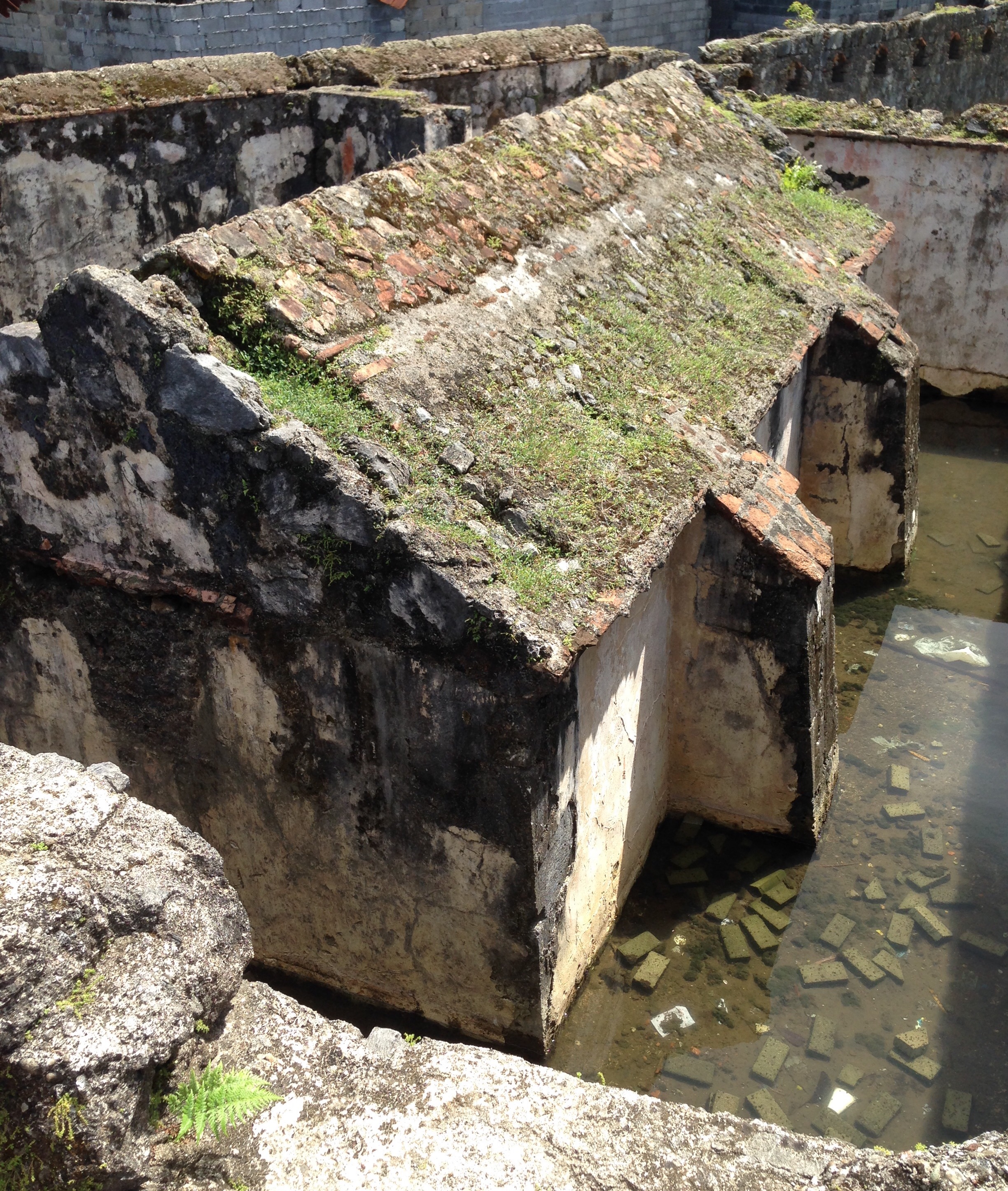
Columbus was the first European to set foot at Portobelo in 1502. Because it was a major trading port and part of the link to the Pacific it was a target for pirates over the years. At one point the port (Portobelo means beautiful port), which is at the end of a long bay, was protected by 3 forts. We visited 2 of the fort remains.


There were 7 separate major pirate attacks on the town. The last by Captain Morgan who took 500 men in over land to attack and destroy the town. The forts were rebuilt in the early 1700s and eventually were left to decline to their current state. A landslide 2 years ago during the rainy season took out one wall of one Fort and a local family’s home nearby.

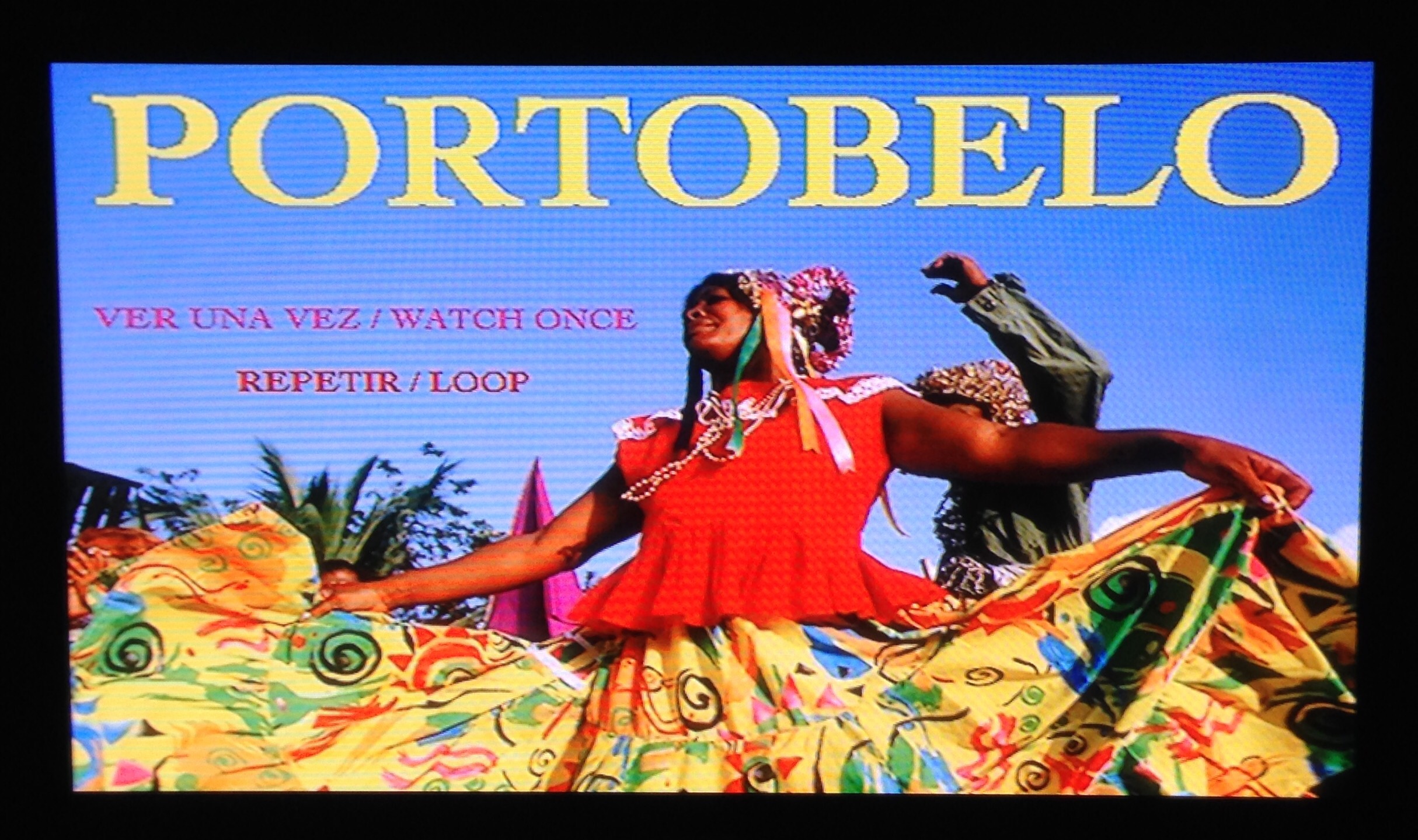
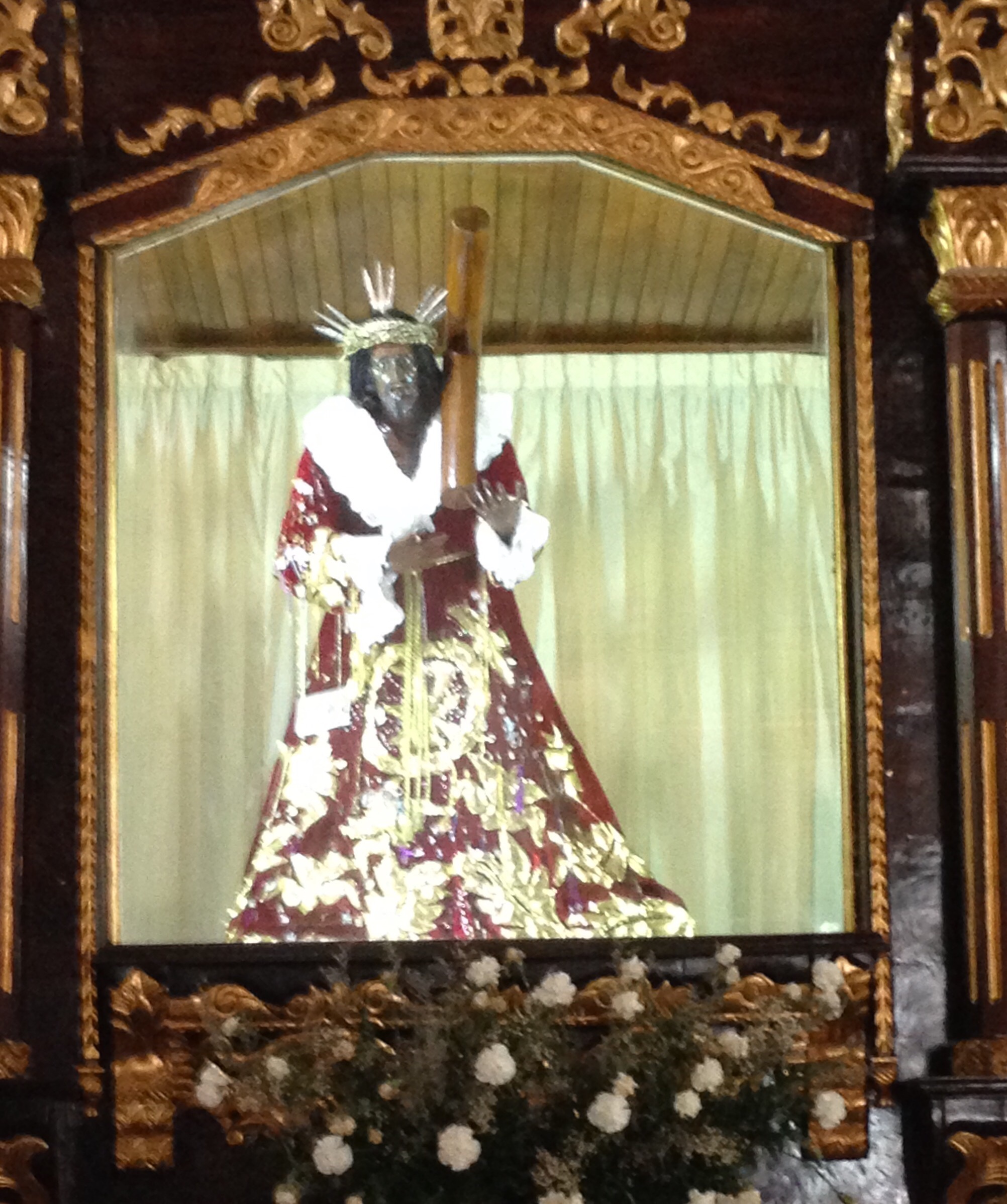
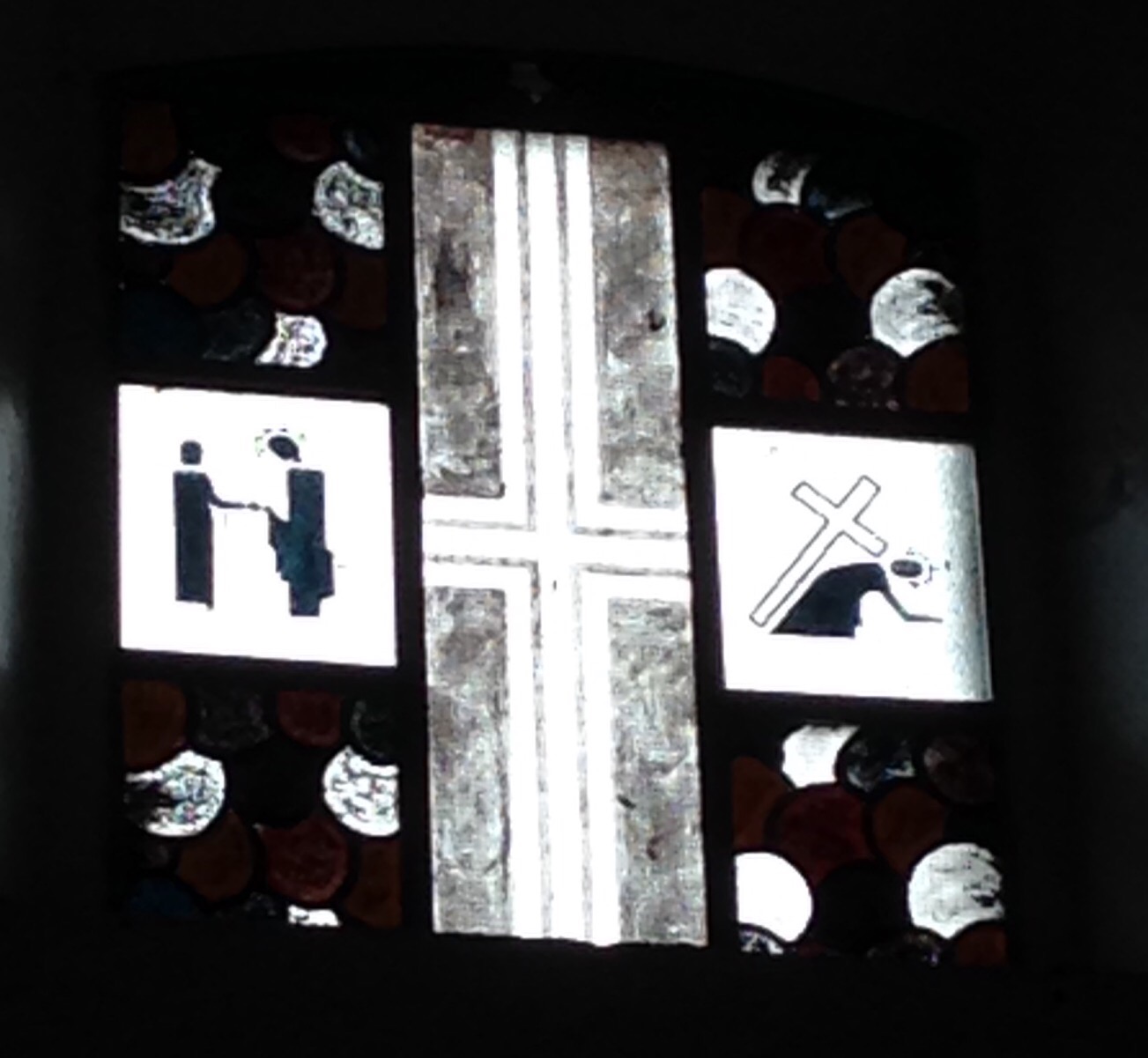
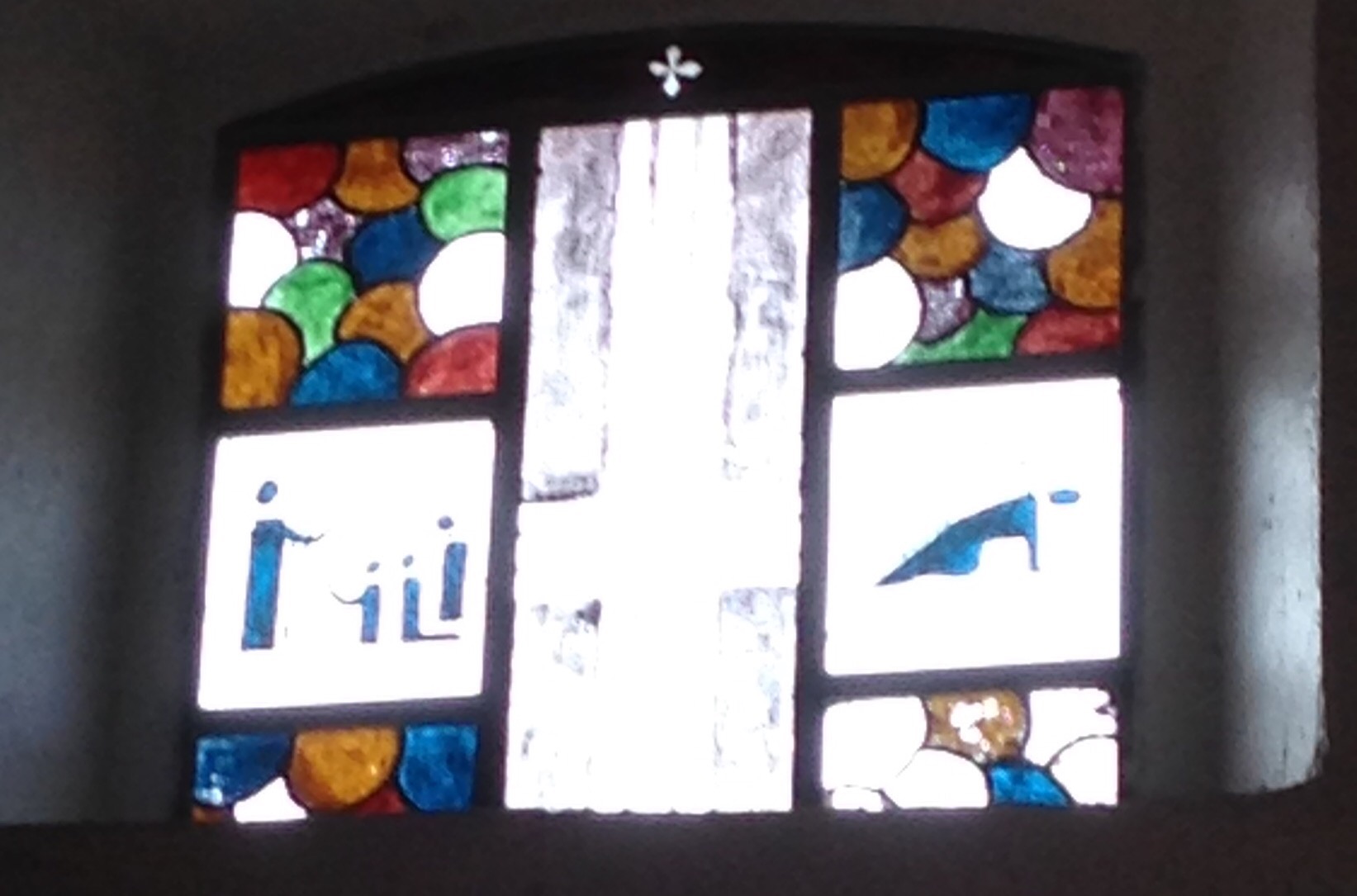
We also visited the restored Customs House & Museum and the local church which is famous for the Black Christ.The Black Christ attracts thousands of pilgrims each October 21 for a ceremony. Pilgrims come in the hope of being healed.  Portobelo is also the location of a major celebration in early February, a Carnival similar to Mardi Gras. The church has some very interesting, different, stained glass. 


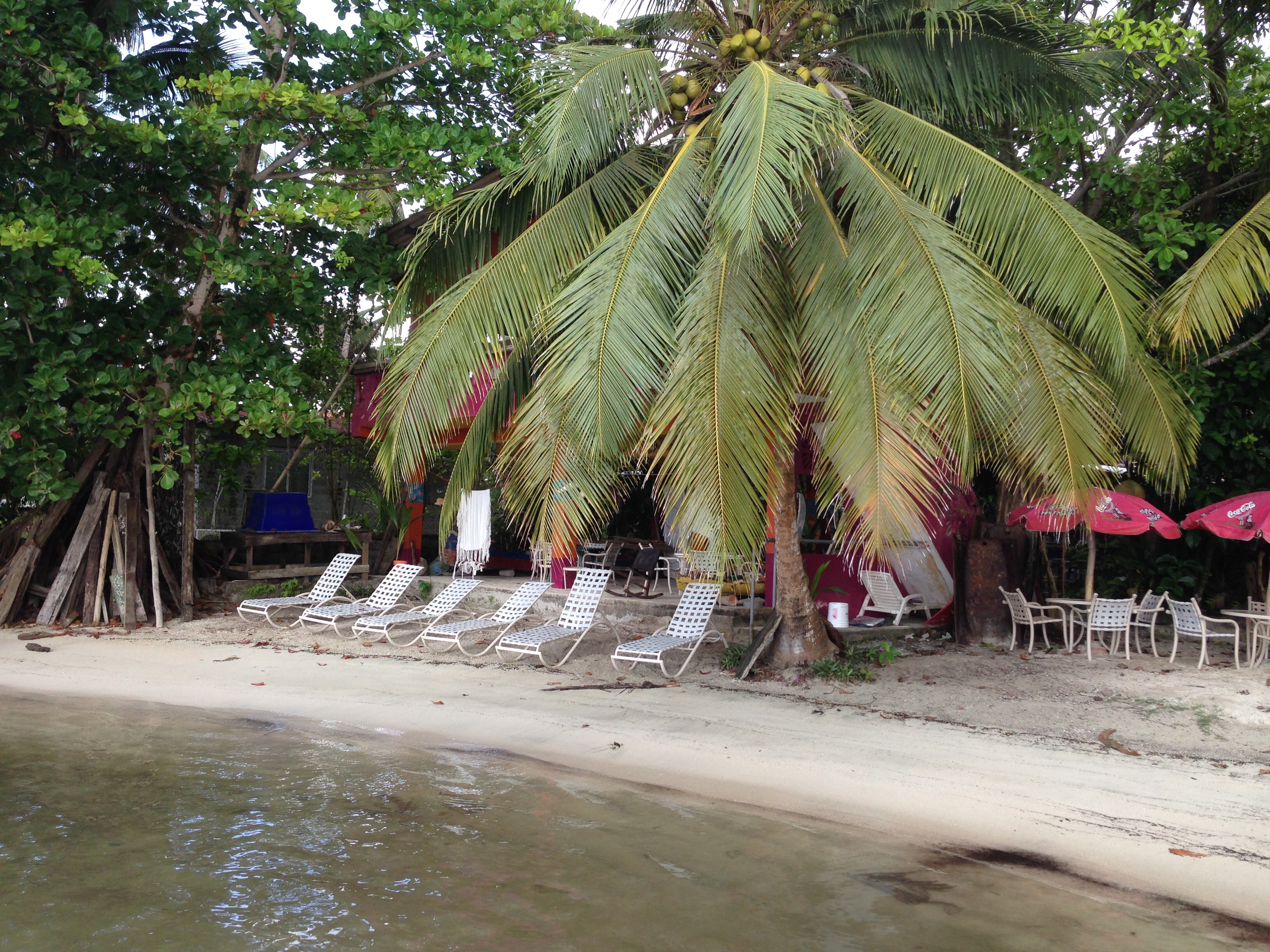
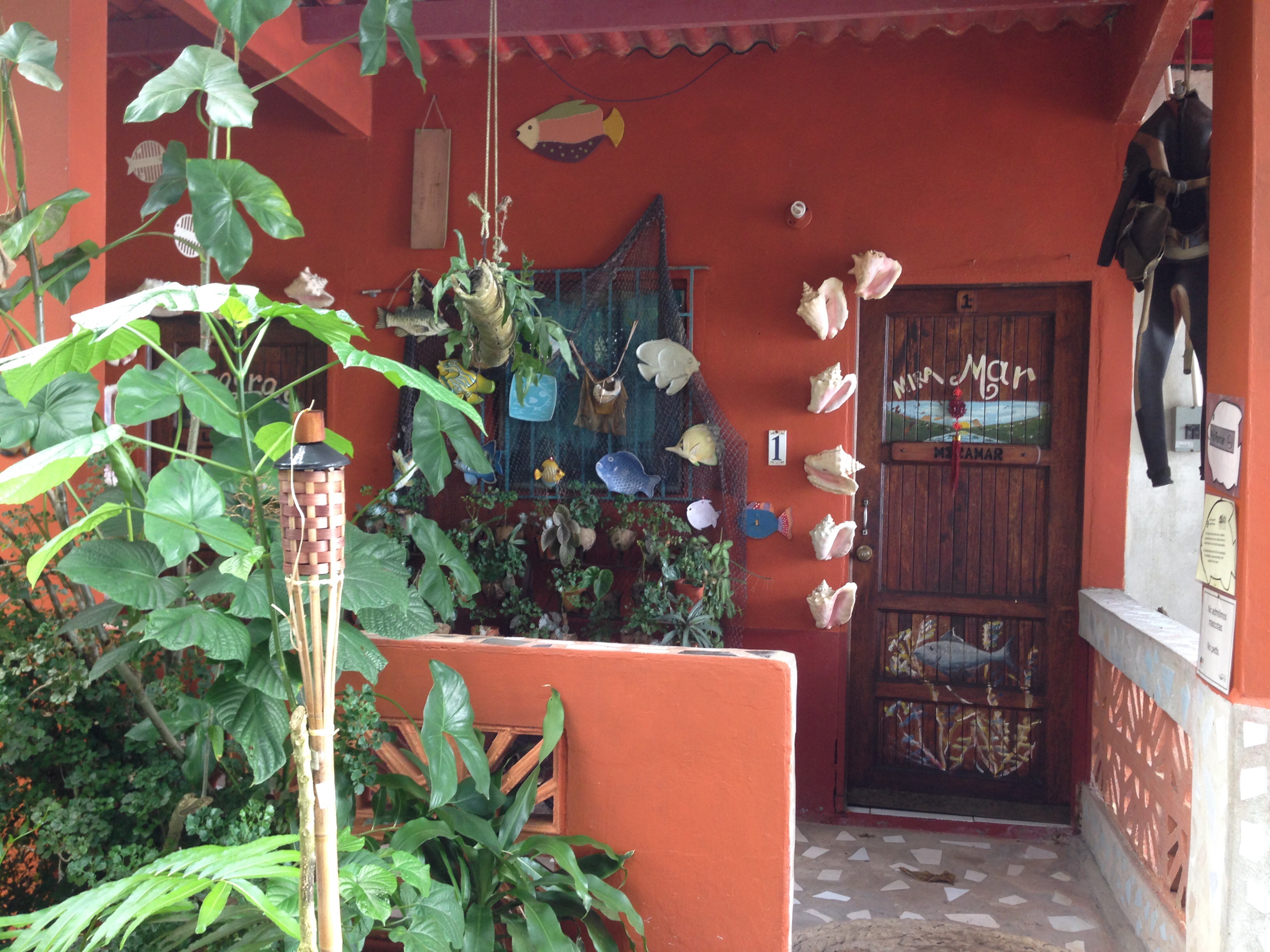
We stopped for lunch at a small cafe on the water. It is part of a small beach resort with interesting decor, a nice beach and a diving program 

    
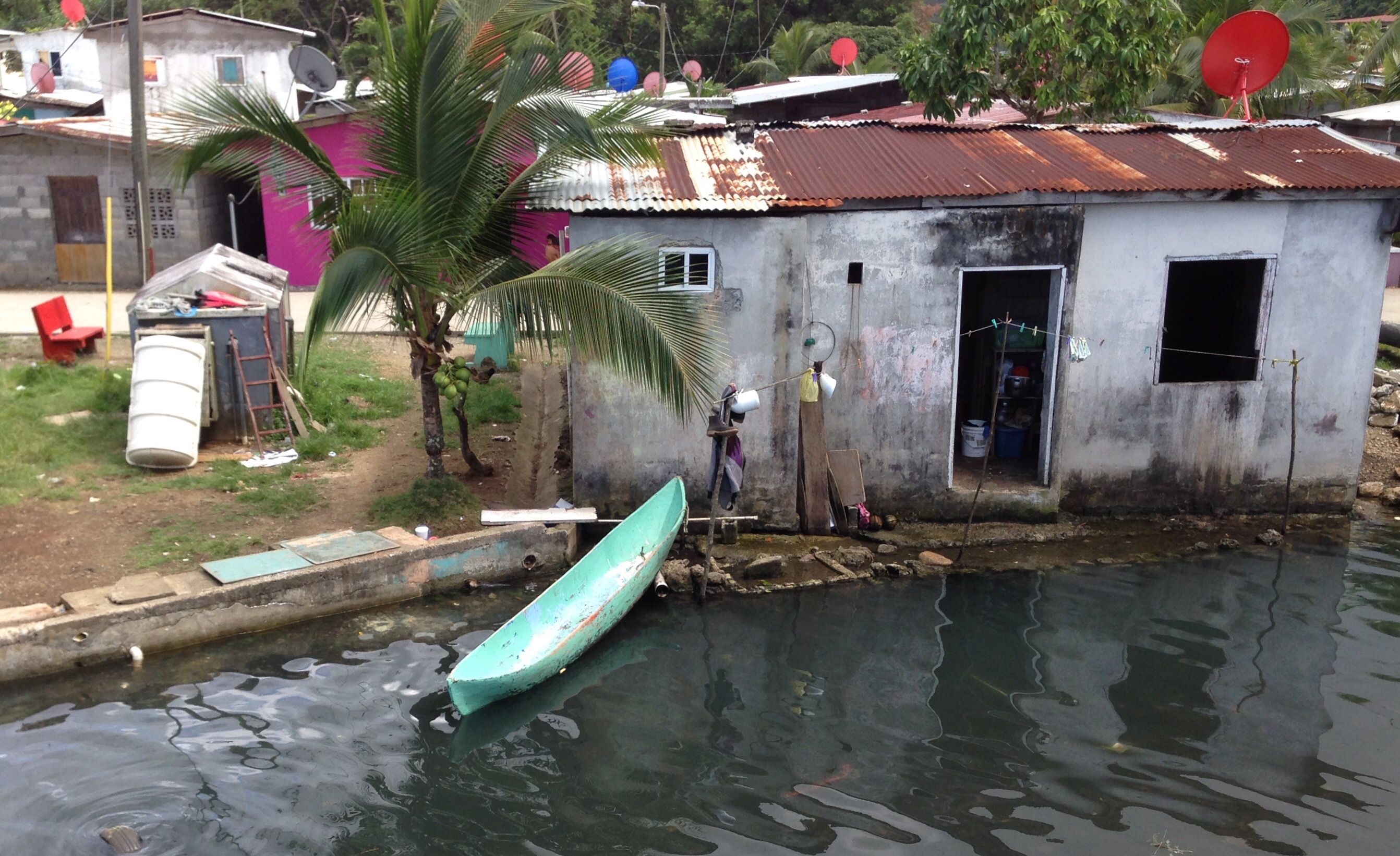
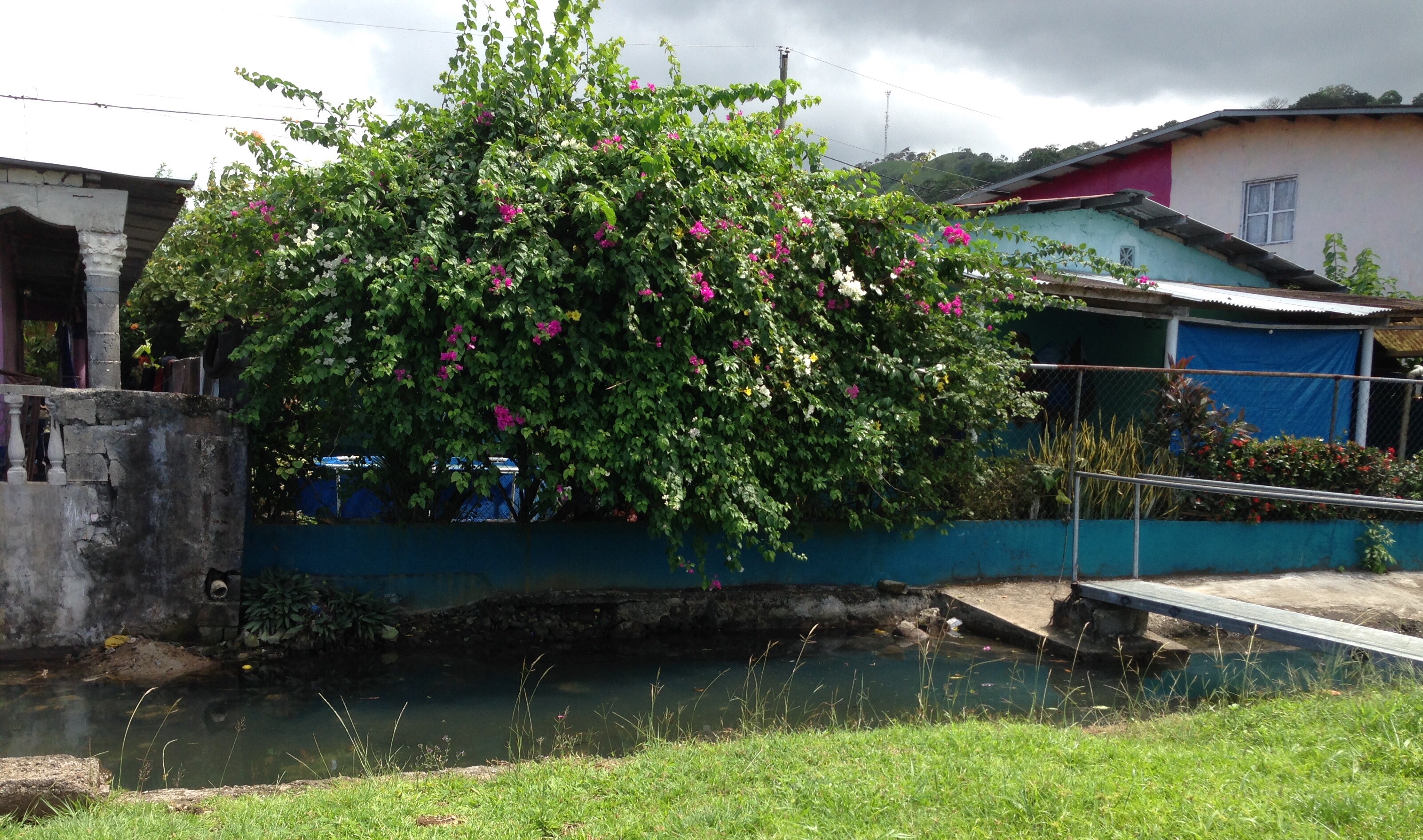
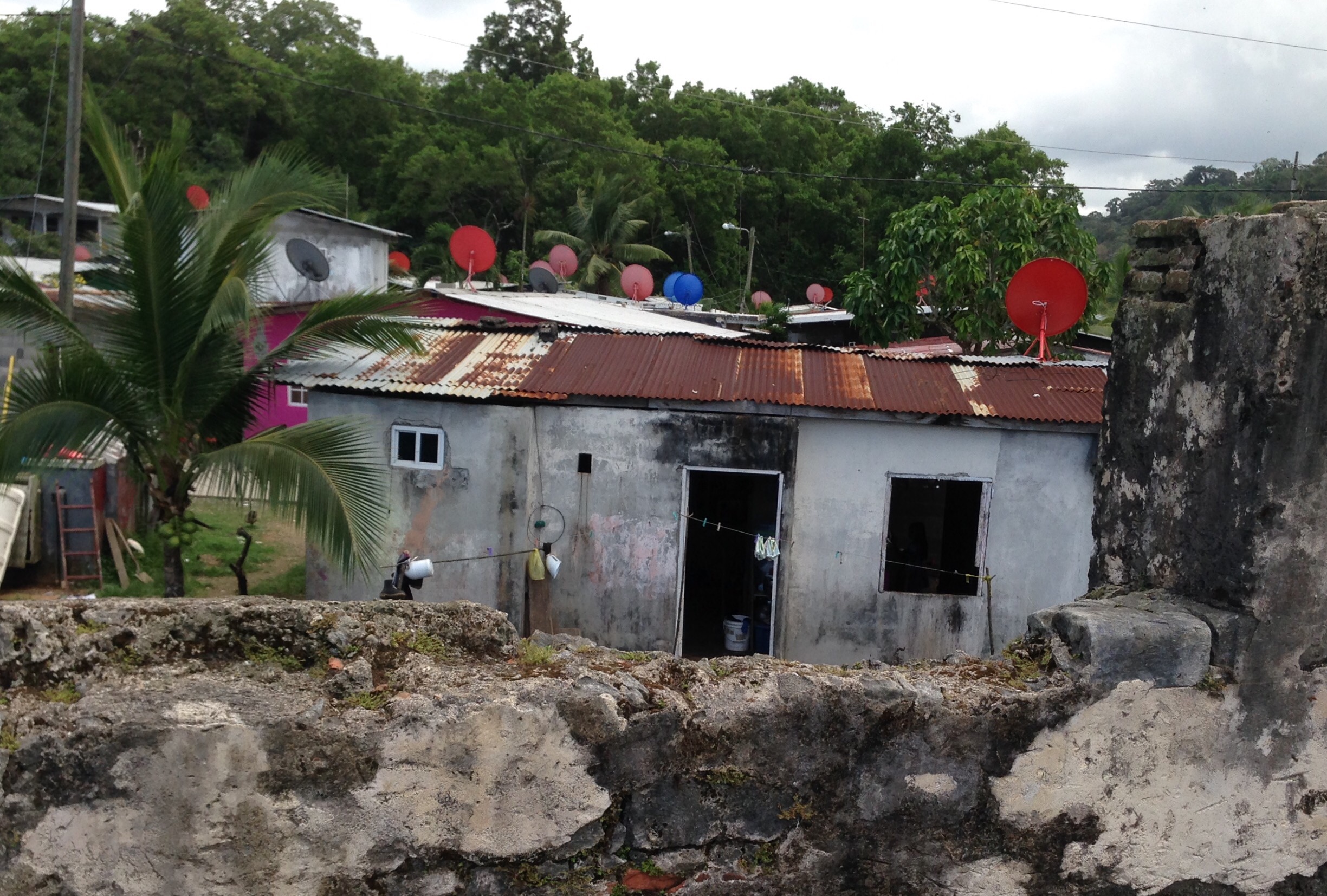
Some thoughts about Panama. There is significant income from the canal yet the country seems poor, based on what we saw. Most housing is concrete block with corricated tin roofs, lots of garbage on the sides of the road. But every house has a  satellite dish (very colourful dishes. Red, green, blue). Some dugout canoes lying by the houses near the water. Colourful houses – like walking down the street in St John’s NFLD, but colour only on the front of the houses. Open markets on the side of the road like what we saw in India. 


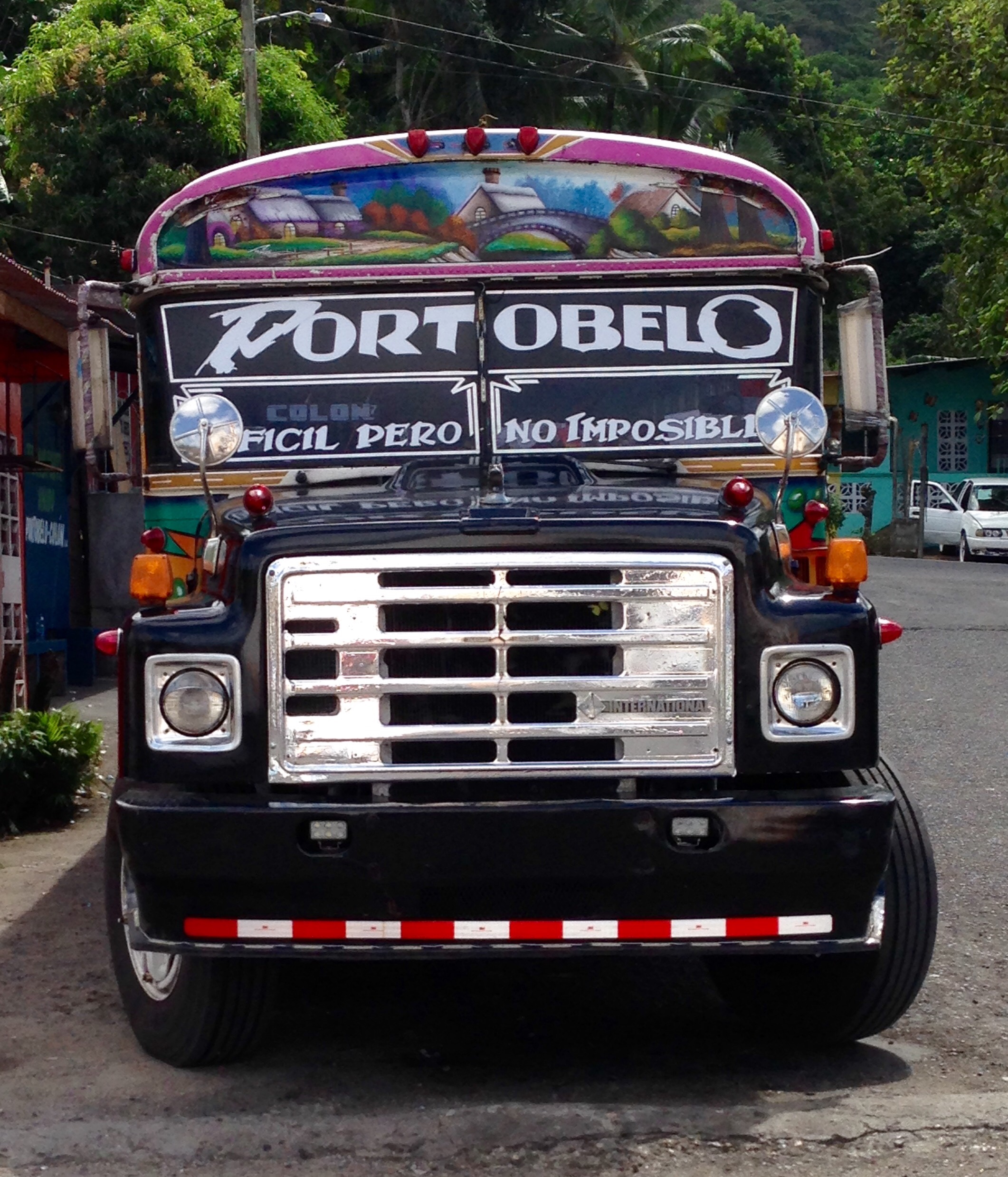
 Very colourful local buses. All privately owned. The owners pay for a bus route, have to maintain the route and schedule. They provide and decorate their own buses – apparently lots of lights and stuff at night. The side are usually painted as well – and no advertising that I saw.

   
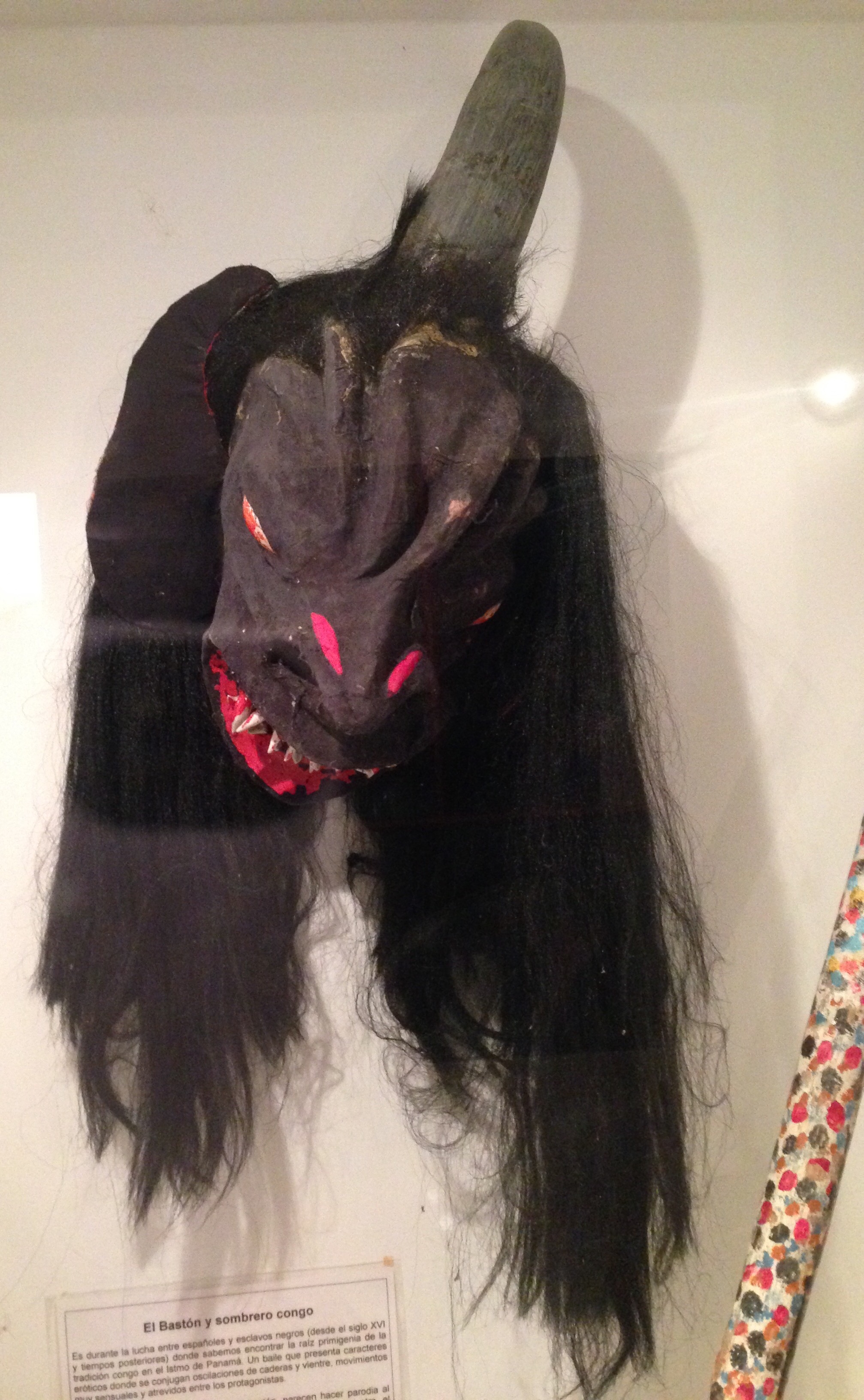
A mask in the Portobelo museum

 
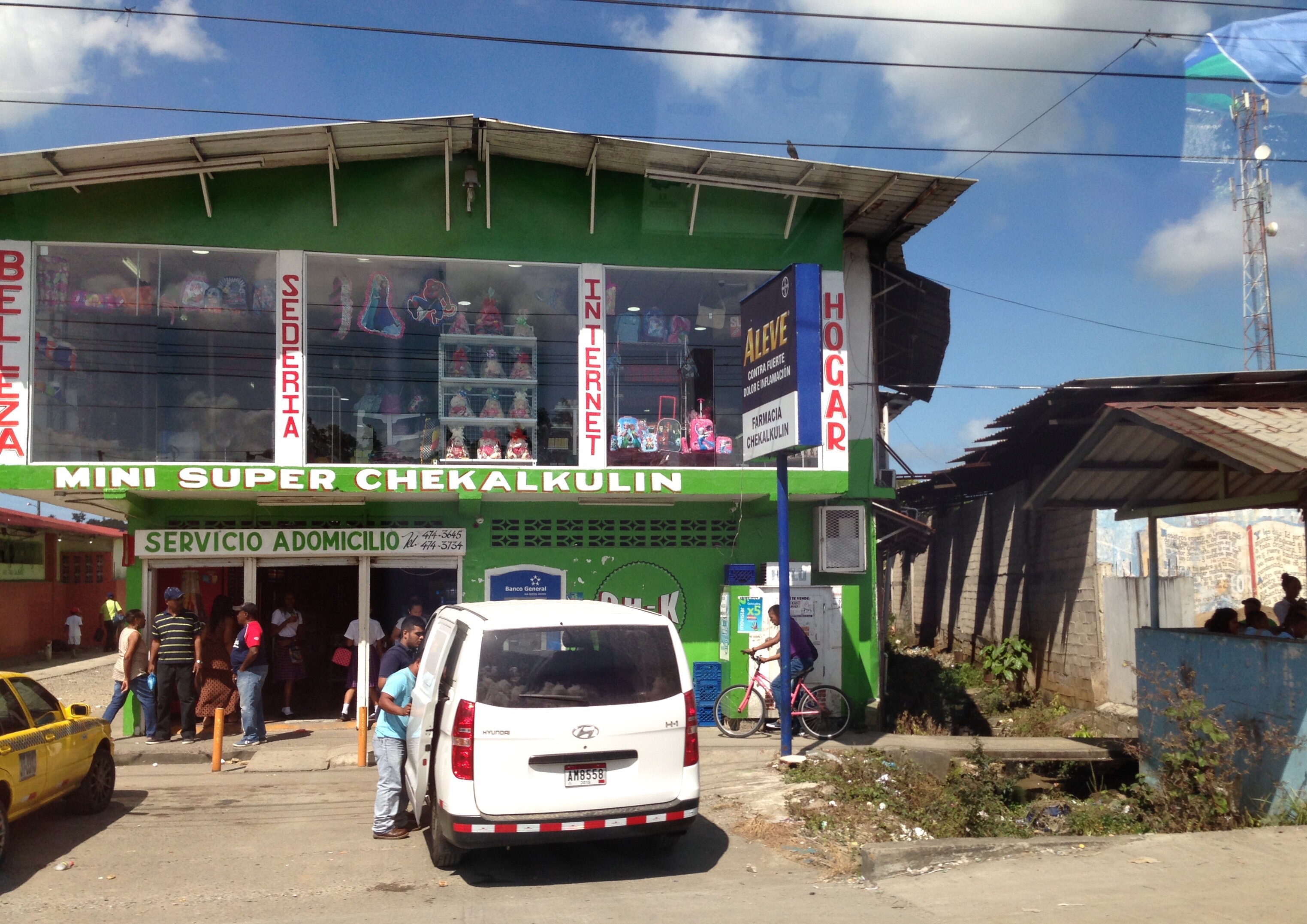
A “super” market. Apparently there are a lot of Chinese opening these kind of stores.
Our drive through the rain forest was interesting in that it was very dry! This is the dry season. But we had rain. It rains every day summer (dry season) and winter (rainy season). The difference is the amount of rain!
Colon is a city of contrasts with very prosperous areas (owners of the Free Zone shopping areas) and the rest of the city which is very run down, our guide was nervous driving through some of the areas near the Cruise ship docks. The train ride back ran beside the canal for part of the way so we had a small look at the canal. Off the coast of Colon (Caribbean side) there were lots of large container ships lined up to enter the canal or on their way out.
Tomorrow we have a partial transit through the canal and meet our guide at 6:00 am so now off to bed.

Rick, all the pictures here were taken by me, using my iPhone. Pat

Posted in Uncategorized | 2 Comments

Jan. 21 flight & Panama


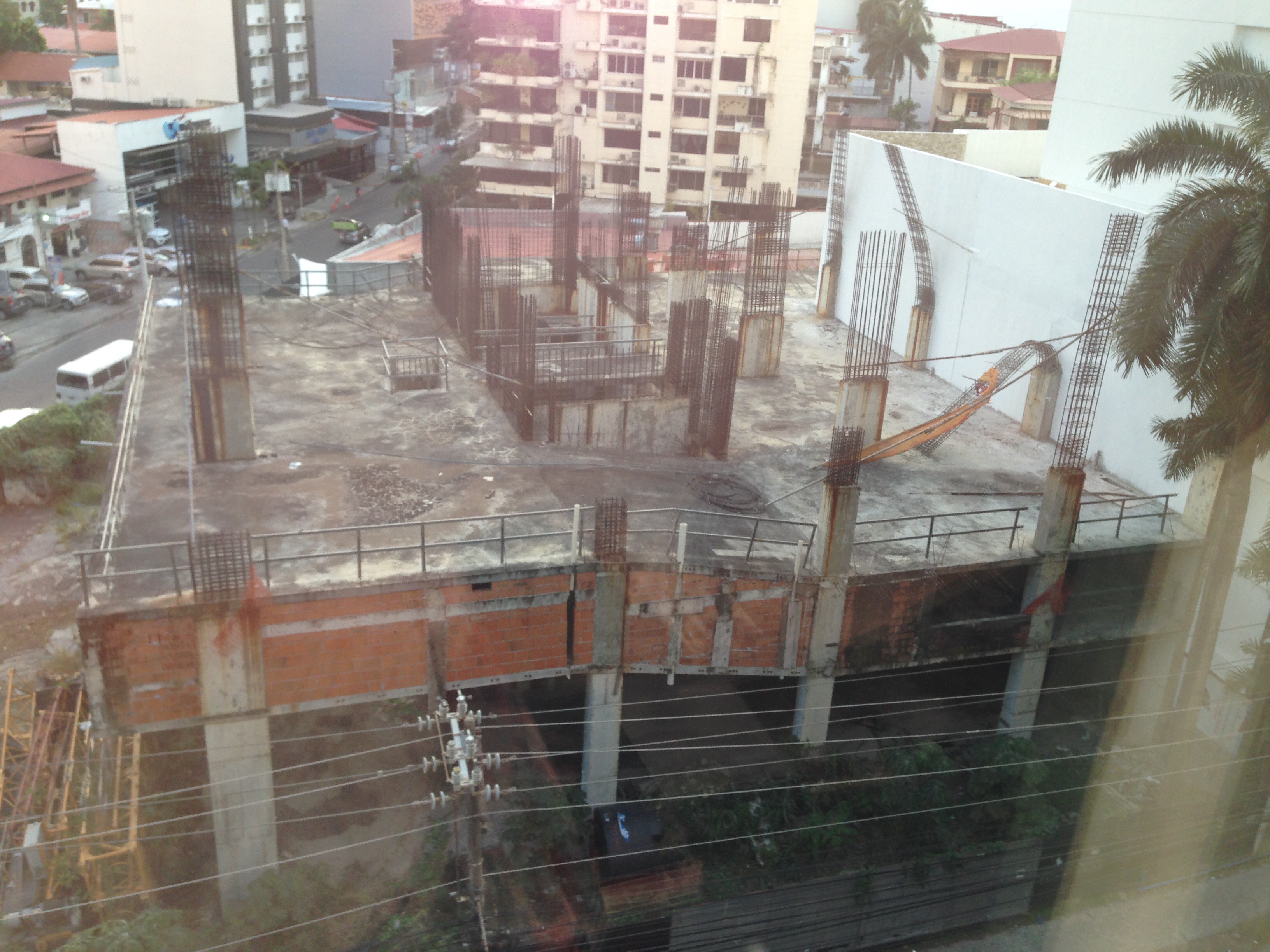
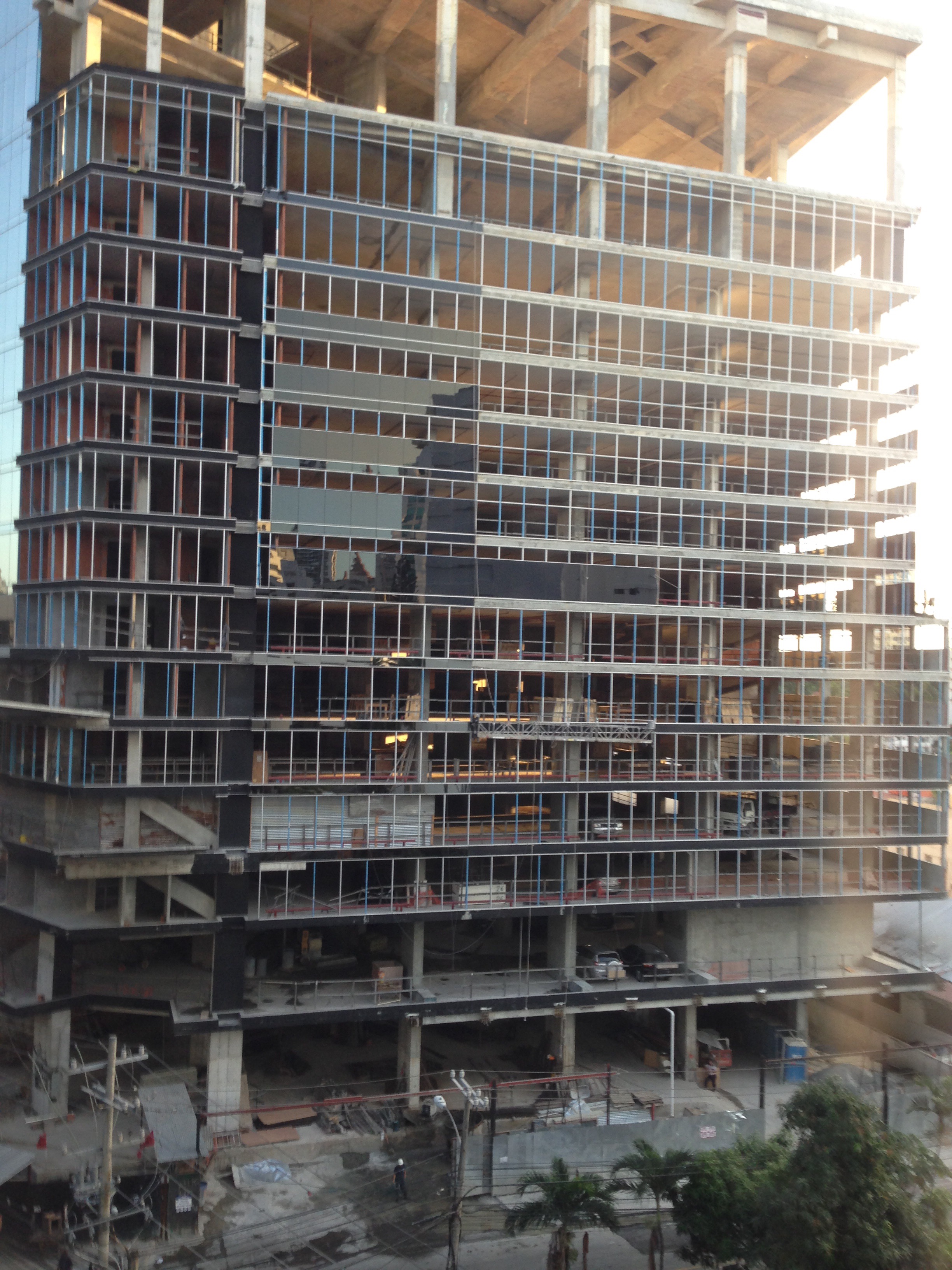
As you can see a good flight enjoyed by all! So far everything is working smoothly. Arrived at our hotel mid afternoon and Gary off for his walk to explore area and nearby restaurants. Great hotel suite in the middle of the financial district which is under construction as you can see below.


We are staying in the financial district – the streets are filled with litter, the sidewalks are treacherous as they are very uneven, lots of holes (easy to break an ankle), sudden changes in level with high (unexpected steps) and steeps drops. Yet we are told a safe area to walk. We walked to a restaurant and it seemed safe, despite the sidewalk situation. The restaurant we went to tonight was basic, good food. Doesn’t seem to be any particular Panamanian dishes.

Posted in Uncategorized | 3 Comments

Panama & Costa Rica 2016

Two things on our bucket list were to take a windstar cruise and to do a transit of the Panama. So we booked a Windstar cruise through the Panama and up the coast of Costa Rica. Alas, it is not to be. Our ship, the Star Pride, caught a case of rock rash on a reef off the Coast of Costa Rica and all sailings are cancelled until April. 

Our travel agent was able to pull together another trip for us using the same flights so now we are going to the Panama and Costa Rica, but not on a cruise. We leave tomorrow, January 21 and leave Costa Rica on February 1 when we will go to visit our good friends Nancie and Ross Parker in Palm Dessert for a couple of weeks before coming home for a few days.

Here is our itinerary – hope you enjoy the trip as much as we will:

Jan. 21 – fly to Panama City

Jan 22 – tour of Portobelo with trip back to Panama on the Trans-Isthmian train

Jan 23 – partial transit of the canal

Jan 24 – to Monteverde via car and plane

Jan 25 – Tree top walkways hanging bridge tour (yikes, sounds high and scarey!) + butterfly & humingbird gardens

Jan. 26 – El Trapiche Tour (local plantation with coffee, sugar cane etc.)

Jan. 27 – boat and bus trip to Arenal

Jan. 28 – wildlife refuge boat tour in the Cano Negro Wildlife refuge

Jan. 29 – day at Arenal Kioro – the spa we are staying at in Arenal

Jan. 30 – transfer to San Jose

Jan. 31 – Rainforest Aerial Tram tour 

Feb. 1 – leave hotel at 4:30 am!!!! For flights to Houston and after a 6 hour layover on to Palm Dessert

Posted in Uncategorized | 2 Comments

Paris and Normandy impressions

As we wait to board our flight we are talking about our impressions of France now. My main impressions, in no particular order, are:
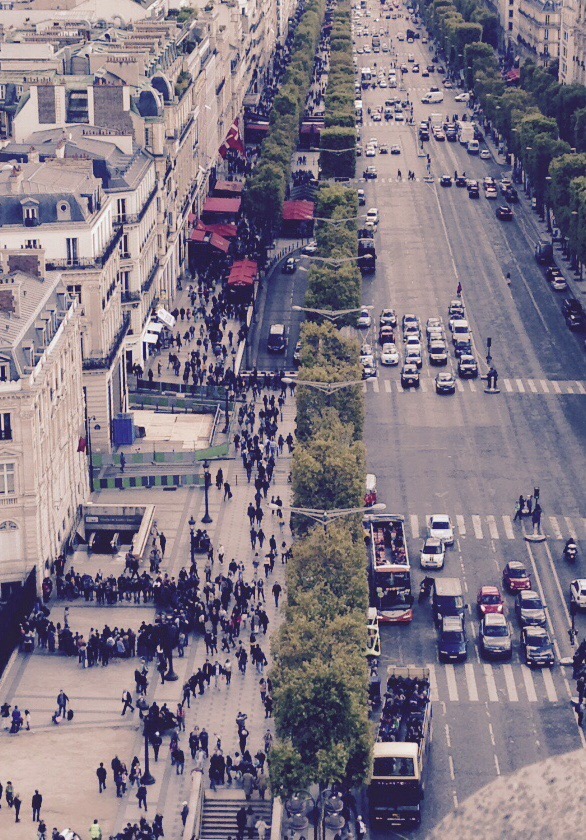
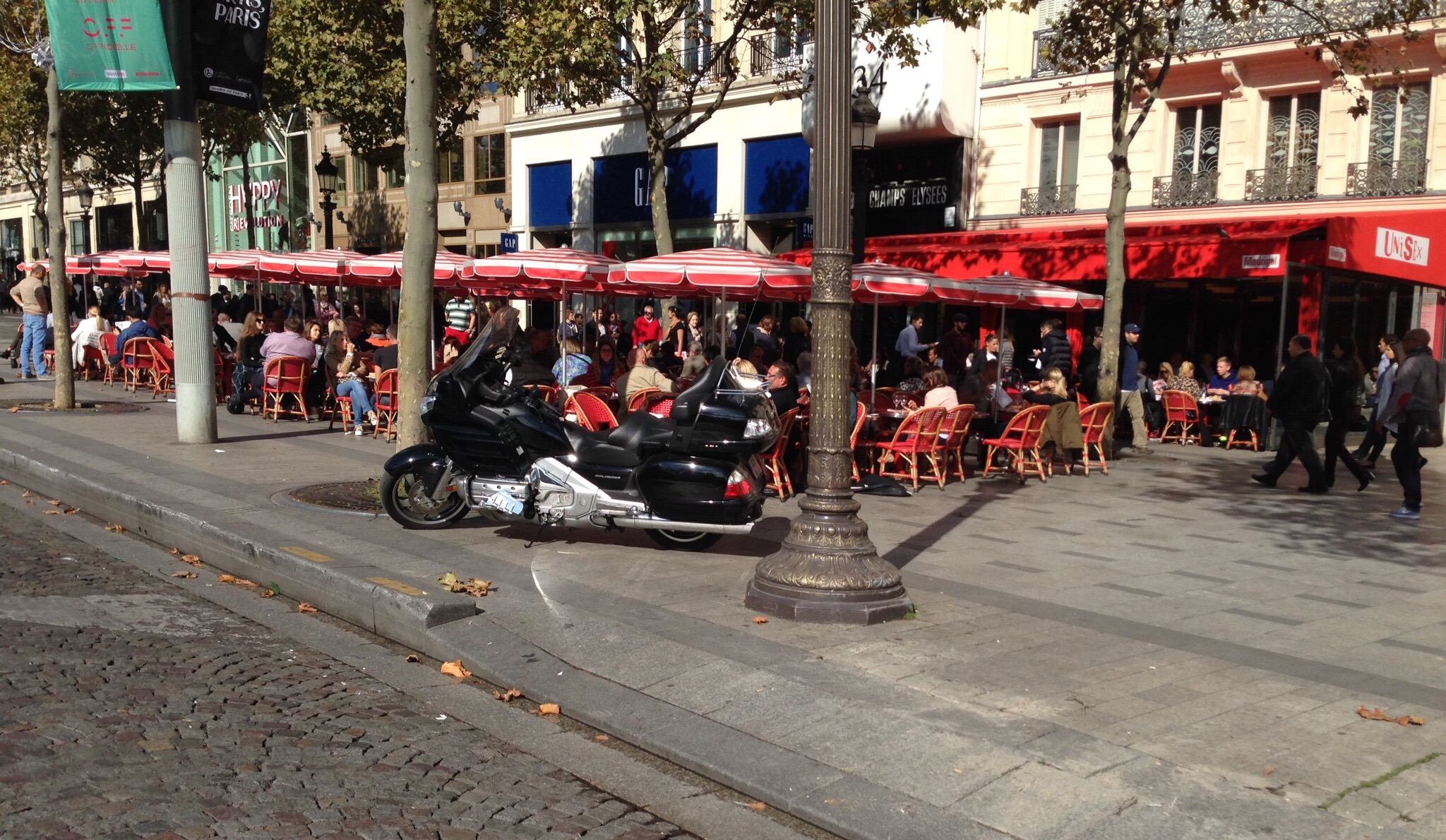
— the Champs de Élysées is different, more Americanized, the big designer houses are mostly gone and replaced with MacDonalds, H&M and other American brands. Instead of strolling down a peaceful tree lined Avenue with small bistros lining the sidewalk, it is a crowded, noisy, area with mostly tourists. Only one or two of the big designers houses still have a presence here. When we were on the bus, the announcer made a comment that the powers that be wanted to return the Avenue to its former glory and reintroduce the big designers to the area and make it an exclusive shopping area again.
— the main fashion seen is leggings or tights without feet. These are worn with the shortest possible top often not even covering the bum. Seen on all sizes and ages of women. Definitely not a good look for all! Some of the leggings are very decorative.
— there are more motorcycles than we remember from previous trips. There are not the big Harleys and not noisy. Most have a blanket that the driver puts over his lap when driving and uses to cover the seat when it is parked.
— there are parking spots where drivers can plug in their electric cars
— we see a few scooters, mainly kids but some adults, many are motorized so the driver can scoot along the sidewalk at a fairly good pace. Not as many bicycles as we remember.
— French waiters are much better than we remember – more polite and accommodating, most spoke English and tried to communicate and displayed a sense of humour
— getting around Paris is still relatively easy using the Metro and RER
— coffee and tea are still very expensive 5E or about $7.50, the same as a glass of wine
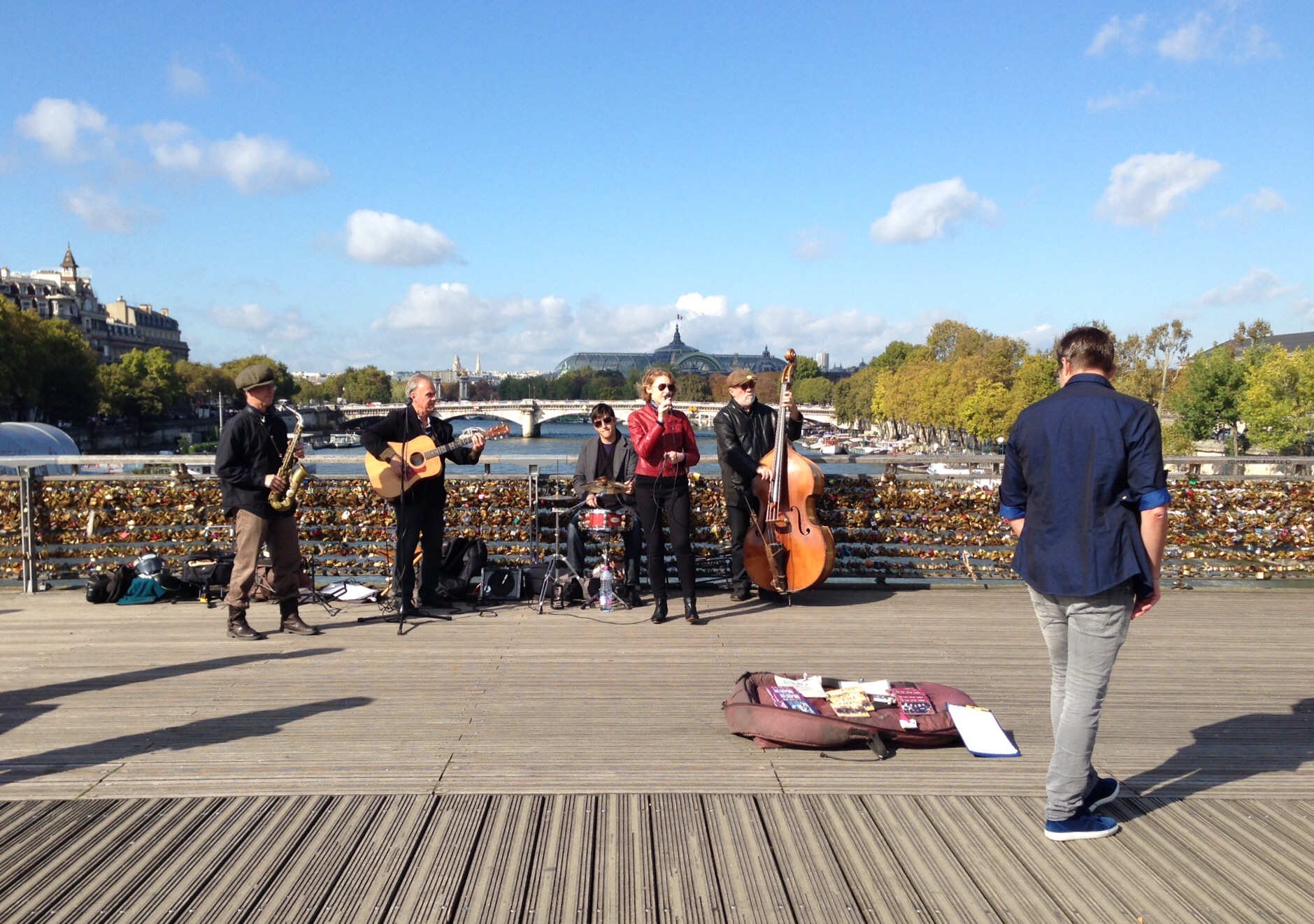
— Saturday is not the best day to sight-see. It was a real mob then, however there was also a lot going on with the street entertainers and music in every square, on the bridges, corner bands set up.
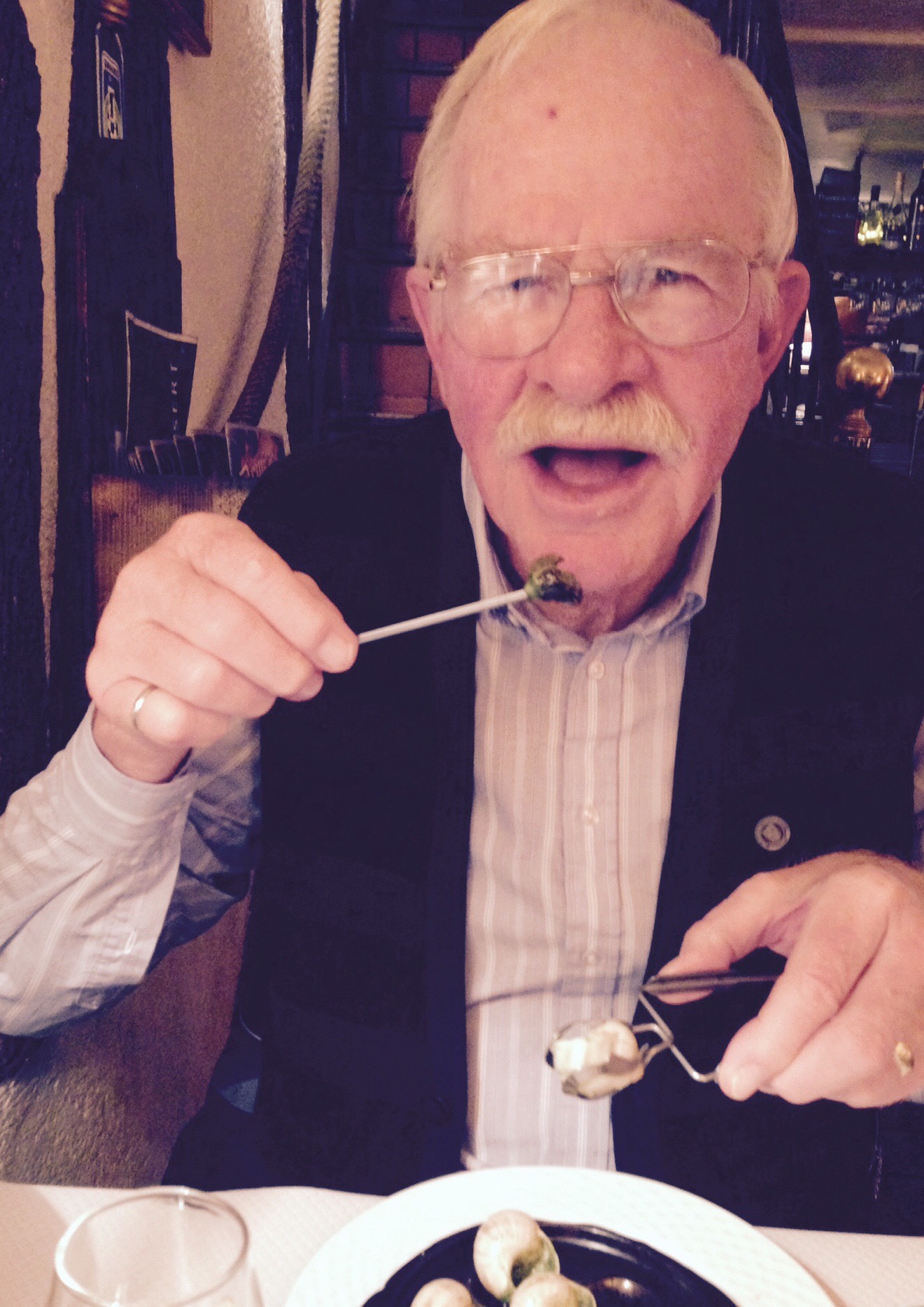
— the food is as good as ever with plenty of moules, escargot, crime brûlée, patisseries and outdoor seating areas perfect for people watching
— there is still a lot of smoking, but no longer inside, so the restaurants are more comfortable inside and no dogs in the restaurants!
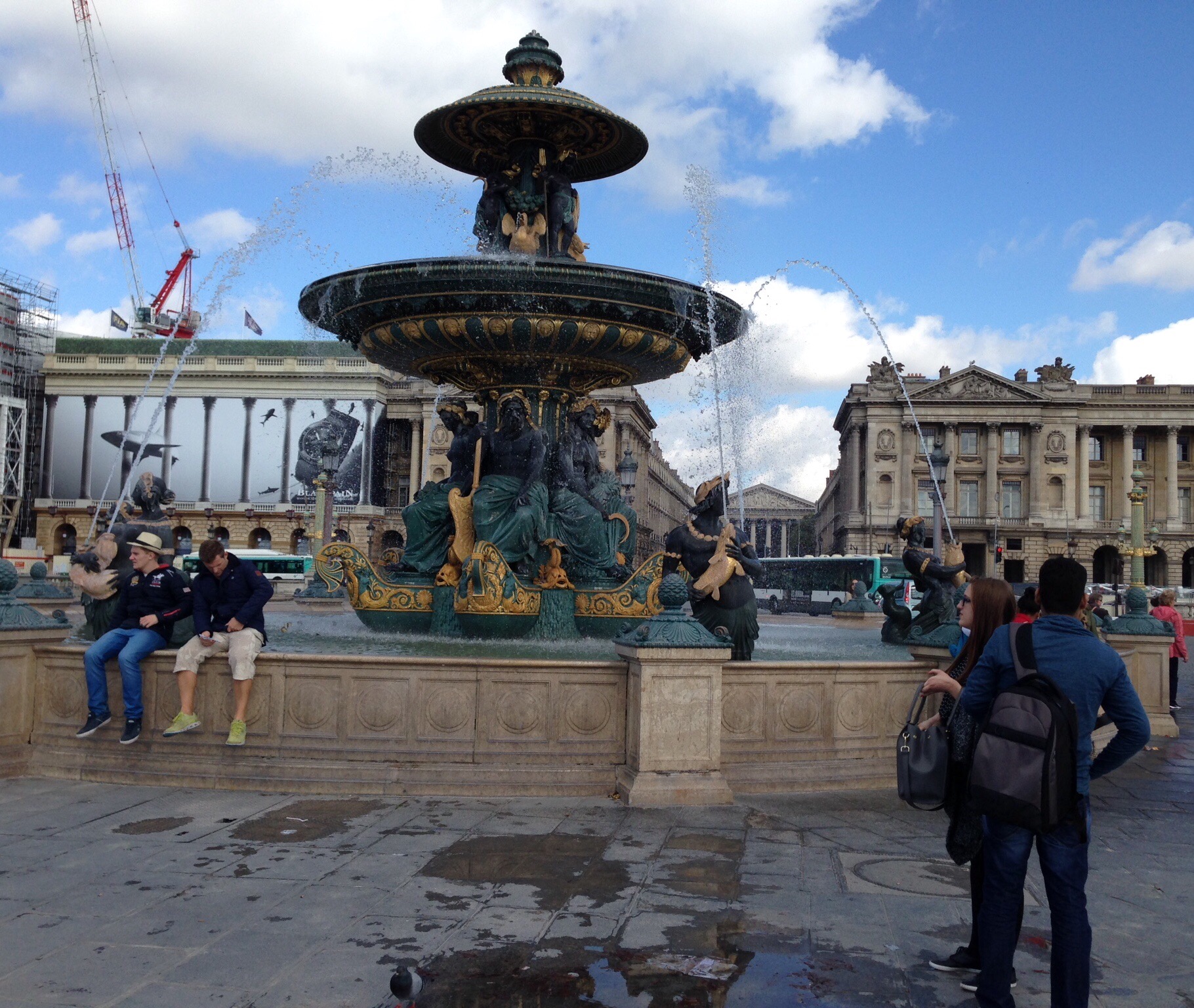
— we still love Paris and love wandering around. There are fountains and art works everywhere. The museums are outstanding and works of art themselves. The city has endless things to see and do. I hope we come back again soon.

Posted in Uncategorized | Leave a comment

Paris, October 11, 2014

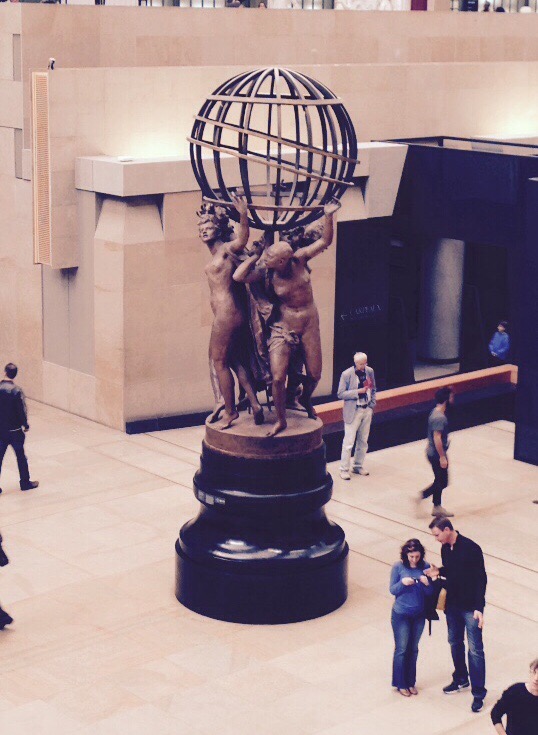
Our last day in Paris. We spent a few hours at Musee d’Orsay. We spent most of our time in the Impressionist gallery. What a thrill to see all the paintings I have looked at in books. There were many examples that were familiar to us. Many of Monet ‘s works. Also Renoir, Cezanne, Sisley, Toulouse-Latrec, Degas, Manet, Van Gogh, Gaugin. Many names we recognize and many paintings that we have seen reproductions of. It was one of my favourite stops in Paris.
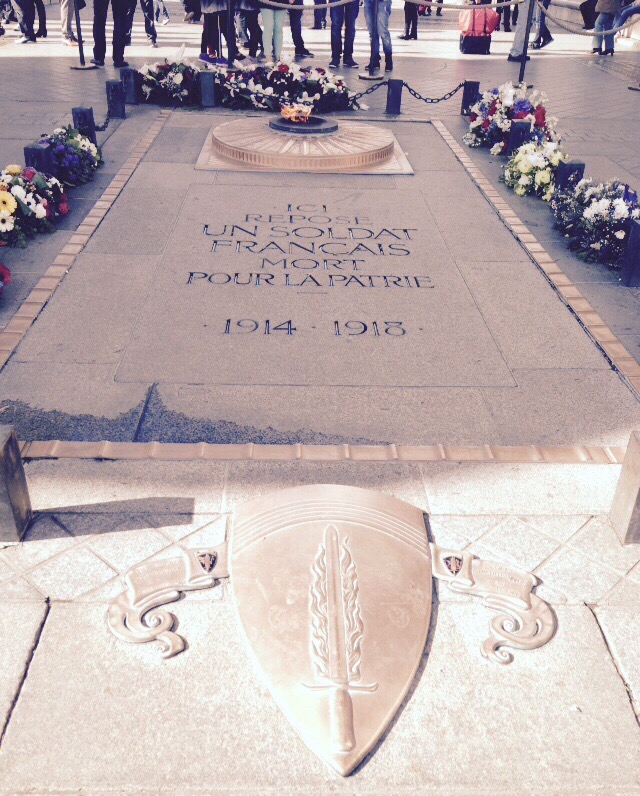
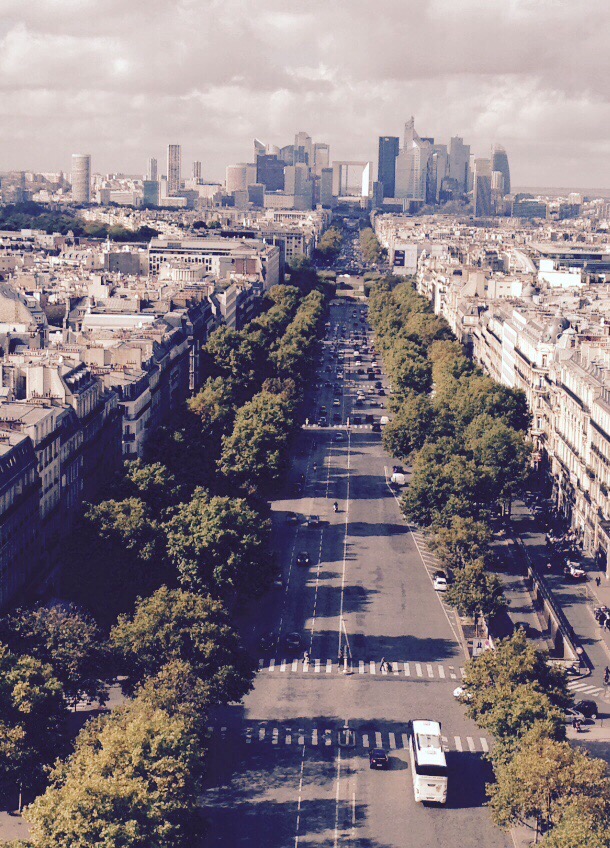
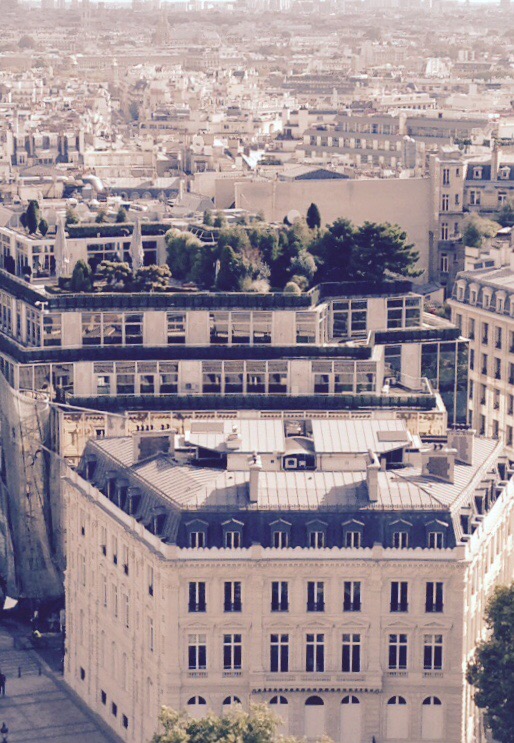
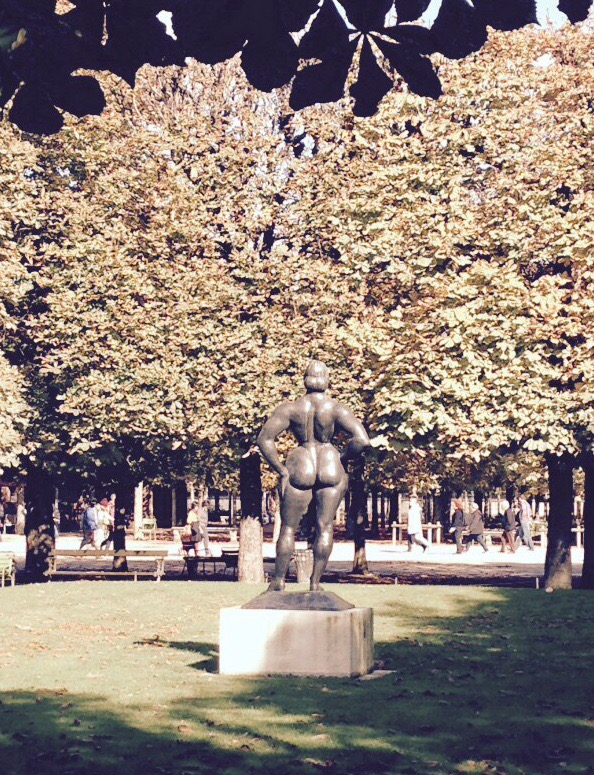
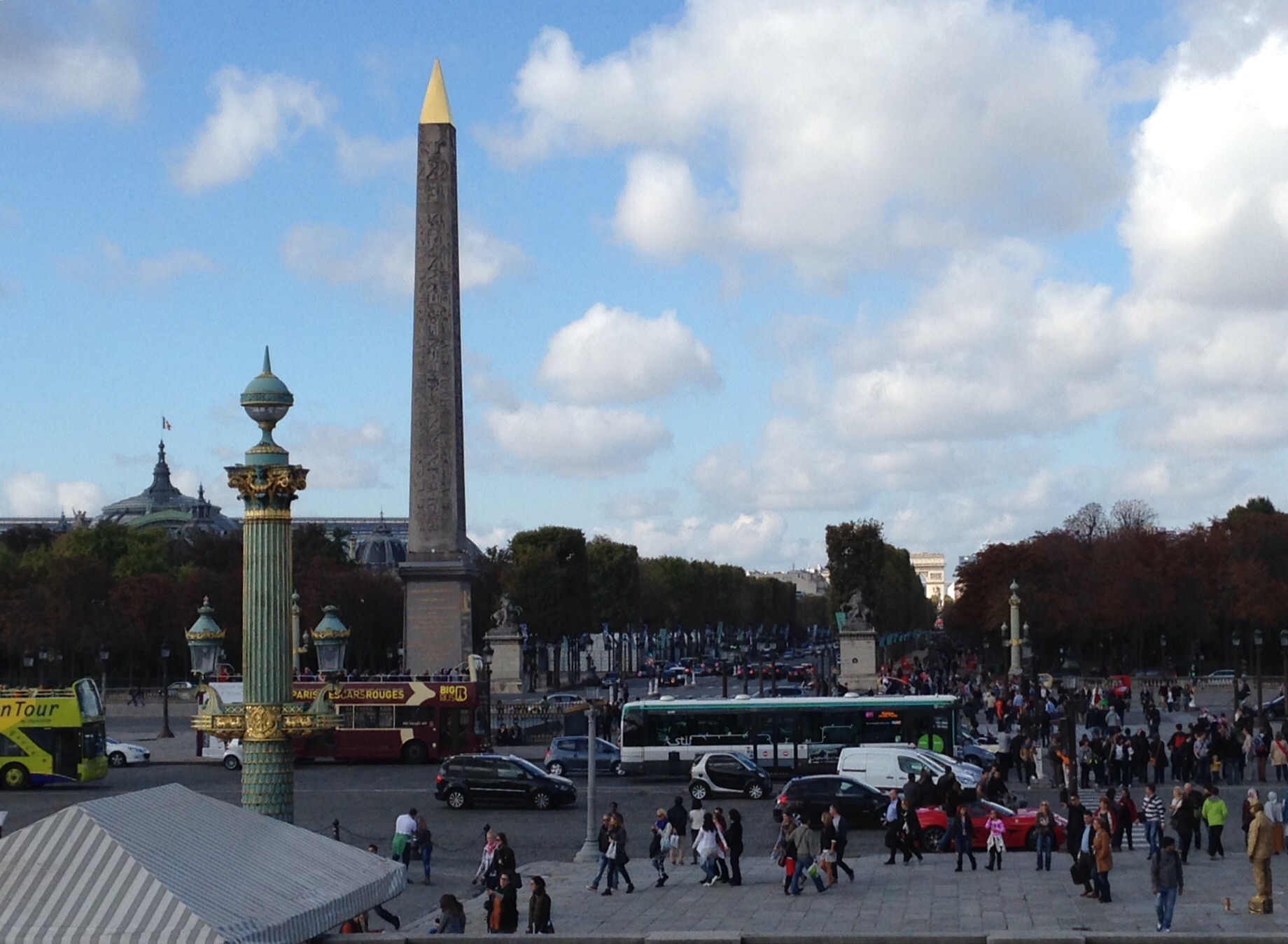
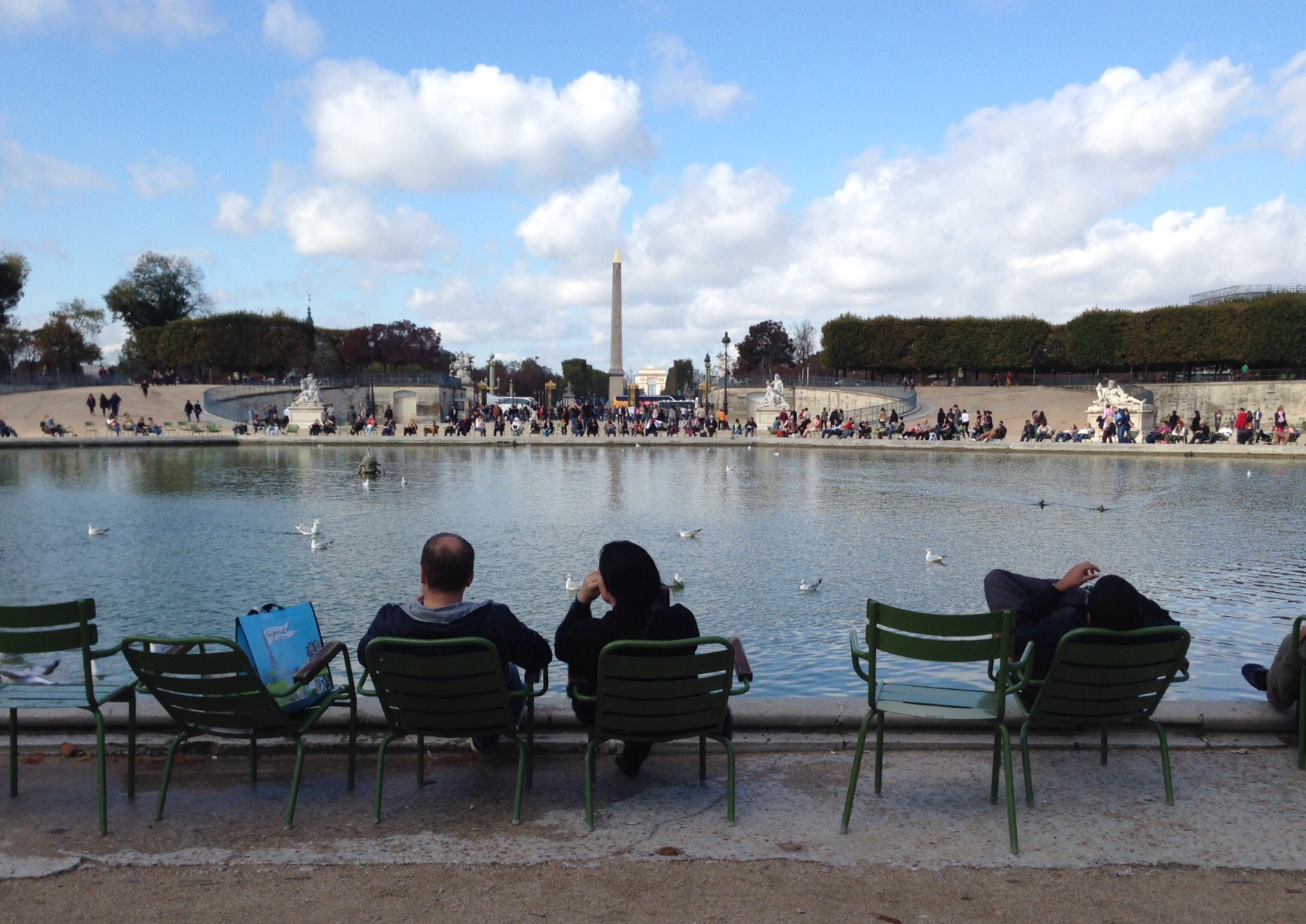
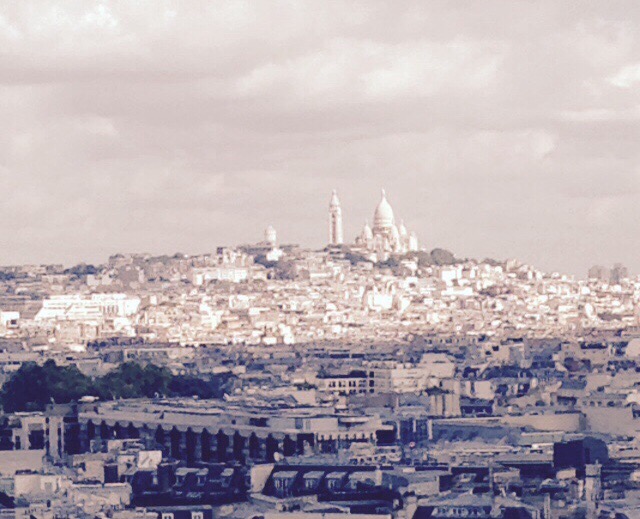
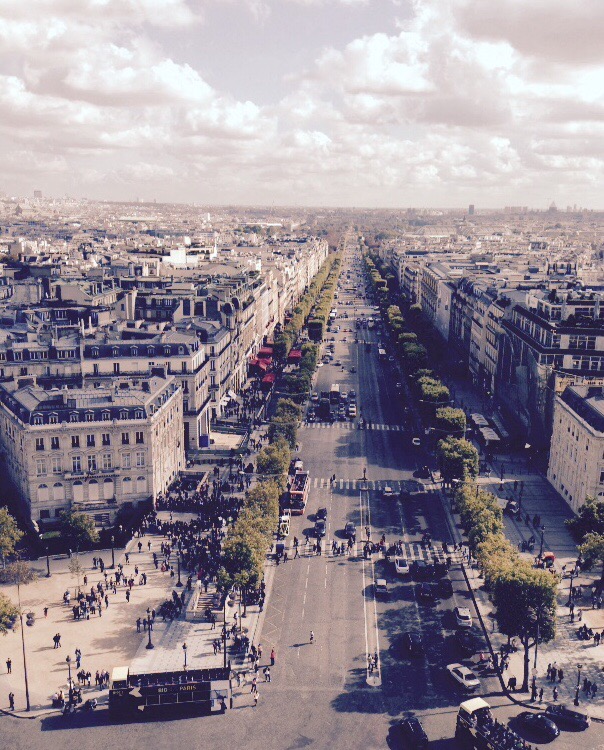
As we left the Musee and headed for the Champs de Élysées we passed through Jardin des Tuileries. We took a pedi-cab up to the Arc de Triomphe and went to the top to see all of Paris with the roads all leading out from the Arc.
It is busy in Paris on Saturday. Lots of people out visiting the sights, street performers on almost every corner, the metro is bustling, restaurants all full especially later in the evening.
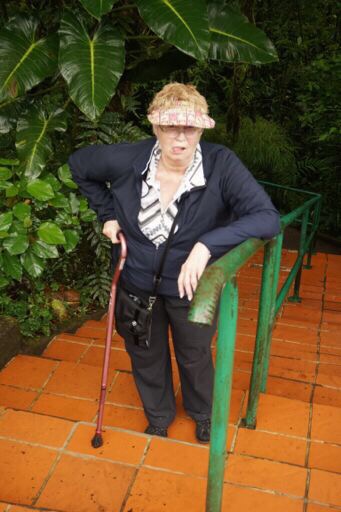
I brought my cane with me on the trip to help with the walking, particularly the stairs. It has really proved to be an advantage. I always get a seat on the Metro, without having to ask I get to use the elevators instead of stairs, we got preferential seating on the boat trip, I get early boarding on the plane. As I bonus I could (but haven’t yet) shoo dogs and little kids out of my way!
We had yet another delightful meal tonight and are both ready to head home for a rest!

IMG_0429.JPG

IMG_0430.JPG

IMG_0431.JPG

IMG_0432.JPG

IMG_0426.JPG

IMG_0427.JPG

IMG_0425.JPG

IMG_0428.JPG

IMG_0424.JPG

IMG_0423.JPG

IMG_0422.JPG

IMG_0421.JPG

IMG_0418.JPG

IMG_0420.JPG

IMG_0419.JPG

IMG_0417.JPG

IMG_0416.JPG

IMG_0415.JPG

IMG_0414.JPG

Posted in Uncategorized | Leave a comment