Dec. 28, Dar Es Salaam, Tanzania

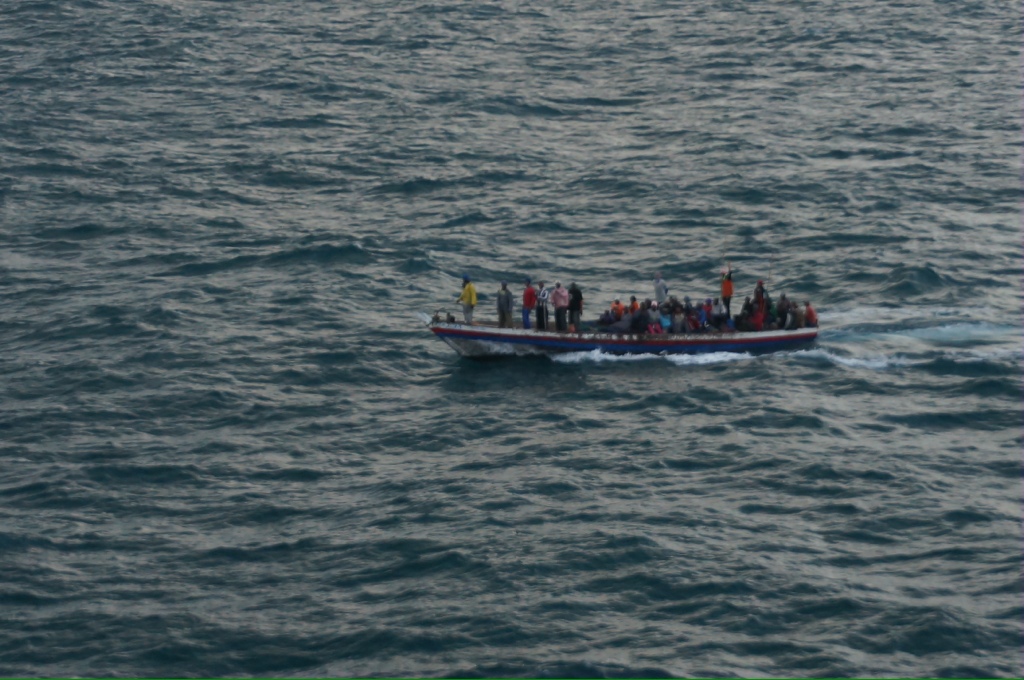
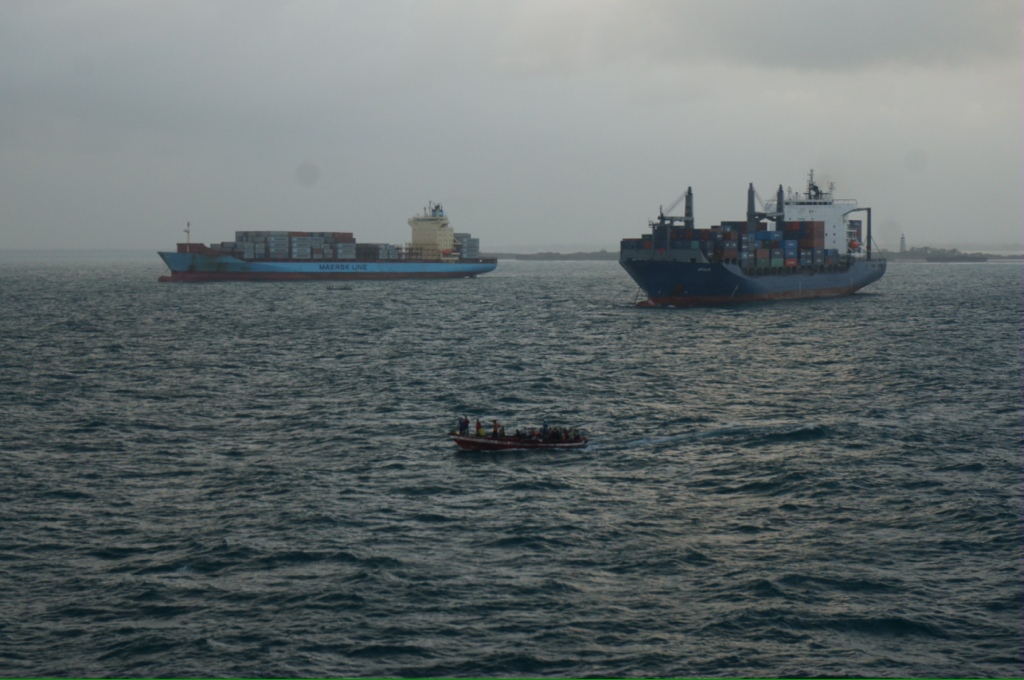
As we arrive at Dar Es Salaam we pass many massive container ships, some loaded and heading out to sea, others empty and anchored off shore. There are also a number of smaller vessels – fishing boats, small open boats loaded with people seemingly headed out to sea as well. We later learn these are water taxis taking people to the fish market. There are many islands some with white sandy beaches, lighthouses and some small buildings.
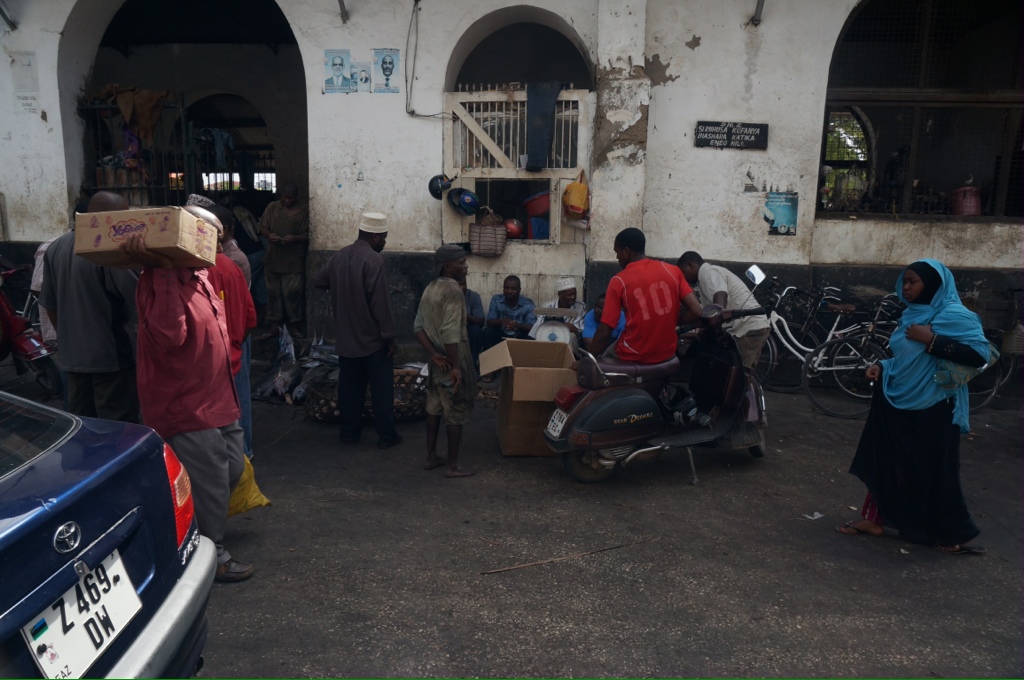
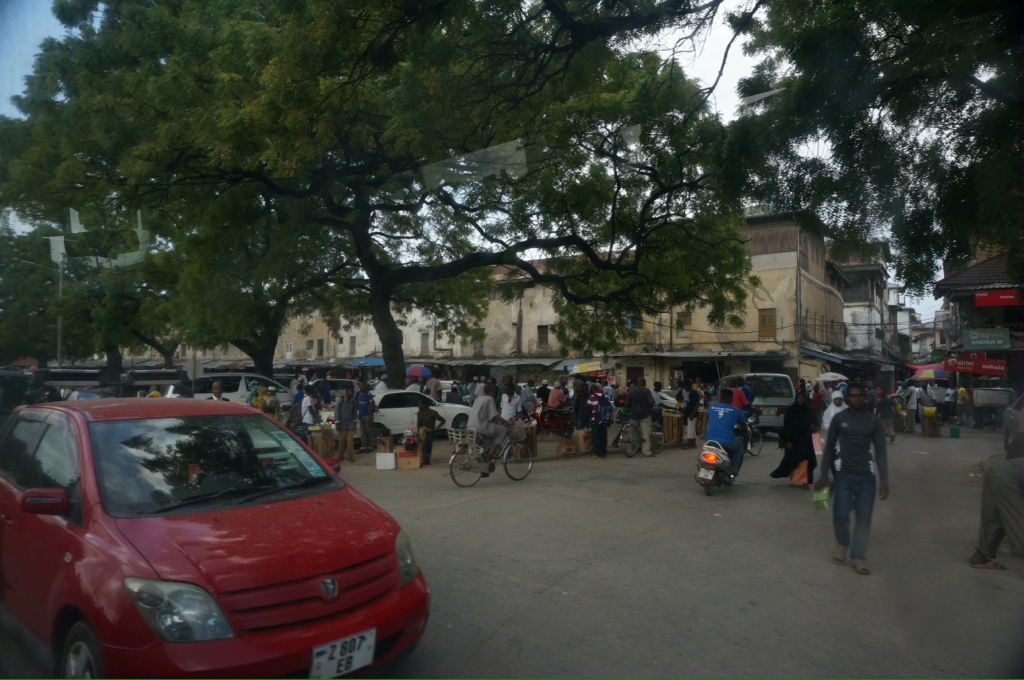
As we near the port we are in a narrow channel, the waters around are very shallow and we see a modern looking city with high rise buildings. Once ashore we see there are a number of newer buildings and some under construction. Dar Es Salaam is a city of 5 million people. It is the largest and richest city in Tanzania. It was the capital until 1974 when the capital was moved to Dodorma, the transfer of power is still underway.
In the 19th century Mizzina (Swahili for “Healthy Town) was a costal fishing village. In 1865 the Sultan from Zanzibar began building a new city and named it Dar Es Salaam (“Harbor of Peace”). In 1887 the German East Africa Company established a station here, it was captured by the British during WW I. The area surrounding Dar Es Salaam was named Tanganyika. After WW II there was a period of rapid growth. Independence was achieved in 1961 and in 1964 Tanganyika and Zanzibar merged to become Tanzania with Dar Es Salaam as the capital.
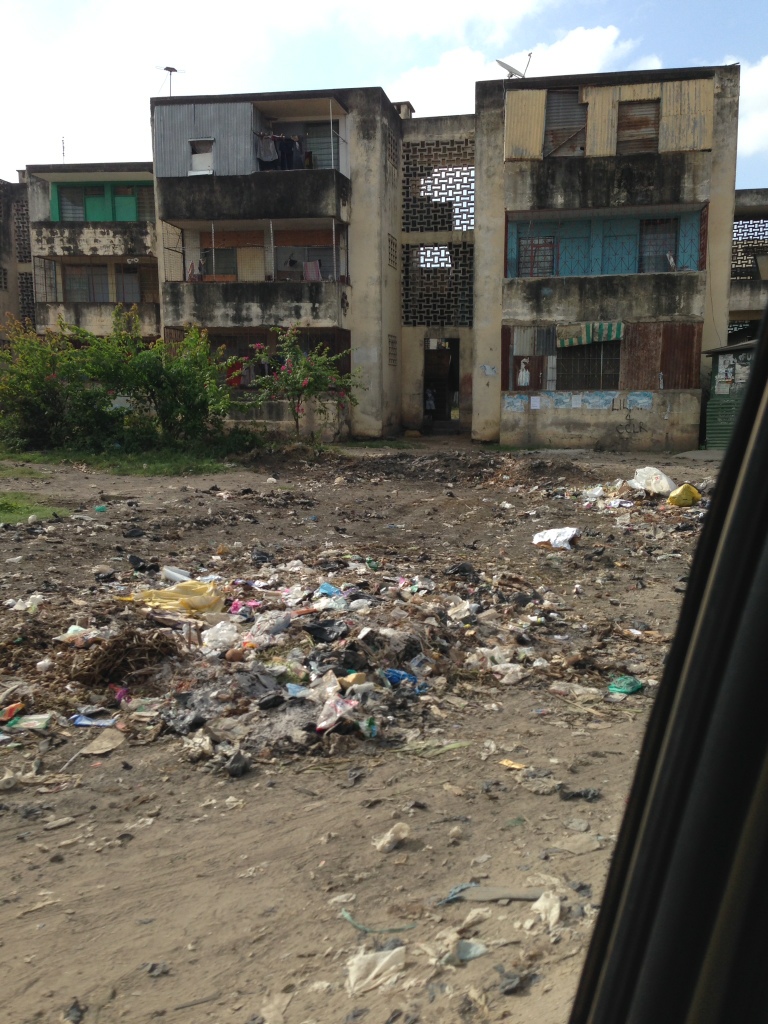
There is high unemployment, about 40% and we see much evidence of this – beggars, people selling things beside the roads, young men loitering beside the street, homeless people sleeping on the road side. Despite this the city is relatively clean and we even see street sweepers working on several roads we drive down. Our guide says that a lot of people come in from the country looking for work and there are a lot of Chinese immigrants as well.
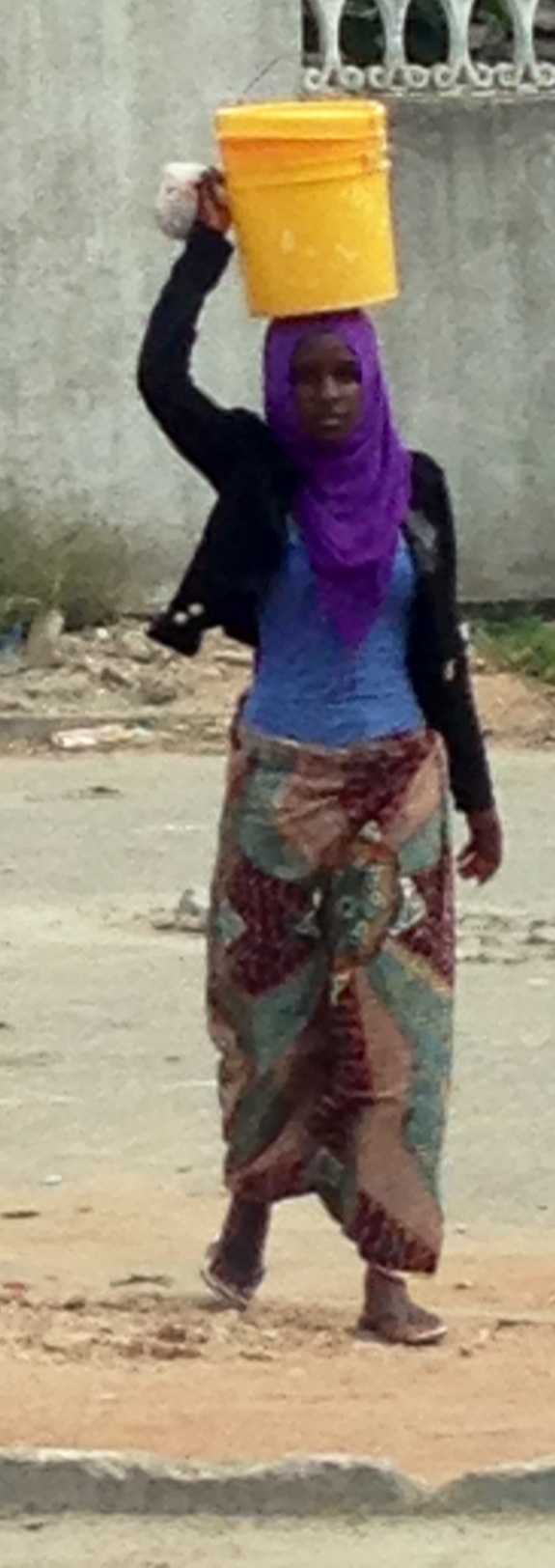
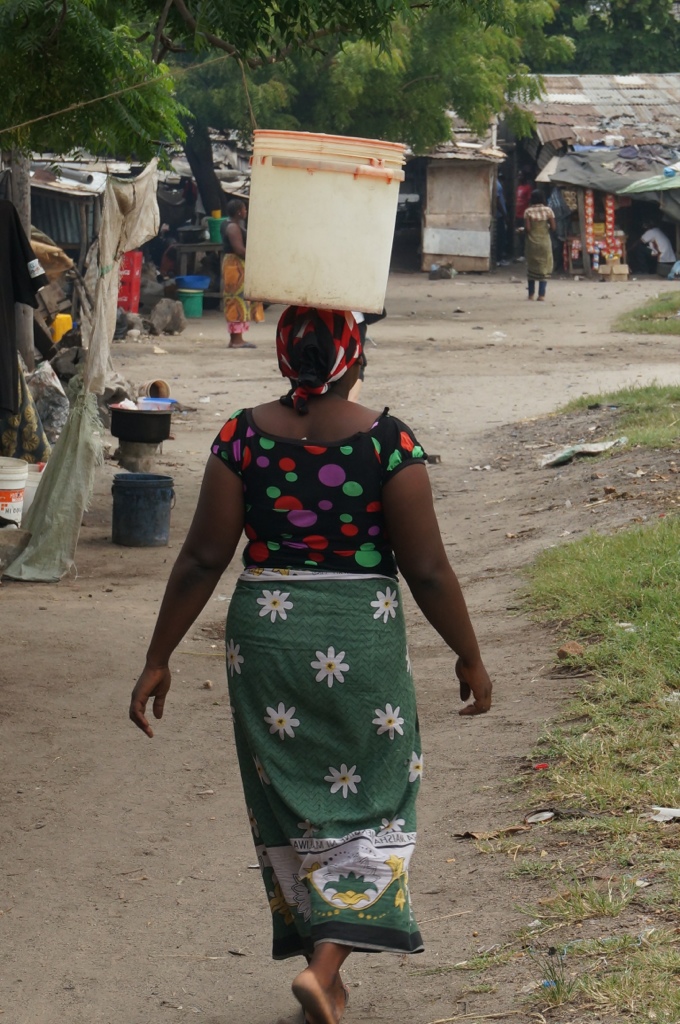
The high rise buildings are government, banks, casinos and a couple of hotels. This is a democracy with elections every 5 years, the President can only hold power for 2 terms or 10 years maximum. Schooling is free to grade 7 and they only teach Swahili so if people can afford it they send their children to one of the private international schools so they can learn English. Most of the people we see along the streets wear Western style clothing, however, there are still a lot of women in the bright colored traditional dress.
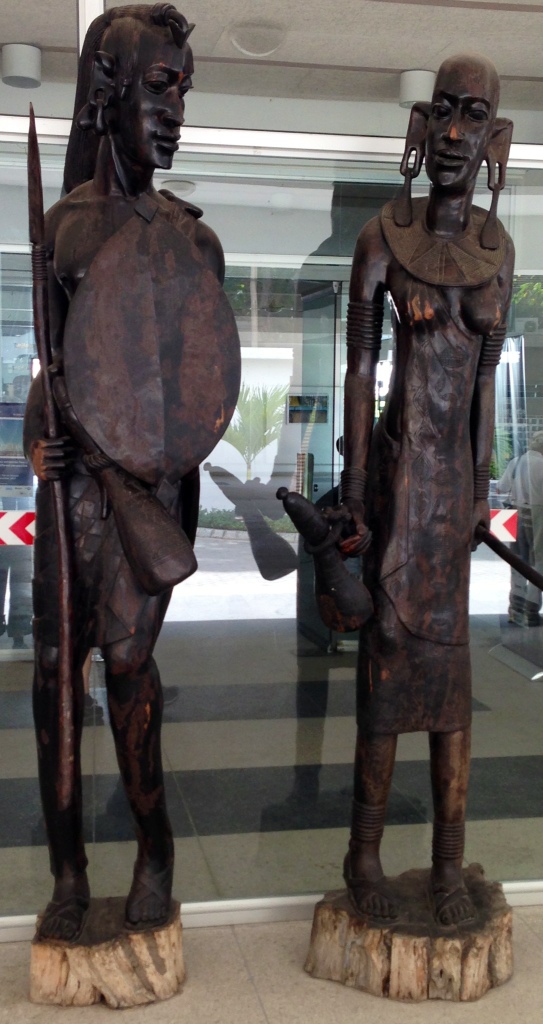
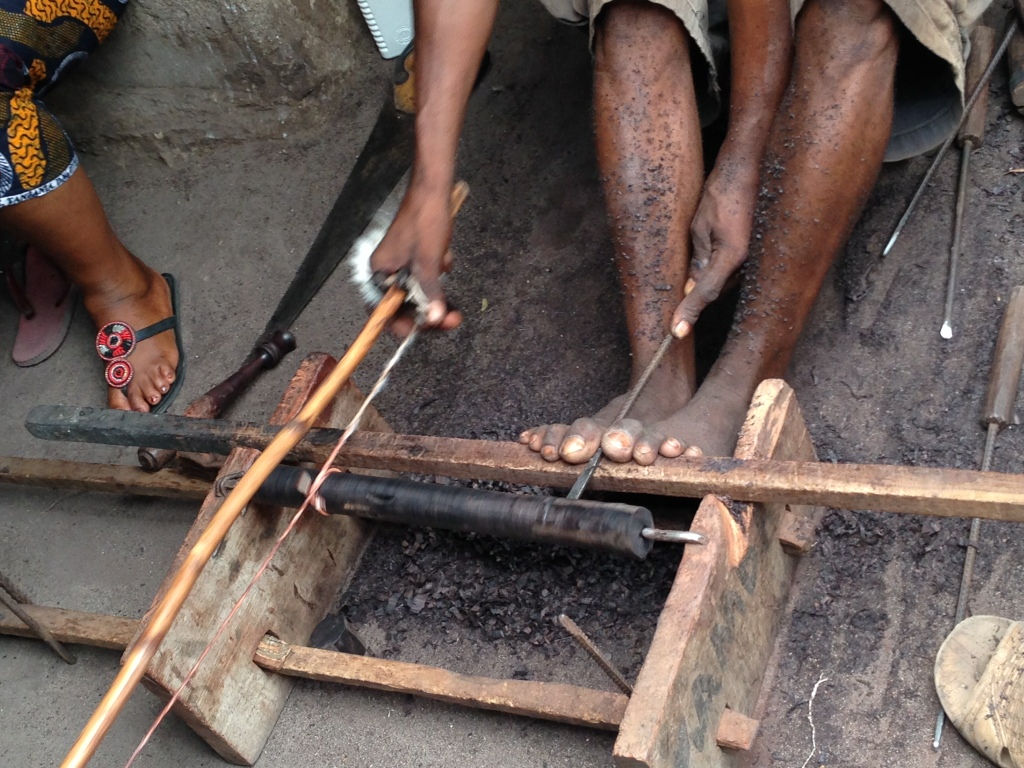
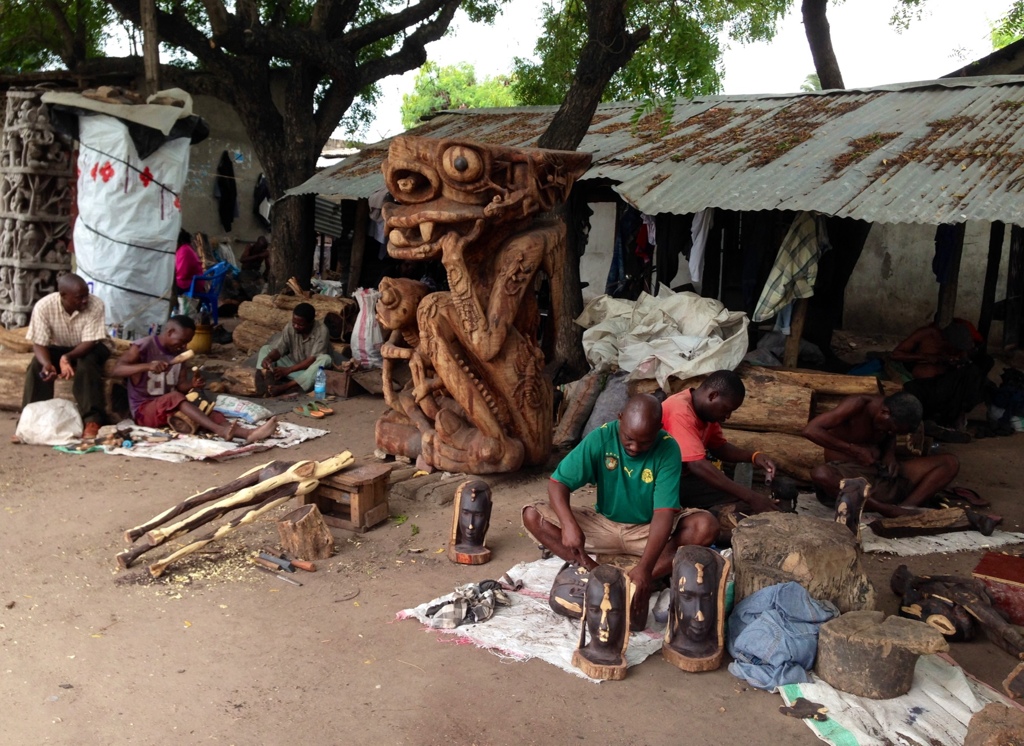
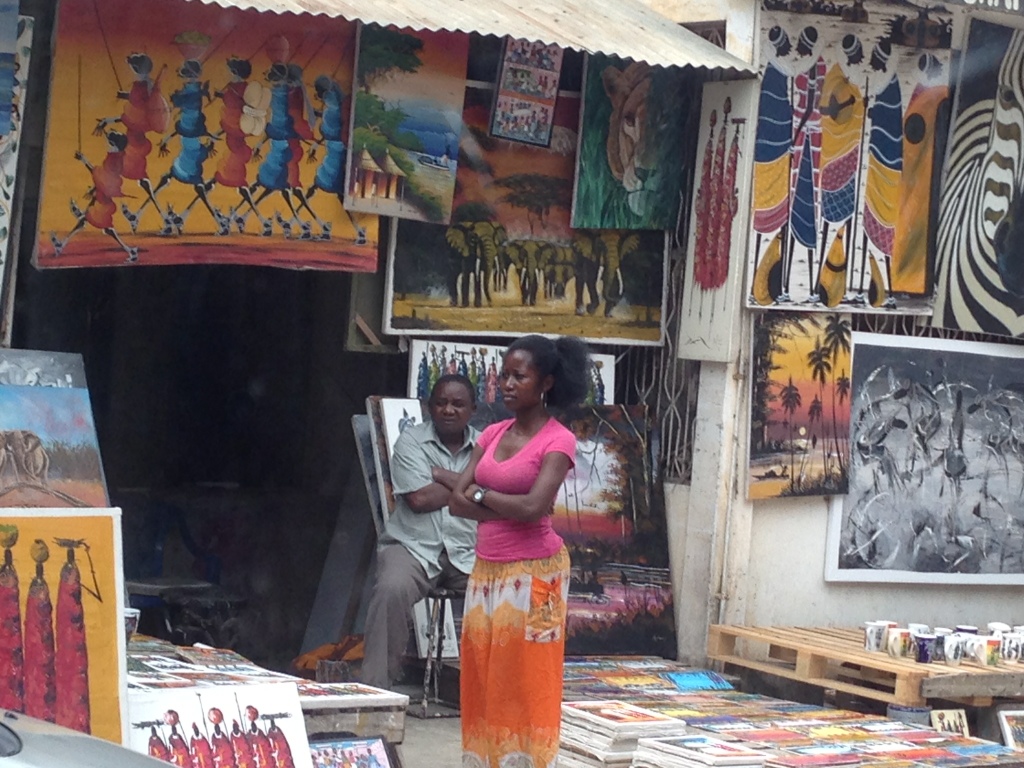
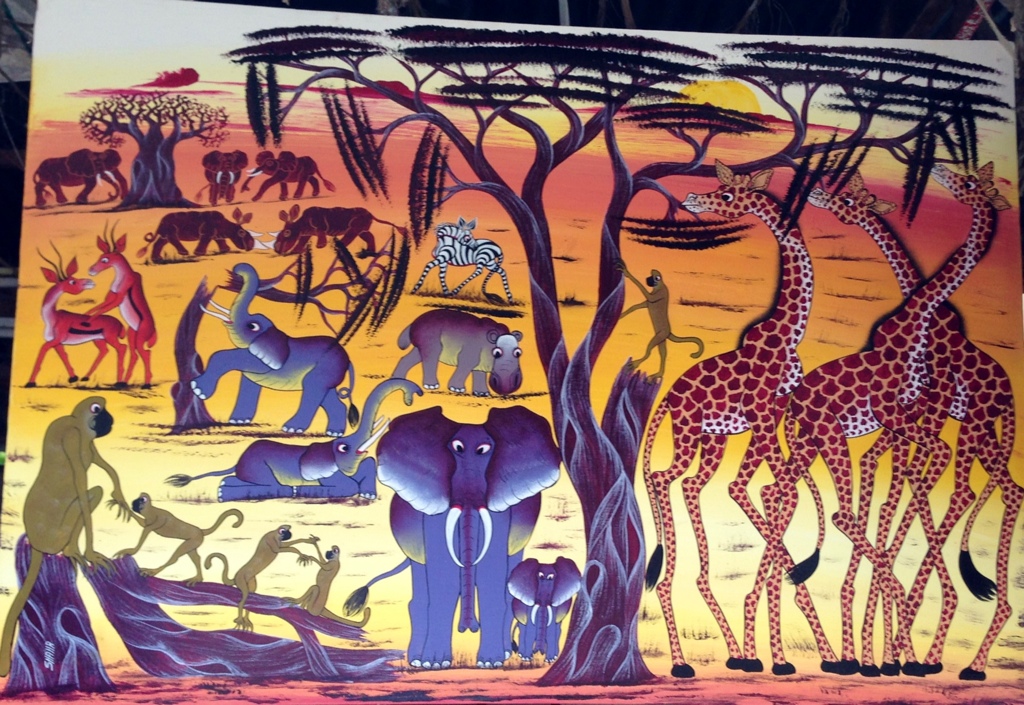
We visit a Tinga Tinga art collective where the artists work and sell their paintings which are a stylized form of colorful painting. They tell us it is oil, however it is likely acrylic. We also visit a craft market where there are several carvers working in ebony. In spite of our recent downsizing and lack of wall space we bought a couple of works (where will they go??). Next we drive through the university area and visit a museum. The university has about 20,000 students and tuition is about $1,000 per year. It sounds like there is access to student loans from the government.
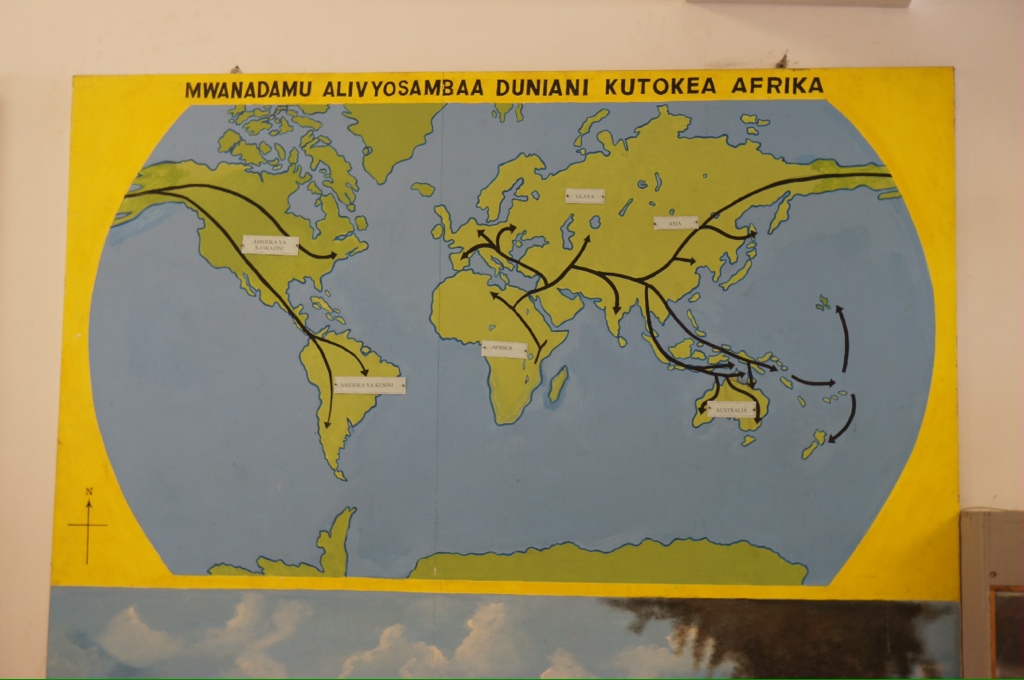
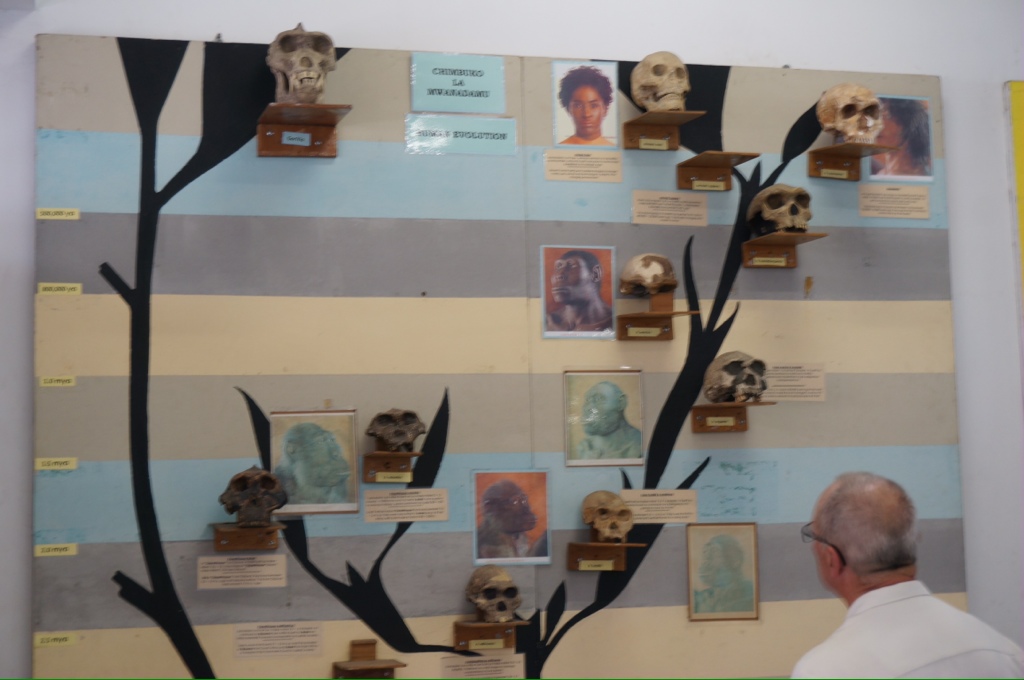
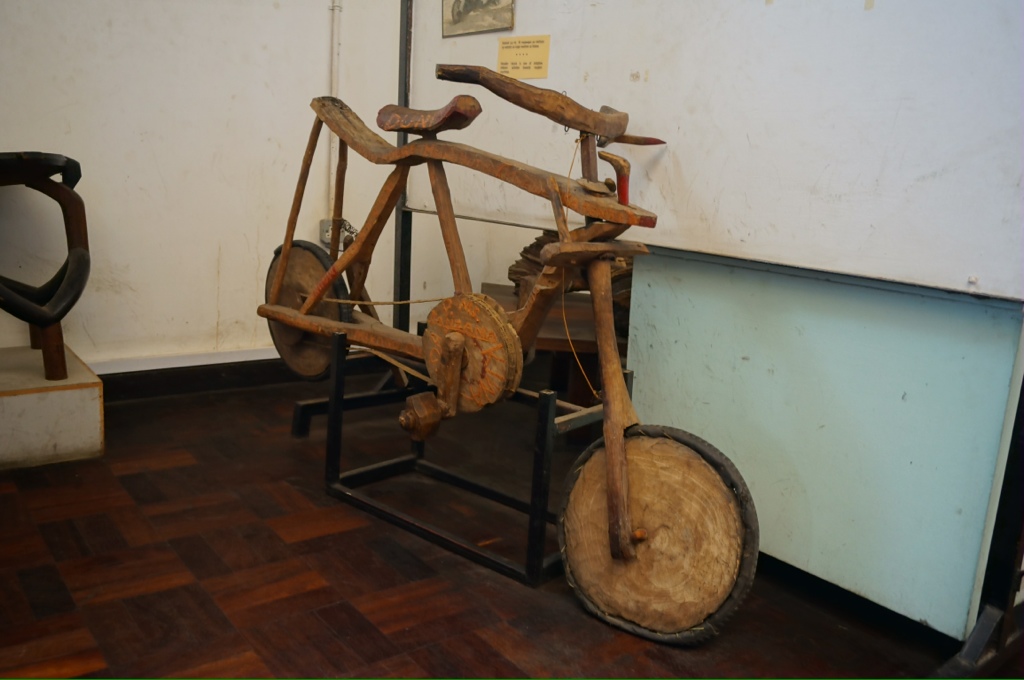
The museum is one of the better ones we have seen on this trip with exhibits on the Masi, evolution, local animal life, history of the area, examples of cave art, and included a memorial of the 1998 bombing of the American embassies in Nairobi and DarEs Salaam.
Dar Es Salaam is about 50/50 Muslim/Christian with a few minority religions as well. Our guide tells us there is equal opportunity for girls and boys for education and jobs.
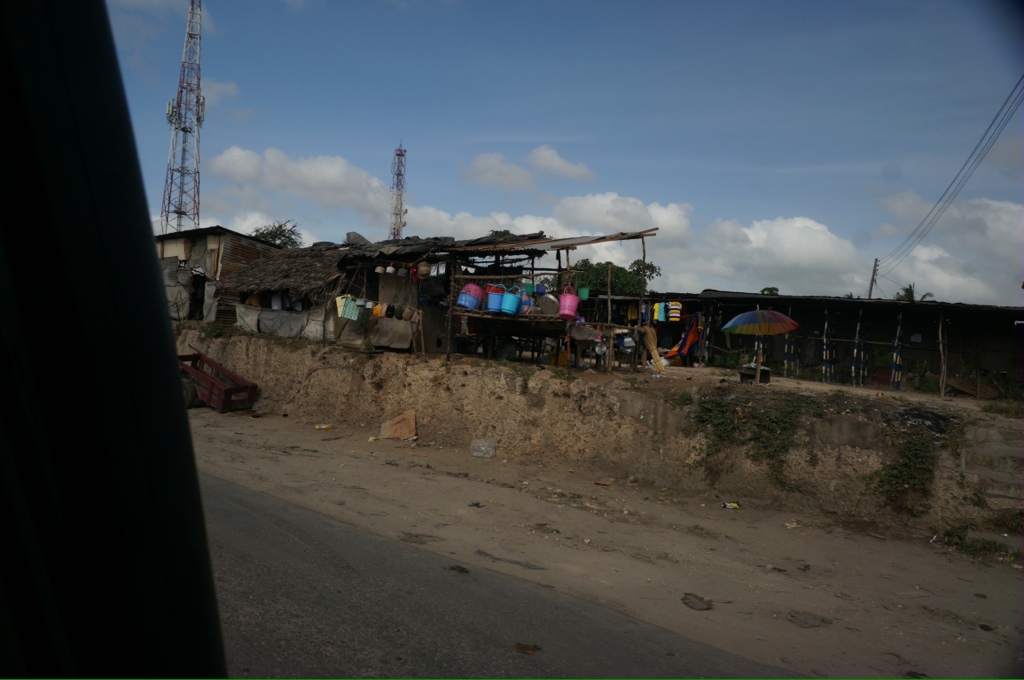
While this is a modern city by comparison to what we have seen over the last couple of days we still see push carts, lots of bicycles, many men and women carrying things on their heads, the same small shack road side stores, people without shoes etc. There are no computers in the schools, it sounds like the medical and government systems are corrupt. Supplies not getting to the intended recipients and people having to pay for medicine and treatment that should be available thought the free hospitals.
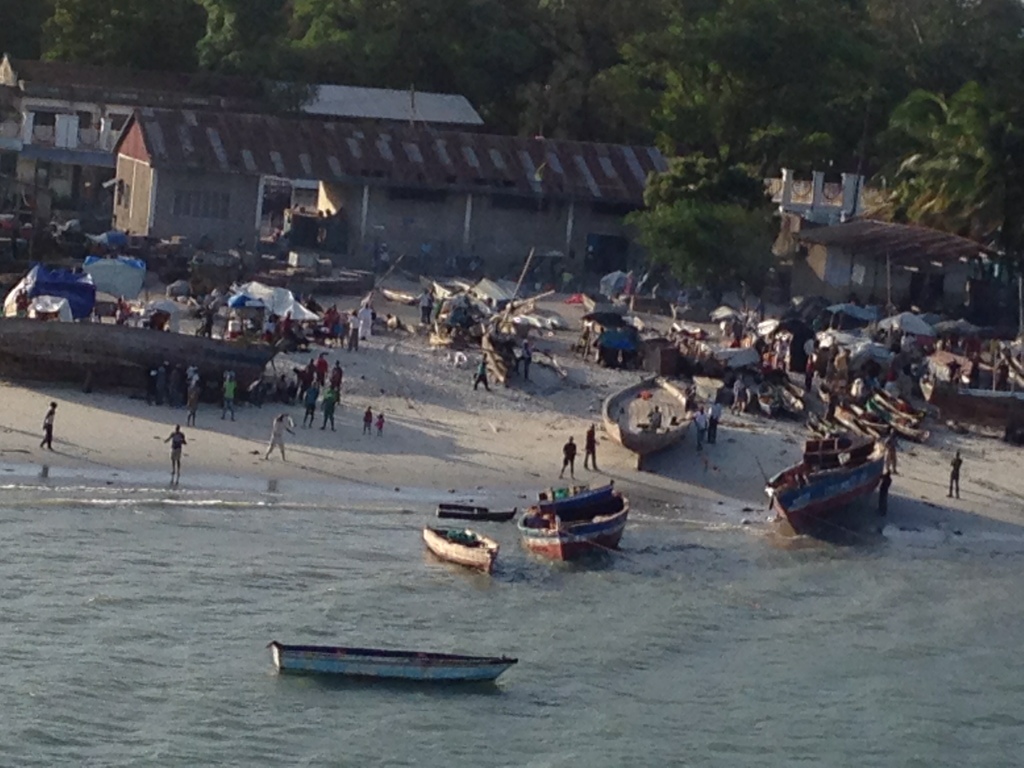
As our ship leaves port we pass by the fishing port.
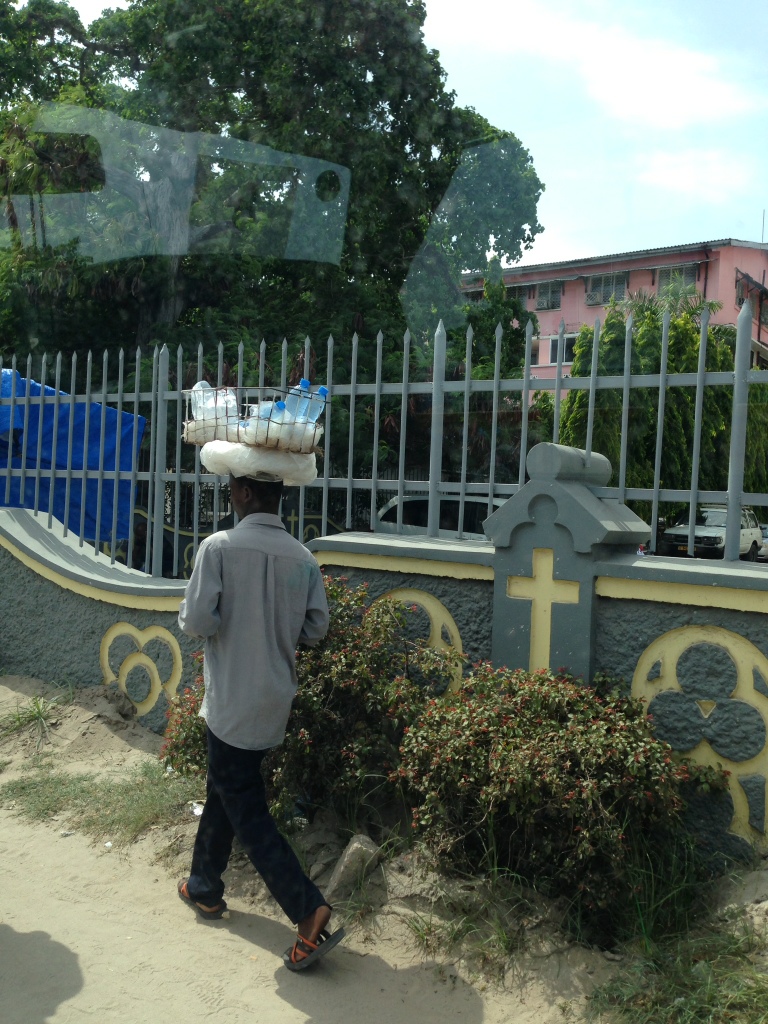
20131229-143330.jpg

20131229-143316.jpg

20131229-143114.jpg

20131229-142952.jpg

20131229-142910.jpg

20131229-142826.jpg

20131229-142813.jpg

20131229-142716.jpg

20131229-142620.jpg

20131229-142605.jpg

20131229-142514.jpg

20131229-142423.jpg

20131229-142316.jpg

20131229-142304.jpg

Posted in Uncategorized | Leave a comment

Dec. 27 Zanzibar, Tanzania

We are at anchor so need to tender in today. Gary went on a tour of the old town. Gary gave me a Christmas present of his cold and I now have bronchitis so I am taking a day off. These are Gary’s notes and pictures.
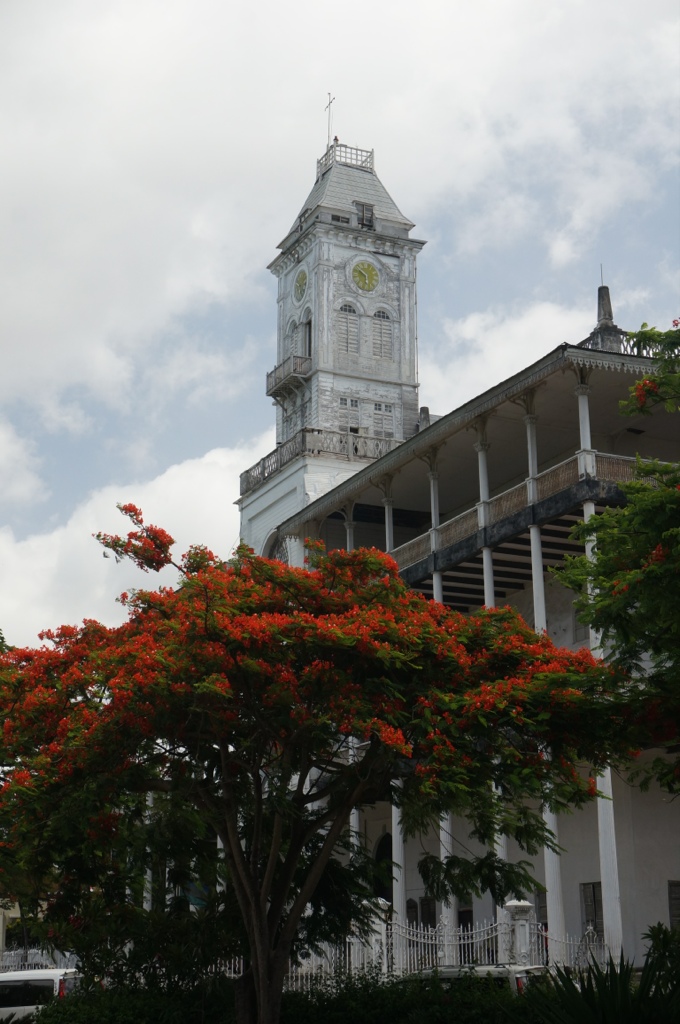
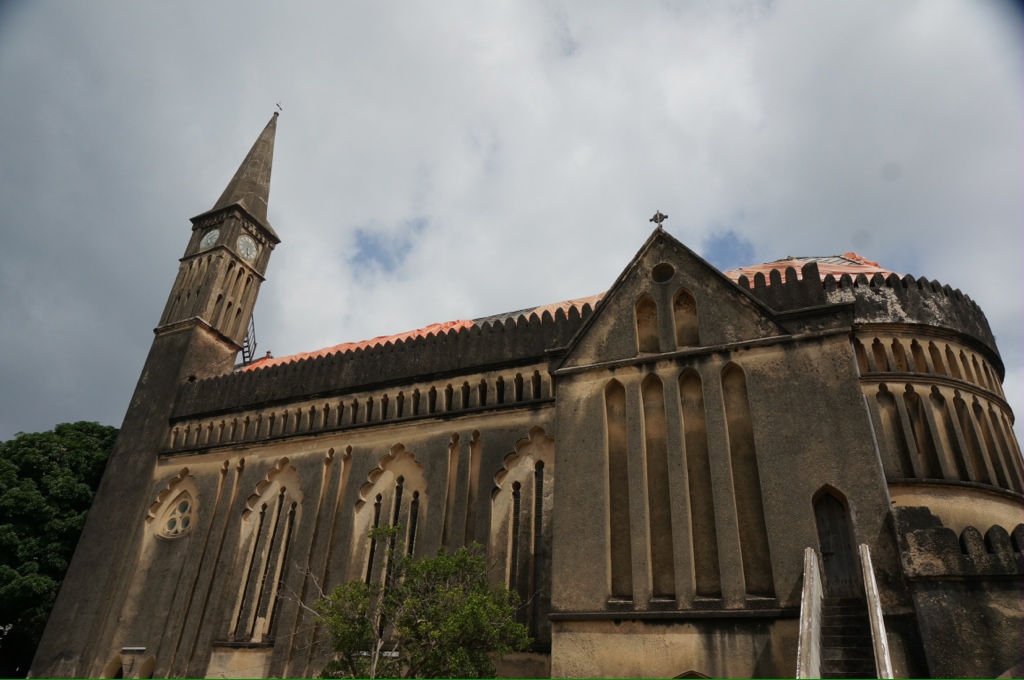
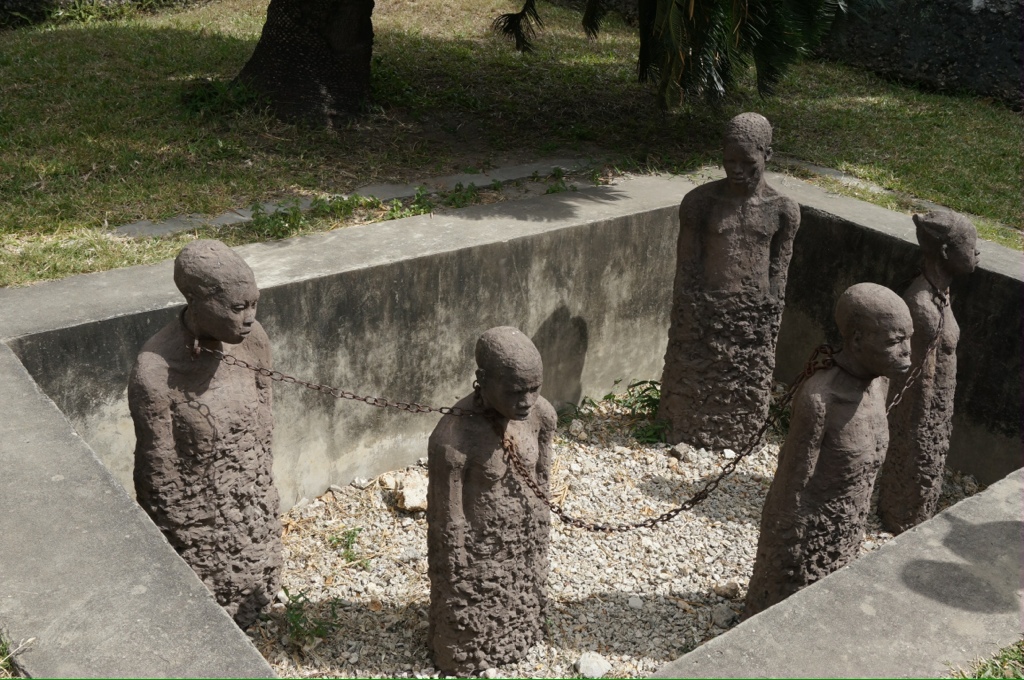
Sunny, hot, sticky day, very uncomfortable for us northerners. Zanzibar has a history going back about 2000 years. First settled by the Arabs, then Portuguese and then Oman. Independence occurred in 1960s. Zanzibar was once the center of the slave trade with the Arab world. Reminders of that time are found around the Anglican Cathedral. This was the last place where the slaves came from, it shut down in late 1870s. At one time the market processed 60,000 slaves each year.
Zanzibar is mainly Muslim with the second largest group Christian. Like Mombasa significant urban decay. Doesn’t look like anything has been built, painted or repaired since the colonials left. Locals seem friendly, well fed and dressed, few beggars.
We visited the cathedral and the old fort. The fort dates to the 18th century and was built by the Omani Arabs who took control from the Portuguese in 1698. The fort was once a residence for the Sultan and Sultana of Oman.
Tourism is now the main source of income. They also produce spices, particularly cloves, cinnamon, nutmeg and black pepper.
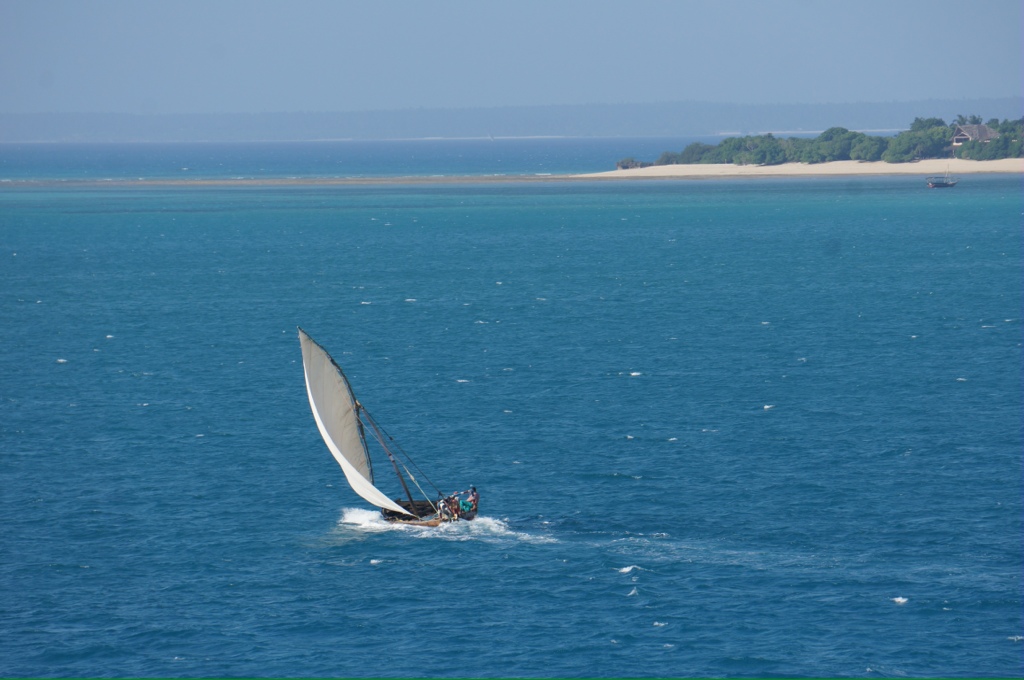
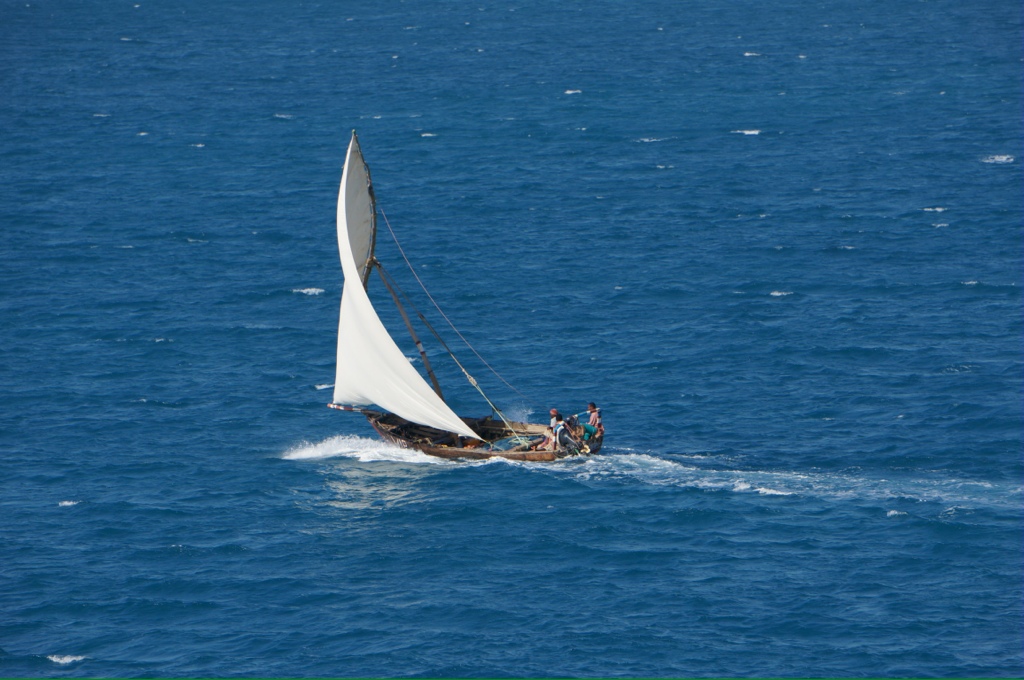
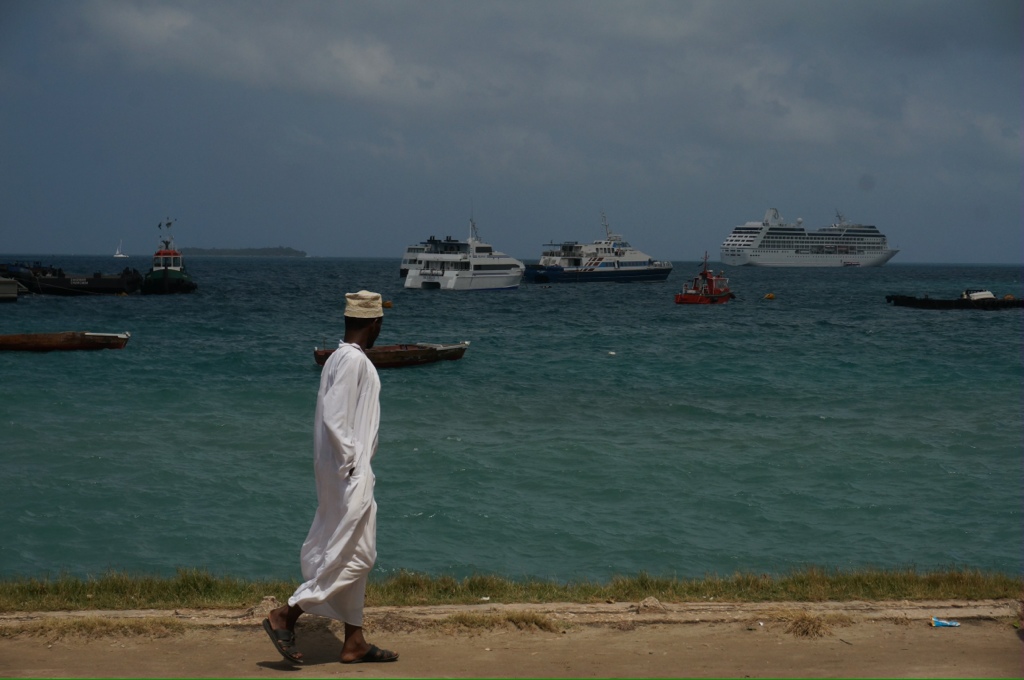
Zanzibar is an island, part of an archipelago, about 25 kms off the coast of the mainland, we are anchored off the main island. From the ship we have a view of a lovely setting – azure blue water, white sand beaches on the large islands and surrounding small islands. Lots of small sailboats – single sail, lateen rig? Loose footed, long leading edge that is hoisted about the middle to top of a short mast. Some of them not so small, maybe 30 feet.

20131227-195217.jpg

20131227-195159.jpg

20131227-195115.jpg

20131227-195016.jpg

20131227-194925.jpg

20131227-194835.jpg

20131227-184930.jpg

20131227-184834.jpg

20131227-184731.jpg

20131227-184639.jpg

Posted in Uncategorized | 2 Comments

Dec. 26, Mombasa, Kenya

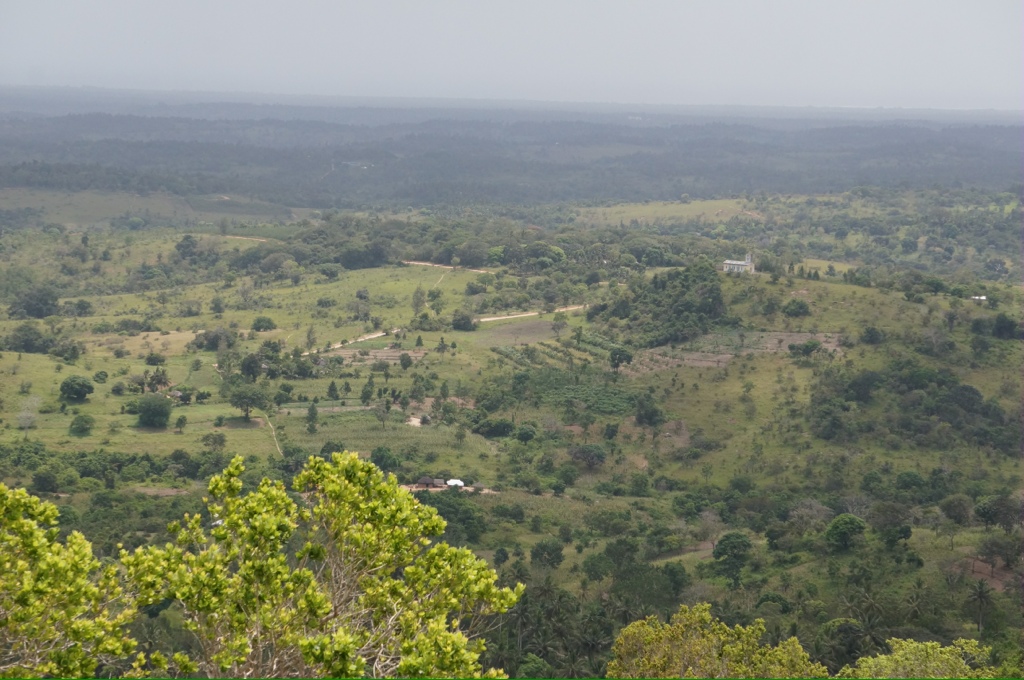
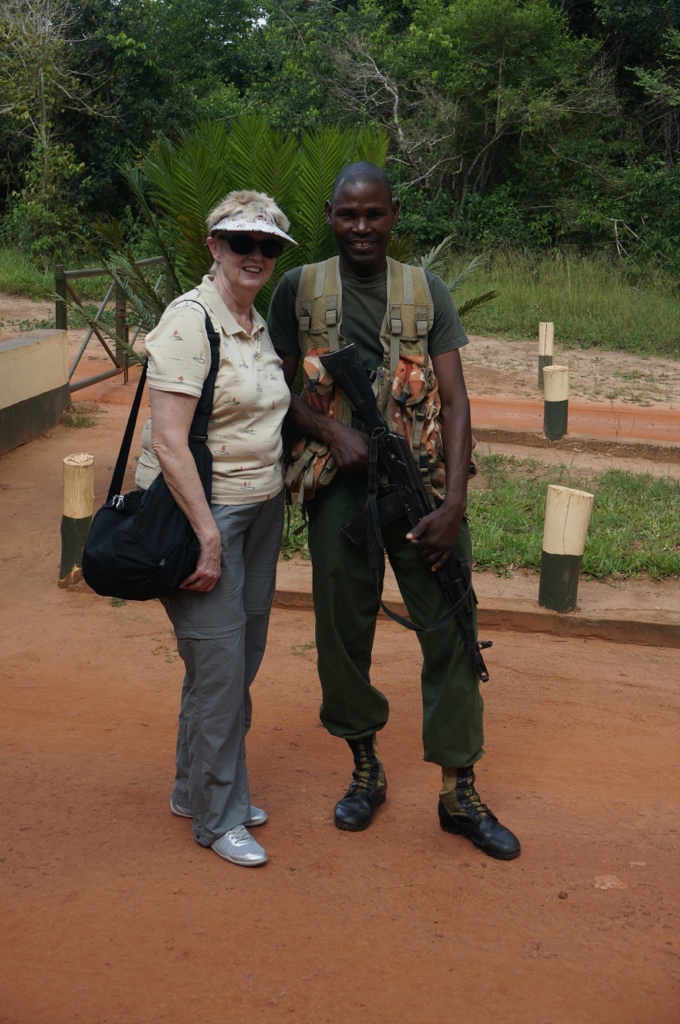
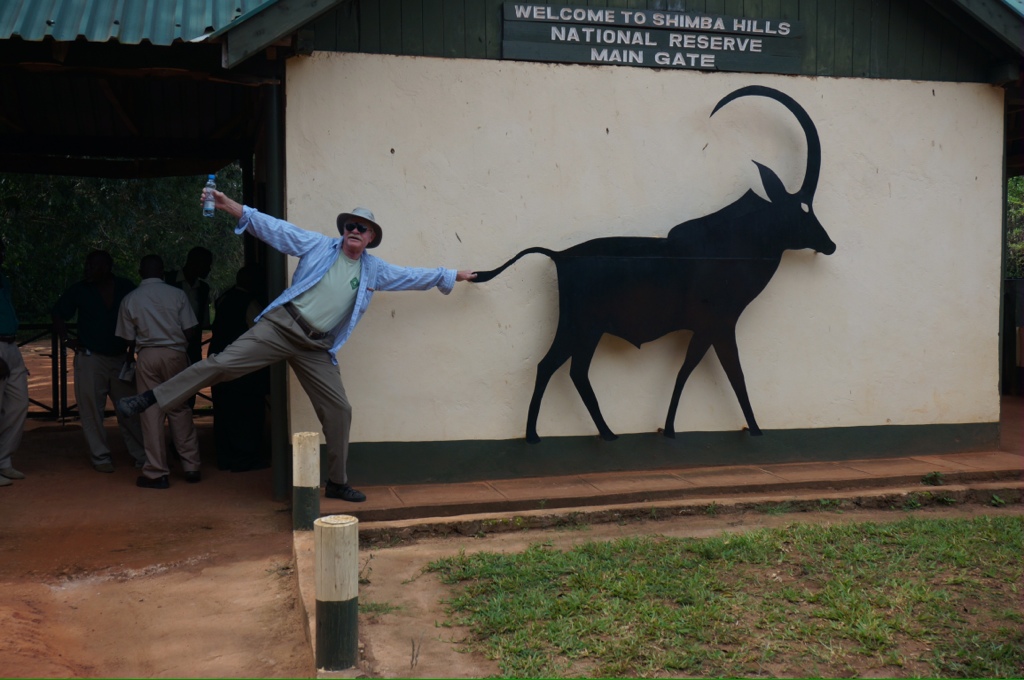
Today we went on a game drive in Shimba Park. The park is about 1 1/2 hour drive from the port. The port is on an island and we have to take a ferry to get to the mainland. The vans we go in are basic – no air conditioning, little comfort, pop top to view animals, seats 7, so our little group toured together.
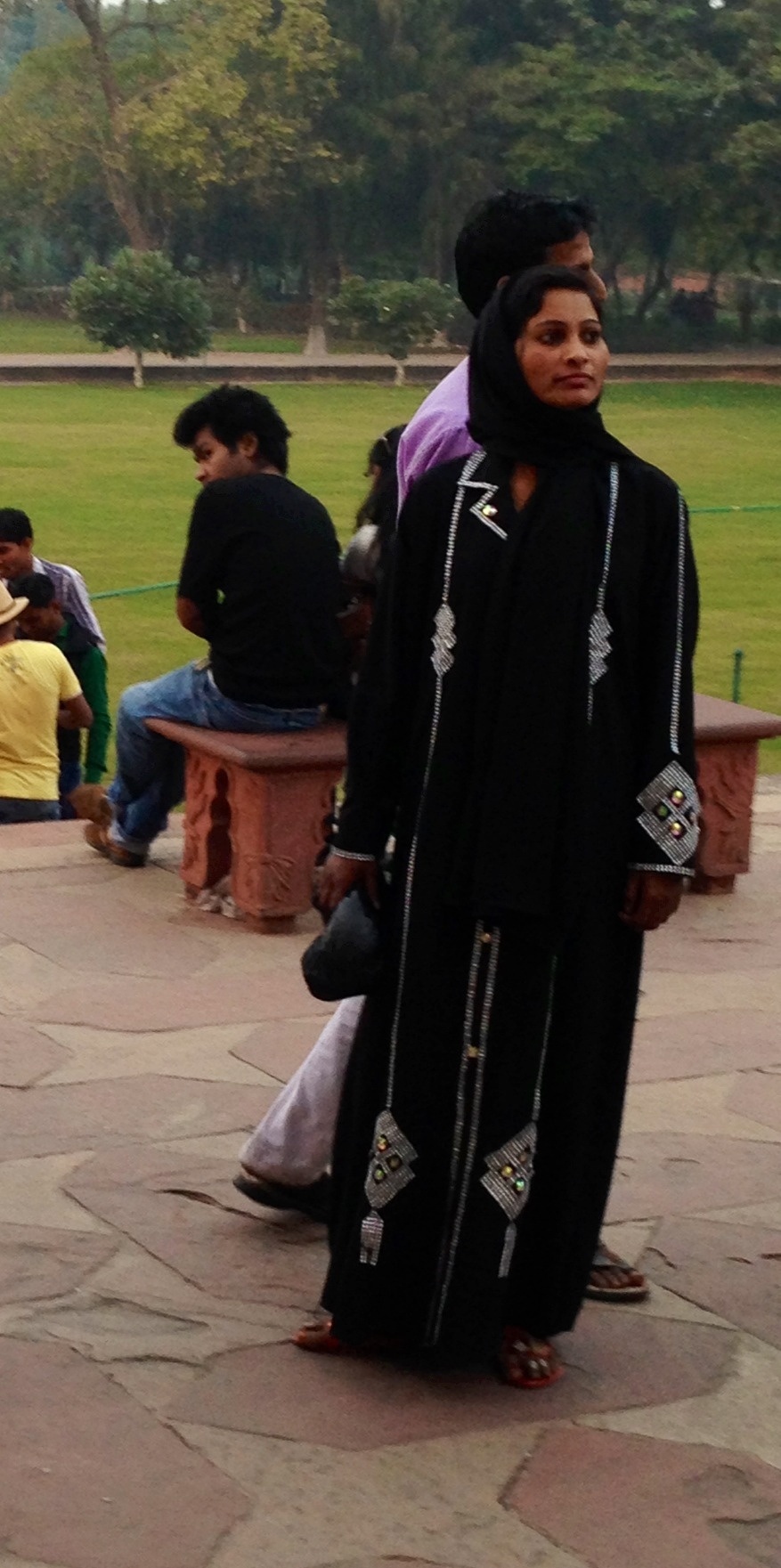
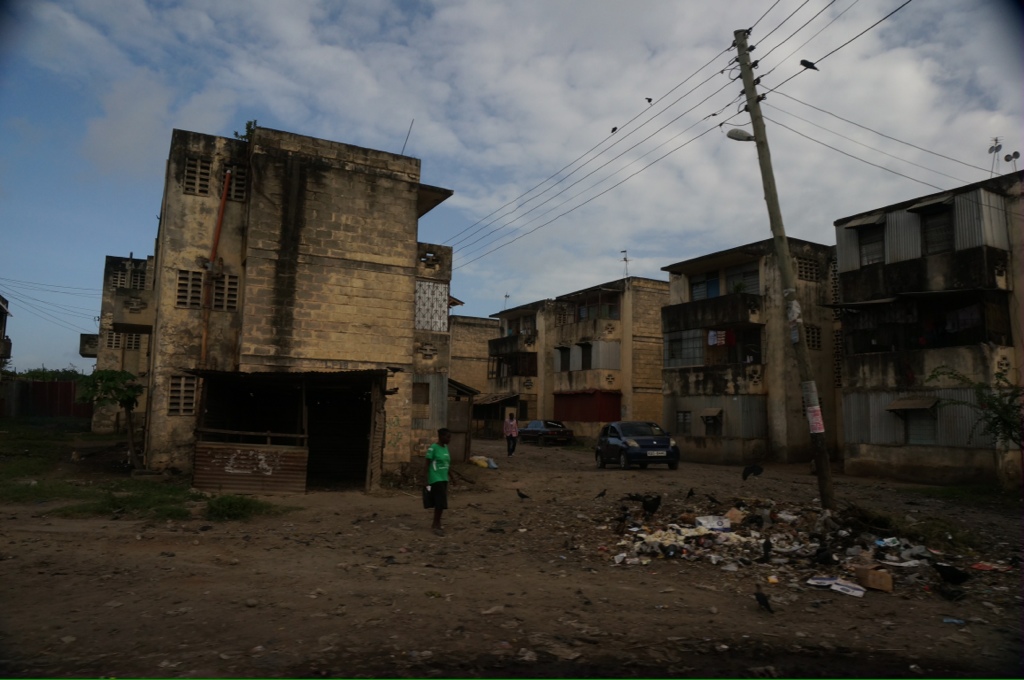
The drive to the park reminder us of our earlier trip to Kenya – garbage piled on side of road, little shacks selling everything, half finished buildings, dirty run-down building, mud huts with thatched roofs, dirty, shoeless children. This is a Muslim country and many of the women are dressed in the traditional Muslim black robes, some with their faces covered. Those not in the black robes often wore brightly colored long skirts with shawls covering their heads or sometimes bright turbans.
We see many young men sitting beside the road, sometimes with motorcycles. Kids on bicycles often with no,shoes.
As we wait in line for the ferry young men walk to the van selling trinkets, cashews, toys.
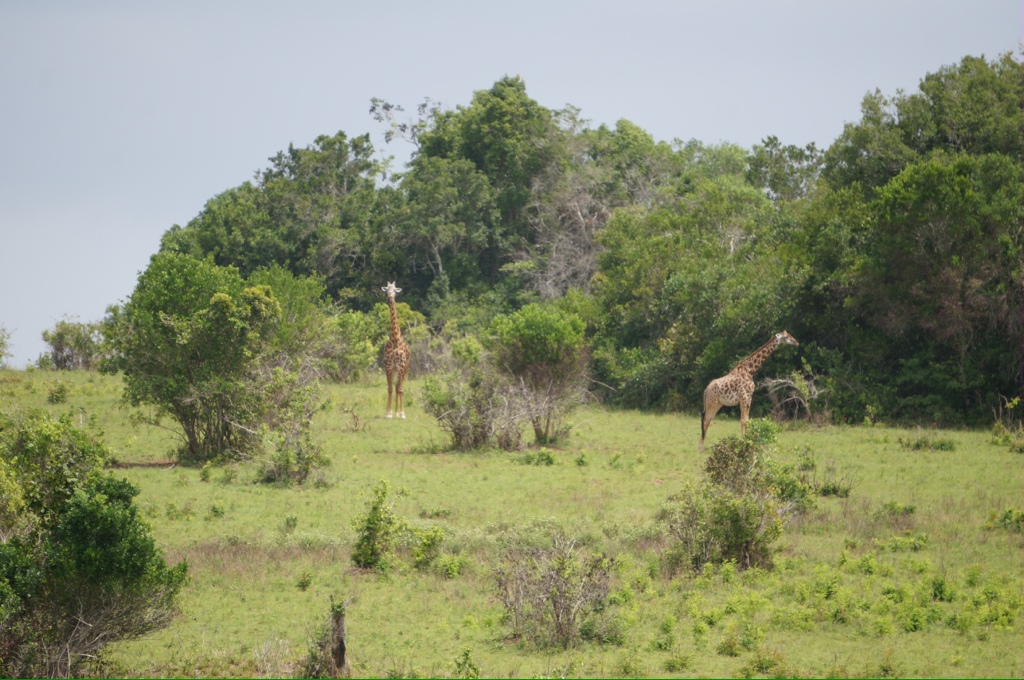
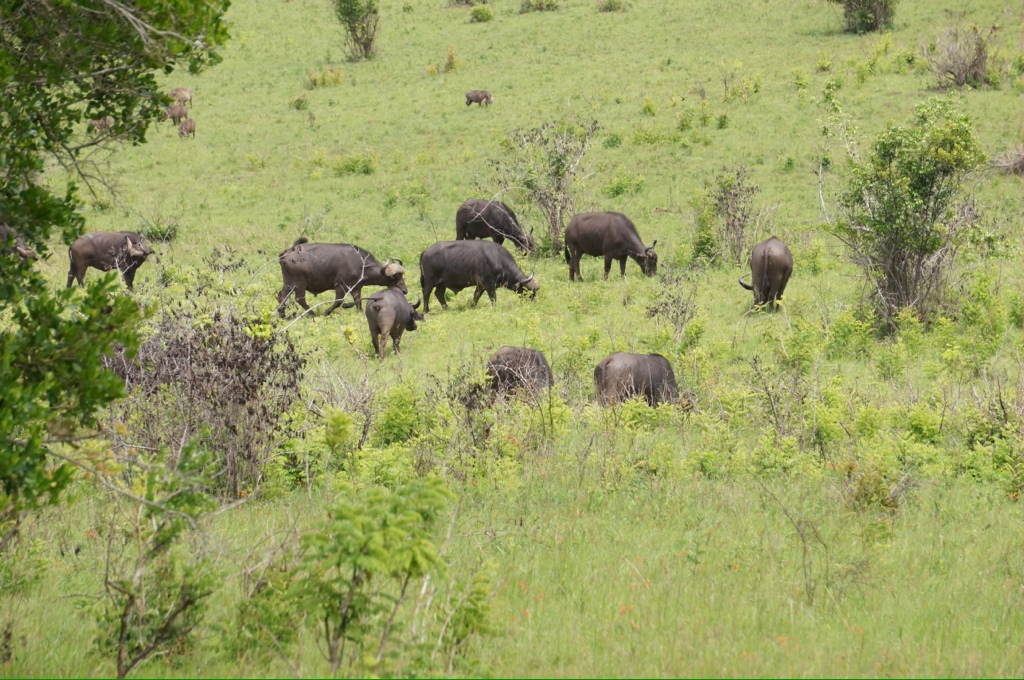
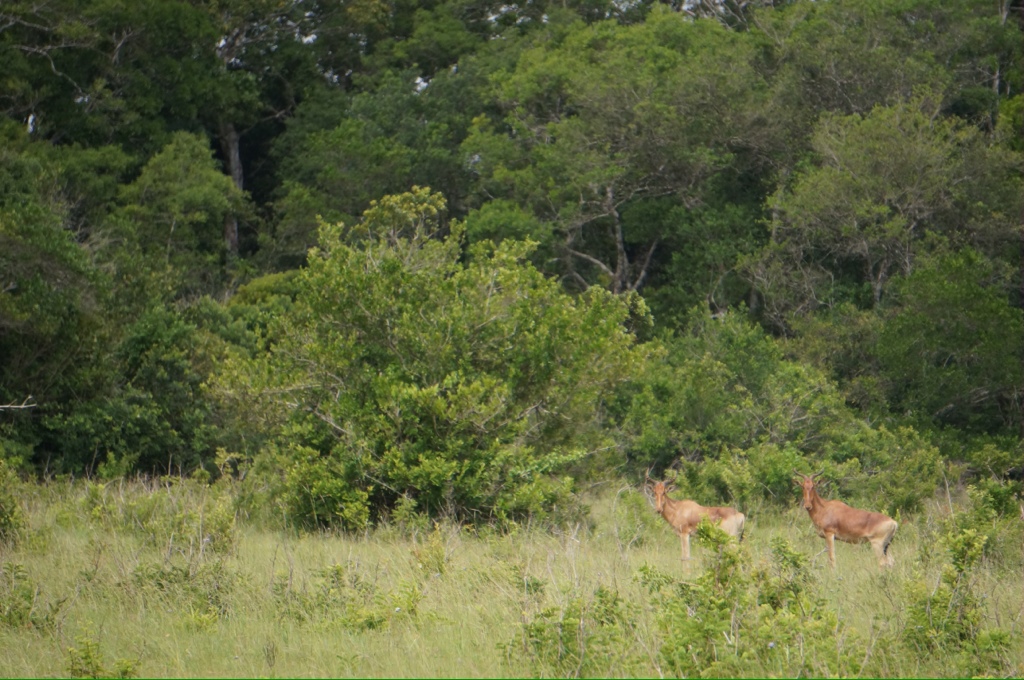
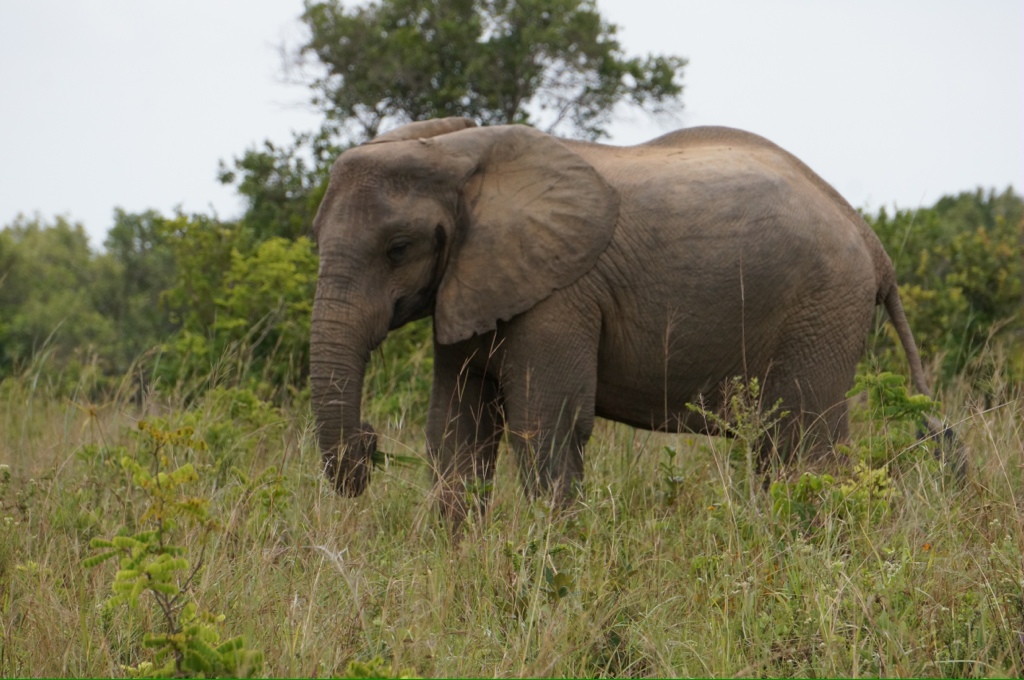
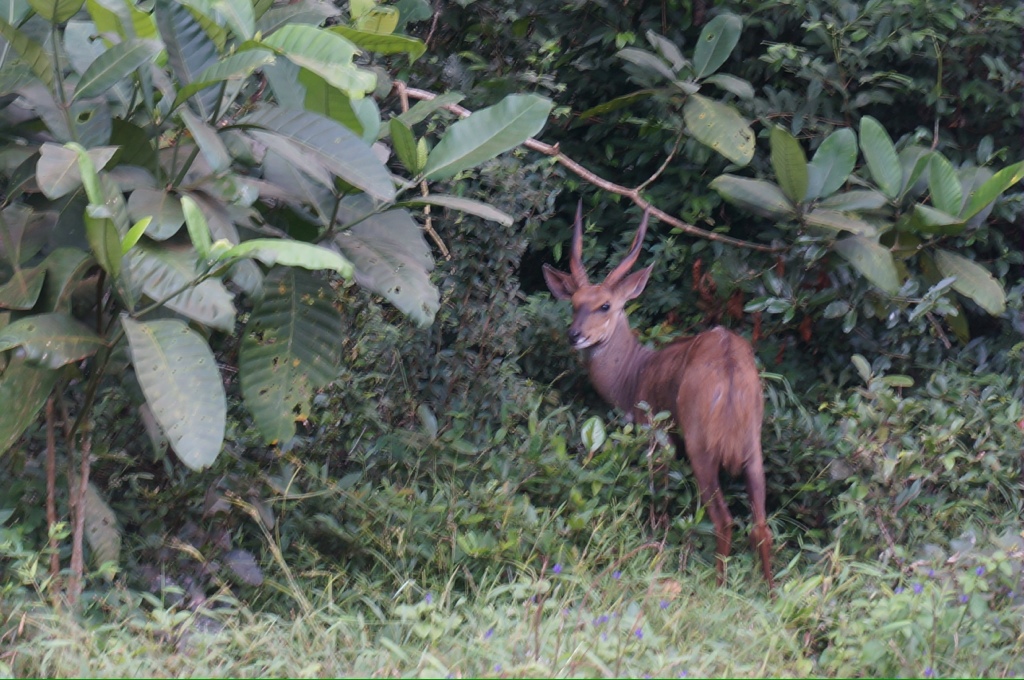
On the game drive we see a variety of animals, not in large quantities, but we understand there are more in the park.
At the ferry, the park and along the roads we see many army/guards all armed with semi-automatic weapons, both men and women.
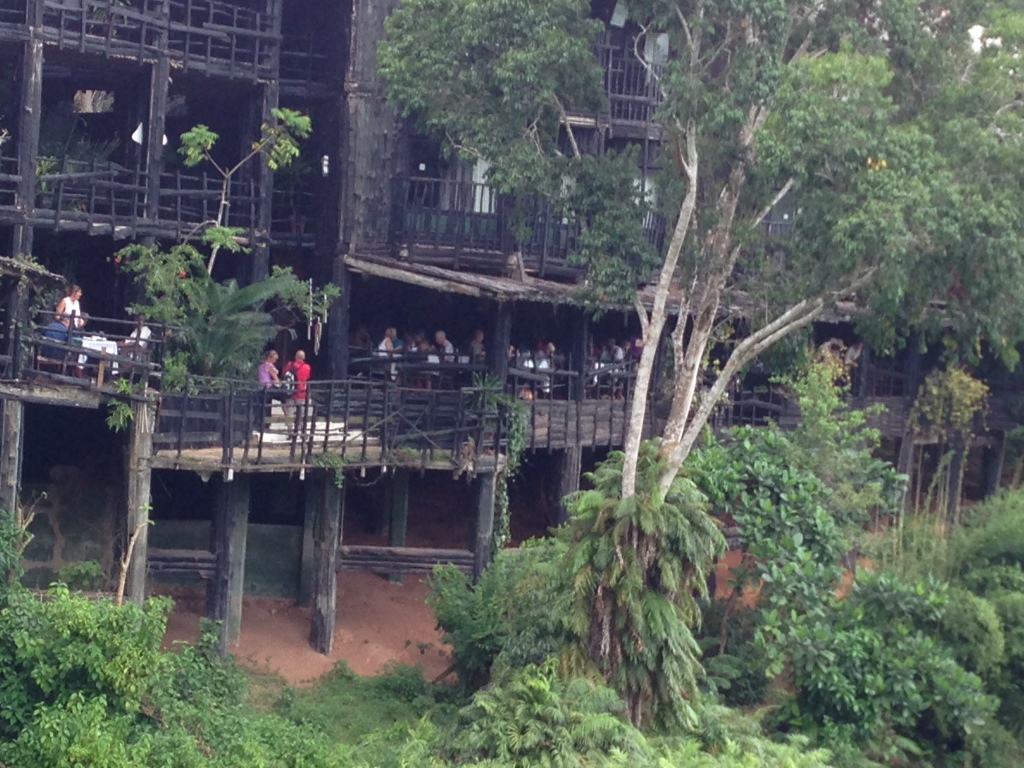
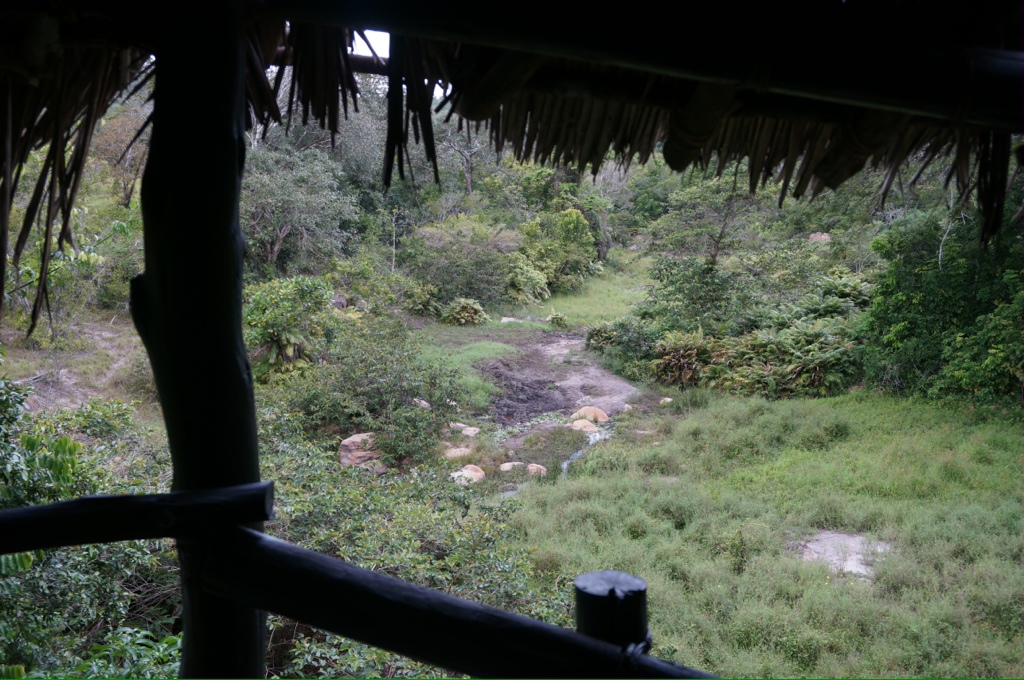
We have lunch at a resort in the park. Very basic, built by a small pond with animal trails leading toward the water. The food service is chaotic and the food is hardly edible, however with the meals on the ship we are likely spoiled and don’t miss one meal.
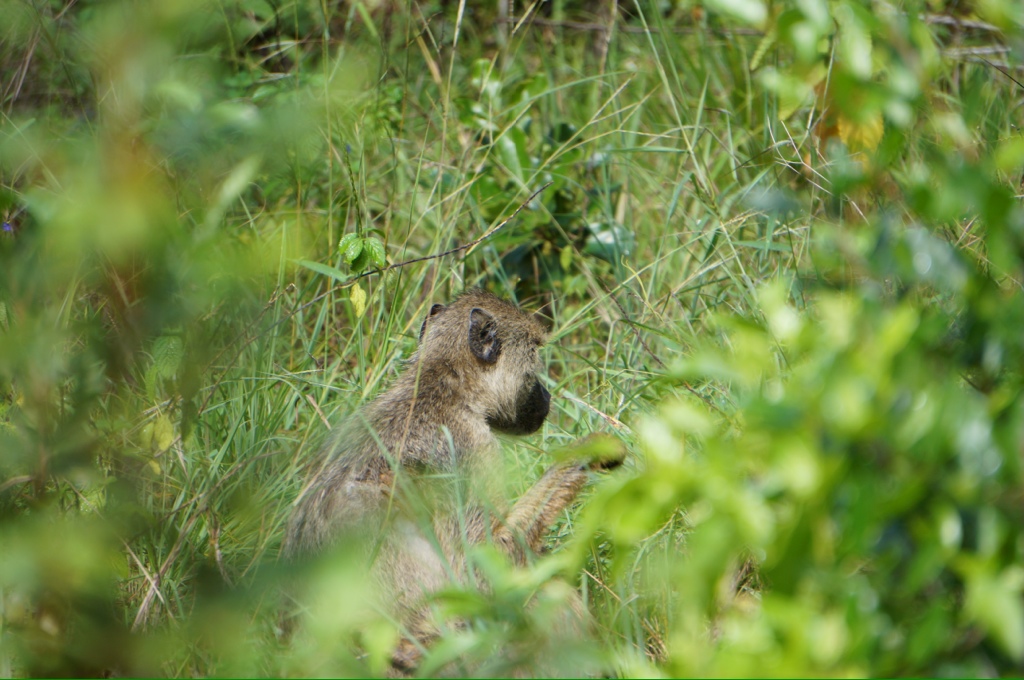
We saw elephants, bush bucks, giraffes, sable, gazelle, monitor lizards, cape buffalo, baboons, fish eagles and wart hogs.

20131227-153025.jpg

20131227-153004.jpg

20131227-152846.jpg

20131227-152738.jpg

20131227-152624.jpg

20131227-152506.jpg

20131227-152331.jpg

20131227-152207.jpg

20131227-152105.jpg

20131227-151959.jpg

20131227-151912.jpg

20131227-151821.jpg

20131227-151750.jpg

20131227-151620.jpg

20131227-151433.jpg

20131227-151217.jpg

Posted in Uncategorized | Leave a comment

Christmas at Sea

It has been very Christmasy here despite the lovely sunny, warm weather.
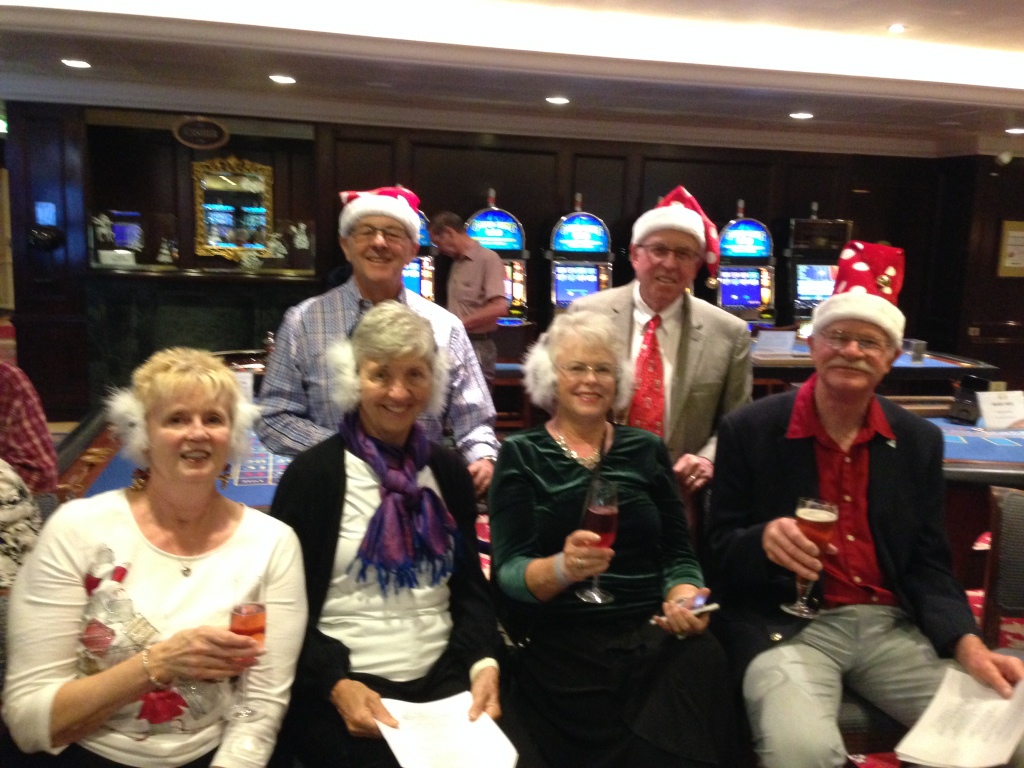
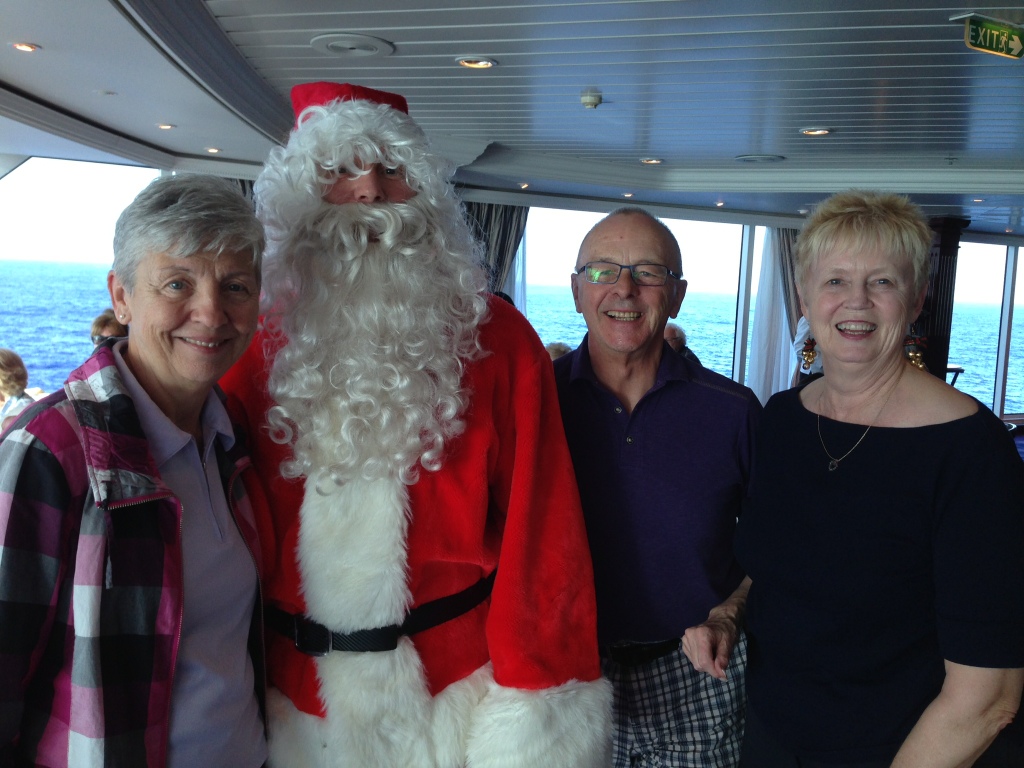
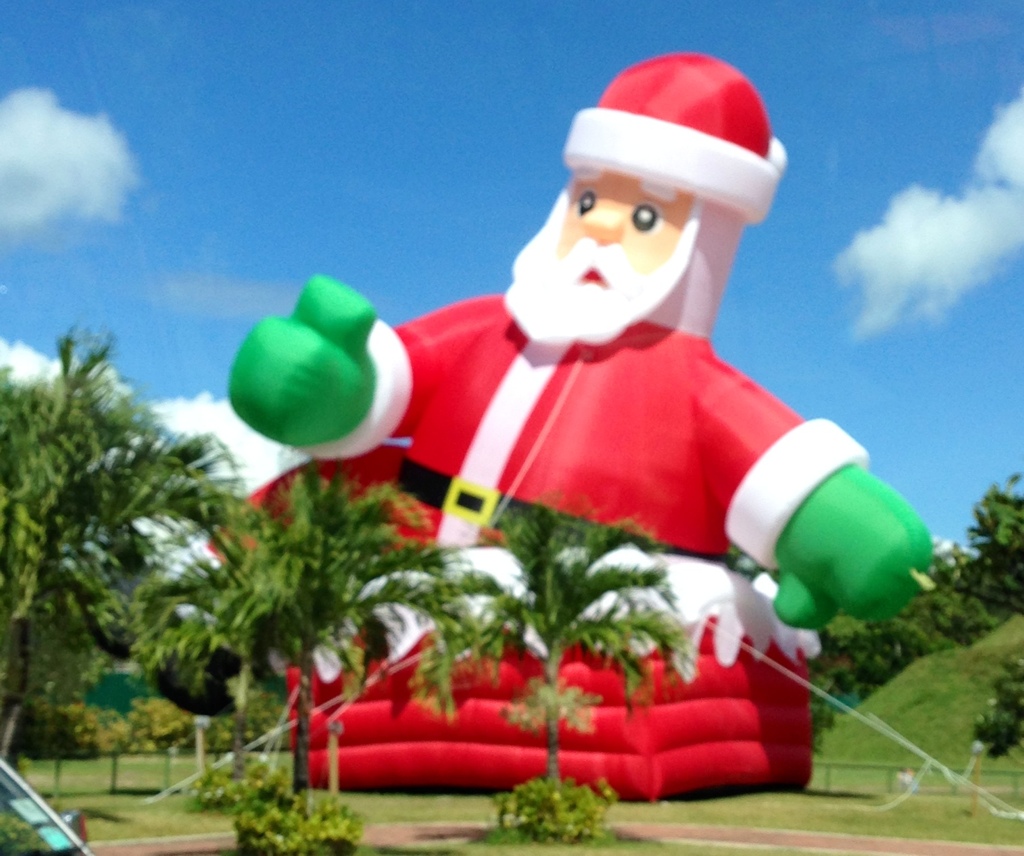
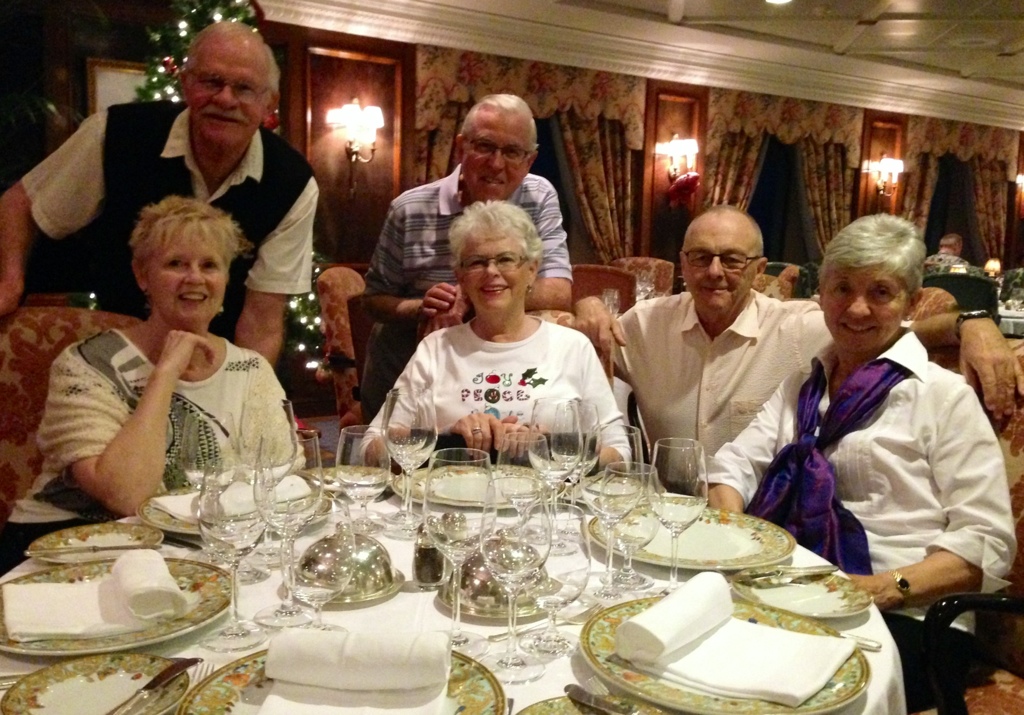
Christmas decorations everywhere, a carol sing on Christmas Eve, turkey dinner, Santa came to visit during tea time. We did a gift exchange beside one of the Christmas trees this morning.

We are thinking of everyone back home and hope you all are having a very Merry Christmas. We have been reading about the weather problems and hope you are all safe and able to get together with your families.

Travel safe, have a Merry Christmas and all the best for the coming year.

20131225-125011.jpg

20131225-125001.jpg

20131225-124949.jpg

Posted in Uncategorized | 2 Comments

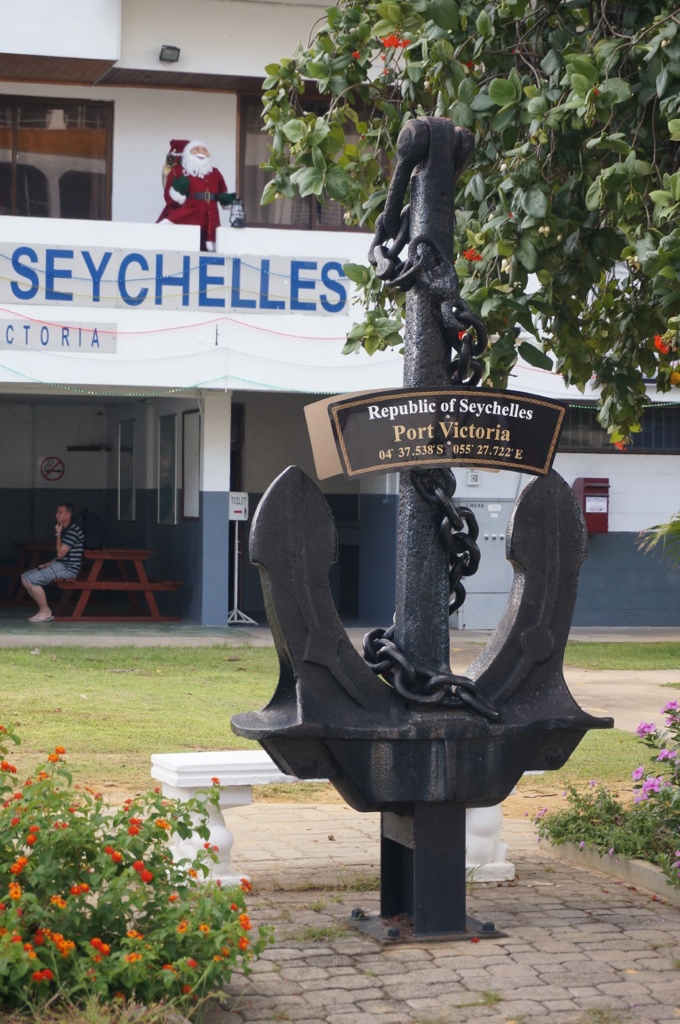
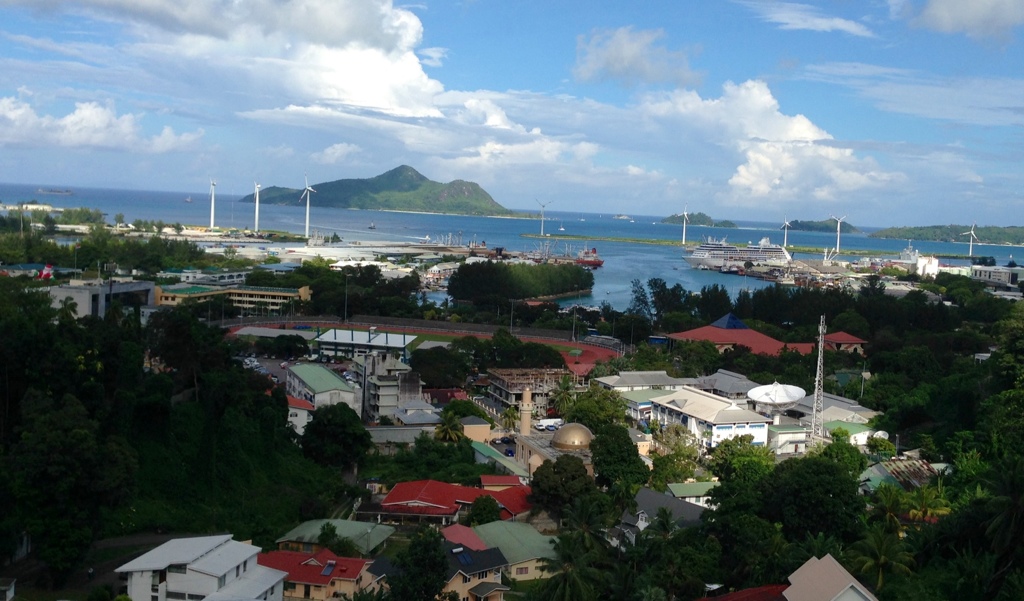
Dec. 23 Victoria, Male, The Seychelles

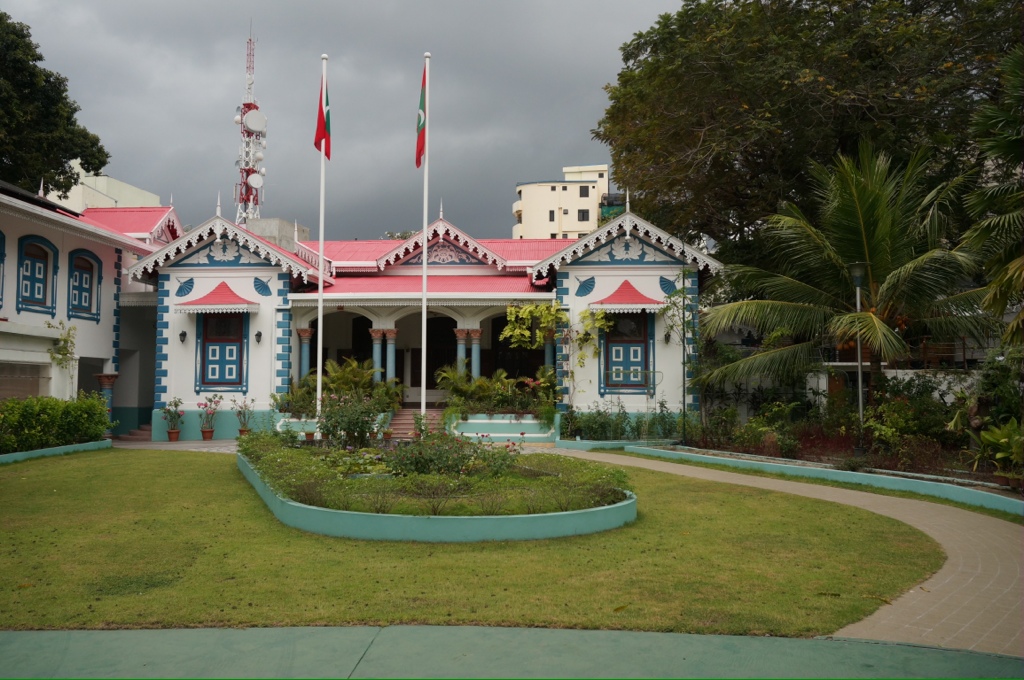
The Maldives are low lying coral islands that just barely break through the waters, the highest point only one meter above sea level. The Seychelles are the opposite, a series of mountainous islands rising up from the sea. It reminds me of Canada’s west coast. To add to the comparison, we are heading for Victoria, the capital of the Seychelles. It is a town of about 25,000 people. The total Seychelles population is 84,000. Victoria is on the largest island, Male.
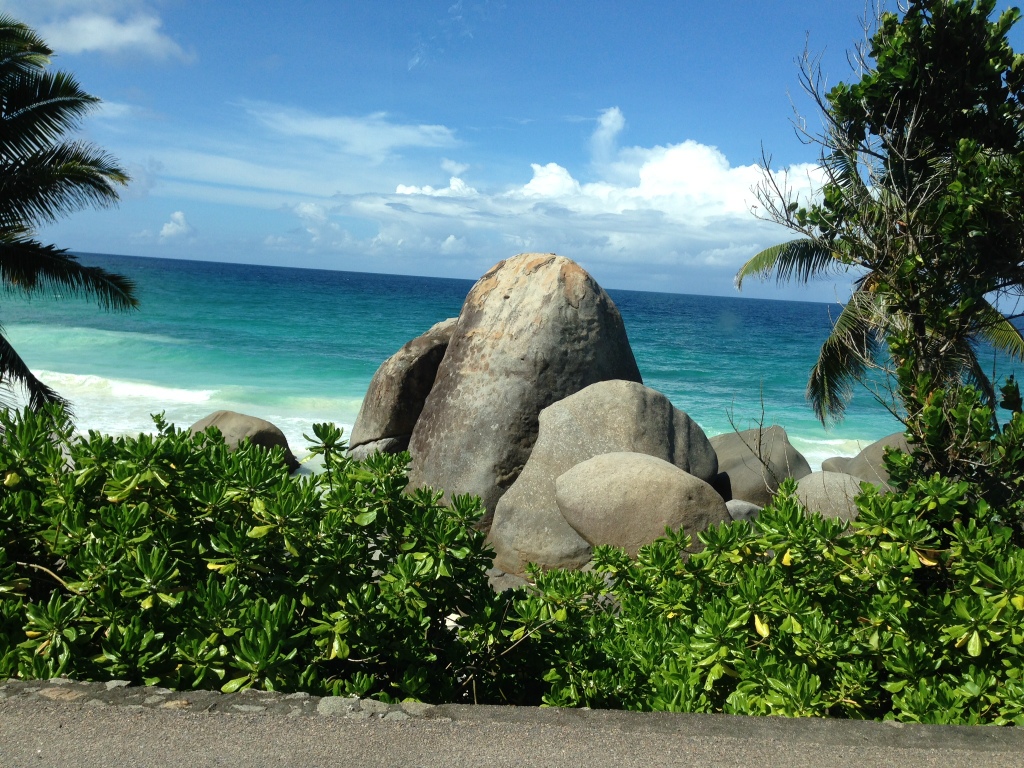
The Seychelles is made up of 115 islands, most of them granite with about 42 being coral. The difference is that the granite islands were pushed up through the water and the coral islands did not rise above the water level and coral built up creating the low lying coral islands. Only the granite islands are occupied.
Gary went to a coral reef to snorkel with the rest of our group and I went on a tour to the north part of the Island.
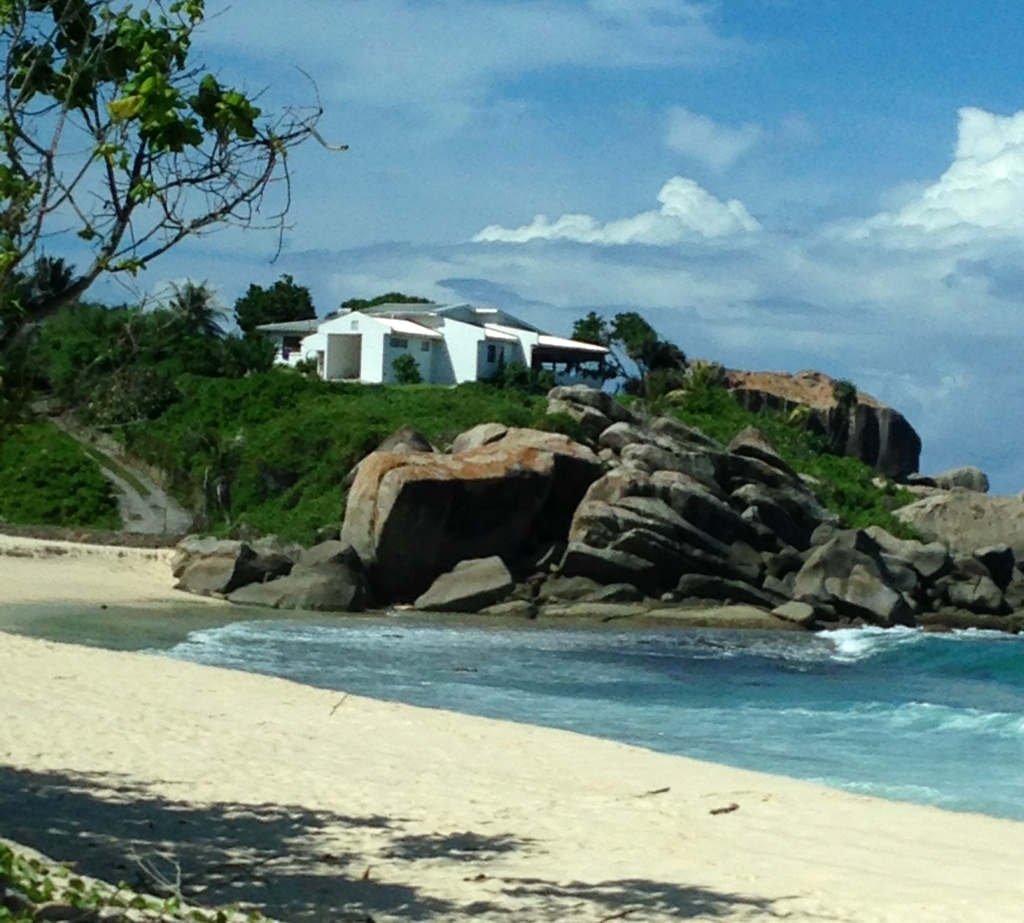
This country is a sharp contrast to every place we have visited so far – it is lush green with dense growth, it is clean and tidy, everything is well maintained, the roads are in good shape. Victoria is busy with Christmas shoppers.
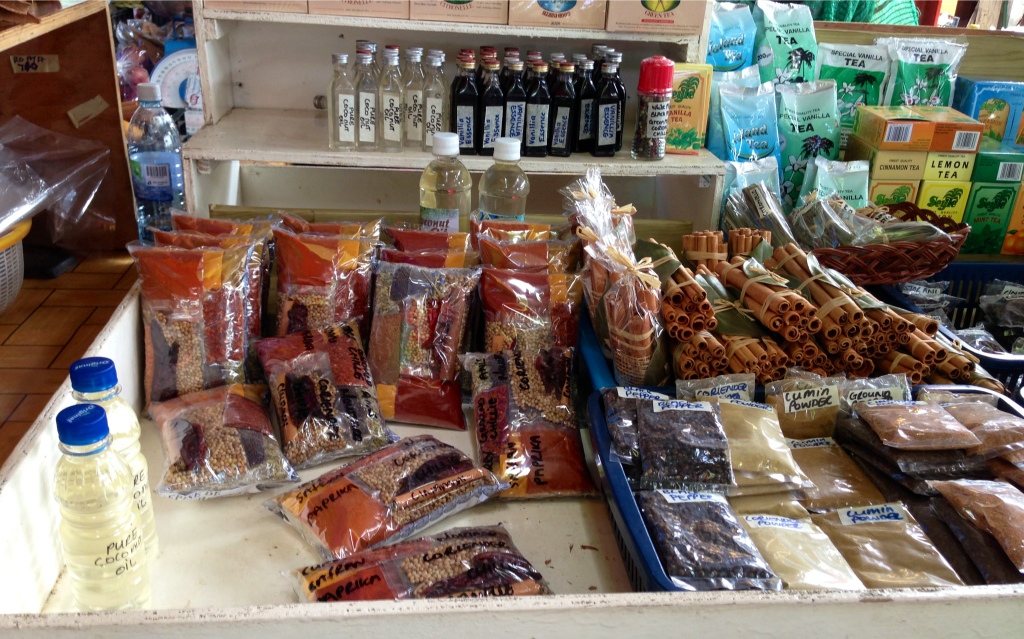
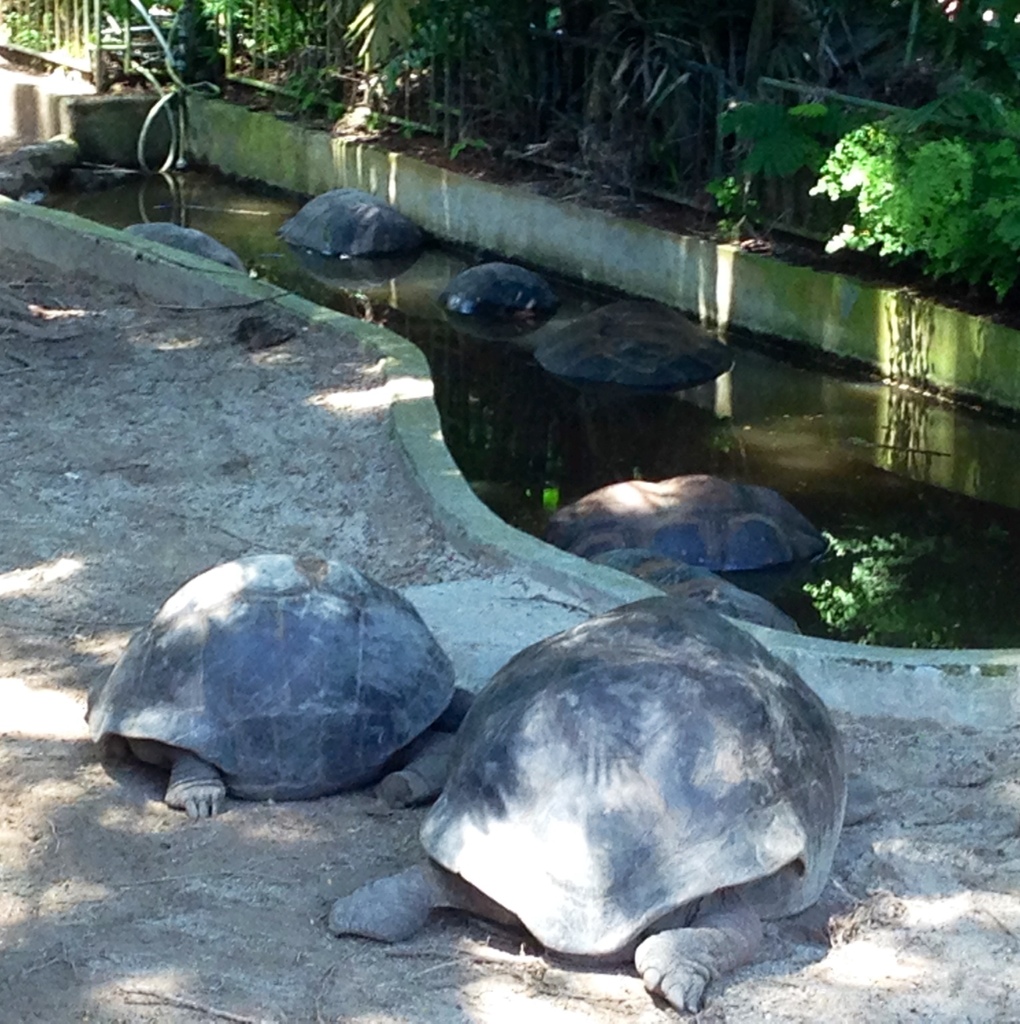
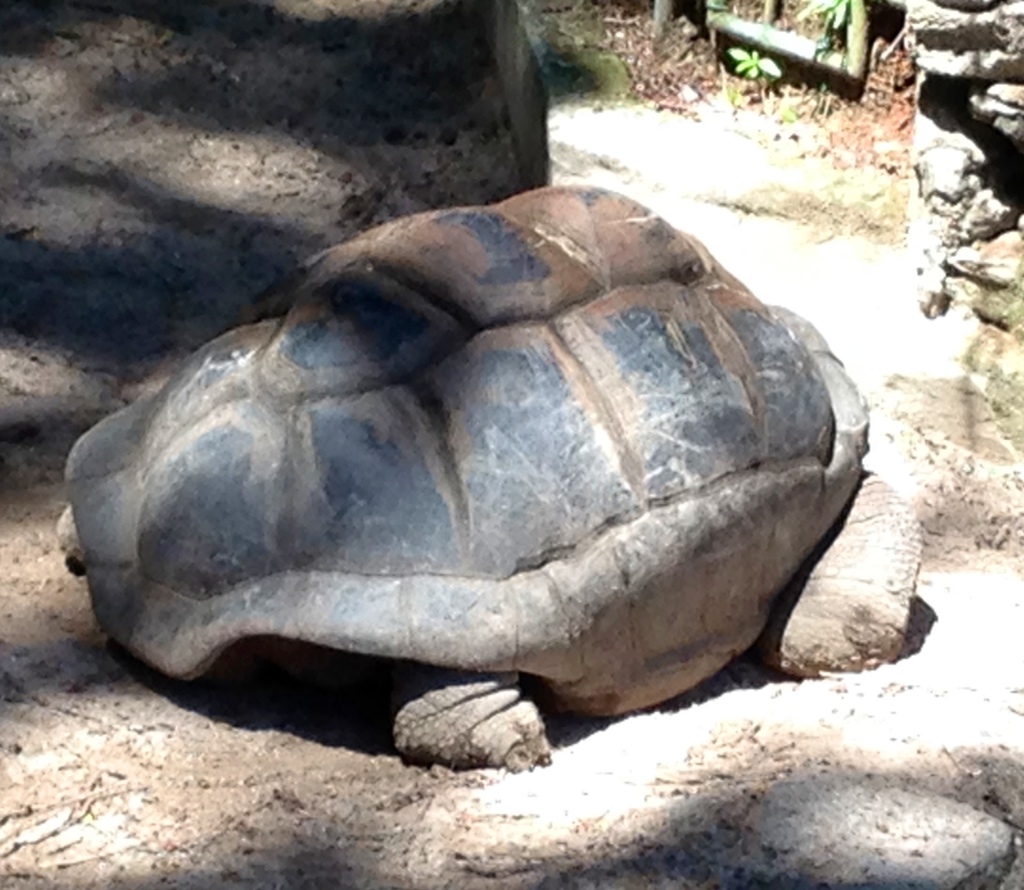
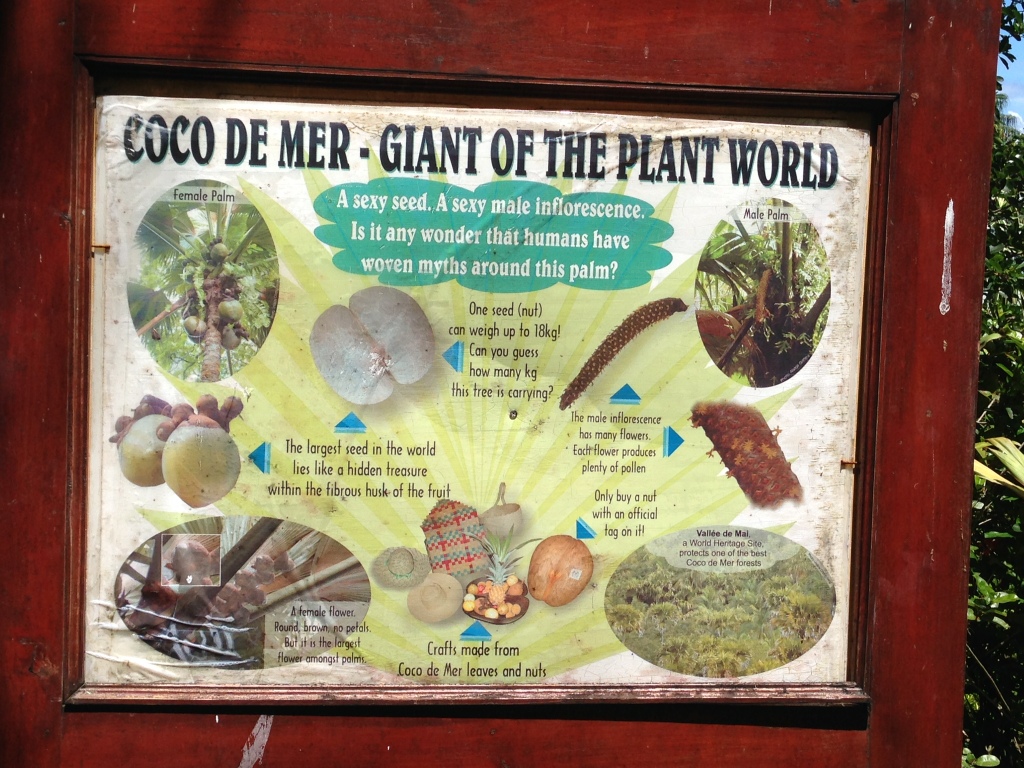
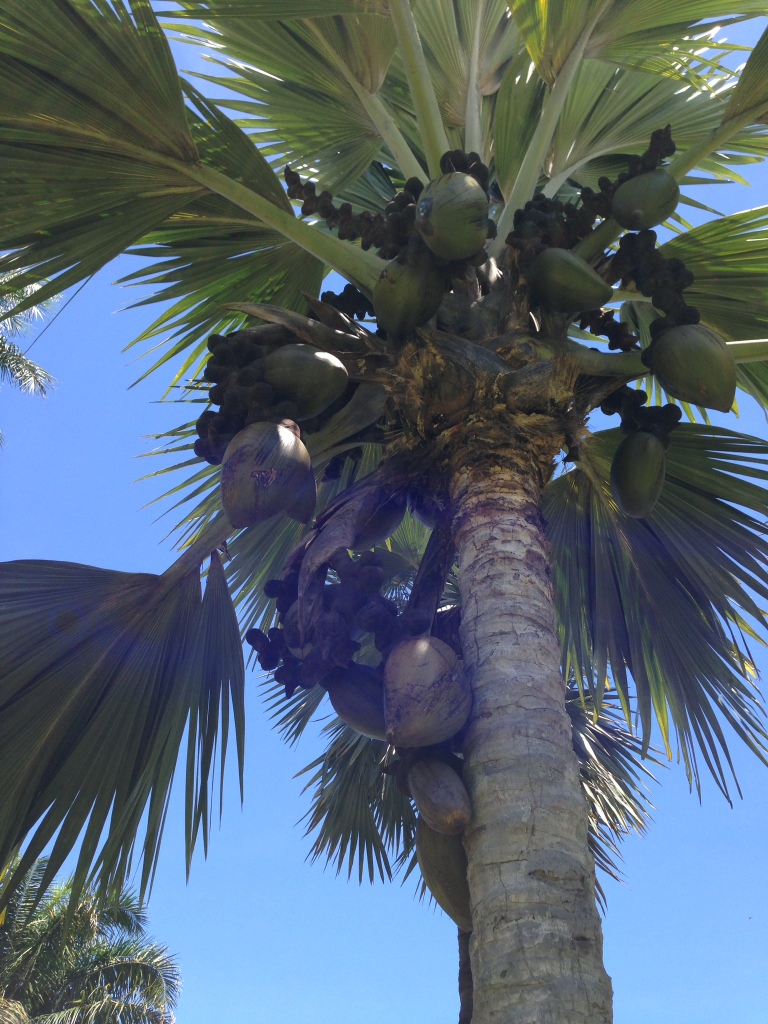
We started with a visit to the botanical gardens where we saw Coco De Mer palms (the largest nut in the world), star fruit trees, huge fruit bats and giant tortoises. There are numerous spice plantations on the island as well. Drinking water comes from rain water that is captured and a desalination plant.
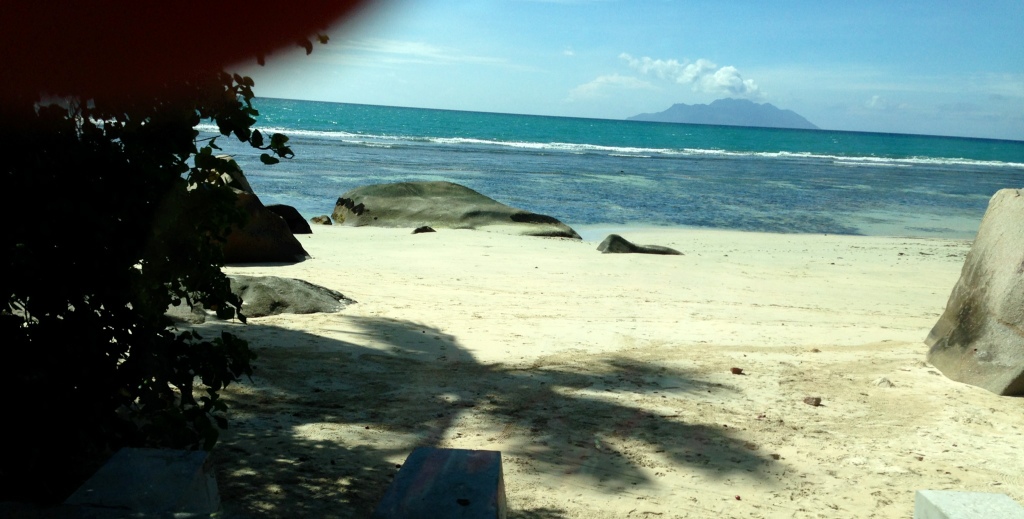
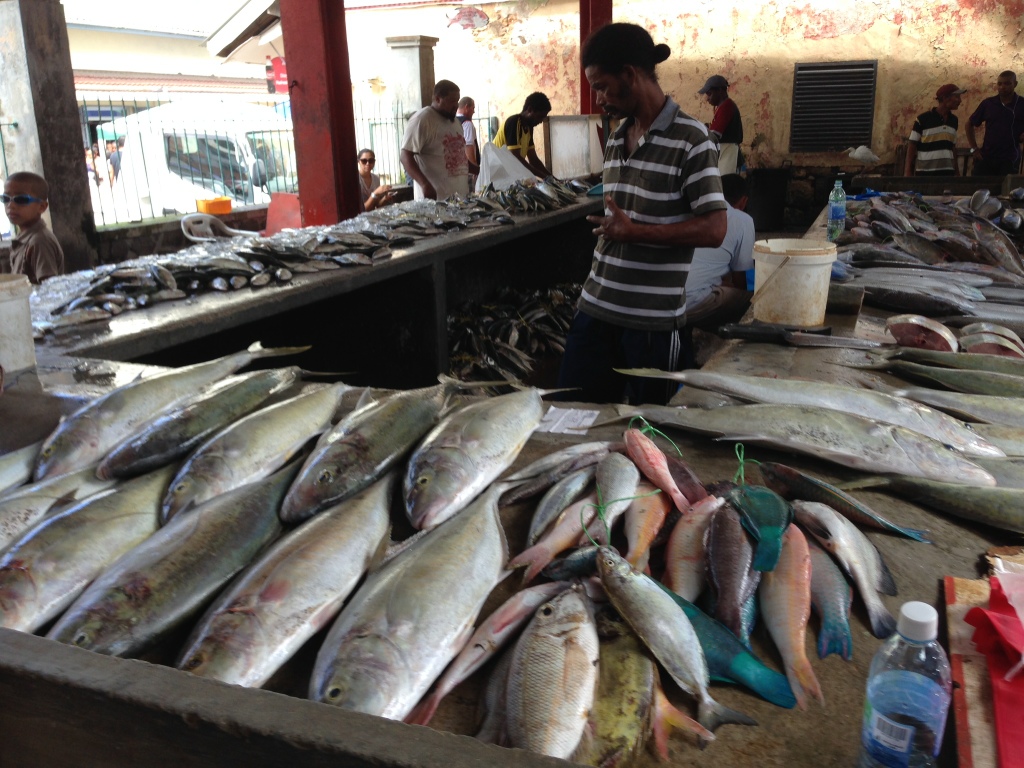
Next we had a walk through the downtown and on of the markets. Most of the produce is grown on the island and of course there was lots of fish. Many merchants sell the spices. Apparently the first spice plantation was started by Pierre Poivre (the famous Peter Pepper). We drove around one of the peninsulas, passing many white sandy beaches, large granite boulders and beach resorts. Tourism is the main industry and some of the islands are privately owned. It was one of those islands where Kate and William spent their honeymoon.
The island was first occupied in the 1700s by settlers from France, Asia and Africa. The British took control and made it a colony in 1812. Independency was declared in 1961. While there are elections for the President and members of Parliament, it sounds as though these are predetermined. An Emir from one of the Arab countries provides considerable financial assistance to the current government, including paying people to vote, as a result the current President and government has been in control for over 35 years. The Emir lives in a castle built on a mountain overlooking Victoria.
The locals refer to themselves as Creole and speak a Creole language which is a mixture of French
and one of the Indian languages. The schools teach French, English and Creole. Education is mandatory from age 4 to age 16. There is free medical care and if the hospital in Victoria cannot handle a situation they are flown to a nearby country for treatment, most of that cost is absorbed by the government. They say they are all a mixture of European, African and Asian.
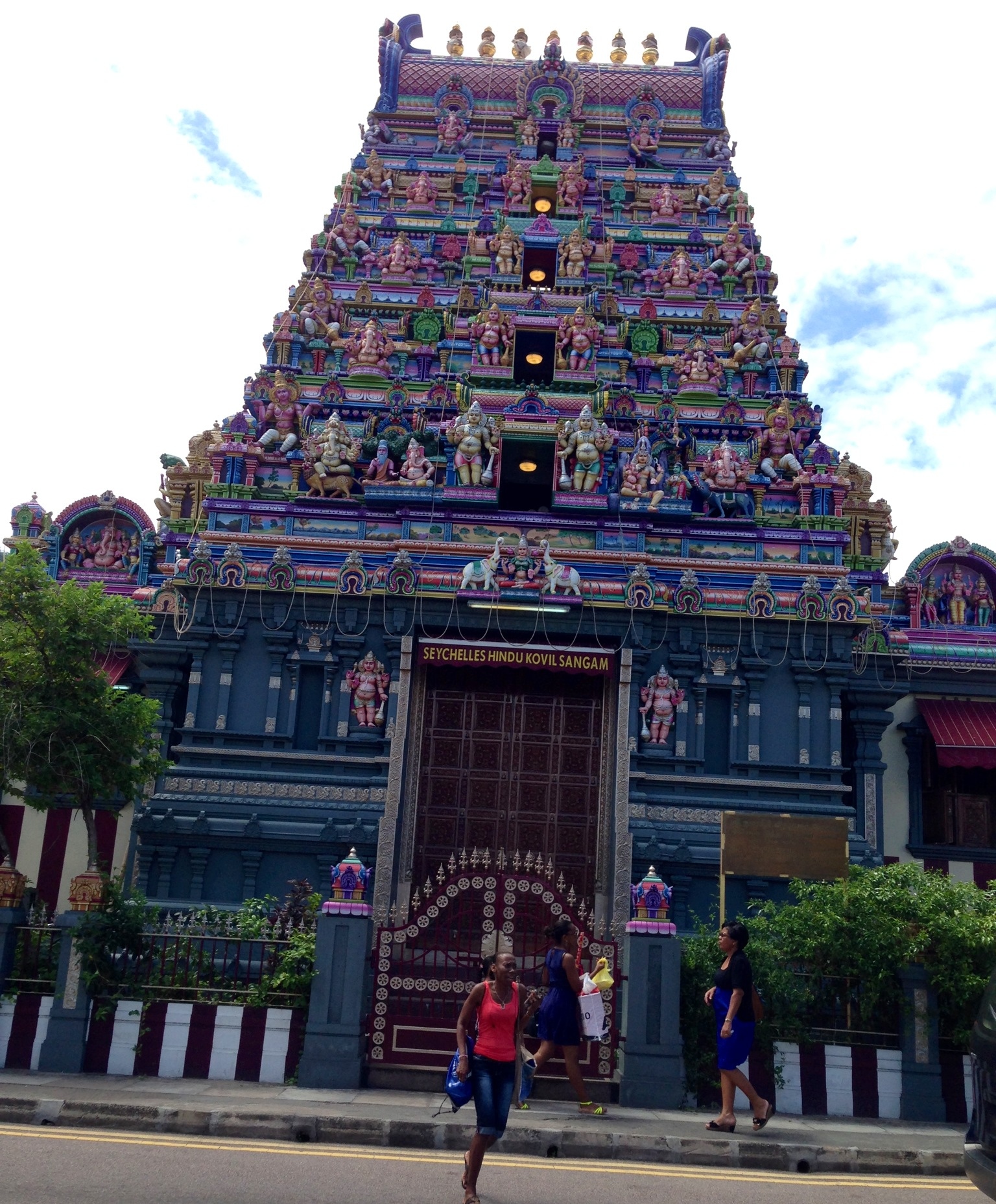
There is a replica of Big Ben on one of the round-abouts, an Indian temple, a Mosque and Christmas decorations.

20131224-111529.jpg

20131224-111426.jpg

20131224-111251.jpg

20131224-111020.jpg

20131224-110854.jpg

20131224-110833.jpg

20131224-110812.jpg

20131224-110753.jpg

20131224-110728.jpg

20131224-110700.jpg

20131224-110326.jpg

20131224-110406.jpg

20131224-110315.jpg

20131224-110213.jpg

20131224-110200.jpg

Posted in Uncategorized | 1 Comment

Dec. 21 & 22 Sea Days

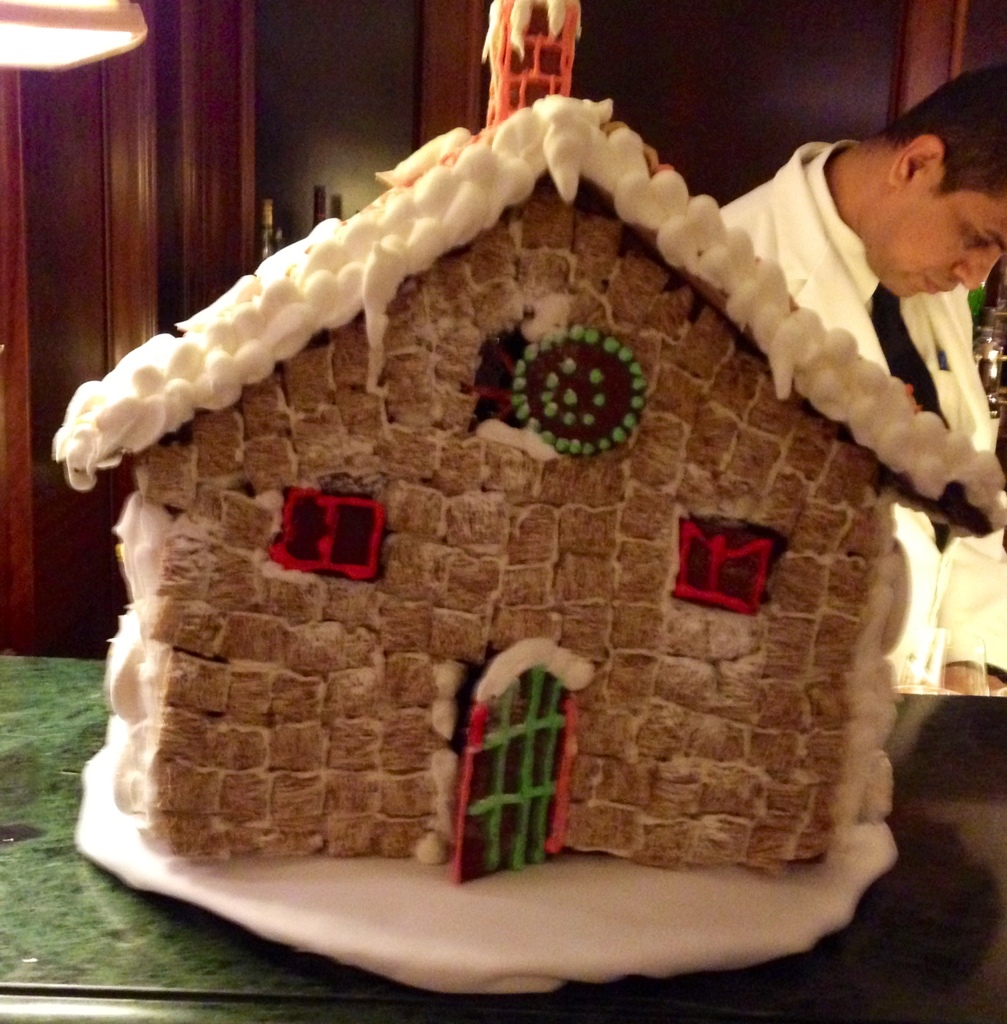
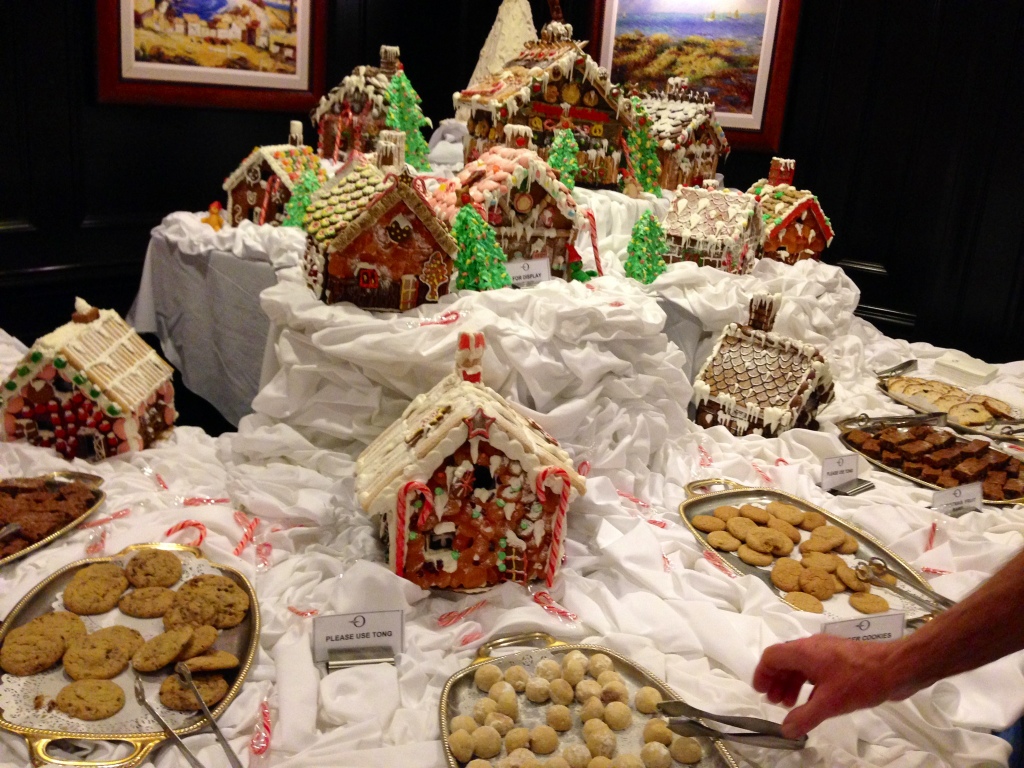
Lots to do (and eat) on our sea days. The kitchen has made many ginger bread houses, there is one large display and some on the bars. They do not appear to be made of ginger bread but all kinds of foods – lady fingers for logs, shreddies for bricks, macaroons for tiles etc.
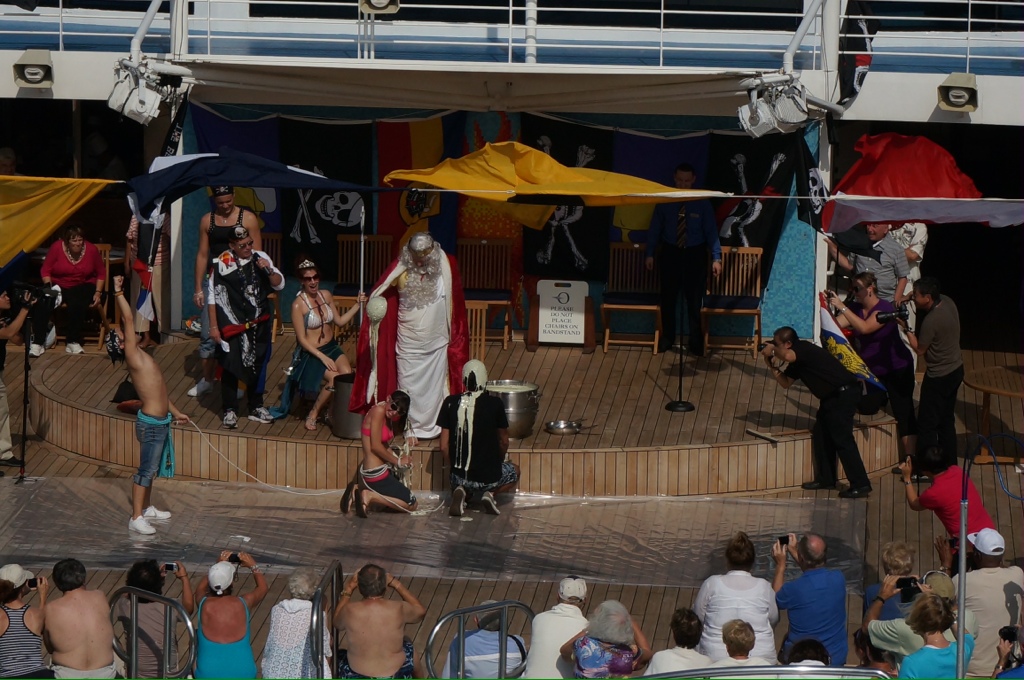
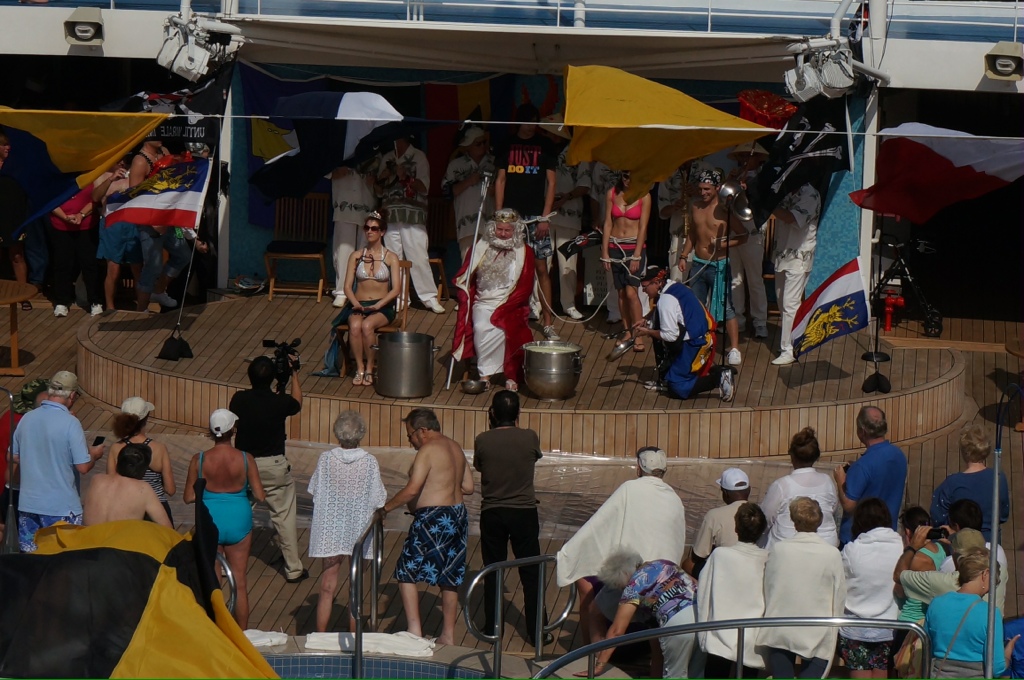
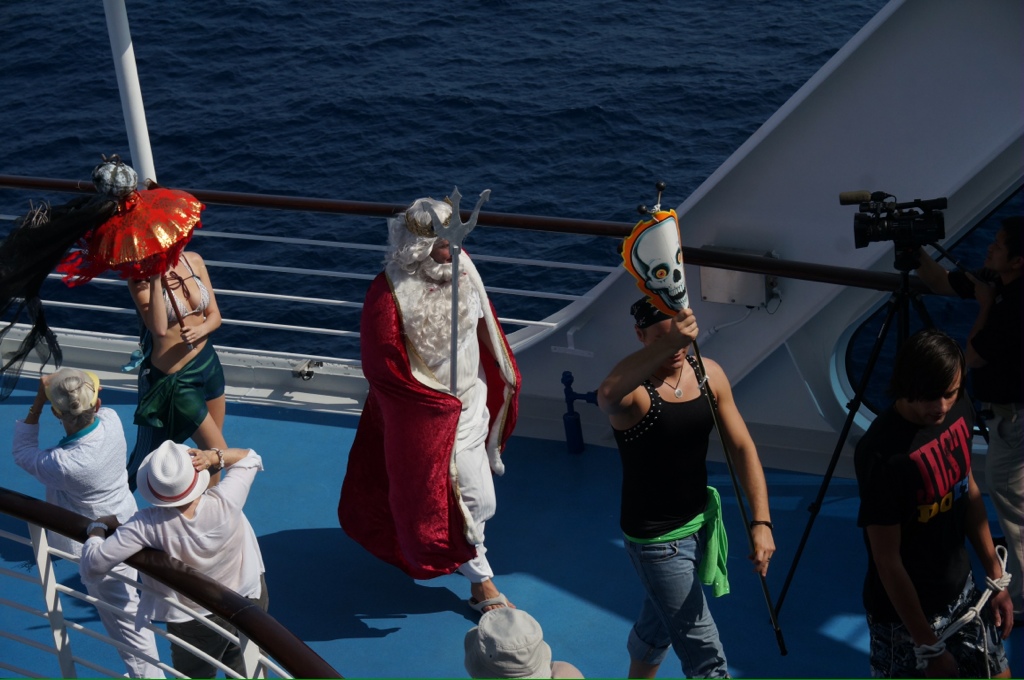
When we crossed the equator King Neptune and his wife Neptuna came aboard to baptize all the polliwogs (anyone who has not crossed the equator by sea before). Once you are baptized you are a shellback. King Neptune looked a lot like Santa Claus! Polliwogs are not permitted to cross the equator by sea and if a ship has any polliwogs aboard at crossing bad things will happen.
Each polliwogs had to kiss the fish on the lips (it looked like a red snapper) then bow before King Neptune. The king then baptized them with either a white goop or water. The crew had no choice they got the goop, passengers had a choice.
We have a very interesting speaker on board, Robert Schrire. He is a professor at Princton and is speaking about world politics, economics and his view of possible scenarios going forward. He has consulted with world leaders including Nelson Mandela, who he will be speaking about today.
Linda, I have been going to the gym, however, I have also been enjoying the food (there is chocolate everywhere!). There is also team trivia (our group plays every day), various golf games, wine tastings, high teat every day etc.
The captain has told us there is a cyclone in the Indian Ocean, however, it is a long ways from us and he does not expect any problems except maybe a little cloudiness and some swells. So far our weather has been excellent, we had about 1/2 hour of light rain in Male, otherwise clear skies and not too hot.
Nancie and Ross, a couple we met told about the Follies that are on in Palm Desert. Apparently it features retired professional performers, including some big names that live in the area, and is an excellent show. They said we should go while we are there. It runs until April and this will be the last year.

20131222-094528.jpg

20131222-094433.jpg

20131222-094335.jpg

20131222-094234.jpg

20131222-094221.jpg

20131222-094206.jpg

Posted in Uncategorized | 1 Comment

Dec. 19 & 20 Male, Maldives

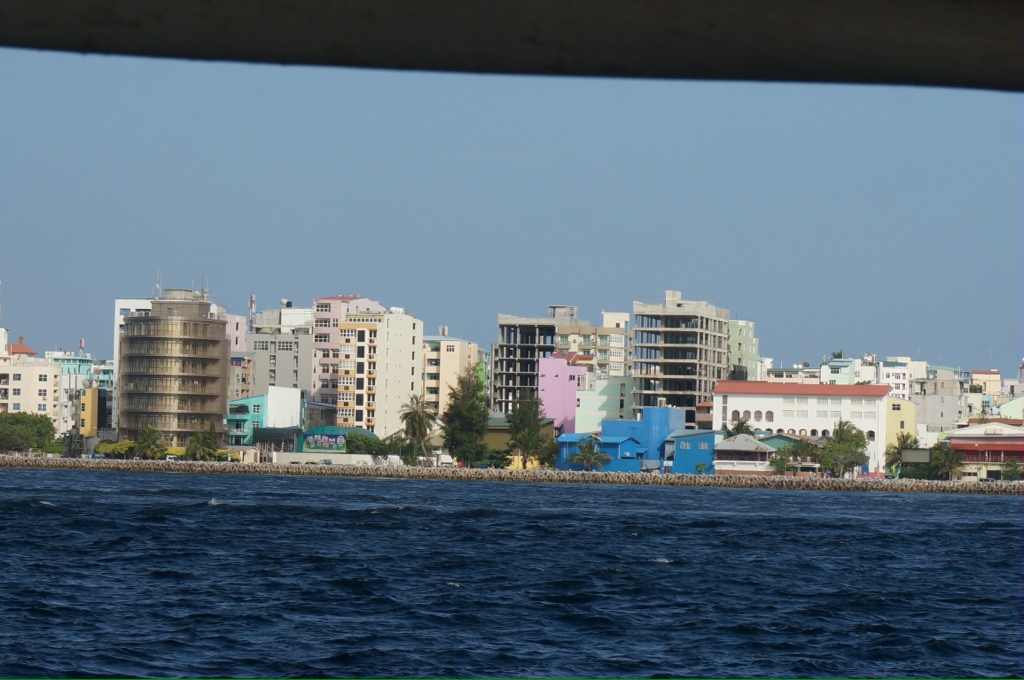
The Maldives is a country consisting of 1190 small islands (atolls), 192 of the islands are inhabited and another 109 islands are resorts (we understand very exclusive and expensive). Only one resort is allowed on any island. The population of the country is 315,000. Male is the capital and is an island measuring 2 km by 1 km. Half the population, 150,000 live in Male. It is shore to shore buildings and the island has been more than doubled in size with reclamation projects. The highest altitude is only about one meter, a good tsunami would wipe out the whole country.
Th Maldives are considered to be a “bell weather” for global warming. As the oceans rise it will be the first to experience problems and may disappear.
The last big tsunami destroyed about 65% of the buildings and 20 people were killed (amazing there wasn’t more damage and casualties.)
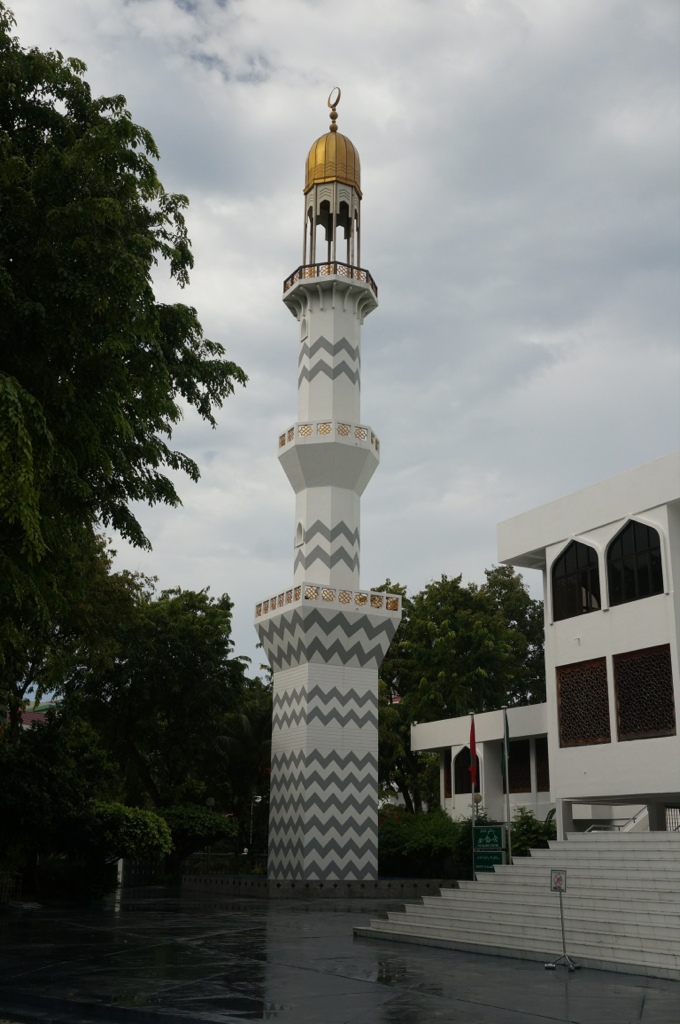
This is a Muslim country, no swimming is allowed on Male and there are 20 mosques on the island. While the men are in western style dress, women are in the various Muslim dress.
There is a lot of building going on and we see buildings where half is occupied while the other half is being constructed. All drinking water has to be imported and there is a desalination plant under construction now.
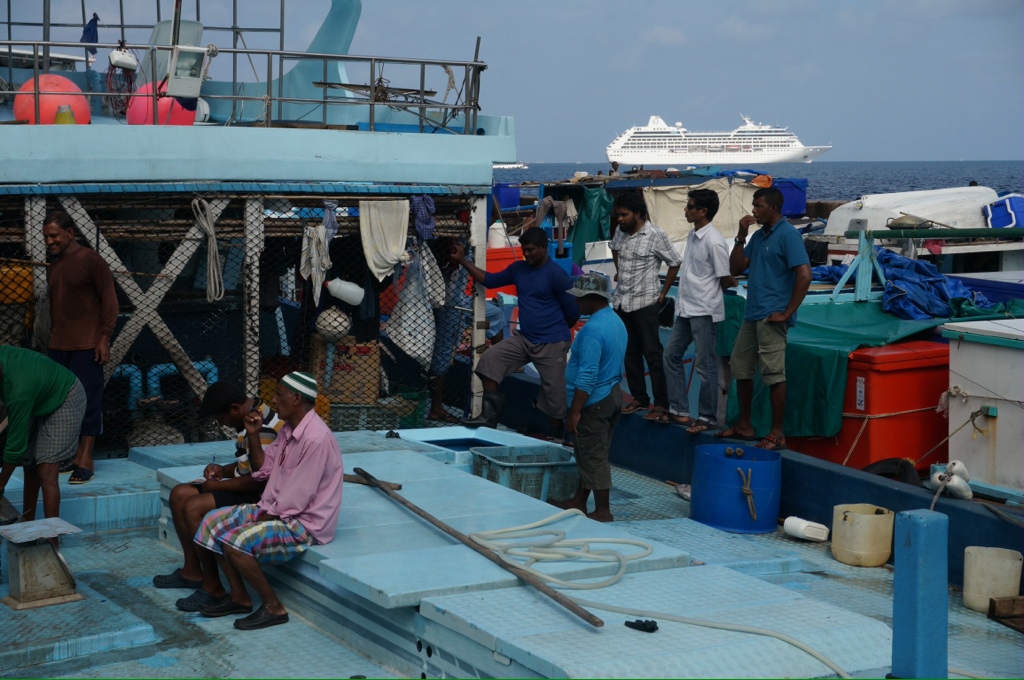
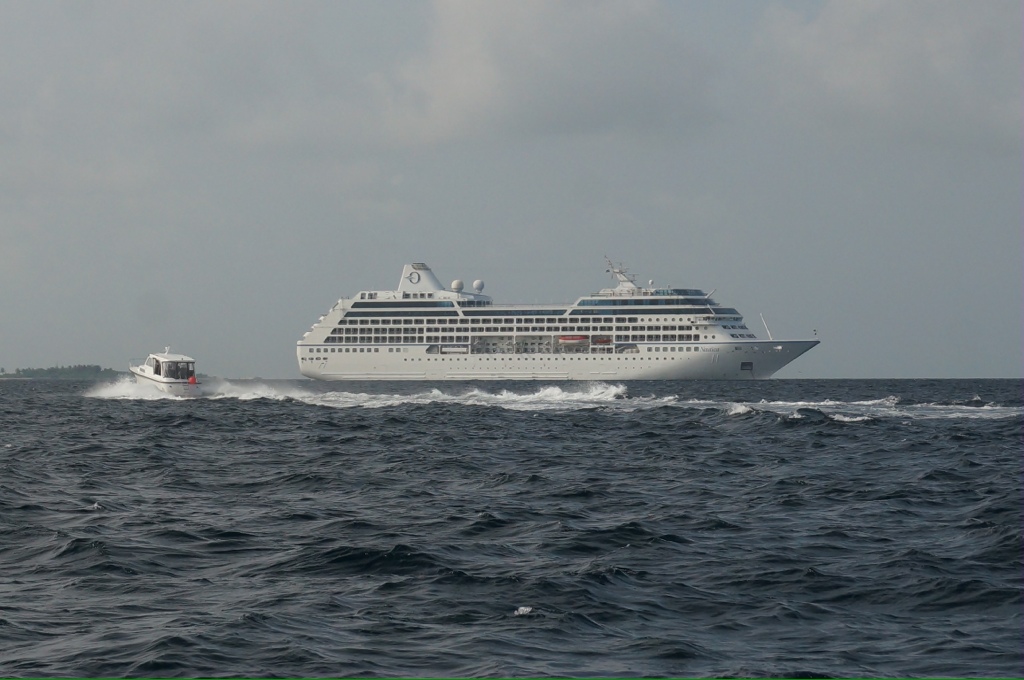
There is a small harbour and we have to anchor out and tender in to shore. We see a lot of ships anchored around us – yachts of all sizes, including dozens of huge mega yachts; freighters, which appear to be empty; many local fishing boats, water taxis of all sizes. The resorts all run shuttle services to Male and some other islands. The airport is on an island of its own. High season for the resorts is November to April.
The Tamil Tigers tried to attack 25 years ago. India came to other rescue and the attack was repelled.
The Portuguese were here. I am not clear on the dates but they left in the 16th century. The country was ruled by a king until democracy was introduced in the early 20th century. The royal family now lives in India.
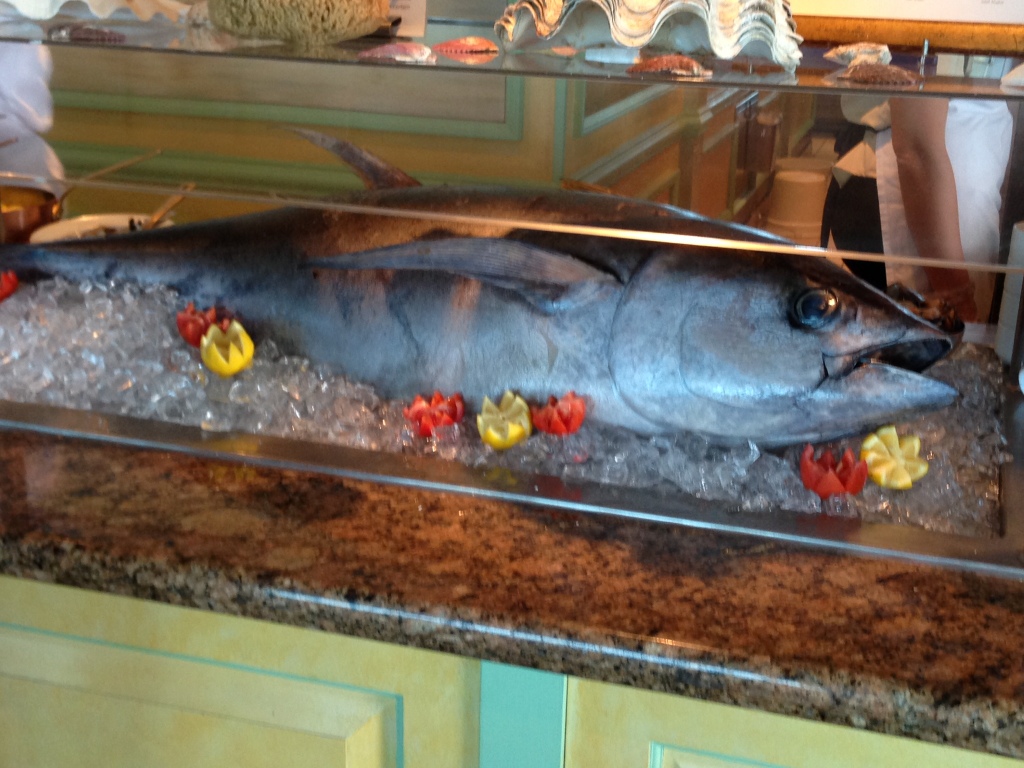
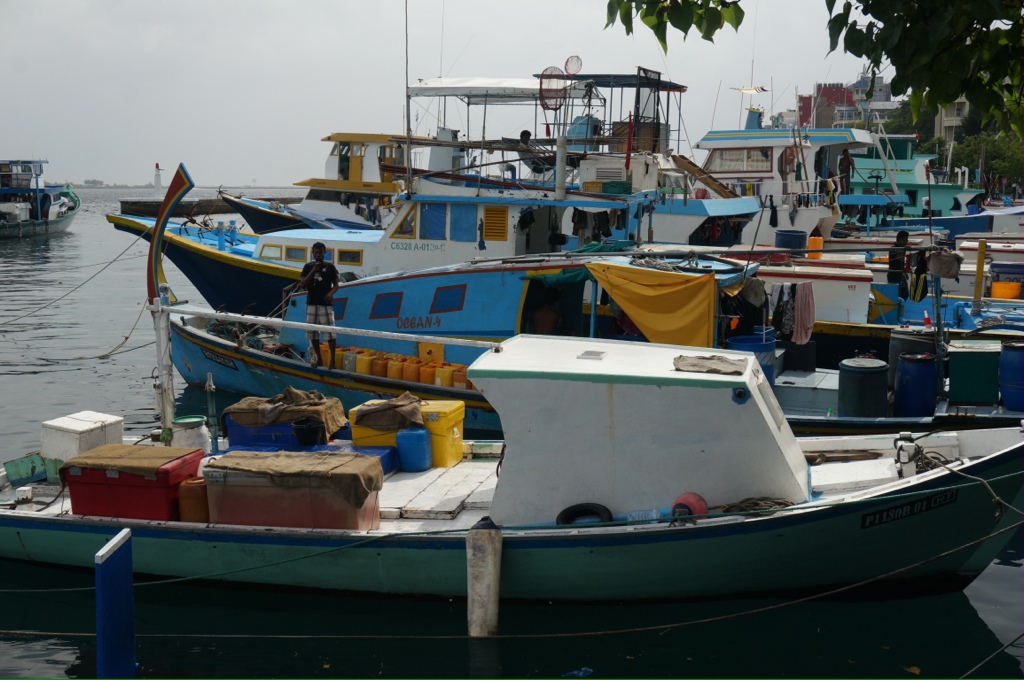
Today the main industry is tourism, next is fishing. They export fish, mainly yellow fin tuna. The harbour is filled with small fishing boats.
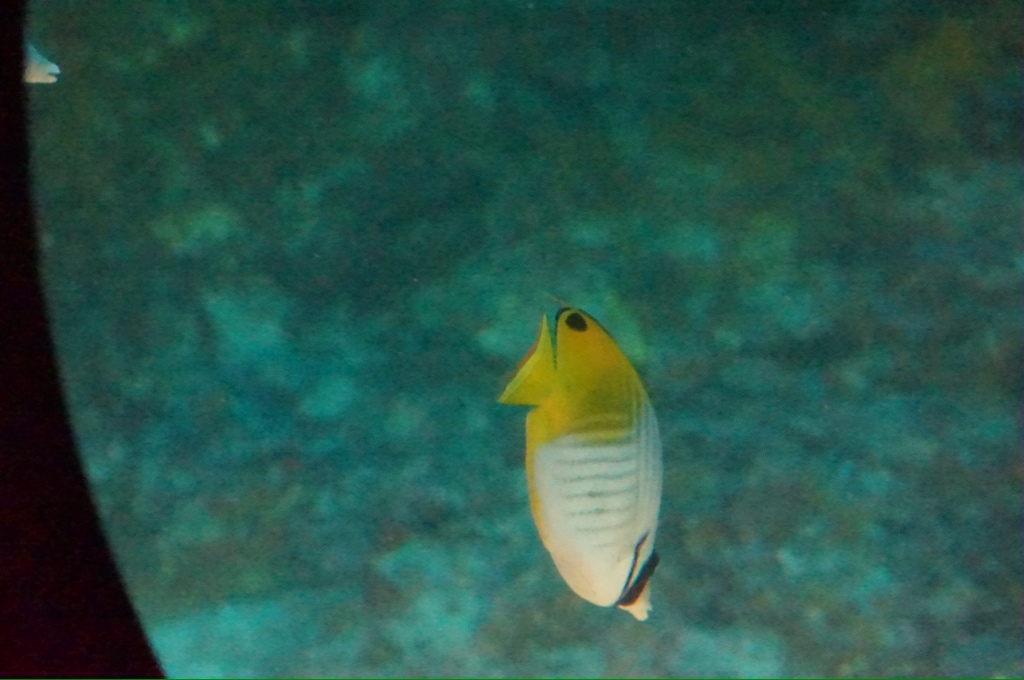
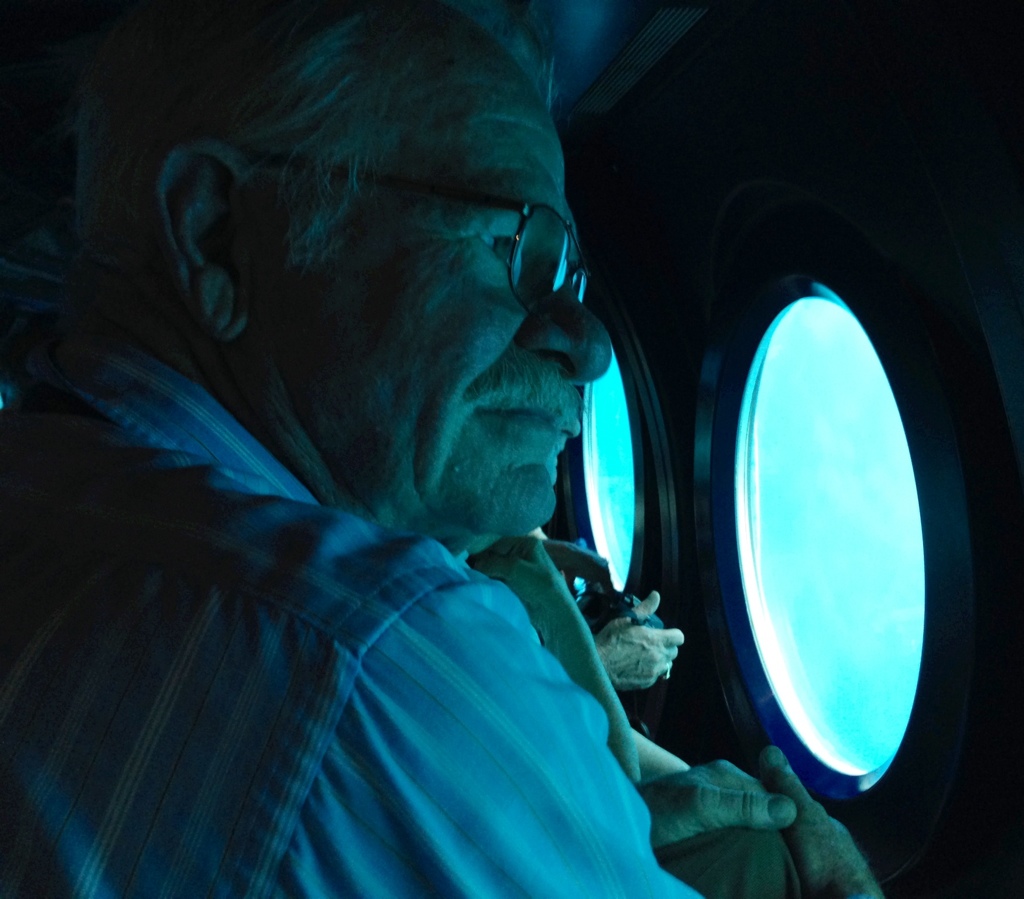
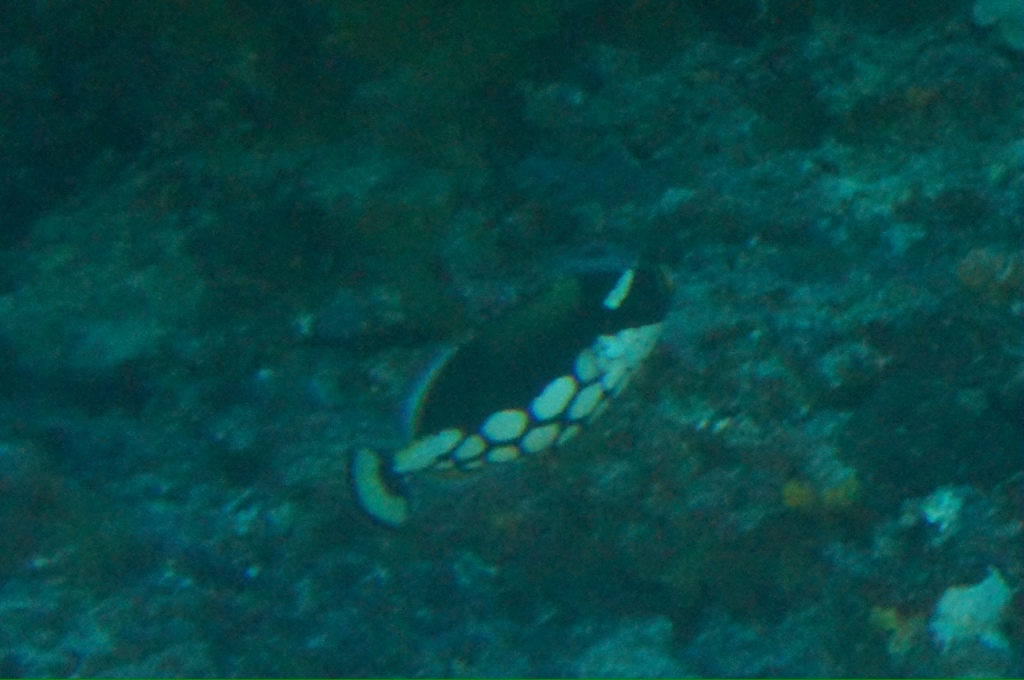
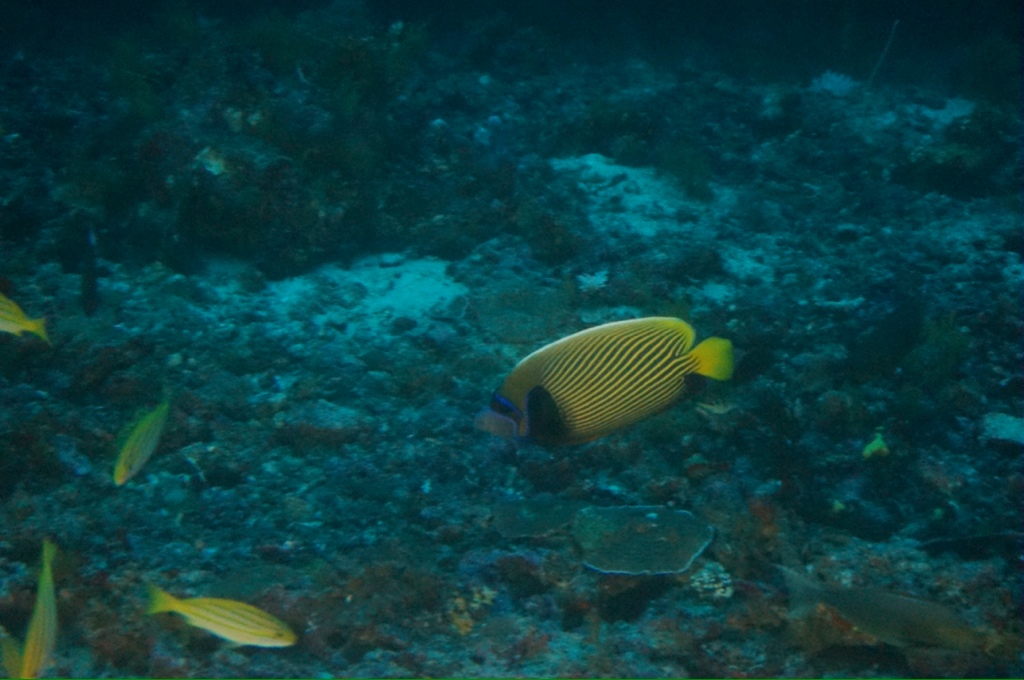
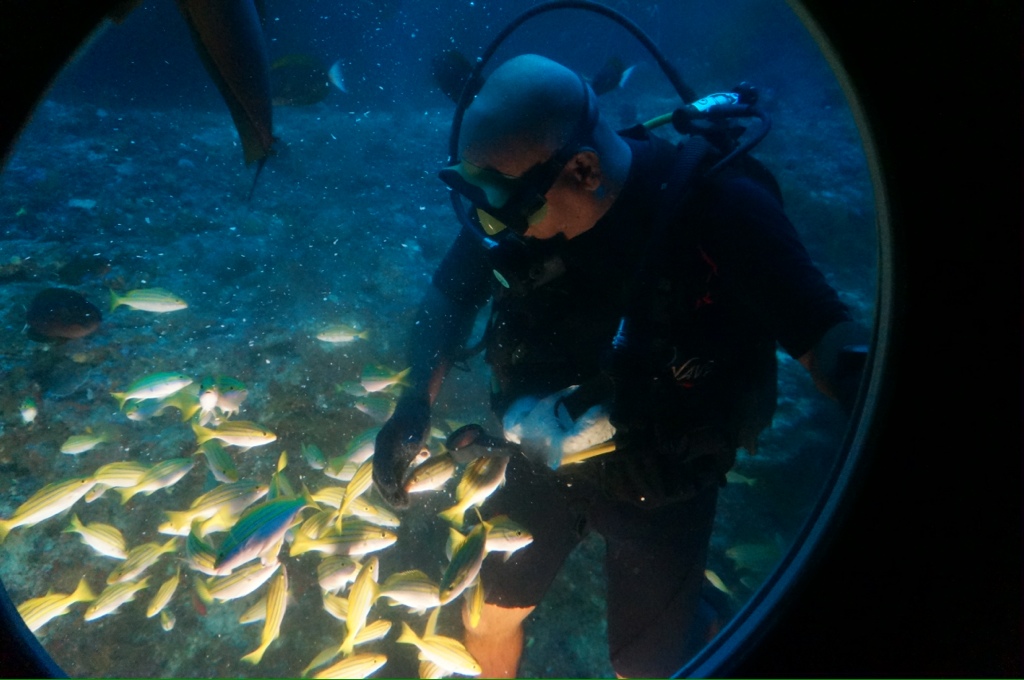
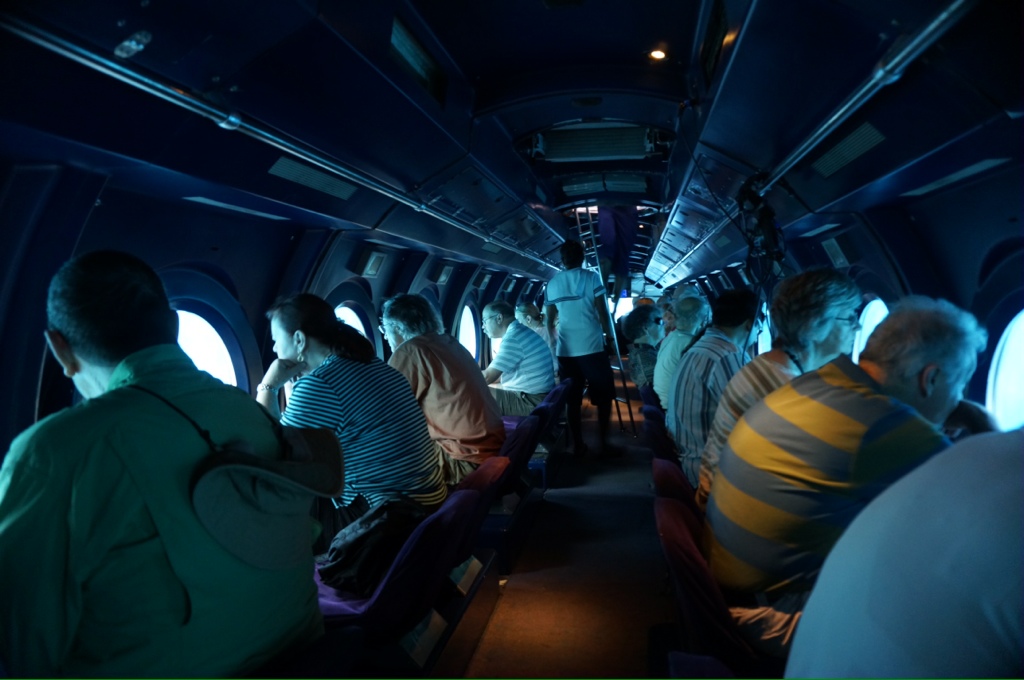
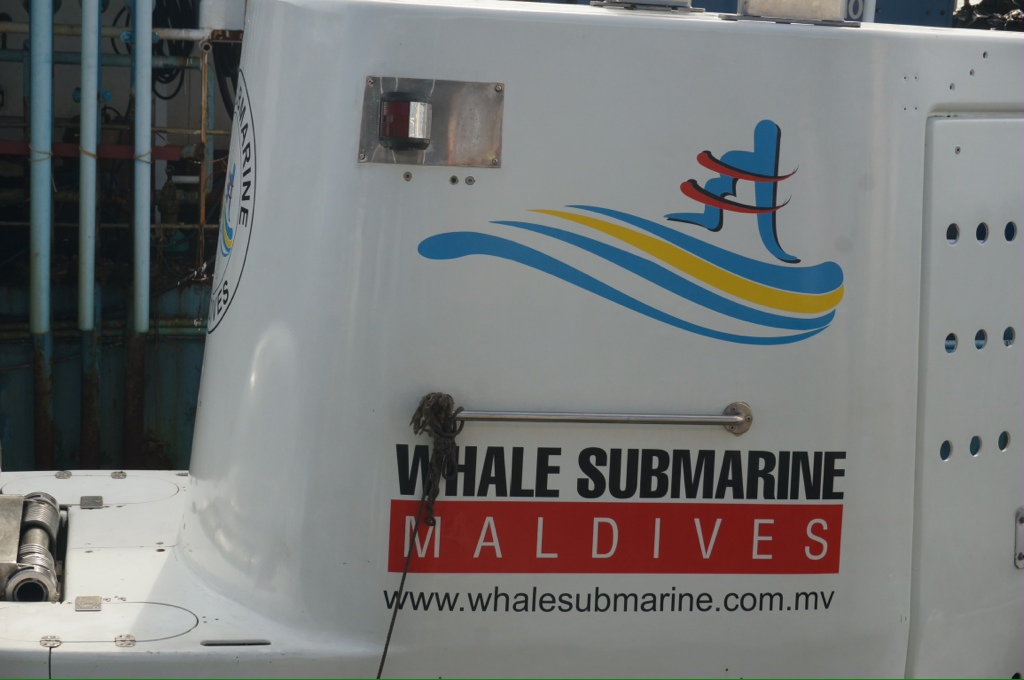
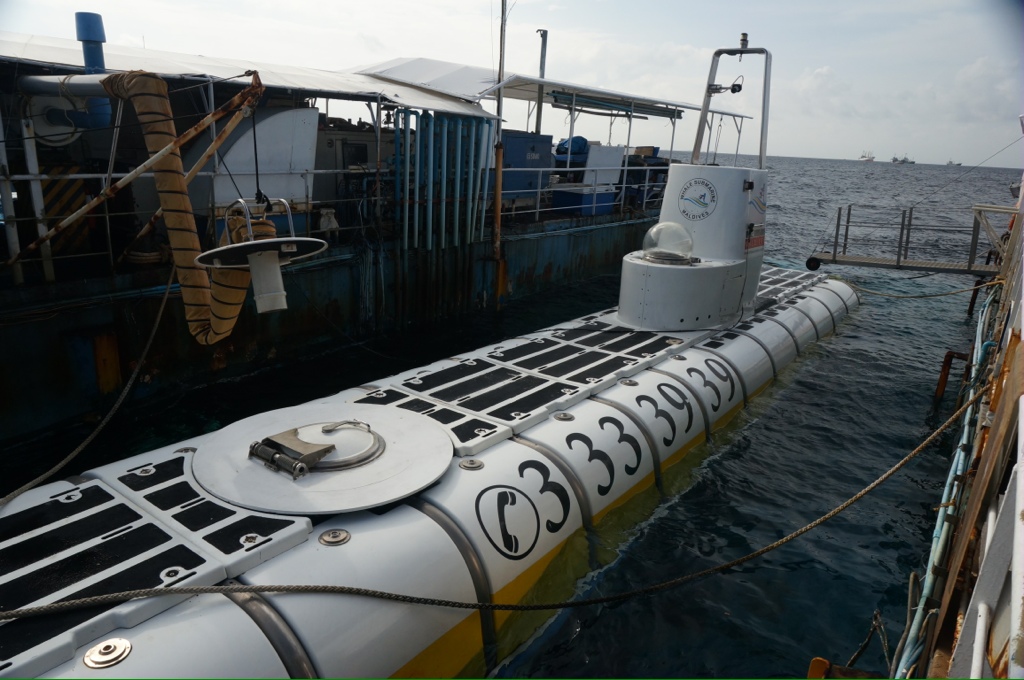
We arrived here at 2:00 pm on the 19th. Gary and I went on a submarine trip to see the underwater life. It was a fairly big submarine, held about 60 people and everyone had a window seat. We did see a small variety of fish. There were 2 divers who fed the fish as well. After having been on a submarine on the Great Barrier Reef we were surprised at how murky the water was and the small variety of fish, coral and other sea life. We did see a moray eel.
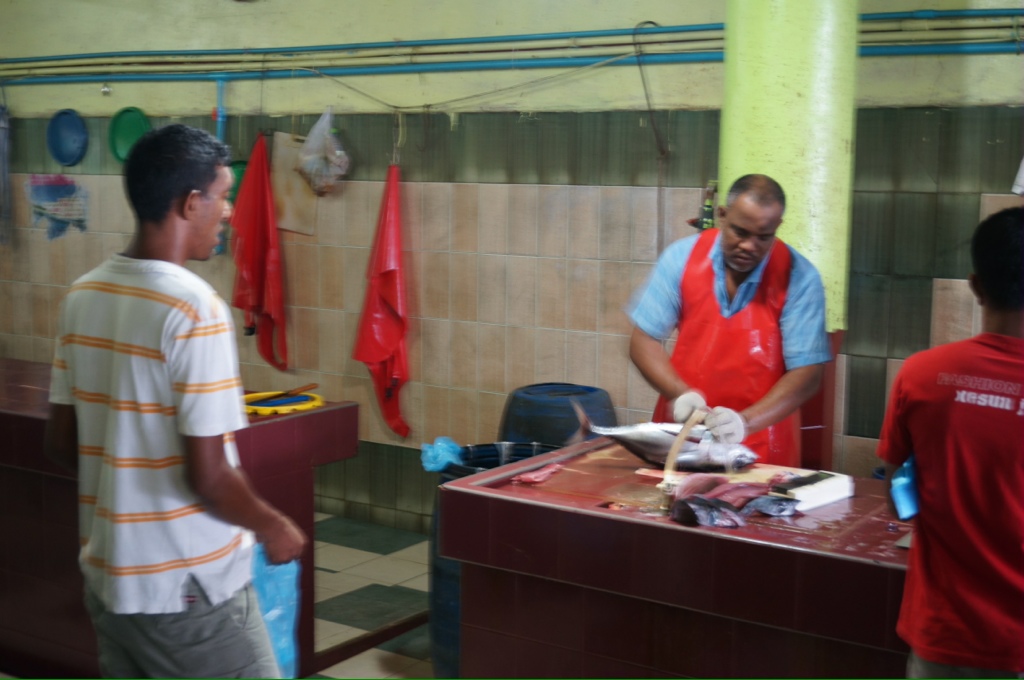
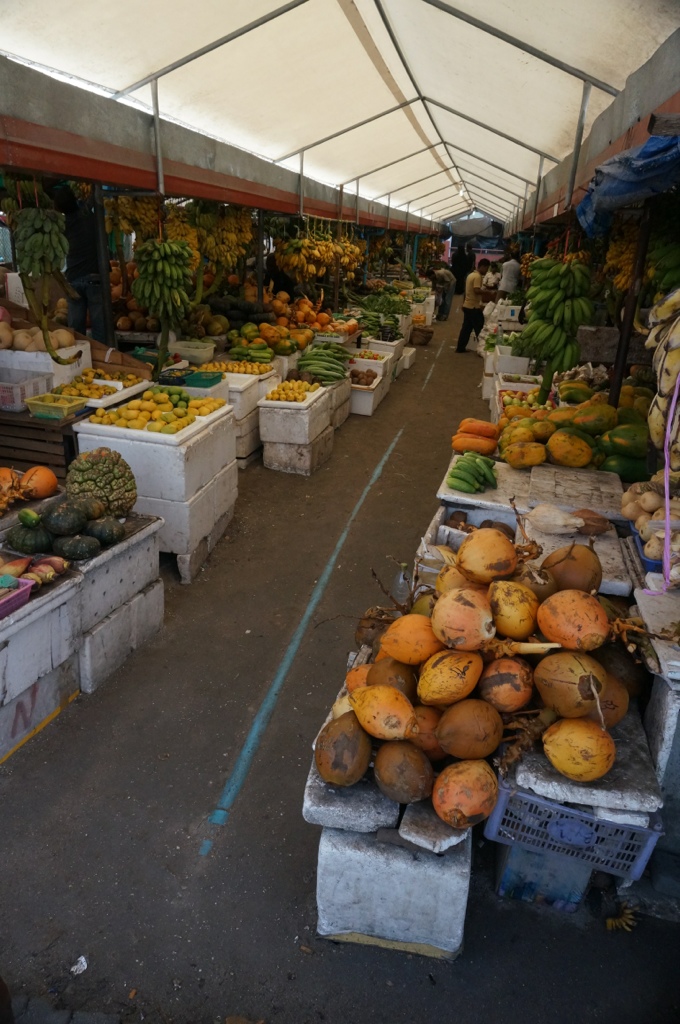
The second day we did a walking tour of Male – didn’t take long! Everyone was very friendly. All the signs are in English, often the local language is not used at all. Our guide said English is now the main language. We visited a fruit/vegetable market as well as the fish market. As it was Friday, some things were closed and traffic was light. Most of their food is imported except for fish. There was a lot of bananas and coconuts in the markets.
The fish market seemed to be only partially open, lots of bigger fish. After buying your fish you take to another section for cleaning. We had a lovely seafood lunch on board!
We are at 5 degrees latitude so it is getting hot and humid, a little rain today for about 1/2 hour, while we were in the museum.
The next 2 days are at sea as we travel toward the Seychelles.

20131220-153952.jpg

20131220-153640.jpg

20131220-153607.jpg

20131220-153546.jpg

20131220-153412.jpg

20131220-153223.jpg

20131220-153123.jpg

20131220-153051.jpg

20131220-152941.jpg

20131220-152835.jpg

20131220-152731.jpg

20131220-152705.jpg

20131220-152635.jpg

20131220-152605.jpg

20131220-152455.jpg

20131220-152439.jpg

20131220-152359.jpg

20131220-152333.jpg

20131220-152319.jpg

Posted in Uncategorized | Leave a comment

Dec. 16 & 17 Goa & Mangalore

We were awake at 4:30 am in Agra as we had an early start for the Delhi airport. There was a very heavy fog so we did not see anything on the trip to the airport and our flight was delayed 2 hours.
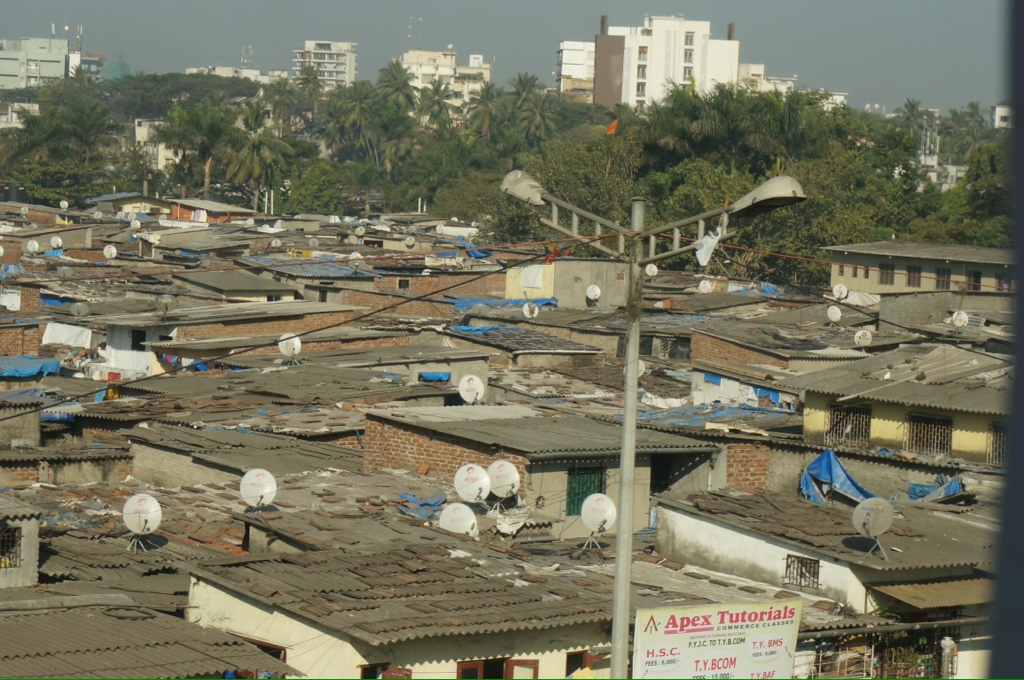
In Goa we had a short half hour tour on our way to rejoin the ship. My general impression was of a much tidier city as there was less garbage on the streets. Still saw the dilapidated, dirty buildings and people living in shacks and tents by the side of the road, same small store fronts and carts.
Goa was occupied by the Portuguese from 1510 until 1961. It is the richest state in India and has a 90% literacy rate. There was evidence of the former mining industry that was shut down a few years ago. Goa is known as the land of sun, sea and sand. There are 29 beaches. One of the local products is cashews and a liquor made from cashews.
On Dec. 17 we are in Mangalore, one of the main ports of India. We did not take one of theOceania cruises but went on a private tour, which was interesting! Gary missed today because of a bad cold. The day did not start well when our driver and guide did not show up – the driver had gone to the fish port instead of the cruise port. Once we connected with him we discovered he was alone – no guide, and while he did his best and took us to a couple of temples, his English was not very good so we struggled a little with the communication..
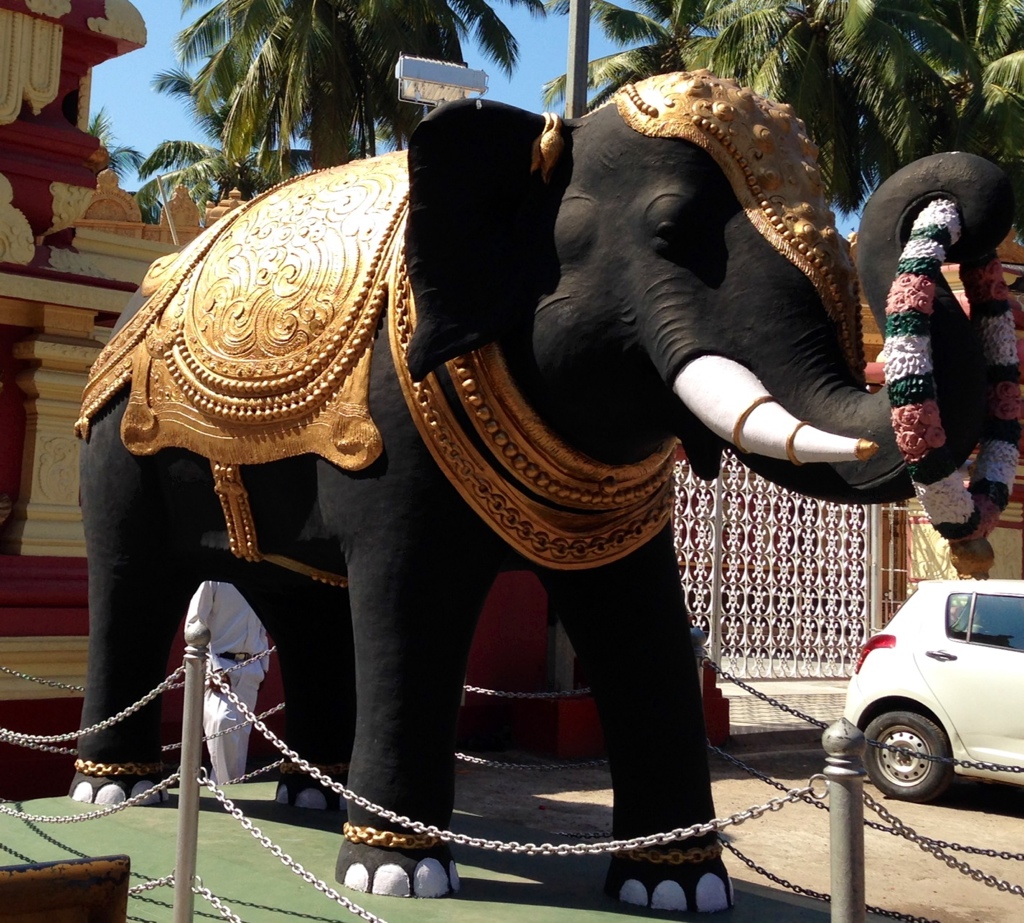
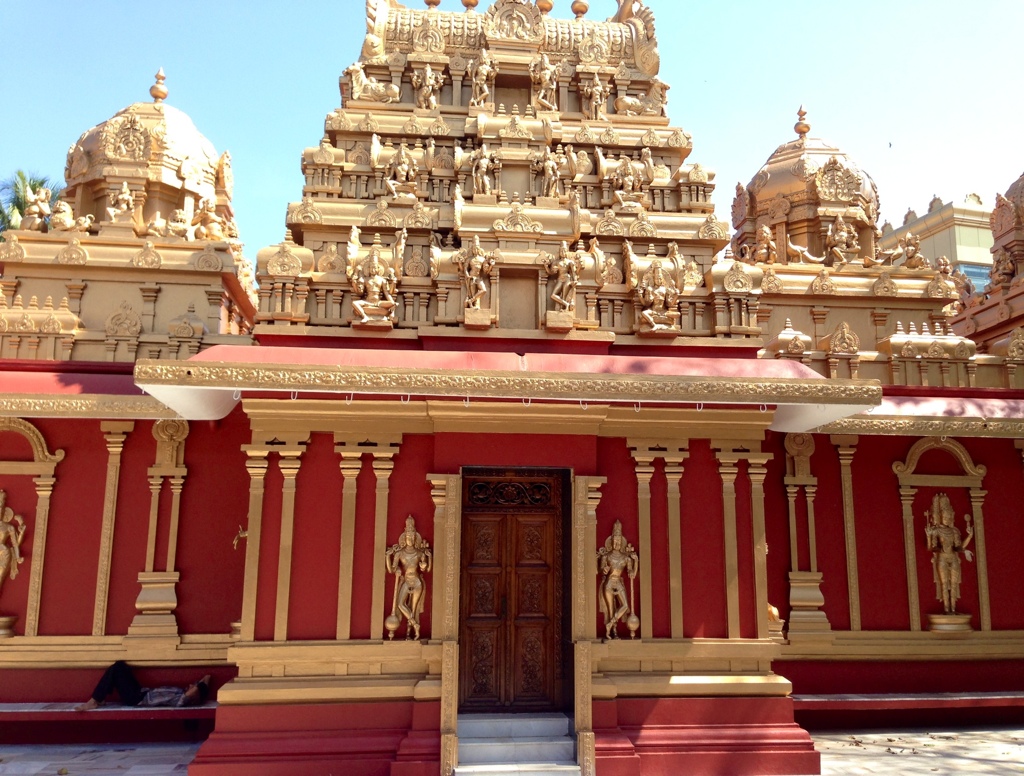
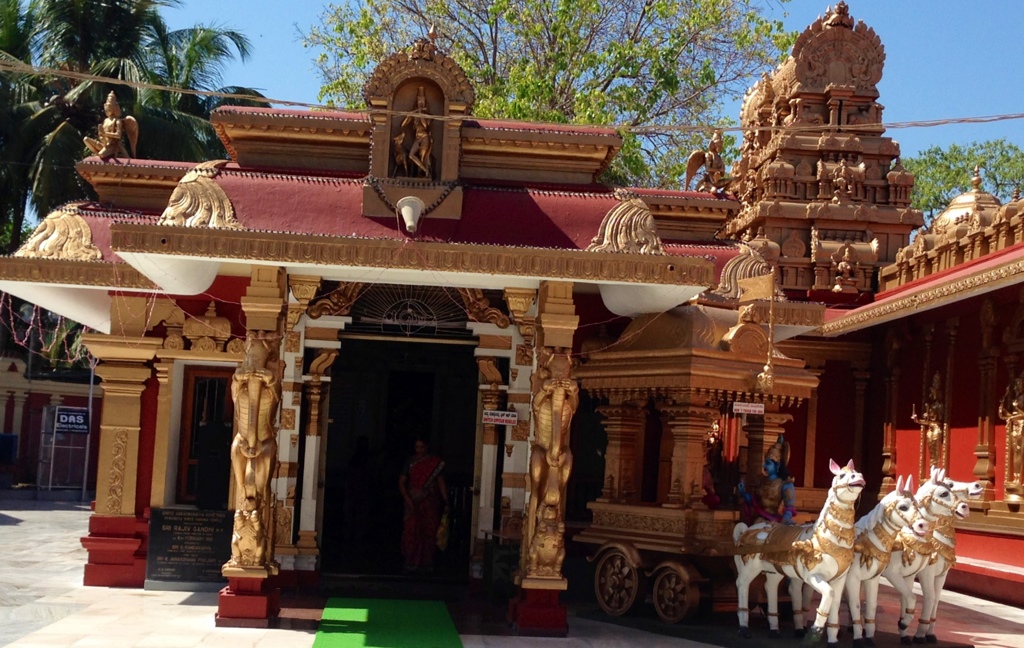
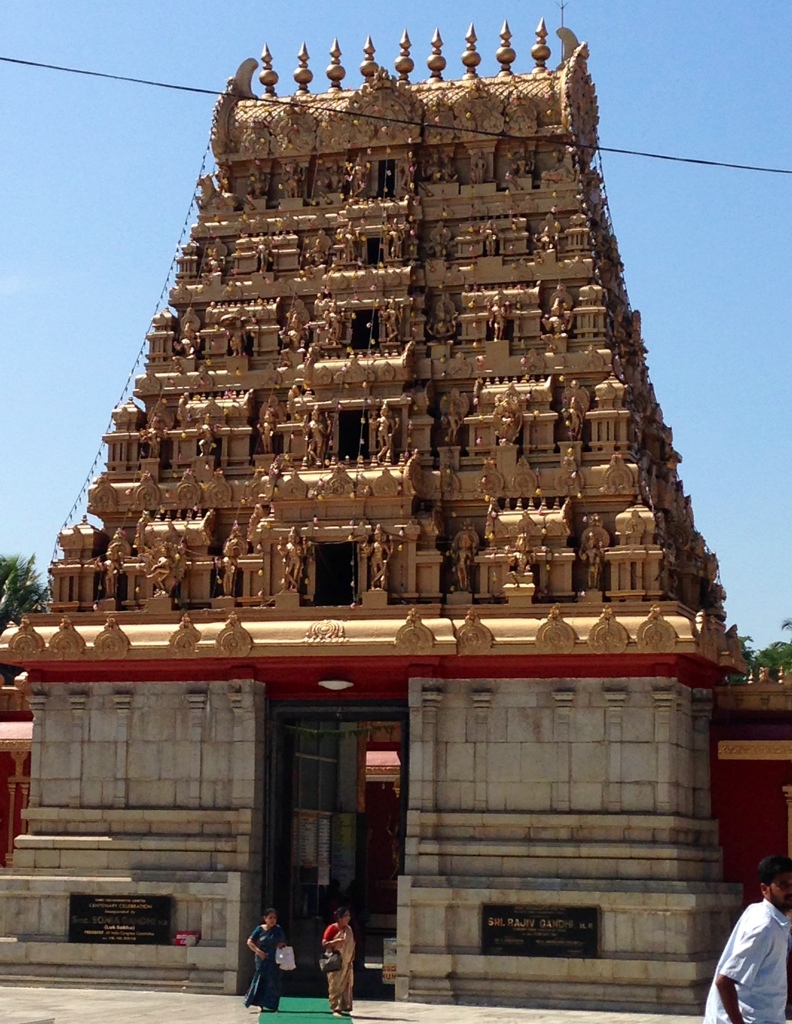
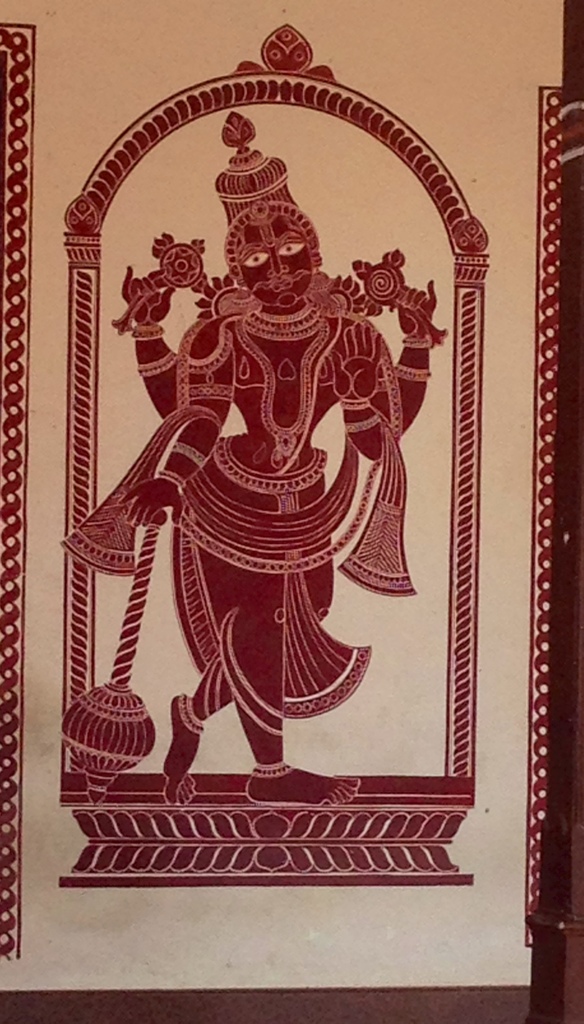
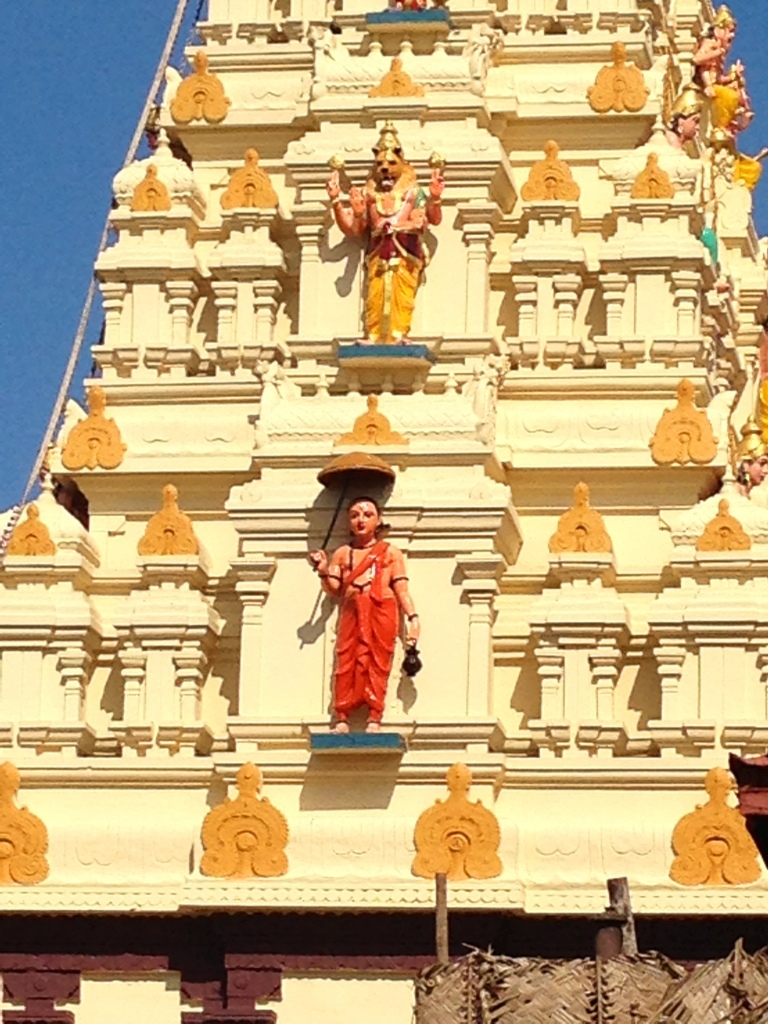
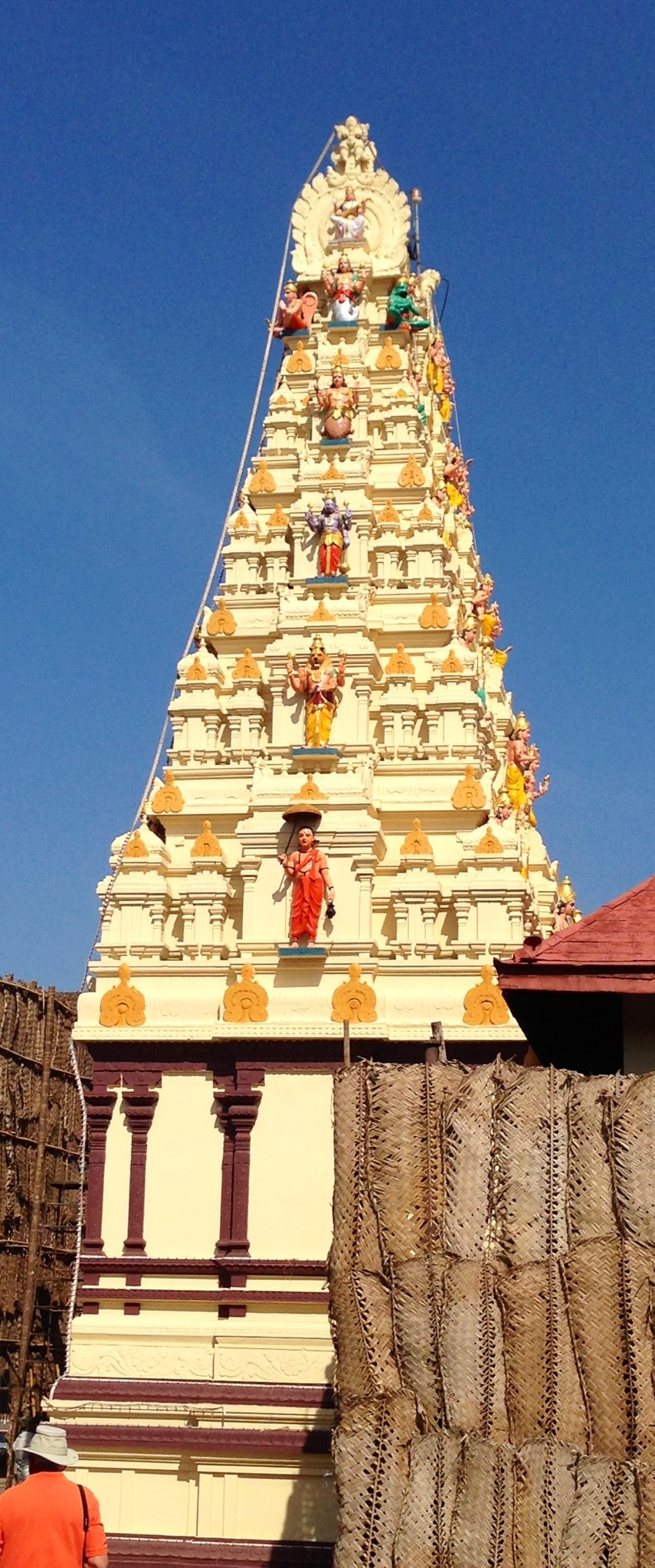
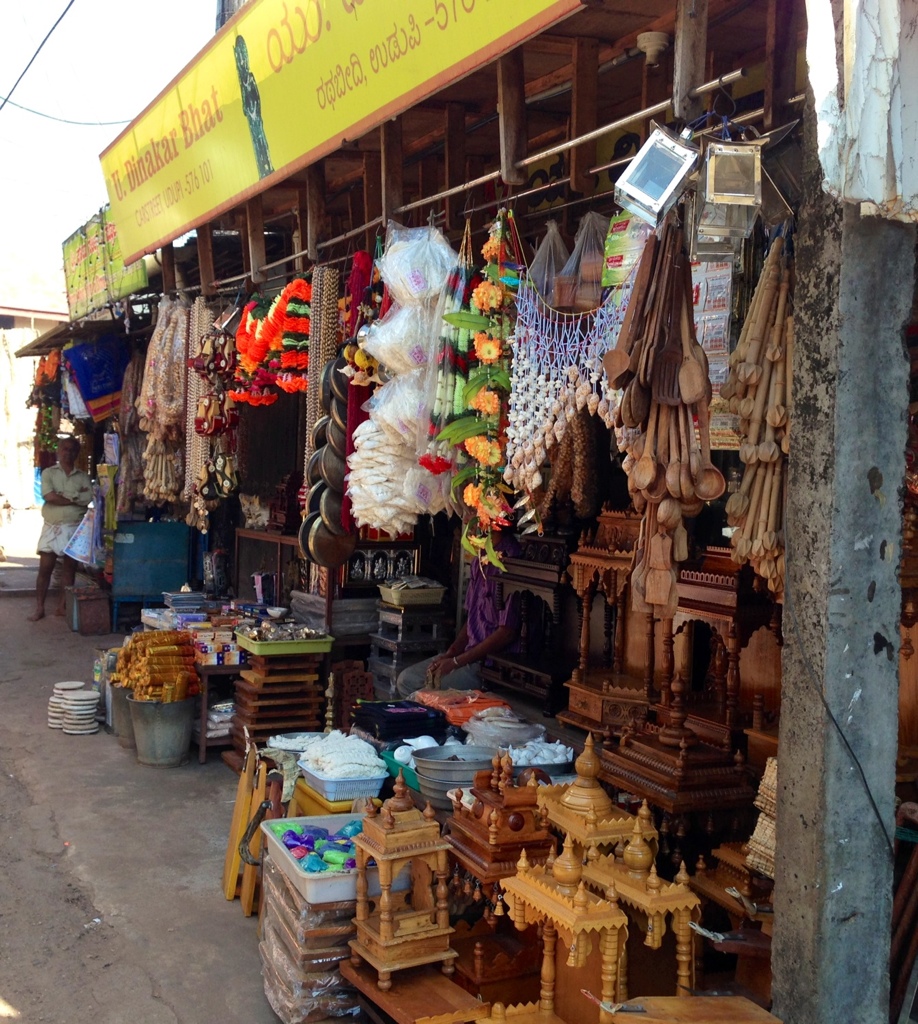
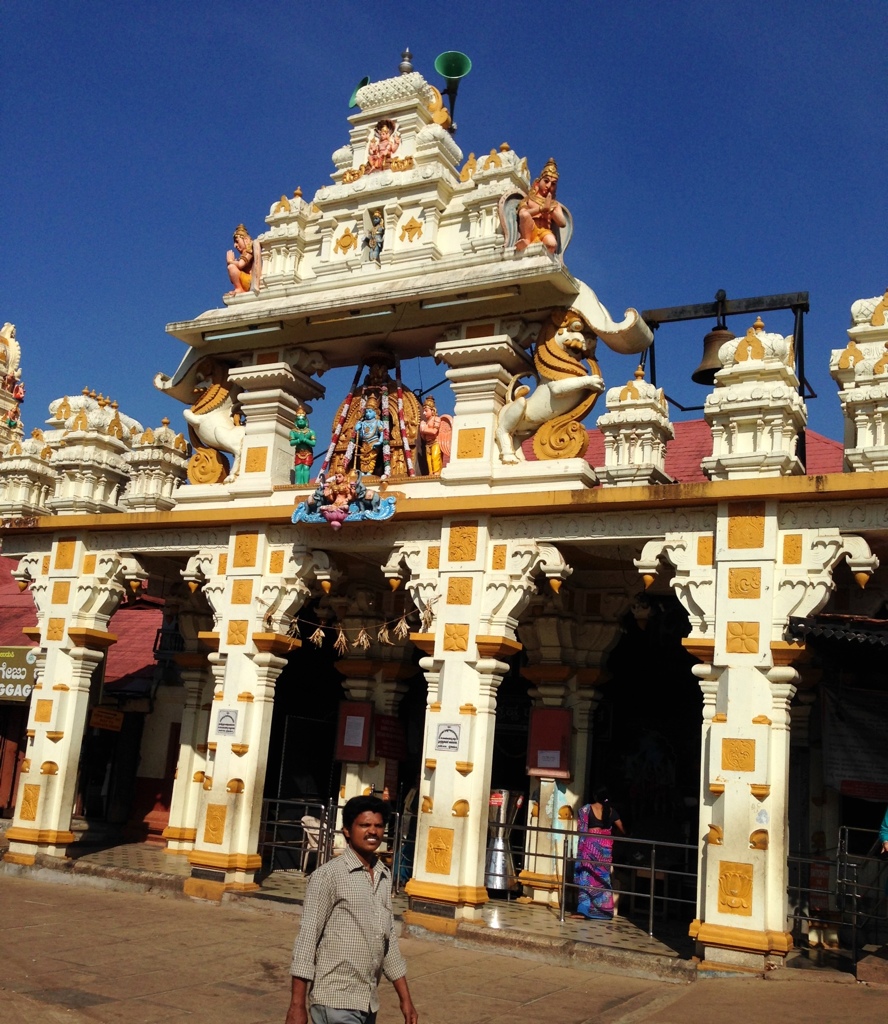
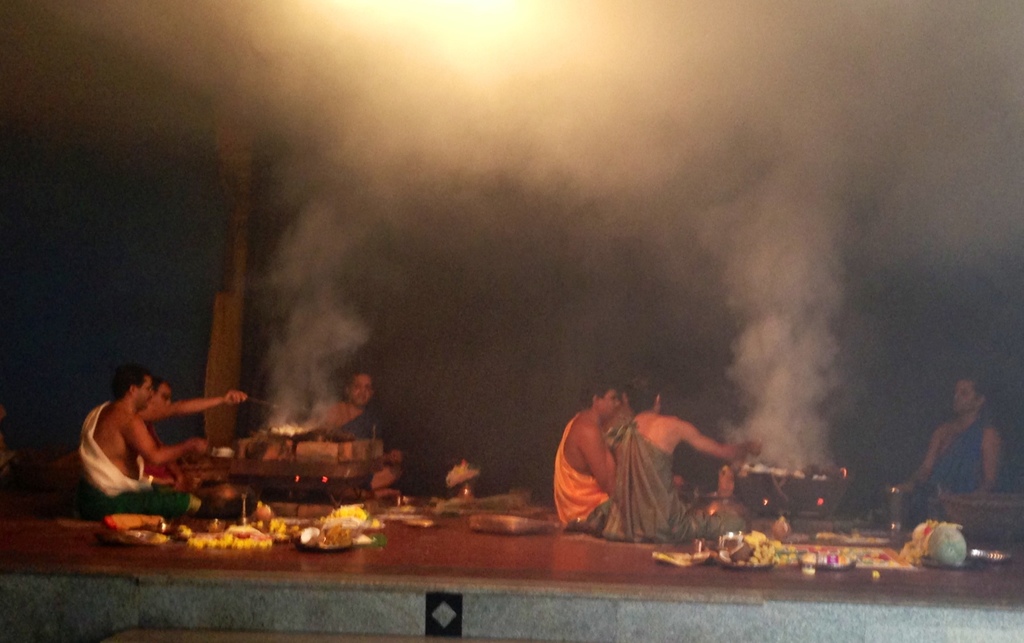
We started out with a drive to the Temple City of Udpui. The main temple is a Krishna temple. We were not allowed to take pictures inside. To tour the temples we first had to remove our shoes, entering the temple we discovered that the men also had to remove their shirts! Inside were people praying, sitting around chatting together and watching us. We approached a holy man who took a small dipper, dipped it in some water which he poured into our right hand, we then put the water to our mouth (we were supposed to take a sip) then move the hand with the remaining water up our face and over our head. This was done at a couple of the temples we entered. There were several temples in the city, collected in a small central area. Each temple had ornate decorations inside and out, each had some holy men and a number of prayer stations, often with a priest who would chant, sometimes with bells ringing. As we exited the first temple we entered an area where some men were cooking or burning incense on a platform. The smoke was so thick our eyes were burning and watering.
Another god honored here is Looftie (??? Not sure how to spell it). The whole time we were there a big bull was standing or lying right in the middle of the square. People would buy a bunch of bananas which he ate skins and all. Reminded me of an Edward’s dog he was so pampered!
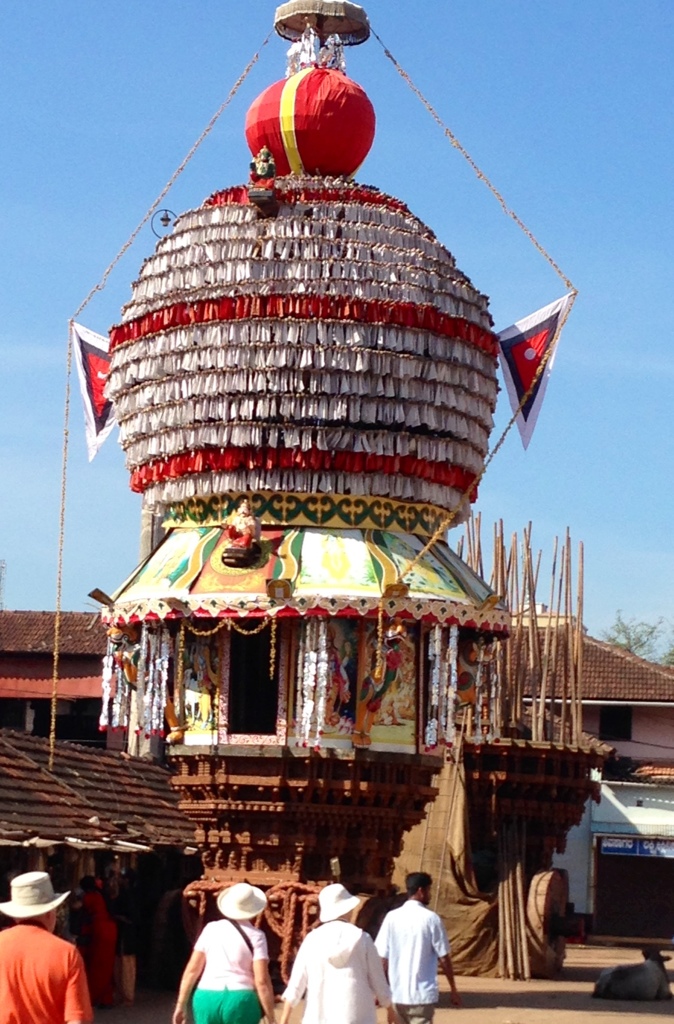
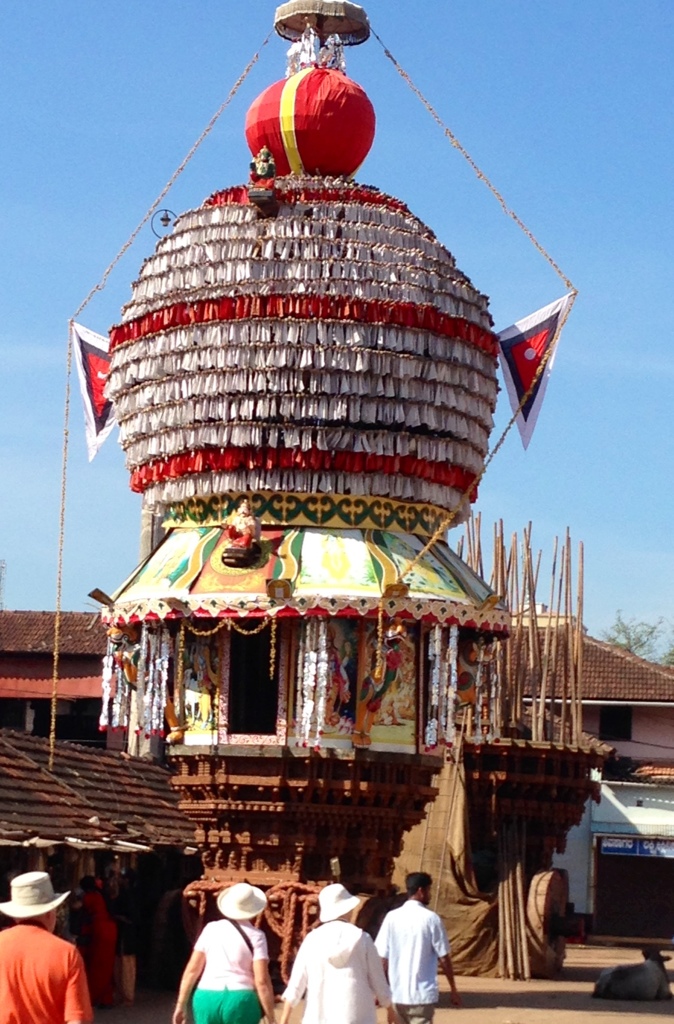
Outside there were stalls selling trinkets, flowers to buy for the prayers, alters, statues, jewelry and “stuff”. There were a couple of huge elaborate balloon shaped things in the square, with another under construction. They were on wheels and appeared to be for use in an upcoming festival.
Our trip there and back to Mangalore was a hair-raising ride along highways that were alternately good roads, road under construction and a series of man sized potholes. It was just one big game of chicken at speeds of about 70 kms. The road was busy with trucks, buses, motorcycles, bikes, pedestrians, cars and our van. Most trucks had a sign on the back “sound horn”. It seemed there was some “rules”. One honk means “I am about to pass” Two honks means” move over you are in my way and I am passing whether you like it or not” . A long honk and/ several in rapid succession means “get out of my way or else”. Someone coming toward us flashing their lights means ” you are in my lane, move over because I am not slowing down or turning”. If anyone slowed down a lane everyone would honk and keep honking until the offender either finally could make his turn or pass another vehicle. Some called it organized chaos but I didn’t see any organization at all!
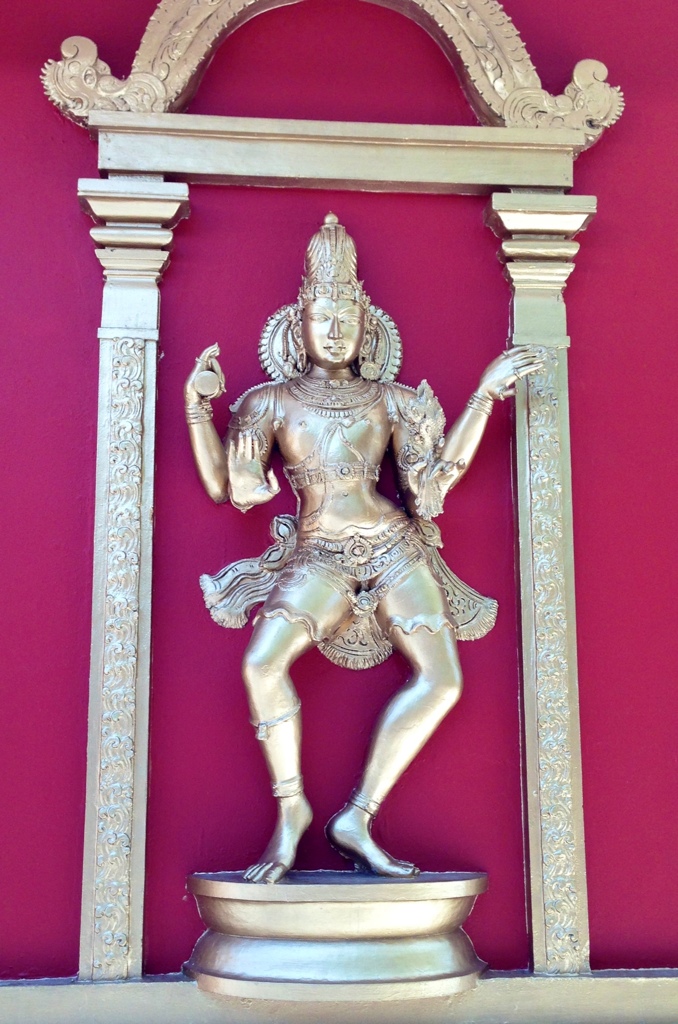
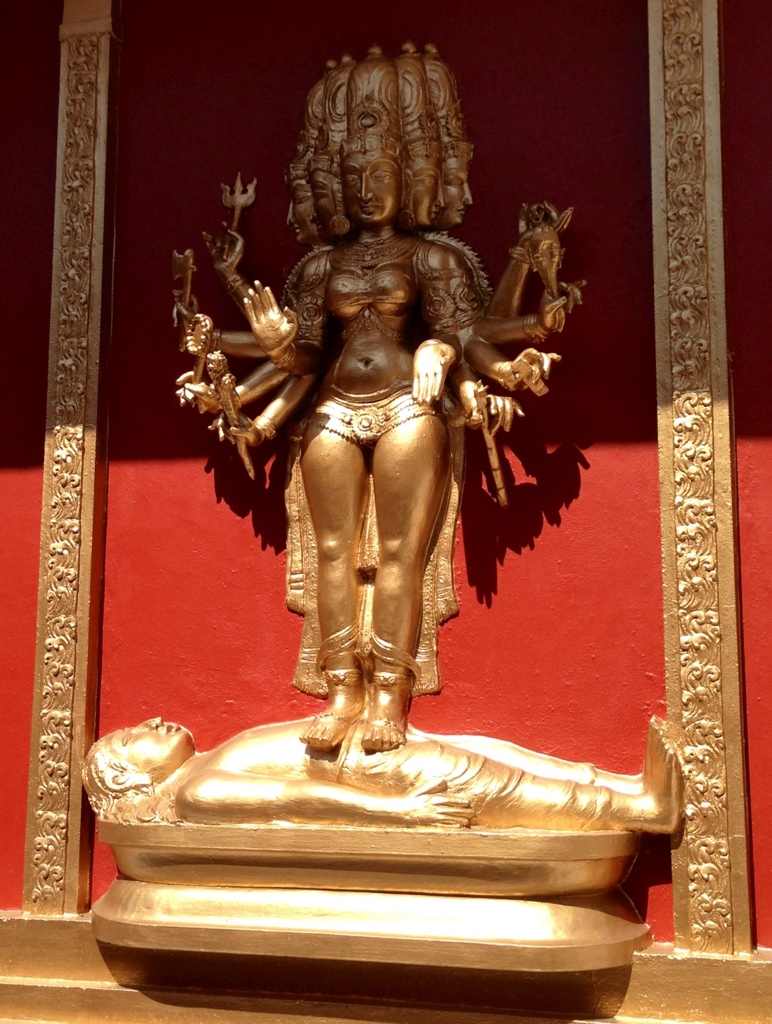
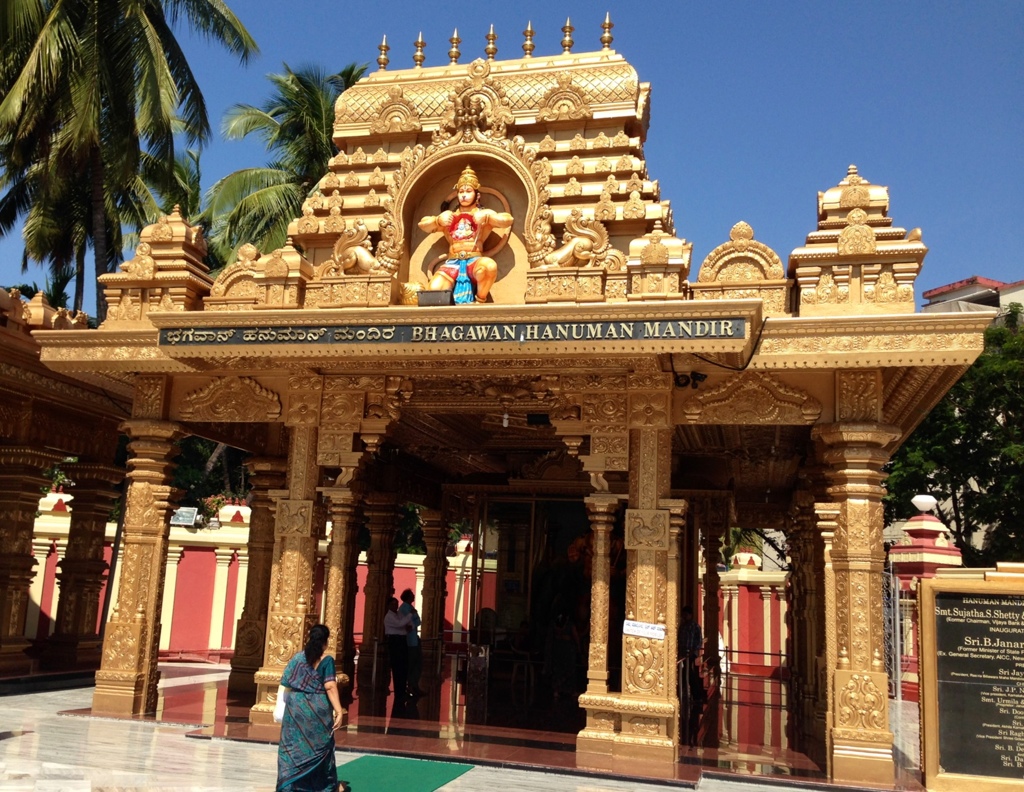
Our second stop was a Shiva temple. It consisted of several golden colored buildings, each with an idol. The walls were covered with carvings of Shiva and other gods. As we left we discovered my New Balance shoes with my orthotics missing, so I had to continue without shoes! We did stop and buy some shoes for me, our guide was surprised as were some local people hanging around. When they found out my shoes were a white color they were less surprised. The largest ladies size in shoes here is 7 – a bit of a problem for me.
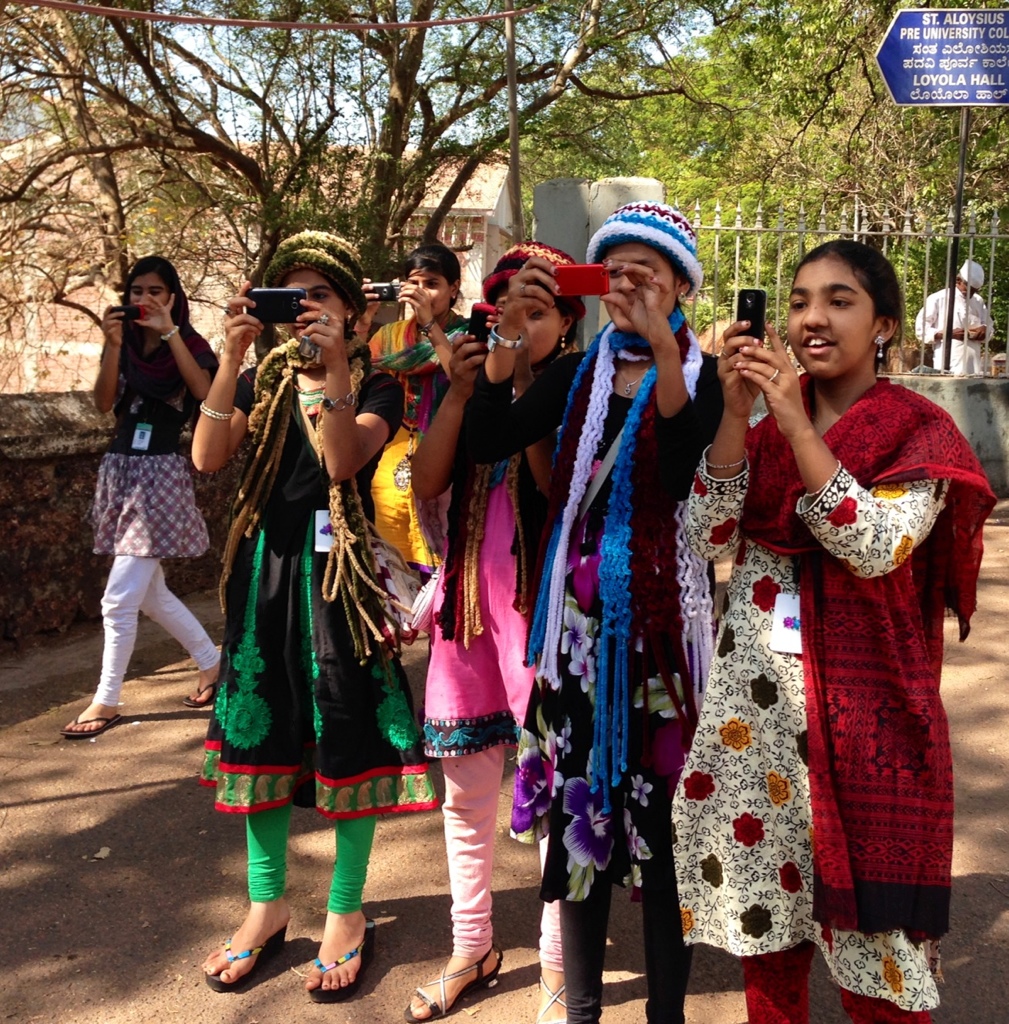
Our last stop was the St Aloysius Chapel. Even though it is a catholic church shoes off again, then a museum and off come the shoes. Even at the port as you are about to enter the port building the sign read no feet ware (yes that is how they spelled it) inside. The museum was basic and had skeletons (one of a “today cat”), TVs, a computer etc.
All day kids would come up to us to talk and get their picture taken with us. They were all very outgoing, friendly, good English and curious about where we are from. They would introduce themselves and ask our name then share pictures with us.

20131218-170054.jpg

20131218-170039.jpg

20131218-165945.jpg

20131218-165928.jpg

20131218-165835.jpg

20131218-165806.jpg

20131218-165613.jpg

20131218-165510.jpg

20131218-165344.jpg

20131218-165312.jpg

20131218-165218.jpg

20131218-165149.jpg

20131218-165112.jpg

20131218-164709.jpg

20131218-164731.jpg

20131218-164821.jpg

20131218-164906.jpg

Posted in Uncategorized | Leave a comment

Dec. 18 Cochin

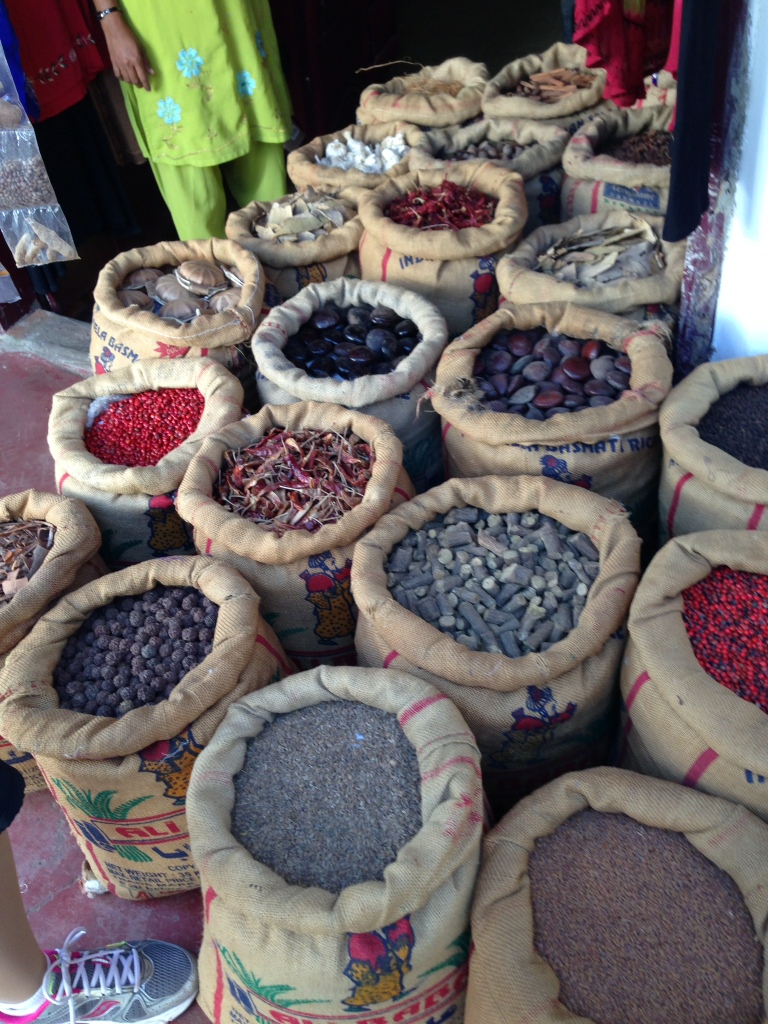
Cochin is a city of about 1.5 million people built on a series of islands, some of them made man. It has long been a trading centre and there is evidence of trading with the Chinese very early. There has also been a Jewish community here for 2000 years when the they fled from Palestine. The Portuguese arrived here 500 years ago in search of spices, sandalwood and ivory. The export of spices is still an important industry and we saw market stalls with bags of the local spices for sale.
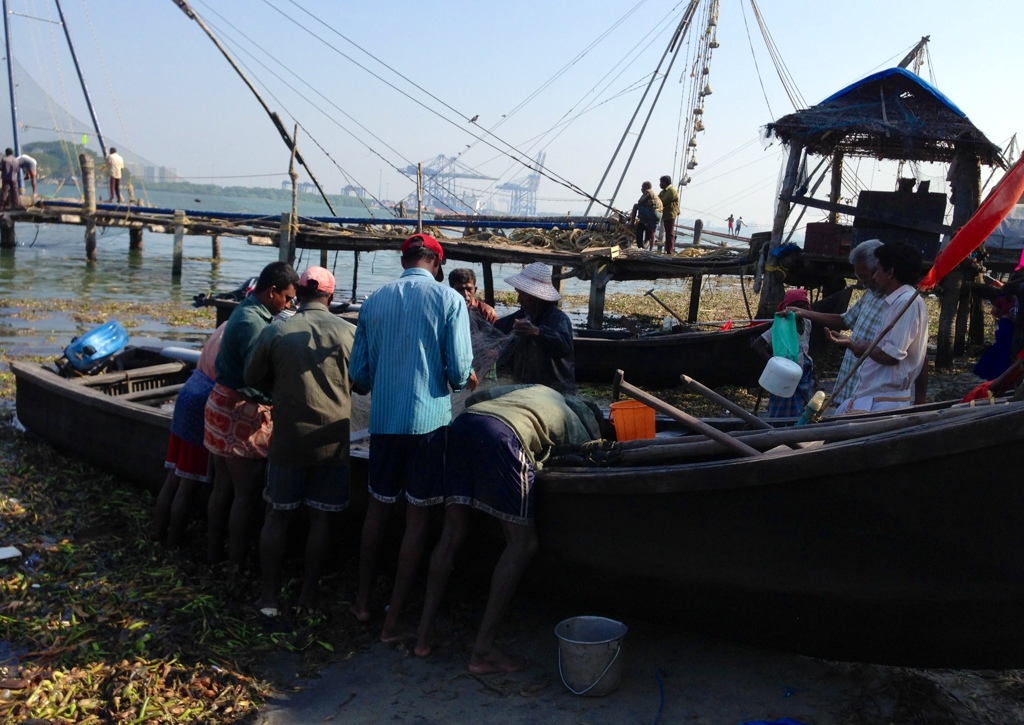
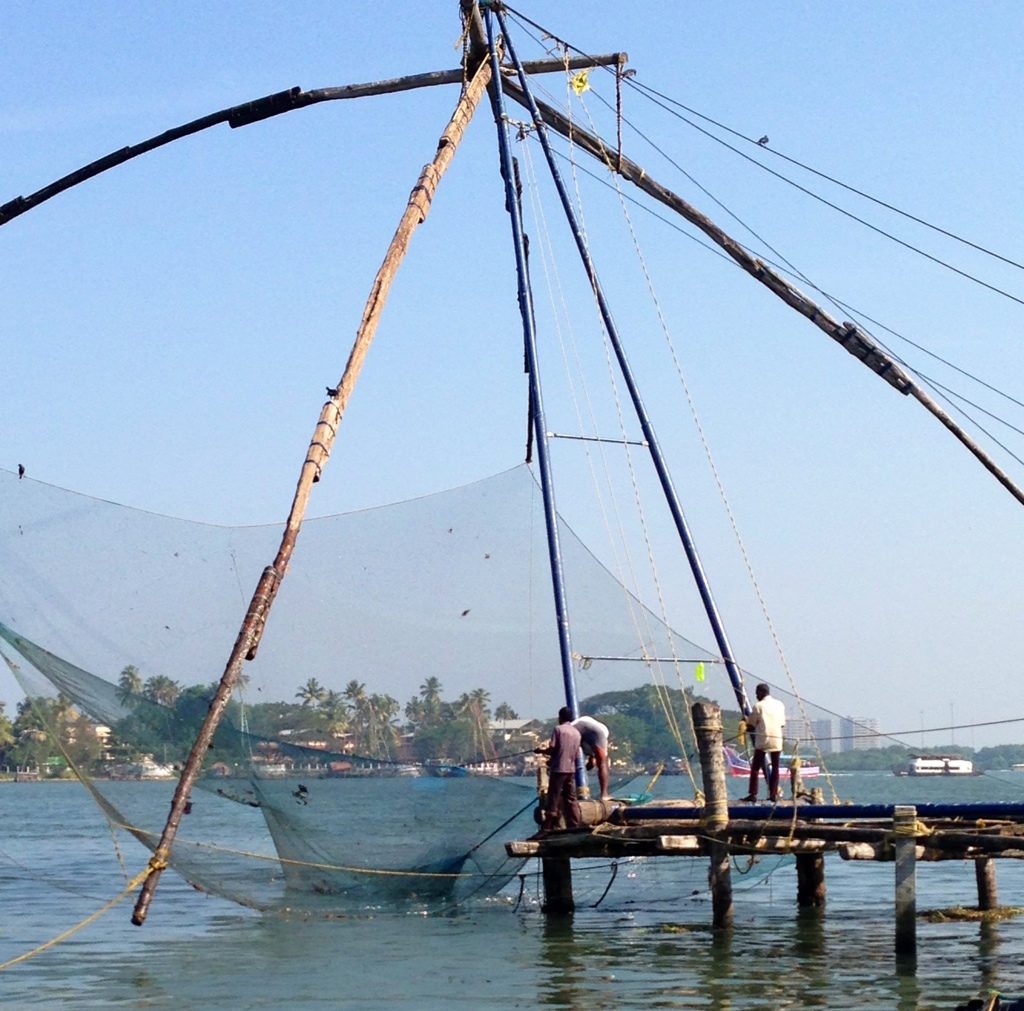
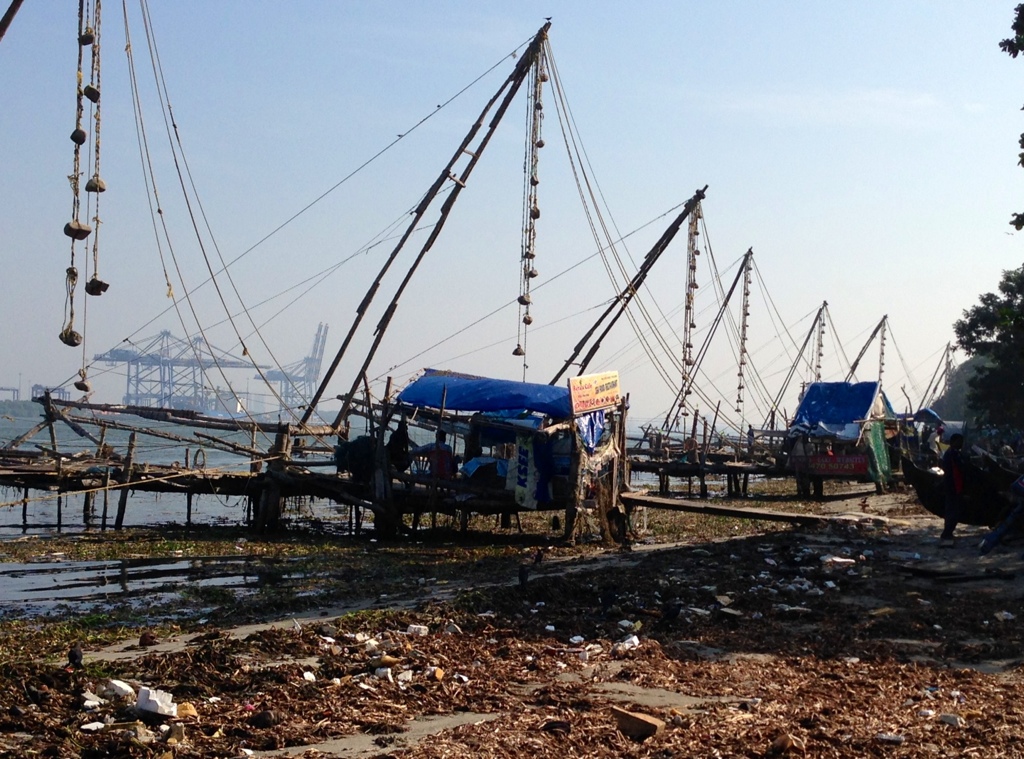
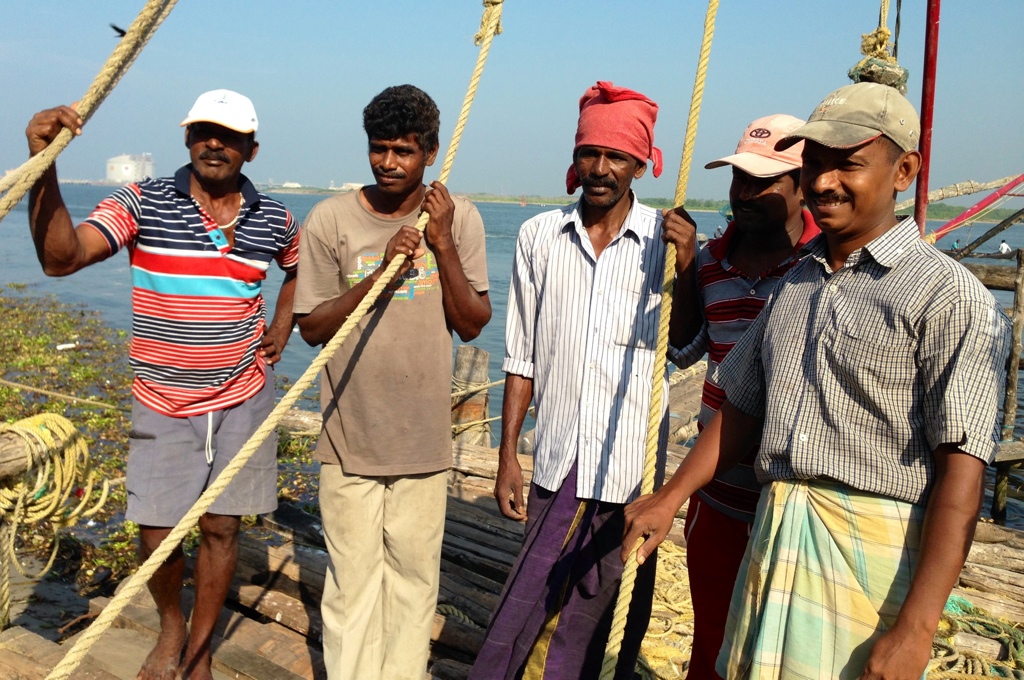
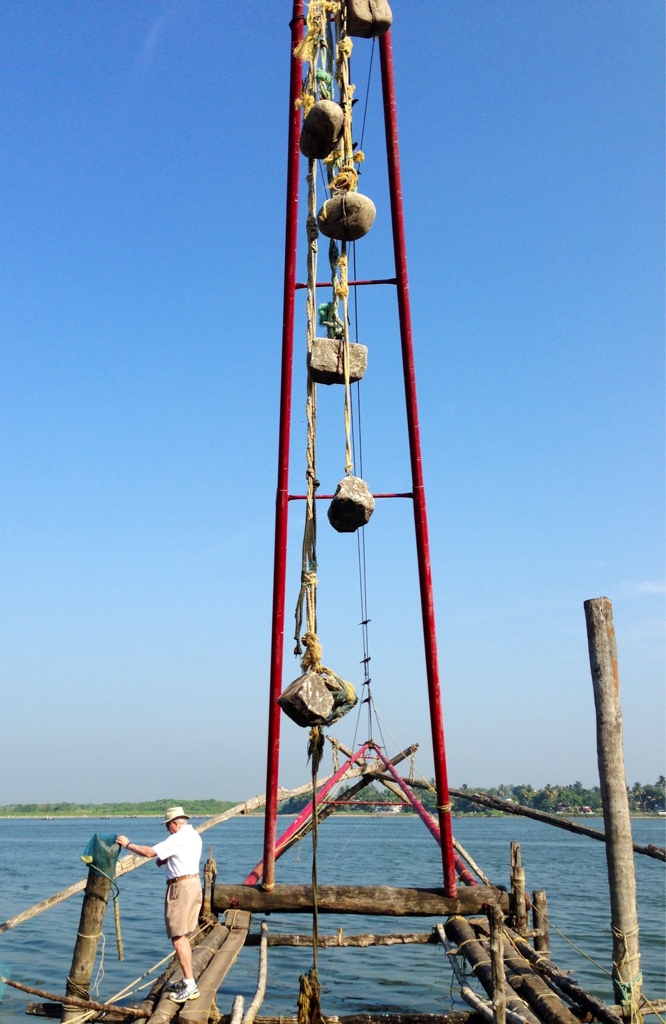
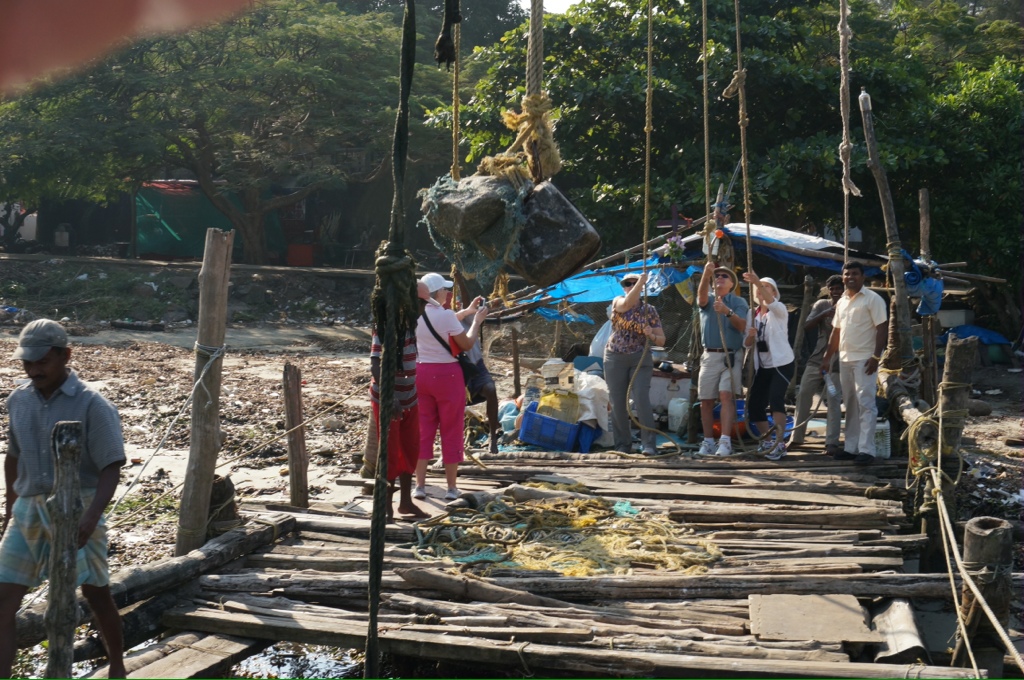
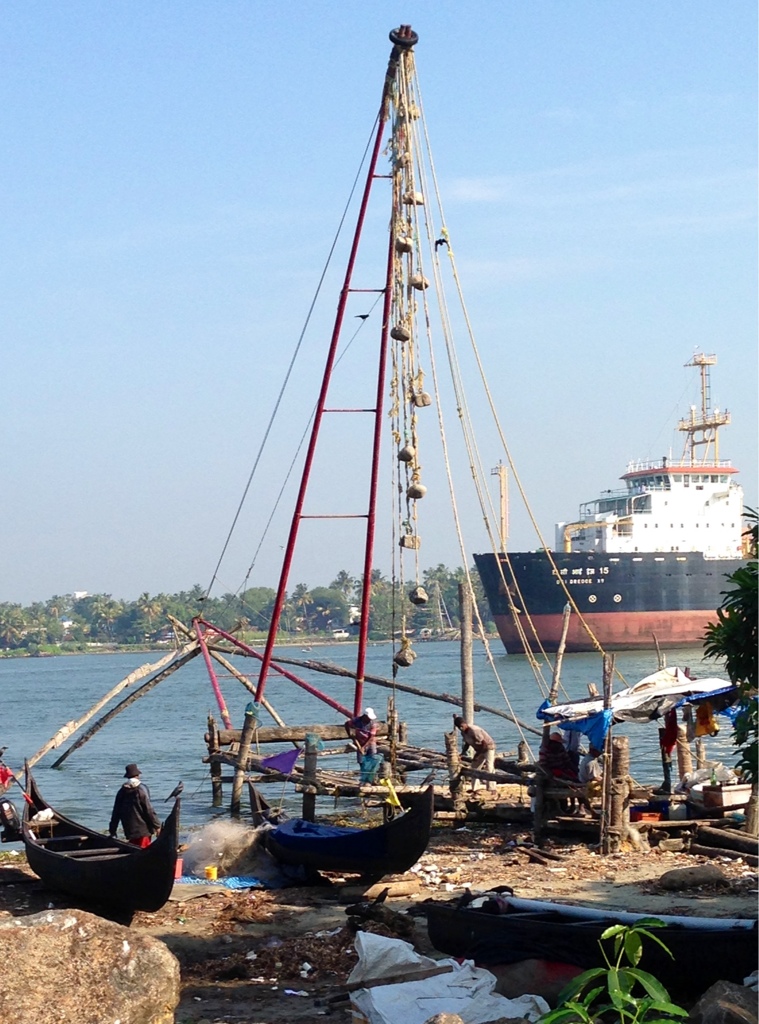
Our tour started with a walk along a lovely boardwalk along the edge of the water. This brought us to the Chinese fishing nets. You need to look at the pictures but the nets are huge nets, each looked after by a team of 5 or 6 men. The net is lower into the water and raised up to collect the fish, shrimp and crabs caught using a basic counter weight system. The net is attached to 2 or 3 long poles plus 4 or 5 ropes, each with a large rock tied on. The poles are cantilevered out over the water so the net is hanging over the water. We were assigned positions on the ropes to raise the net at one of the stations. It was surprisingly easy to pull the net up. When the net was being lowered a couple of the fishermen had to walk out on the poles to provide extra weight.
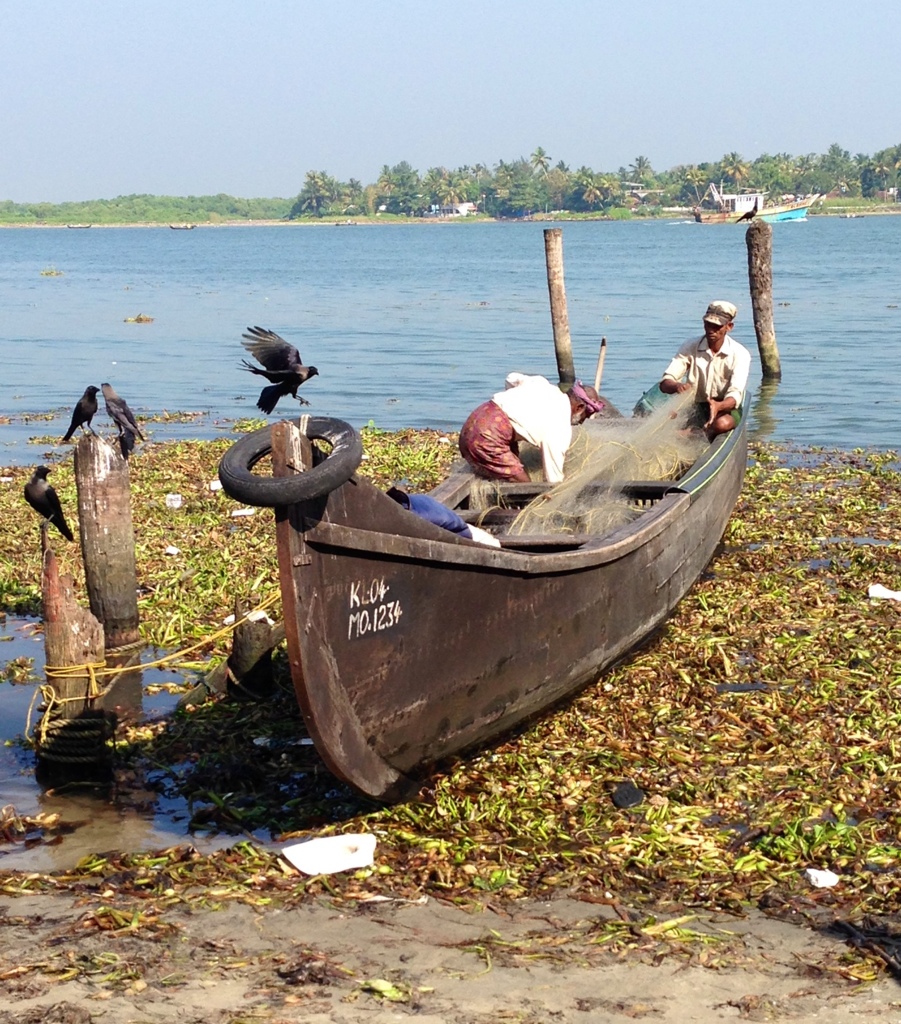
We did not see a lot of fish being caught. In addition to the big nets there were fishing boats on shore with men working to sort out nets, fish and tidy the boats.
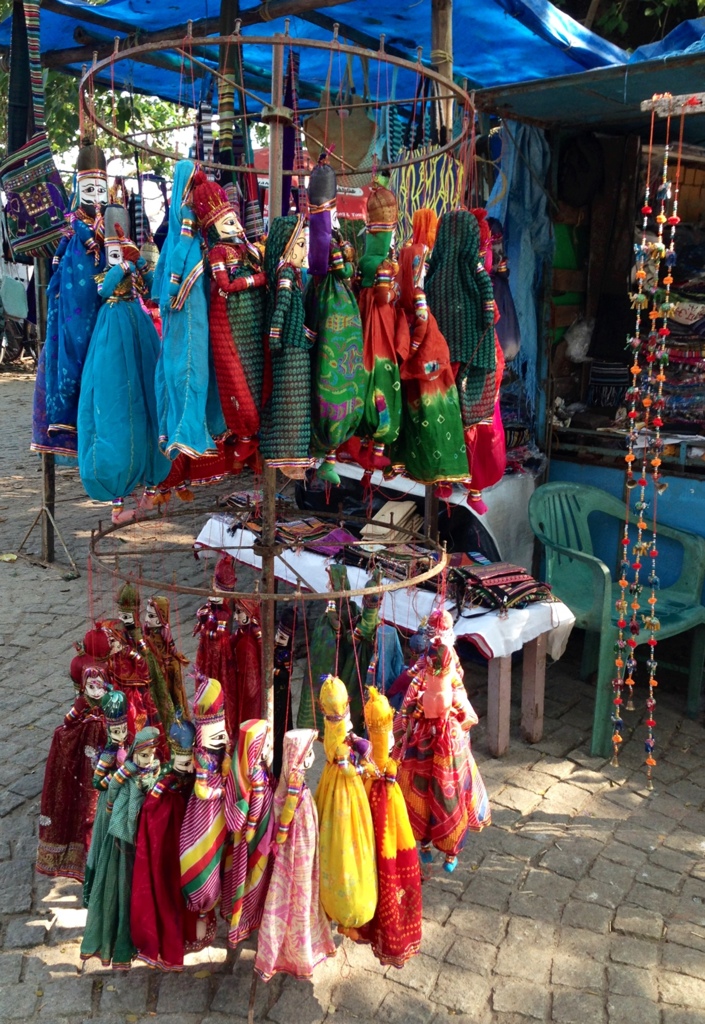
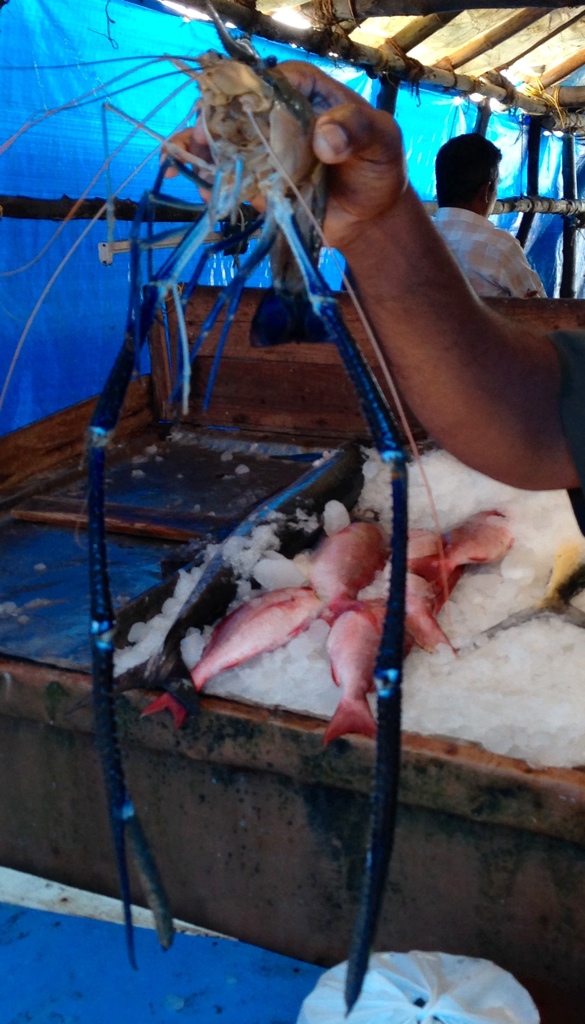
Along the boardwalk there were all kinds of vendors selling art work, trinkets and other stuff. Then a fish market with an auction area and retain fish stalls. A wide variety of fish including large prawns with long blue claws, small sharks, grouper, shrimp, salmon etc.
Next we visited an old Portugese church where Vasco Da Cama was originally buried.
We also visited the Jewish synagogue and a museum. The museum had a series of elaborate wall murals depicting stories of some of the gods. The museum is in a palace that had originally been built by the Portugese as a present to the Maharaja.
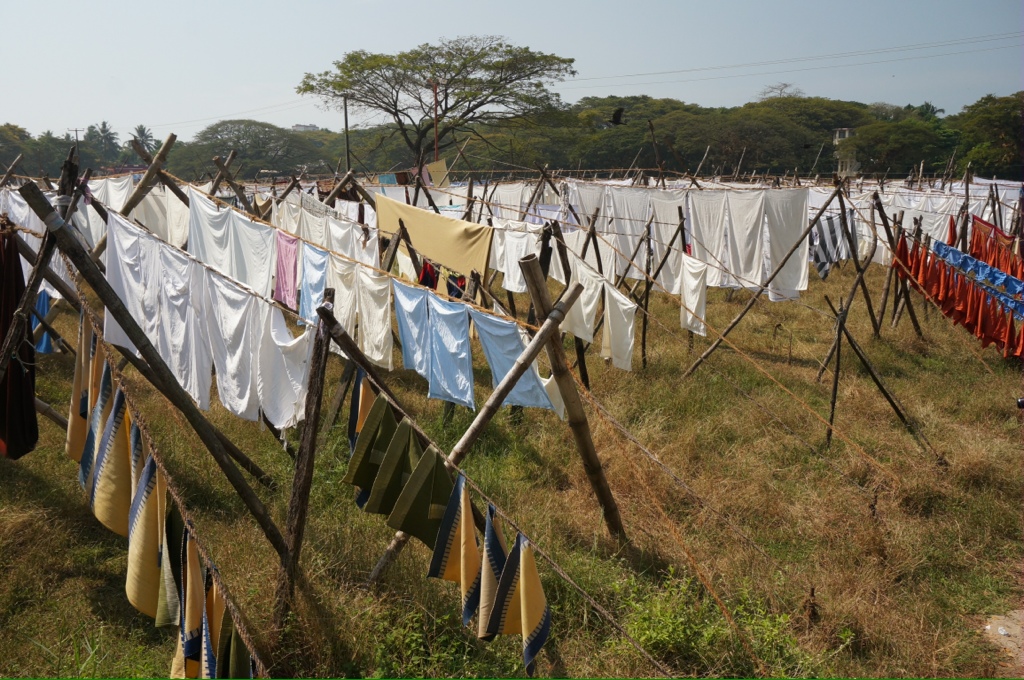
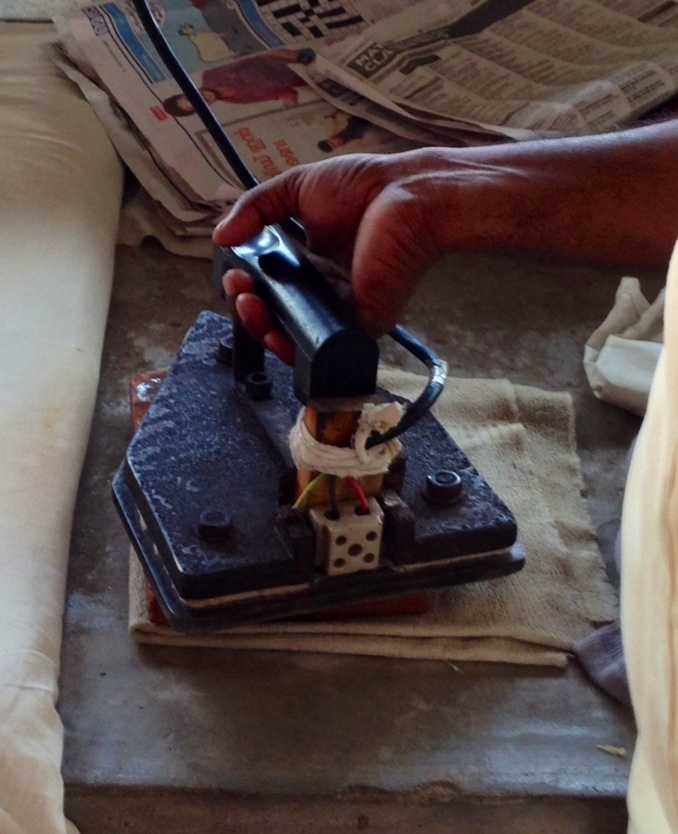
We also visited a laundry. The laundry was built by the English. It is still operating in the same fashion today. We saw men washing the clothes by hand. Beating the clothes against a stone and standing in water as they scrubbed the clothes with a large brush. There was an area to hang the clothes to dry under a roof (for the monsoon season) plus a large field with clothes lines in rows for drying the clothes. Each of the washers has a “locker” to hold supplies and one row of the drying lines to keep his work separated. There was an ironing station with a heavy iron (14 pounds) used to iron the clothes.
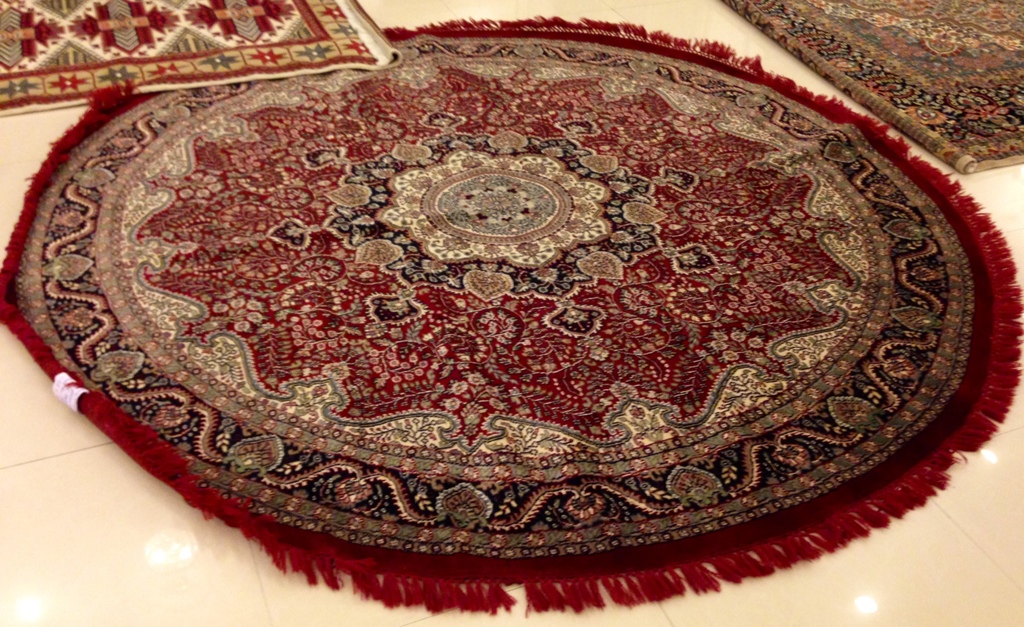
The only decent bathroom our guide knew to stop at just happened to be in a store. They had beautiful carpets and we ended up getting one for the living room! I am sure the guide gets something out of that!!!

20131218-232305.jpg

20131218-232024.jpg

20131218-231951.jpg

20131218-230820.jpg

20131218-230731.jpg

20131218-230331.jpg

20131218-230310.jpg

20131218-225959.jpg

20131218-225914.jpg

20131218-225750.jpg

20131218-225737.jpg

20131218-225700.jpg

20131218-225440.jpg

20131218-225115.jpg

Posted in Uncategorized | Leave a comment

Dec. 15 Taj Mahal

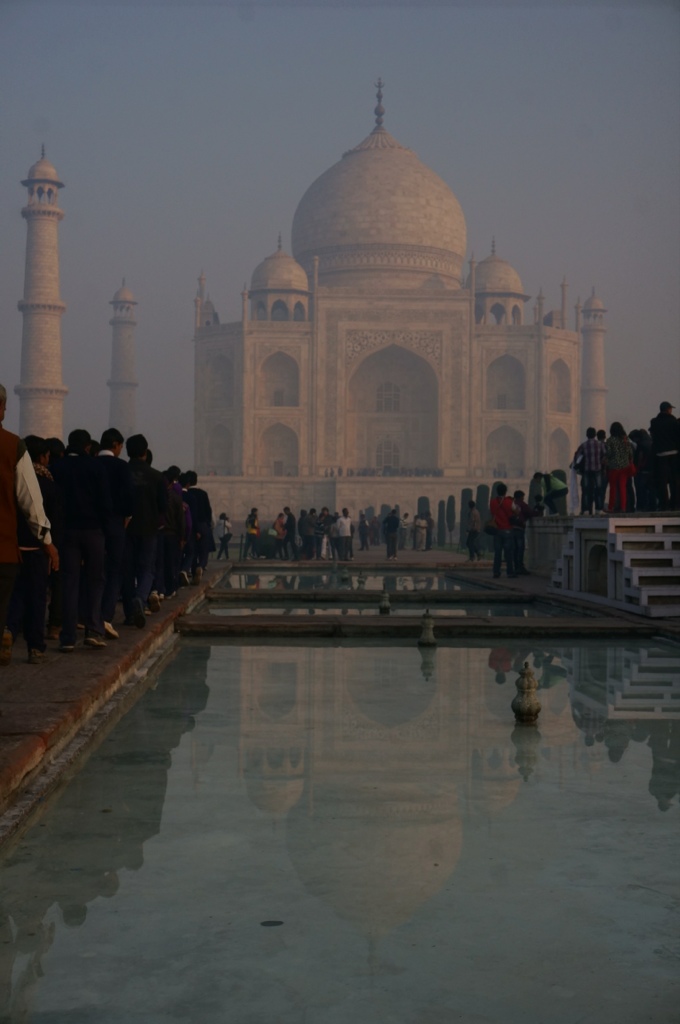
Up at dawn so we can see the sunrise at the Taj. When we arrive there are 4 long lines – one for foreign women, one for local women, one for foreign men and one for local men. For once the men were in the slow line! Always there are more men than women out and about.
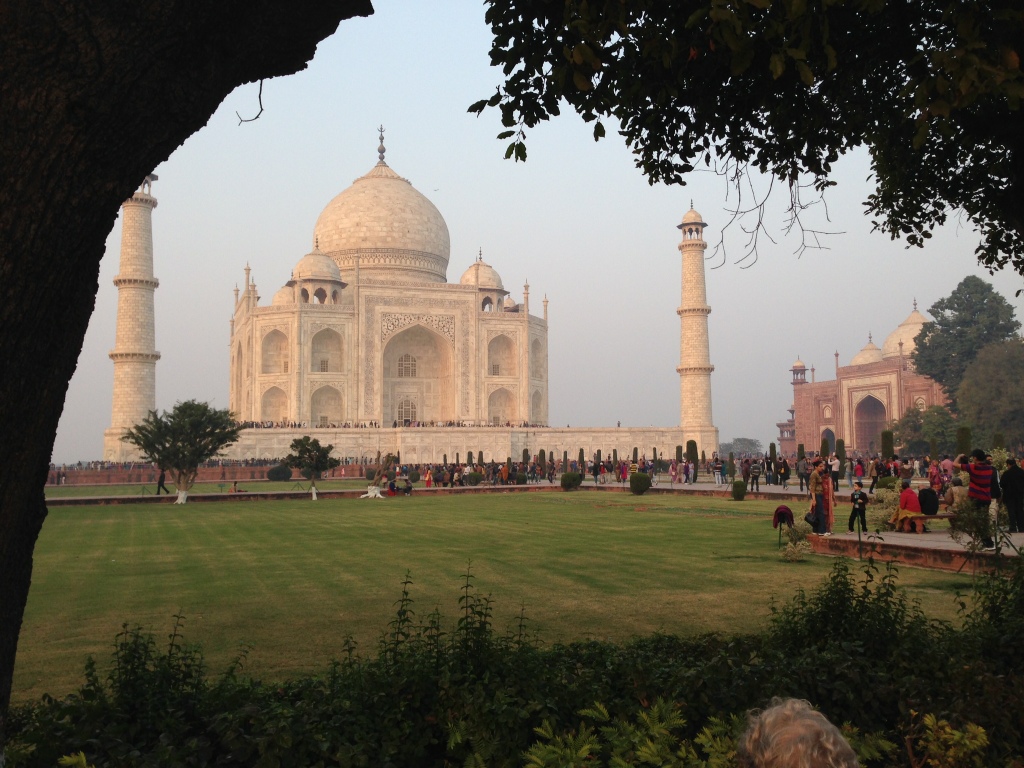
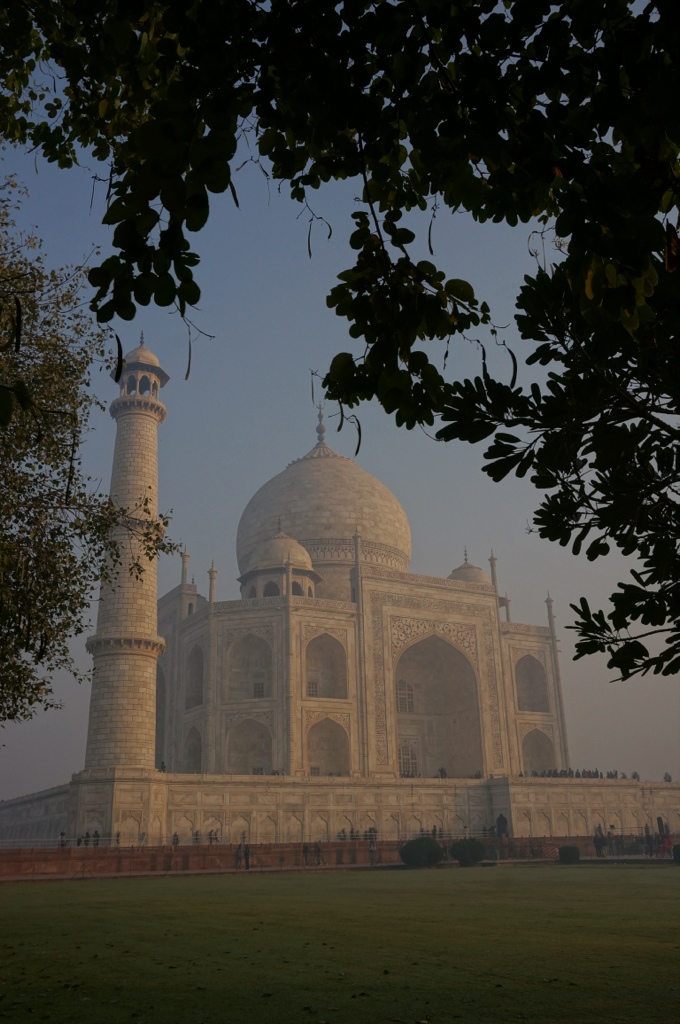
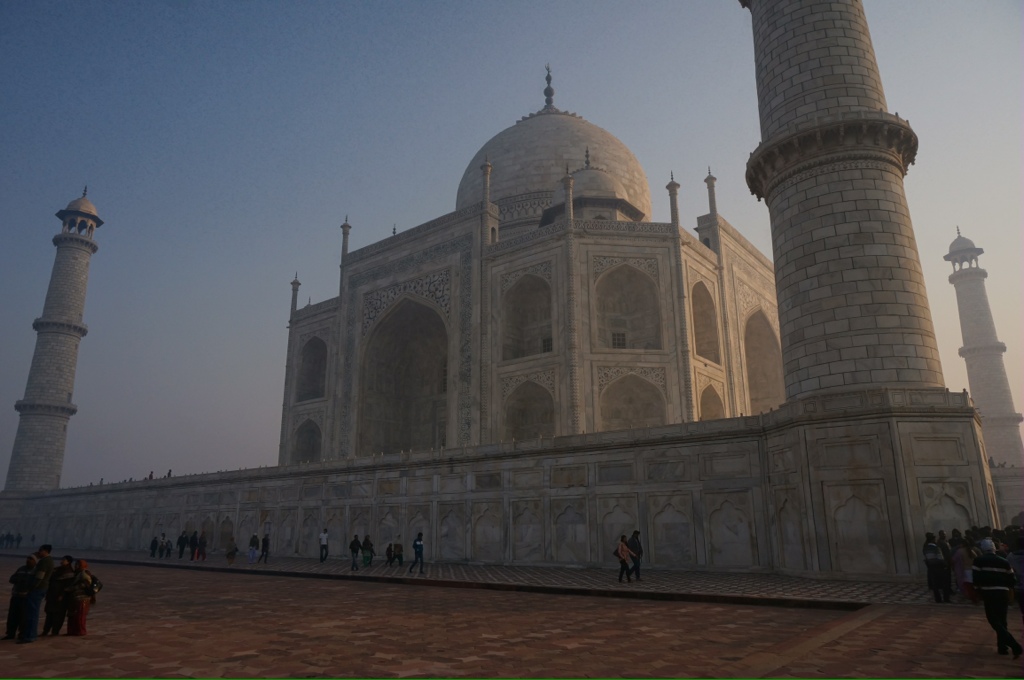
We saw the Taj twice. Once for sun rise (the sun was well up by the time we got in) and once at sun set. There was a very slight color change, slight pink in the morning, white during most of the day and slight yellow tinge in the evening. As you might expect we have a million photos of it. In the morning we thought it was crowded, in the evening it was a mob scene. The local people line up by being right up, against the person in front of them, you couldn’t put a piece if tissue between them and they shove in front of you – a polite Canadian ends up being shuffled back even though we are so much bigger than they are.
Taj was built by a king as a mausoleum for his wife. The Mongols conquered this area in 16th century and reigned for hundreds of years. The 5th Mongol king had the Taj built. He had 4 wives, his 2nd wife was a love match. She died giving birth to their 14th child. Six of the children survived. On her death bed she made her husband promise to not take any more wives and to do something to honour her memory. The Taj took 20,000 workers 23 years to build. Before it was finished the king’s second son imprisoned his father and killed his brothers. The king was imprisoned at Agra fort, he could see the Taj from the window and watched it being built. When he died he was also buried there.
The buildings are brick with a marble facade, the marble came from a quarry about 300 kms north.
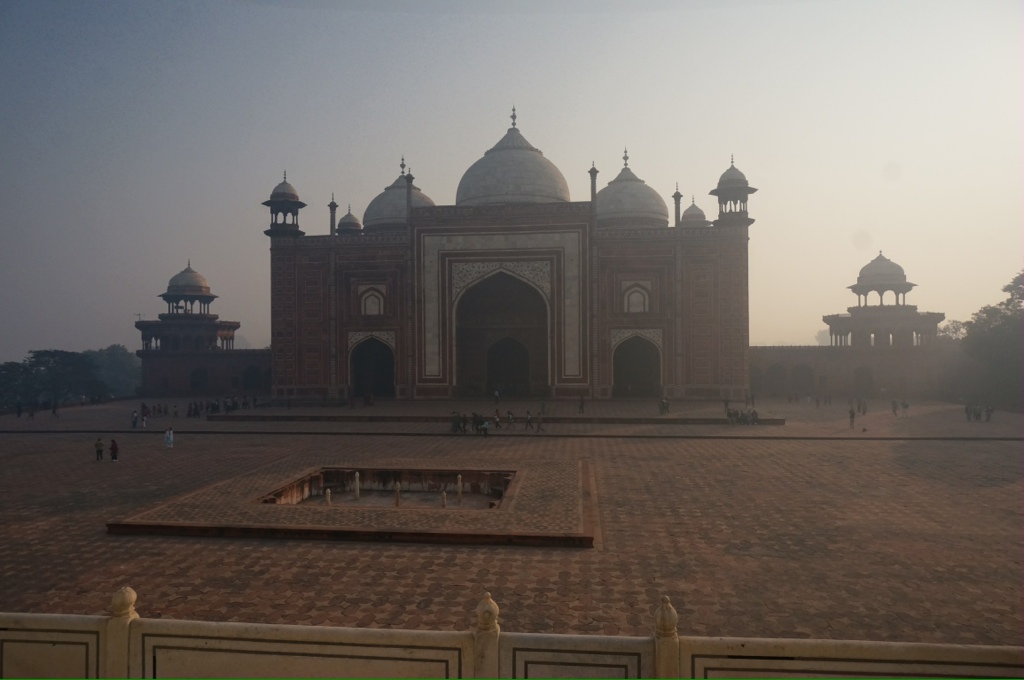
There are 3 buildings – the main one being the mausoleum, a smaller building to the right and a matching building to the left. One is a mosque, the other a guest house. No one has ever lived here.
The main building has 4 towers which were designed with a slight lean away from the main building, so if they ever fell down they would fall away from the graves.
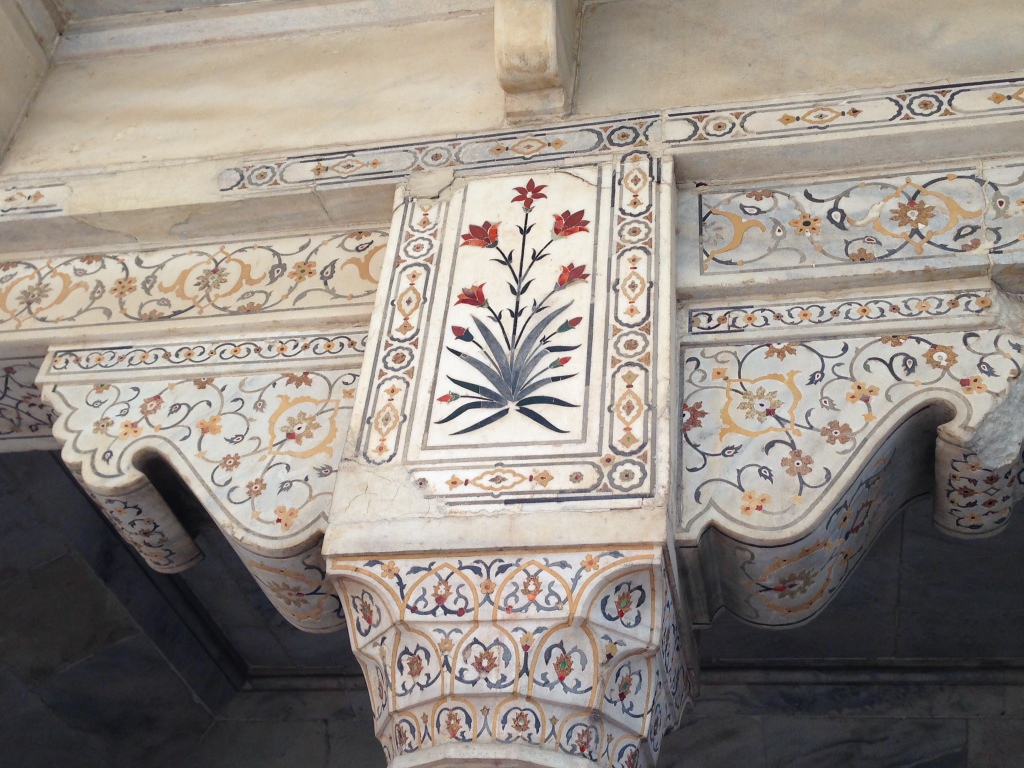
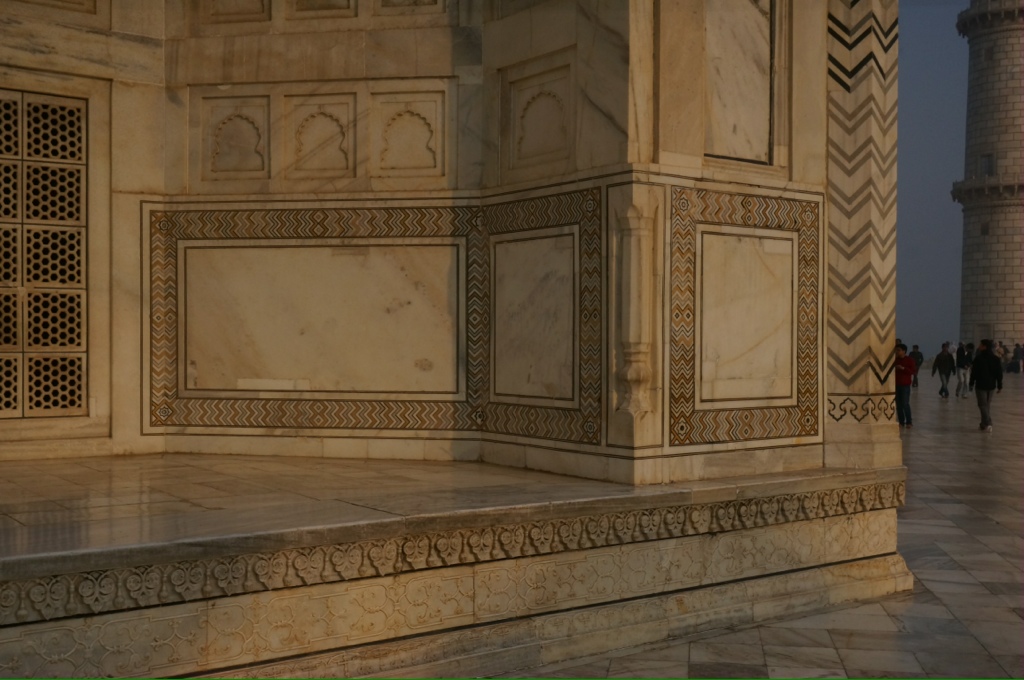
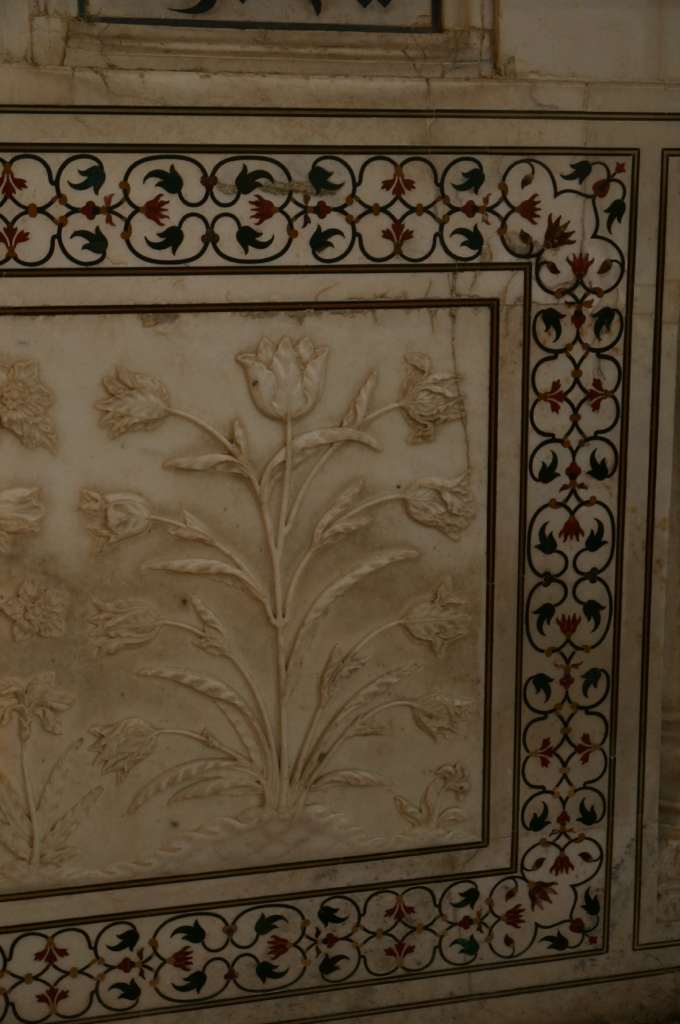
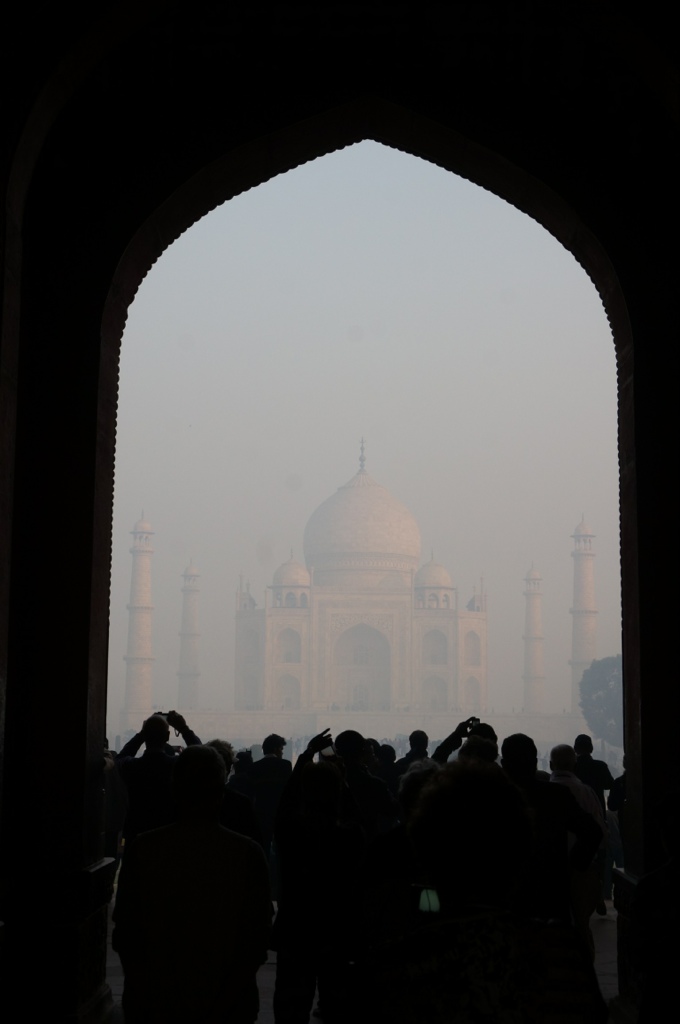
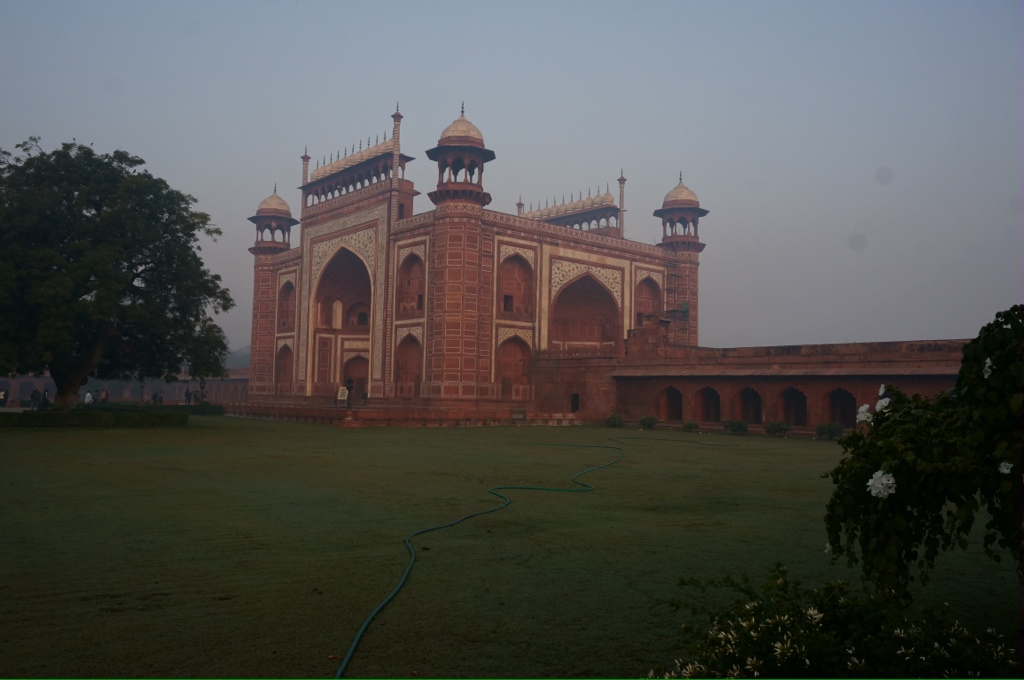
Much of the marble has intricate decorations, either inlay of color or carvings. The main building is protected by an entry gate built of brick and red stone so your first glimpse of the Taj is through the arched doorway.
In the morning there was a heavy fog or smog hanging over the scene, this cleared as the morning went on and when we returned in the evening it was clearer. We did go inside the main building in the morning to view the graves. This is the only area not symmetrical as the king had not intended that he be buried there. He had planned to build a matching mausoleum in black marble across from the Taj.
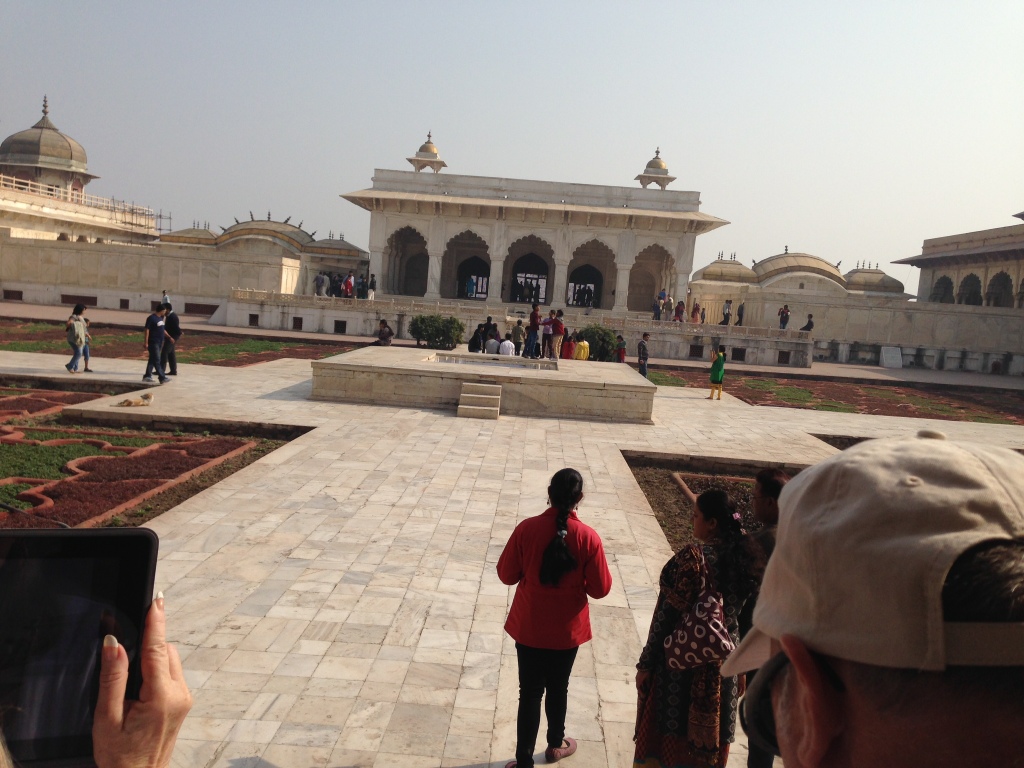
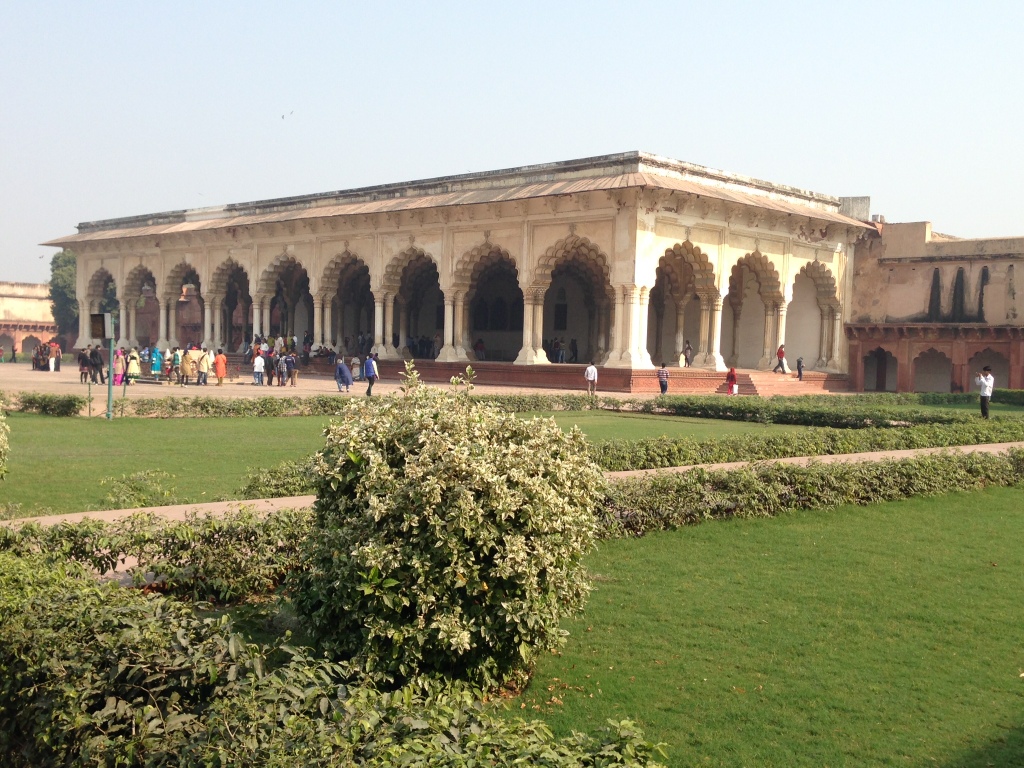
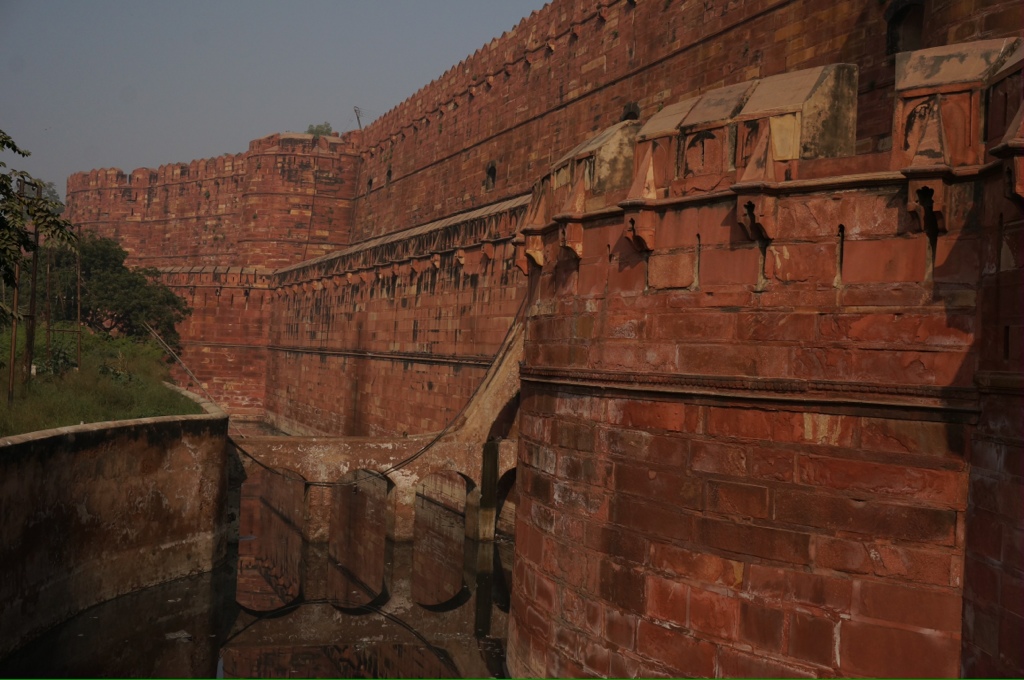
In the afternoon we toured part of the Agra Fort. Most of the fort is not open to the public as it is an army base. It is huge, the part we saw was where the king was imprisoned. We could see the Taj in the distance from the windows.
The fort was built in the 1500s and consisted of 500 buildings surrounded by a brick/red stone wall and moat. There are some marble buildings that were added later. The British occupied the fort in the 1800s and made some renovations as well, including the marble Hall of Justice.
There are millions of steps everywhere, if my knees weren’t wore out before our visit here they will be by the time we finish!
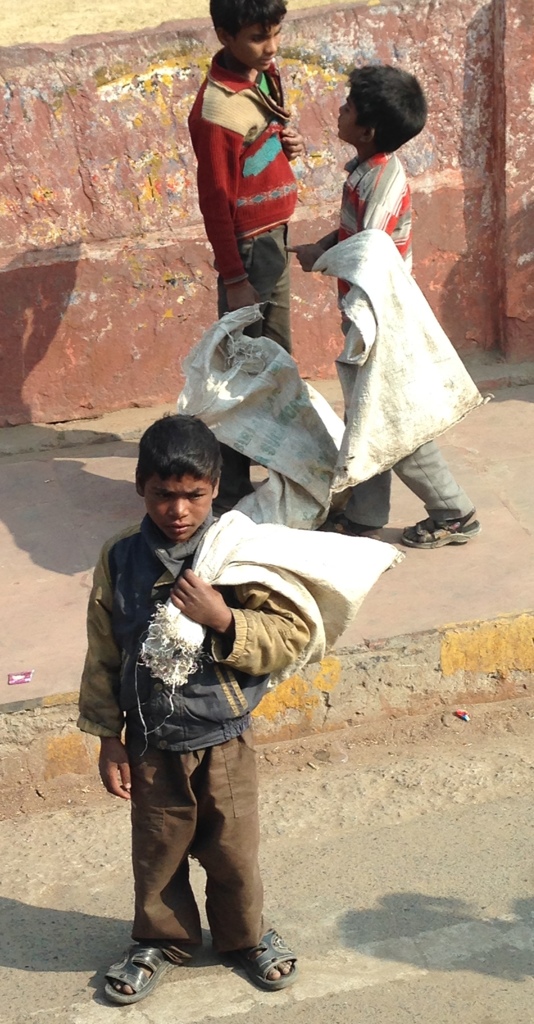
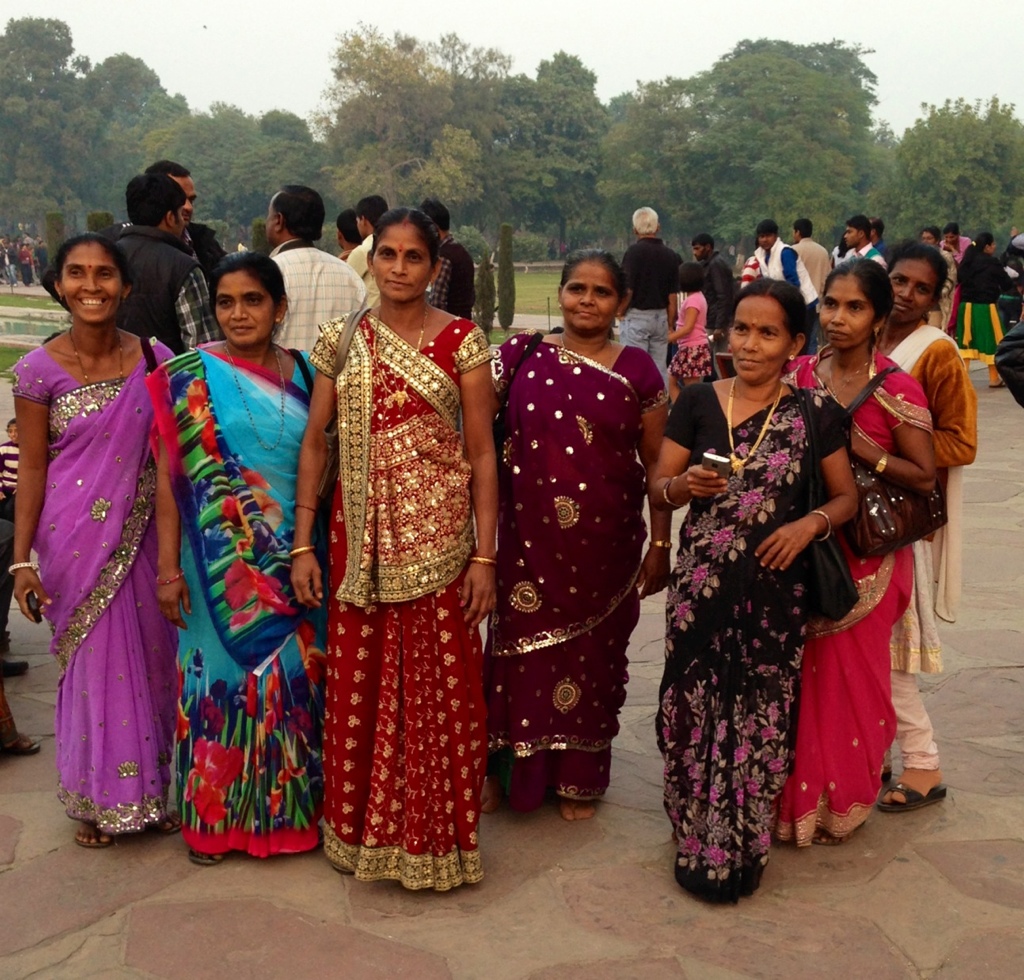
The local people we see on our tours mostly seem happy. The women are dressed in colorful saris and they are all interested in us. We have requests to get our picture taken with them.
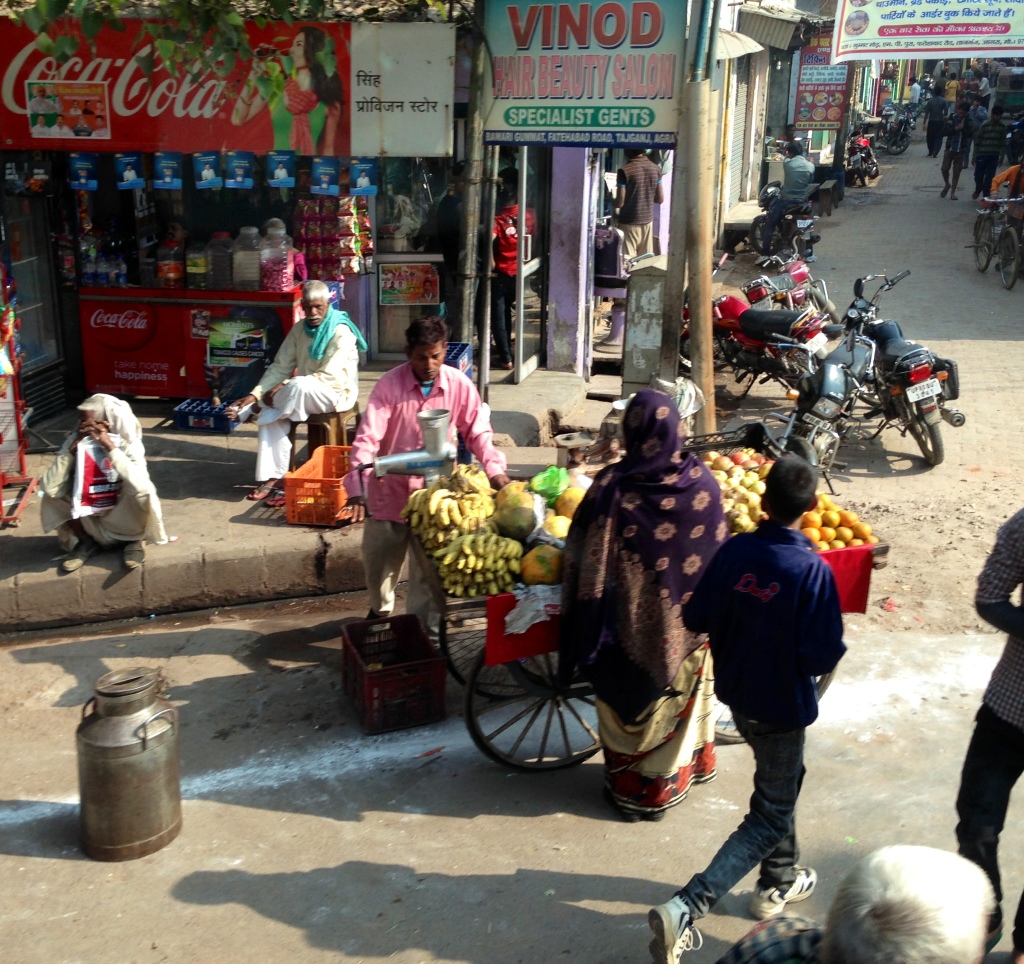
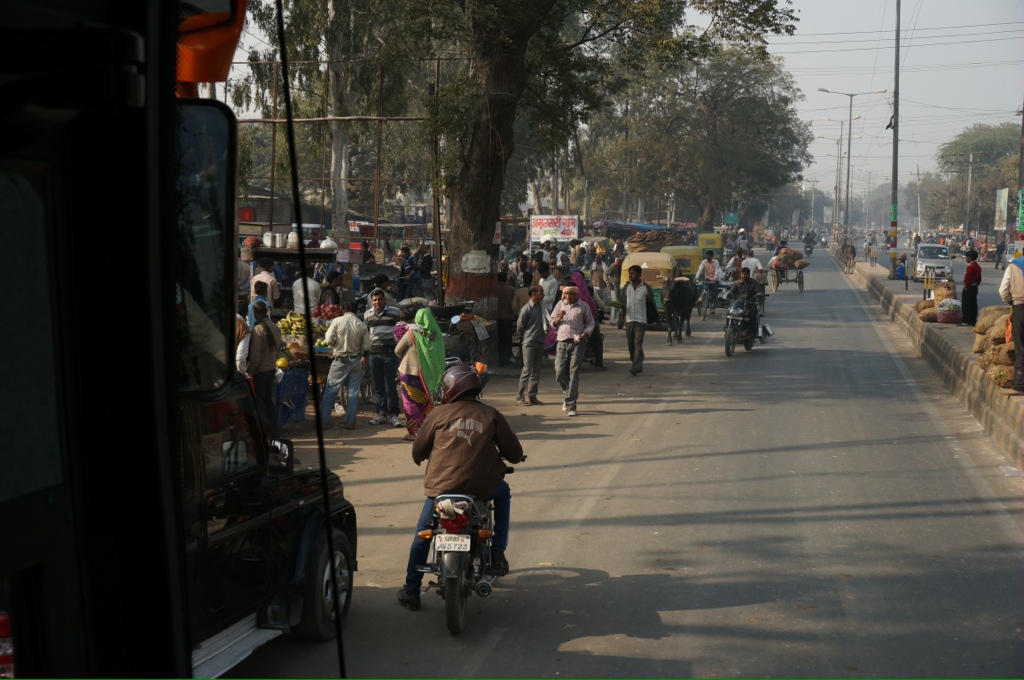
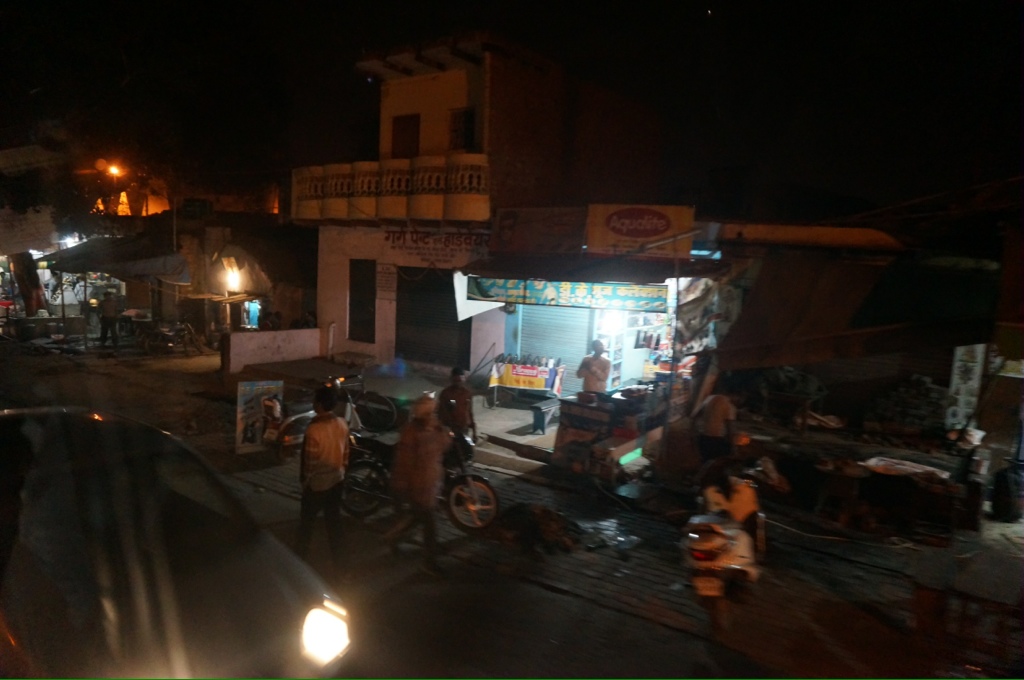
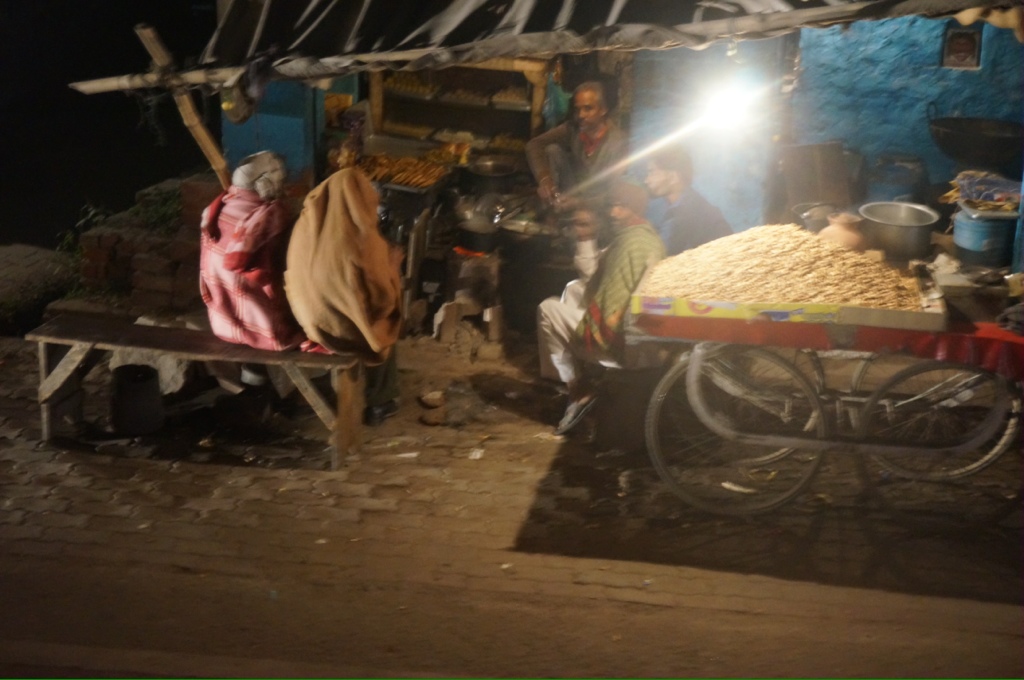
On our drive we passed through a market area. Fruit and veggies plus anything else you need out in stalls and carts along the road. Our guide says they shop everyday for fresh fruit and veggies, many are vegetarians and the produce is grown locally. Many tuk-tuks (green and yellow 3 wheeled “taxis”) often overflowing with people. Built for 2 passengers they often have 5or 6 and our guide says he has heard of 15 in one. Also trucks and buses with people crowded in and hanging off the sides. We see a few beggars but not many, a lot of very aggressive vendors of “stuff” with flexible pricing.
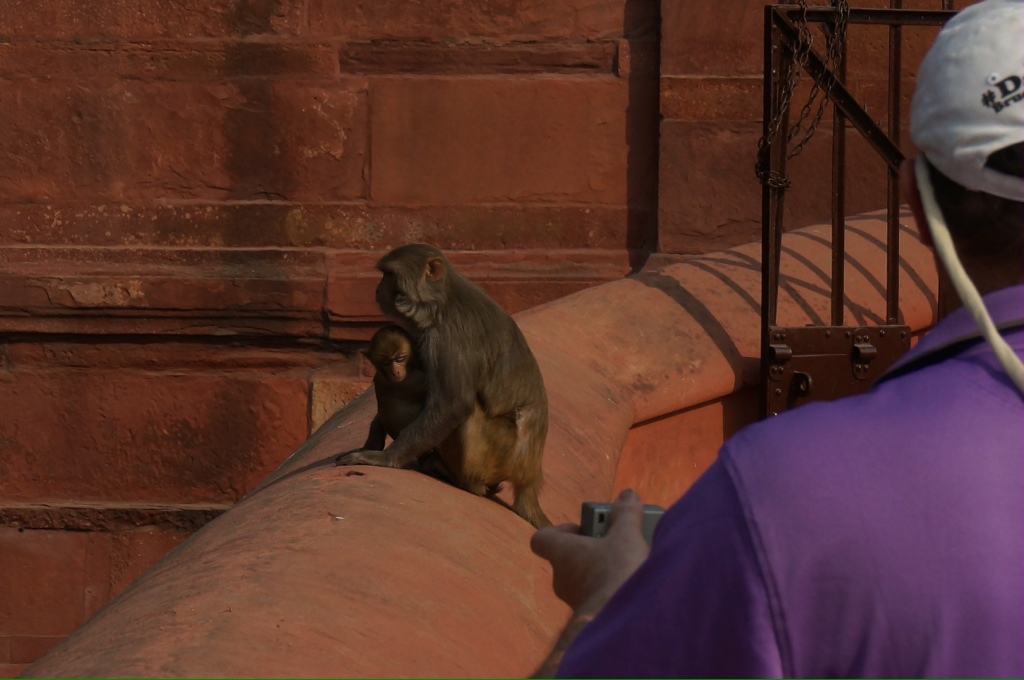
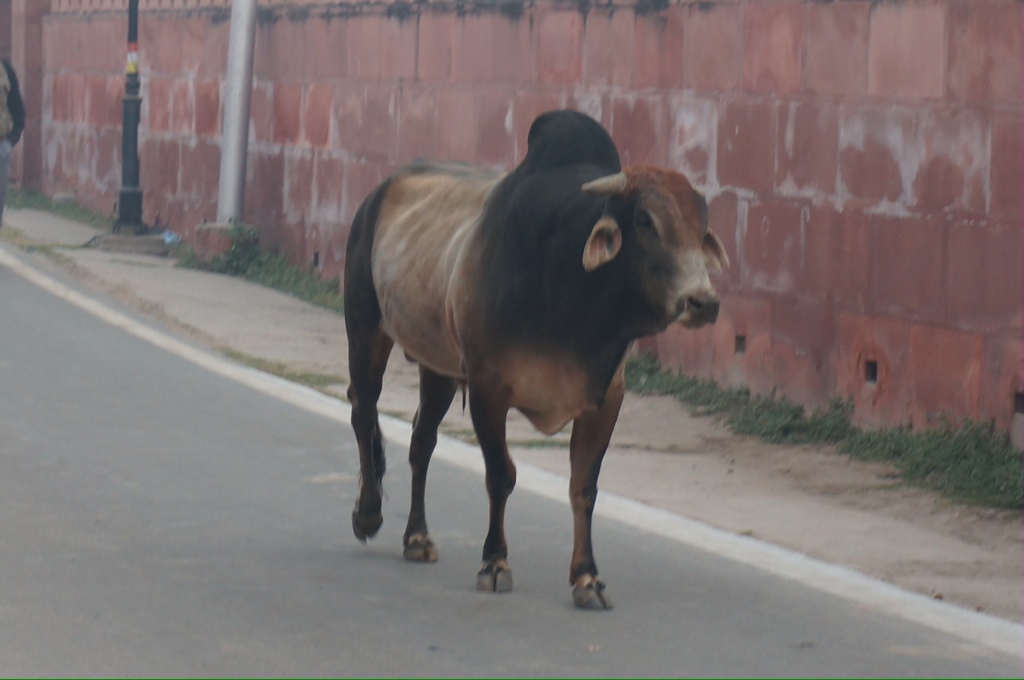
The main impression is people crowding in everywhere. Animals – dogs, bulls, cows, goats, monkeys wandering through the crowds. There are a few camels, but they are all being used to pull carts, also horse drawn vehicles. In the Arab countries we did not see any dogs and were told they do not keep dogs as pets, we did see a few cats, no cats in India.
We did not go on the shopping tour, instead we stayed at the hotel, had a rest and then tea in the tea lounge. Still no shopping! Our hotel is a sharp contrast to the squalor we pass through on our drives. It is gated and guarded by armed sentries who also patrol the halls at night. Cars and busses are subject to a scan underneath as they enter the gates. We are protected, not sure from what!.
The next day we drive back to Delhi in a very heavy fog, we were lucky the heavy fog was not here on the Taj day, we wouldn’t have seen anything.

20131216-081430.jpg

20131216-081123.jpg

20131216-081017.jpg

20131216-080900.jpg

20131216-080754.jpg

20131216-080615.jpg

20131216-080036.jpg

20131216-075846.jpg

20131216-075206.jpg

20131216-075037.jpg

20131216-074955.jpg

20131216-074859.jpg

20131216-074616.jpg

20131216-074748.jpg

20131216-074516.jpg

20131216-074421.jpg

20131216-074330.jpg

20131216-074202.jpg

20131216-074100.jpg

20131216-073336.jpg

20131216-080050.jpg

20131216-072942.jpg

20131216-072928.jpg

Posted in Uncategorized | 1 Comment